MADISON, Wis. (AP) — Planned Parenthood of Wisconsin resumed scheduling abortions on Monday after a nearly monthlong pause due to federal Medicaid funding cuts in President Donald Trump’s tax and spending bill that took effect at the beginning of October.
Planned Parenthood of Wisconsin said it was able to resume scheduling abortions as of noon on Monday because it no longer fits the definition of a “prohibited entity” under the new federal law that took effect this month and can receive Medicaid funds.
The organization said it dropped its designation as an “essential community provider” as defined under the Affordable Care Act. Dropping the designation will not result in changes to the cost for abortions or other services or affect the organization's funding, Planned Parenthood of Wisconsin president and CEO Tanya Atkinson said.
“At this point, in all of our research and analysis, we really shouldn’t see much of an impact on patient access,” she said. “If relinquishing this does ultimately impact our bottom line, then we will have to understand what that path forward is."
Abortion funding has been under attack across the U.S., particularly for affiliates of Planned Parenthood, the biggest provider. The abortion landscape has shifting frequently since the U.S. Supreme Court ruling in 2022 that allowed states to ban abortion. Currently, 12 states do not allow it at any stage of pregnancy, with limited exceptions, and four more ban it after about six weeks’ gestation.
Planned Parenthood has warned that about half its clinics that provide abortion could be closed nationwide due to the ban in the new federal law on Medicaid funding for Planned Parenthood for services other than abortion.
Wisconsin, where abortion is legal but the Republican-controlled Legislature has passed numerous laws limiting access, was the only state where Planned Parenthood paused all abortions because of the new federal law, Atkinson said.
Because of the complexities and varieties of state abortion laws, Planned Parenthood affiliates are responding to the new federal law in a variety of ways, Atkinson said. In Arizona, for example, Planned Parenthood stopped accepting Medicaid but continued to provide abortions.
The move in Wisconsin is “clearly aimed at sidestepping” the federal law, Wisconsin Right to Life said.
“Planned Parenthood’s abortion-first business model underscores why taxpayer funding should never support organizations that make abortion a priority,” said Heather Weininger, executive director of Wisconsin Right to Life. “Women in difficult circumstances deserve compassionate, life-affirming care — the kind of support the pro-life movement is committed to offering.”
In Wisconsin, pausing abortions for the past 26 days meant that women who would normally go to clinics in the southeastern corner of the state instead had to look for other options, including traveling to Chicago, which is within a three-hour drive of the Planned Parenthood facilities.
Affiliated Medical Services and Care for All also provide abortions at clinics in Milwaukee.
Atkinson said she did it was “really, really difficult to say” how many women were affected by the pause in services. She did not have numbers on how many women who wanted to have an abortion since the pause went into effect had to seek services elsewhere.
Planned Parenthood of Wisconsin serves about 50,000 people, and about 60% of them are covered by Medicaid, the organization said.
Given those numbers, the priority was on finding a way to continue receiving Medicaid funding and dropping the “Essential Community Provider” status provided the gateway, Atkinson said.
Wisconsin is part of a multistate federal lawsuit challenging the provision in the law. A federal appeals court in September said the government could halt the payments while a court challenge to the provision moves ahead.
Planned Parenthood of Wisconsin cited a Sept. 29 court filing on behalf of U.S. Health and Human Services that said family planning organizations could continue billing Medicaid if they gave up either their tax-exempt status or the “essential community provider" designation.
By giving up that designation, it no longer fits the definition of “prohibited entity” under the federal law and can continue to receive federal Medicaid funds, the organization said. Planned Parenthood of Wisconsin is not giving up its tax exempt status.
The “essential community provider” designation was originally given to organizations to help make it easier for them to be considered in-network for billing with private health insurers, Planned Parenthood said.
Atkinson called it a “nuanced provision” of the law and she does not anticipate that giving it up will affect Planned Parenthood's ability to continue providing abortions and other services.
Planned Parenthood provides a wide range of services including cancer screenings and sexually transmitted infection testing and treatment. Federal Medicaid money was already not paying for abortion, but affiliates relied on Medicaid to stay afloat. Services other than abortion are expected to expand in light of the new law.
Planned Parenthood performed 3,727 abortions in Wisconsin between Oct. 1, 2023, and Sept. 30, 2024, the group said.
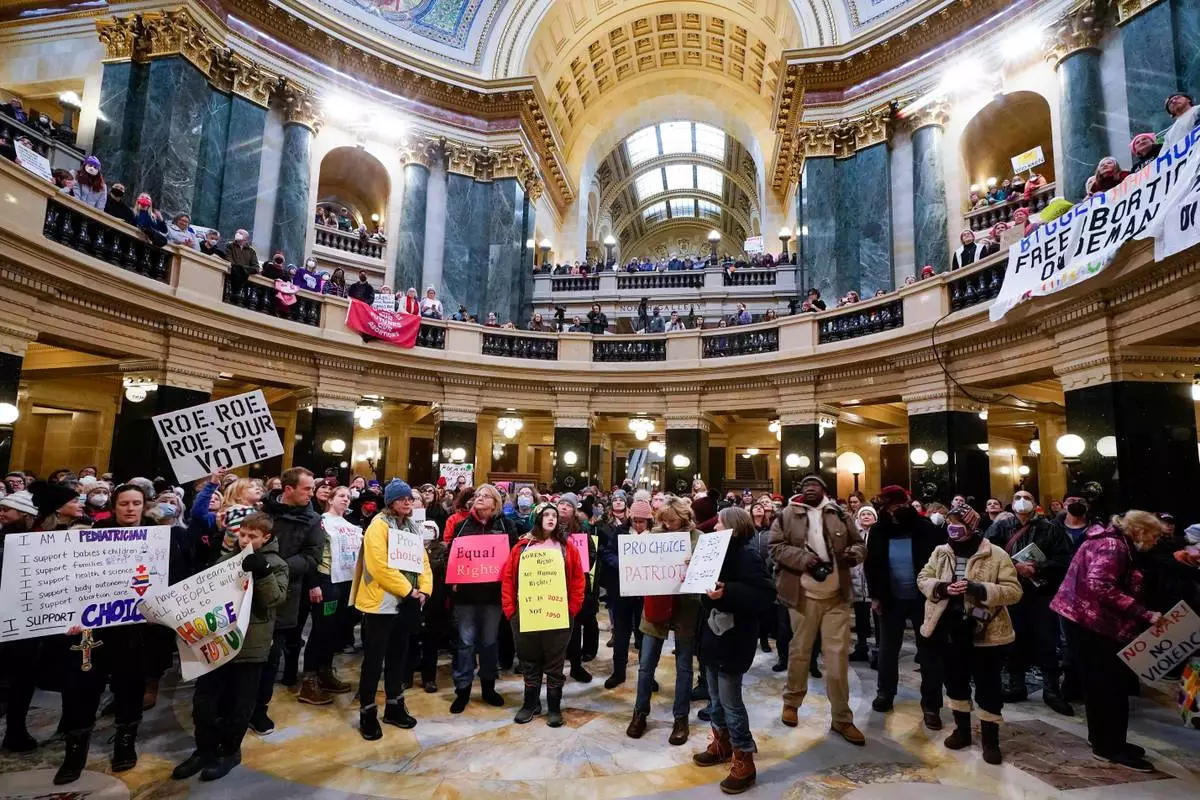
FILE - Protesters stand in the Wisconsin Capitol Rotunda during a march supporting overturning Wisconsin's near total ban on abortion, Jan. 22, 2023, in Madison, Wis. (AP Photo/Morry Gash, file)

FILE - Protesters are seen outside Planned Parenthood, Sept. 18, 2023, in Milwaukee. (AP Photo/Morry Gash, File)
WASHINGTON (AP) — The U.S. Supreme Court is hearing arguments at 10 a.m. ET over the constitutionality of President Donald Trump’s order to end birthright citizenship for children born in the United States to someone in the country illegally or temporarily.
The birthright citizenship order, which Trump signed on Jan. 20, 2025, the first day of his second term, is part of his Republican administration’s broad immigration crackdown.
Trump plans to be in attendance. He will be the first sitting president to attend oral arguments at the nation’s highest court.
Every lower court to have considered the issue has found the order illegal and prevented it from taking effect. A definitive ruling by the nation’s highest court is expected by early summer.
Here’s the latest:
Way back in 1841, former President John Quincy Adams represented a shipload of African men and women who had been sold into slavery in the famous Amistad case.
Former President William Howard Taft became chief justice nearly eight years after leaving the White House in 1913. Charles Evans Hughes left the Supreme Court for a presidential run in 1912, which he nearly won, then returned to the court in 1930 as chief justice.
In 1966, Richard Nixon argued his only Supreme Court case, which he lost.
Twenty-four Democratic state attorneys general put out a statement Wednesday morning saying they’re “proud to lead the fight against this unlawful order.”
While Democratic attorneys general have sued the Trump administration scores of times, the plaintiffs in this case are represented by the American Civil Liberties Union and other civil rights groups.
The Democratic attorneys filed court papers supporting their position. Twenty-five of their Republican counterparts filed a friend-of-the-court brief backing the Trump administration.
The only state sitting this one out is New Hampshire.
More than 250,000 babies born in the U.S. each year would not be citizens, according to research from the Migration Policy Institute and Pennsylvania State University’s Population Research Institute.
The order would only apply going forward, the administration has said. But opponents have said a court ruling in Trump’s favor could pave the way for a later effort to take away citizenship from people who were born to parents who were not themselves U.S. citizens.
The president and first lady Melania Trump showed up for the court ritual marking the arrival of a new justice following the confirmations of Justice Neil Gorsuch in 2017 and Justice Brett Kavanaugh a year later.
The ceremony for Trump’s third appointee, Justice Amy Coney Barrett, was delayed a year because of the COVID-19 pandemic and Trump, who was no longer in office, did not attend.
Traditionally the president has avoided attending arguments to maintain distance between the government branches — since the executive officer’s presence is seen by many as a way to pressure the independent court to rule in their favor.
Given the unusual nature of it all — Trump’s presence in the courtroom spotlights how high the stakes are for him, as the court’s decision will have massive consequences on his longstanding promise to crack down on immigration.
Last year, Trump said that he badly wanted to attend a hearing on whether he overstepped federal law with his sweeping tariffs, but he decided against it, saying it would have been a distraction.
Adam Winkler, a constitutional law professor at UCLA, told the The Associated Press that Trump’s attending SCOTUS oral arguments signals how important the president views this case.
However, Trump’s presence “is unlikely to sway the justices,” Winkler said, adding that the SCOTUS justices “pride themselves in their independence, even if some agree with much of Trump’s agenda.”
The fanfare of Trump being in the courtroom will make for a different experience for the justices themselves, however, as “Trump’s presence will make the atmosphere a little bit more circus-like,” Winkler said.
Solicitor General D. John Sauer is making his ninth Supreme Court argument and second in as many weeks. Sauer’s biggest win to date was the presidential immunity decision that spared Trump from being tried for his effort to overturn the 2020 election.
Sauer was a Supreme Court law clerk to Justice Antonin Scalia early in his legal career.
ACLU legal director Cecillia Wang, the child of Chinese immigrants, is presenting her second argument to the Supreme Court. In the first Trump administration, a 5-4 conservative majority ruled against Wang’s clients in another immigration case.
It’s not an April Fool’s joke. Alito was born this day in 1950. Only Thomas, who turns 78 in June, is older than Alito among the nine justices.
In the post-pandemic era, the other justices allow the 77-year-old Thomas, the longest-serving member of the court, to pose a question or two before the free-for-all begins.
In a second round of questioning, the justices ask questions in order of seniority. Chief Justice John Roberts, whose center chair makes him the most senior, gets the first crack.
The justices have routinely gone beyond the allotted time since returning to the courtroom following the Covid-19 pandemic.
A buzzer and the court marshal’s cry, “All rise,” signal the justices’ entrance from behind red curtains. The livestream won’t kick in for several minutes, until after the ceremonial swearing-in of lawyers to the Supreme Court bar.
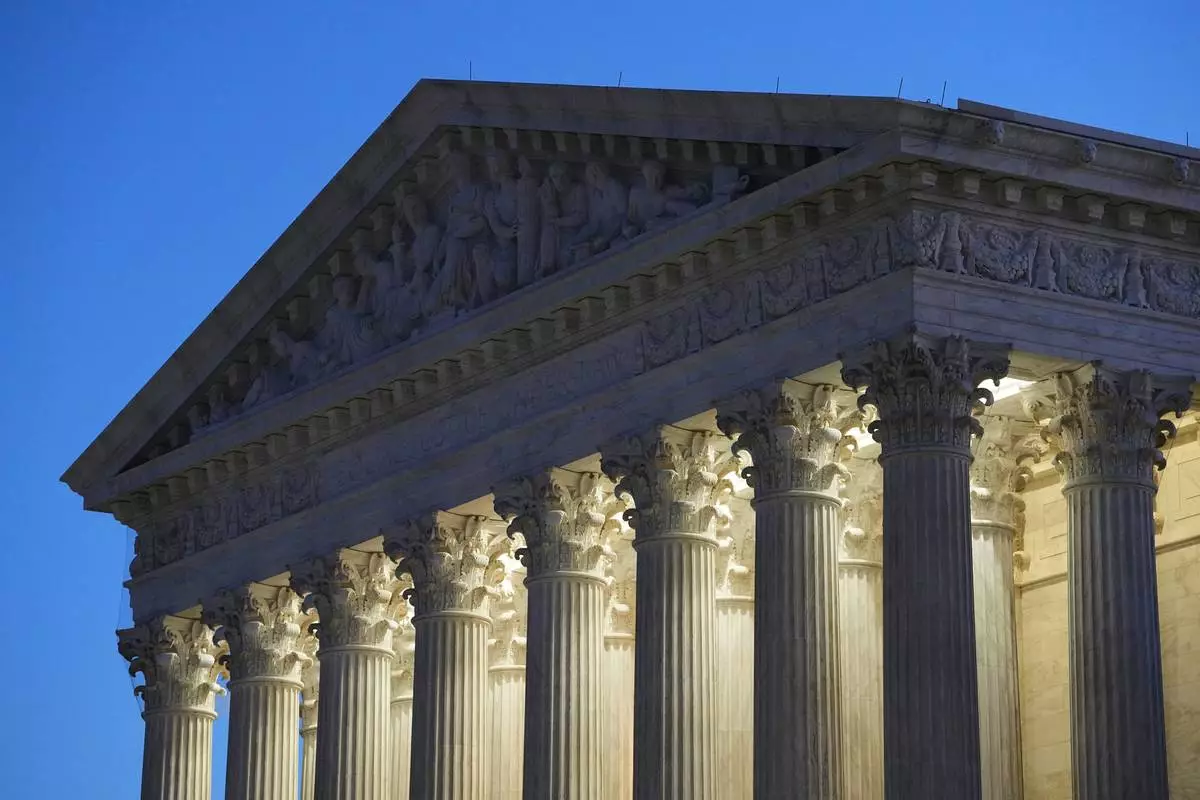
FILE - The U.S. Supreme Court is seen in Washington on Feb. 24, 2026. (AP Photo/Matt Rourke, File)
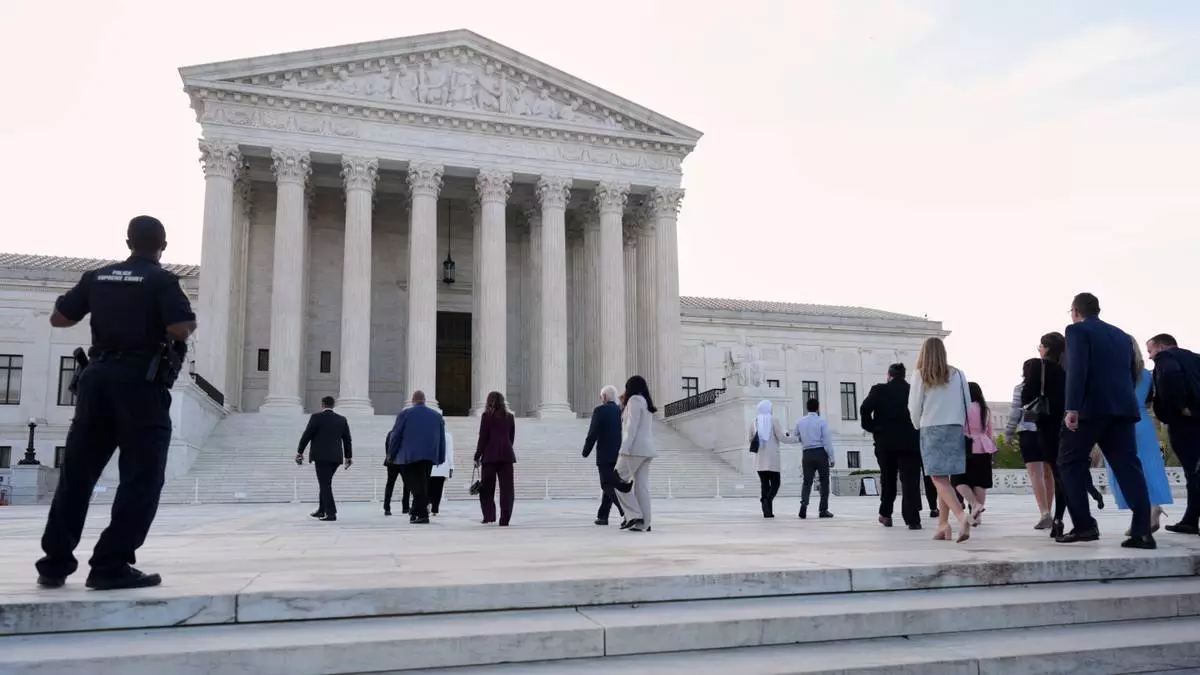
People arrive to walk inside the U.S. Supreme Court, on Capitol Hill in Washington, Wednesday, April 1, 2026. The Supreme Court justices will hear oral arguments today on whether President Donald Trump can deny citizenship to children born to parents who are in the United States illegally or temporarily. (AP Photo/J. Scott Applewhite)