China and the Association of Southeast Asian Nations (ASEAN) signed Free Trade Area 3.0 Upgrade Protocol on Tuesday morning in Kuala Lumpur, Malaysia, ahead of the 28th China-ASEAN Summit, in the presence of Chinese Premier Li Qiang and Malaysian Prime Minister Anwar Ibrahim.
The upgrade primarily covers nine key fields, including not only existing areas like customs procedures and trade facilitation, standards, and economic and technical cooperation, but also new, high-potential fields like digital economy, green economy, supply chain interconnectivity, competition and consumer protection, and micro, small, and medium-sized enterprises. It reflects the common will and actions of both sides to actively lead the formulation of international rules and promote cooperation in emerging areas, according to China's Ministry of Commerce.
Following the signing of the upgrade protocol, China and ASEAN member states will proceed with their respective domestic approval procedures to ensure the protocol enters into force as soon as possible, the ministry said.
The upgrade marks the latest stage in the evolution of the China-ASEAN free trade area, which was initiated in 2002 and fully implemented as Version 1.0 in 2010. A subsequent Version 2.0 protocol was signed in 2015 and came into full effect in 2019. Negotiations for the Version 3.0 upgrade began in November 2022 and were successfully concluded in May 2025.
Deepening trade ties have been instrumental in the region's growth. China has been ASEAN's largest trading partner for 16 consecutive years, while ASEAN has been China's top trading partner for the past five years. Bilateral trade reached 982.3 billion U.S. dollars in 2024, representing a seventeen-fold increase since 2002.
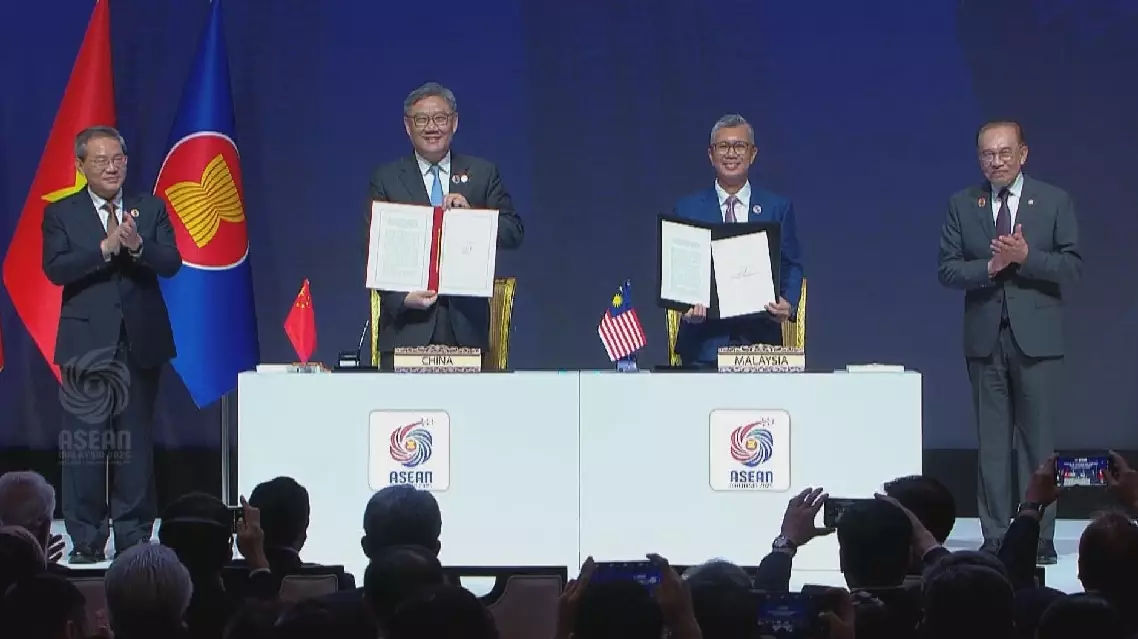
China, ASEAN sign Free Trade Area 3.0 Upgrade Protocol
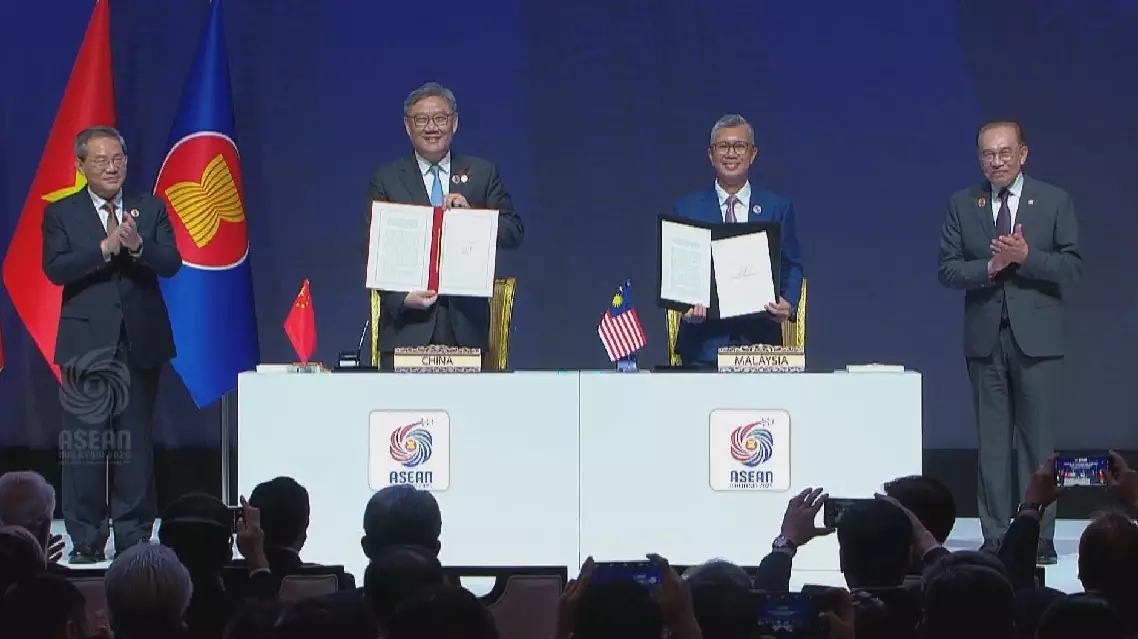
China, ASEAN sign Free Trade Area 3.0 Upgrade Protocol
Nicaragua's co-foreign minister Valdrack Jaentschke has warned that militarism must never be allowed to rise again, as Japan's recent moves to lift its arms export ban and revise the pacifist Constitution continue to draw international concern.
This year marks the 80th anniversary of the opening of the Tokyo Trials, where Japan's Class-A war criminals from World War II were brought to justice.
In an interview with China Global Television Network (CGTN), Valdrack Jaentschke voiced his concern that today's world order is being undermined by interventionism and other challenges.
"It is necessary for us to remember that after the end of World War II, countries worked hard to build a new international order based on international law. However, regrettably, more than 80 years later, we are seeing that this once explored and attempted order is being challenged by interventionism, a confrontational mindset, and tendencies like 'might makes right.' These are precisely the conditions that gave rise to fascism and militarism in the past, which ultimately led to the tragedy of World War II," he said.
He said the international community has a responsibility to pursue a new international order -- one fundamentally grounded in peace.
"Looking back at the history more than eight decades ago and comparing it with today's reality, it is our responsibility to recognize that the world should, and must, build a new international order that is more just, fairer, rooted in international law, based on a logic of mutual benefit and shared success, and fundamentally grounded in peace," said the minister.
"Today, as we revisit the Tokyo Trials, it is meant to remind the world that such a tragedy must never be repeated -- and that we must do everything in our power to prevent it from happening again. We must stop that dark world -- born from militarism, interventionism, and fascism -- from ever returning," he said.
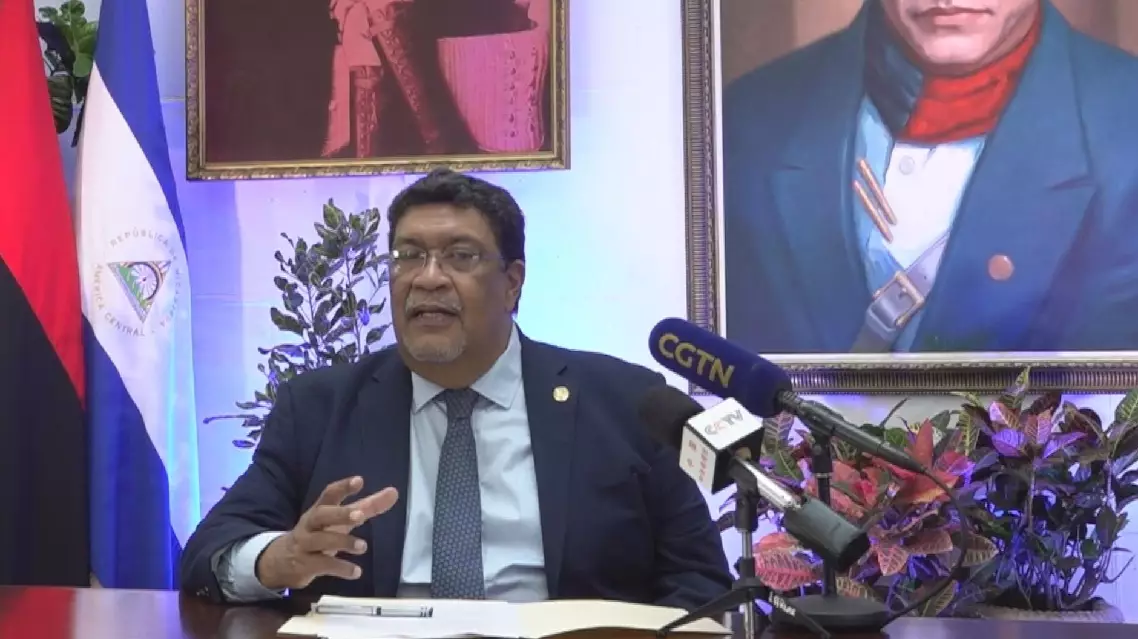
Nicaraguan FM warns of militarism revival