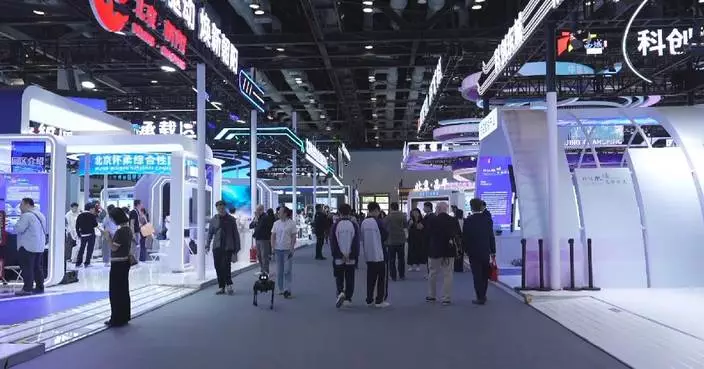
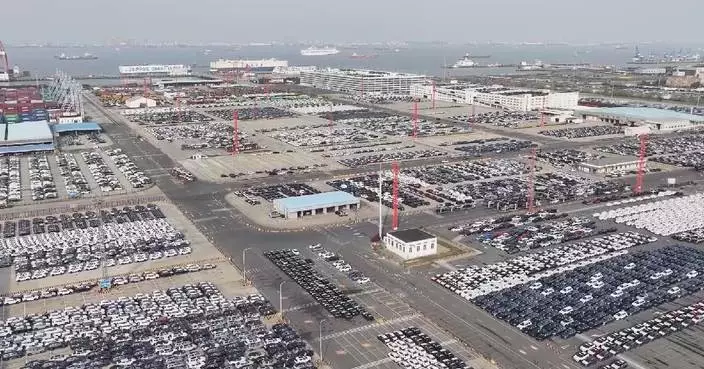
Coastal cities in China and the Republic of Korea (ROK) are building a cross-border manufacturing and logistics corridor, driven by the China–ROK Free Trade Agreement (FTA) and deepening industrial ties.
Weihai, in eastern China's Shandong Province, is only about an hour’s flight from Incheon, a major city in northwest ROK. Their proximity makes them natural economic partners, with cooperation accelerating under the bilateral trade agreement.
On Feb 25, 2015, China and the ROK signed off on the full text of their FTA, confirming its terms and paving the way for deeper economic ties.
Wendeng Das Automobile Fittings, an auto parts maker in the ROK, now operates a major facility in Weihai, where its core product, a car seat slider once made exclusively at home, is now largely manufactured in China.
"Since production moved to China, our efficiency has increased by at least 50 percent," said Chang Myung-jin, China regional general manager of Wendeng Das.
With tariffs nearly eliminated under the FTA, the company’s operations are more flexible, and exports are growing.
"With smooth trade links, we aim to combine China’s manufacturing strength with Korea’s design edge to reach new levels of cooperation," Chang said.
The city of Weihai hosts more than 1,000 ROK-invested enterprises, more than half of all foreign-funded firms in the city, with total investment exceeding 5 billion U.S. dollars.
Reciprocal offices were established in both cities to help companies enter each other's markets.
"The Incheon Center in Weihai provides one-stop services for Korean firms — from customs clearance to e-commerce access. By leveraging Weihai's bonded zone, we help small and medium-sized enterprises integrate into China's supply chains and expand their local presence," said Ryu Sun-hee, chief representative of the Incheon Business and Trading in China Representative Office.
Reports show the agreement has streamlined customs procedures and boosted bilateral trade. Building on the FTA, Weihai and Incheon are moving from simple trade to coordinated industrial partners.
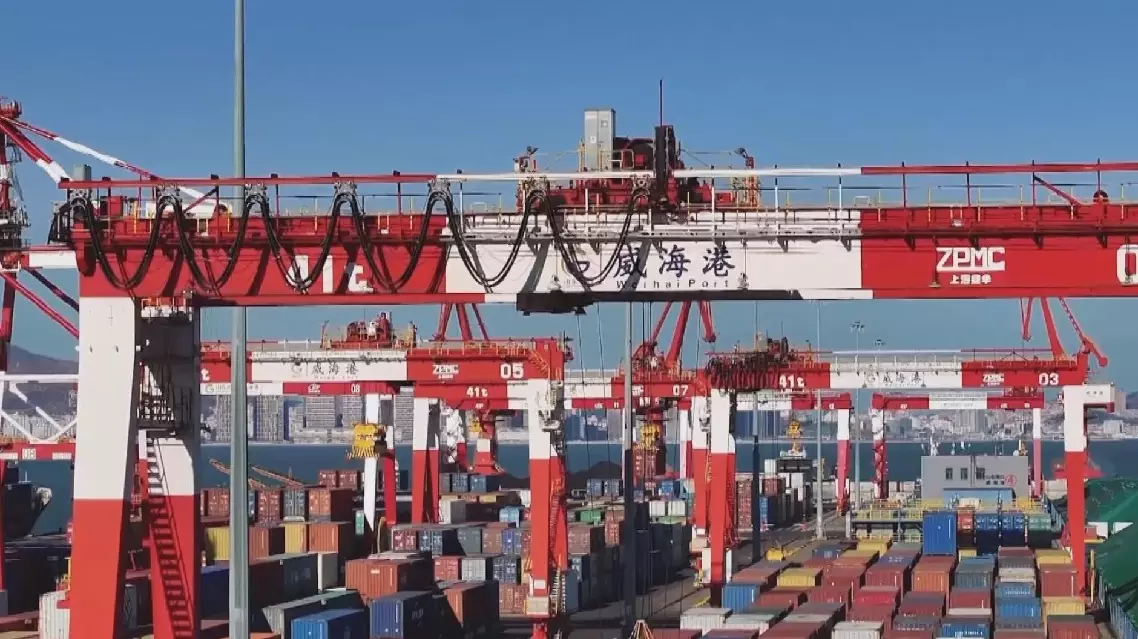
Chinese, ROK coastal cities build strong industrial ties under FTA
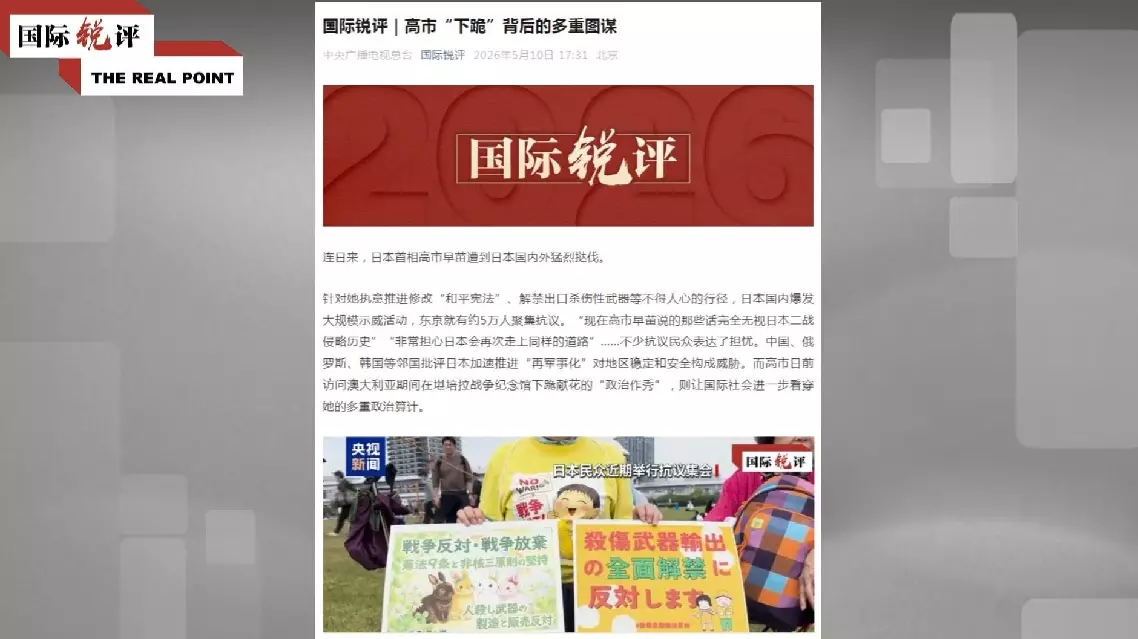
Japanese Prime Minister Sanae Takaichi's political stunts both at home and abroad cannot whitewash Japan's World War II (WWII) aggression, but instead expose the schemes of the country's far-right forces to incite bloc confrontation and promote remilitarization, says a China Media Group commentary published on Sunday.
An edited English version of the commentary is as follows:
In recent days, Takaichi has faced fierce criticism both domestically and internationally.
Her political stunt of kneeling in front of the Tomb of the Unknown Australian Soldier to lay flowers at the Australian War Memorial in Canberra during her visit to Australia further exposed her multiple political calculations to the international community.
Choosing to kneel in front of a tomb in Australia, Takaichi was not regretting for Japan's aggression and atrocities during World War II.
This act not only reveals the distorted world outlook of Japanese politicians, but also exposes their attempts to mislead public opinion, whitewash the crimes of WWII aggression, instigate bloc confrontation, and push for military buildup.
From "fawning diplomacy" during her U.S. visit in March to the recent kneeling show during her visit to Australia in May, Takaichi has been trying to cultivate a friendly image towards the West.
Geopolitically speaking, Japan's far-right forces are trying to expand their military and breach from the restraints of the pacifist constitution by exaggerating external threats. To this end, they are making every effort to exploit geopolitical conflicts and draw neighboring countries, especially Western countries, into bloc confrontation.
Since the end of WWII, Japanese leaders have never apologized to the people of victim countries such as China, the Republic of Korea, and the Democratic People's Republic of Korea. Many Japanese politicians have even tried every means to justify the war crimes.
In particular, Takaichi has questioned the 1995 Murayama Statement, denied the Nanjing Massacre, visited the notorious Yasukuni Shrine annually for many consecutive years, and revived military rank titles during WWII, such as "taisa."
On the issue of Japan's history of aggression, Takaichi's insidious move cannot deceive the world.
Takaichi's political stunts both at home and abroad are a provocation against WWII victim countries in Asia and other regions.
This cannot conceal Japan's remilitarization attempt or the reality that " neo-militarism" is spreading and becoming a threat.
All countries that have suffered from Japanese militarist aggression should remain highly vigilant and united, and work together to safeguard the outcomes of WWII victory, so that historical tragedies never repeat themselves.
Takaichi's political stunts cannot whitewash Japan's history of aggression, remilitarization attempt: commentary