One viral video shows what appears to be four sharks swimming in a Jamaican hotel's pool as floodwaters allegedly brought on by Hurricane Melissa swamp the area. Another purportedly depicts Jamaica's Kingston airport completely ravaged by the storm. But neither of these events happened, it's just AI-generated misinformation circulating on social media as the storm churned across the Caribbean this week.
These videos and others have racked up millions of views on social media platforms, including X, TikTok and Instagram.
Some of the clips appear to be spliced together or based on footage of old disasters. Others appear to be created entirely by AI video generators.
“I am in so many WhatsApp groups and I see all of these videos coming. Many of them are fake,” said Jamaica’s Education Minister Dana Morris Dixon on Monday. “And so we urge you to please listen to the official channels.”
Although it's common for hoax photos, videos and misinformation to surface during natural disasters, they’re usually debunked quickly. But videos generated by new artificial intelligence tools have taken the problem to a new level by making it easy to create and spread realistic clips.
In this case, the content has been showing up in social media feeds alongside genuine footage shot by local residents and news organizations, sowing confusion among social media users.
Here are a few steps you can take to reduce your chances of getting fooled.
Look for a watermark logo indicating that the video was generated by Sora, a text-to-video tool launched by ChatGPT-maker OpenAI, or other AI video generators. These will usually appear in one of the corners of a video or photo.
It is quite easy to remove these logos using third-party tools, so you can also check for blurs, pixelation or discoloration where a watermark should be.
Look more closely at videos for unclear details. While the sharks-in-pool video appears realistic at first glance, it looks less believable upon closer examination because one of the sharks has a strange shape.
You might see objects that blend together, or details such as lettering on a sign that are garbled, which are telltale signs of AI-generated imagery. Branding is also something to look out for as many platforms are cautious about reproducing specific company logos.
Experts say it’s going to get increasingly harder to tell the difference between reality and deepfakes as the technology improves.
Experts noted that Melissa is the first big natural disaster since OpenAI launched the latest version of its video generation tool Sora last month.
“Now, with the rise of easily accessible and powerful tools like Sora, it has become even easier for bad actors to create and distribute highly convincing synthetic videos,” said Sofia Rubinson, a senior editor at NewsGuard, which analyzes online misinformation.
“In the past, people could often identify fakes through telltale signs like unnatural motion, distorted text, or missing fingers. But as these systems improve, many of those flaws are disappearing, making it increasingly difficult for the average viewer to distinguish AI-generated content from authentic footage.”
AI expert Henry Ajder said most of the hurricane deepfakes he's seen aren't inherently political. He suspects it's “much closer to more traditional kind of click-based content, which is to try and get engagement, to try and get clicks.”
On X, users can get paid based on the amount of engagement their posts get. YouTubers can earn money from ads.
A video that racks up millions of views could earn the creator a few thousand dollars, Ajder said, not bad for the amount of effort needed.
Social media accounts also use videos to expand their follower base in order to promote projects, products or services, Ajder said.
So check who's posting the video. If the account has a track record of clickbait-style content, be skeptical.
But keep in mind that the people behind deepfake videos aren't always trying to hide.
“Some creators are just trying to do interesting things using AI that they think are going to get people’s attention,” he said.
While it's unclear who exactly created the pool shark video, one version found on Instagram carries the watermark for a TikTok account, Yulian_Studios. That account's TikTok profile describes itself, in Spanish, as a “Content creator with AI visual effects in the Dominican Republic.”
The shark video can't be found on the account's page, but it does have another AI-generated clip of an obese man clinging to a palm tree as hurricane winds blow in Jamaica.
Context matters. Take a beat to consider whether what you’re seeing is plausible. The Poynter journalism website advises that if you see a situation that seems “exaggerated, unrealistic or not in character,” consider that it could be a deepfake.
That includes the audio. AI videos used to come with synthetic voice-overs that had unusual cadence or tone, but newer tools can create synchronized sound that sound realistic.
And if you found it on X, make sure to check whether there's a community note attached, which is the platform's user-powered fact-checking tool.
One version of the shark pool video on X comes with a community note that says: “This video footage and the voice used were both created by artificial intelligence, it is not real footage of hurricane Melissa in Jamaica.”
Don't just rely on random strangers on the internet for information. The Jamaican government has been posting storm updates and so has the National Hurricane Center.
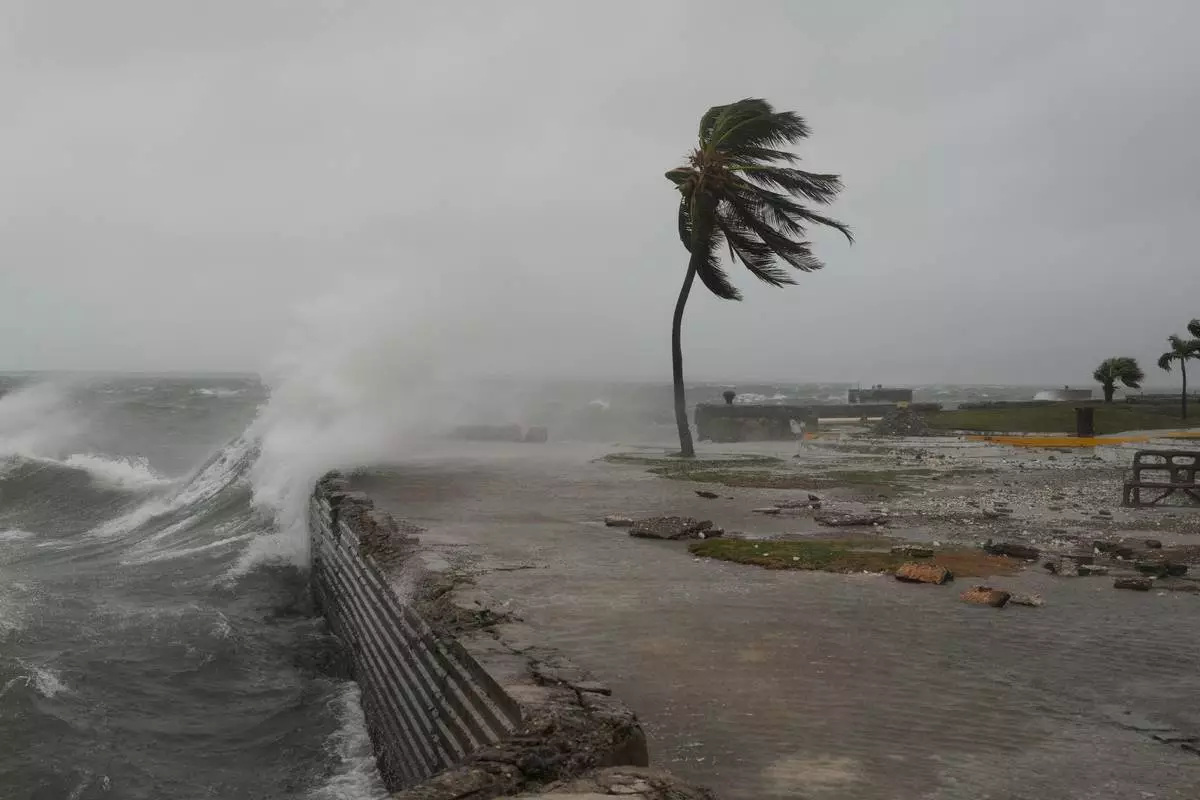
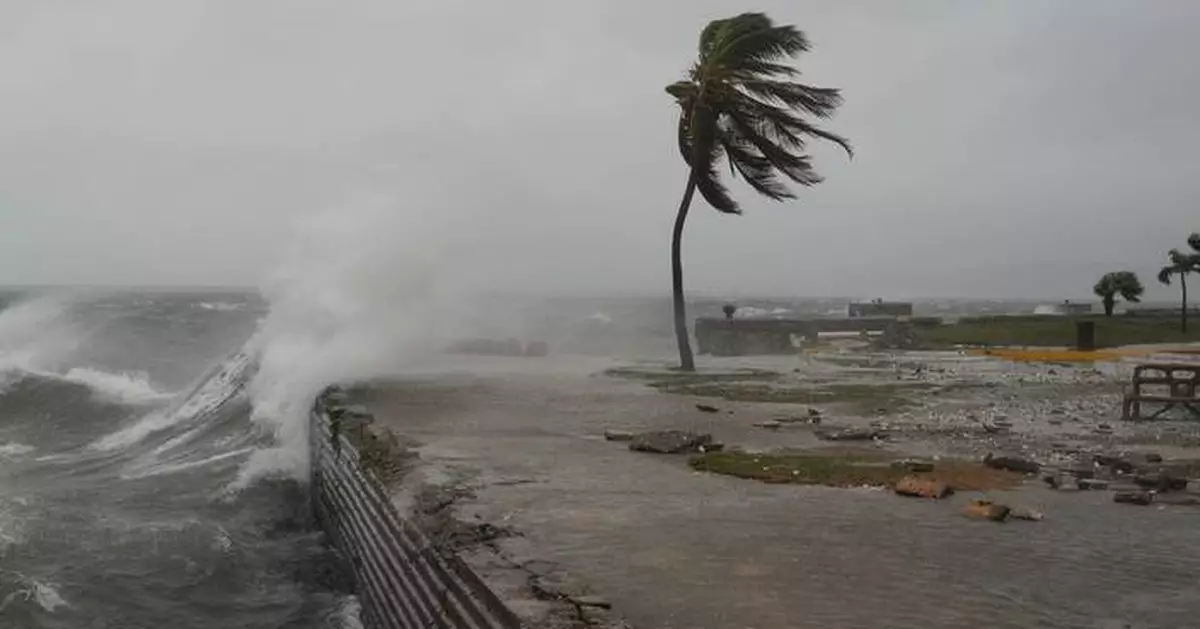
Waves splash in Kingston, Jamaica, as Hurricane Melissa approaches, Tuesday, Oct. 28, 2025. (AP Photo/Matias Delacroix)
WASHINGTON (AP) — The Supreme Court is taking up one of the term’s most consequential cases, President Donald Trump’s executive order on birthright citizenship declaring that children born to parents who are in the United States illegally or temporarily are not American citizens, and he was in the courtroom on Wednesday for some of the arguments.
The justices are hearing Trump’s appeal of a lower-court ruling from New Hampshire that struck down the citizenship restrictions, one of several courts that have blocked them. They have not taken effect anywhere in the country.
Trump is the first sitting president to attend oral arguments at the nation’s highest court. He spent just over an hour inside the courtroom, hearing arguments by the government’s lawyer, Solicitor General D. John Sauer. He left shortly after Sauer wrapped up and the plaintiff was invited to present her case.
The case frames another test of Trump's assertions of executive power that defy long-standing precedent for a court that has largely ruled in the president's favor — but with some notable exceptions that Trump has responded to with starkly personal criticisms of the justices. A definitive ruling is expected by early summer.
The birthright citizenship order, which Trump signed the first day of his second term, is part of his Republican administration’s broad immigration crackdown.
Birthright citizenship is the first Trump immigration-related policy to reach the court for a final ruling. The justices previously struck down global tariffs Trump had imposed under an emergency powers law that had never been used that way.
Trump reacted furiously to the late February tariffs decision, saying he was ashamed of the justices who ruled against him and calling them unpatriotic.
He issued a preemptive broadside against the court on Sunday on his Truth Social platform. “Birthright Citizenship is not about rich people from China, and the rest of the World, who want their children, and hundreds of thousands more, FOR PAY, to ridiculously become citizens of the United States of America. It is about the BABIES OF SLAVES!,” the president wrote. “Dumb Judges and Justices will not a great Country make!”
Trump's order would upend the long-standing view that the Constitution’s 14th Amendment, ratified in 1868, and federal law since 1940 confer citizenship on everyone born on American soil, with narrow exceptions for the children of foreign diplomats and those born to a foreign occupying force.
The 14th Amendment was intended to ensure that Black people, including former slaves, had citizenship, though the Citizenship Clause is written more broadly. “All persons born or naturalized in the United States, and subject to the jurisdiction thereof, are citizens of the United States and of the State wherein they reside,” it reads.
In a series of decisions, lower courts have struck down the executive order as illegal, or likely so, under the Constitution and federal law. The decisions have invoked the high court's 1898 ruling in Wong Kim Ark, which held that the U.S.-born child of Chinese nationals was a citizen.
The Trump administration argues that the common view of citizenship is wrong, asserting that children of noncitizens are not “subject to the jurisdiction” of the United States and therefore are not entitled to citizenship.
The court should use the case to set straight “long-enduring misconceptions about the Constitution’s meaning,” wrote Sauer, the solicitor general.
No court has accepted that argument, and lawyers for pregnant women whose children would be affected by the order said the Supreme Court should not be the first to do so.
“We have the president of the United States trying to radically reinterpret the definition of American citizenship,” said Cecillia Wang, the American Civil Liberties Union legal director who is facing off against Sauer at the Supreme Court.
More than one-quarter of a million babies born in the U.S. each year would be affected by the executive order, according to research by the Migration Policy Institute and Pennsylvania State University’s Population Research Institute.
While Trump has largely focused on illegal immigration in his rhetoric and actions, the birthright restrictions also would apply to people who are legally in the United States, including students and applicants for green cards, or permanent resident status.
Associated Press writer Darlene Superville contributed to this report.
Follow the AP’s coverage of the U.S. Supreme Court at https://apnews.com/hub/us-supreme-court.
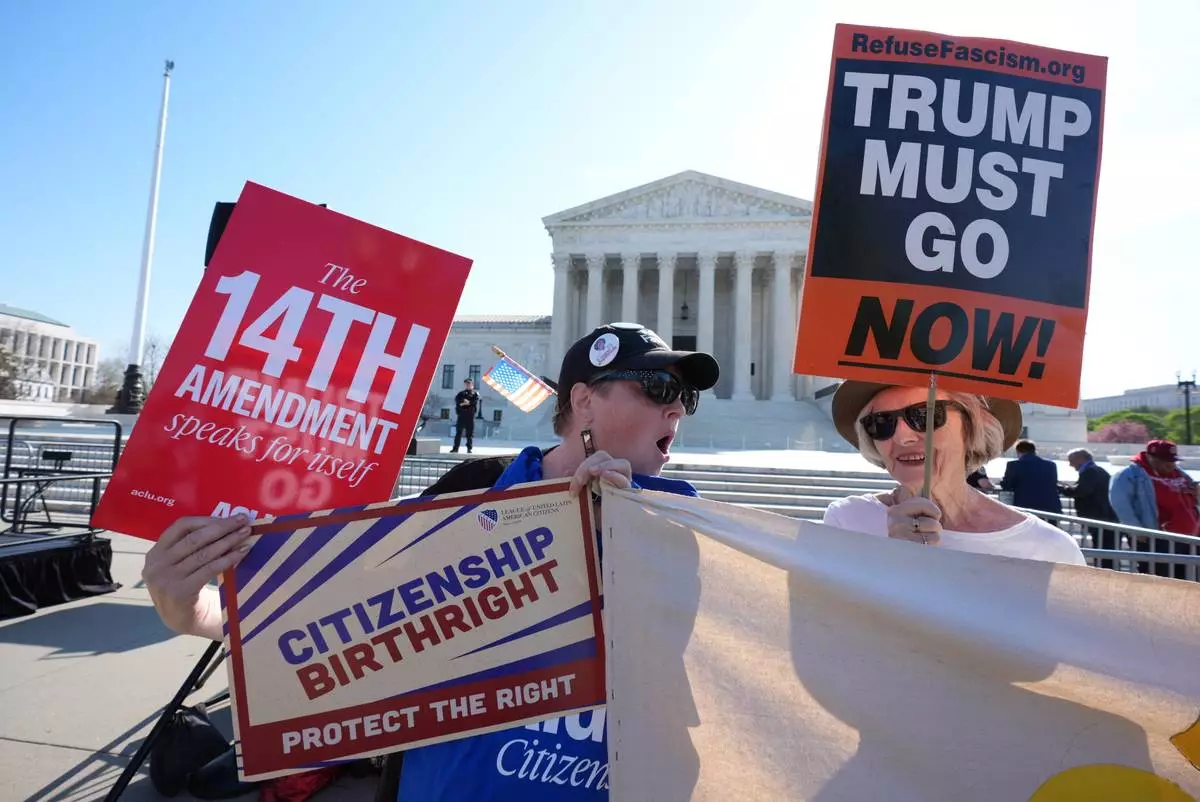
Pro and anti-Trump demonstrators rally outside the U.S. Supreme Court, before justices hear oral arguments on whether President Donald Trump can deny citizenship to children born to parents who are in the United States illegally or temporarily, on Capitol Hill, in Washington, Wednesday, April 1, 2026. (AP Photo/J. Scott Applewhite)
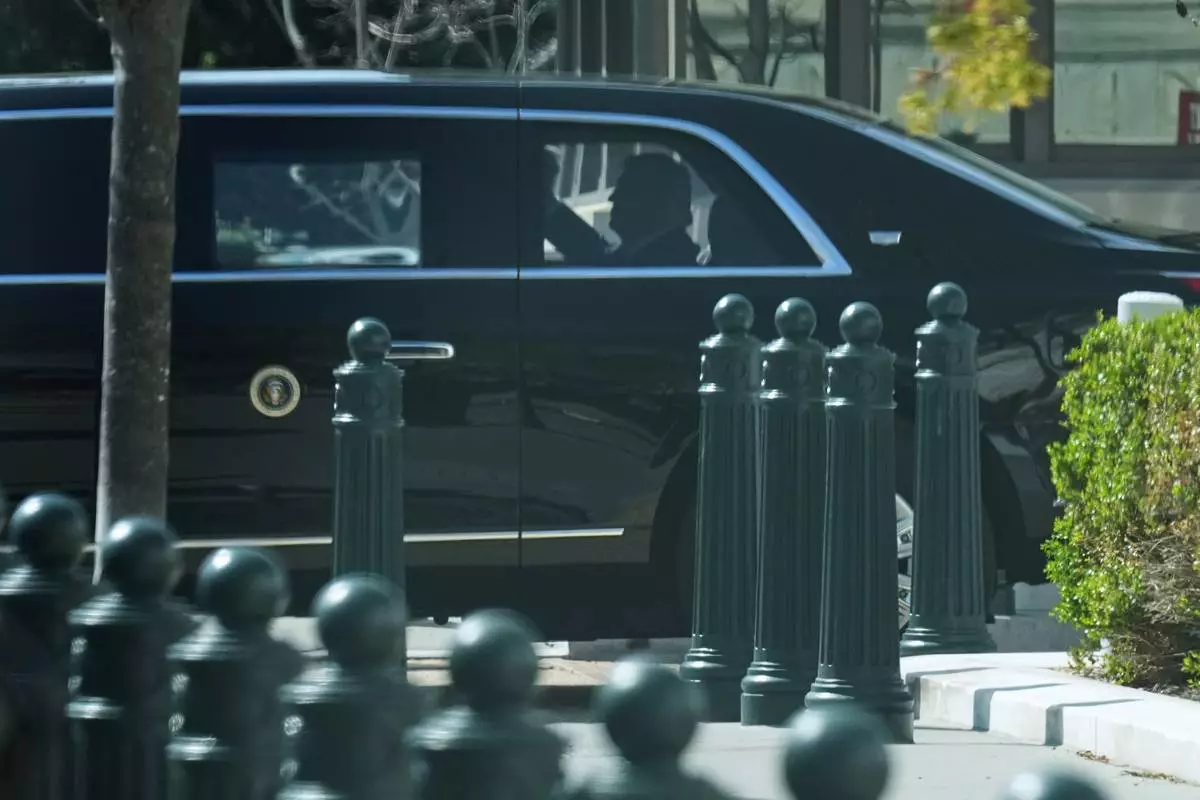
President Donald Trump leaves the U.S. Supreme Court, Wednesday, April 1, 2026, in Washington. (AP Photo/Mark Schiefelbein)
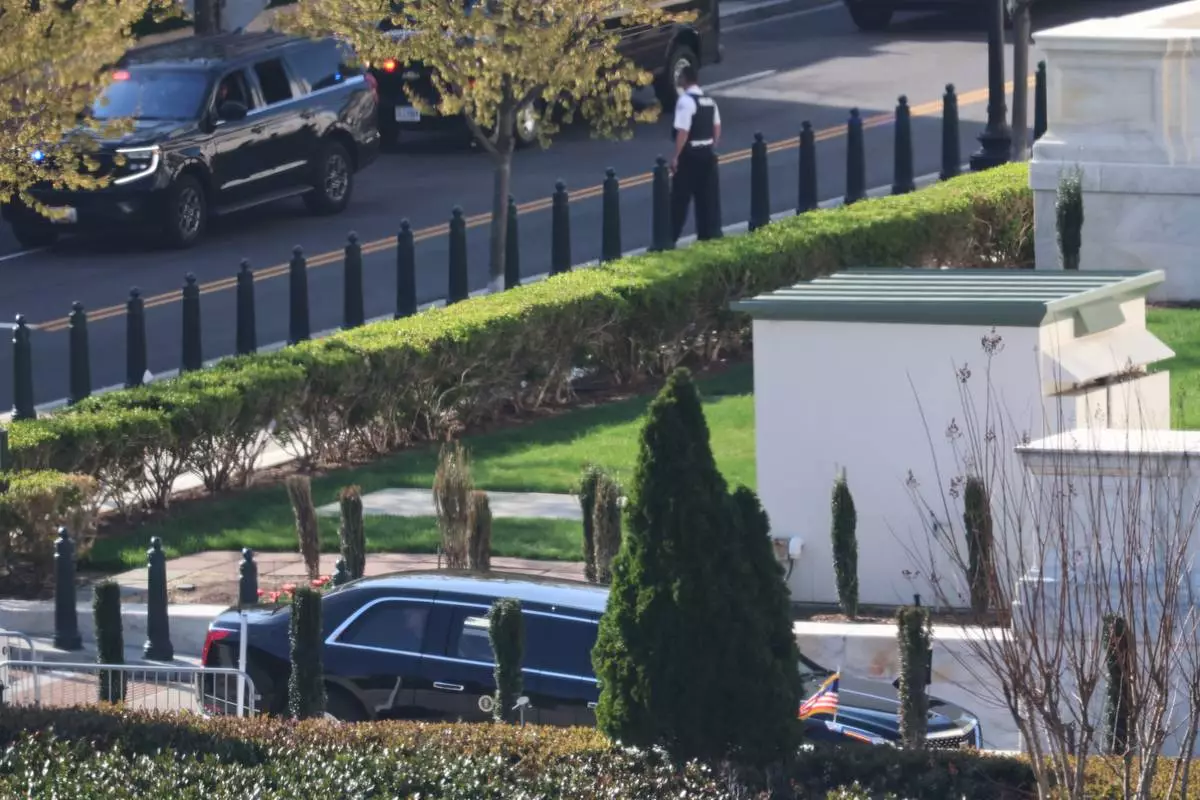
President Donald Trump's motorcade arrives at the U.S. Supreme Court, Wednesday, April 1, 2026, in Washington. (AP Photo/Tom Brenner)
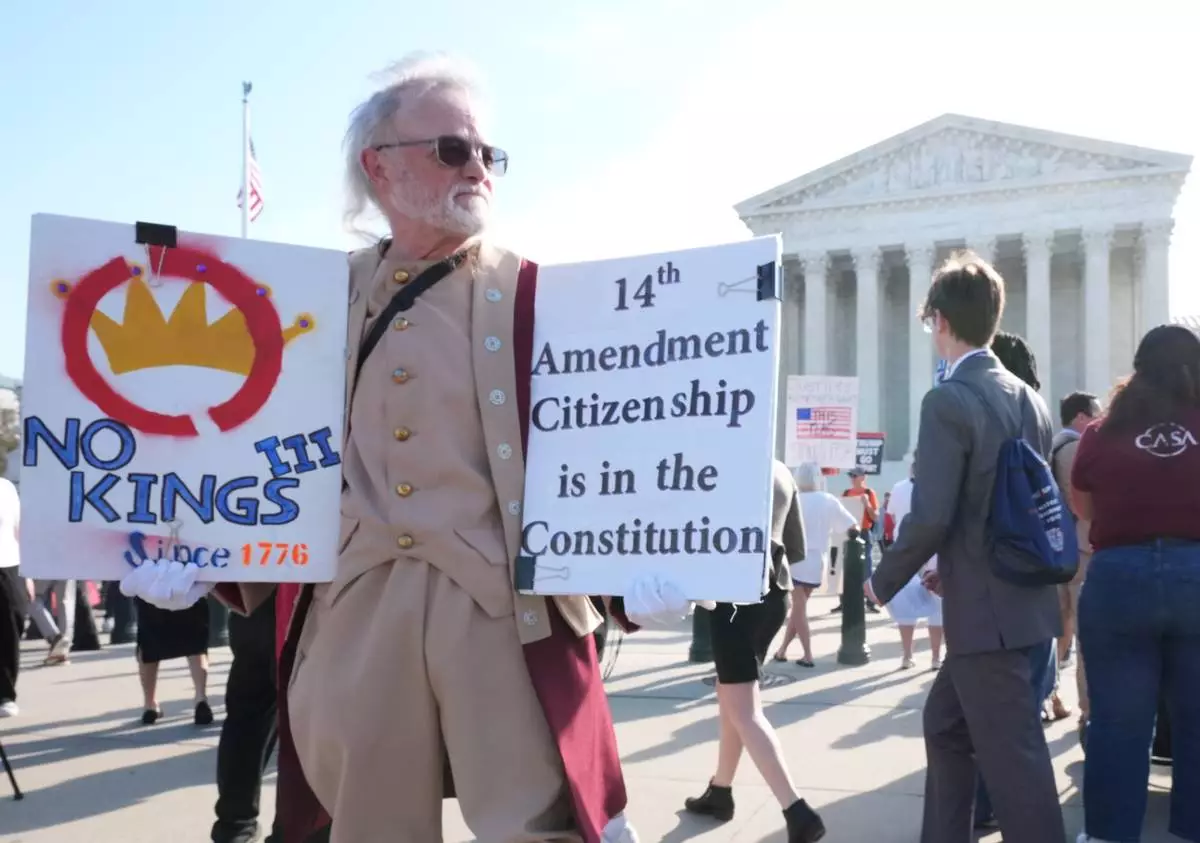
Pro and anti-Trump demonstrators rally outside the U.S. Supreme Court, before justices hear oral arguments on whether President Donald Trump can deny citizenship to children born to parents who are in the United States illegally or temporarily, on Capitol Hill, in Washington, Wednesday, April 1, 2026. (AP Photo/J. Scott Applewhite)
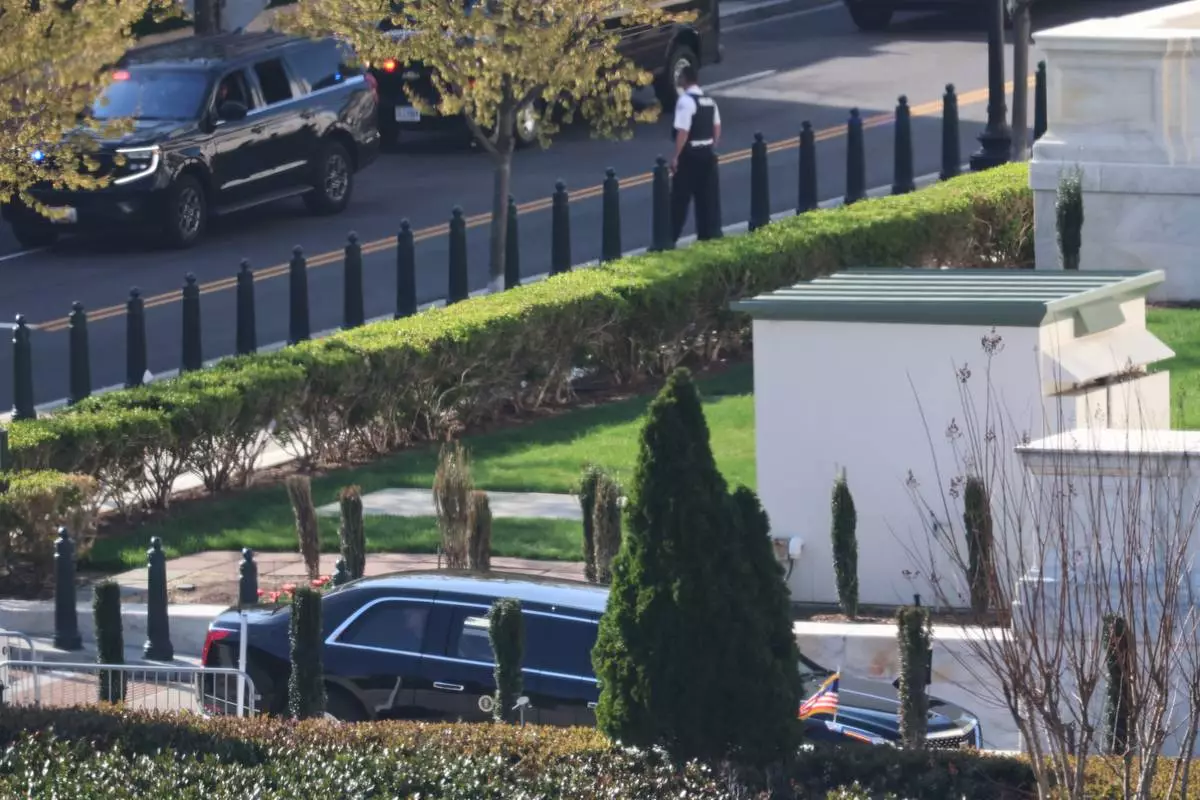
President Donald Trump's motorcade arrives at the U.S. Supreme Court, Wednesday, April 1, 2026, in Washington. (AP Photo/Tom Brenner)
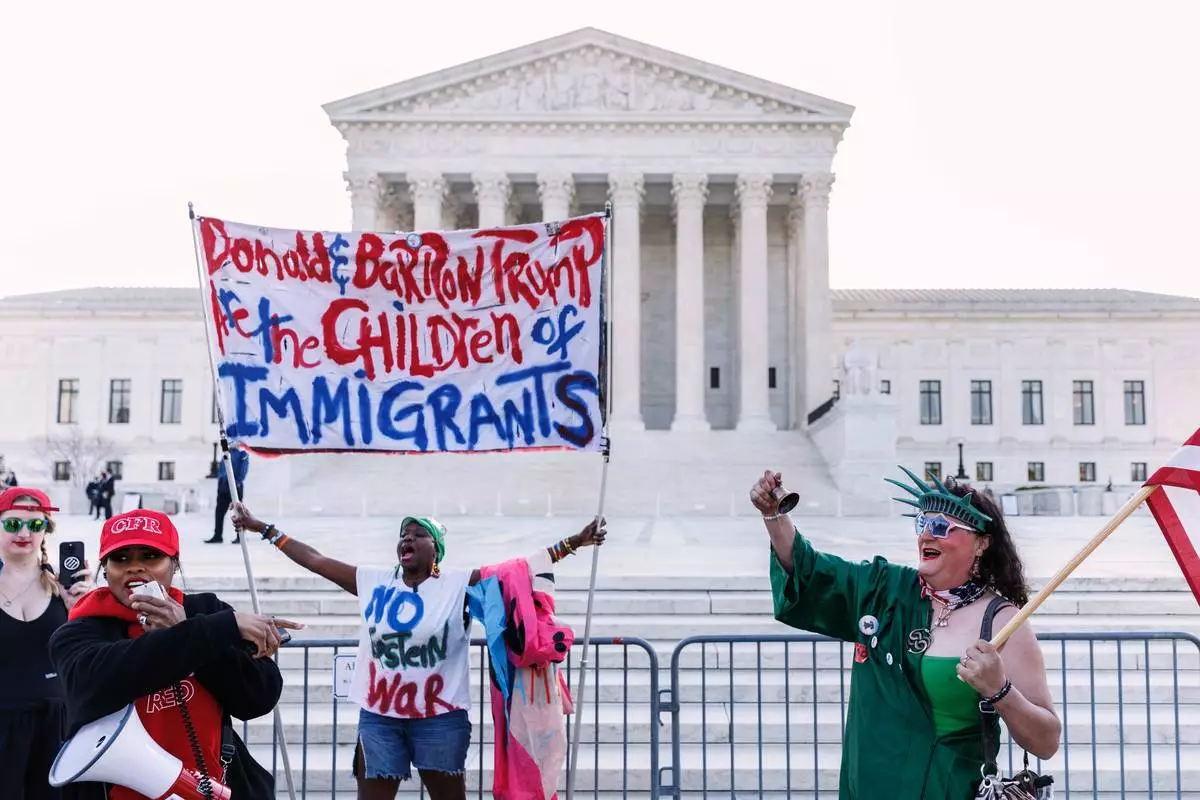
Demonstrators holding opposing views verbally engage ahead of President Donald Trump's arrival at the U.S. Supreme Court, Wednesday, April 1, 2026, in Washington. (AP Photo/Tom Brenner)
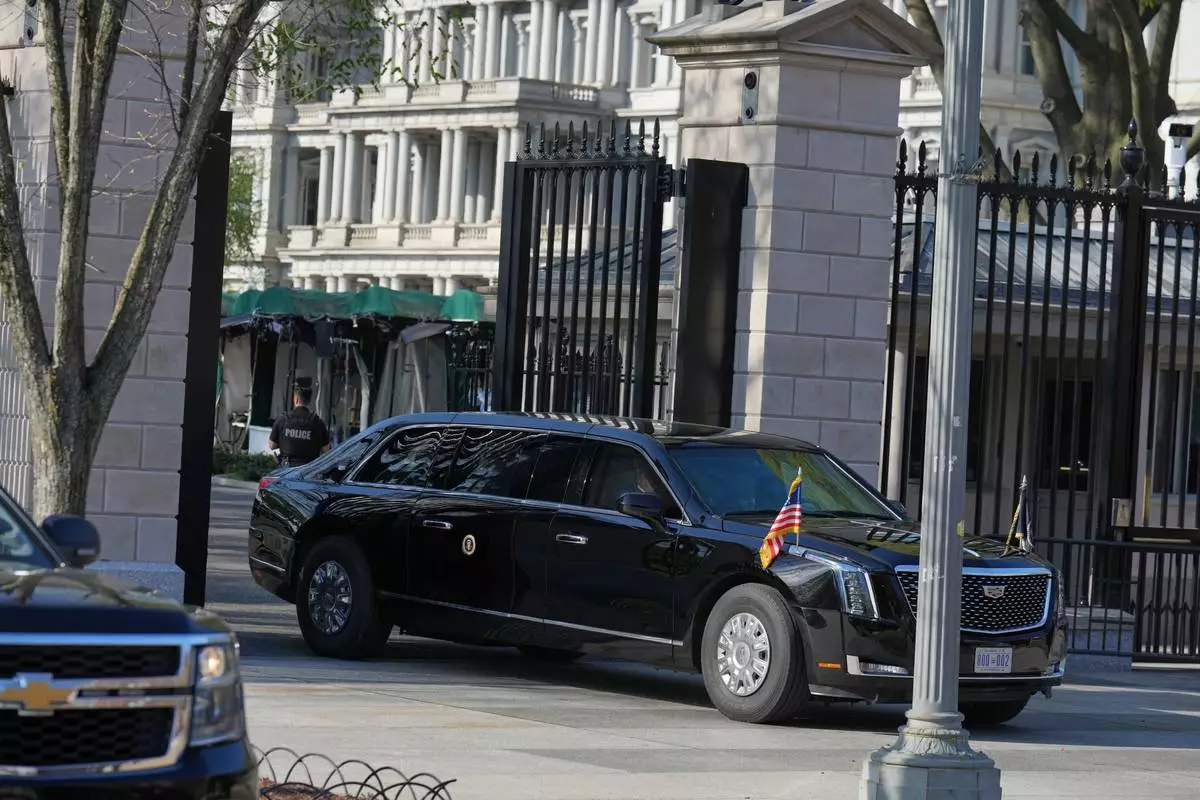
President Donald Trump's limo exits the White House en route to the Supreme Court, Wednesday, April 1, 2026, in Washington. (AP Photo/Mark Schiefelbein)
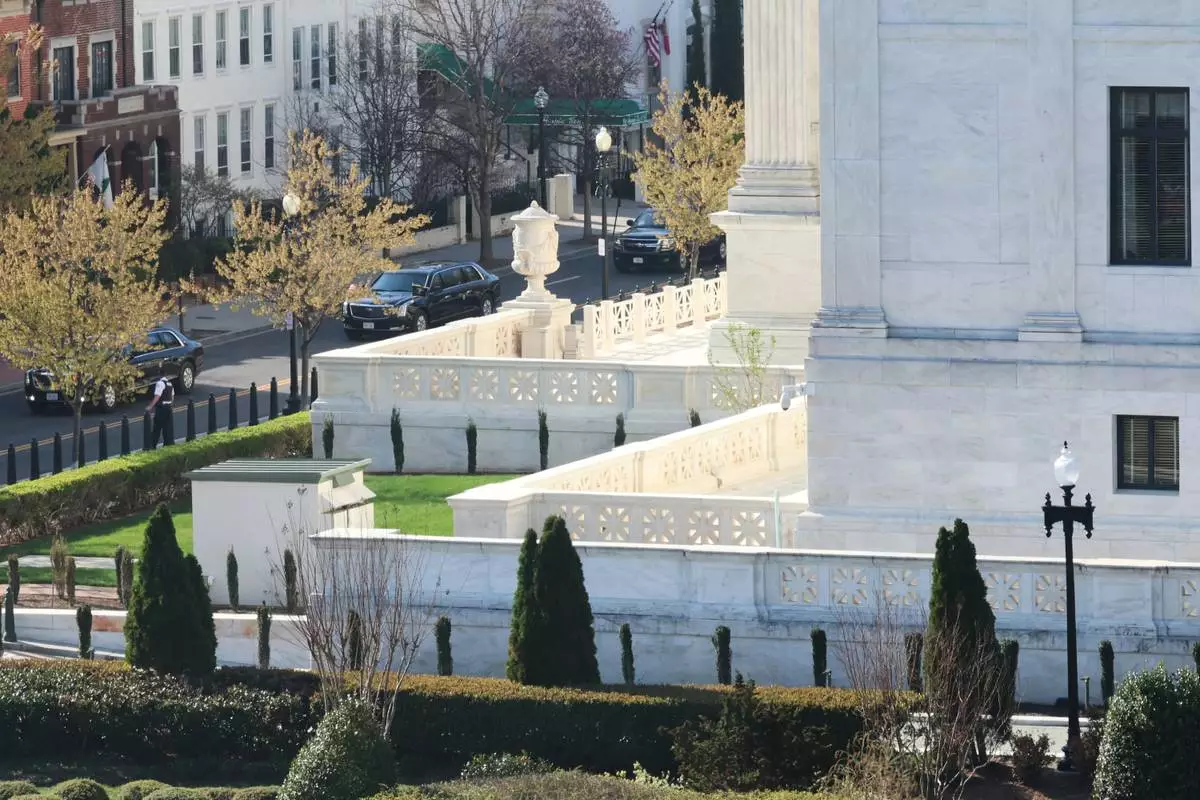
President Donald Trump's motorcade arrives at the U.S. Supreme Court, Wednesday, April 1, 2026, in Washington. (AP Photo/Tom Brenner)

Pro and anti-Trump demonstrators rally outside the U.S. Supreme Court, before justices hear oral arguments on whether President Donald Trump can deny citizenship to children born to parents who are in the United States illegally or temporarily, on Capitol Hill, in Washington, Wednesday, April 1, 2026. (AP Photo/J. Scott Applewhite)
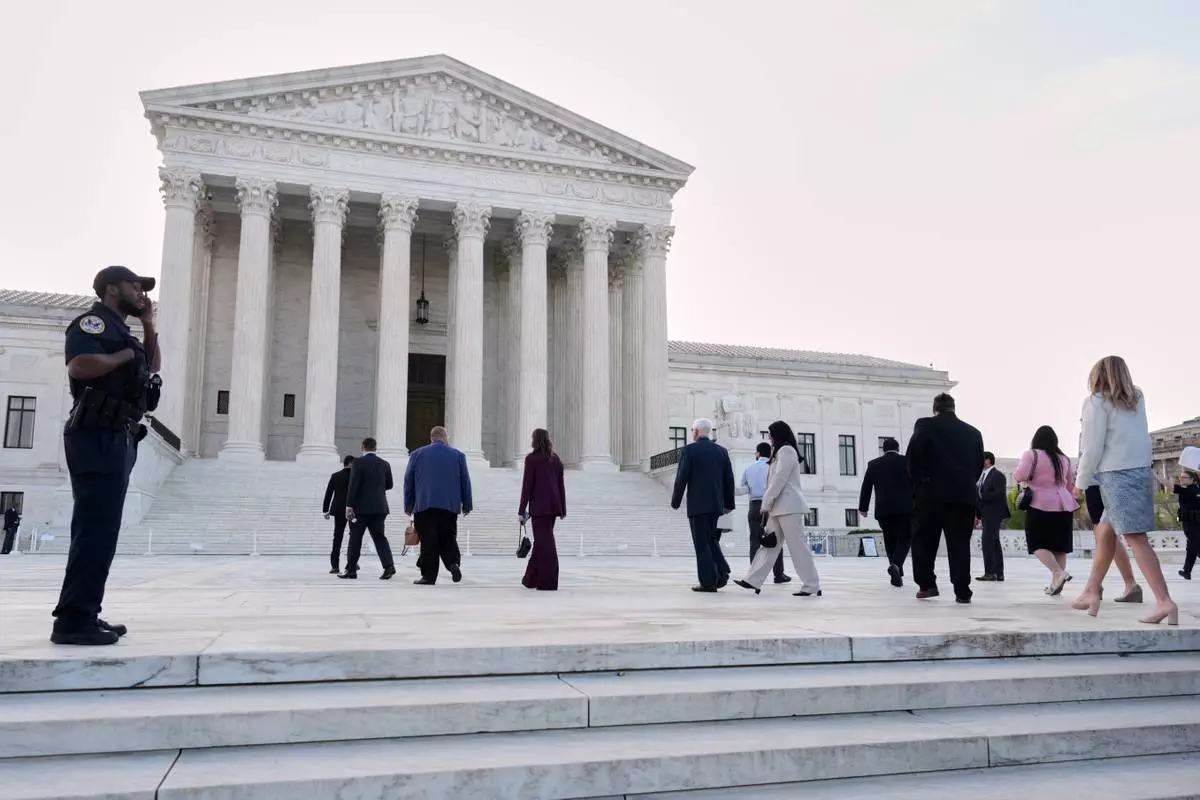
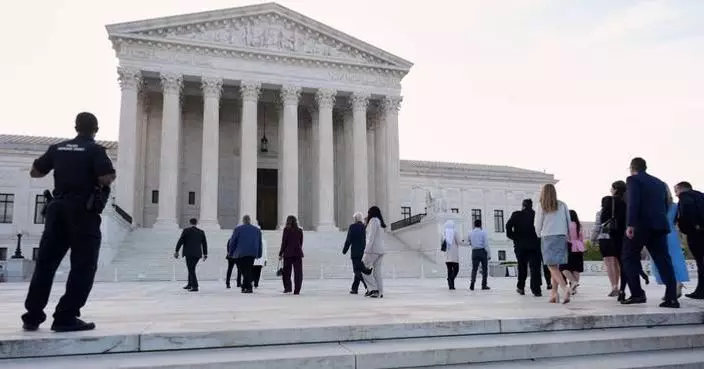
People arrive to walk inside the U.S. Supreme Court, on Capitol Hill in Washington, Wednesday, April 1, 2026. The Supreme Court justices will hear oral arguments today on whether President Donald Trump can deny citizenship to children born to parents who are in the United States illegally or temporarily. (AP Photo/J. Scott Applewhite)
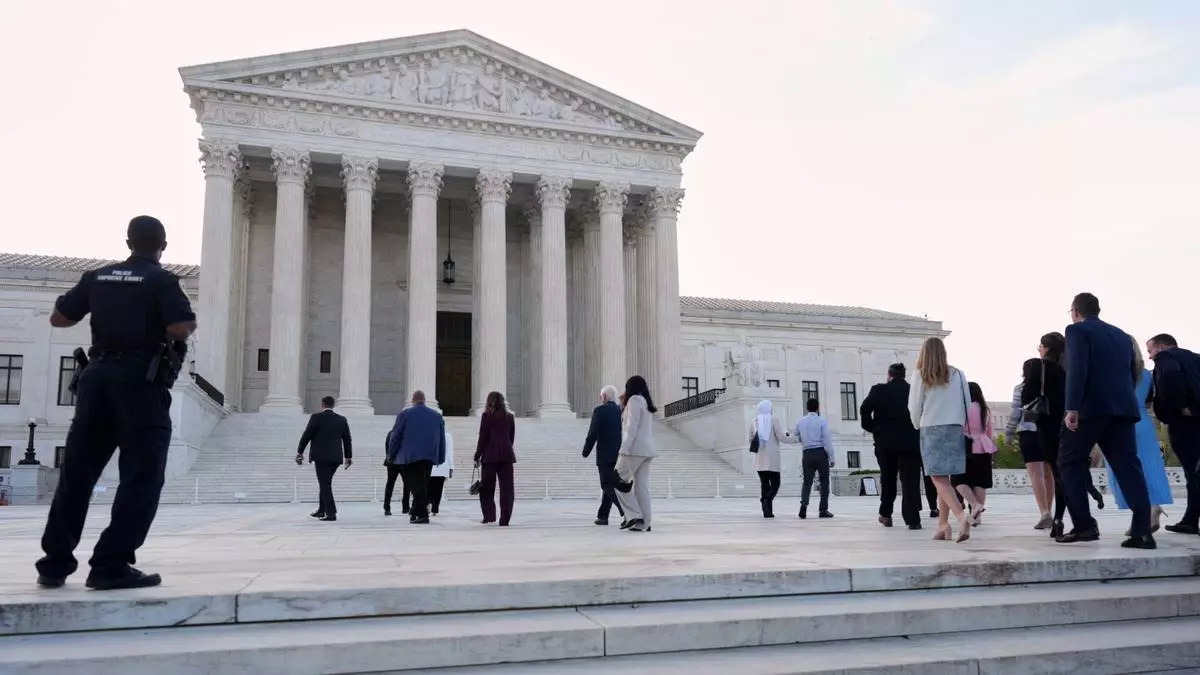
People arrive to walk inside the U.S. Supreme Court, on Capitol Hill in Washington, Wednesday, April 1, 2026. The Supreme Court justices will hear oral arguments today on whether President Donald Trump can deny citizenship to children born to parents who are in the United States illegally or temporarily. (AP Photo/J. Scott Applewhite)
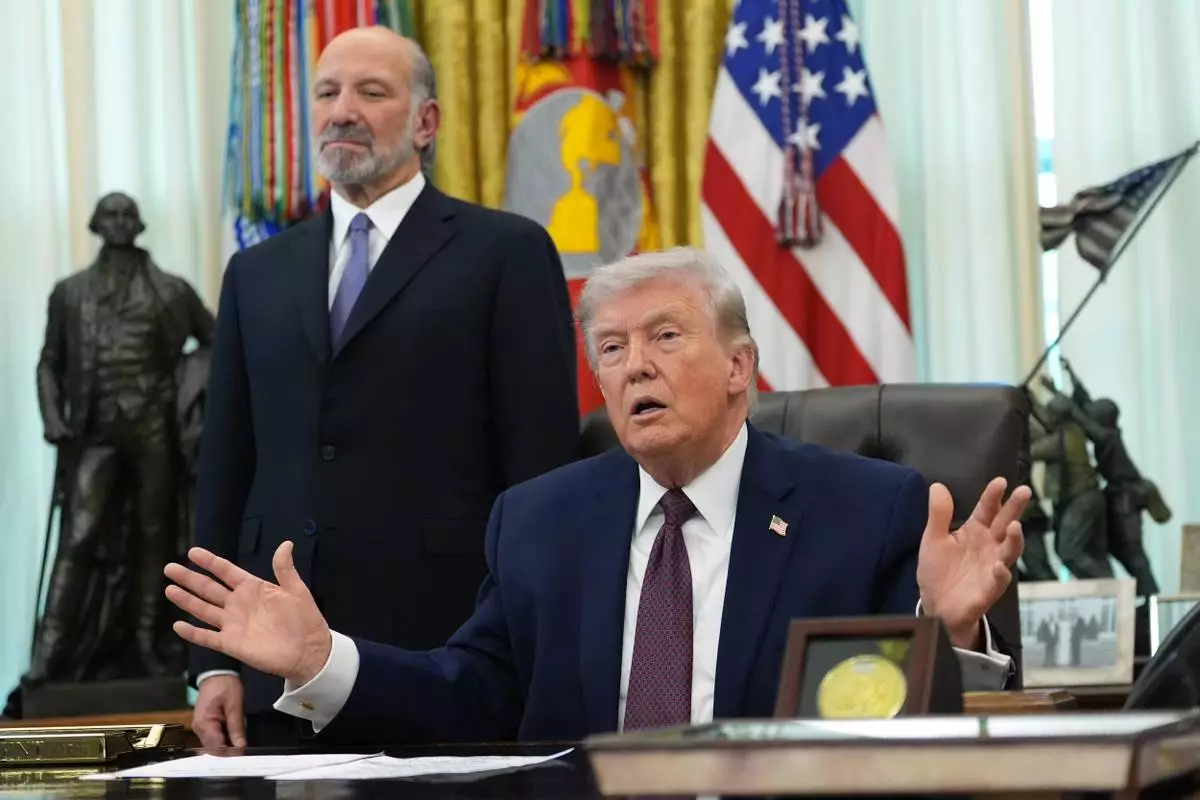
President Donald Trump answers questions from reporters after signing an executive order in the Oval Office of the White House Tuesday, March 31, 2026, in Washington, as Commerce Secretary Howard Lutnick listens. (AP Photo/Alex Brandon)
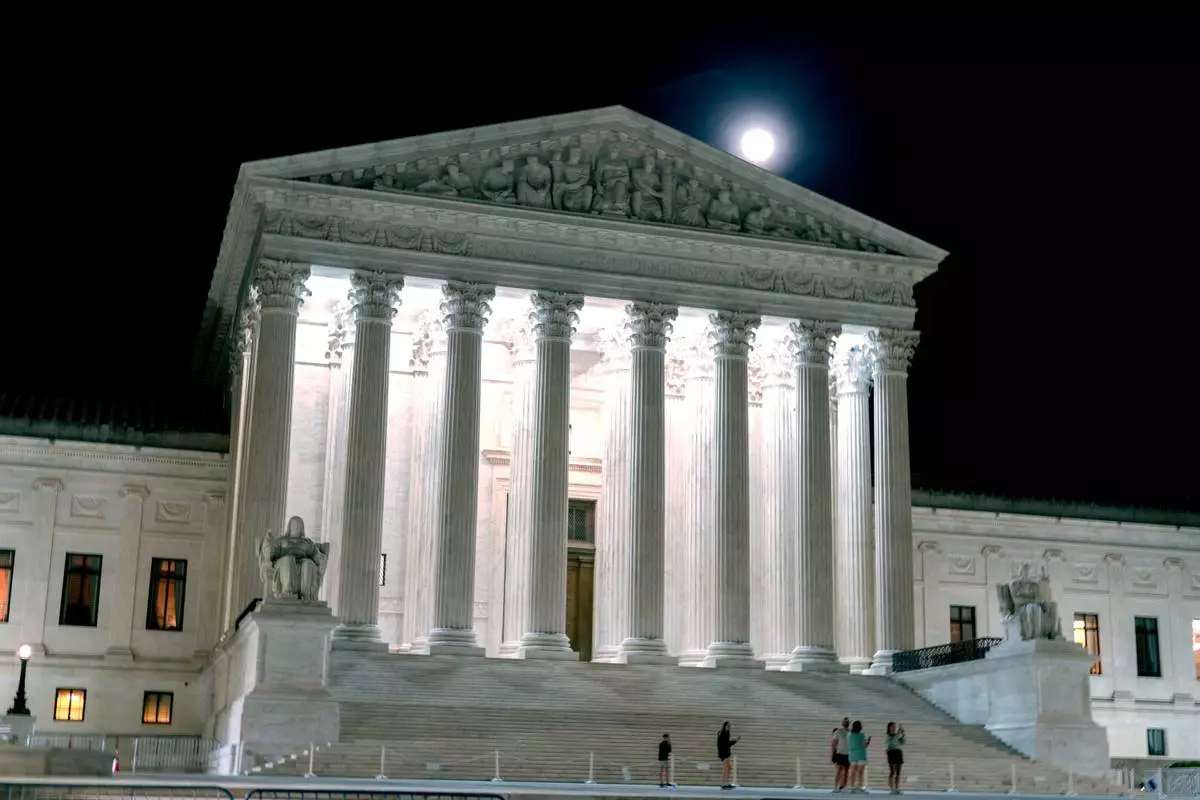
The U.S. Supreme Court is seen as the moon rises Tuesday, March 31, 2026, in Washington. (AP Photo/Jose Luis Magana)