Skip to Content Facebook Feature Image

The International Space Station marks 25 years of nonstop human presence in orbit

News

The International Space Station marks 25 years of nonstop human presence in orbit
News

News

The International Space Station marks 25 years of nonstop human presence in orbit

2025-10-30 21:13 Last Updated At:22:51

CAPE CANAVERAL, Fla. (AP) — It’s an unprecedented space streak: 25 years of people living off-planet without even a moment’s pause.

The International Space Station marks a quarter-century of continuous occupancy this weekend, boasting a guest list of nearly 300 — mostly professional astronauts but also the occasional space tourist and movie director. The first full-time residents opened the hatch on Nov. 2, 2000.

More Images
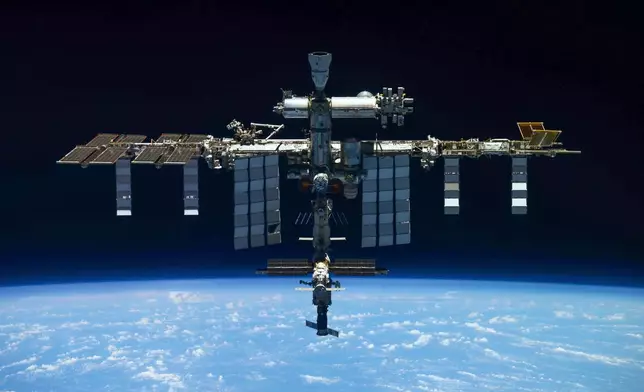
FILE - This photo provided by Roscosmos shows the International Space Station from a Russian Soyuz MS-19 spaceship after undocking on March 30, 2022. (Roscosmos State Space Corporation via AP, File)
FILE - This photo provided by Roscosmos shows the International Space Station from a Russian Soyuz MS-19 spaceship after undocking on March 30, 2022. (Roscosmos State Space Corporation via AP, File)

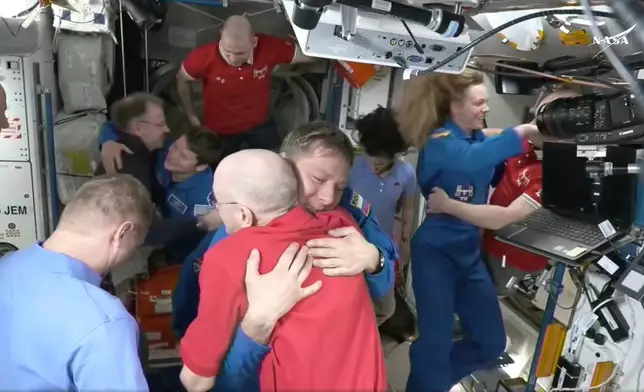
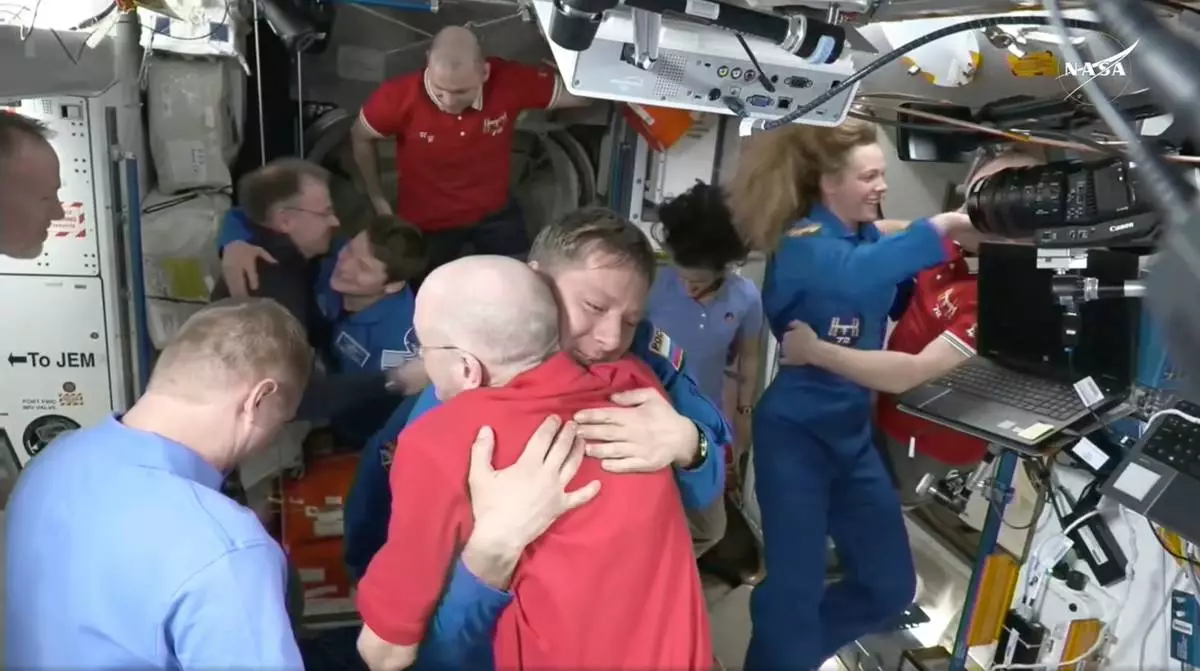
FILE - In this image from video provided by NASA, astronaut Don Pettit, bottom center, hugs Kirill Peskov as astronauts greet each other after a SpaceX capsule docked with the International Space Station, Sunday, March 16, 2025. (NASA via AP, File)
FILE - In this image from video provided by NASA, astronaut Don Pettit, bottom center, hugs Kirill Peskov as astronauts greet each other after a SpaceX capsule docked with the International Space Station, Sunday, March 16, 2025. (NASA via AP, File)

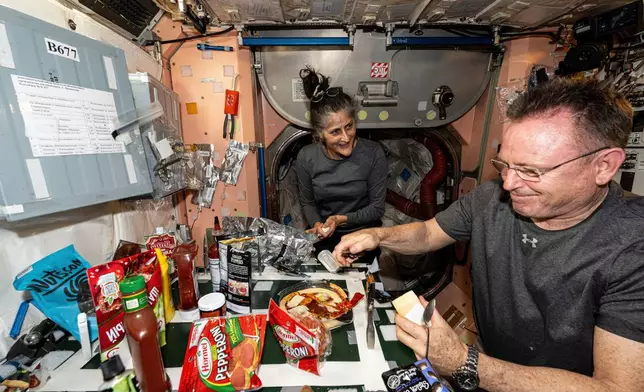
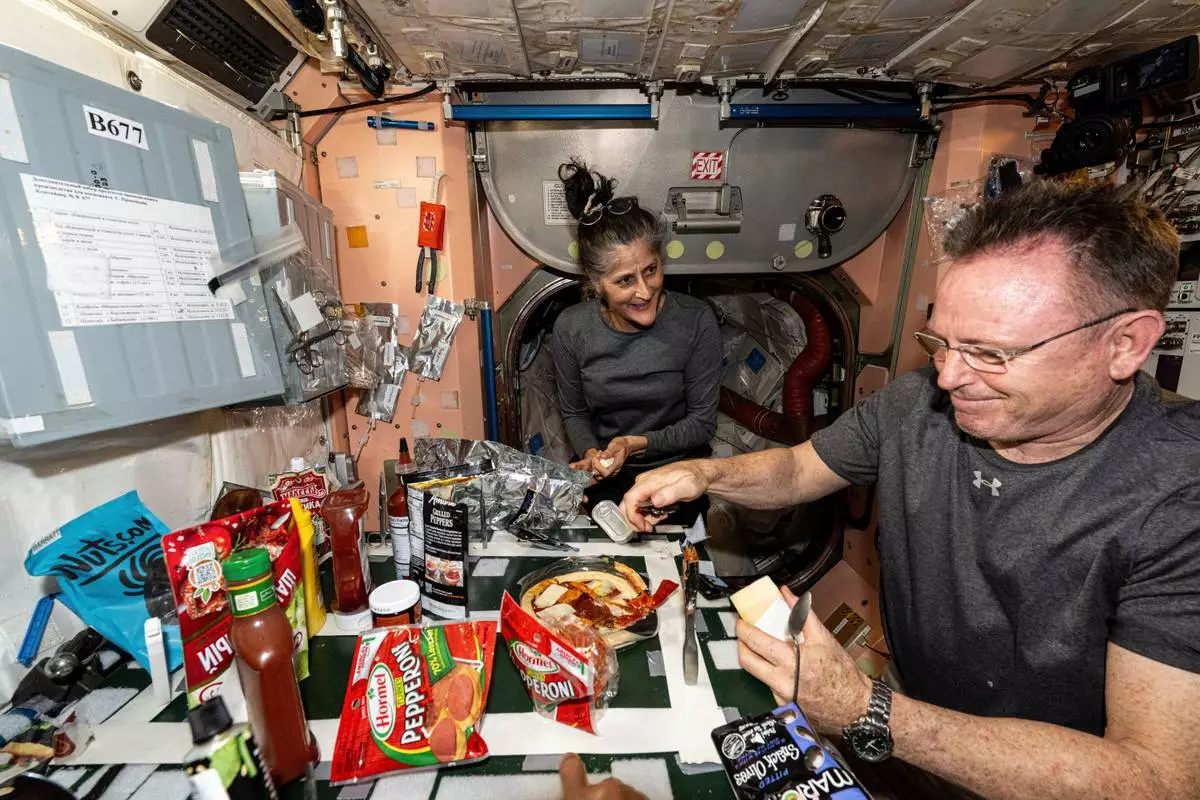
FILE - In this photo provided by NASA, astronauts Suni Williams and Butch Wilmore, both Expedition 71 flight engineers, make pizza aboard the International Space Station's galley located inside the Unity module on Sept. 9, 2024. Items are attached to the galley using tape and velcro to keep them from flying away in the microgravity environment. (NASA via AP, File)
FILE - In this photo provided by NASA, astronauts Suni Williams and Butch Wilmore, both Expedition 71 flight engineers, make pizza aboard the International Space Station's galley located inside the Unity module on Sept. 9, 2024. Items are attached to the galley using tape and velcro to keep them from flying away in the microgravity environment. (NASA via AP, File)

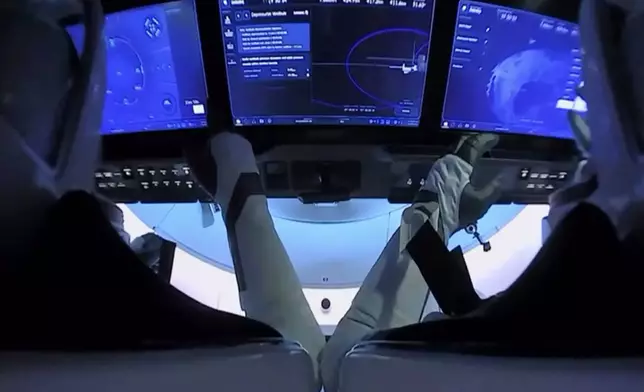
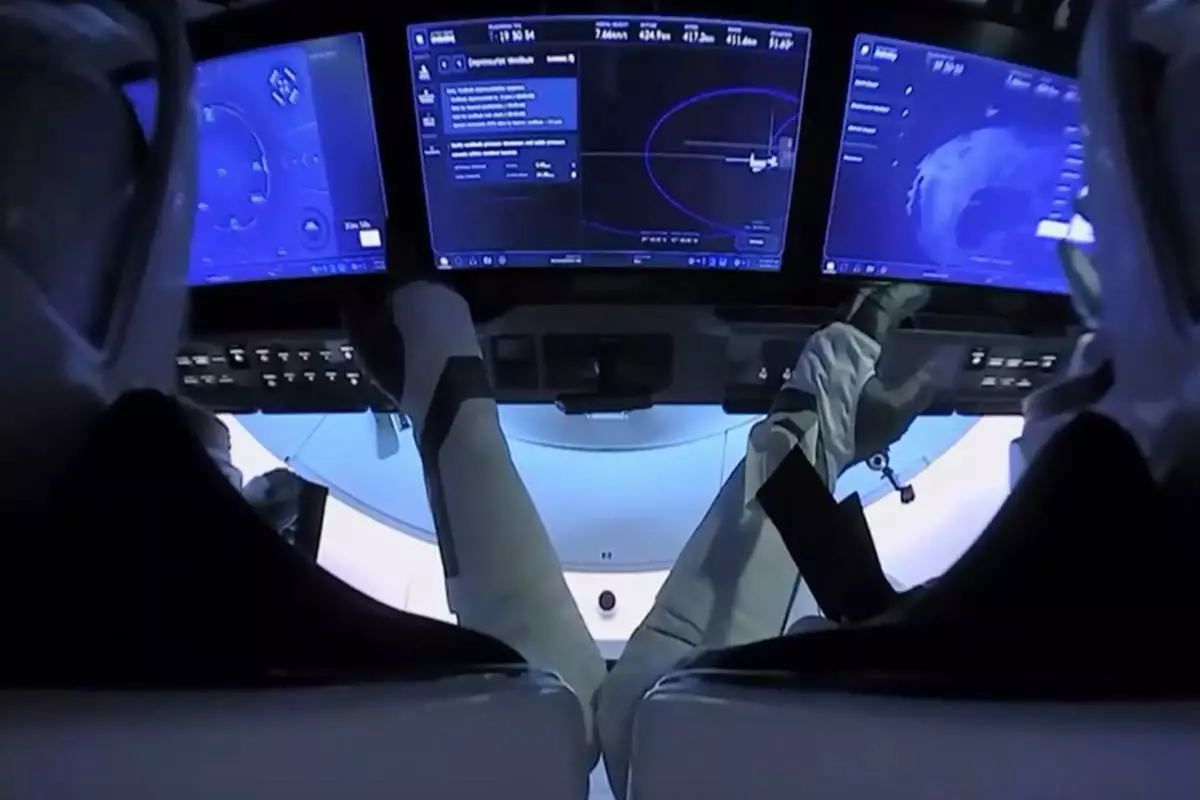
FILE - In this image from video provided by NASA, astronauts Doug Hurley, left, and Bob Behnken prepare for undocking from the International Space Station, aboard the SpaceX Crew Dragon capsule on Saturday, Aug. 1, 2020. (NASA via AP, File)
FILE - In this image from video provided by NASA, astronauts Doug Hurley, left, and Bob Behnken prepare for undocking from the International Space Station, aboard the SpaceX Crew Dragon capsule on Saturday, Aug. 1, 2020. (NASA via AP, File)

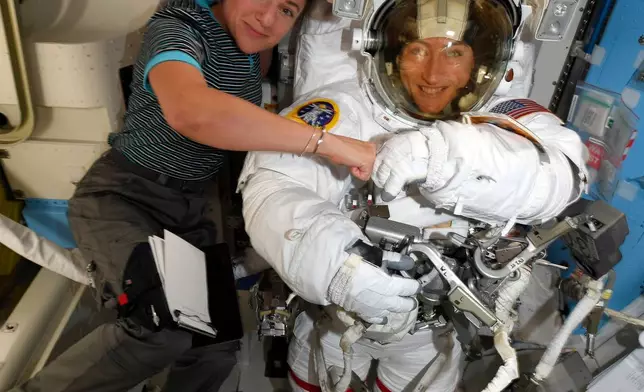
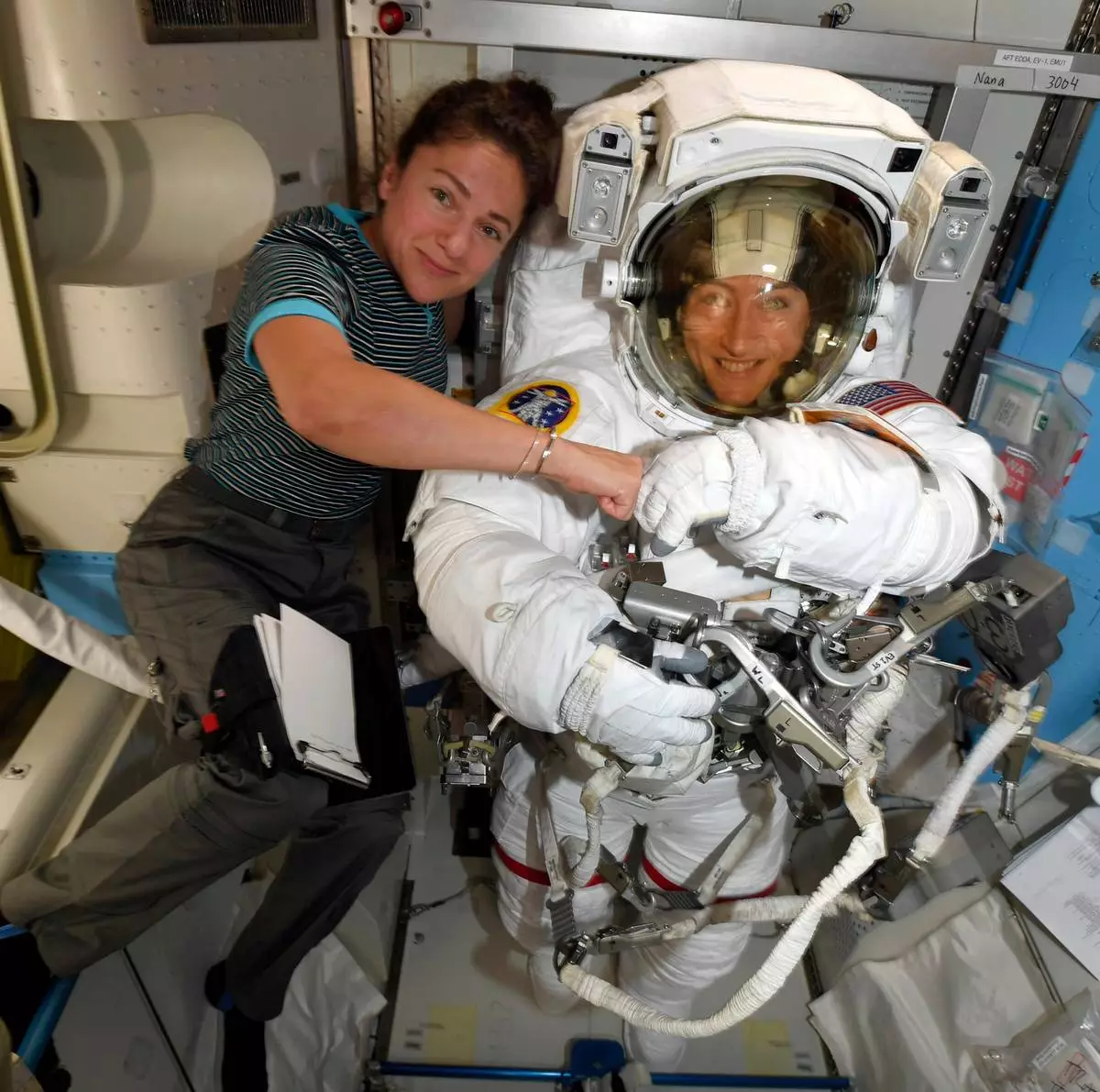
In this photo provided by NASA on Friday, Oct. 4, 2019, astronauts Christina Koch, right, and, Jessica Meir pose for a photo on the International Space Station. (NASA via AP)
In this photo provided by NASA on Friday, Oct. 4, 2019, astronauts Christina Koch, right, and, Jessica Meir pose for a photo on the International Space Station. (NASA via AP)

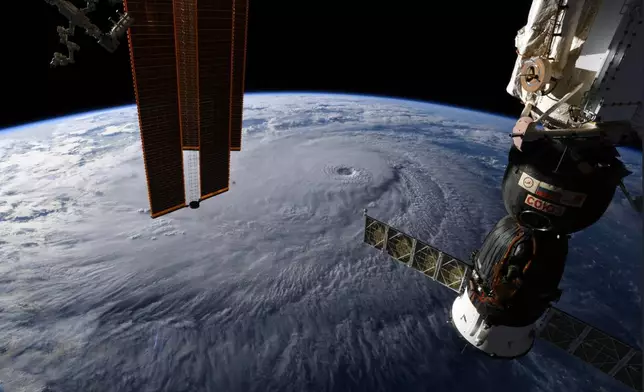
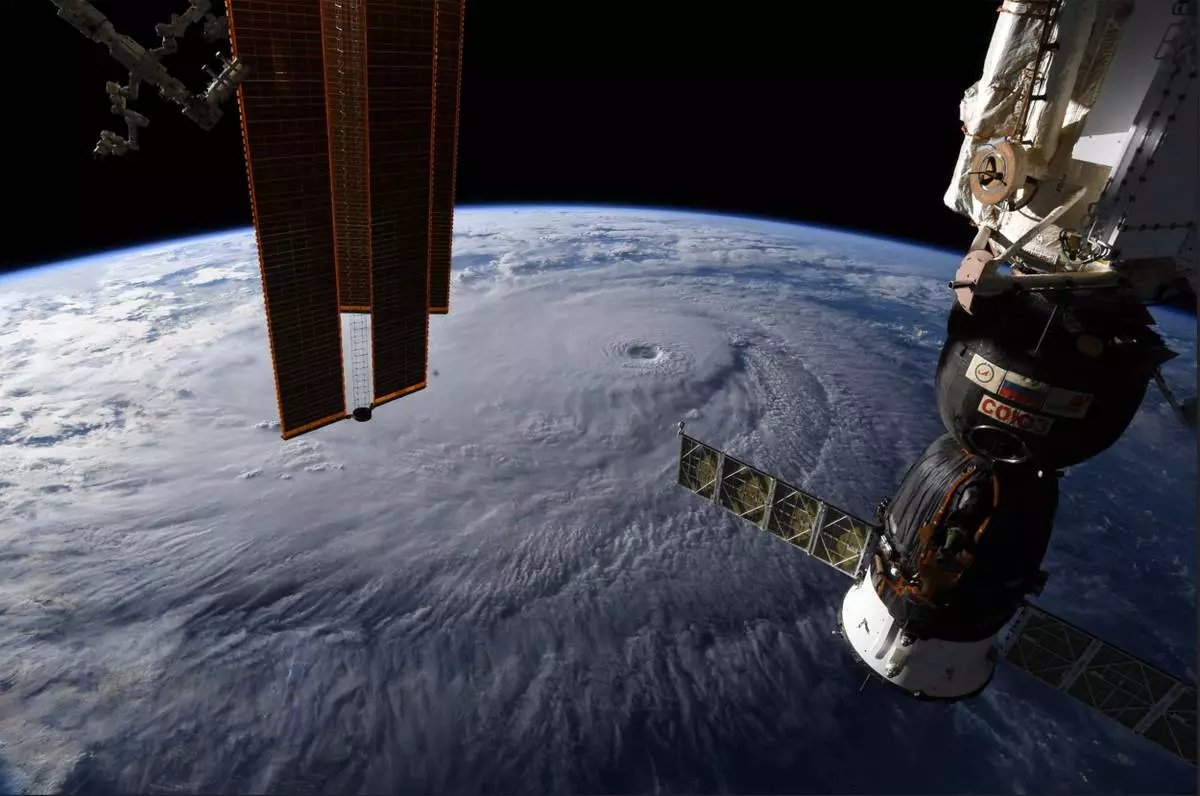
FILE - This image provided by NASA on Wednesday, Aug. 22, 2018 shows Hurricane Lane as seen from the International Space Station. (NASA via AP, File)
FILE - This image provided by NASA on Wednesday, Aug. 22, 2018 shows Hurricane Lane as seen from the International Space Station. (NASA via AP, File)

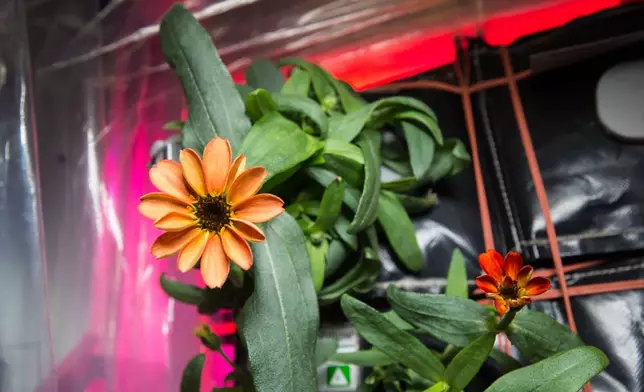
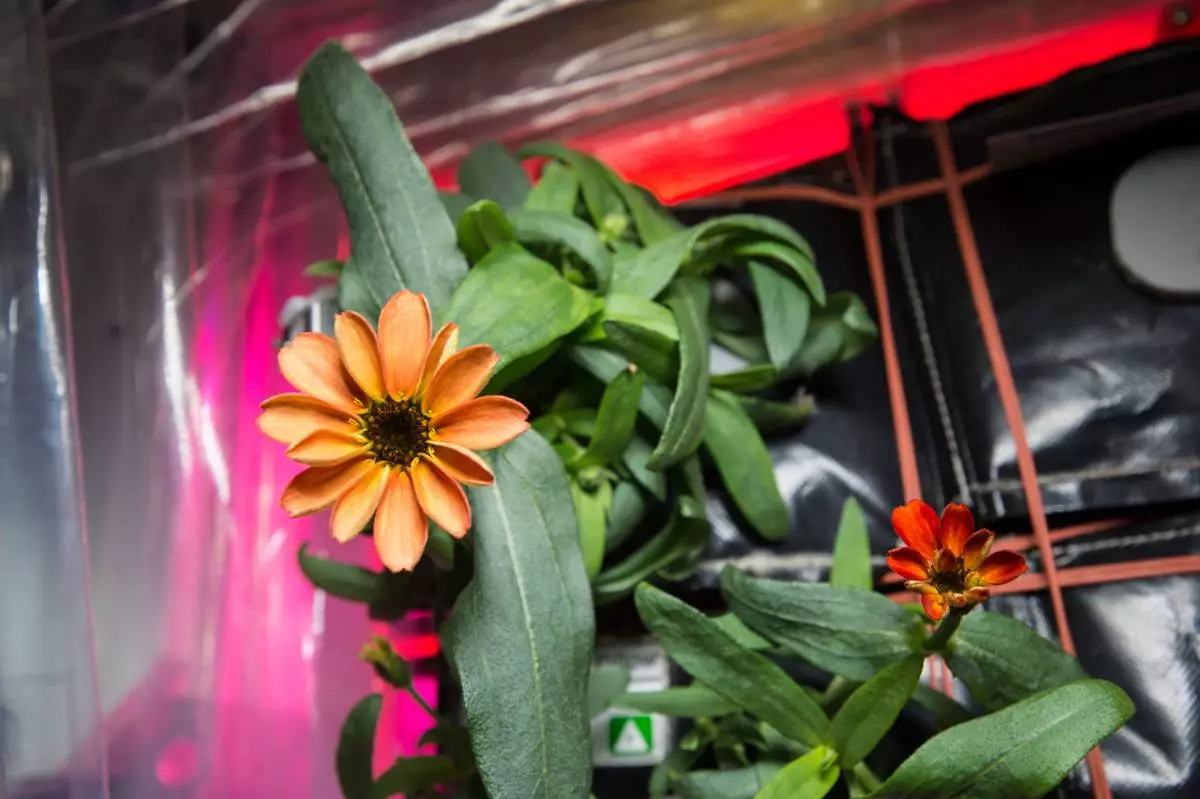
FILE - This Jan. 16, 2016 photo provided by NASA shows a blooming zinnia flower grown aboard the International Space Station. (Scott Kelly/NASA via AP, File)
FILE - This Jan. 16, 2016 photo provided by NASA shows a blooming zinnia flower grown aboard the International Space Station. (Scott Kelly/NASA via AP, File)

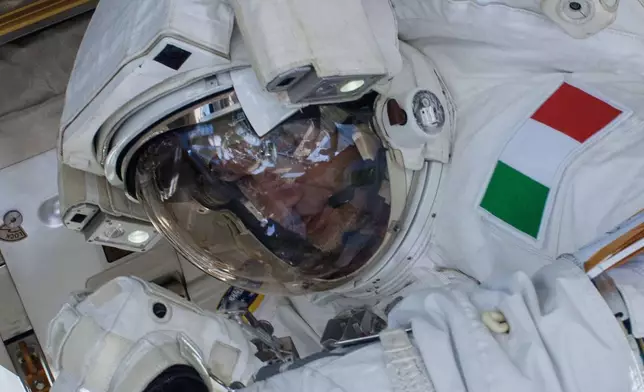
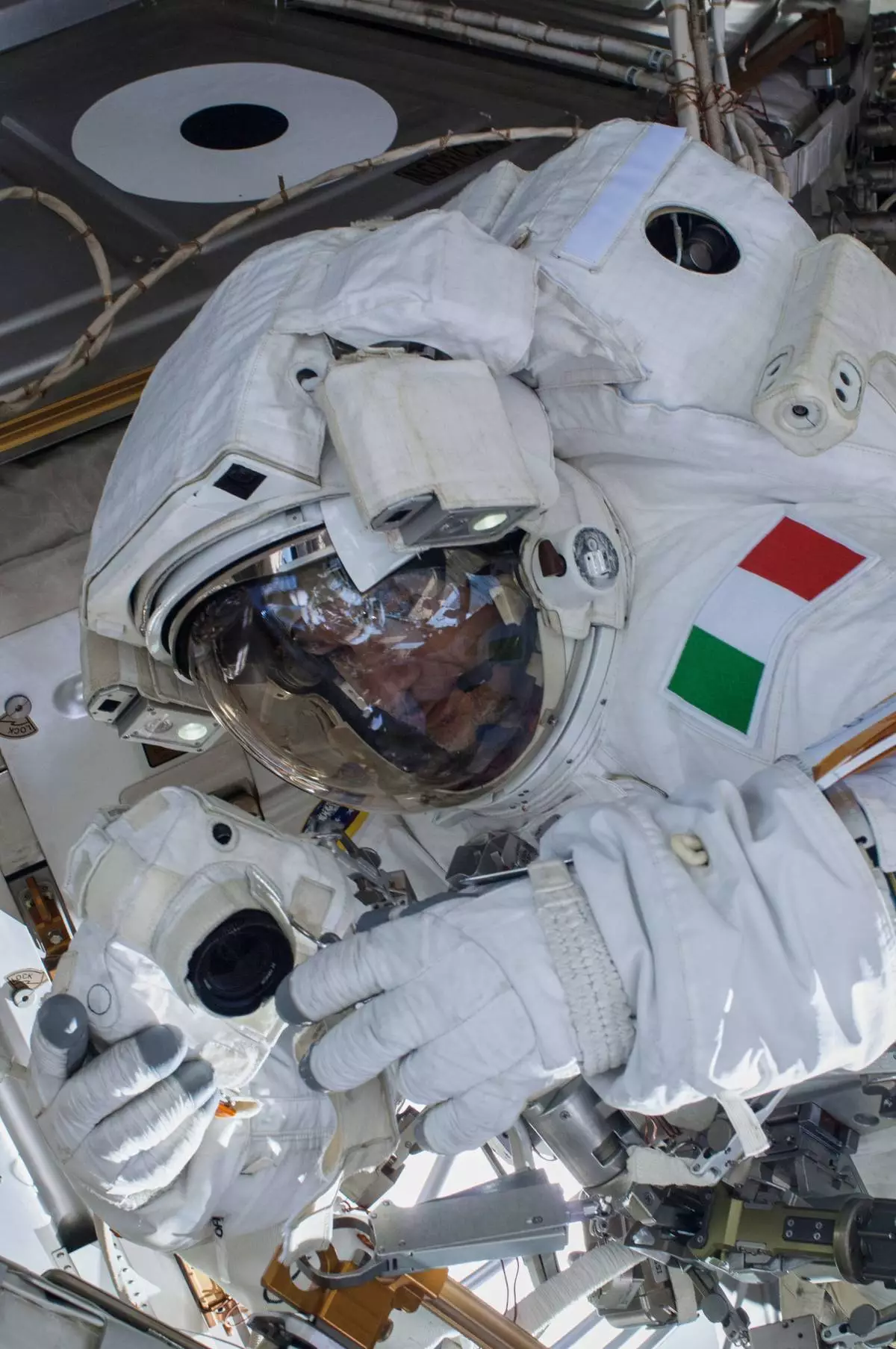
In this photo provided by NASA, European Space Agency astronaut Luca Parmitano, Expedition 36 flight engineer, participates in a spacewalk outside the International Space Station on July 16, 2013, before he reported water floating behind his head inside his helmet. (NASA via AP)
In this photo provided by NASA, European Space Agency astronaut Luca Parmitano, Expedition 36 flight engineer, participates in a spacewalk outside the International Space Station on July 16, 2013, before he reported water floating behind his head inside his helmet. (NASA via AP)

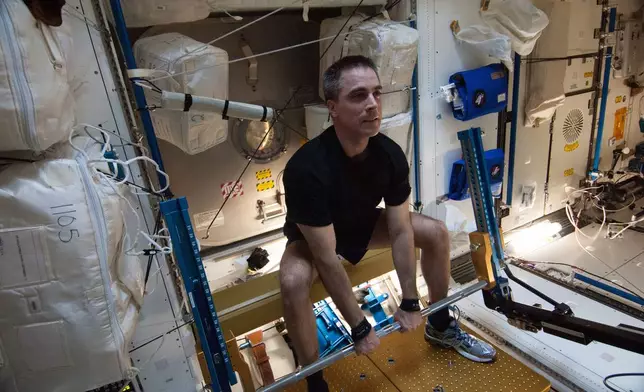
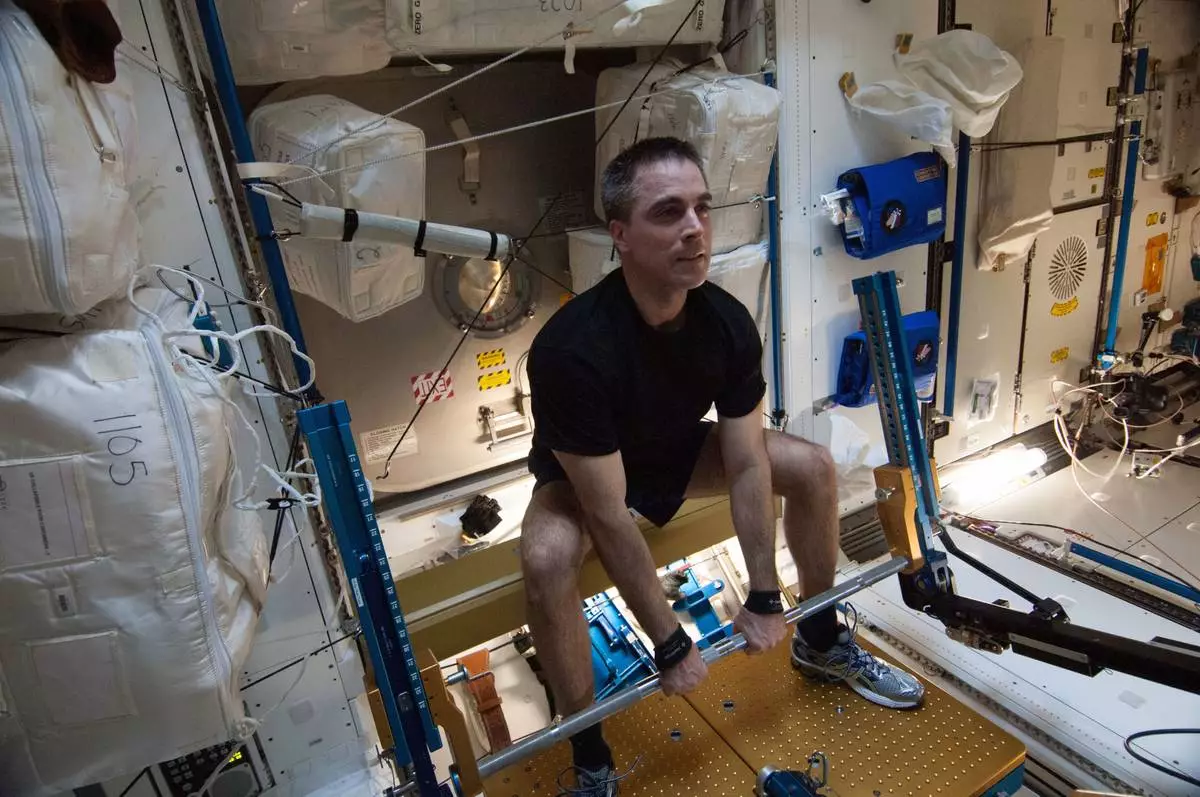
FILE - In this photo made available by NASA, astronaut Chris Cassidy, Expedition 36 flight engineer, exercises on the advanced Resistive Exercise Device (aRED) in the Tranquility node of the International Space Station on Aug. 31, 2013. (NASA via AP, File)
FILE - In this photo made available by NASA, astronaut Chris Cassidy, Expedition 36 flight engineer, exercises on the advanced Resistive Exercise Device (aRED) in the Tranquility node of the International Space Station on Aug. 31, 2013. (NASA via AP, File)

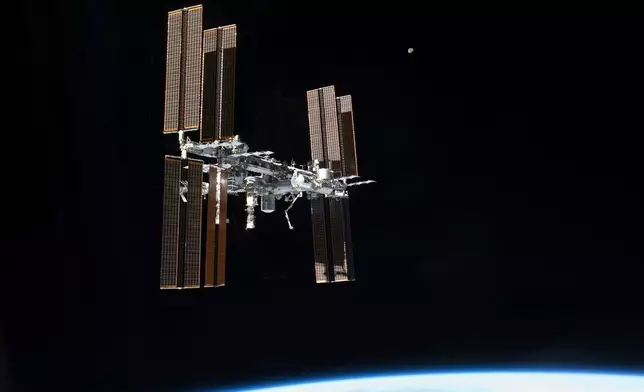
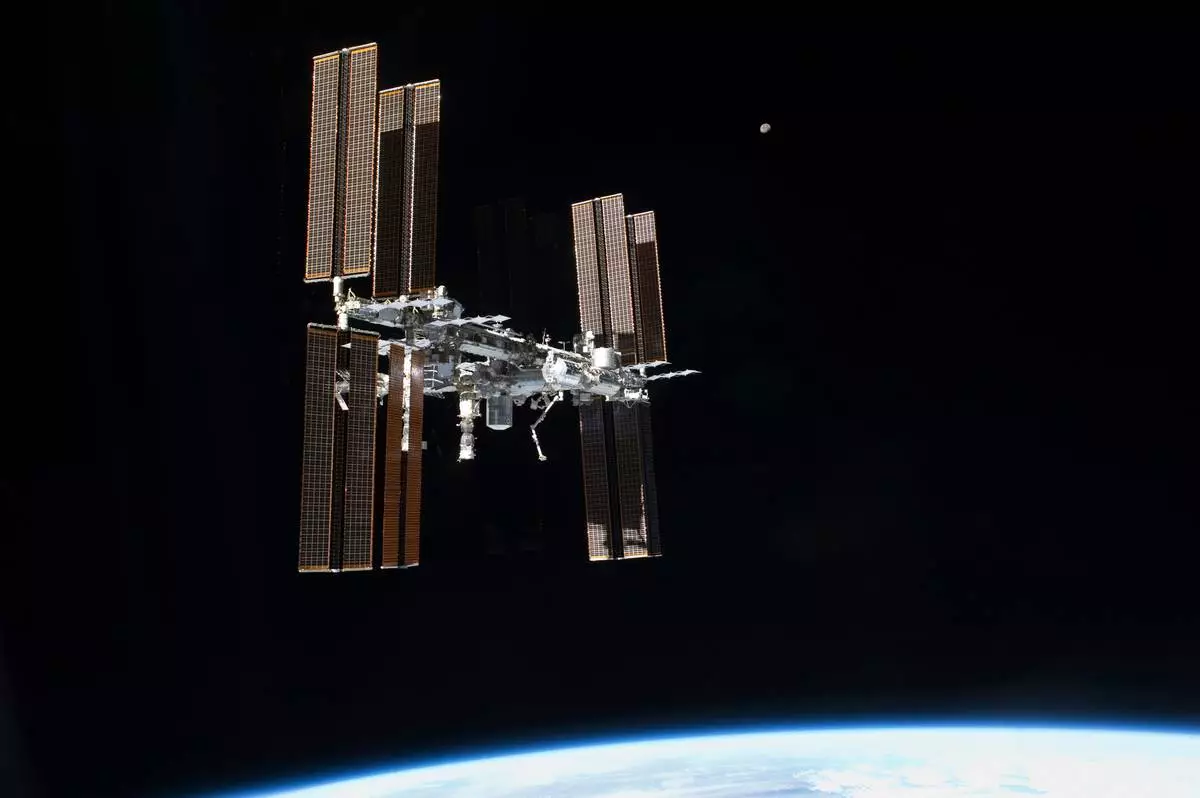
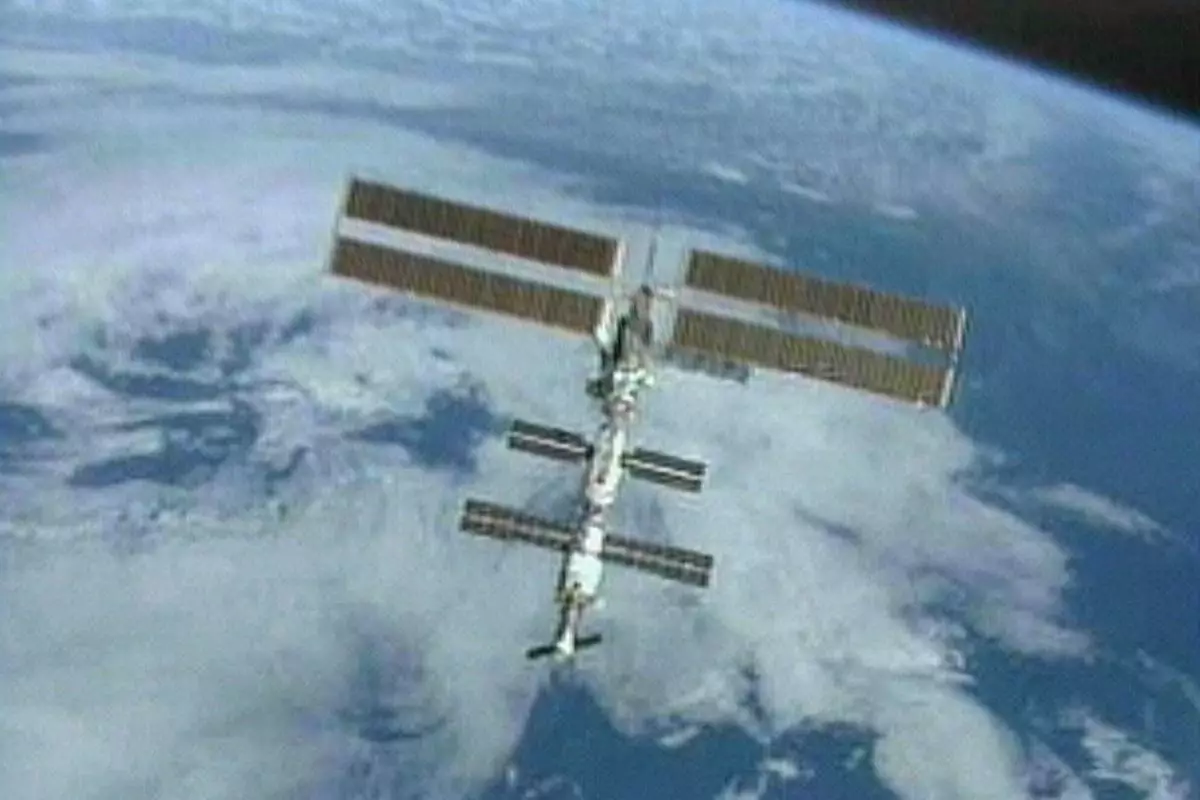
FILE - The International Space Station is seen from the space shuttle Atlantis on July 19, 2011, after it left the orbiting complex. (NASA via AP, File)
FILE - The International Space Station is seen from the space shuttle Atlantis on July 19, 2011, after it left the orbiting complex. (NASA via AP, File)

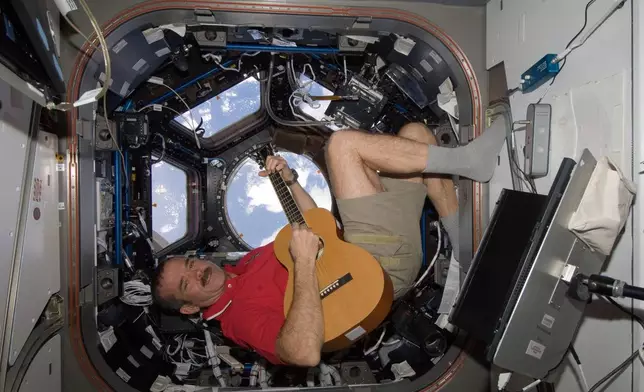
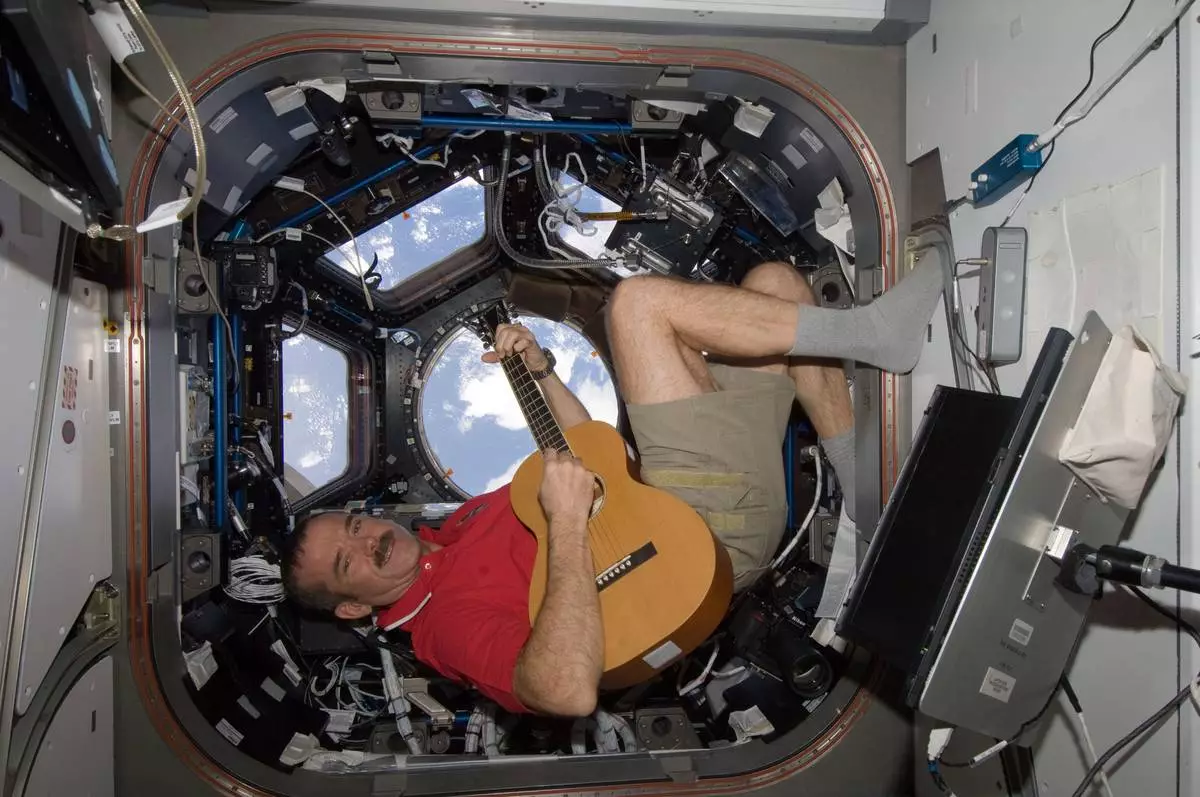
In this photo provided by NASA, Canadian astronaut Chris Hadfield plays guitar in the cupola module of the International Space Station on Dec. 25, 2012. (NASA via AP)
In this photo provided by NASA, Canadian astronaut Chris Hadfield plays guitar in the cupola module of the International Space Station on Dec. 25, 2012. (NASA via AP)

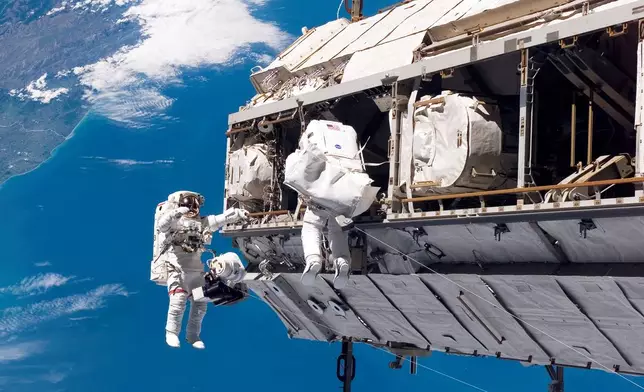
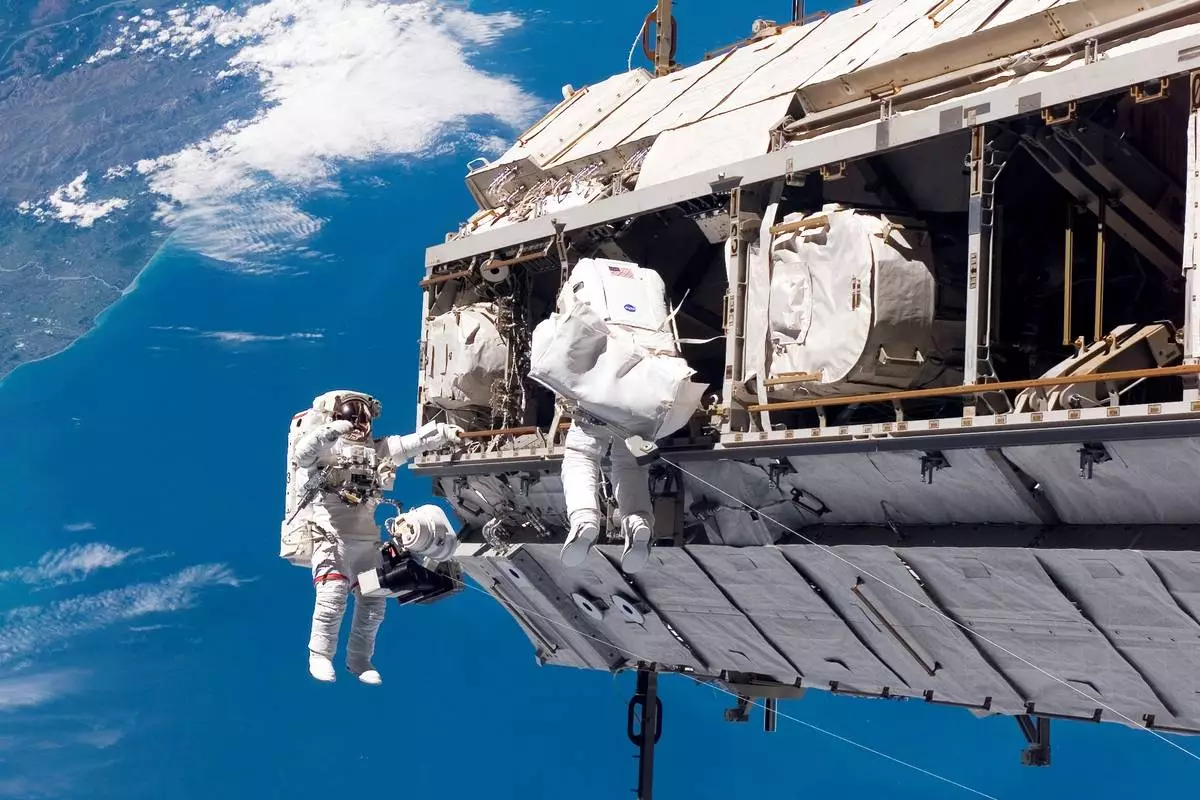
FILE - In this photo provided by NASA, astronaut Robert L. Curbeam Jr., left, and European Space Agency astronaut Christer Fuglesang, participate in a spacewalk during construction of the International Space Station on Dec. 12, 2006. In the background are New Zealand and the Pacific Ocean. (NASA via AP, File)
FILE - In this photo provided by NASA, astronaut Robert L. Curbeam Jr., left, and European Space Agency astronaut Christer Fuglesang, participate in a spacewalk during construction of the International Space Station on Dec. 12, 2006. In the background are New Zealand and the Pacific Ocean. (NASA via AP, File)

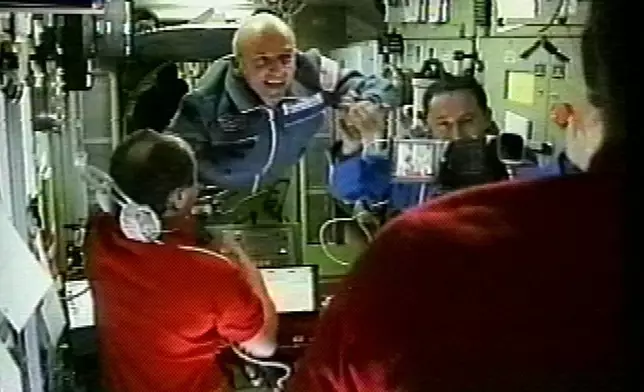
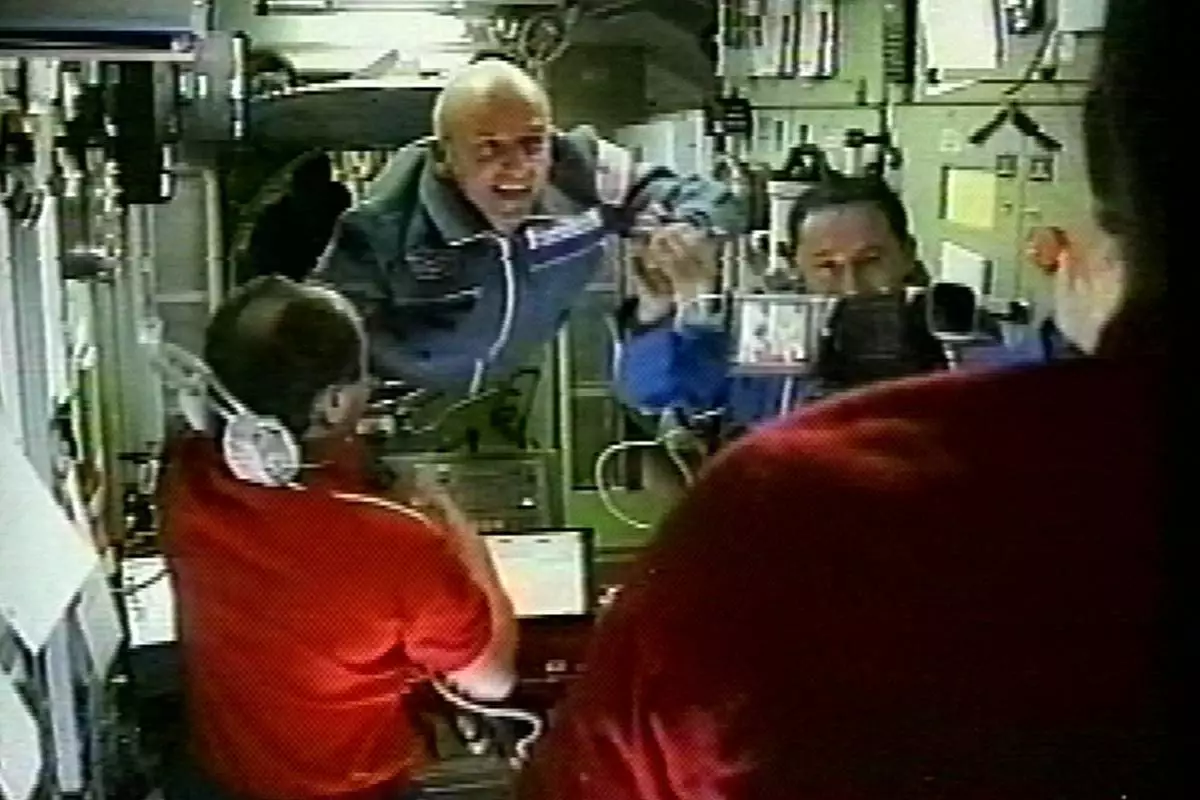
FILE - In this image from television, space station commander Yury Usachev, left, welcomes California millionaire Dennis Tito, center, and Russian cosmonauts Talgat Musabayev, right, to the International Space Station on Monday, April 30, 2001. (AP Photo/APTN, File)
FILE - In this image from television, space station commander Yury Usachev, left, welcomes California millionaire Dennis Tito, center, and Russian cosmonauts Talgat Musabayev, right, to the International Space Station on Monday, April 30, 2001. (AP Photo/APTN, File)

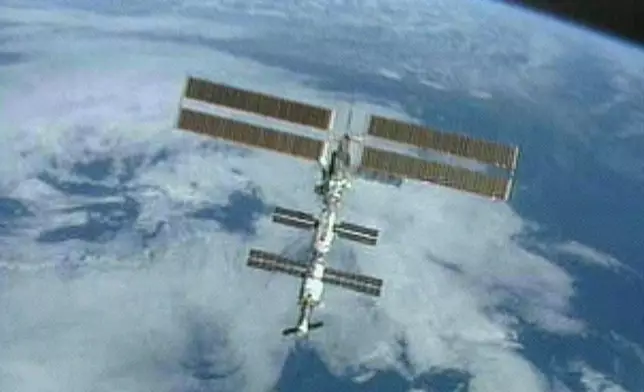
FILE - In this image from video provided by NASA, the International Space Station Alpha is seen against the Northern Atlantic Ocean after the space shuttle Endeavour undocked, Sunday, April 29, 2001. (AP Photo/NASA TV, File)
FILE - In this image from video provided by NASA, the International Space Station Alpha is seen against the Northern Atlantic Ocean after the space shuttle Endeavour undocked, Sunday, April 29, 2001. (AP Photo/NASA TV, File)

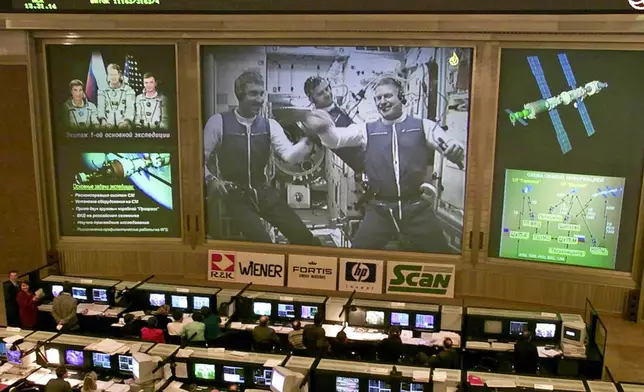
FILE - Russia's Mission Control center monitors the crew floating inside the International Space Station, from at Korolyov, just outside Moscow, Thursday, Nov. 2, 2000. The central screen shows American astronaut Bill Shepherd, right, Russian cosmonauts Yuri Gidzenko, center, and Sergei Krikalev, left. (AP Photo/Mikhail Metzel, File)
FILE - Russia's Mission Control center monitors the crew floating inside the International Space Station, from at Korolyov, just outside Moscow, Thursday, Nov. 2, 2000. The central screen shows American astronaut Bill Shepherd, right, Russian cosmonauts Yuri Gidzenko, center, and Sergei Krikalev, left. (AP Photo/Mikhail Metzel, File)

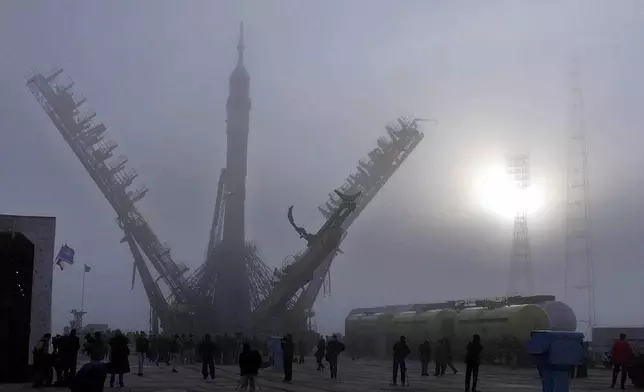
FILE - The Soyuz booster is mounted to the launch pad at the Baikonur cosmodrome, Kazakstan, Sunday, Oct. 29, 2000, ahead of the launch of U.S. astronaut Bill Shepherd, and Russian cosmonauts Sergei Krikalyov and Yuri Gidzenko to be the first residents on the International Space Station. (AP Photo/Mikhail Metzel, File)
FILE - The Soyuz booster is mounted to the launch pad at the Baikonur cosmodrome, Kazakstan, Sunday, Oct. 29, 2000, ahead of the launch of U.S. astronaut Bill Shepherd, and Russian cosmonauts Sergei Krikalyov and Yuri Gidzenko to be the first residents on the International Space Station. (AP Photo/Mikhail Metzel, File)

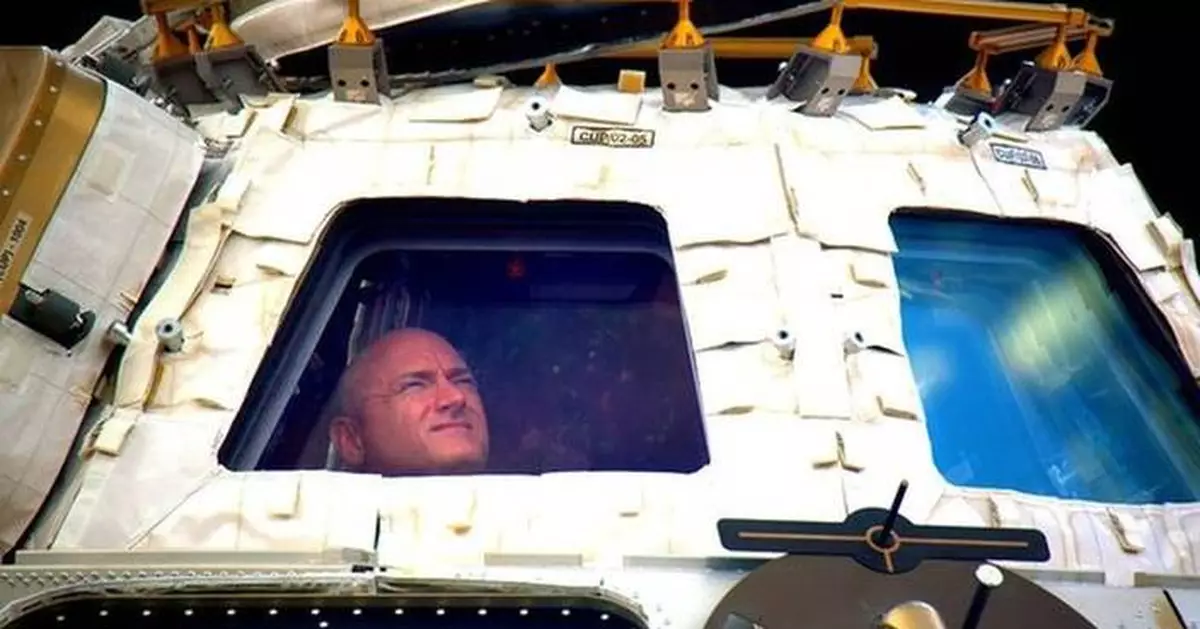
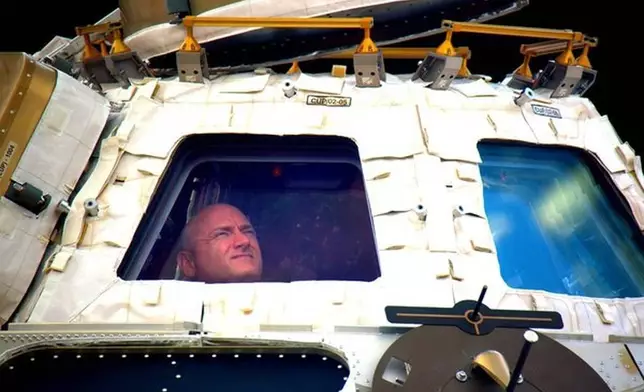
FILE - In this undated photo provided by NASA on Tuesday, March 1, 2016, astronaut Scott Kelly looks out the cupola of the International Space Station. (NASA via AP, File)

FILE - In this undated photo provided by NASA on Tuesday, March 1, 2016, astronaut Scott Kelly looks out the cupola of the International Space Station. (NASA via AP, File)

With only five years left at the scientific outpost, NASA is counting on private companies to launch their own orbiting stations with an even bigger and wider clientele.

Here's a look at what has been and what is ahead:

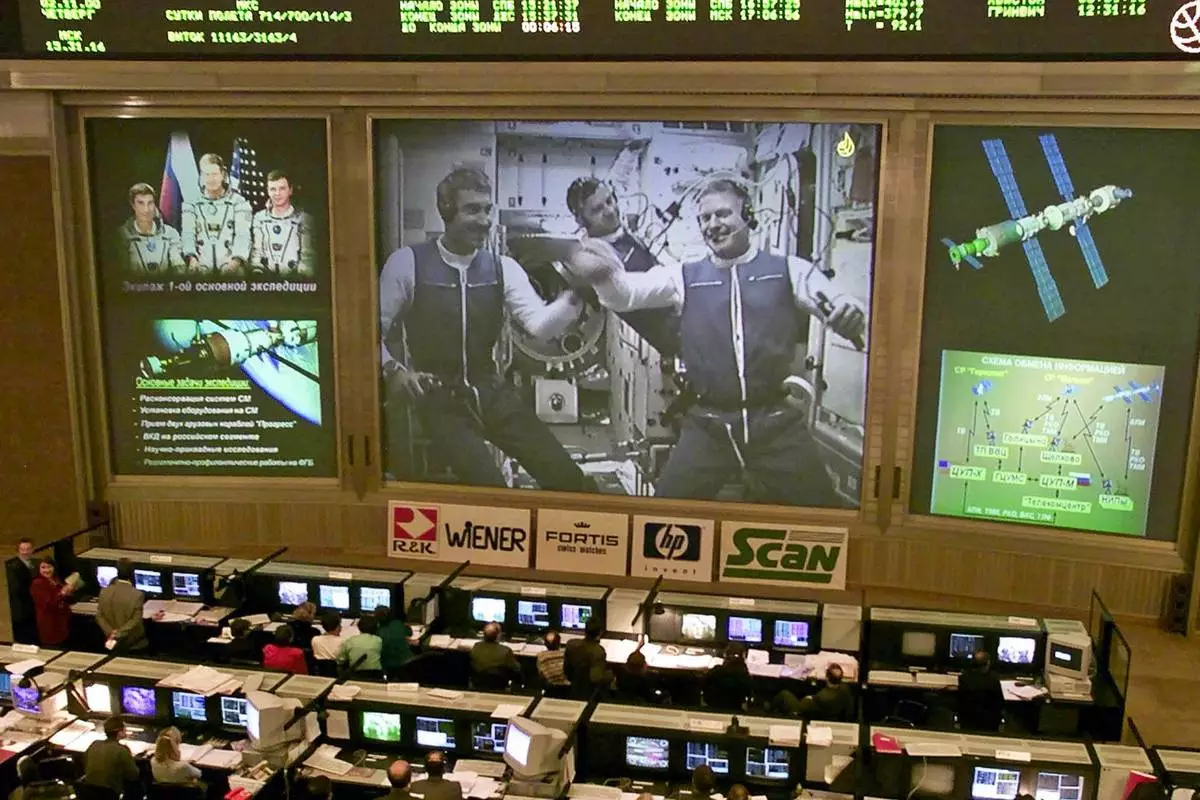
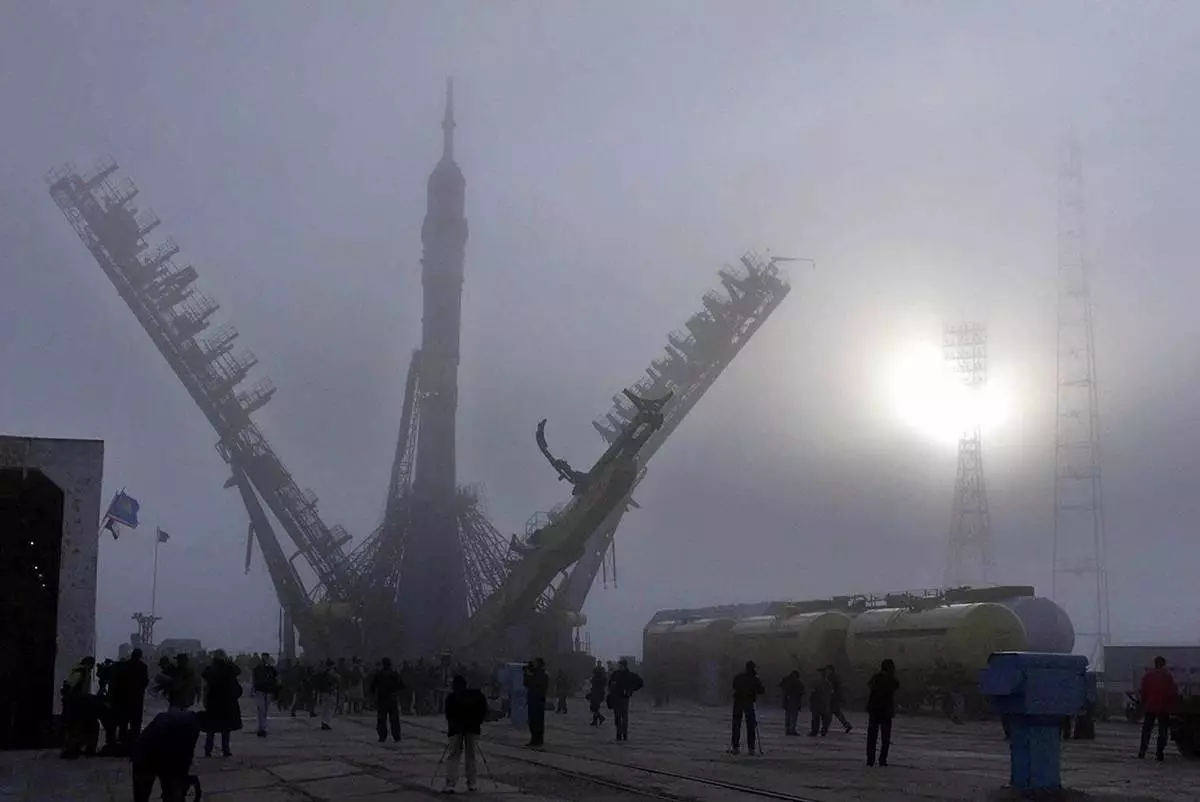
NASA’s Bill Shepherd and Russia’s Sergei Krikalev and Yuri Gidzenko took off in a Russian Soyuz rocket from Kazakhstan on Oct. 31, 2000. They reached the dark, humid, three-room station two days later and spent almost five months on board, making the place not only functional but hospitable.

Shepherd, a former Navy SEAL who retired in 2002, serves on a space station advisory committee with Krikalev, now a high-ranking Russian space official.

While relations between the U.S. and Russia are “quite bad” on the national level, “person to person and even space agency to space agency, they're actually quite good,” Shepherd told The Associated Press.

By NASA’s count, 290 people from 26 countries have visited the space station. Seven are up there right now, representing the U.S., Russia and Japan.

Most of the visitors have flown courtesy of their homelands.

The first to pay his own way — California businessman Dennis Tito — launched with the Russians in 2001 over NASA’s objections. Hungry for cash, Russia continued flying private clients, including a Russian movie crew in 2021.

NASA now embraces space tourism, inviting private crews for two-week stays. Dropping by the station a few months ago were the first astronauts in decades from India, Poland and Hungary, accompanied by the station's first female commander, Peggy Whitson. “Space brings people together,” she noted.

Operations may look easy and ho-hum as astronauts come and go, but “there’s nothing routine about it,” former NASA Administrator Jim Bridenstine said at a recent presentation.

Among the more serious stumbles: a spacewalker’s near-drowning, a docking that sent the station into a wild spin, persistent cracks and air leaks, and the ever-growing threat of space junk.

Shepherd is surprised it’s still going strong. “The fact that it’s more than twice its design life on a lot of things is pretty remarkable,” he said.

Space station life has improved drastically since Shepherd and his crew toughed it out.

“It’s a four-star hotel now,” he said. “You couldn’t ask for better accommodations, at least in space.”

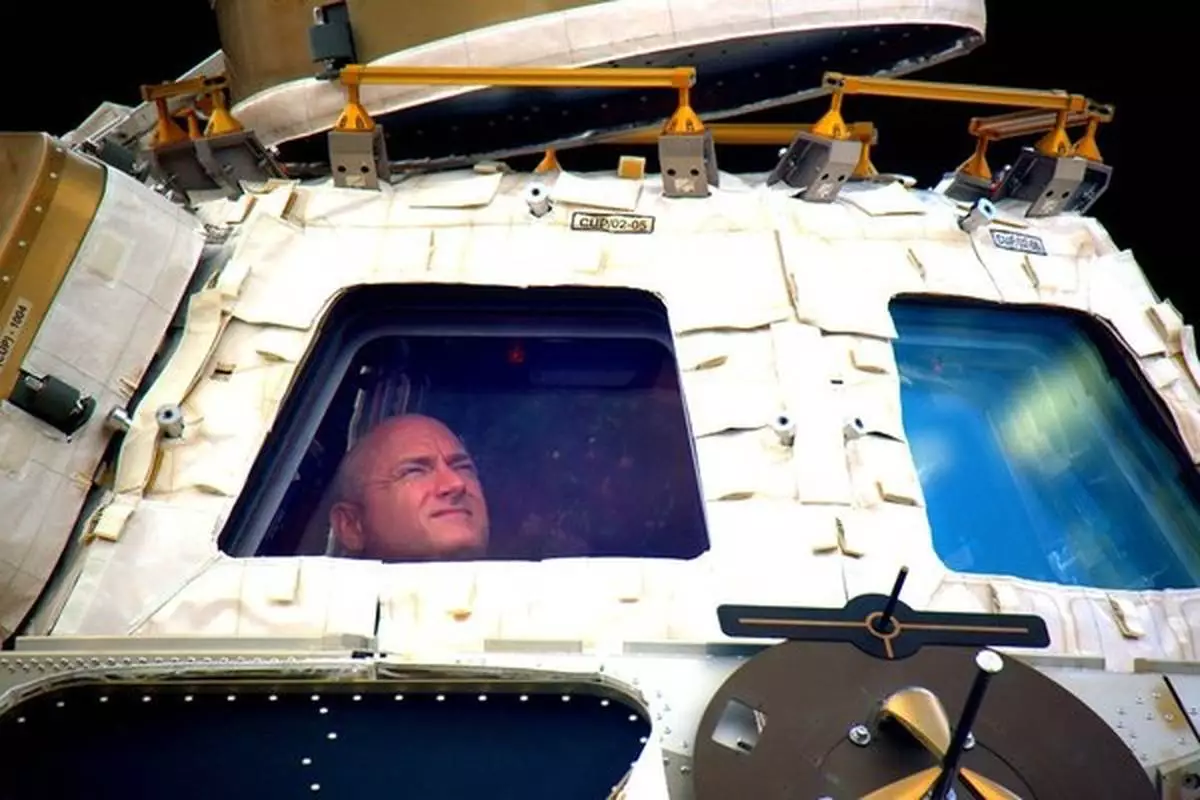
Now the size of a football field with multiple labs, the station has an internet phone for astronauts’ personal use and a glassed-in cupola, or dome, for prime Earth views and performances.

Canada’s guitar-playing astronaut Chris Hadfield famously performed David Bowie’s “Space Oddity” and other tunes from that perch more than a decade ago.

Experimental hothouses also have added color and zip, yielding chile peppers and zinnias. An espresso machine even got a brief tryout, as did a cookie-baking oven. But there’s still no shower or laundry — sponge baths only, with dirty clothes tossed instead of washed.

Astronauts have gotten married and welcomed newborn children while serving on the space station. One of the new space dads — Mike Fincke — is up there again, more than 20 years after he dialed in from orbit to his wife’s delivery room.

Station residents have also dealt with heartbreak. An astronaut’s mother was killed in a car accident in 2007. And in 2011, Scott Kelly was midway through a five-month stay when his sister-in-law, U.S. Congresswoman Gabrielle Giffords, was shot in the head and survived.

Others have had to cope with delayed returns, the most recent and extreme case involving stuck astronauts Butch Wilmore and Suni Williams. Their planned weeklong test flight of Boeing's new Starliner capsule turned into a station stay of more than nine months, with NASA switching to SpaceX for the return trip.

Thousands of experiments have been conducted, many on the astronauts themselves. Medical tests took on increased urgency several years ago when an astronaut discovered a blood clot in one of their jugular veins. Doctors oversaw treatment from afar until the patient was safely back home.

NASA also launched a twins study with the Kelly brothers. Scott Kelly took part in NASA’s first yearlong expedition in 2015 and 2016, comparing his body with identical twin Mark’s on the ground. Mark Kelly also contributed to astronomy, leading a shuttle mission to deliver and install a cosmic particle detector. Upgrades are planned next year.

NASA is paying SpaceX nearly $1 billion to boot the space station from orbit in early 2031. The company will launch a heavy-duty capsule to dock with the station and steer it to a fiery reentry over the Pacific.

Before that happens, Axiom Space will remove the module it plans to send to the station. That free-flying module will form the nucleus of Axiom’s own space station. Other companies are working on their own concepts.

NASA wants to avoid a gap between the International Space Station and its successors, preserving America’s continued human presence in orbit.

The Associated Press Health and Science Department receives support from the Howard Hughes Medical Institute’s Department of Science Education and the Robert Wood Johnson Foundation. The AP is solely responsible for all content.
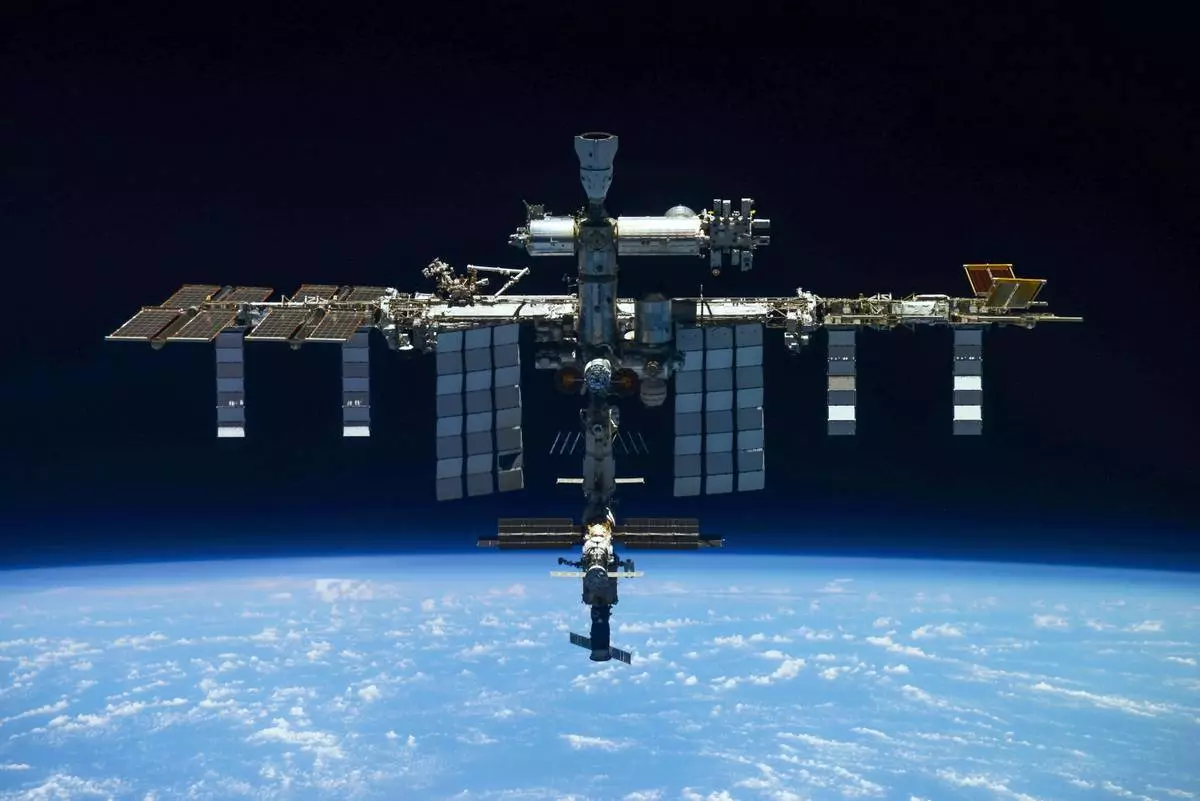
FILE - This photo provided by Roscosmos shows the International Space Station from a Russian Soyuz MS-19 spaceship after undocking on March 30, 2022. (Roscosmos State Space Corporation via AP, File)
FILE - This photo provided by Roscosmos shows the International Space Station from a Russian Soyuz MS-19 spaceship after undocking on March 30, 2022. (Roscosmos State Space Corporation via AP, File)

FILE - In this image from video provided by NASA, astronaut Don Pettit, bottom center, hugs Kirill Peskov as astronauts greet each other after a SpaceX capsule docked with the International Space Station, Sunday, March 16, 2025. (NASA via AP, File)
FILE - In this image from video provided by NASA, astronaut Don Pettit, bottom center, hugs Kirill Peskov as astronauts greet each other after a SpaceX capsule docked with the International Space Station, Sunday, March 16, 2025. (NASA via AP, File)

FILE - In this photo provided by NASA, astronauts Suni Williams and Butch Wilmore, both Expedition 71 flight engineers, make pizza aboard the International Space Station's galley located inside the Unity module on Sept. 9, 2024. Items are attached to the galley using tape and velcro to keep them from flying away in the microgravity environment. (NASA via AP, File)
FILE - In this photo provided by NASA, astronauts Suni Williams and Butch Wilmore, both Expedition 71 flight engineers, make pizza aboard the International Space Station's galley located inside the Unity module on Sept. 9, 2024. Items are attached to the galley using tape and velcro to keep them from flying away in the microgravity environment. (NASA via AP, File)

FILE - In this image from video provided by NASA, astronauts Doug Hurley, left, and Bob Behnken prepare for undocking from the International Space Station, aboard the SpaceX Crew Dragon capsule on Saturday, Aug. 1, 2020. (NASA via AP, File)
FILE - In this image from video provided by NASA, astronauts Doug Hurley, left, and Bob Behnken prepare for undocking from the International Space Station, aboard the SpaceX Crew Dragon capsule on Saturday, Aug. 1, 2020. (NASA via AP, File)

In this photo provided by NASA on Friday, Oct. 4, 2019, astronauts Christina Koch, right, and, Jessica Meir pose for a photo on the International Space Station. (NASA via AP)
In this photo provided by NASA on Friday, Oct. 4, 2019, astronauts Christina Koch, right, and, Jessica Meir pose for a photo on the International Space Station. (NASA via AP)

FILE - This image provided by NASA on Wednesday, Aug. 22, 2018 shows Hurricane Lane as seen from the International Space Station. (NASA via AP, File)
FILE - This image provided by NASA on Wednesday, Aug. 22, 2018 shows Hurricane Lane as seen from the International Space Station. (NASA via AP, File)

FILE - This Jan. 16, 2016 photo provided by NASA shows a blooming zinnia flower grown aboard the International Space Station. (Scott Kelly/NASA via AP, File)
FILE - This Jan. 16, 2016 photo provided by NASA shows a blooming zinnia flower grown aboard the International Space Station. (Scott Kelly/NASA via AP, File)

In this photo provided by NASA, European Space Agency astronaut Luca Parmitano, Expedition 36 flight engineer, participates in a spacewalk outside the International Space Station on July 16, 2013, before he reported water floating behind his head inside his helmet. (NASA via AP)
In this photo provided by NASA, European Space Agency astronaut Luca Parmitano, Expedition 36 flight engineer, participates in a spacewalk outside the International Space Station on July 16, 2013, before he reported water floating behind his head inside his helmet. (NASA via AP)

FILE - In this photo made available by NASA, astronaut Chris Cassidy, Expedition 36 flight engineer, exercises on the advanced Resistive Exercise Device (aRED) in the Tranquility node of the International Space Station on Aug. 31, 2013. (NASA via AP, File)
FILE - In this photo made available by NASA, astronaut Chris Cassidy, Expedition 36 flight engineer, exercises on the advanced Resistive Exercise Device (aRED) in the Tranquility node of the International Space Station on Aug. 31, 2013. (NASA via AP, File)

FILE - The International Space Station is seen from the space shuttle Atlantis on July 19, 2011, after it left the orbiting complex. (NASA via AP, File)
FILE - The International Space Station is seen from the space shuttle Atlantis on July 19, 2011, after it left the orbiting complex. (NASA via AP, File)

In this photo provided by NASA, Canadian astronaut Chris Hadfield plays guitar in the cupola module of the International Space Station on Dec. 25, 2012. (NASA via AP)
In this photo provided by NASA, Canadian astronaut Chris Hadfield plays guitar in the cupola module of the International Space Station on Dec. 25, 2012. (NASA via AP)

FILE - In this photo provided by NASA, astronaut Robert L. Curbeam Jr., left, and European Space Agency astronaut Christer Fuglesang, participate in a spacewalk during construction of the International Space Station on Dec. 12, 2006. In the background are New Zealand and the Pacific Ocean. (NASA via AP, File)
FILE - In this photo provided by NASA, astronaut Robert L. Curbeam Jr., left, and European Space Agency astronaut Christer Fuglesang, participate in a spacewalk during construction of the International Space Station on Dec. 12, 2006. In the background are New Zealand and the Pacific Ocean. (NASA via AP, File)

FILE - In this image from television, space station commander Yury Usachev, left, welcomes California millionaire Dennis Tito, center, and Russian cosmonauts Talgat Musabayev, right, to the International Space Station on Monday, April 30, 2001. (AP Photo/APTN, File)
FILE - In this image from television, space station commander Yury Usachev, left, welcomes California millionaire Dennis Tito, center, and Russian cosmonauts Talgat Musabayev, right, to the International Space Station on Monday, April 30, 2001. (AP Photo/APTN, File)

FILE - In this image from video provided by NASA, the International Space Station Alpha is seen against the Northern Atlantic Ocean after the space shuttle Endeavour undocked, Sunday, April 29, 2001. (AP Photo/NASA TV, File)
FILE - In this image from video provided by NASA, the International Space Station Alpha is seen against the Northern Atlantic Ocean after the space shuttle Endeavour undocked, Sunday, April 29, 2001. (AP Photo/NASA TV, File)

FILE - Russia's Mission Control center monitors the crew floating inside the International Space Station, from at Korolyov, just outside Moscow, Thursday, Nov. 2, 2000. The central screen shows American astronaut Bill Shepherd, right, Russian cosmonauts Yuri Gidzenko, center, and Sergei Krikalev, left. (AP Photo/Mikhail Metzel, File)
FILE - Russia's Mission Control center monitors the crew floating inside the International Space Station, from at Korolyov, just outside Moscow, Thursday, Nov. 2, 2000. The central screen shows American astronaut Bill Shepherd, right, Russian cosmonauts Yuri Gidzenko, center, and Sergei Krikalev, left. (AP Photo/Mikhail Metzel, File)

FILE - The Soyuz booster is mounted to the launch pad at the Baikonur cosmodrome, Kazakstan, Sunday, Oct. 29, 2000, ahead of the launch of U.S. astronaut Bill Shepherd, and Russian cosmonauts Sergei Krikalyov and Yuri Gidzenko to be the first residents on the International Space Station. (AP Photo/Mikhail Metzel, File)
FILE - The Soyuz booster is mounted to the launch pad at the Baikonur cosmodrome, Kazakstan, Sunday, Oct. 29, 2000, ahead of the launch of U.S. astronaut Bill Shepherd, and Russian cosmonauts Sergei Krikalyov and Yuri Gidzenko to be the first residents on the International Space Station. (AP Photo/Mikhail Metzel, File)

FILE - In this undated photo provided by NASA on Tuesday, March 1, 2016, astronaut Scott Kelly looks out the cupola of the International Space Station. (NASA via AP, File)
FILE - In this undated photo provided by NASA on Tuesday, March 1, 2016, astronaut Scott Kelly looks out the cupola of the International Space Station. (NASA via AP, File)
WASHINGTON (AP) — The Supreme Court is taking up one of the term’s most consequential cases, President Donald Trump’s executive order on birthright citizenship declaring that children born to parents who are in the United States illegally or temporarily are not American citizens, and he was in the courtroom on Wednesday for some of the arguments.

The justices are hearing Trump’s appeal of a lower-court ruling from New Hampshire that struck down the citizenship restrictions, one of several courts that have blocked them. They have not taken effect anywhere in the country.

Trump is the first sitting president to attend oral arguments at the nation’s highest court. He spent just over an hour inside the courtroom, hearing arguments by the government’s lawyer, Solicitor General D. John Sauer. He left shortly after Sauer wrapped up and the plaintiff was invited to present her case.

The case frames another test of Trump's assertions of executive power that defy long-standing precedent for a court that has largely ruled in the president's favor — but with some notable exceptions that Trump has responded to with starkly personal criticisms of the justices. A definitive ruling is expected by early summer.

The birthright citizenship order, which Trump signed the first day of his second term, is part of his Republican administration’s broad immigration crackdown.

Birthright citizenship is the first Trump immigration-related policy to reach the court for a final ruling. The justices previously struck down global tariffs Trump had imposed under an emergency powers law that had never been used that way.

Trump reacted furiously to the late February tariffs decision, saying he was ashamed of the justices who ruled against him and calling them unpatriotic.

He issued a preemptive broadside against the court on Sunday on his Truth Social platform. “Birthright Citizenship is not about rich people from China, and the rest of the World, who want their children, and hundreds of thousands more, FOR PAY, to ridiculously become citizens of the United States of America. It is about the BABIES OF SLAVES!,” the president wrote. “Dumb Judges and Justices will not a great Country make!”

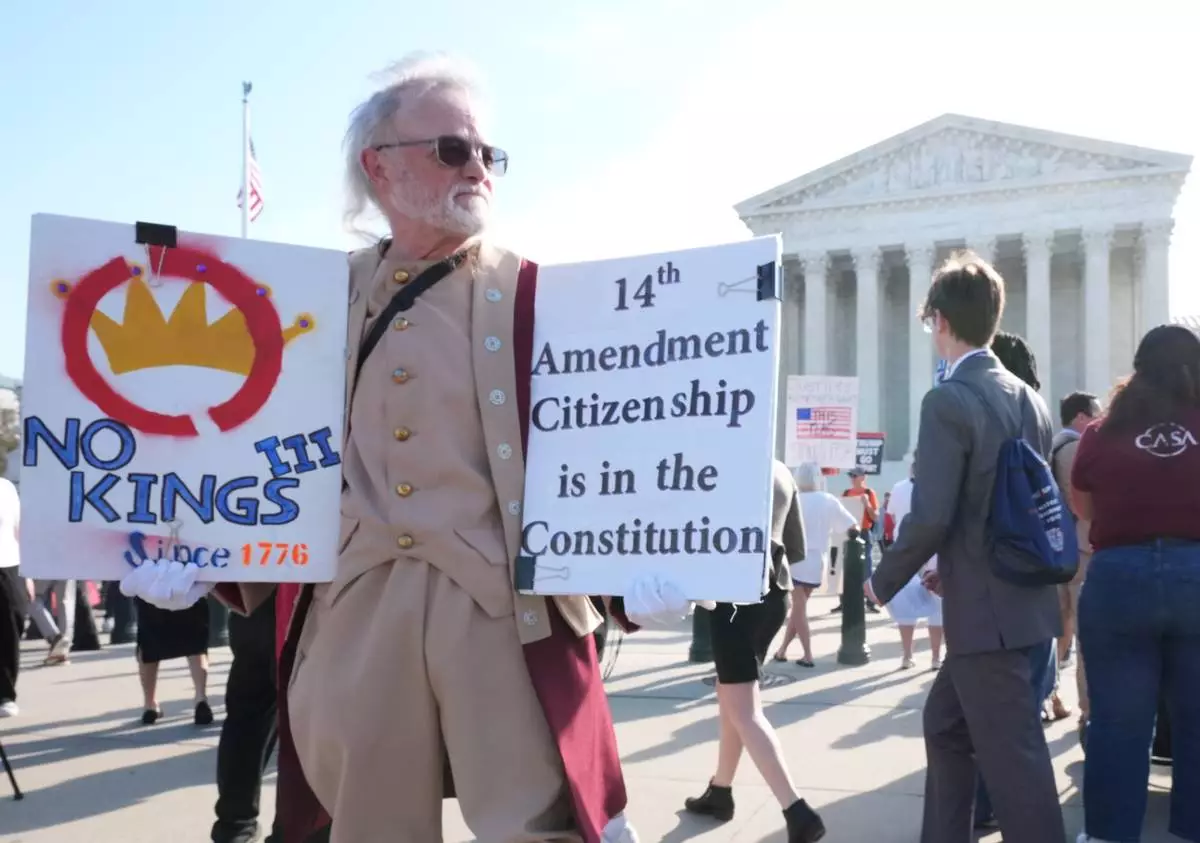
Trump's order would upend the long-standing view that the Constitution’s 14th Amendment, ratified in 1868, and federal law since 1940 confer citizenship on everyone born on American soil, with narrow exceptions for the children of foreign diplomats and those born to a foreign occupying force.

The 14th Amendment was intended to ensure that Black people, including former slaves, had citizenship, though the Citizenship Clause is written more broadly. “All persons born or naturalized in the United States, and subject to the jurisdiction thereof, are citizens of the United States and of the State wherein they reside,” it reads.

In a series of decisions, lower courts have struck down the executive order as illegal, or likely so, under the Constitution and federal law. The decisions have invoked the high court's 1898 ruling in Wong Kim Ark, which held that the U.S.-born child of Chinese nationals was a citizen.

The Trump administration argues that the common view of citizenship is wrong, asserting that children of noncitizens are not “subject to the jurisdiction” of the United States and therefore are not entitled to citizenship.

The court should use the case to set straight “long-enduring misconceptions about the Constitution’s meaning,” wrote Sauer, the solicitor general.

No court has accepted that argument, and lawyers for pregnant women whose children would be affected by the order said the Supreme Court should not be the first to do so.

“We have the president of the United States trying to radically reinterpret the definition of American citizenship,” said Cecillia Wang, the American Civil Liberties Union legal director who is facing off against Sauer at the Supreme Court.

More than one-quarter of a million babies born in the U.S. each year would be affected by the executive order, according to research by the Migration Policy Institute and Pennsylvania State University’s Population Research Institute.

While Trump has largely focused on illegal immigration in his rhetoric and actions, the birthright restrictions also would apply to people who are legally in the United States, including students and applicants for green cards, or permanent resident status.

Associated Press writer Darlene Superville contributed to this report.

Follow the AP’s coverage of the U.S. Supreme Court at https://apnews.com/hub/us-supreme-court.

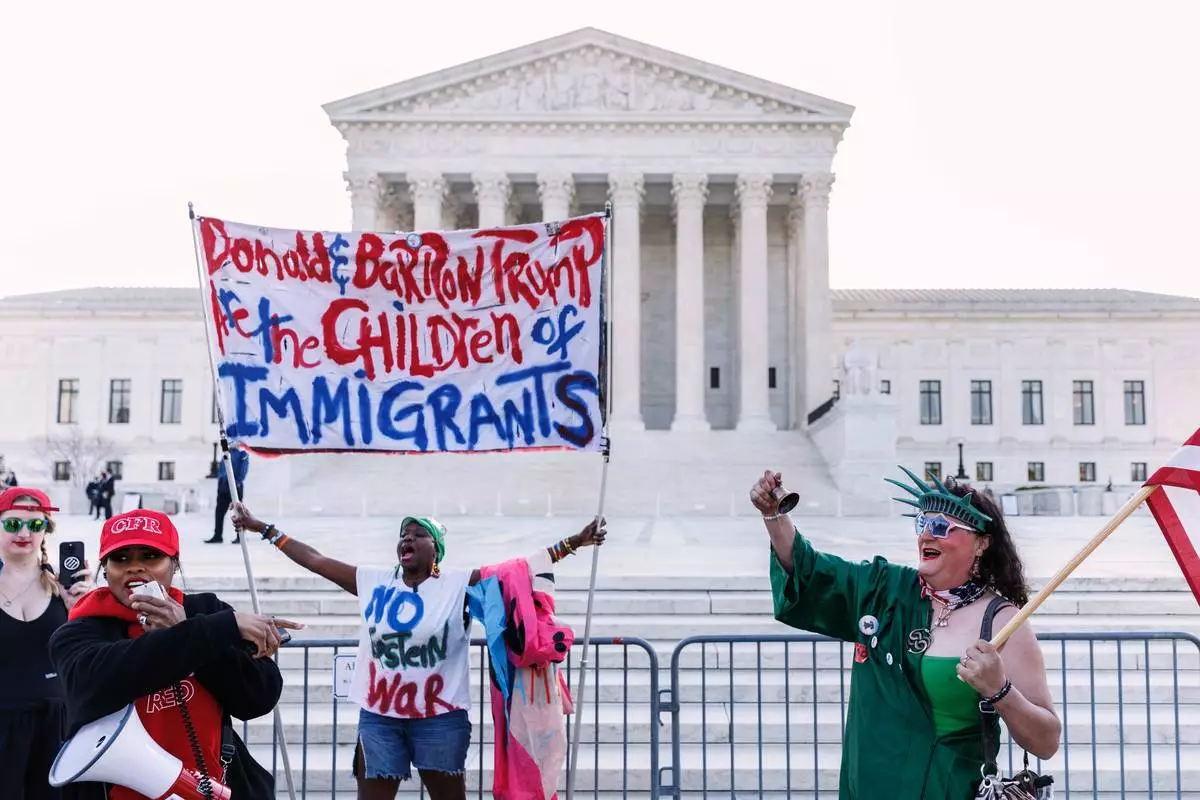
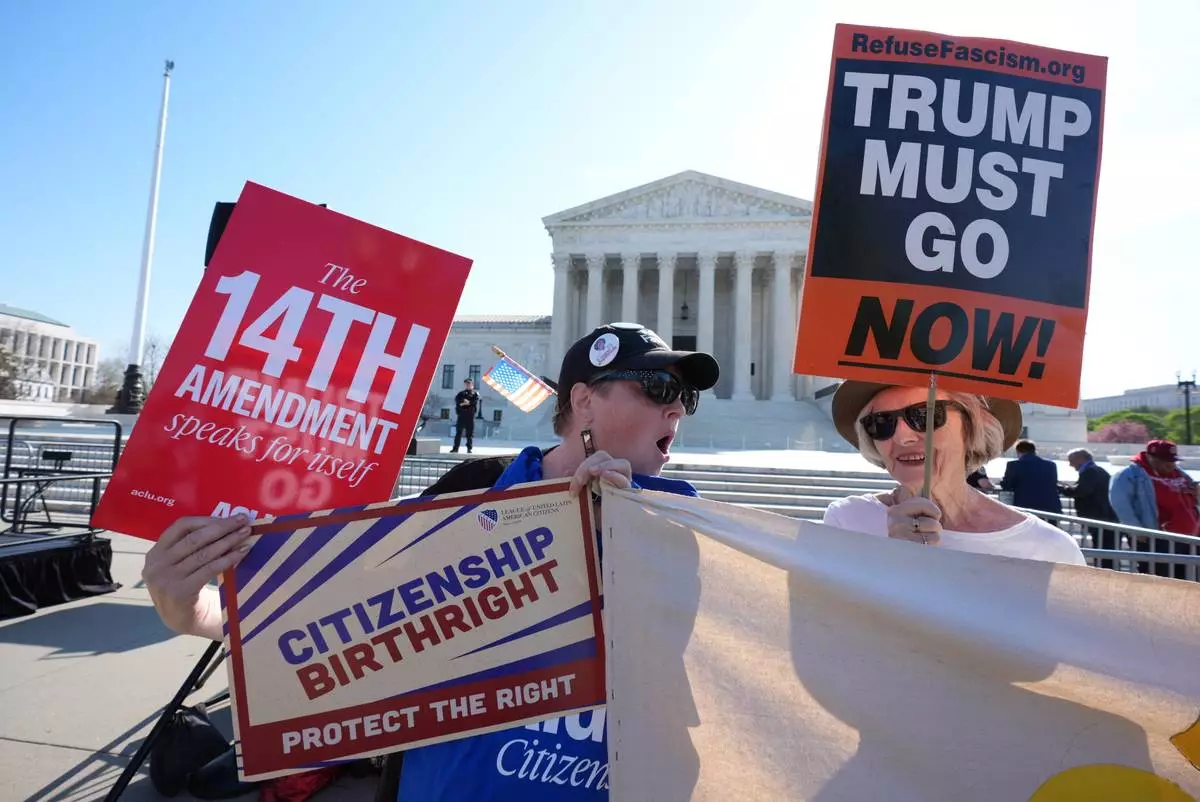
Pro and anti-Trump demonstrators rally outside the U.S. Supreme Court, before justices hear oral arguments on whether President Donald Trump can deny citizenship to children born to parents who are in the United States illegally or temporarily, on Capitol Hill, in Washington, Wednesday, April 1, 2026. (AP Photo/J. Scott Applewhite)

Pro and anti-Trump demonstrators rally outside the U.S. Supreme Court, before justices hear oral arguments on whether President Donald Trump can deny citizenship to children born to parents who are in the United States illegally or temporarily, on Capitol Hill, in Washington, Wednesday, April 1, 2026. (AP Photo/J. Scott Applewhite)

President Donald Trump leaves the U.S. Supreme Court, Wednesday, April 1, 2026, in Washington. (AP Photo/Mark Schiefelbein)

President Donald Trump leaves the U.S. Supreme Court, Wednesday, April 1, 2026, in Washington. (AP Photo/Mark Schiefelbein)

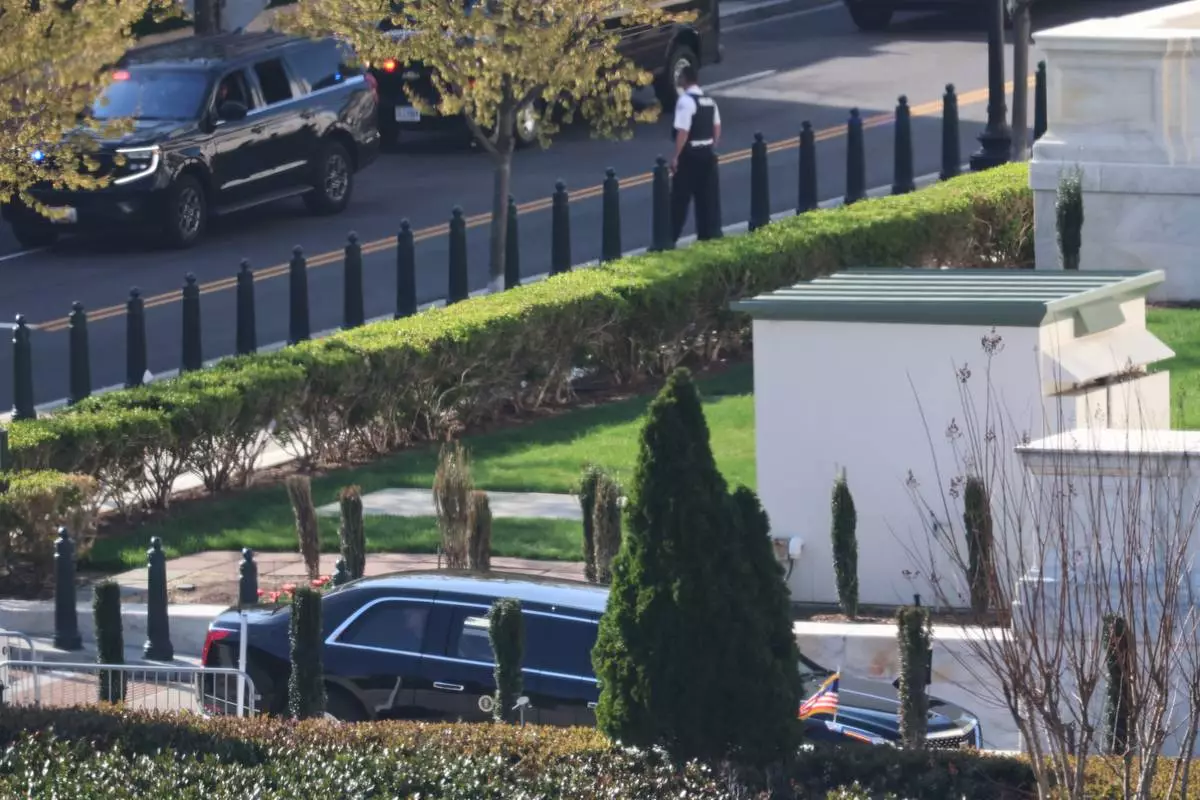
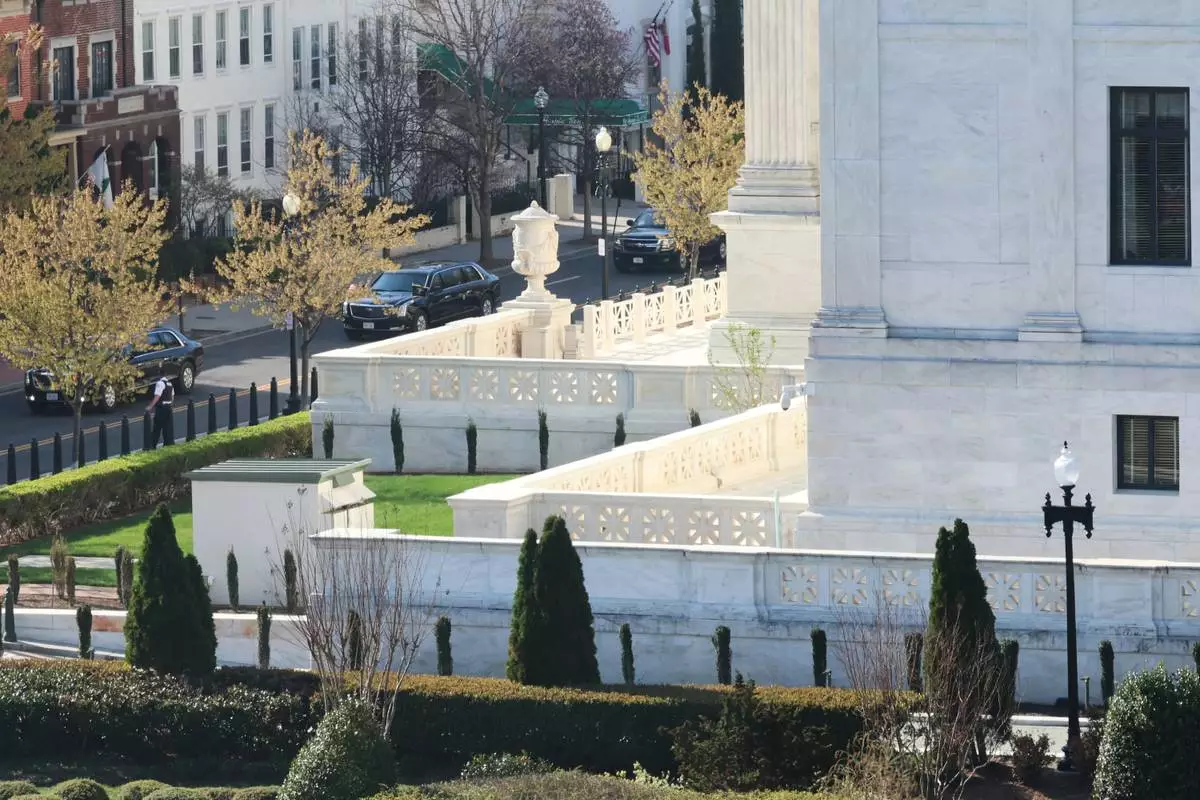
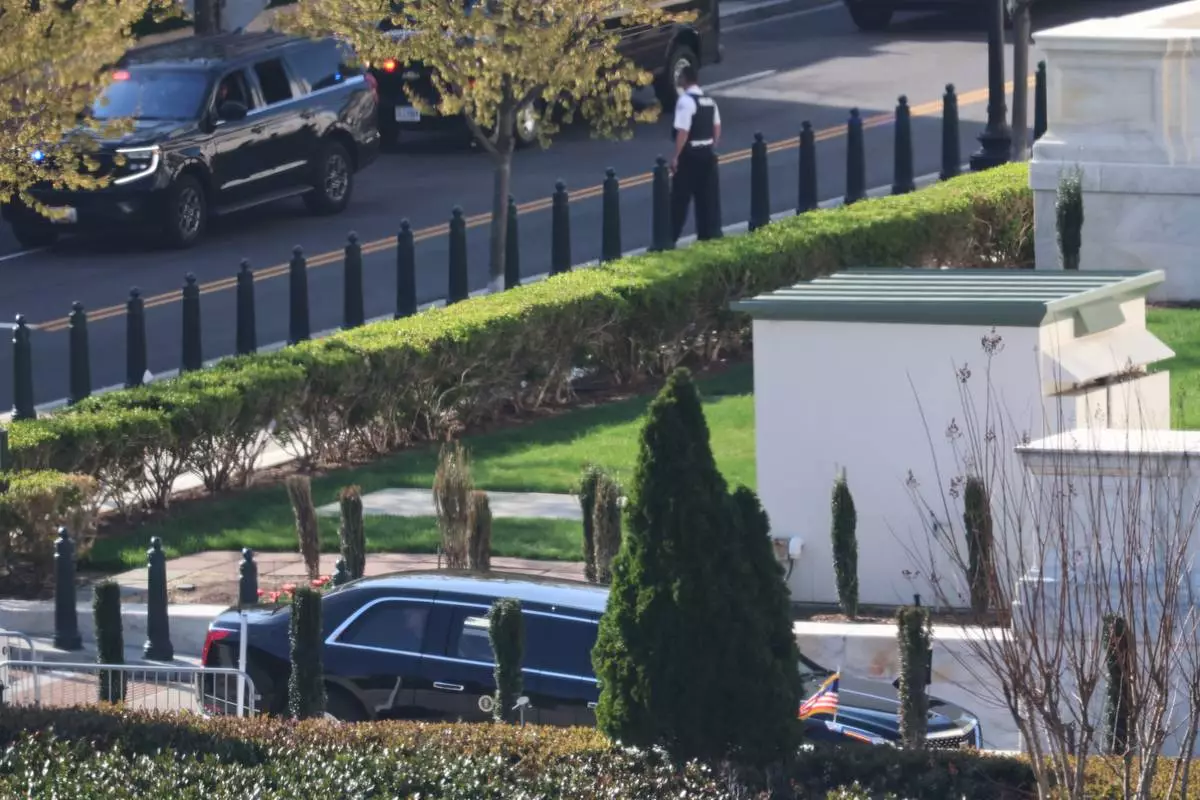
President Donald Trump's motorcade arrives at the U.S. Supreme Court, Wednesday, April 1, 2026, in Washington. (AP Photo/Tom Brenner)

President Donald Trump's motorcade arrives at the U.S. Supreme Court, Wednesday, April 1, 2026, in Washington. (AP Photo/Tom Brenner)

Pro and anti-Trump demonstrators rally outside the U.S. Supreme Court, before justices hear oral arguments on whether President Donald Trump can deny citizenship to children born to parents who are in the United States illegally or temporarily, on Capitol Hill, in Washington, Wednesday, April 1, 2026. (AP Photo/J. Scott Applewhite)

Pro and anti-Trump demonstrators rally outside the U.S. Supreme Court, before justices hear oral arguments on whether President Donald Trump can deny citizenship to children born to parents who are in the United States illegally or temporarily, on Capitol Hill, in Washington, Wednesday, April 1, 2026. (AP Photo/J. Scott Applewhite)

President Donald Trump's motorcade arrives at the U.S. Supreme Court, Wednesday, April 1, 2026, in Washington. (AP Photo/Tom Brenner)

President Donald Trump's motorcade arrives at the U.S. Supreme Court, Wednesday, April 1, 2026, in Washington. (AP Photo/Tom Brenner)

Demonstrators holding opposing views verbally engage ahead of President Donald Trump's arrival at the U.S. Supreme Court, Wednesday, April 1, 2026, in Washington. (AP Photo/Tom Brenner)

Demonstrators holding opposing views verbally engage ahead of President Donald Trump's arrival at the U.S. Supreme Court, Wednesday, April 1, 2026, in Washington. (AP Photo/Tom Brenner)

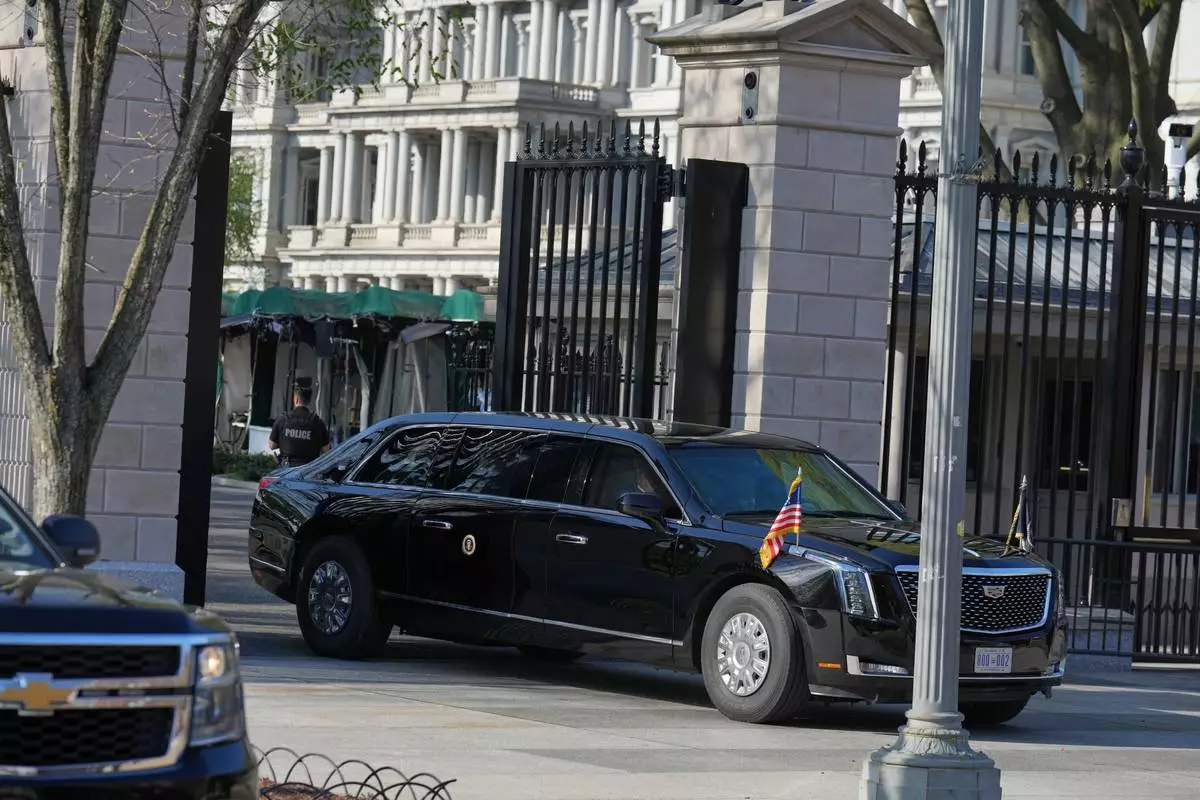
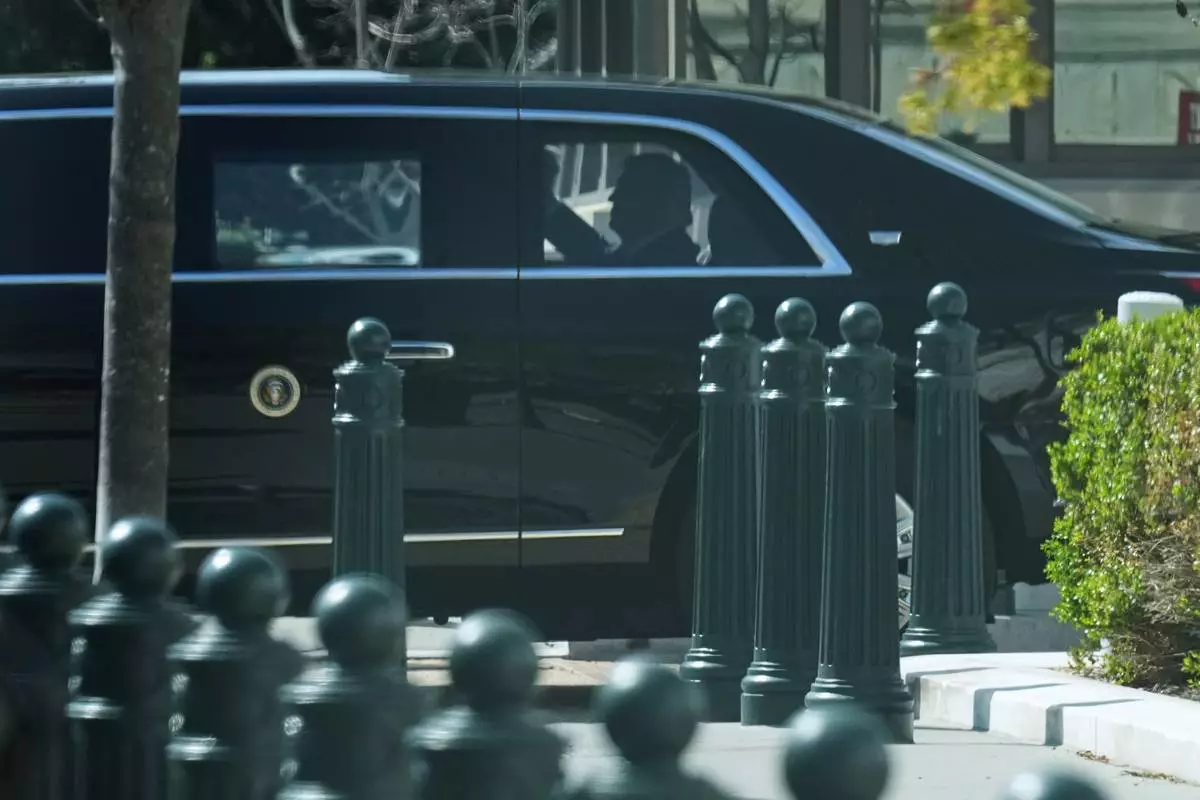
President Donald Trump's limo exits the White House en route to the Supreme Court, Wednesday, April 1, 2026, in Washington. (AP Photo/Mark Schiefelbein)

President Donald Trump's limo exits the White House en route to the Supreme Court, Wednesday, April 1, 2026, in Washington. (AP Photo/Mark Schiefelbein)

President Donald Trump's motorcade arrives at the U.S. Supreme Court, Wednesday, April 1, 2026, in Washington. (AP Photo/Tom Brenner)

President Donald Trump's motorcade arrives at the U.S. Supreme Court, Wednesday, April 1, 2026, in Washington. (AP Photo/Tom Brenner)

Pro and anti-Trump demonstrators rally outside the U.S. Supreme Court, before justices hear oral arguments on whether President Donald Trump can deny citizenship to children born to parents who are in the United States illegally or temporarily, on Capitol Hill, in Washington, Wednesday, April 1, 2026. (AP Photo/J. Scott Applewhite)

Pro and anti-Trump demonstrators rally outside the U.S. Supreme Court, before justices hear oral arguments on whether President Donald Trump can deny citizenship to children born to parents who are in the United States illegally or temporarily, on Capitol Hill, in Washington, Wednesday, April 1, 2026. (AP Photo/J. Scott Applewhite)

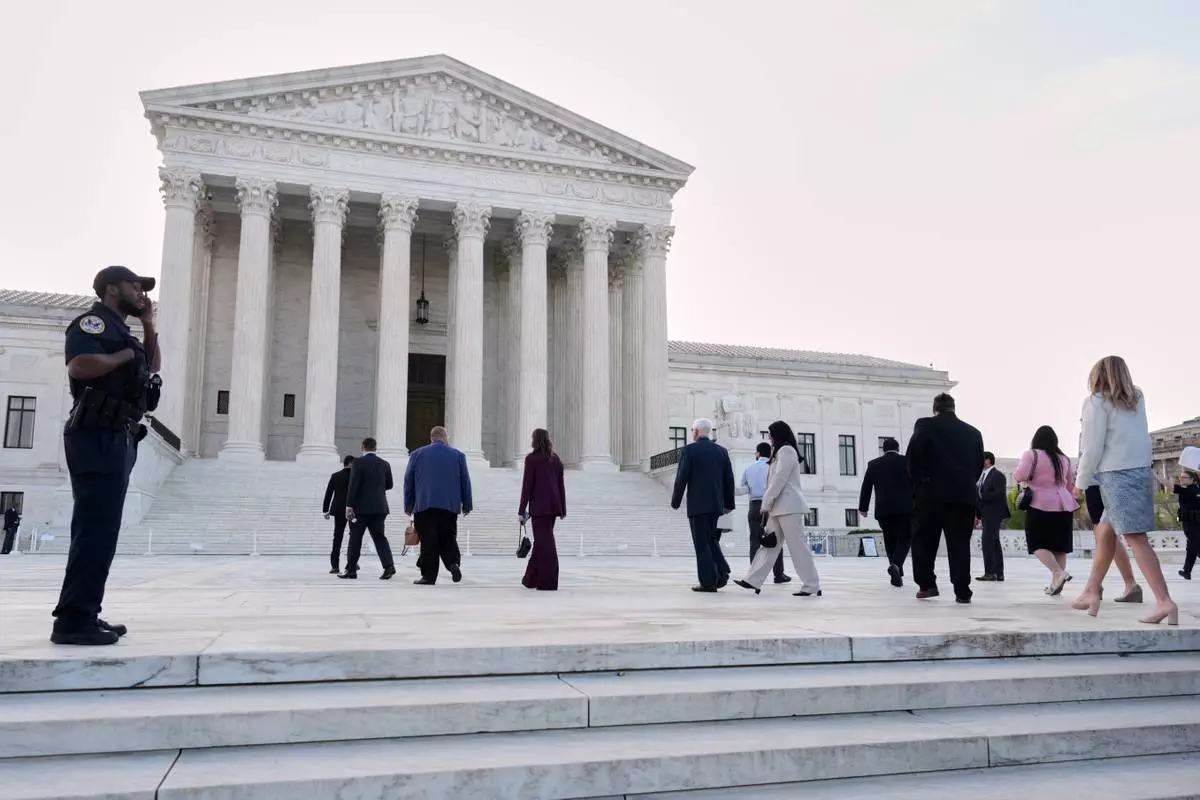
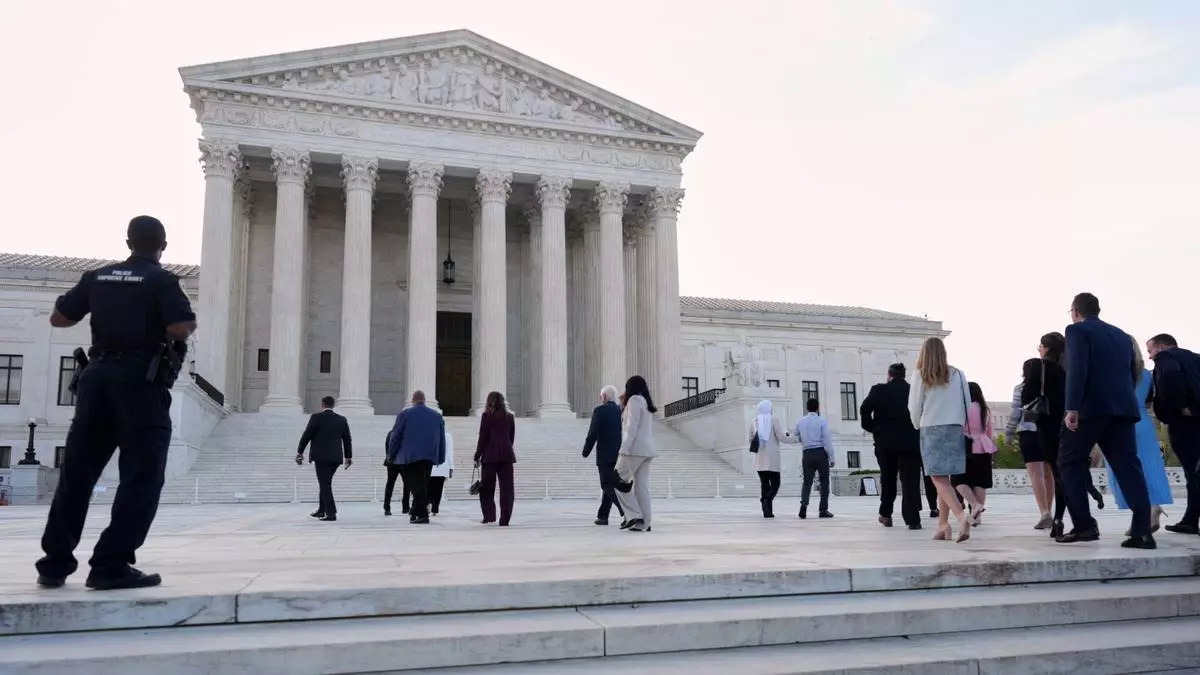
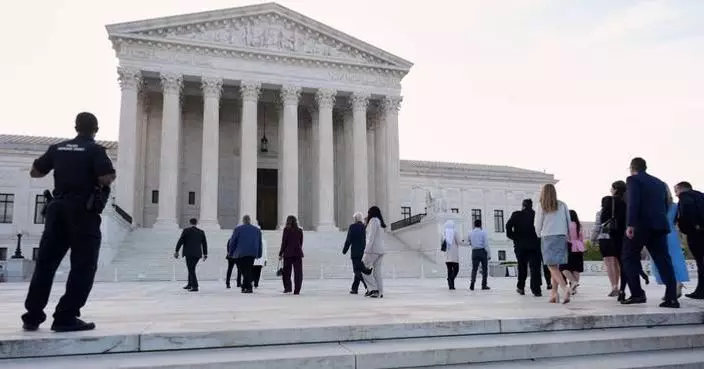
People arrive to walk inside the U.S. Supreme Court, on Capitol Hill in Washington, Wednesday, April 1, 2026. The Supreme Court justices will hear oral arguments today on whether President Donald Trump can deny citizenship to children born to parents who are in the United States illegally or temporarily. (AP Photo/J. Scott Applewhite)

People arrive to walk inside the U.S. Supreme Court, on Capitol Hill in Washington, Wednesday, April 1, 2026. The Supreme Court justices will hear oral arguments today on whether President Donald Trump can deny citizenship to children born to parents who are in the United States illegally or temporarily. (AP Photo/J. Scott Applewhite)

People arrive to walk inside the U.S. Supreme Court, on Capitol Hill in Washington, Wednesday, April 1, 2026. The Supreme Court justices will hear oral arguments today on whether President Donald Trump can deny citizenship to children born to parents who are in the United States illegally or temporarily. (AP Photo/J. Scott Applewhite)

People arrive to walk inside the U.S. Supreme Court, on Capitol Hill in Washington, Wednesday, April 1, 2026. The Supreme Court justices will hear oral arguments today on whether President Donald Trump can deny citizenship to children born to parents who are in the United States illegally or temporarily. (AP Photo/J. Scott Applewhite)

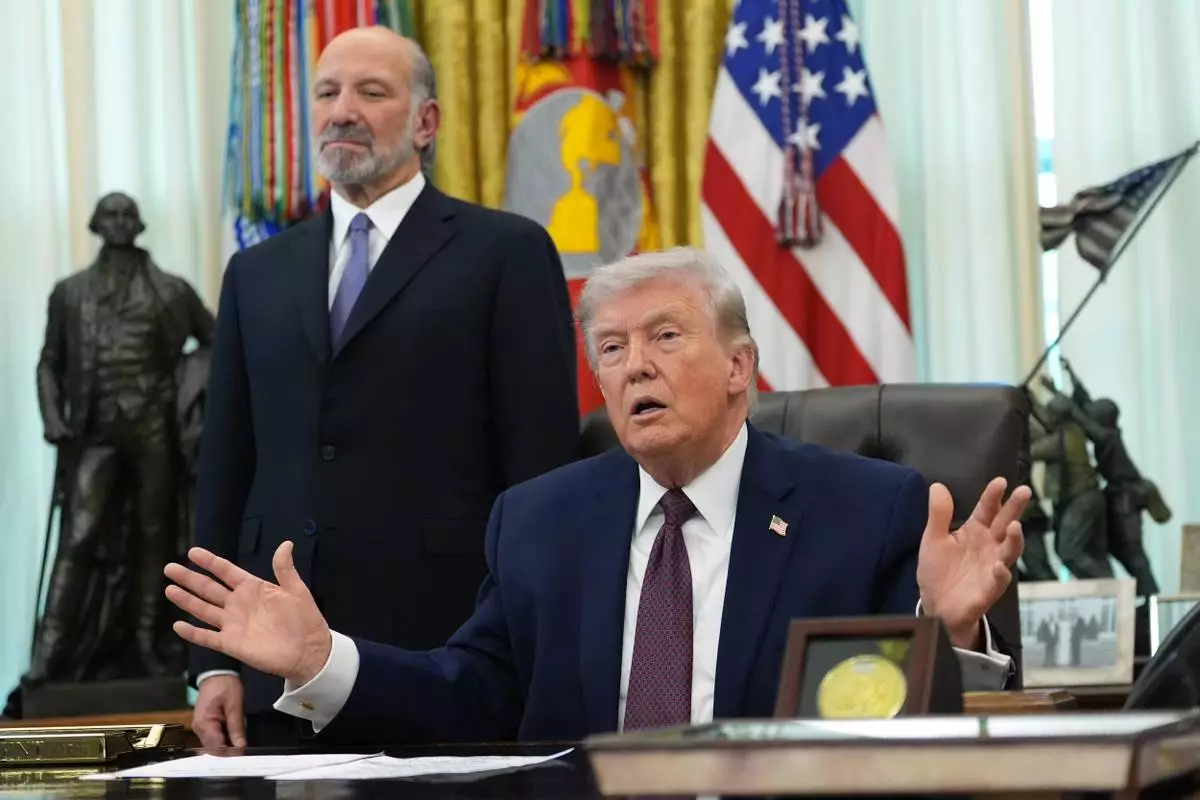
President Donald Trump answers questions from reporters after signing an executive order in the Oval Office of the White House Tuesday, March 31, 2026, in Washington, as Commerce Secretary Howard Lutnick listens. (AP Photo/Alex Brandon)

President Donald Trump answers questions from reporters after signing an executive order in the Oval Office of the White House Tuesday, March 31, 2026, in Washington, as Commerce Secretary Howard Lutnick listens. (AP Photo/Alex Brandon)

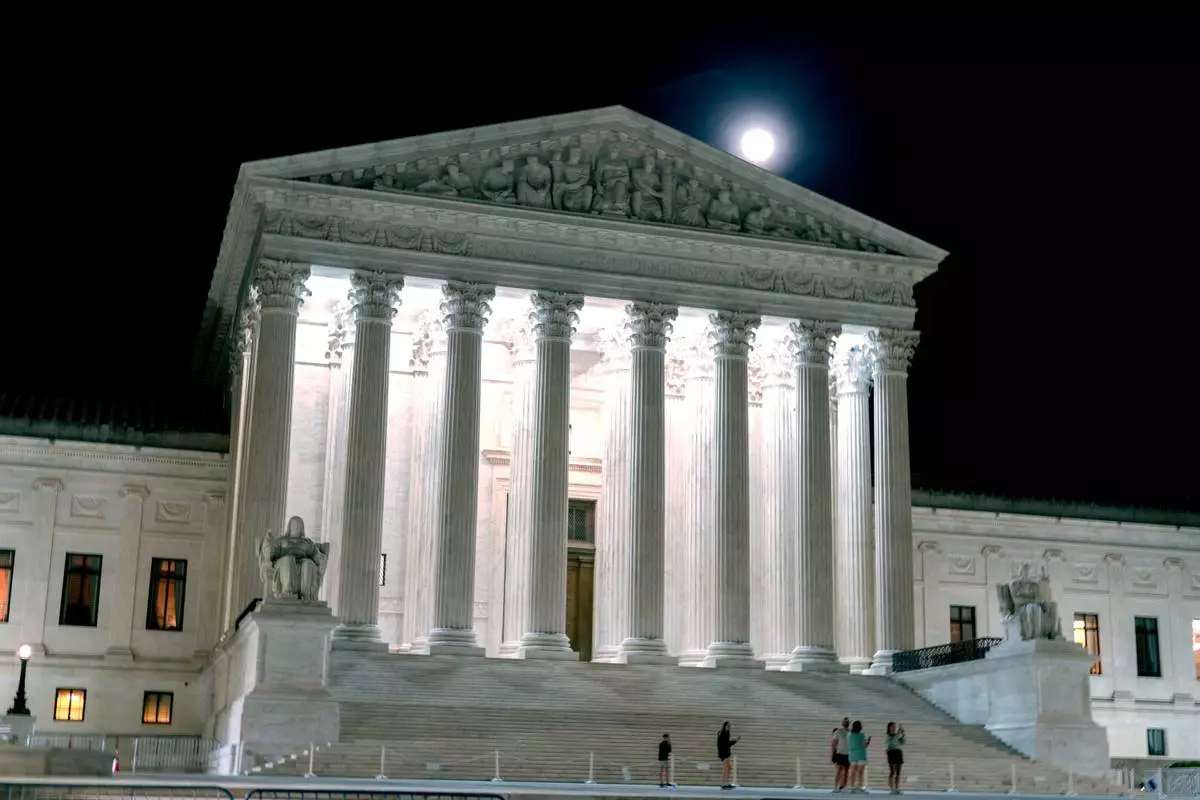
The U.S. Supreme Court is seen as the moon rises Tuesday, March 31, 2026, in Washington. (AP Photo/Jose Luis Magana)

The U.S. Supreme Court is seen as the moon rises Tuesday, March 31, 2026, in Washington. (AP Photo/Jose Luis Magana)

Recommended Articles