GYEONGJU, South Korea (AP) — Silicon Valley chipmaker Nvidia plans to supply hundreds of thousands of its graphics processing units for projects with South Korean businesses and the government to advance the country’s artificial intelligence infrastructure and technologies.
The plan was announced Friday by the government, Nvidia, and some of South Korea’s biggest companies, including chipmakers Samsung Electronics, SK Hynix and auto giant Hyundai Motor, after President Lee Jae Myung met with Nvidia CEO Jensen Huang.
Click to Gallery
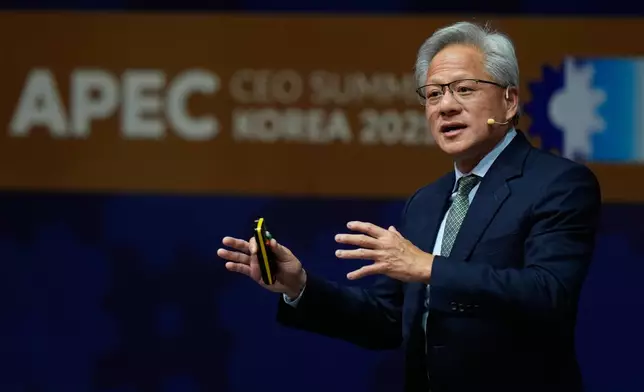
NVIDIA CEO Jensen Huang makes a keynote speech during the special session at the Asia-Pacific Economic Cooperation (APEC) CEO summit in Gyeongju, South Korea, Friday, Oct. 31, 2025. (AP Photo/Ng Han Guan)
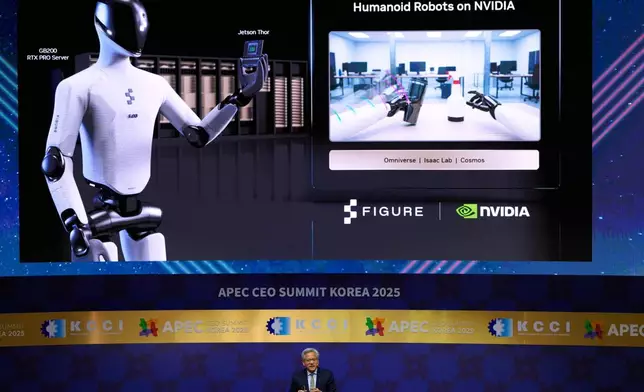
NVIDIA CEO Jensen Huang makes a keynote speech during the special session at the Asia-Pacific Economic Cooperation (APEC) CEO summit in Gyeongju, South Korea, Friday, Oct. 31, 2025. (AP Photo/Ng Han Guan)
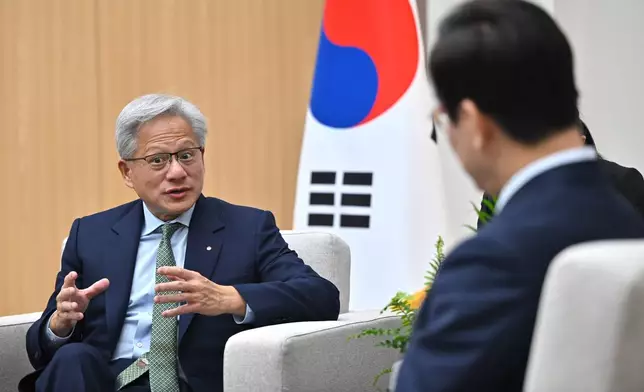
South Korean President Lee Jae Myung, right, talks with Nvidia CEO Jensen Huang during their meeting on the sidelines of the Asia-Pacific Economic Cooperation (APEC) summit in Gyeongju, South Korea Friday, Oct. 31, 2025. (Jung Yeon-je/Pool Photo via AP)
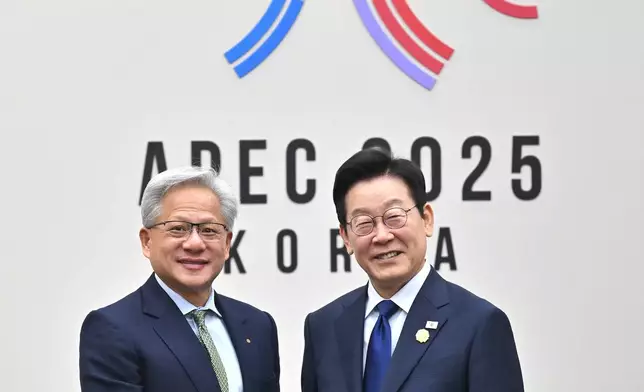
South Korean President Lee Jae Myung, right, shakes hands with Nvidia CEO Jensen Huang during their meeting on the sidelines of the Asia-Pacific Economic Cooperation (APEC) summit in Gyeongju, South Korea Friday, Oct. 31, 2025. (Jung Yeon-je/Pool Photo via AP)
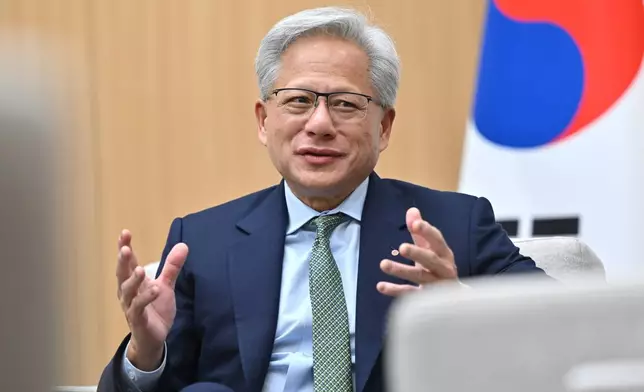
Nvidia CEO Jensen Huang meets with South Korean President Lee Jae Myung on the sidelines of the Asia-Pacific Economic Cooperation (APEC) summit in Gyeongju, South Korea Friday, Oct. 31, 2025. (Jung Yeon-je/Pool Photo via AP)
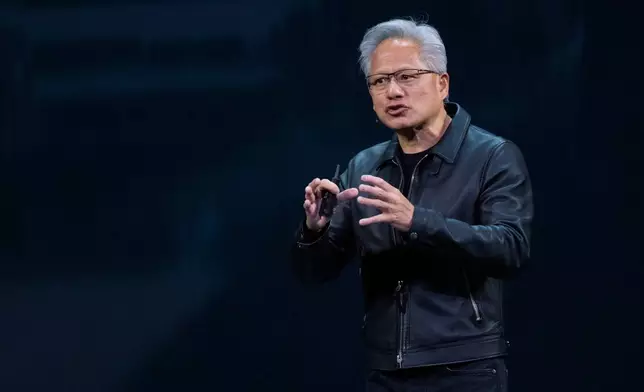
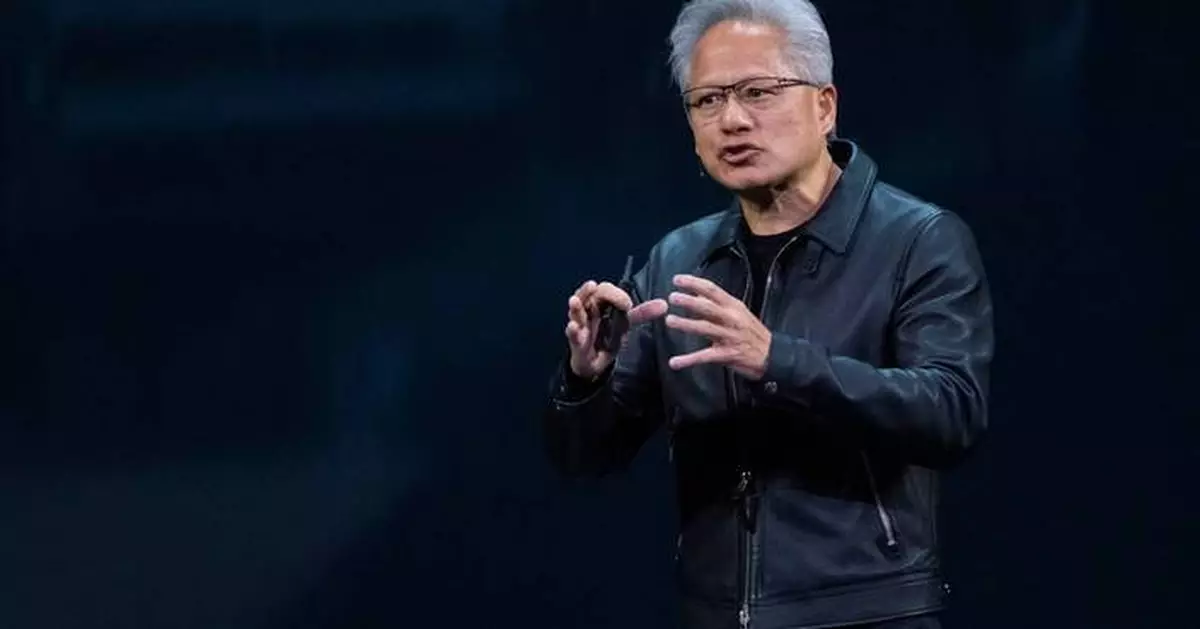
NVIDIA CEO Jensen Huang speaks on how AI infrastructure and AI factories that generate intelligence at scale are powering a new industrial revolution, at Washington Convention Center, Tuesday, Oct. 28, 2025, in Washington. (AP Photo/Manuel Balce Ceneta)
At a news conference, Huang said he hopes to export Nvidia’s most advanced AI chips to China, following U.S. President Donald Trump’s talks with Chinese President Xi Jinping on loosening U.S. chip restrictions as the two leaders pledged to reduce trade tensions.
However, he acknowledged that it was up to Trump to decide, and said there were no current plans to sell the next generation Blackwell chips to China.
Huang has gotten rockstar treatment reminiscent of Apple’s Steve Jobs since arriving in South Korea on Thursday to attend meetings of the Asia-Pacific Economic Cooperation forum in Gyeongju. As APEC host, South Korea is using the gathering of world leaders to showcase its ambitions in AI.
According to Lee’s office and the companies, Nvidia will supply around 260,000 GPUs to support South Korea’s AI computing and manufacturing capabilities.
About 50,000 of the GPUs will be used to support a government project to build a national cloud computing center for AI and Nvidia will provide the same number of GPUs each to Samsung and SK to help them enhance their manufacturing processes through AI and accelerate the development of advanced semiconductors.
Hyundai and Nvidia said they plan to collaborate on developing technologies related to self-driving cars, smart factories and robotics, a process that will be powered by 50,000 of Nvidia’s advanced Blackwell GPUs.
Speaking to business leaders, Huang highlighted how AI and advanced computing are driving a profound transformation across industries, adding to the need for more infrastructure and capacity. South Korea’s strengths in software, technical expertise and manufacturing give it an edge, he said.
“When you combine software, AI technology, and manufacturing, you have the opportunity to really take advantage of robotics,” which is the future of AI, Huang said.
Santa Clara-based Nvidia, whose GPU chips power much of the global AI industry, featured in talks Thursday between Trump and Xi in the South Korean city of Busan, where the leaders agreed to take steps to ease their escalating trade war.
Following the meeting, Trump said he discussed sales of computer chips to China. Trump and former President Joe Biden have imposed restrictions on China’s access to the most advanced chips, including those used for AI. Trump said China will speak with Nvidia about purchasing their chips, but not the company’s latest Blackwell AI chips.
Nvidia has argued that U.S. export controls hinder American competitiveness in one of the world’s largest technology markets and warned that such limits could push other countries toward China’s AI technology. Talking to reporters in South Korea, Huang said he hopes to eventually sell Blackwell chips to China, “but that’s a decision for the president to make.”
“We’re always hoping to return to China,” Huang said. “It’s in the best interest of the United States, it’s in the best interests of China. And so I’m hopeful that both governments will arrive at a conclusion someday where Nvidia’s technology could be exported to China.”
Huang acknowledged U.S. security concerns about Nvidia technology being used by China’s military but argued that China already has ample AI capabilities, making the use of Nvidia chips for military purposes largely unnecessary.
In August, Trump announced a deal with Nvidia and AMD, another chipmaker, to lift export controls on sales of advanced chips to China in exchange for a 15% cut of the revenue, despite concerns among national security experts that such chips will end up in the hands of Chinese military and intelligence services.
Nvidia earlier this week confirmed that it has become the first $5 trillion company, just three months after the company broke through the $4 trillion mark. The milestone underscores the upheaval driven by the AI craze, widely seen as the biggest technological shift since Apple co-founder Jobs unveiled the first iPhone 18 years ago.
But there are also concerns over a potential AI bubble. Officials at the Bank of England warned earlier this month that tech stock prices fueled by the AI boom could collapse, and the head of the International Monetary Fund has issued a similar warning.
Hundreds of people, including reporters, gathered at a restaurant in southern Seoul on Thursday as Huang, dressed casually in a black T-shirt just hours after arriving in South Korea, shared fried chicken and beer with Samsung Electronics Chairman Lee Jae-yong and Hyundai Motor Executive Chair Euisun Chung. The tech executives clinked glasses, took bomb shots, and at one point, Huang stepped outside to hand baskets of chicken and fried cheese to the crowd waiting outside.
The three later took the stage before hundreds of cheering fans at a nearby gaming festival, where Huang said Korea’s gaming scene aided Nvidia’s early success back when it mainly made graphics cards for gamers.
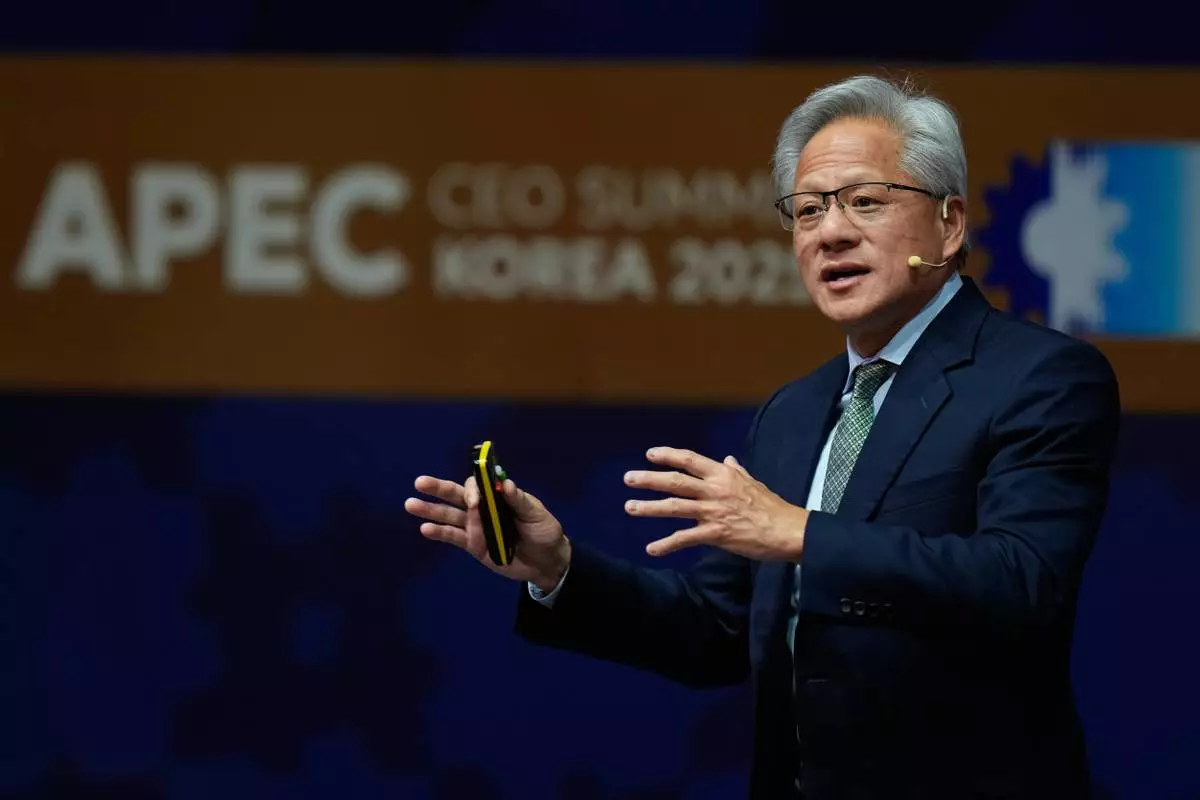
NVIDIA CEO Jensen Huang makes a keynote speech during the special session at the Asia-Pacific Economic Cooperation (APEC) CEO summit in Gyeongju, South Korea, Friday, Oct. 31, 2025. (AP Photo/Ng Han Guan)
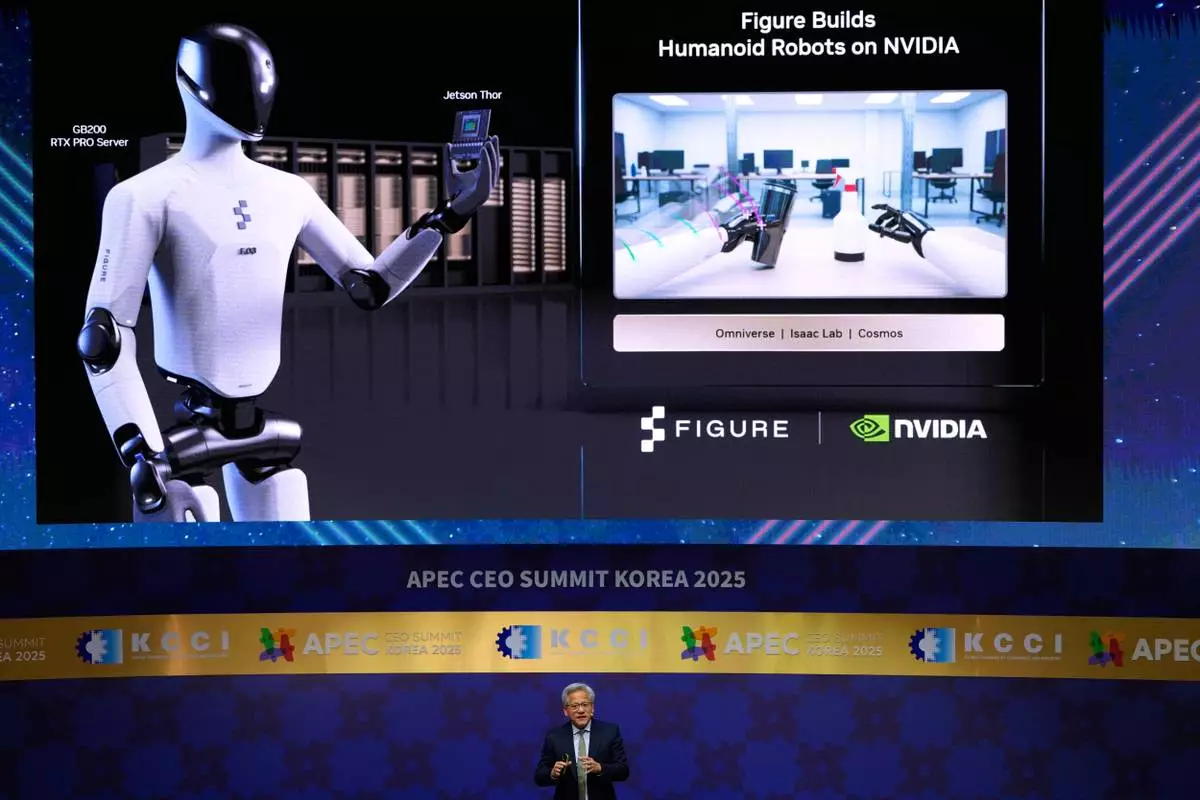
NVIDIA CEO Jensen Huang makes a keynote speech during the special session at the Asia-Pacific Economic Cooperation (APEC) CEO summit in Gyeongju, South Korea, Friday, Oct. 31, 2025. (AP Photo/Ng Han Guan)
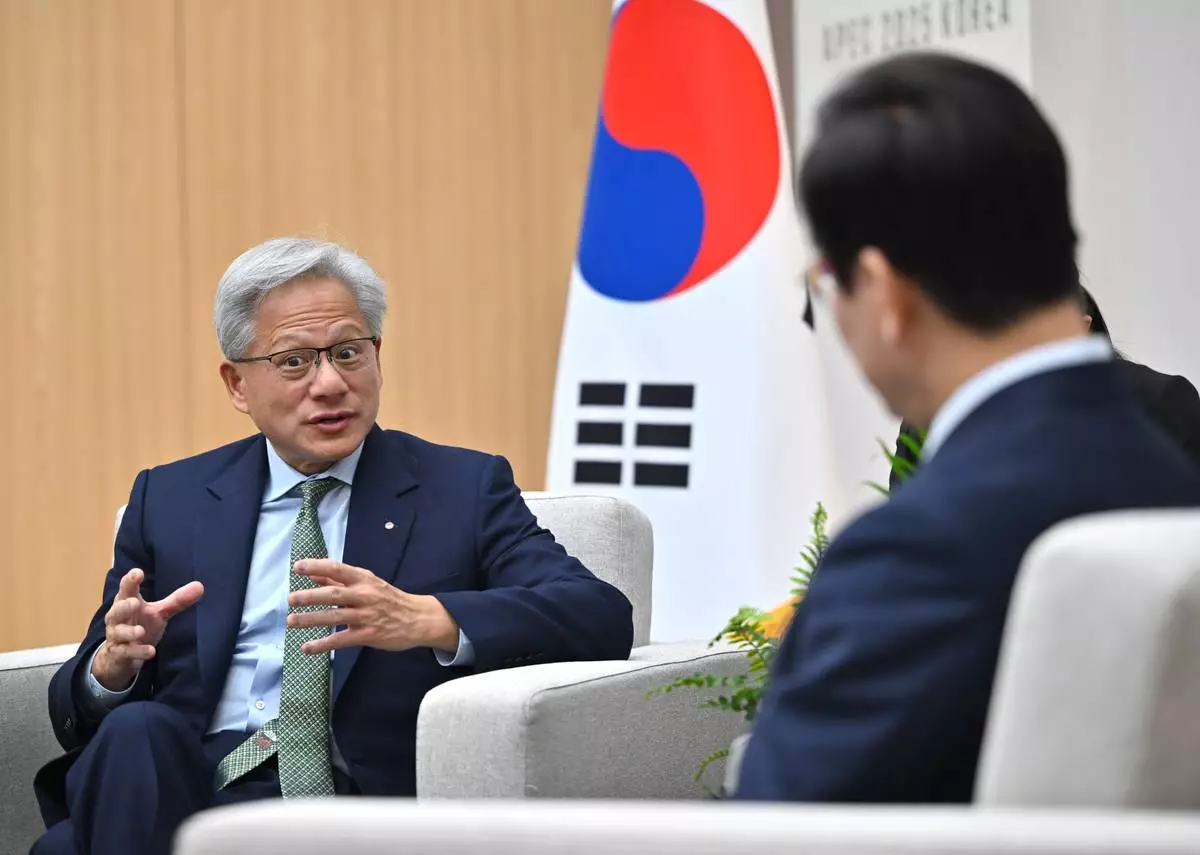
South Korean President Lee Jae Myung, right, talks with Nvidia CEO Jensen Huang during their meeting on the sidelines of the Asia-Pacific Economic Cooperation (APEC) summit in Gyeongju, South Korea Friday, Oct. 31, 2025. (Jung Yeon-je/Pool Photo via AP)
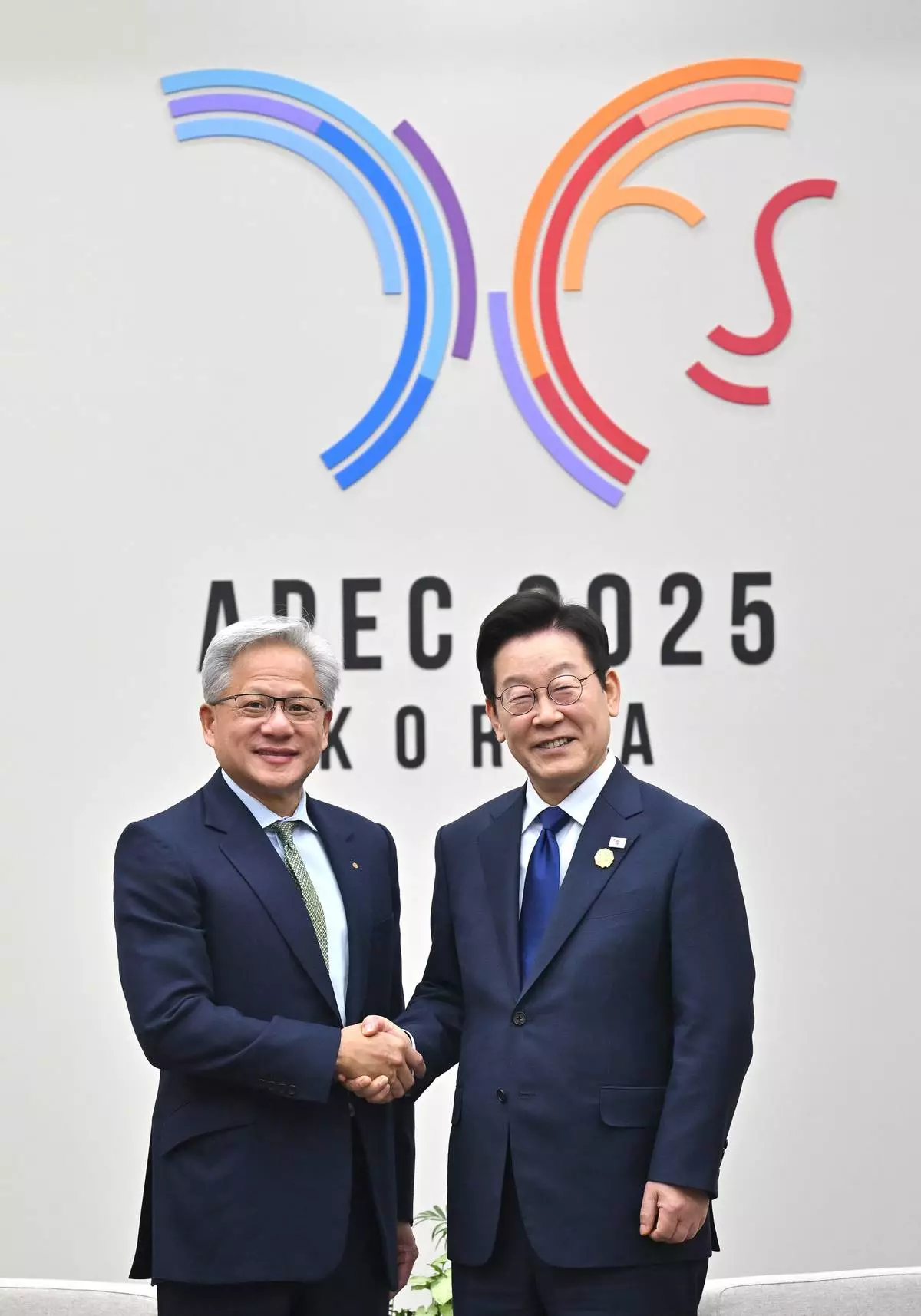
South Korean President Lee Jae Myung, right, shakes hands with Nvidia CEO Jensen Huang during their meeting on the sidelines of the Asia-Pacific Economic Cooperation (APEC) summit in Gyeongju, South Korea Friday, Oct. 31, 2025. (Jung Yeon-je/Pool Photo via AP)
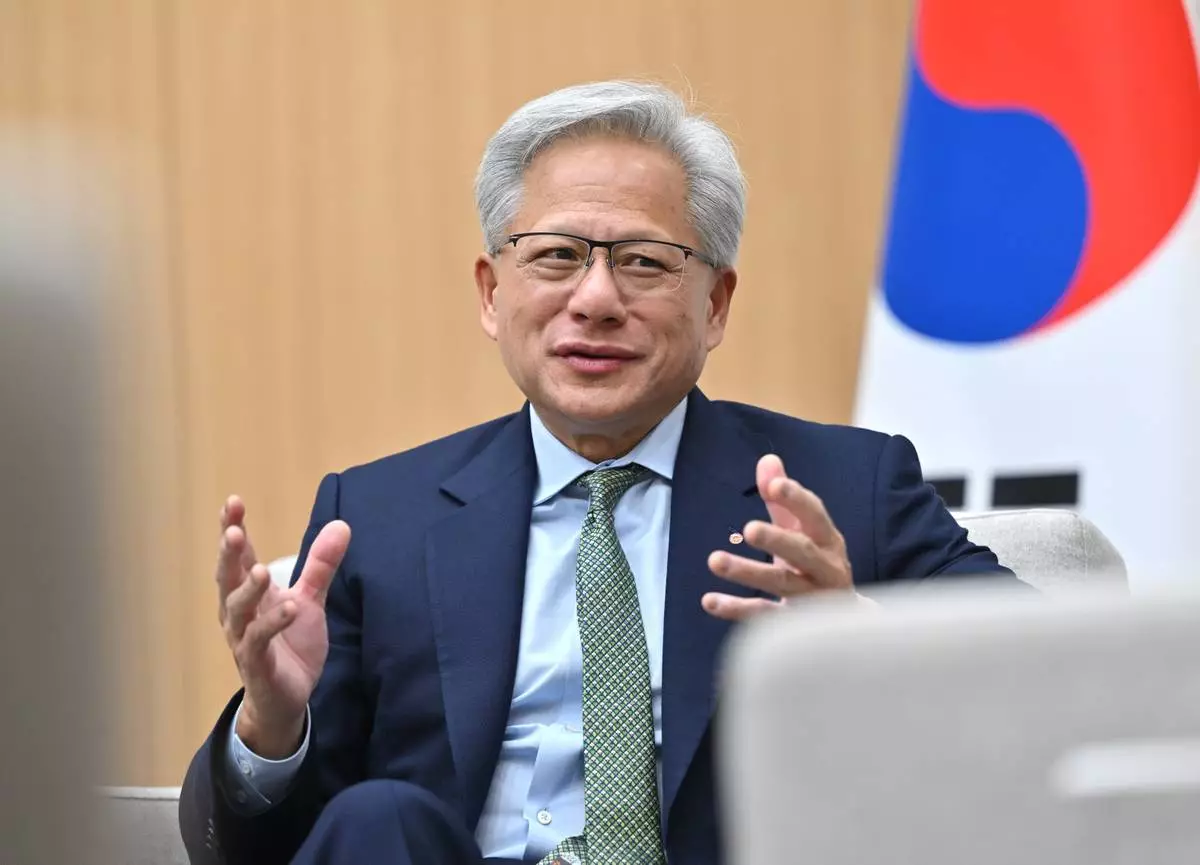
Nvidia CEO Jensen Huang meets with South Korean President Lee Jae Myung on the sidelines of the Asia-Pacific Economic Cooperation (APEC) summit in Gyeongju, South Korea Friday, Oct. 31, 2025. (Jung Yeon-je/Pool Photo via AP)
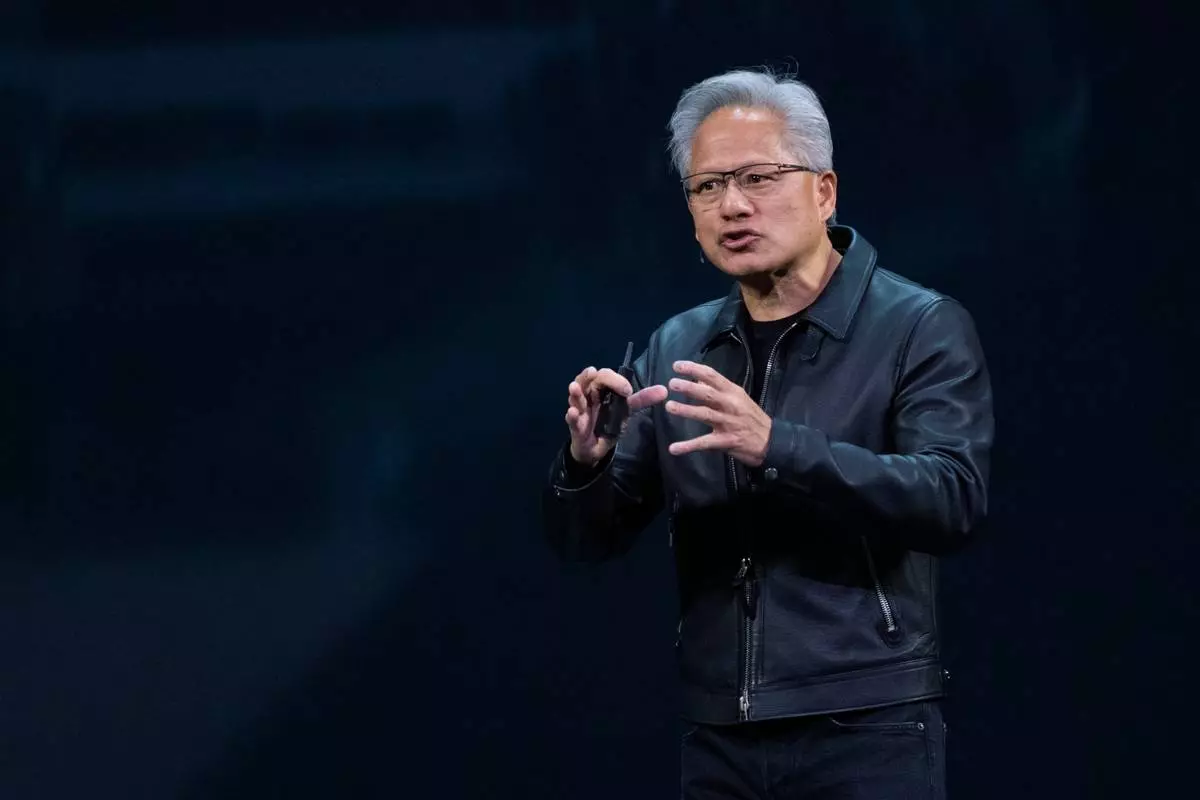
NVIDIA CEO Jensen Huang speaks on how AI infrastructure and AI factories that generate intelligence at scale are powering a new industrial revolution, at Washington Convention Center, Tuesday, Oct. 28, 2025, in Washington. (AP Photo/Manuel Balce Ceneta)