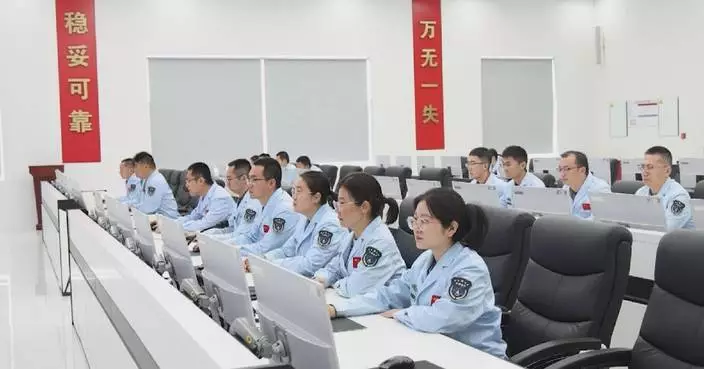
China's Shenzhou spacecraft has undergone a leapfrog enhancement in its capabilities over the past two decades, from taking two days to dock with China's space station to completing the same task in just 3.5 hours.
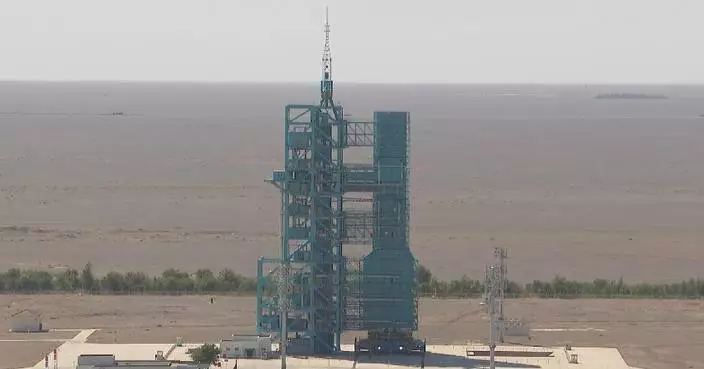
The Shenzhou-21 manned spaceship, which was sent into space from the Jiuquan Satellite Launch Center on Friday night, marked the country's first use of the 3.5-hour fast rendezvous and docking procedure.
He Yu, commander-in-chief of Shenzhou spacecraft, elaborated on the rapid progress.
"Firstly, the speed is faster. The earliest rendezvous and docking took two days, while in the Shenzhou-21 mission, it took 3.5 hours. The earliest return took about one day, while the Shenzhou-21 also has the capability to return after orbiting the Earth three times, which is about five hours, that is faster," said He.
Besides faster speed, He also noted that the spacecraft production has also accelerated, from taking one to two years to develop a single spaceship to achieving batch production capable of supporting two launches per year.
"Secondly, I think we now have greater capability. For example, our cargo transport capability has been significantly boosted – our capability to send cargo into space has increased by 20 percent, while the capability to download cargo has doubled the previous level. The cargo space is three times as much as before, which means that it can effectively support the return of large quantities of scientific experiment samples from the space station. It is also the only spaceship in our country capable of returning to Earth," said He.
"Moreover, our flight capability is stronger. The Shenzhou spaceship can now conduct rendezvous and docking with all docking ports of the space station. We also have the capability for ground emergency rescue standby. In addition, our components and parts are now much more independently controllable," he said.
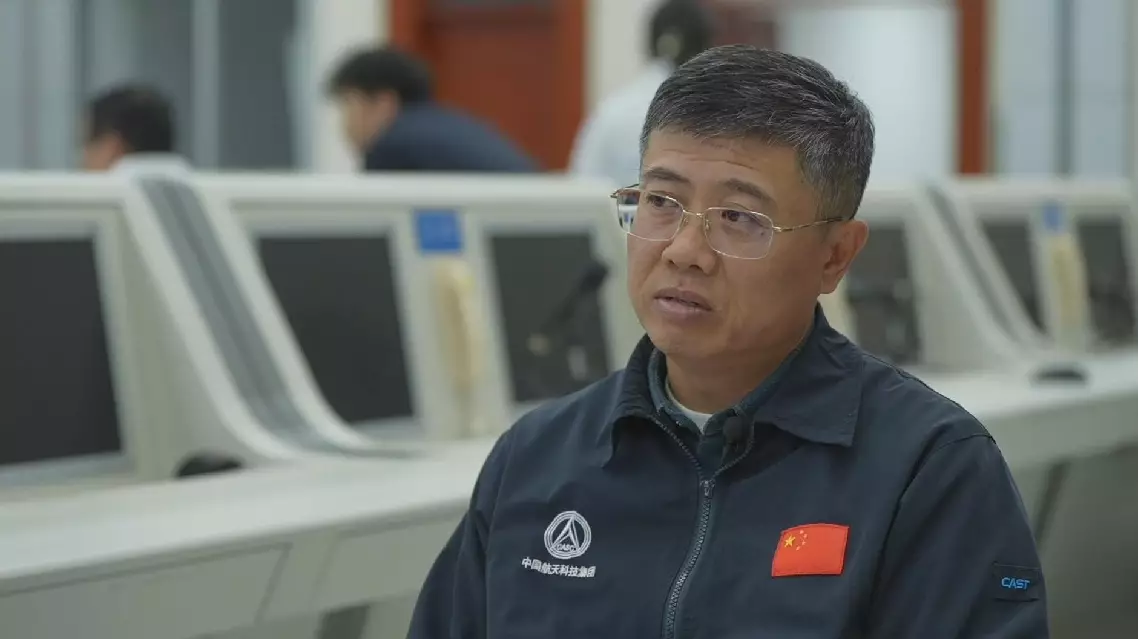
Shenzhou spacecraft achieves leapfrog progress in 20 years: expert
China's Minister of Commerce Wang Wentao outlined the key priorities of the 32nd Asia-Pacific Economic Cooperation (APEC) Ministers Responsible for Trade Meeting, which opened on Friday in Suzhou, East China's Jiangsu province.
In an interview with CGTN ahead of the two-day meeting, Wang said free trade, digital cooperation and green economy are high on the agenda of the meeting.
"The key areas include advancing regional economic integration and the Free Trade Area of the Asia-Pacific, supporting the World Trade Organization (WTO) in strengthening digital cooperation and developing green economy. At present, the international situation is marked by intertwined turbulence and chaos, with intensified geopolitical instability. The rise of unilateralism and protectionism poses serious challenges to the international economic and trade order, disrupting global and Asia-Pacific development. Against this backdrop, all parties have higher expectations for this trade ministers' meeting, hoping that it can build consensus and deliver outcomes," Wang said.
This year marks China's third time hosting the APEC meetings and the 35th anniversary of its membership.
By 2025, China had become the largest trading partner of 13 APEC economies. Trade between China and APEC economies reached 3.7 trillion U.S. dollars, accounting for 57.8 percent of China's total foreign trade.
China has signed 24 free trade agreements or economic and trade arrangements with 31 countries and regions, including 15 APEC economies. In recent years, China has also completed upgrades of free trade agreements with APEC economies such as Singapore and Peru.
The minister said that China has always been a firm supporter and an important contributor to APEC.
"We have actively shared our vast market and development opportunities with all parties. China's door to the world will only open wider and wider. Facing the common challenges, China will continue to fulfill its responsibilities as a major country, further deepen reform, expand high-standard opening-up, and continue to provide new opportunities for the Asia-Pacific region and the world with its new achievements in Chinese modernization," the minister said.
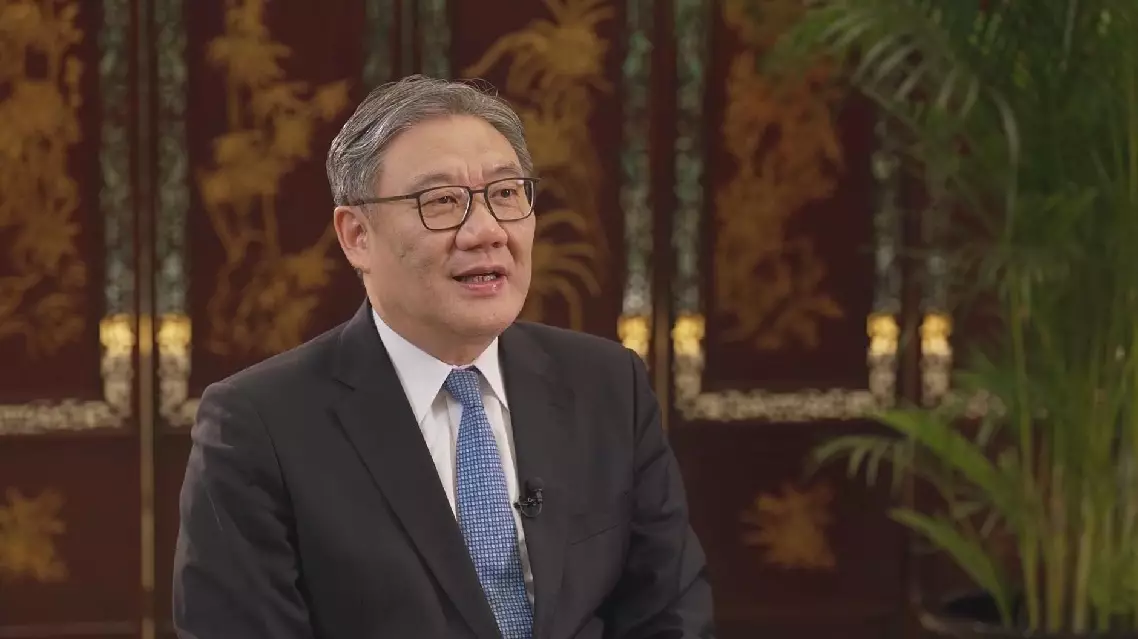
China's Commerce Minister outlines priorities for 32nd APEC trade ministers' meeting