BOSTON (AP) — Two Massachusetts men were arrested Tuesday in connection with a weekend explosion at Harvard Medical School, authorities said.
Logan David Patterson and Dominick Frank Cardoza face charges of conspiracy to damage by means of fire or an explosive, according to the charging document. Patterson, an 18-year-old from Plymouth, and Cardoza, a 20-year-old from Bourne, were arrested Tuesday morning and were due to be arraigned in federal court later in the day.
The explosion occurred early Saturday on the fourth floor of Harvard Medical School's Goldenson Building, which houses labs and offices associated with the school’s neurobiology department. No one was injured.
“Anxiety levels naturally rise when the public learns that an explosion was intentionally caused. I would say those levels may rise even higher in the Boston area,” U.S. Attorney Leah B. Foley said at a news conference, noting that the investigation is ongoing but that there's no further threat to the university.
According to the charging document, witnesses said the men were visiting Wentworth College for Halloween activities, including parties at area schools. On the day of the blast, surveillance footage captured the two walking toward Harvard's medical school. Witnesses said the pair chose the building because it looked abandoned and got into it via the roof, the charging document states.
Witnesses said the pair lit a roman candle outside of the building and placed a cherry bomb inside of a locker in the building that then exploded, according to the charging document.
“Let me be clear: Setting off an explosive device inside a locker at an institution geared toward higher education is not some harmless college prank. It’s selfish, it’s short-sighted, and it’s a federal crime,” said Ted Docks, the FBI's special agent in charge.
Neither Foley nor Docks would speculate as to the motive.
Medical school officials said the explosion caused no structural damage and that all labs and equipment remained intact. The Boston Fire Department determined that the explosion was intentional. Police said officers did not find additional devices during a sweep of the building.
An officer who responded to a fire alarm that morning encountered two people running from the building, university police said.
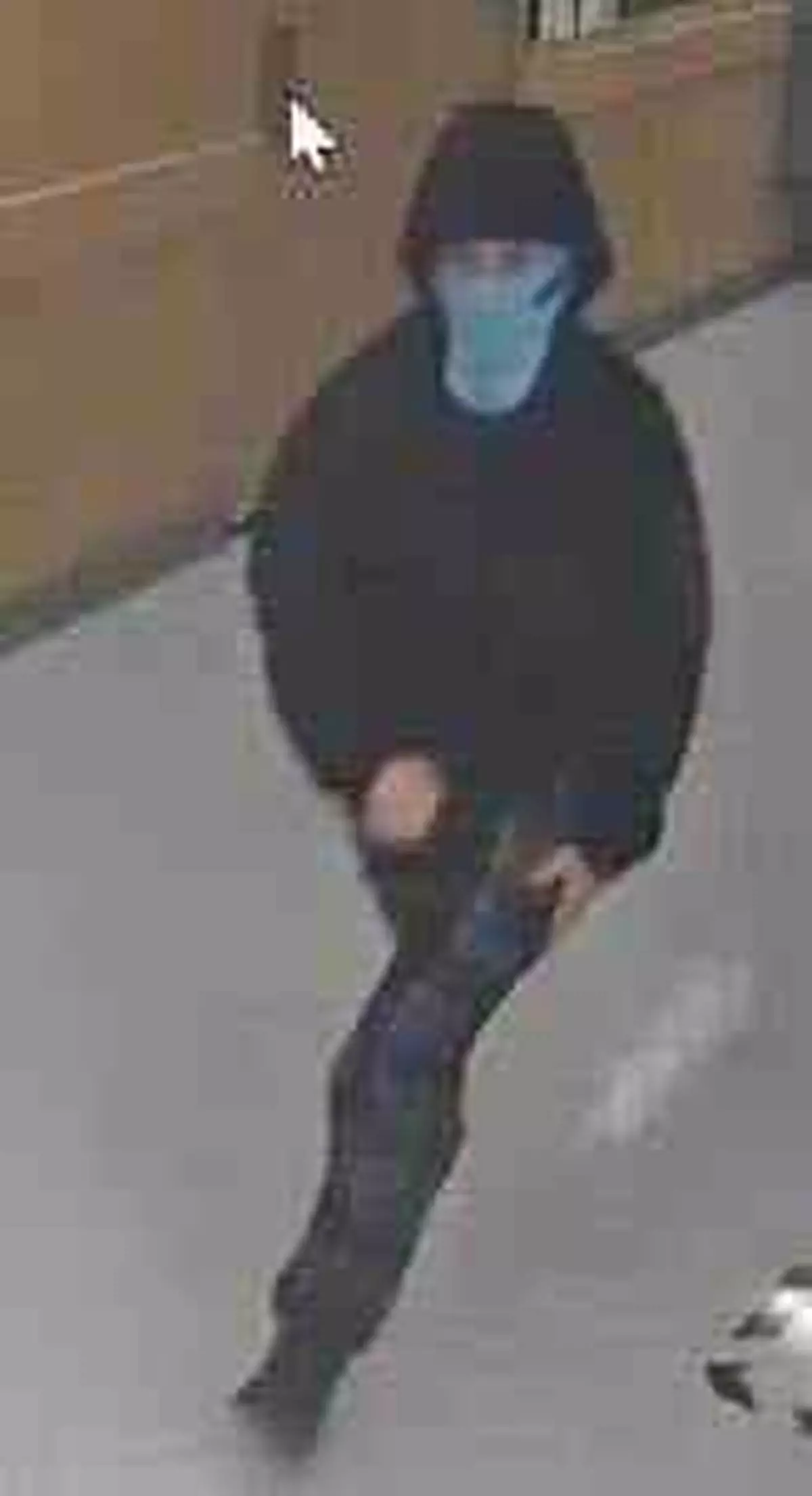
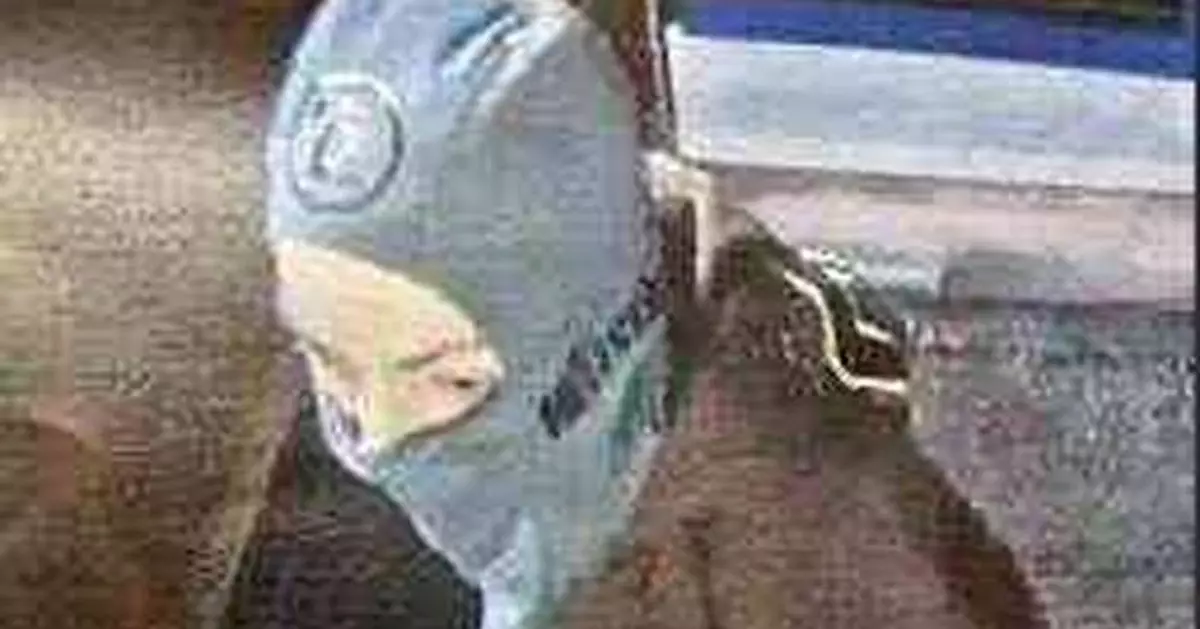
This photo provided by the Harvard University Police Department shows a person of interest in an explosion at the Harvard Medical School in Boston, on Saturday, Nov. 1, 2025. (Harvard University Police Department via AP)
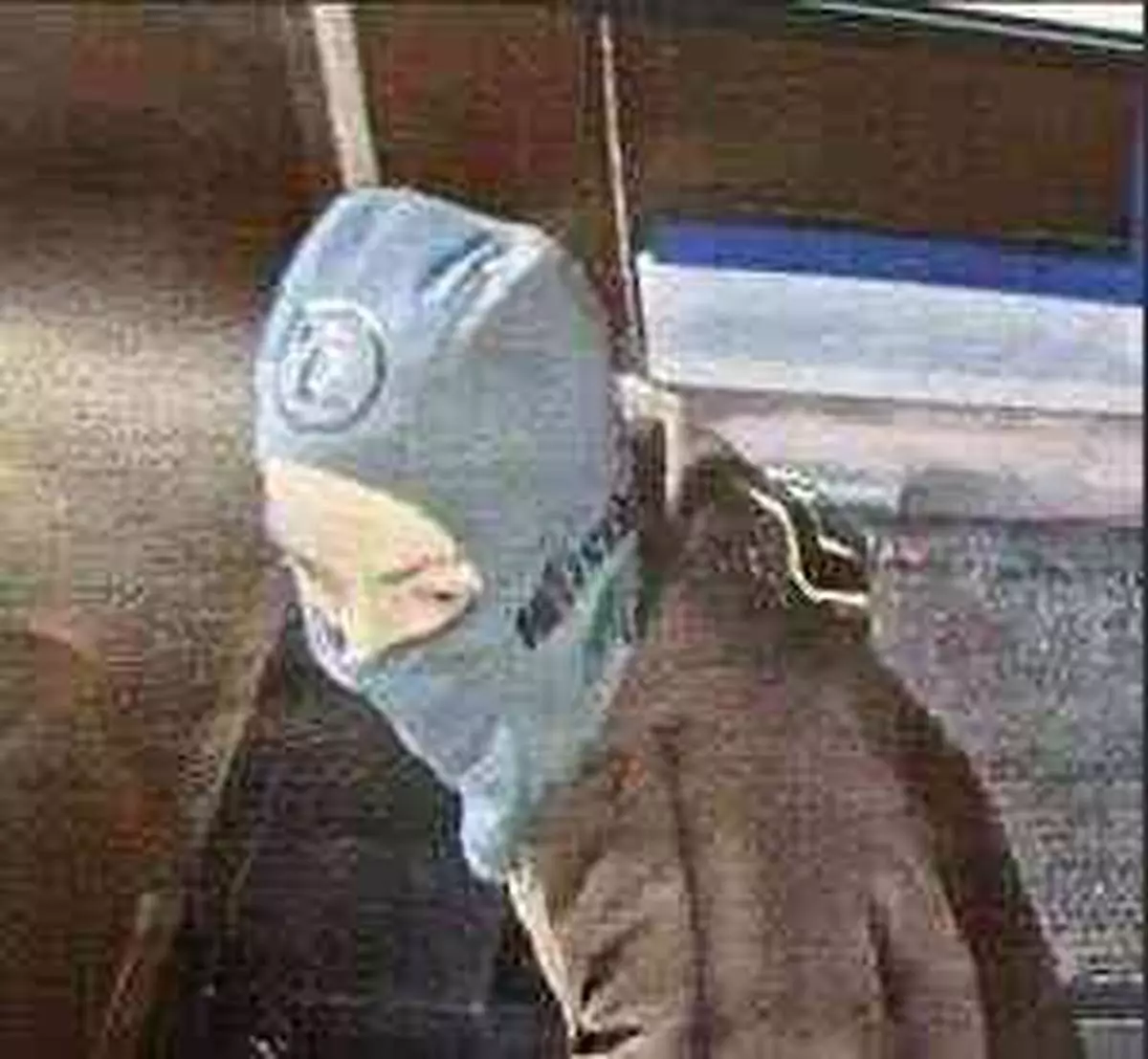
This photo provided by the Harvard University Police Department shows a person of interest in an explosion at the Harvard Medical School in Boston, on Saturday, Nov. 1, 2025. (Harvard University Police Department via AP)
NEW YORK (AP) — A federal appeals court on Monday gave President Donald Trump a new pathway to erasing his hush money criminal conviction, moving the case to a federal court where he could seek to have it dismissed on immunity grounds.
A three-judge panel of the 2nd U.S. Circuit Court of Appeals reversed a lower court decision that had kept the case in state court in New York, where Trump was tried and convicted on 34 felony counts of falsifying business records to obscure a $130,000 payment to adult film performer Stormy Daniels.
The panel ordered a lower court to promptly issue a decision on whether the case should remain in federal court. If that happens, Trump could then argue that verdict should be discarded because of presidential immunity.
The decision also set in motion a halt to proceedings in Trump’s simultaneous state court appeal. Trump denies wrongdoing and was given no punishment in the case, which made him the first U.S. president convicted of a crime.
In a two-page order, the 2nd Circuit panel said it disagreed with the late U.S. District Judge Alvin Hellerstein’s earlier denial of Trump’s request to move the historic case from state court to federal court, a process known as removal.
The appellate judges ruled that Hellerstein “erred in holding that removal is categorically unavailable in a state criminal case” after a conviction and erred in denying that Trump had good cause to make two attempts at moving the case — once after his indictment and again after his trial.
The ruling came a week after 2nd Circuit Judges Raymond J. Lohier Jr., John M. Walker Jr. and José A. Cabranes spent more than an hour questioning Trump’s lawyer and a state prosecutor on the matter.
Lohier and Cabranes were appointed by Democrats. Walker was appointed by a Republican.
In a statement, a spokesperson for Trump's legal team said the president “appreciates the 2nd Circuit’s prompt and correct ruling, as he continues to win against Democrat weaponization of our Justice System.”
The Manhattan District Attorney's Office, which prosecuted the case, declined comment.
Trump’s lawyer, Robert Giuffra Jr., had urged the judges to rule swiftly, arguing that without federal court intervention, the president “will likely have to wait years” for state appellate courts to rule before he can take the matter to the U.S. Supreme Court.
Steven Wu, chief of the appeals division at the Manhattan DA's office, urged the 2nd Circuit panel to uphold Hellerstein’s ruling and leave the case in state court.
Trump had been waging a traditional appeal through New York’s state court system, which included arguments before the mid-level Appellate Division on Nov. 5. That court has yet to rule and could be prevented from doing so indefinitely under Monday’s ruling.
Trump asked the 2nd Circuit to step in after a federal judge in August ruled against the president for a third time. Hellerstein, who died last month at 92, wrote in his decision that “paying hush money to an adult film star or engaging in a cover-up of an embarrassment are not subsumed in presidential immunity.”
Trump first sought to move the case to federal court weeks after he was indicted in March 2023. He tried again after his conviction and the Supreme Court’s July 2024 ruling that presidents and ex-presidents can’t be prosecuted for official acts and prosecutors can’t use official acts as evidence that unofficial actions were illegal.
After Trump appealed Hellerstein’s second denial, the 2nd Circuit ordered the judge to reconsider, finding that he had failed to weigh “important issues relevant” to the president’s request to move the case.
That panel, which also included Lohier, said it expressed no view on how he should rule but instructed Hellerstein to closely review evidence that Trump claimed was related to official acts and whether Trump could argue those actions were taken as part of his White House duties.
Giuffra told the 2nd Circuit panel last week that prosecutors at Trump’s trial had used the type of official acts evidence that was later barred by the Supreme Court’s immunity ruling, including testimony about his Oval Office conversations, workflow and social media posts.
Giuffra also took issue with the prosecution’s description of the hush money payment as an illegal campaign contribution under the Federal Election Campaign Act, arguing that such allegations belong in federal court, not state court.
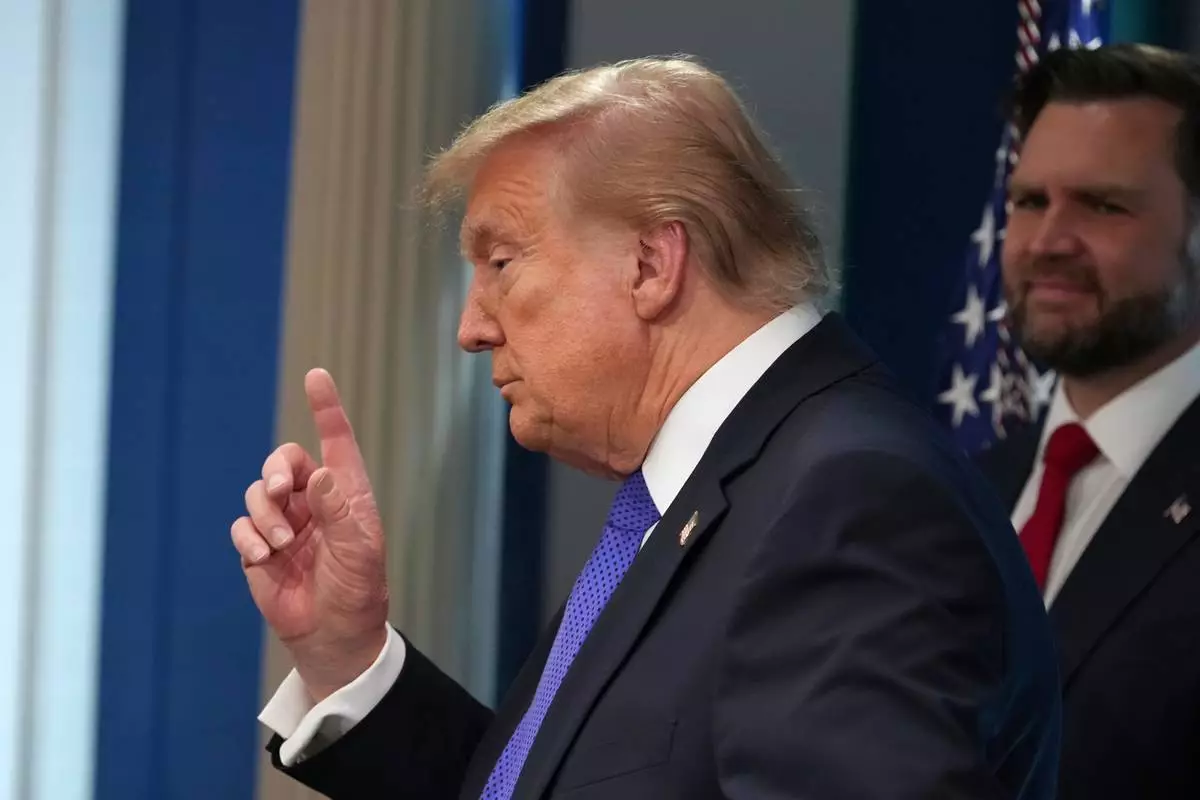
President Donald Trump gestures to a reporter alongside Vice President JD Vance during a news conference in the James Brady Press Briefing Room of the White House, Friday, Nov. 20, 2026, in Washington. (AP Photo/Alex Brandon)