The orbiter of China's Mars mission Tianwen-1 has successfully captured the images of an interstellar object, coded 3I/ATLAS, using its high-resolution camera, according to the China National Space Administration (CNSA).
Discovered on July 1, 2025, by a survey telescope in Chile, 3I/ATLAS is the third known interstellar object to visit the solar system and marks the first interstellar object captured by a Chinese spacecraft.
Click to Gallery
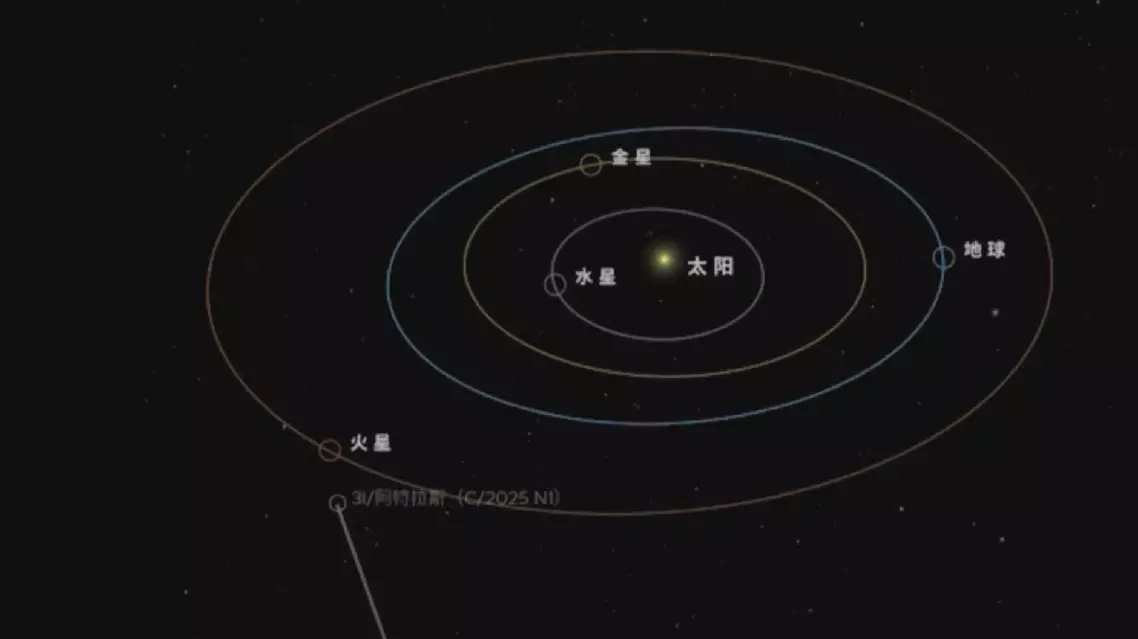
China's Mars orbiter captures images of interstellar object 3I/ATLAS
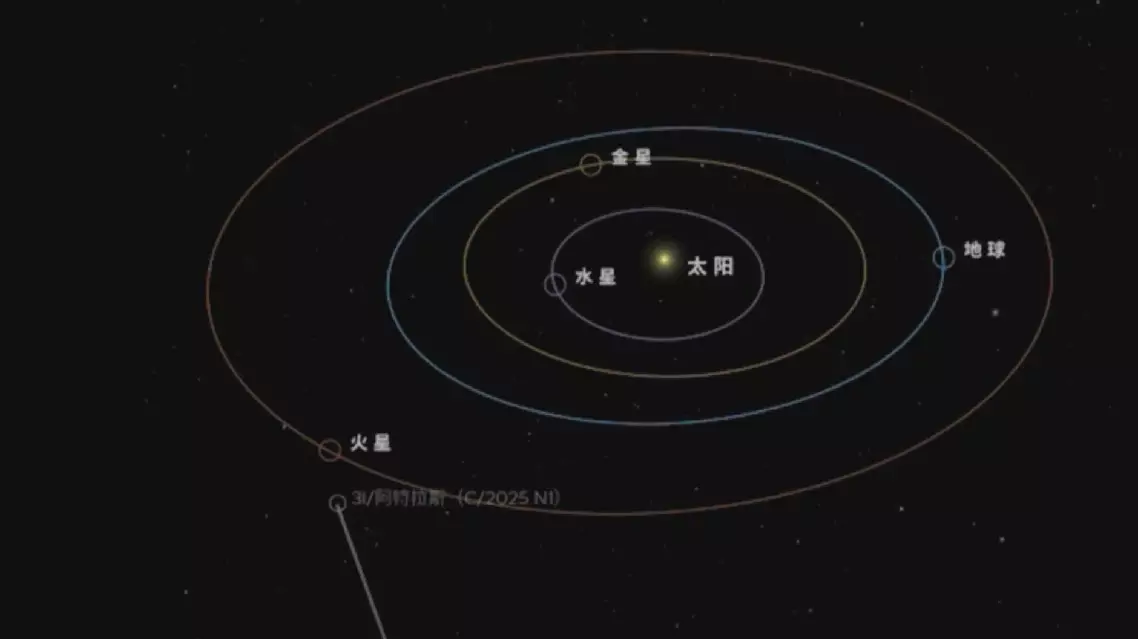
China's Mars orbiter captures images of interstellar object 3I/ATLAS
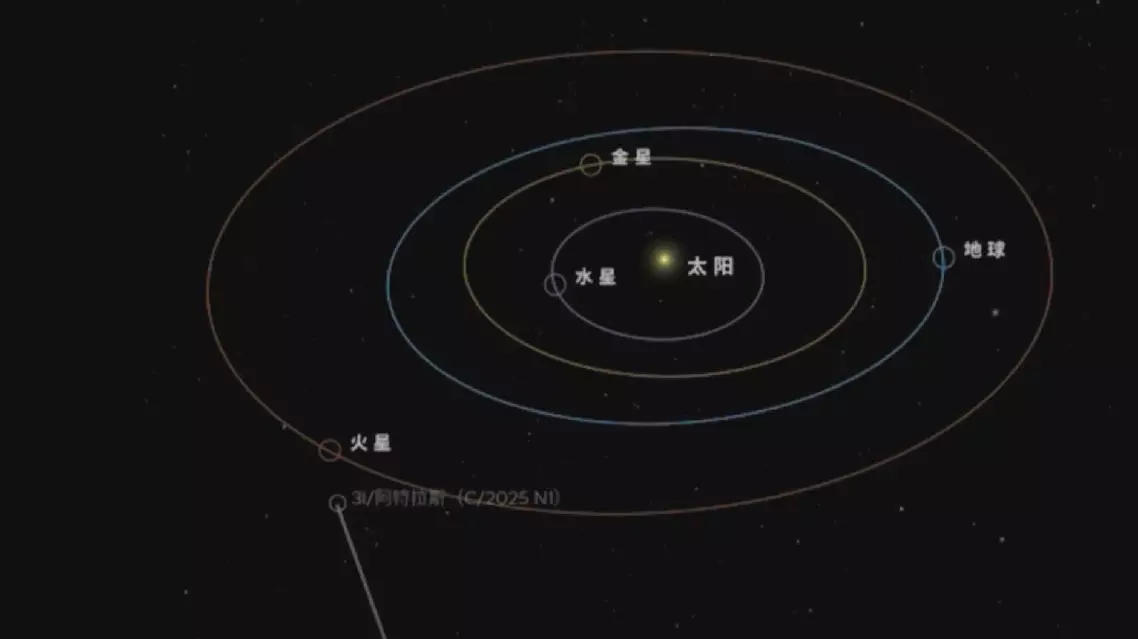
China's Mars orbiter captures images of interstellar object 3I/ATLAS
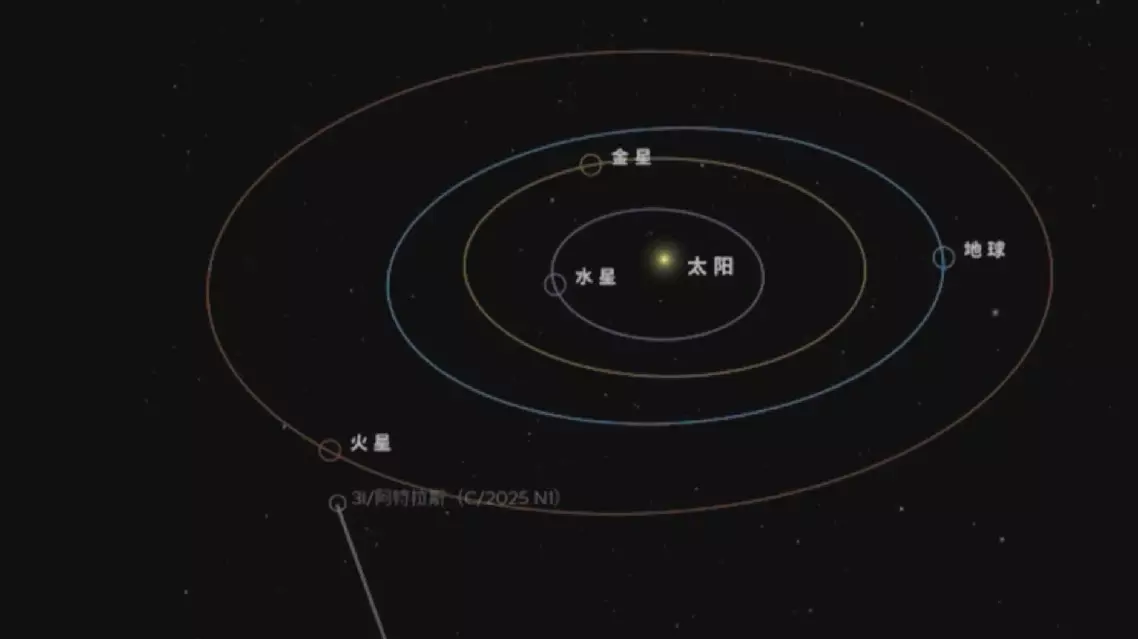
China's Mars orbiter captures interstellar object 3I/ATLAS
During the observation, the spacecraft was about 30 million kilometers from 3I/ATLAS, making it one of the closest observations by a probe of this interstellar object.
Scientists believe this object likely formed around ancient stars near the center of the Milky Way, with an estimated age of between 3 and 11 billion years -- possibly older than the solar system. This makes 3I/ATLAS a rare sample in studying the composition and evolution of exoplanets, and the early history of stars, holding significant scientific value.
Tianwen-1, China's first Mars mission, carries optical payloads originally designed to image the bright Martian surface. Capturing such a distant and faint object -- between 10,000 and 100,000 times dimmer than typical Martian targets -- represents the first attempt of its kind for the mission.
"Because 3I/ATLAS follows a hyperbolic orbit, unlike the elliptical orbits of objects around the Sun, it clearly originates from beyond the solar system and will eventually move away from it," said Liu Jianjun, chief designer of the ground application system for China's first Mars exploration mission.
Data received and processed by the ground application system showed clear cometary features in the images. Researchers created an animation from a series of images taken over 30 seconds, demonstrating the object's movement through space. These observations are now being used for further scientific study of 3I/ATLAS.
"From Oct 1 to 4, Tianwen-1 captured images each day and sent the data back to the ground. Using these consecutive images, we were able to create an animation that effectively shows its (3I/ATLAS) flight path," he said.
This successful observation represents an important extended mission for Tianwen-1. The detection of such a faint celestial object serves as a valuable technical test for China's Tianwen-2 mission, which was launched in May -- aiming to collect samples from a near-Earth asteroid and explore a main-belt comet, according to the CNSA.
"The successful observation proves the long-term reliability of our orbiter. Tianwen-2 probe will also explore small, faint celestial objects, and we hope to build on this experience to test technology and accumulate expertise for future deep-space missions," Liu added.
The Tianwen-1 team began preparing for the observation in early September. After repeated simulations and feasibility assessments, they determined to use the high-resolution camera on the orbiter and designed optimal imaging strategies, ultimately achieving successful observation.
China's Tianwen-1 mission, consisting of an orbiter, a lander and a rover, was launched in July 2020. The probe entered Mars' orbit in February 2021 and has been operating stably for roughly four years and eight months.
China's Mars orbiter captures images of interstellar object 3I/ATLAS
China's Mars orbiter captures images of interstellar object 3I/ATLAS
China's Mars orbiter captures images of interstellar object 3I/ATLAS
China's Mars orbiter captures interstellar object 3I/ATLAS