Business insiders from the African continent have welcomed the newly-established pavilion for Least Developed Countries (LDCs) set up at the 8th China International Import Expo (CIIE) in Shanghai, saying it helps bring greater trade equity and will open up opportunities for developing countries to take advantage of the huge Chinese market.
This year's CIIE, which opened on Wednesday and will run till Nov. 10, features the largest exhibition space in the event's history and sees record participation levels with more than 4,100 enterprises from 138 countries and regions in attendance.
Since its inception in 2018, the event has consistently provided various preferential treatments and conveniences for the least developed countries. Earlier this year, China expanded its zero-tariff policy for least developed countries (LDCs), with the country extending zero-tariff treatment to cover 100 percent of tariff lines for all 53 African nations that have diplomatic ties with the country.
This year, for the first time, a dedicated exhibition area for products from the LDCs has been established at the CIIE, aiming to help their enterprises fully leverage zero-tariff policies and tap into the vast Chinese market.
Many see the expo as a valuable platform to access new markets and share the benefits of China's continued opening-up. The event also showcased China's firm commitment to global cooperation and injecting much-needed certainty and stability into the global economy.
Nigerian businesses have been a regular feature at the annual CIIE, with the trade exhibition serving as an important avenue for many Nigerian businesses to showcase their products on the global stage.
Industry insiders have also hailed the advantages afforded by China's zero-tariff policy for countries such as Nigeria, which allows them to achieve a greater trading balance.
"It's a deliberate policy on the part of the Chinese authorities or the Chinese government to open up their markets, for developing countries, which I think is a very, very good thing. Because it's an unusual thing for countries to have a deliberate policy to encourage imports into their own country. And I think this is an appreciation of the need to ensure some balance, some equity in terms of trade. And it opens up a lot of opportunities for countries, particularly from the developing countries, to take advantage of the huge Chinese market," said Muda Yusuf, CEO of the Nigeria's non-profit Center for the Promotion of Private Enterprise organization.
Many are encouraged by the setting up of the special pavilion at the CIIE and the expanded zero-tariff policy, saying it will further galvanize African countries to scale up their exports to the Chinese market.
"It's a matter of being focused and [having the] intention to do a lot of business with China. With the [zero] tariff [policy], the way it's been put now, it means it's easier for you to sell things into that country. And all they are after is to expand trade. All they are after is to also give us opportunities to sell things to them. But we must be sure that our products meet their quality. Because that is very, very key," said Asiwaju Michael Olawale-Cole, 2nd Deputy President of the Nigerian Association of Chambers of Commerce, Industries, Mines and Agriculture.
China is Nigeria's largest trading partner and accounts for the bulk of imports into the country, but Yusuf pointed to the need for Nigeria to expand its own exports to include other sectors beyond oil and gas, though he said greater investment is needed to deliver on this potential.
"What Nigeria needs to do is to first diversify its export portfolio. Because right now, if you look at our trade between Nigeria and China, it's dominated largely by crude oil and gas. And of course, in recent [times] we are seeing increase in the export of solid minerals to China. But we need to do a lot more to ensure that we invest more in building capacity in value addition for our solid minerals, for instance, and more importantly for our agricultural products," he said.
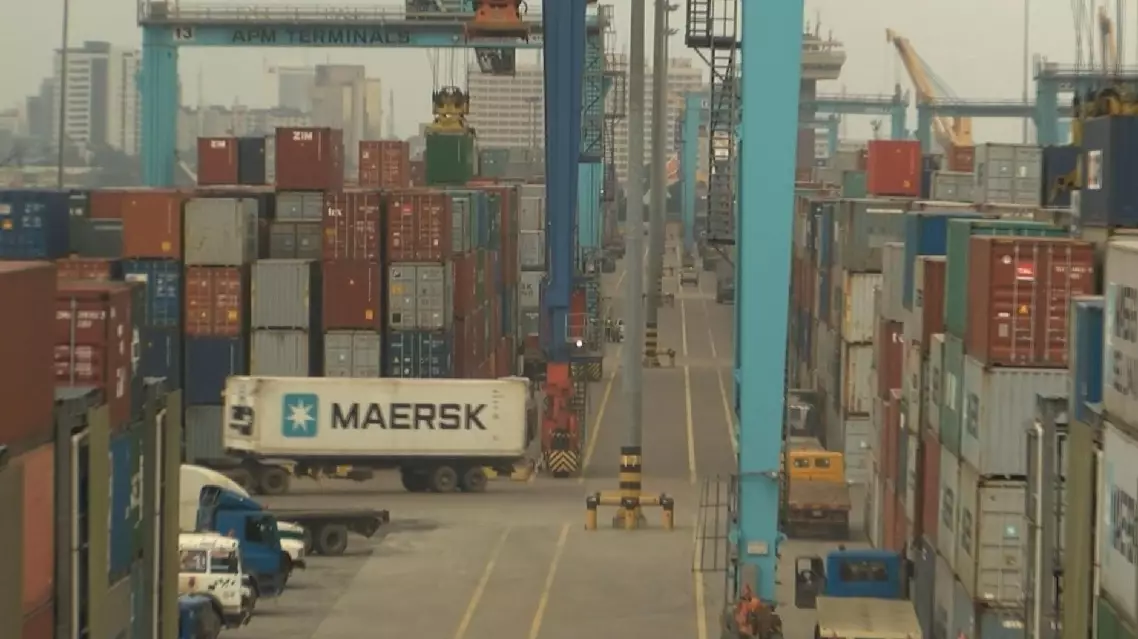
African nations welcome new pavilion for least developed countries (LDC) at CIIE