KYIV, Ukraine (AP) — Ukrainian drones struck a major oil refinery in Russia’s Volgograd region for the second time in almost three months, Ukraine’s general staff said Thursday. Russian officials did not confirm the attack, although the local governor said drones started a fire at an unspecified industrial facility in the region.
Ukraine’s general staff said in a statement that the attack took place the previous day. The refinery is the largest producer of fuel and lubricants in Russia’s Southern Federal District, processing more than 15 million tons of crude annually — about 5.6% of the country’s total refining capacity, according to Ukrainian officials.
Russia and Ukraine have traded almost daily assaults on each other’s energy infrastructure as U.S.-led diplomatic efforts to stop the nearly four-year war make no impact on the battlefield.
Ukraine’s long-range drone strikes on Russian refineries aim to deprive Moscow of the oil export revenue it needs to pursue its full-scale invasion. Russia wants to cripple the Ukrainian power grid, seeking to deny civilians access to heat, light and running water in what Kyiv officials say is an attempt to “weaponize winter.”
Ukrainian President Volodymyr Zelenskyy said foreign countries are helping Kyiv in its efforts to keep the power grid operating amid Russia’s onslaught.
“Practically every day, our power engineers, repair brigades, and the State Emergency Service of Ukraine are carrying out restorations on-site after attacks: hits keep occurring across various points, especially in our communities, and especially near the Russian border and close to the front,” Zelenskyy said late Wednesday.
Also, saboteurs inside Russia burned dozens of locomotives in a bid to hamper the logistics of Russia’s armed forces, Ukraine’s military intelligence said Thursday.
The Freedom of Russia group used Molotov cocktails to set fire to the control and power supply systems of dozens of locomotives that transported military cargo, according to a statement from GUR, as the intelligence agency is known.
It was not possible to independently verify the claim, nor did the statement say whether the GUR was involved in the operation. Russian officials offered no immediate comment.
Ukraine, meanwhile, has attempted to strike targets on Russian soil with domestically developed long-range drones.
Ukrainian forces also struck three fuel lubricants facilities in the Russian-occupied Crimean peninsula and a storage and assembly base for Russia’s Shahed drones in an occupied area of Ukraine’s eastern Donetsk region, the general staff statement said.
In the Kostroma region northeast of Moscow, a Ukrainian aerial attack hit unidentified “energy infrastructure facilities,” Gov. Sergei Sitnikov said. There were no casualties and power supplies were not disrupted, he said.
Unconfirmed media reports said the attack targeted a hydroelectric power plant in the Kostroma region, one of the biggest in Russia.
The Russian Defense Ministry said Thursday its air defenses shot down 75 drones overnight over multiple Russian regions and annexed Crimea.
Russia, meantime, attacked the city of Kamianske in Ukraine’s eastern Dnipropetrovsk region with drones overnight, killing one person and injuring eight others, the head of the regional military administration, Vladyslav Haivanenko, said on his official Telegram channel.
Several fires broke out and the roof of a four-story building was partially destroyed, he said.
The Russian military also continued its assault on Ukraine’s rail infrastructure, causing delays and route changes in Ukraine’s eastern regions of Kharkiv and Dnipropetrovsk and in the southern Zaporizhzhia region, Ukraine’s state-owned railway company Ukrzaliznytsia said.
Russia attacked Ukraine with 135 drones of various types overnight on Thursday, Ukraine’s air force said.
Follow AP’s coverage of the war in Ukraine at https://apnews.com/hub/russia-ukraine

In this image, made from video and provided by Russian Defense Ministry Press Service on Thursday, Nov. 6, 2025, Russian soldiers fire a Malka self-propelled gun towards Ukrainian positions on an undisclosed location in Ukraine. (Russian Defense Ministry Press Service via AP)
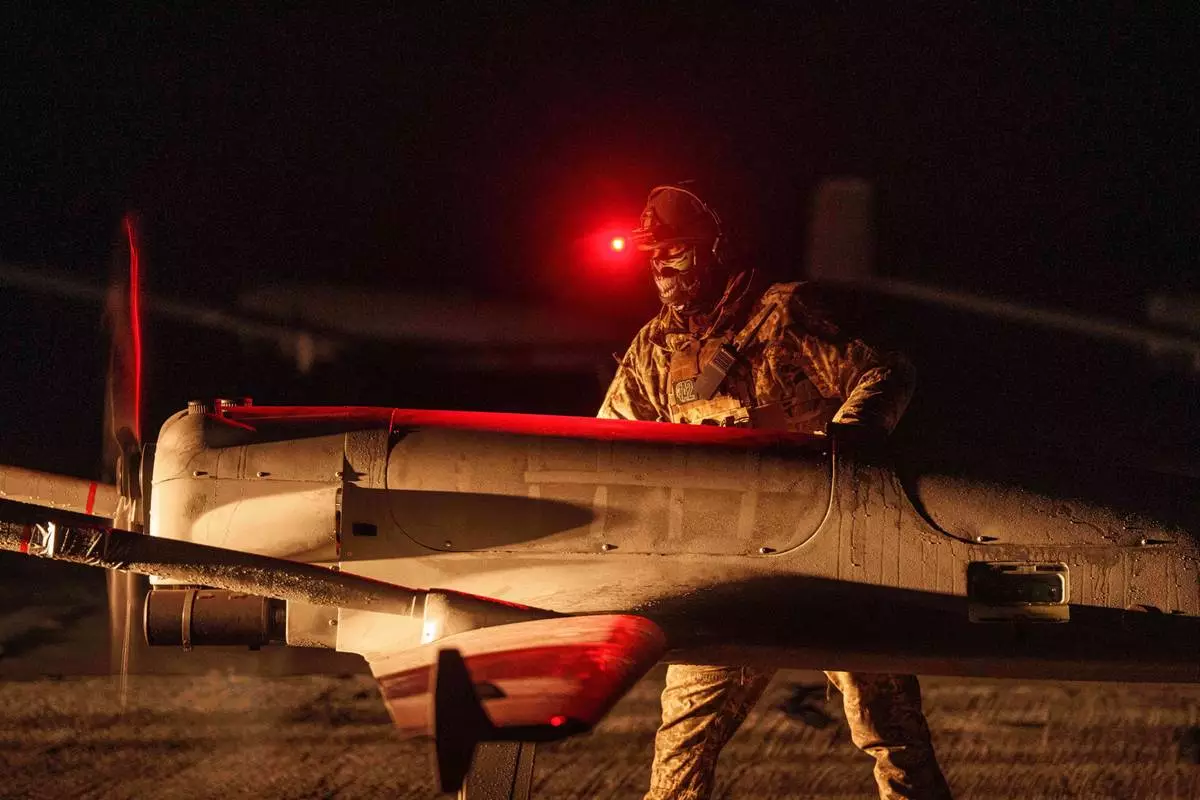
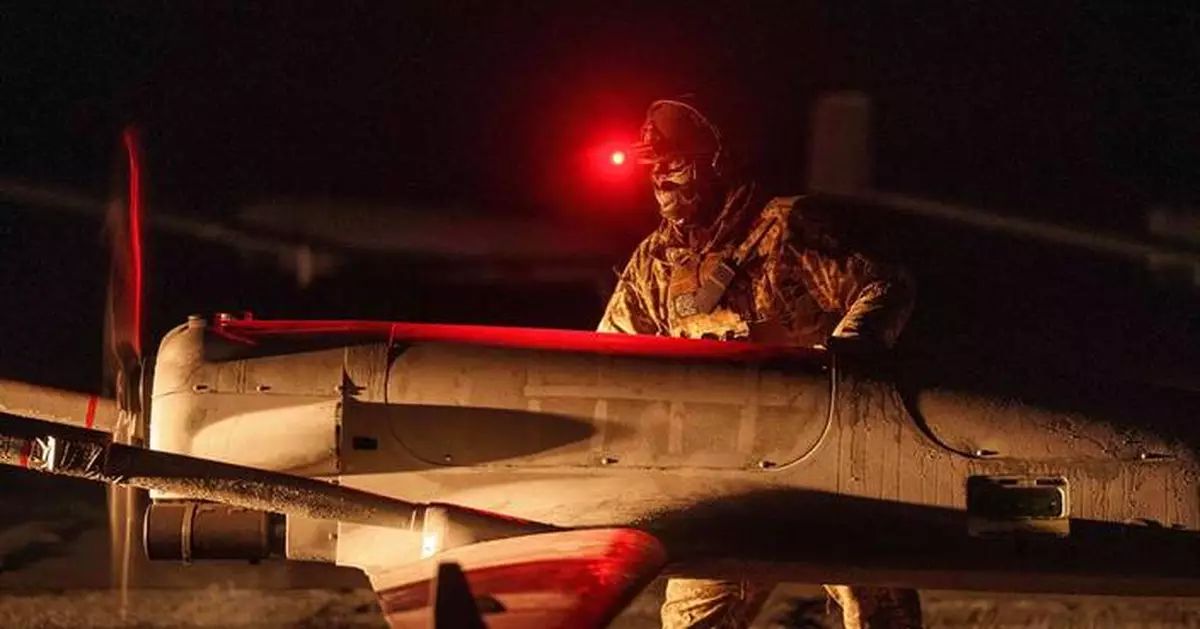
FILE - A Ukrainian serviceman of the 14th Separate Unmanned Aerial Systems Regiment prepares a long-range drone An-196 Liutyi before takeoff in undisclosed location, Ukraine, Tuesday, Oct. 14, 2025. (AP Photo/Evgeniy Maloletka, File)
NEW YORK (AP) — No quick dispatching of disease investigators. No televised news conference to inform the public. No timely health alerts to doctors.
In the midst of a hantavirus outbreak that involves Americans and is making headlines around the world, the U.S. government's top public health agency, the Centers for Disease Control and Prevention, has been uncharacteristically missing in action, according to a number of experts.
To President Donald Trump, "We seem to have things under very good control," as he told reporters Friday evening.
To experts, the situation aboard a cruise ship has not spiraled because, unlike COVID-19 or measles or the flu, hantavirus does not spread easily. It has been health experts in other countries, not the United States, who have been dealing primarily with the outbreak in the past week.
“The CDC is not even a player," said Lawrence Gostin, an international public health expert at Georgetown University. “I've never seen that before.”
Not until late Friday did CDC actions accelerate.
Health officials confirmed the deployment of a team to Spain's Canary Islands, where the ship was expected to arrive early Sunday local time, to meet the Americans onboard. They said a second team will go to Offutt Air Force Base in Nebraska as part of a plan to evacuate American passengers from the ship to a quarantine center. Also, the CDC issued its first health alert to U.S. doctors, advising them of the possibility of imported cases.
The CDC's diminished role in this outbreak is an indicator the agency is no longer the force in international health or the protector of domestic health that it once was, some experts said.
The hantavirus outbreak is “a sentinel event” that speaks to “how well the country is prepared for a disease threat. And right now, I’m very sorry to say that we are not prepared,” said Dr. Jeanne Marrazzo, chief executive officer of the Infectious Diseases Society of America.
Early last month, a 70-year-old Dutch man developed a feverish illness on a cruise ship traveling from Argentina to Antarctica and some islands in the South Atlantic. He died less than a week later. More people became sick, including the man's wife and a German woman, who both died.
Hantavirus was first identified as a cause of sickness of one of the cases on May 2. The World Health Organization swung into action and by Monday was calling it an outbreak. About two dozen Americans were on the ship, including about seven who disembarked last month and 17 who remained on board.
For decades, the CDC partnered with the WHO in such situations. The CDC acted as a mainstay of any international investigation, providing staff and expertise to help unravel any outbreak mystery, develop ways to control it and communicate to the public what they should know and how they should worry.
Such actions were a large reason why the CDC developed a reputation as the world's premier public health agency.
But this time, the WHO has been center stage. It made the risk assessment that has told people the outbreak is not a pandemic threat.
“I don’t think this is a giant threat to the United States,” said Jennifer Nuzzo, director of Brown University’s Pandemic Center. But how this situation has played out “just shows how empty and vapid the CDC is right now,” she said.
The current situation comes after 16 tumultuous months during which the Trump administration withdrew from the WHO, has restricted CDC scientists from talking to international counterparts at times and embarked on a plan to build its own international public health network through one-on-one agreements with individual countries.
The administration has laid off thousands of CDC scientists and public health professionals, including members of the agency's ship sanitation program.
As this was playing out, Trump's health secretary, Robert F. Kennedy Jr., said he was working to “restore the CDC’s focus on infectious disease, invest in innovation, and rebuild trust through integrity and transparency.”
The CDC has not been completely silent on hantavirus.
The agency on Wednesday issued a short statement that said the risk to the American public is “extremely low,” and described the U.S. government as “the world’s leader in global health security.”
Said Nuzzo: “Not only was that not helpful, it actually does damage because a core principle of public health communications is humility.”
The CDC's acting director, Dr. Jay Bhattacharya, posted a message on social media that the agency was lending its expertise in coordinating with other federal agencies and international authorities. Arizona officials this week said they learned from the CDC that one of the Americans who left the ship — a person with no symptoms and not considered contagious — had already returned to the state. WHO officials said the CDC has been sharing technical information.
The CDC also is “monitoring the health status and preparing medical support for all of the American passengers on the cruise,” Bhattacharya wrote.
But federal health officials have mostly been tight-lipped, declining interview requests.
In interviews this week, some experts made a comparison with a 2020 incident involving the Diamond Princess, a cruise ship docked in Japan that became the setting of one of the first large COVID-19 outbreaks outside of China.
The CDC sent personnel to the port, helped evacuate American passengers, ran quarantines, shared genetic data on the virus, coordinated with the WHO and Japan, held public briefings and rapidly published reports “that became the world’s reference data on cruise ship COVID transmission,” said Dr. Tom Frieden, a former CDC director.
Some aspects of the international response to the Diamond Princess were criticized, and it did not halt the outbreak or stop COVID-19’s spread across the world. But some experts say it was not for the CDC's lack of trying.
“The CDC was right on top of it, very visible, very active in trying to manage and contain it,” Gostin said, while the agency's work now is delayed and subdued.
Instead of working with nearly all of the world's nations through the WHO, the Trump administration has pursued bilateral health agreements with individual nations for information sharing, public health support, and what it describes as “the introduction of innovative American technologies.” Roughly 30 agreements are currently in place.
That's not sufficient, Gostin said. “You can't possibly cover a global health crisis by doing one-on-one deals with countries here and there,” he said.
Associated Press writers Ali Swenson in New York, Darlene Superville in Washington and Susan Montoya Bryan in Albuquerque, New Mexico, contributed to this report.
The Associated Press Health and Science Department receives support from the Howard Hughes Medical Institute’s Department of Science Education and the Robert Wood Johnson Foundation. The AP is solely responsible for all content.
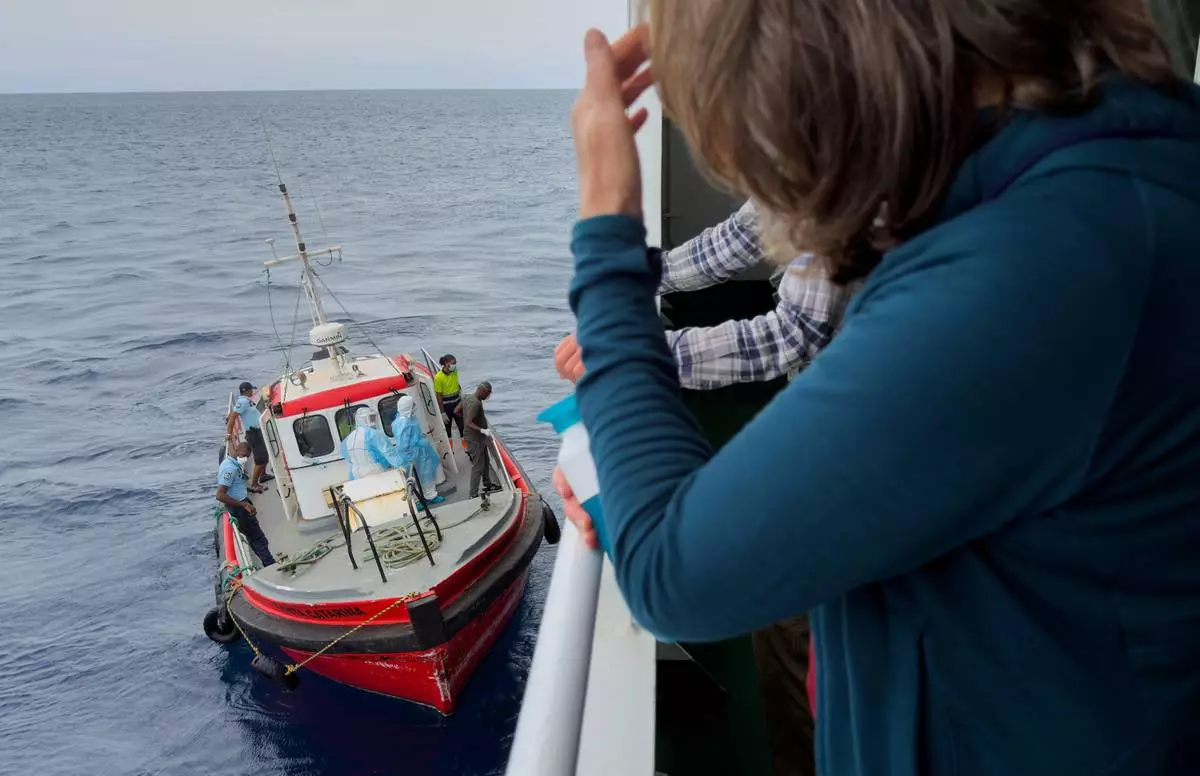
Passengers on the the hantavirus-stricken cruise ship, MV Hondius, watch epidemiologists board the boat in Praia, during their voyage to Spain's port of Tenerife, May 6, 2026. (AP Photo)
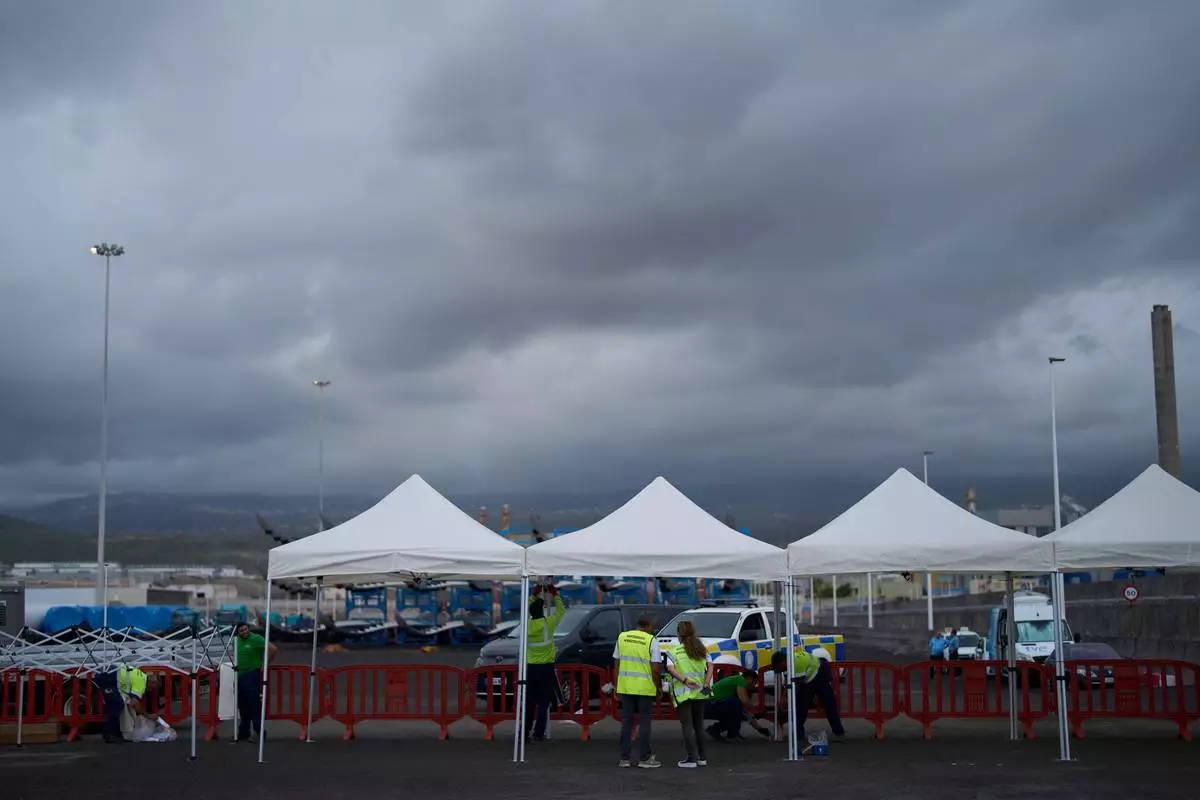
Workers set up temporary shelters in the area where passengers from the MV Hondius cruise ship are expected to arrive at the port of Granadilla in Tenerife, Canary Islands, Spain, Saturday, May 9, 2026. (AP Photo/Manu Fernandez)

Crew members of the hantavirus-stricken cruise ship, MV Hondius, wait their turns for a first interview with epidemiologists, during the voyage to Spain's port of Tenerife, May 6, 2026. (AP Photo)
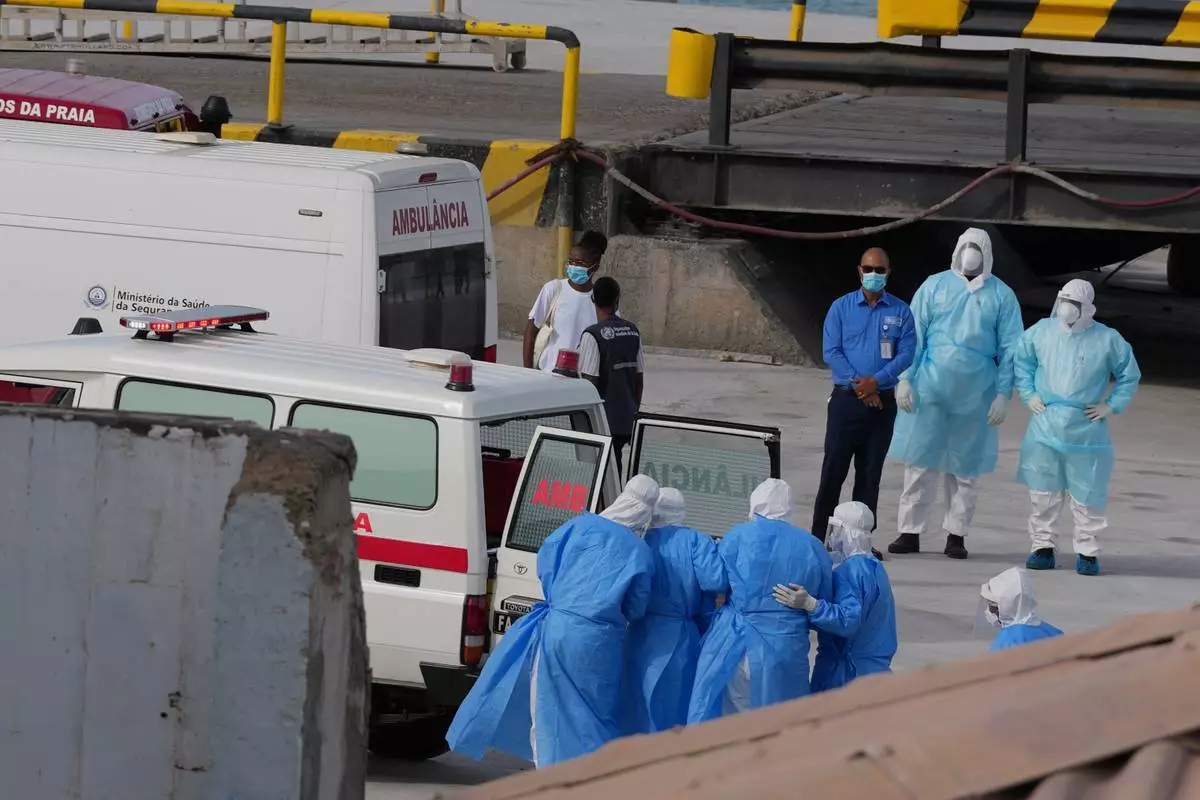
Health workers in protective gear evacuate patients from the MV Hondius cruise ship into an ambulance at a port in Praia, Cape Verde, Wednesday, May 6, 2026. (AP Photo/Misper Apawu)
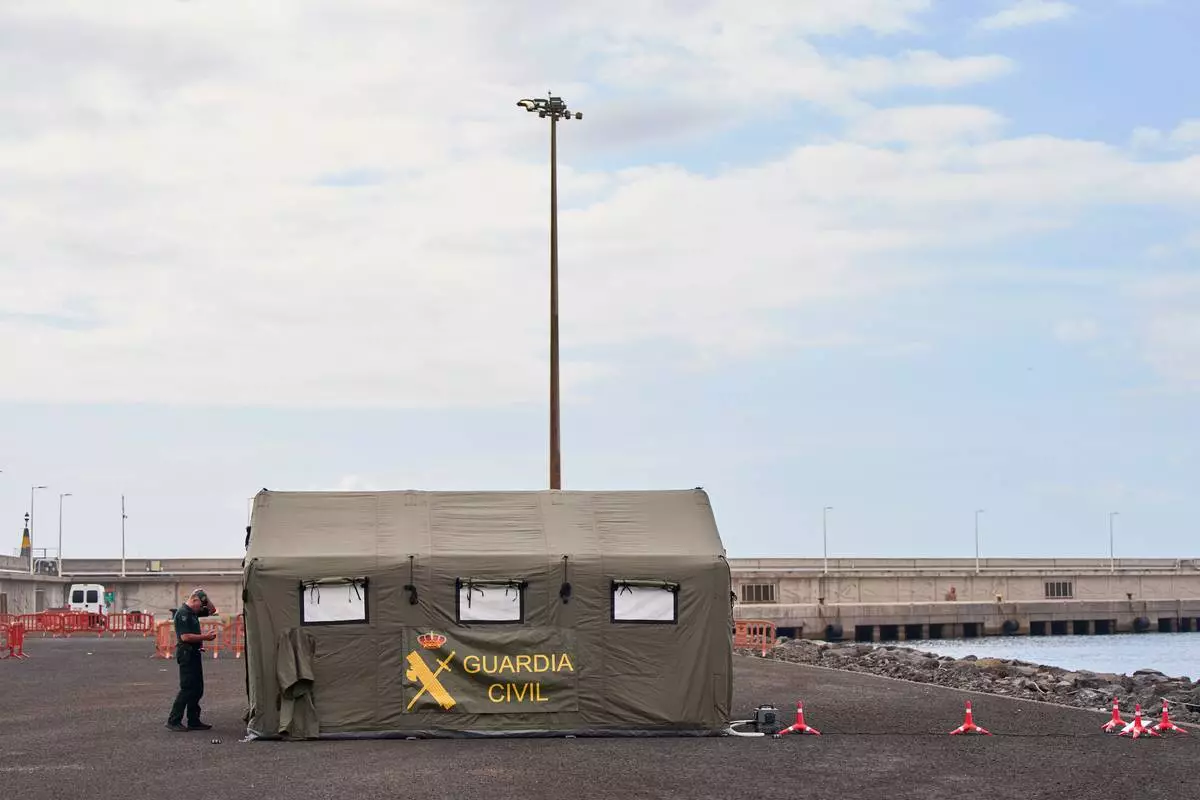
A Spanish Civil Guard officer inspects the area where passengers from the MV Hondius cruise ship are expected to arrive at the port of Granadilla in Tenerife, Canary Islands, Spain, Saturday, May 9, 2026. (AP Photo/Manu Fernandez)