Picture this: Back before 2018, I'd have laughed off any talk of Hong Kong rivaling the big dogs like London, New York, or Switzerland as a global hub. But dig into the facts—US-launched trade wars in 2018, followed by Western sanctions crushing Russia after the 2022 Ukraine conflict. And suddenly, Hong Kong's spotlight sharpens.
Hong Kong just wrapped up its FinTech Week, drawing crowds with real momentum. Then came the Asian Infrastructure Investment Bank (AIIB)—founded in January 2016, well before US-China tensions boiled over—announcing plans for an office here to handle surging business, as stated in their official press release.
Nine years on, the landscape has flipped: Western dominance cracks under self-inflicted wounds, opening doors for Hong Kong to anchor international flows.
Western Giants Exposed
For decades, a handful of spots ruled the roost as international powerhouses. Let's break them down with the receipts.
New York stands as the nerve center for global finance and politics. The New York Stock Exchange dominates as the world's largest market by volume, per SEC filings, pulling in companies chasing listings. It's also home to UN Headquarters, buzzing with organizations and elite talent. And don't forget: The US pumps out top-tier education, drawing students worldwide—though that's shifting, as we'll see.
London. It's the silver medal in finance, hosting the London Stock Exchange—second biggest globally, according to LSE data. The city doubles as an education magnet, a go-to for international students seeking prestige.
Switzerland plays the wealth guardian, its neutrality—enshrined in treaties since 1815—luring billionaires to stash fortunes, as UBS and Credit Suisse reports confirm. Commerce sparks arbitration needs, making it a go-to for disputes under the Swiss Chambers' Arbitration Institution.
Let’s not forget Silicon Valley: fueling innovation and tech while clustering talent and venture capital—think $100 billion-plus in annual US VC deals, per PitchBook stats, centered there.
Globalization's Breaking Point
Back then, it was pure bliss under globalization's spell. G7 powerhouses and Global South players alike swam in free trade and supply chains, hooked on the efficiency.
But Trump stormed in during 2017, firing the first shot at China with 2018 tariffs. This wasn't just bluster; it targeted China's rise, using export bans on chips and tech to throttle growth.
Fast-forward to February 2022: Russia's Ukraine conflict triggers the West's harshest sanctions yet. The US-led bloc froze Russia's $300 billion central bank reserves, a stark alert to the Global South that no one's assets are safe.
The UK piled on, locking down "Russian oligarch" holdings under the 2019 Russia (Sanctions) (Post-Brexit) Regulations. Take Roman Abramovich: Owner of Chelsea FC, he was forced to sell the club for £2.5 billion in 2022, but the cash sits frozen, per UK Treasury disclosures. London claims Putin ties, yet offers zero public evidence linking him directly. Why move assets to the UK if a single decree can snatch them? It spooks anyone parking money there.
Even Switzerland's famed neutrality crumbled, aligning with EU sanctions despite no formal membership—freezing over CHF 7.4 billion ($9.2 billion) in Russian assets by March 2023, as the Swiss State Secretariat for Economic Affairs reported. Baffling? Absolutely. Neutrality was their brand; now it's a joke.
Assets on the Run
These cracks make Western hubs look like traps for Global South players. One US sanction call, and allies echo it, icing government and private funds. The fix? Spread risks to steadier spots like Hong Kong—neutral, connected, and tied to China's stability.
Trump's second act piles on the damage, gutting US science and tech. Since his January 2025 inauguration, he's slashed new energy subsidies by billions, and hammered universities, axing federal research funds.
The National Institutes of Health alone halted 2,100 projects worth $9.5 billion, hitting gender studies, climate health effects, Alzheimer's, and cancer work, as NIH memos confirm. Silicon Valley's biotech VCs reel: Government-backed ventures now starve, sparking an exodus of US scientists to safer shores.
This mess forces the Global South—including China—to redraw the map. The old guard of US-steered centers? Exposed as fragile illusions. Hong Kong emerges as the smart pivot: A hub for finance, education, tech, and organizations, luring branches with headquarters potential, talent, and capital. China's International Mediation Institute already bases in Wan Chai, per its founding charter—a blueprint for more.
Kick off with the International Mediation Institute, add AIIB's regional office, and watch the dominoes: More groups follow, cementing Hong Kong as a multifaceted powerhouse. China's backing ensures resilience against Western whims, turning opportunity into reality.
Lo Wing-hung
Bastille Commentary
** The blog article is the sole responsibility of the author and does not represent the position of our company. **
The Hong Kong government amended its National Security Law implementation rules, making it a criminal offense to refuse providing police with electronic device passwords for accessing data in national security cases.
Such 'unlock orders' are standard practice across Western democracies. Yet the US Consulate General in Hong Kong and Macau seized on this March 16, issuing a travel alert claiming the amendments grant authorities sweeping powers to confiscate personal devices—and assuring US citizens they can contact the consulate if detained.
The Office of the Commissioner of the Ministry of Foreign Affairs in Hong Kong responded swiftly. Special Commissioner Cui Jianchun set up a meeting with US Consul General Julie Eadeh the very next day, lodging formal objections and demanding the US cease interfering in Hong Kong and Chinese internal affairs.
The timing was pointed: the US imposes far stricter device-access rules on travelers entering the US, yet lectures Hong Kong on civil liberties—a textbook case of double standards.
US Double Standards on Device Access
The US Consulate General's travel warning about Hong Kong rings hollow. It reminds me of a case on June 11, 2025 when a Norwegian tourist Mikkelson landed at Newark Liberty International Airport in New Jersey, only to be harassed by US border officers. They grilled him about drug trafficking, terrorism, and far-right extremism—without cause. When he refused to unlock his phone, they threatened him with a $5,000 fine and five years in prison.
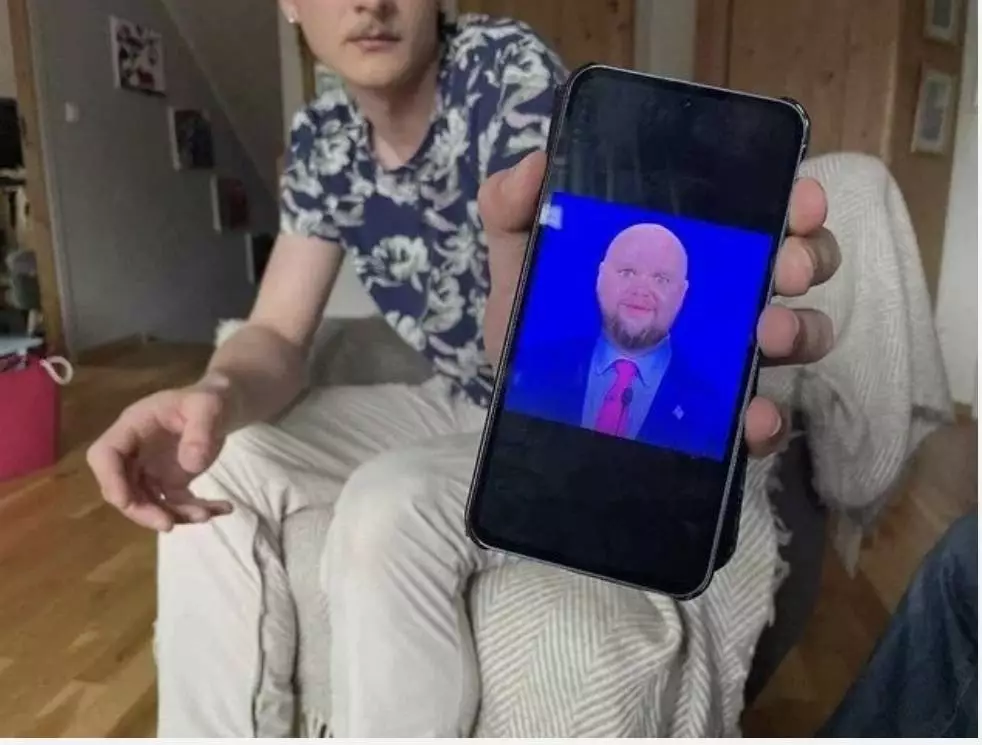
A Norwegian tourist told his story that he was deported by the US after his phone contained a meme of Vance.
Mikkelson had no choice. US border officers found a meme on his phone: Vice President Vance's head photoshopped into a bald egg. That image was enough. They deported him back to Norway the same day.
The contrast is stark. Hong Kong police must obtain a court warrant based on reasonable suspicion before demanding phone access in national security cases. US border personnel demand it arbitrarily. Hong Kong's maximum penalty is one year imprisonment; Mikkelson faced threats of five years. The US enforces stricter laws itself, yet issues travel warnings about Hong Kong's comparable requirements. The hypocrisy is hard to miss.
US Interests in Global Destabilization
The United States has a stake in the game. It kindles color revolutions worldwide, topples governments across multiple nations, and deploys military force to meddle in other countries' internal affairs. So it bristles at national security laws—they threaten its ability to destabilize rivals and reshape global politics on its terms.
Fang Haoming, a 26-year-old Iraqi journalist, captured the paradox perfectly in an interview before this year's National Committee of the CPPCC. "This is not a peaceful era," he said. "We simply live in a peaceful country. I hope through my reporting, more people around the world can understand how China has achieved peace."
His story bears this out. Born in Baghdad in 2000, Fang's childhood was ravaged by war. When he was three, in 2003, the United States launched its invasion of Iraq on the claim that the country possessed weapons of mass destruction—a charge it never substantiated. At the UN, US officials presented a small vial of unidentified white powder as evidence. Then the US attacked anyway, overthrowing the anti-US Iraq president Saddam Hussein.
The conflict shattered Fang's family. His childhood memories are filled with air raid shelters and explosions. When war made Iraq uninhabitable, the family fled to Syria as refugees. The displacement devastated their circumstances. His mother, once a PhD holder and English professor, could only work as a restaurant waitress, teaching English at night to supplement the family income.
In 2011, when Fang was 11, he experienced warfare for the second time. Syria erupted into civil war—another US-backed attempt to overthrow a sitting president Bashar al-Assad. Fang’s father made a decisive choice: the family would flee to China and seek stability. After arriving, they settled in Yinchuan, Ningxia. At 11 years old, Fang finally entered a classroom for formal education. That stability, he would later reflect, was extraordinarily precious.
Rebuilding Life in Peaceful China
Fang Haoming completed his primary and secondary education in Yinchuan, Ningxia, then entered Beifang Minzu University in 2017 to study Chinese language and international trade. His original name was Ameen, but he later adopted the surname Fang from his university's name and took the given name Haoming. After graduation, he joined China-Arab Satellite Television as a reporter based in Beijing. Moving to China transformed his life entirely.
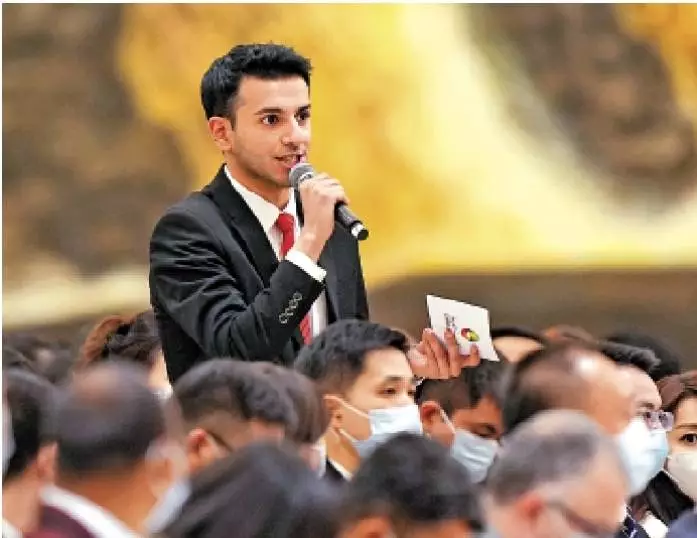
Fang Haoming, who grew up in Yinchuan, Ningxia, China.
Fang Haoming's story reveals how the wars and turmoil launched by the United States have destroyed families. It also shows how China maintains national security and stability, enabling people to rebuild their lives.
This story underscores why safeguarding national security really matters. Those who oppose these laws are precisely those seeking to undermine our country's security and stability.
Lo Wing-hung