WASHINGTON (AP) — Cornell University has agreed to pay $60 million and accept the Trump administration’s interpretation of civil rights laws in order to restore federal funding and end investigations into the Ivy League school.
Cornell President Michael Kotlikoff announced the agreement on Friday, saying it upholds the university’s academic freedom while restoring more than $250 million in research funding that the government withheld amid investigations into alleged civil rights violations. He said the government’s funding freeze had stalled research, upended careers and threatened the future of academic programs.
The university agreed to pay $30 million directly to the U.S. government along with another $30 million toward research that will support U.S. farmers.
The agreement is the latest struck between President Donald Trump's administration and elite colleges he has accused of tolerating antisemitism and promoting far-left ideas. Trump is still locked in a standoff with Harvard, the nation's oldest and wealthiest university, and lately has tried an incentive-based approach by offering preferential access to federal funding for other schools that sign onto his political agenda.
Kotlikoff said the agreement revives the campus’ partnership with the federal government “while affirming the university’s commitment to the principles of academic freedom, independence, and institutional autonomy that, from our founding, have been integral to our excellence.”
The six-page agreement is similar to one signed by the University of Virginia last month. It’s shorter and less prescriptive than others signed by Columbia University and Brown University.
A statement from Cornell's chapter of the American Association of University Professors said the deal “omits many of the worst provisions” in agreements struck by other colleges. Still, it said Cornell's deal poses a threat to academic freedom and goes beyond what the law requires.
“One of the major concerns with these agreements generally has been, if you make a deal with somebody when they’re just extorting you, well, that only encourages future extortion,” said David Bateman, the chapter president, in an interview.
The agreement requires Cornell to comply with the government’s interpretation of civil rights laws on issues involving antisemitism, racial discrimination and transgender issues. A Justice Department memo that orders colleges to abandon diversity, equity and inclusion programs and transgender-friendly policies will be used as a training resource for Cornell's faculty and staff.
The campus must also provide a wealth of admissions data that the government has separately sought from campuses to ensure race is no longer being considered as a factor in admissions decisions. Trump has suggested some campuses are ignoring a 2023 Supreme Court decision ending affirmative action in admissions.
Education Secretary Linda McMahon called it a transformative commitment that puts a focus on “merit, rigor, and truth-seeking.”
“These reforms are a huge win in the fight to restore excellence to American higher education and make our schools the greatest in the world,” McMahon said on X.
Attorney General Pam Bondi said the agreement illustrates the value for colleges that work with the administration. Colleges that receive federal funding “must fully adhere to federal civil rights laws and ensure that harmful DEI policies do not discriminate against students,” Bondi said in a statement.
Cornell’s president must personally certify compliance with the agreement each quarter. The deal is effective through the end of 2028.
It appears to split the difference on a contentious issue colleges have grappled with as they negotiate an exit from federal scrutiny: payments made directly to the government. Columbia agreed to pay $200 million directly to the government, while Brown University reached an agreement to pay $50 million to state workforce organizations. Virginia’s deal included no payment at all.
The agriculture investment will be made over three years, aimed at programs that incorporate artificial intelligence and robotics with the goal of supporting research that reduces costs for U.S. farmers. Founded as a land-grant school, Cornell has longstanding ties with American agriculture.
Kotlikoff was among hundreds of university presidents who signed an April letter opposing “unprecedented government overreach and political interference” from the Trump administration.
Kotlikoff emphasized that Cornell was not found in violation of federal law and said the agreement will preserve the campus' independence. “In short, it recognizes our rights, as a private university, to define the conditions on our campuses that advance learning and produce new knowledge,” he wrote.
The campus AAUP raised concerns with several provisions of the deal. The group said the agreement invites future federal intrusion through requirements to share enrollment data and to conduct campus surveys on antisemitism. It also opposed the $30 million payment to the government, calling it “extortion plain and simple.”
Associated Press writer Carolyn Thompson contributed to this report.
The Associated Press’ education coverage receives financial support from multiple private foundations. AP is solely responsible for all content. Find AP’s standards for working with philanthropies, a list of supporters and funded coverage areas at AP.org.

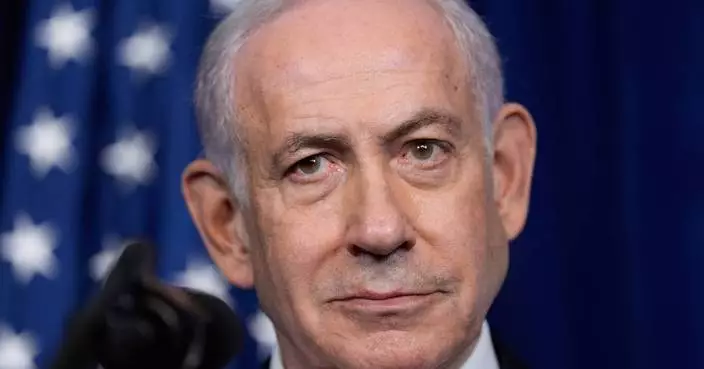
President Donald Trump attends a dinner with leaders from countries in Central Asia, Thursday, Nov. 6, 2025, in the East Room of the White House in Washington. (AP Photo/Jacquelyn Martin)
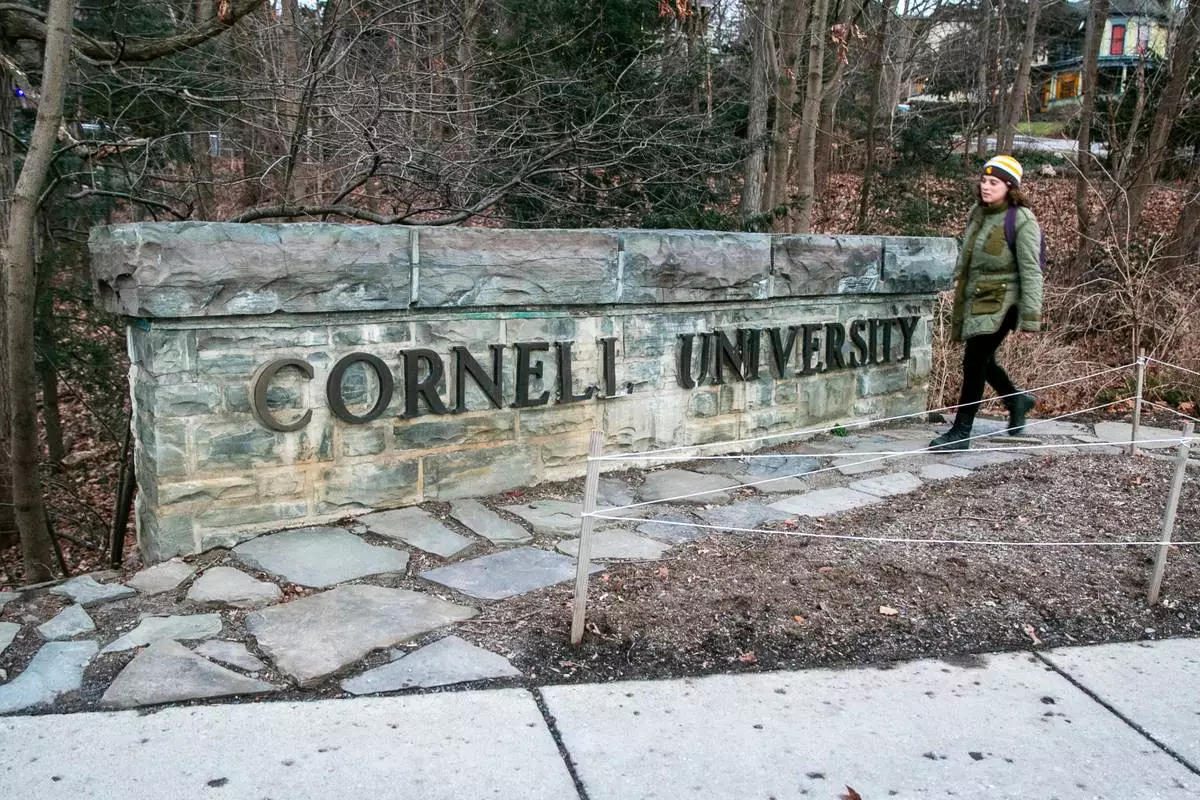
FILE - A woman walks by a Cornell University sign on the Ivy League school's campus in Ithaca, New York, Jan. 14, 2022. (AP Photo/Ted Shaffrey, File)
BANGKOK (AP) — Floodwaters in Thailand ’s capital were slowly receding on Monday after nearly continuous rainfall over the weekend, although some neighborhoods and major roads remained inundated.
Rain continued intermittently, but Bangkok city officials said conditions had improved enough to accelerate drainage efforts. Water levels in four main canals had risen too high over the weekend to take in runoff from surrounding communities.
More rain was forecast across much of Thailand, although Bangkok was expected to receive less. Cambodia and Myanmar were also experiencing severe weather.
The weekend flooding affected 329,000 households, or about 700,000 people, the Bangkok Flood Control Center reported, according to Deputy Gov. Tavida Kamolvej. Thai media reported two flood-related deaths in the city and at least 10 nationwide.
Gov. Chadchart Sittipunt declared a flood emergency Saturday across all 50 city districts, although some were relatively unscathed. He said authorities were prioritizing assistance for vulnerable residents, including older people and those with disabilities, by delivering supplies or evacuating them. City officials said nearly 7,000 people were staying in shelters.
Neighborhoods in eastern Bangkok were hit hardest. Prime Minister Anutin Charnvirakul donned white rain boots Sunday night to inspect a heavily flooded housing estate in Bang Kapi district and help distribute relief supplies.
Water was about knee-deep Monday near a train station and shopping mall in Bang Kapi. Despite intermittent downpours, shoppers waded through the water carrying bags, backpacks and boxes of groceries. Some traveled to and from the station in a small boat provided by the mall.
For Naowarat Supanikorn, a 55-year-old maid who shares a single-story house with three dogs and six cats, the flooding was more than an inconvenience.
She said she realized at about 1:30 a.m. on Saturday that water was seeping into her home.
“I had to take my dogs and cats out,” she said. “I had to leave them with my neighbor. I have taken them back today because they said the sun would come out, but it looks like the rain will come back.”
She said the flooding in her neighborhood reached above her hips at its highest, and had since dropped to about knee-level. She said the bigger problem is that she has lost her job working at a condominium.
“My workplace also said if I can’t come to work, they’re happy to take my resignation. So I thought, that’s fine, I’ll quit.”
To try to generate some income, she bought supplies to make some food she can sell streetside, but business is slow in the flooded conditions.
“It’s stressful. If the bills come, I’d be cooked, because I don’t have work now. If I have to pay for water or electricity now it would be bad,” she said. “I’m not worried about me but I’m worried about my pets. I’ve lived with them my whole life. They’re my priority. It’s ok if I don’t have work and starve myself, but I’d like help for my pets.”
The flood also has had knock-on effects, including panic buying of food, disrupted supply chains for food and other items, and staffing problems at various enterprises whose employees were unable to get to their jobs.
The Thai Air Force announced it was sending 69 ground personnel to Bangkok's Suvarnabhumi Airport to help clear a backlog of passenger luggage caused largely by airport workers being unable to get to their place of work.
“This deployment is a vital mission to care for, assist, and facilitate travelers — including tourists from around the world — ensuring smooth operations and preventing delays in ground services, thereby upholding the nation’s positive image,” the air force said.
The airport previously attributed the baggage pileup to “insufficient staffing to support ground handling operations” and problems with some baggage carts.
The disruptions delayed some departures and forced arriving passengers to wait longer than usual for their luggage, with baggage from several flights still undelivered, the airport said.
The government declared special holidays on Monday and Tuesday for state offices. It advised state enterprises, financial institutions, private businesses and hospitals to determine whether they needed to remain open.
Thailand’s meteorological agency forecast heavy to very heavy rain across several parts of the country. It warned residents, particularly in northern, central and eastern regions, to prepare for possible flash floods, river overflows, forest runoff and landslides, especially near waterways, foothills and low-lying areas.
In neighboring Myanmar, at least 10 people were killed and dozens were missing after heavy rain triggered widespread flooding and landslides in the southern coastal region of Tanintharyi, local media reported.
Dawei township recorded 346 millimeters (13.62 inches) of rain Monday, breaking an 80-year-old record. Myanmar’s Meteorology Department warned that conditions could worsen as the storm front moved closer to Yangon.
Flash floods struck at least 10 provinces in Cambodia, affecting 44,889 families and forcing nearly 4,000 people to evacuate, according to disaster management officials.
The agency overseeing the archaeological park in Siem Reap province, home to the centuries-old Angkor temple complex, said it was operating water gates and diversion systems to reduce the risk of flooding.
——-
Associated Press writer Sopheng Cheang in Phnom Penh, Cambodia contributed to this report.
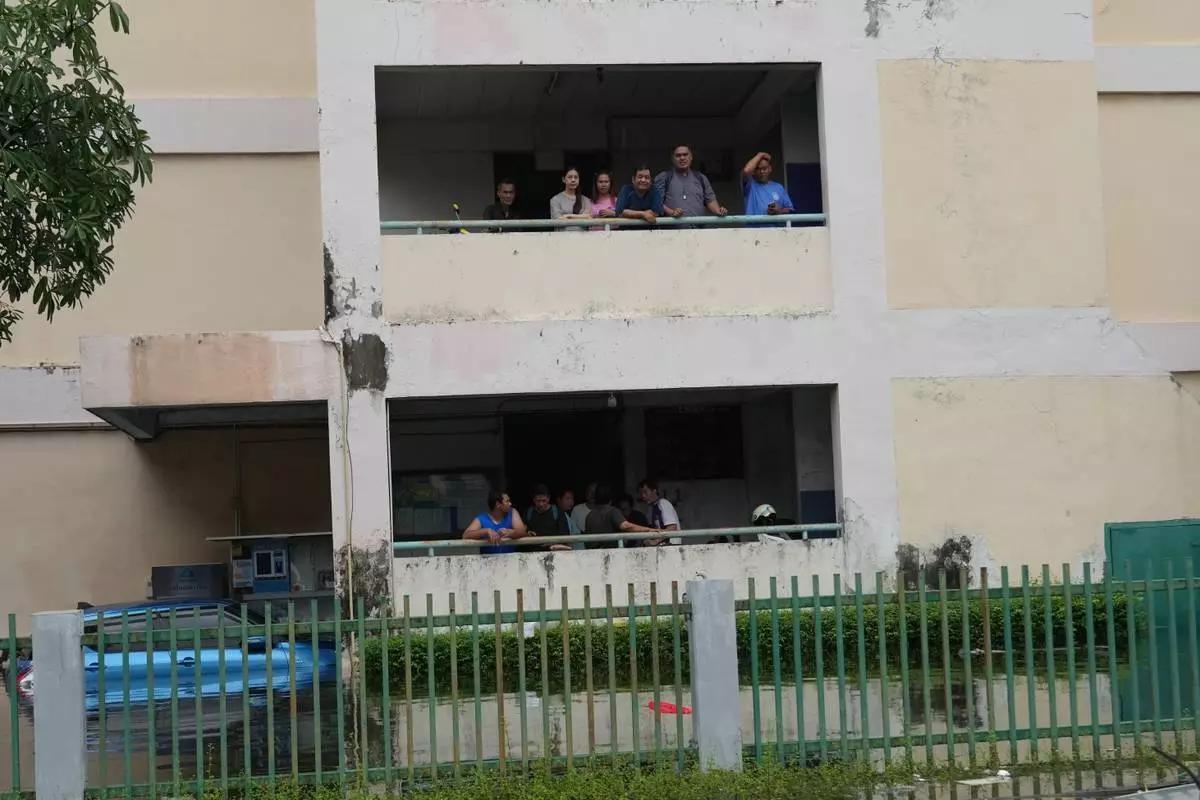
Residents of a building look out at the flooded street after heavy rain in Bangkok, Thailand, Monday, Sept. 28, 2026. (AP Photo/Sakchai Lalit)
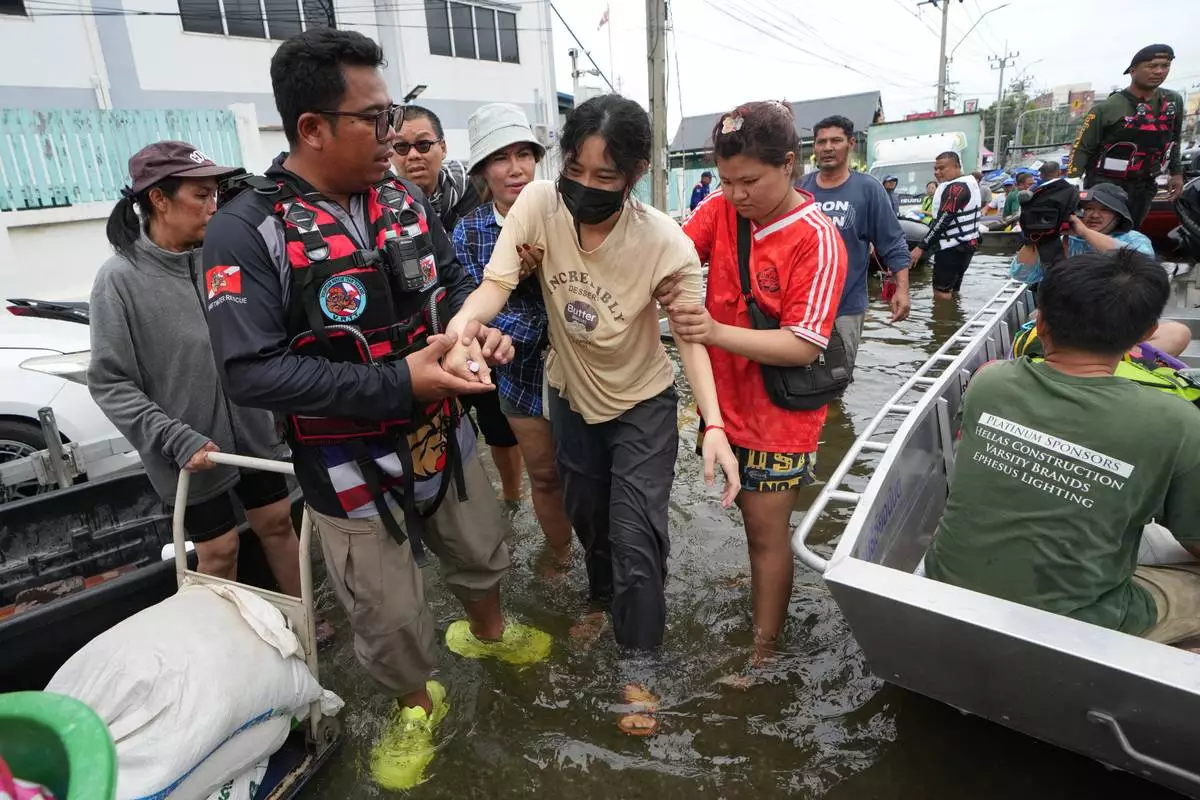
Rescuers evacuate a patient from a flooded area to a safer place in Bangkok, Thailand, Monday, Sept. 28, 2026. (AP Photo/Sakchai Lalit)
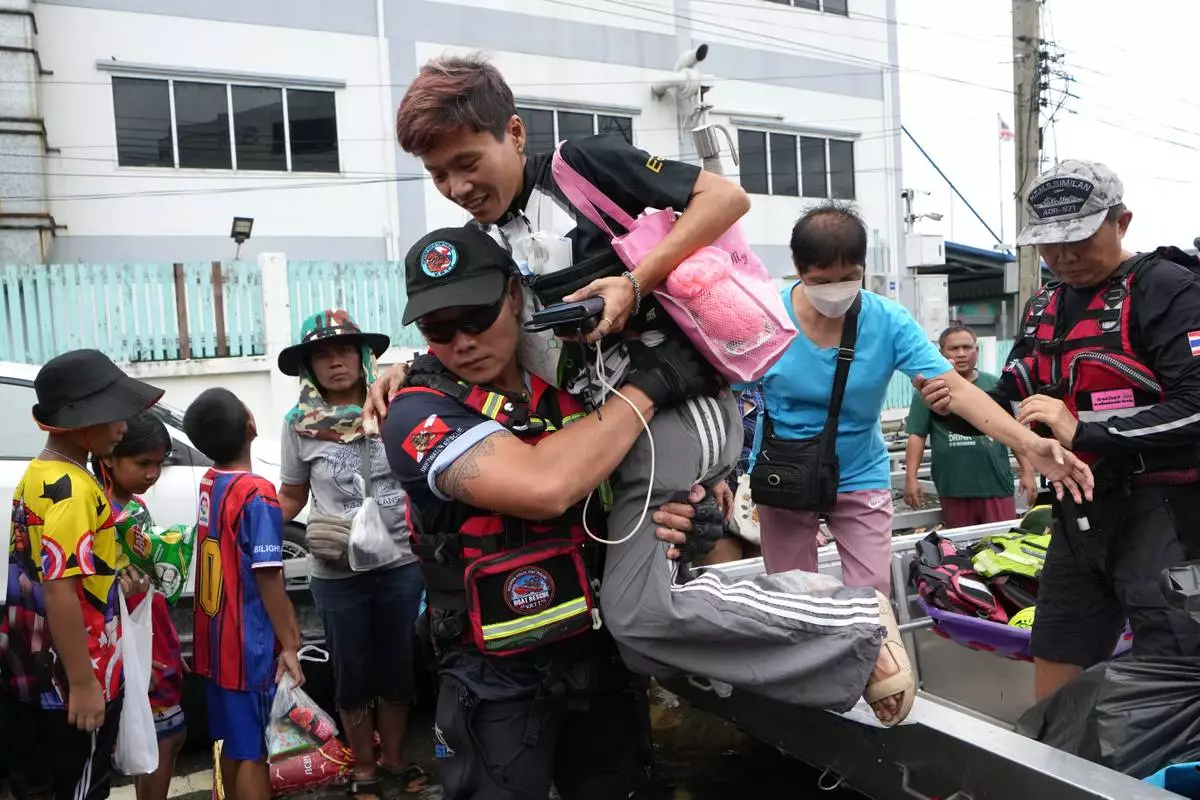
Rescuers evacuate people from a flooded area to a safer place in Bangkok, Thailand, Monday, Sept. 28, 2026. (AP Photo/Sakchai Lalit)
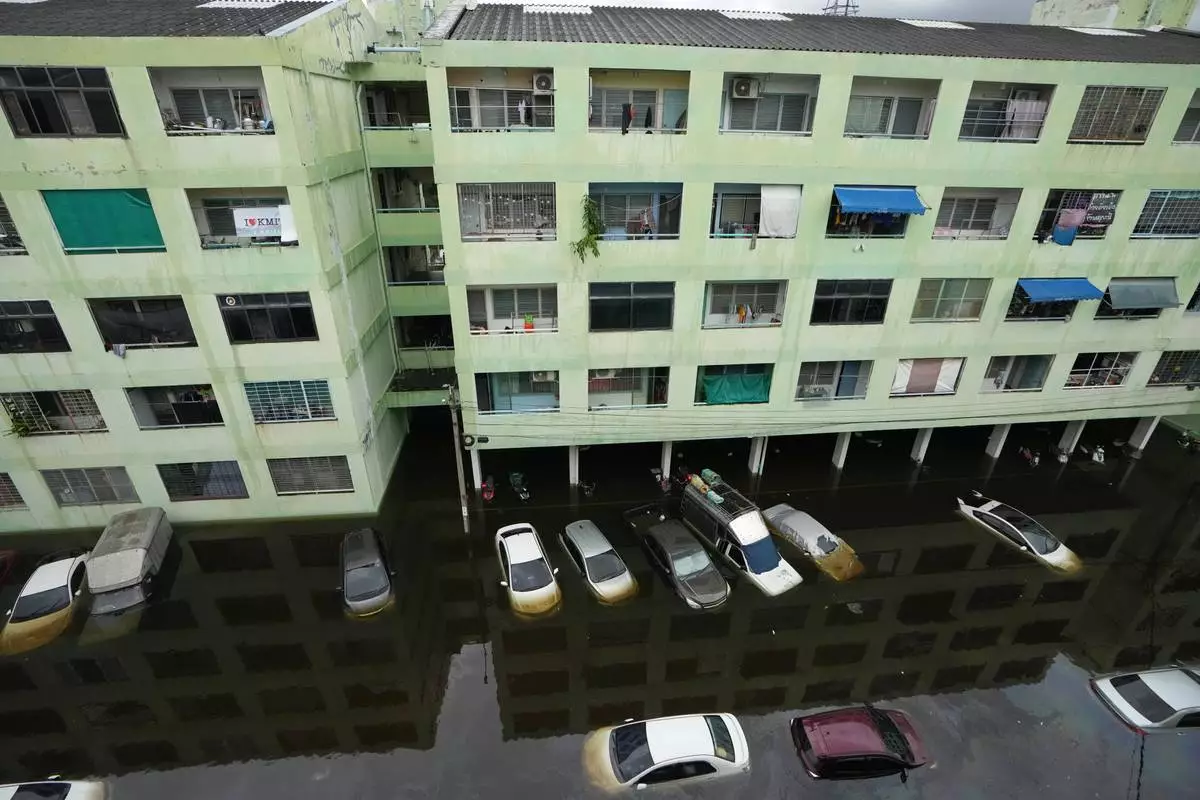
The streets are flooded after a heavy rain, in Bangkok, Thailand, Monday, Sept. 28, 2026. (AP Photo/Sakchai Lalit)
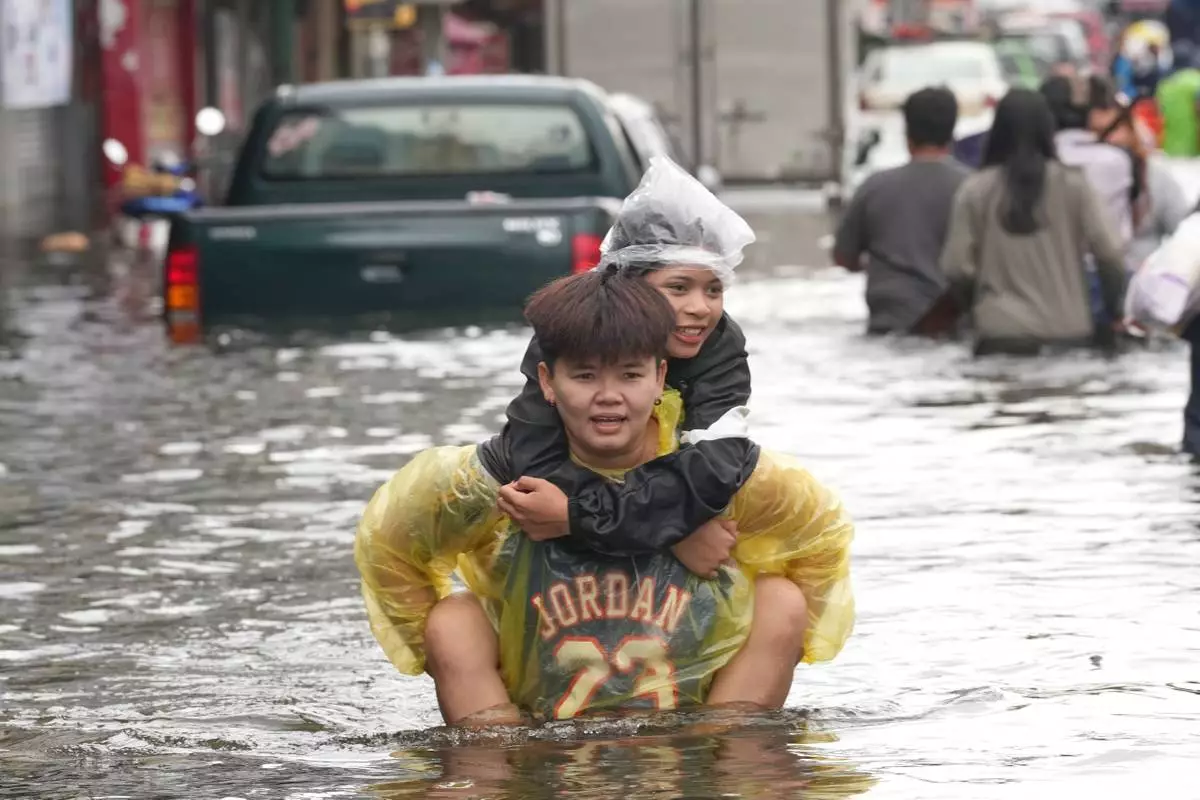
People wade through a flooded street after a heavy rain in Bangkok, Thailand, Monday, Sept. 28, 2026. (AP Photo/Sakchai Lalit)