WASHINGTON (AP) — Don’t lose sleep over headlines linking melatonin to heart failure.
That’s the message after some scary-sounding reports about a preliminary study involving the sleep-related supplement. It raised questions about the safety of long term use of melatonin for insomnia.
Doctors have long known that too little or interrupted sleep raises the risk of heart disease. But heart experts say this kind of so-called observational study can't prove that melatonin use plays any role — instead of the insomnia patients were trying to treat.
“We should not raise the alarm and tell patients to stop taking all their melatonin,” said Dr. Pratik Sandesara, an interventional cardiologist at Emory Healthcare who wasn’t involved with the research.
Our bodies naturally produce melatonin, a hormone that regulates our sleep cycles. Levels normally increase as it gets darker in the evening, triggering drowsiness.
People may take lab-produced melatonin to help them fall asleep or to adjust for jet lag or time changes.
The new study used international electronic health records, tracking adults diagnosed with insomnia who had a melatonin prescription that suggested they used the supplement for at least a year.
Over five years, 4.6% of the chronic melatonin users developed heart failure compared to 2.7% of insomnia patients whose charts showed no melatonin use, the researchers found. The study is being presented at an American Heart Association meeting but hasn’t undergone peer review.
But only certain countries require a melatonin prescription. It’s over-the-counter in the U.S., meaning Americans in the study might have used the supplements without it being recorded, said Northwestern University cardiology chief Dr. Clyde Yancy, who wasn't involved in the study. The study also did not show dosages.
Also, U.S. supplements don’t require government approval, meaning brands can vary in their ingredients. The researchers, from SUNY Downstate Health Sciences University, characterized the findings as a call for more research.
Meanwhile, patients wondering about melatonin should talk it over with their doctors, said Emory’s Sandesara. Generally doctors recommend it for short-term use, like for jet lag.
Yancy noted that while the study doesn't prove there's a danger from long term melatonin use, there's also no evidence that people should use melatonin indefinitely.
And one key to better shut-eye is to practice better sleep hygiene, like making sure your room is dark.
“When we expose ourselves to blue light in particular at night, we are diminishing our melatonin levels. That’s science,” he said. Sleep problems aren’t about “just being sleepy and tired — they’re putting yourself at risk.”
This story has been corrected to show that the Northwestern University cardiology chief is Dr. Clyde Yancy, not Yancey.
The Associated Press Health and Science Department receives support from the Howard Hughes Medical Institute’s Department of Science Education and the Robert Wood Johnson Foundation. The AP is solely responsible for all content.
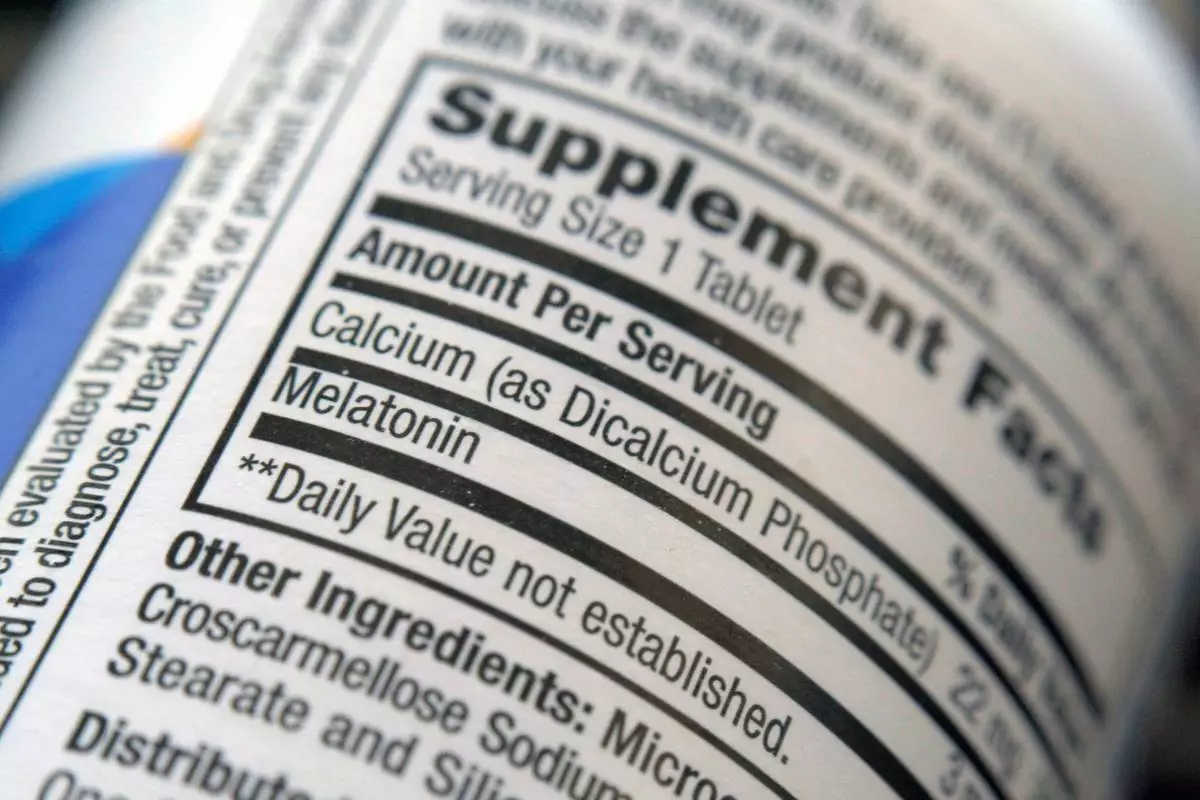
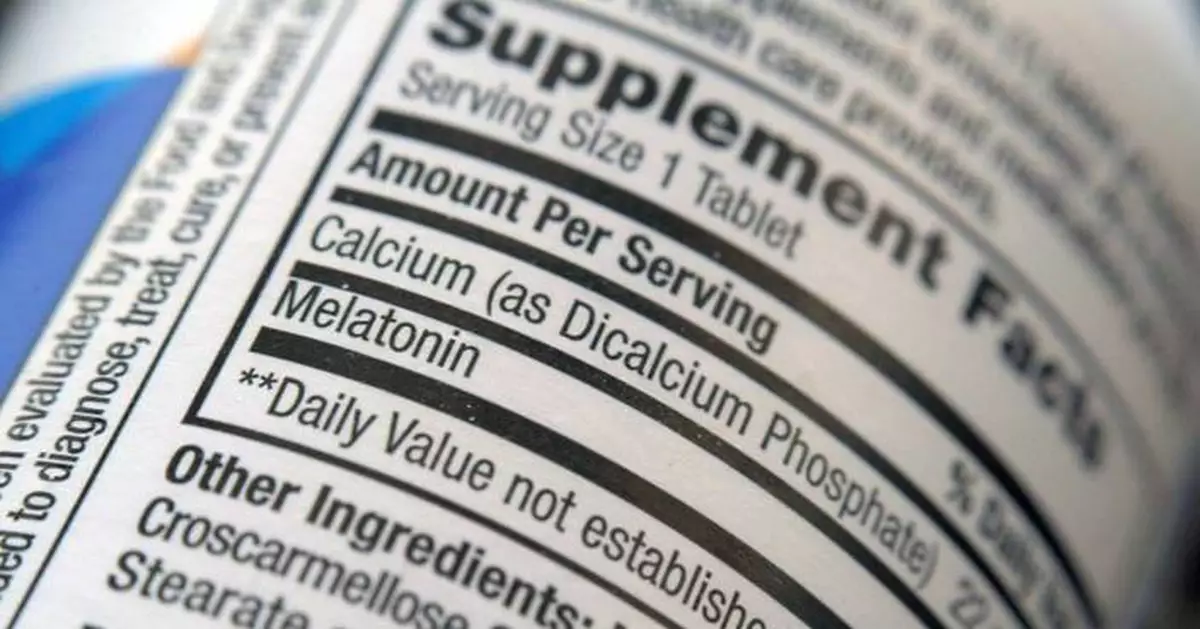
FILE - The label for a bottle of melatonin pills is seen in New York on Thursday, June 2, 2022. (AP Photo/Patrick Sison, File)
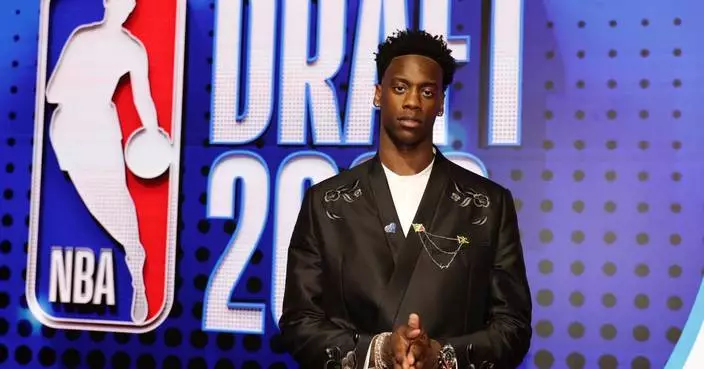
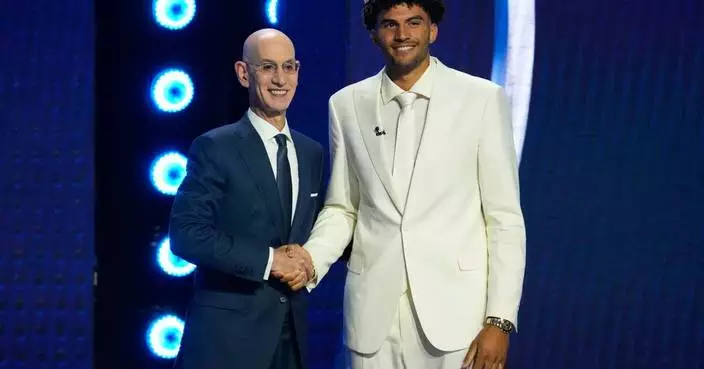
The players selected in the first round of the NBA draft Tuesday night in New York:
Scouting report: First-team Associated Press All-American and national scoring leader (25.5) as a sturdy-framed freshman. Pressured defenses by creating his own shot and getting to the line, where he led the country in made free throws (229) and attempts (296). Synergy rated him as “Excellent” as the ballhandler in pick-and-rolls (87th percentile, 27% of possessions) and post-ups (94th, 10.9%). Averaged 6.8 rebounds and 3.7 assists. Shot 51%. Scored BYU freshman-record 43 points against Utah. Must improve his 3-point shot (33.1%).
Scouting report: Scoring playmaker thrives off the dribble, in halfcourt and in transition. Freshman averaged 20.2 points, 4.2 rebounds and 1.6 assists. Shot 38.2% on 3-pointers, hitting six 3s in a win at Oklahoma State. Made 82.6% of free throws, logging six games with at least eight attempts. Biggest questions centered on availability. Dealt with a preseason full-body cramping issue requiring hospitalization, then missed 11 games for injury or illness. Frequently had limited minutes for uncertainty with his day-to-day status.
Scouting report: Fifth freshman named AP men’s national player of the year. Averaged 22.5 points and 10.2 rebounds. Shot 55.6%, routinely finishing through contact and physical play. Made 39.1% of 3s. Rated “Excellent” by Synergy against man defense (94th percentile), on post-ups (86th) and spot-up shots (95th). Strong passer (4.1 assists) out of double teams or in initiating offense. Son of former Duke and NBA player Carlos Boozer. Lacks explosive athleticism, relying more on strength and positioning than above-the-rim play.
Scouting report: Second-team AP All-American as a freshman with explosive athleticism, go-go-go motor, 7-foot wingspan and spotlight-embracing personality. Averaged 19.8 points and 9.4 rebounds. Thrived at the rim and in transition. Stood out in marquee wins against Kansas and rival Duke. Needs to add strength and hone his 3-point shot (25.9%). Had a national-leading 66 dunks when he suffered a broken left hand in mid-February, then broke his right thumb in practice when on the verge of returning in March.
Scouting report: Freshman four-star recruit became a second-team AP All-American in Illinois’ first Final Four run since 2005. Can play on or off the ball. Averaged 17.9 points, 5.1 rebounds and 4.2 assists. Shot 39.7% on 3s, hitting nine 3s in a 46-point outburst against Purdue. Rated “Excellent” by Synergy as the pick-and-roll ballhandler and with his jumper in off-the-dribble and catch-and-shoot opportunities. Lacks elite athleticism. Needs to add strength.
Scouting report: Freshman offers scoring punch with combo-guard size. Averaged 18.2 points and 4.7 assists. Erupted for 45 points and 10 3-pointers in a blowout of N.C. State to break the Atlantic Coast Conference freshman scoring record set by 2025 No. 1 overall pick Cooper Flagg. Needs to add strength. Battled back issues that sidelined him for eight midseason games and then resurfaced to sideline him for the last six.
Scouting report: First-team AP All-American with standout offensive skills. Freshman ranked third nationally in scoring (23.5) and 14th in assists (6.4), leading Razorbacks to first Southeastern Conference Tournament title in 26 years. Had program freshman-record 49 points in a double-overtime loss at Alabama. Thrived as the pick-and-roll ballhandler (rated “Excellent” in the 89th percentile by Synergy) and in isolation (rated “Very good” in the 74th percentile). Defense is a question.
Scouting report: Third-team AP All-American as a freshman with potential to be disruptive defensively. Averaged 16.1 points, 4.1 rebounds and 5.2 assists. Pressured opponents in transition or off the bounce. Had program freshman-record 42 points in a loss to Texas Tech. Posted a nearly 3:1 assist-to-turnover ratio. Ranked in the top six at combine in lane-agility time, shuttle run and three-quarter-court sprint. Needs to add strength and refine shot mechanics.
Scouting report: Versatile and physical presence as a sophomore transfer from Illinois, helping Michigan win its first NCAA title since 1989. Averaged 13.1 points, 7.3 rebounds and 1.1 blocks with potential to play forward or a small-ball 5-man. Thrived as a cutter, in post-ups and in finishing at the rim. Ranked ninth at the combine with a better than 7-3 wingspan.
Scouting report: Freshman combo guard offers potential to impact both ends of the court. Averaged 16.1 points, 4.9 rebounds and 2.4 assists for 36-win Final Four team. Shot 49.1% overall, 39.1% on 3-pointers and 80.5% on free throws. Averaged 1.5 steals, including nine games with at least three. Ranked fourth at the combine in standing vertical leap (35 inches).
11. Golden State Warriors
12. Oklahoma City Thunder (from Los Angeles Clippers)
13. Miami Heat ( traded to Milwaukee )
14. Charlotte Hornets
15. Chicago Bulls (from Portland)
16. Memphis Grizzlies (from Phoenix via Orlando)
17. Oklahoma City Thunder (from Philadelphia)
18. Charlotte Hornets (from Orlando via Phoenix)
19. Toronto Raptors
20. San Antonio Spurs (from Atlanta)
21. Detroit Pistons (from Minnesota)
22. Philadelphia 76ers (from Houston via Oklahoma City)
23. Atlanta Hawks (from Cleveland)
24. New York Knicks
25. Los Angeles Lakers
26. Denver Nuggets
27. Boston Celtics
28. Minnesota Timberwolves (from Detroit, traded to Brooklyn )
29. Cleveland Cavaliers (from San Antonio via Atlanta)
30. Dallas Mavericks (from Oklahoma City via Washington and Philadelphia)
AP NBA: https://apnews.com/nba
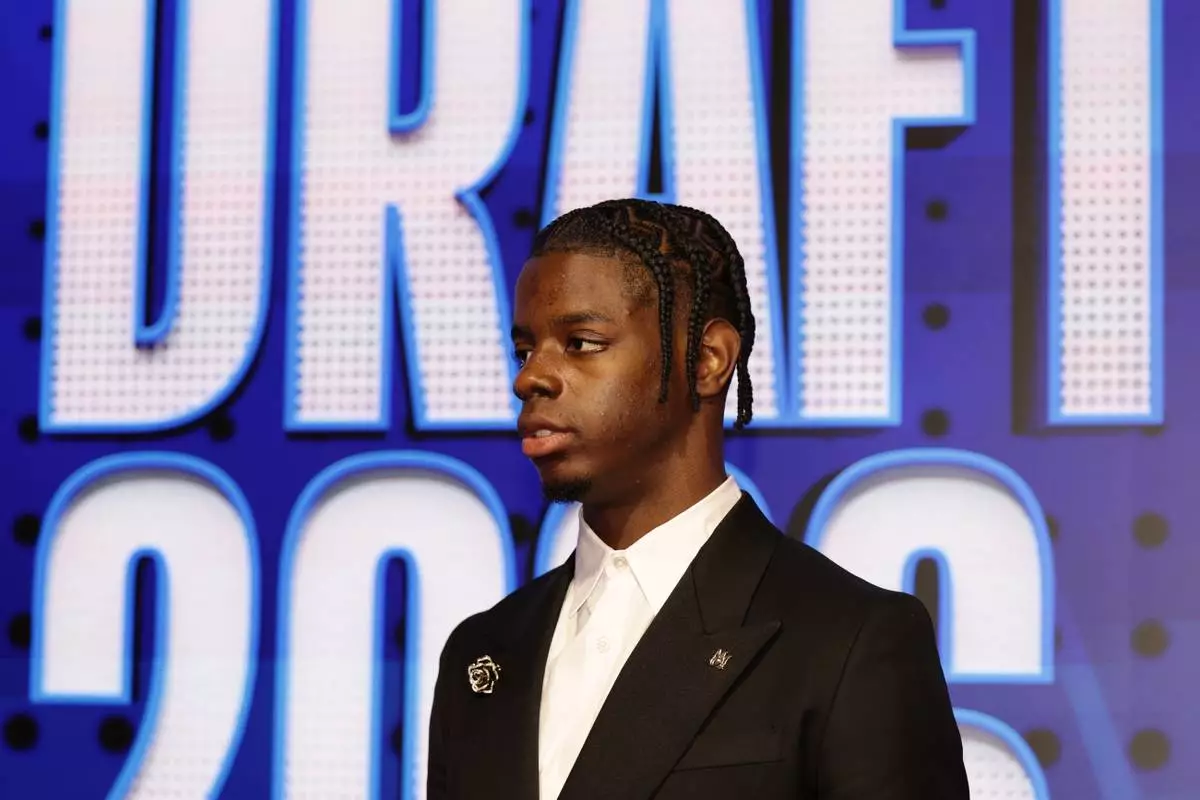
Caleb Wilson arrives for the first round of the NBA basketball draft Tuesday, June 23, 2026, in New York. (AP Photo/Adam Hunger)
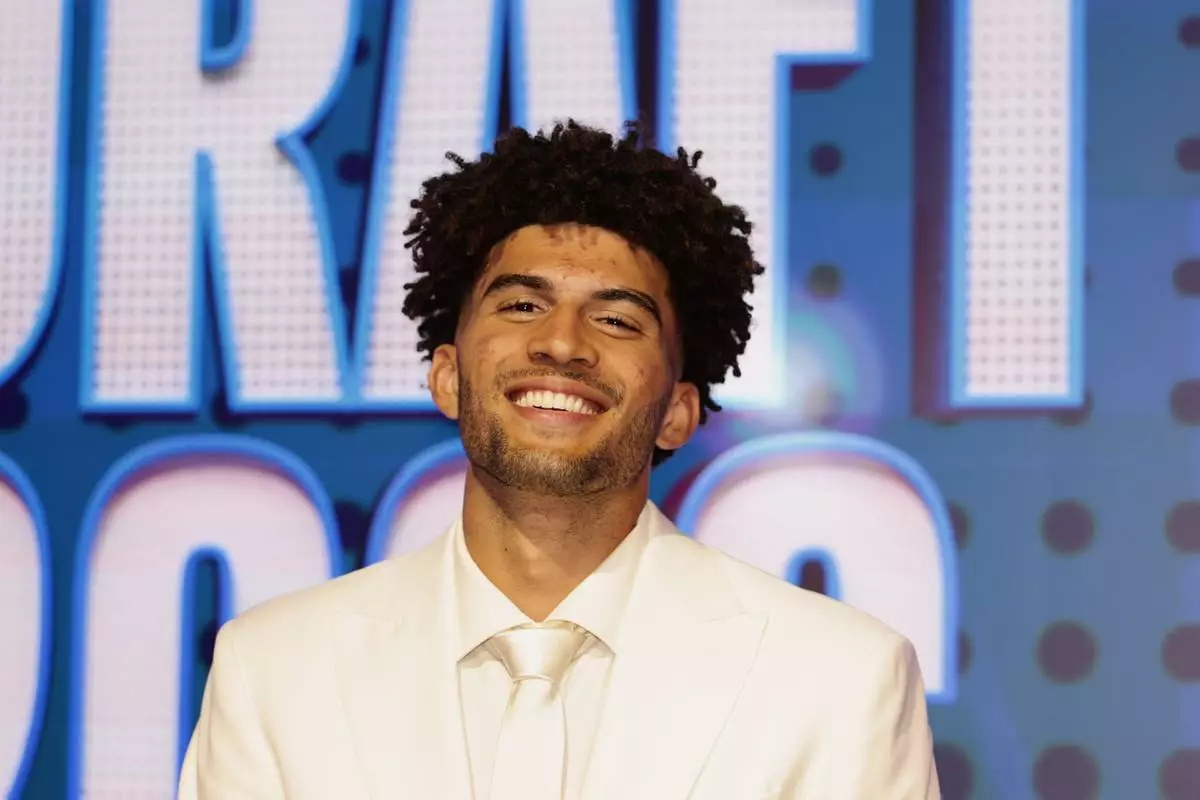
Cameron Boozer arrives for the first round of the NBA basketball draft Tuesday, June 23, 2026, in New York. (AP Photo/Adam Hunger)
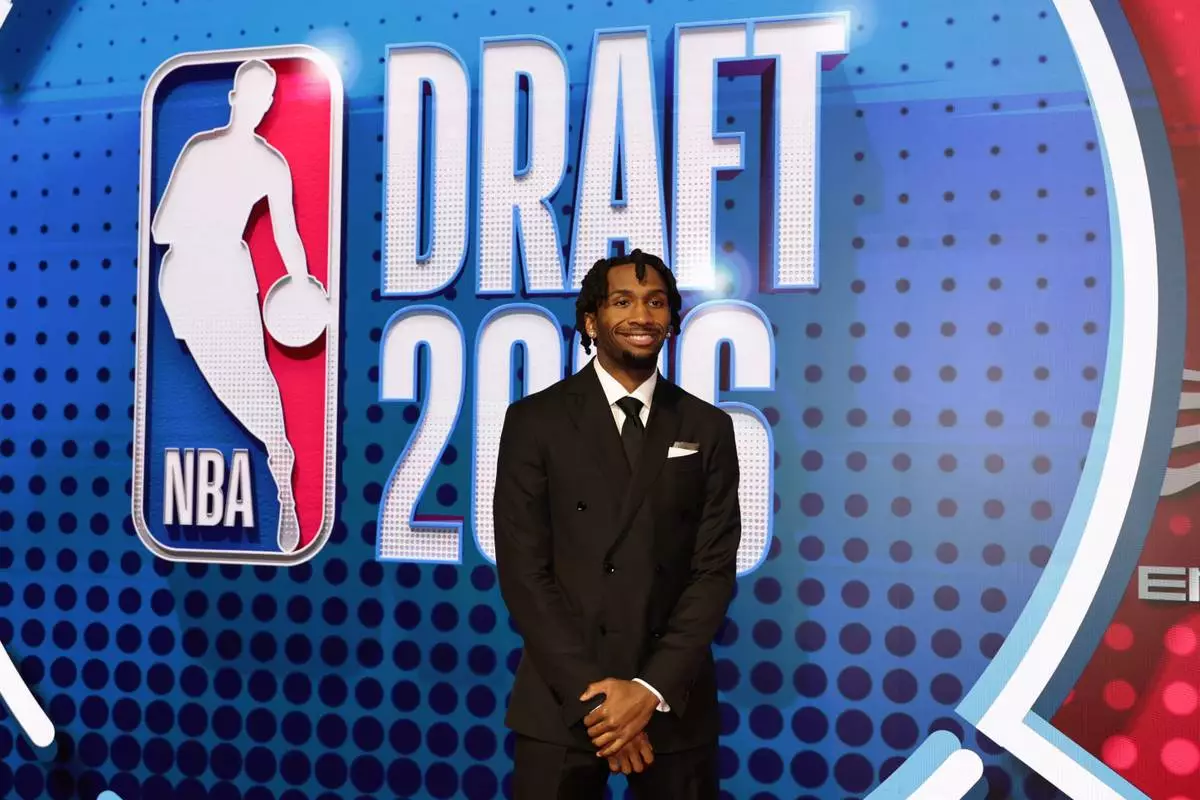
Darryn Peterson arrives for the first round of the NBA basketball draft Tuesday, June 23, 2026, in New York. (AP Photo/Adam Hunger)
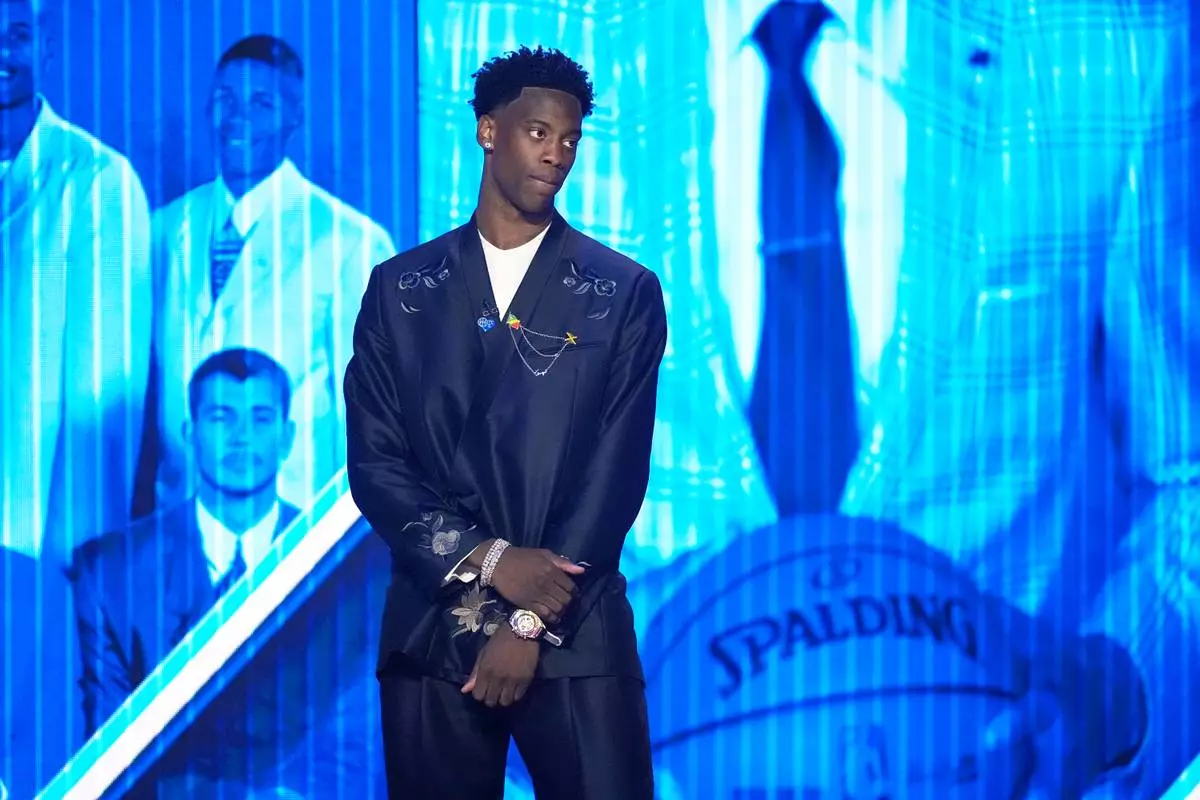
Draft prospect AJ Dybantsa is introduced at the NBA basketball draft, Tuesday, June 23, 2026, in New York. (AP Photo/Yuki Iwamura)
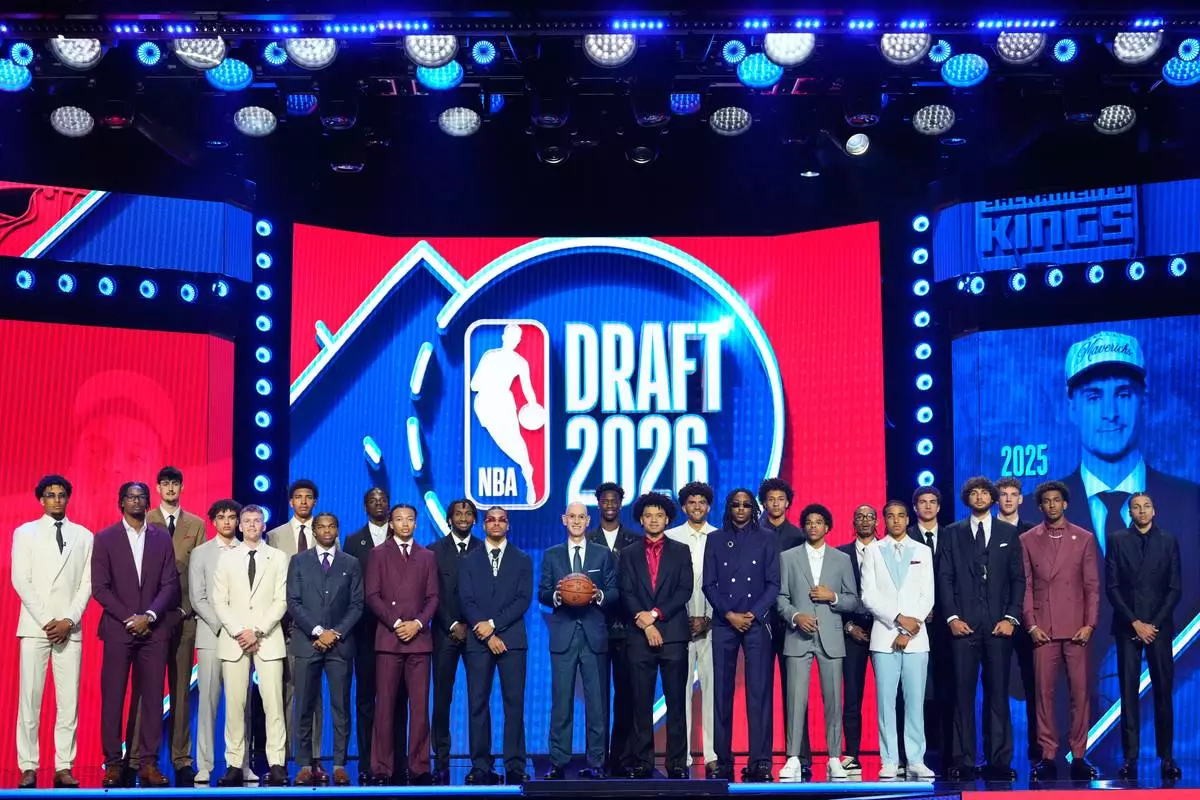
Prospective draftees pose for a group photo with NBA Commissioner Adam Silver, center, before the first round of the NBA basketball draft, Tuesday, June 23, 2026, in New York. (AP Photo/Yuki Iwamura)