NEW YORK (AP) — You keep your trusty reusable bottle filled with only clear, delicious water. Do you still need to wash it?
Experts say reusable bottles get grubby no matter what liquid they're filled with, and it's important to clean them regularly.
Water bottles pick up germs from our mouths when we take a sip, and from our hands when we touch the straw or lid. They're covered in tiny, tough-to-reach nooks and crannies which can become breeding grounds for mold, bacteria and other microbes if left un-scrubbed.
“It seems like something mundane, but it is extremely important,” said nurse practitioner Michele Knepper, who works at the University of Pittsburgh Medical Center.
Unclean water bottles can cause stomach aches and itchy throats and even exacerbate allergies and asthma.
Experts disagree on when and how you should wash them, but they're all in agreement on one thing: Give your water bottle a tender loving clean, because something is better than nothing at all.
“Is it that big of a deal? No. But it’s also not difficult to just wash your water bottle,” said Dr. Mike Ren, a family medicine physician at Baylor College of Medicine.
Experts say the gunk doesn’t care what your water bottle is made of. Reusable metal, plastic and glass bottles all grow germy, but plastic bottles are more likely to get scratches or dings on the inside where microbial life can cozy up.
The best cleaning routine is a simple one: Use a sponge or bottle brush to scrub inside and out with warm, soapy water, rinse it out and let it dry so it's ready for the next refill. A narrow or pipe cleaner-shaped tool can be useful to get into straws and tight crevices.
For a deeper wash, scientists recommend popping the bottle in the dishwasher if it's safe to do so, or dissolving a denture or retainer-cleaning tablet in the bottle overnight. Scrubbing with a warm water solution of vinegar or baking soda works too.
Many experts recommend doing a simple, soapy water clean every day and a deeper clean once a week. If daily cleaning feels a little extra, Ren said to try to get to it at least every other week or so while maintaining other good habits like rinsing the mouthpiece over the sink during each refill.
But if you fill your reusable bottle with other beverages like protein shakes or exercise drinks, it really is important to clean every day. Sugary drinks leave a residue that bacteria love to snack on.
Is it okay to leave water in a reusable bottle overnight? Experts disagree.
Some say to dump the dregs out every refill, while others recommend emptying every few hours. Ren says it's likely okay to leave some inside overnight, but to empty old water at least every few days.
“Guidelines are guidelines,” Ren said. “Everyone's going to do it a little bit differently.”
If there's visible mold on the bottle or the liquid inside has a weird smell, don't drink it. Avoid refilling disposable plastic water bottles since chemicals can leach into the water, and they're even more full of cracks and crevices that can harbor germs.
Water bottle cleaning routines may not all look the same — but it's important to keep up the habit, said Ivy Sun, a hospitality expert at Georgia Southern University who has studied water bottle contamination. She washes her and her kids' bottles with soapy water every day.
“This is just a very small step that we do, but it can largely help with our health,” Sun said.
—-
The Associated Press Health and Science Department receives support from the Howard Hughes Medical Institute’s Department of Science Education and the Robert Wood Johnson Foundation. The AP is solely responsible for all content.
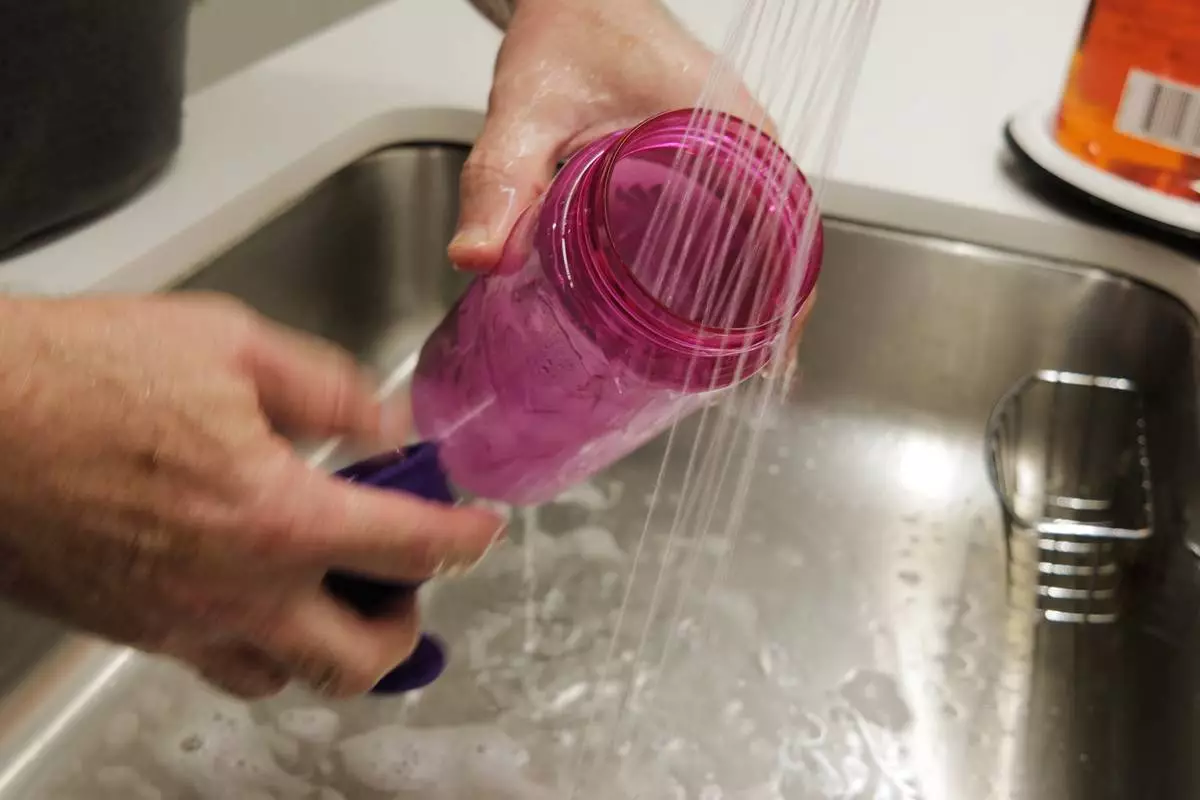
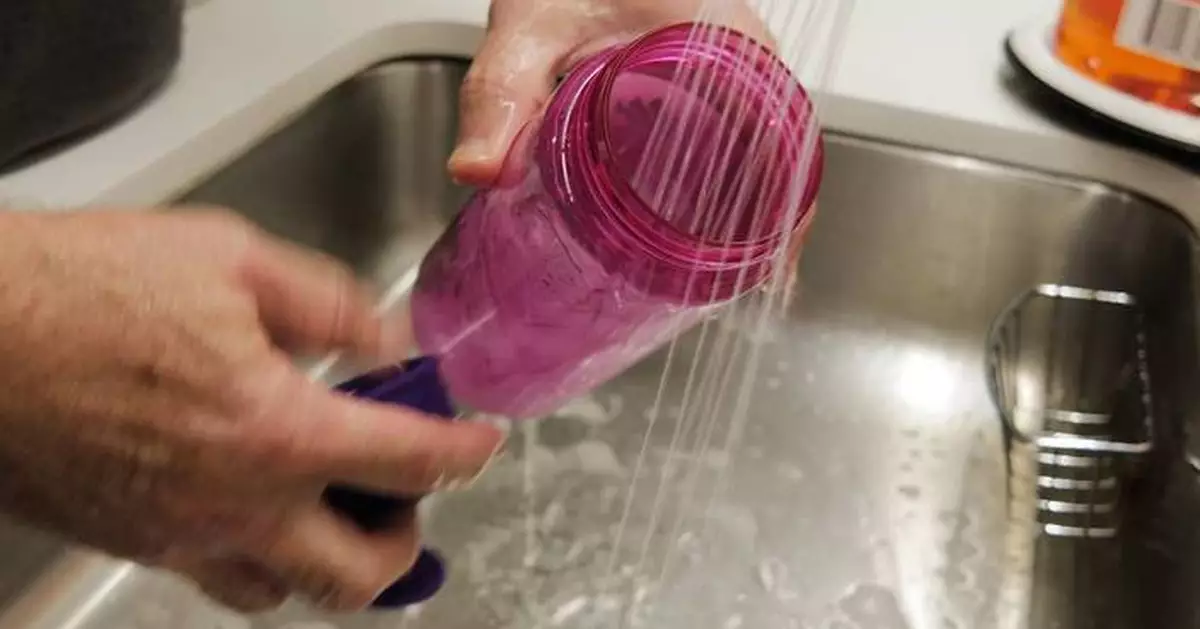
A reusable water bottle is washed in New York on Thursday, Oct. 16, 2025. (AP Photo/Patrick Sison)
NEW YORK (AP) — Stocks are rushing higher worldwide, and oil prices are easing Wednesday as hopes build that the war with Iran could end soon. That's even though some of the signals investors saw as hopeful are already under dispute, and several prior bouts of optimism in financial markets quickly got undercut by continued, fierce fighting in the war.
The S&P 500 rallied 0.9% and added to its leap from the day before, which was its best since last spring. That followed even bigger gains for stock markets across Europe and Asia, including an 8.4% surge in South Korea, which were catching up to Wall Street’s rally from Tuesday.
The Dow Jones Industrial Average was up 294 points, or 0.6%, as of 2:08 p.m. Eastern time, and the Nasdaq composite was 1.3% higher.
Oil prices also fell back toward $100 per barrel after President Donald Trump said late Tuesday that the U.S. military could end its offensive in two to three weeks.
That added to optimism following a couple tenuous signals of hope from earlier Tuesday that Wall Street latched onto, including a news report quoting Iran’s president as saying that it has “the necessary will to end the war” as long as certain requirements are met, including “guarantees to prevent a recurrence of aggression.”
The worry on Wall Street has been that the war may last a long time and keep oil and natural gas from the Persian Gulf out of global markets, which could create a brutal blast of inflation.
But hope has been quick to reverse to doubt on Wall Street, triggering manic swings back and forth for financial markets since the war with Iran began. Trump has also made statements that lifted markets, only to see the gains quickly disappear after increasing his military threats.
Shortly before Wall Street began trading on Wednesday, Trump claimed in a post on his social media network that Iran “has just asked the United States of America for a CEASEFIRE!”
“We will consider when Hormuz Strait is open, free, and clear. Until then, we are blasting Iran into oblivion or, as they say, back to the Stone Ages!!!”
But Iran’s Foreign Ministry spokesman, Esmail Baghaei, quickly called that claim “false and baseless,” according to a report on Iranian state television.
Oil prices also remain high, even if they’ve eased recently. The price for a barrel of Brent crude oil, the international standard, was sitting at $101.51 following its declines, which is still up from roughly $70 before the war began.
U.S. gasoline prices rose again overnight to a national average of $4.06 per gallon, according to the auto club AAA.
Iran, meanwhile, hit an oil tanker off the coast of Qatar and Kuwait’s airport on Wednesday while airstrikes battered Tehran as the fighting continued. Iran also continues to hold a grip on the Strait of Hormuz, where a fifth of the world’s traded oil passes during peacetime.
“De-escalation hopes have given markets a lift, but we think the effects of the war would, in many cases, persist even if the war did end soon,” Thomas Mathews, head of markets, Asia Pacific at Capital Economics, said in a research note Wednesday.
“It’s worth thinking through how markets might fare if the war were to end ‘very soon,’” he wrote. “Do markets have further to recover if sentiment continues to improve? The answer is almost certainly yes.”
The White House said Trump will deliver a public address Wednesday evening on the Iran war.
On Wall Street, most stocks rose as Big Tech powered the move higher. Gains of 3.8% for Alphabet and 0.8% for Nvidia were two of the strongest forces lifting the S&P 500.
Eli Lilly climbed 5.1% after U.S. regulators approved its GLP-1 pill for weight loss.
Such gains have pulled the S&P 500, which sits at the heart of many 401(k) accounts, back to within 5.6% of its all-time high set early this year. Just on Monday, the index briefly neared a 10% drop from its record, a steep-enough fall that professional investors have a name for it: a “correction.”
Nike sank 14.5% even though it reported a stronger profit for the latest quarter than expected. Analysts said it gave some lackluster financial forecasts.
Hasbro fell 4.8% after the toy company found someone had gained unauthorized access to its computer network and is working to assess the full impact.
Energy companies fell broadly as oil prices eased. Exxon Mobil slumped 5% and Chevron fell 4.9%.
In stock markets abroad, indexes leaped more than 2% in France and Germany. Asian markets had even bigger gains.
Tokyo’s Nikkei 225 jumped 5.2% after a survey showed business sentiment for major Japanese manufacturers improved despite worries about the Iran war.
In the bond market, Treasury yields held relatively steady after a report said U.S. retailers made more money in February than economists expected. A separate report said U.S. manufacturing growth last month was slightly faster than economists expected.
The 10-year Treasury yield rose to 4.32% from 4.30% late Tuesday.
AP Business Writers Chan Ho-him and Matt Ott contributed.
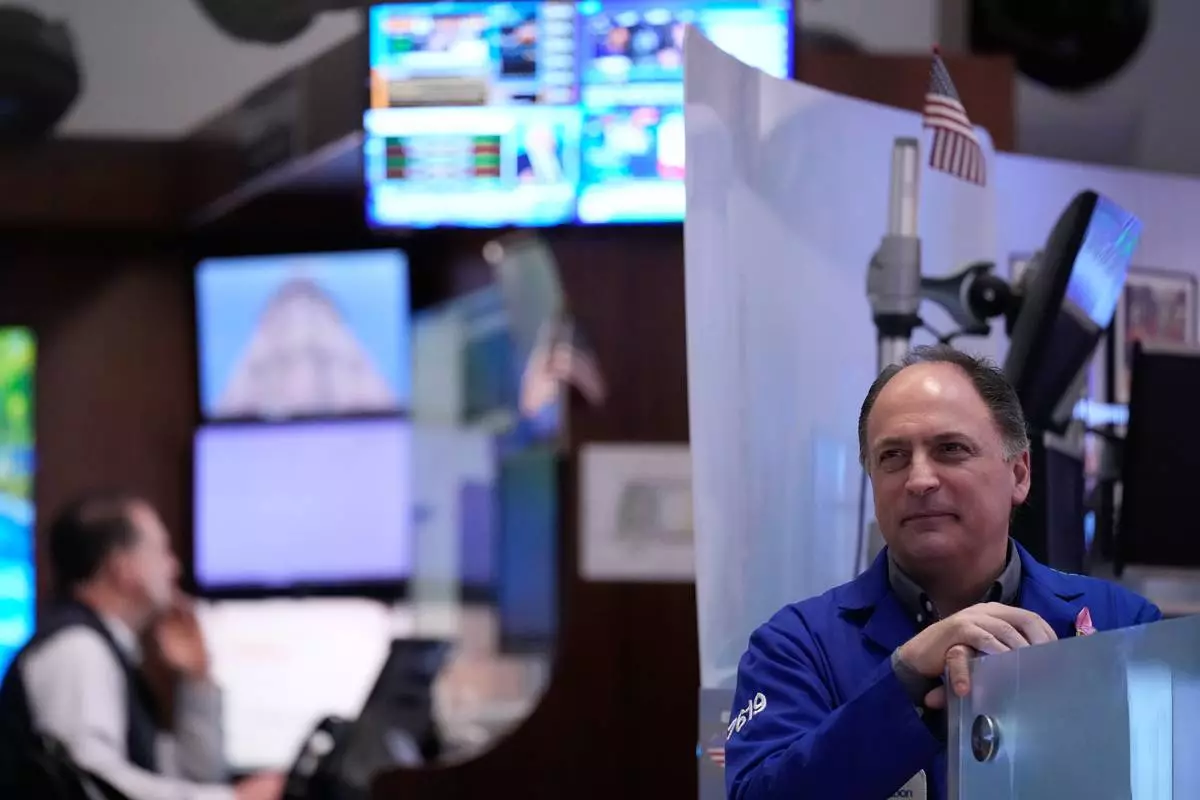
James Conti works on the floor at the New York Stock Exchange in New York, Tuesday, March 31, 2026. (AP Photo/Seth Wenig)
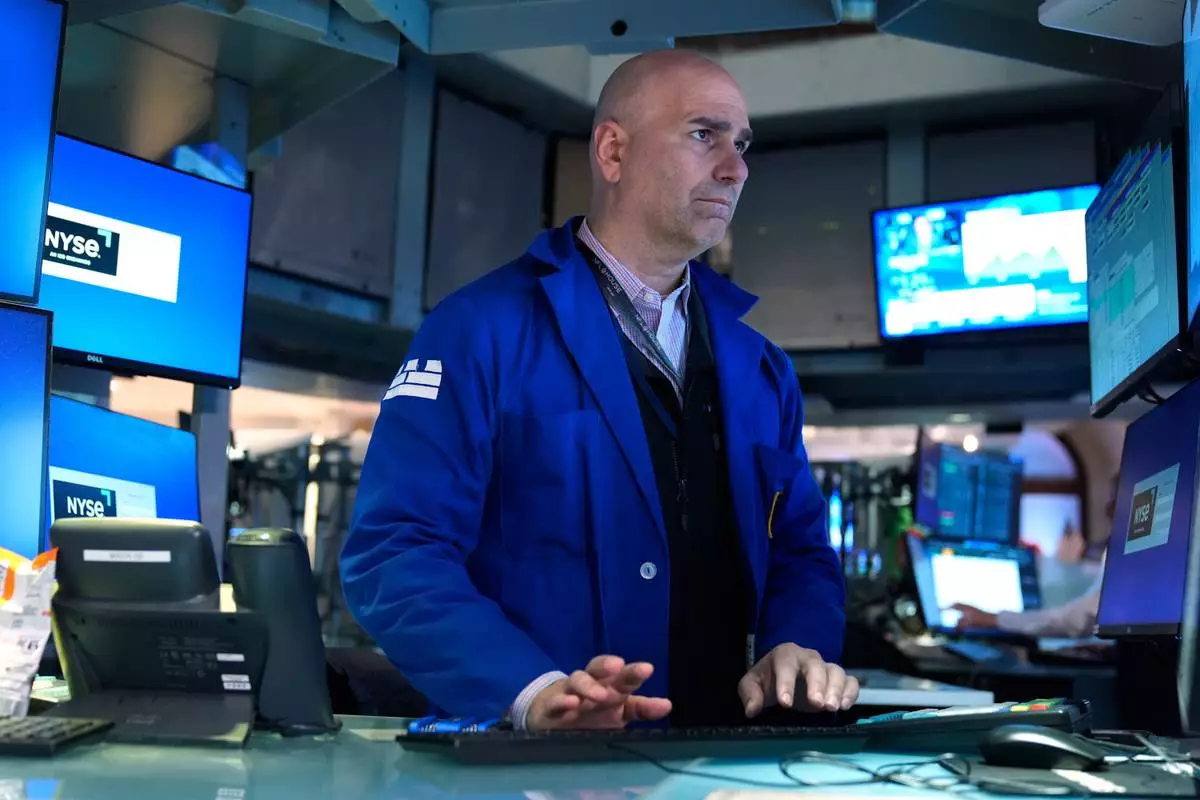
Philip Finale works on the floor at the New York Stock Exchange in New York, Tuesday, March 31, 2026. (AP Photo/Seth Wenig)
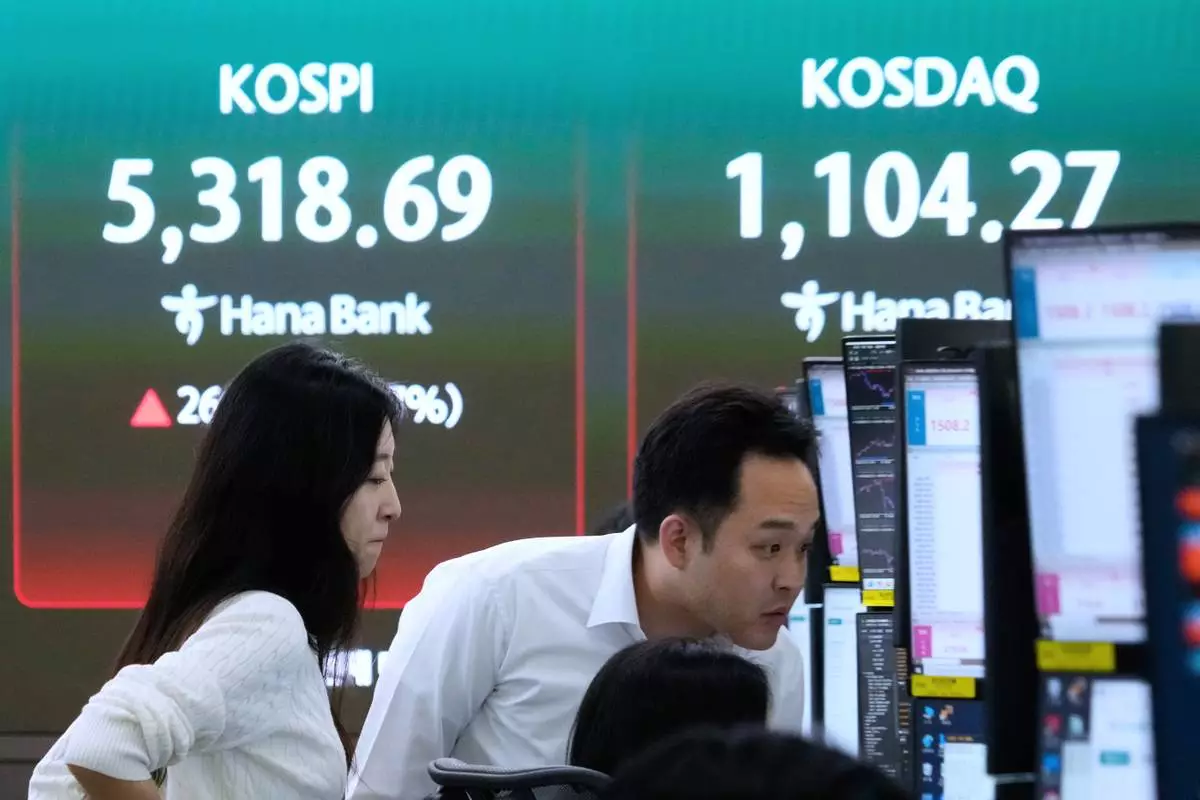
Currency traders watch monitors near a screen showing the Korea Composite Stock Price Index (KOSPI), left, at the foreign exchange dealing room of the Hana Bank headquarters in Seoul, South Korea, Wednesday, April 1, 2026. (AP Photo/Ahn Young-joon)
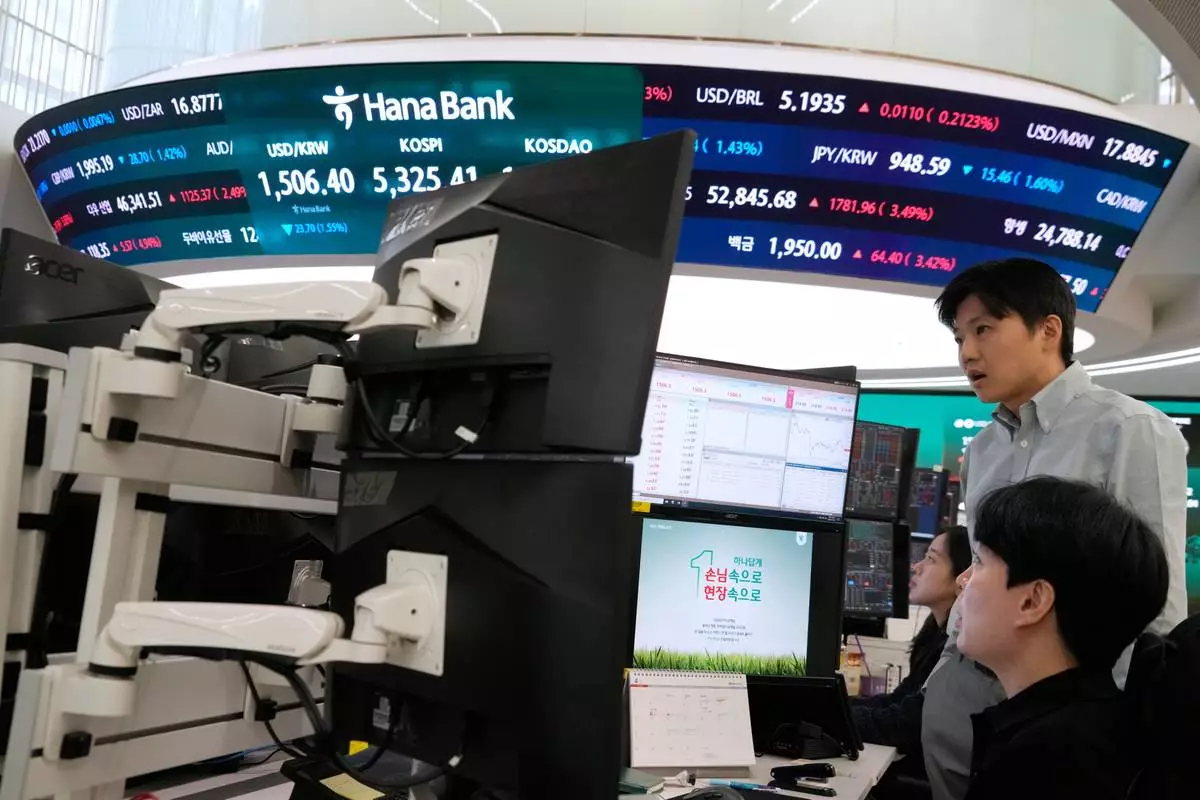
Currency traders watch monitors near a screen showing the Korea Composite Stock Price Index (KOSPI), top center, and the foreign exchange rate between U.S. dollar and South Korean won, top center left, at the foreign exchange dealing room of the Hana Bank headquarters in Seoul, South Korea, Wednesday, April 1, 2026. (AP Photo/Ahn Young-joon)
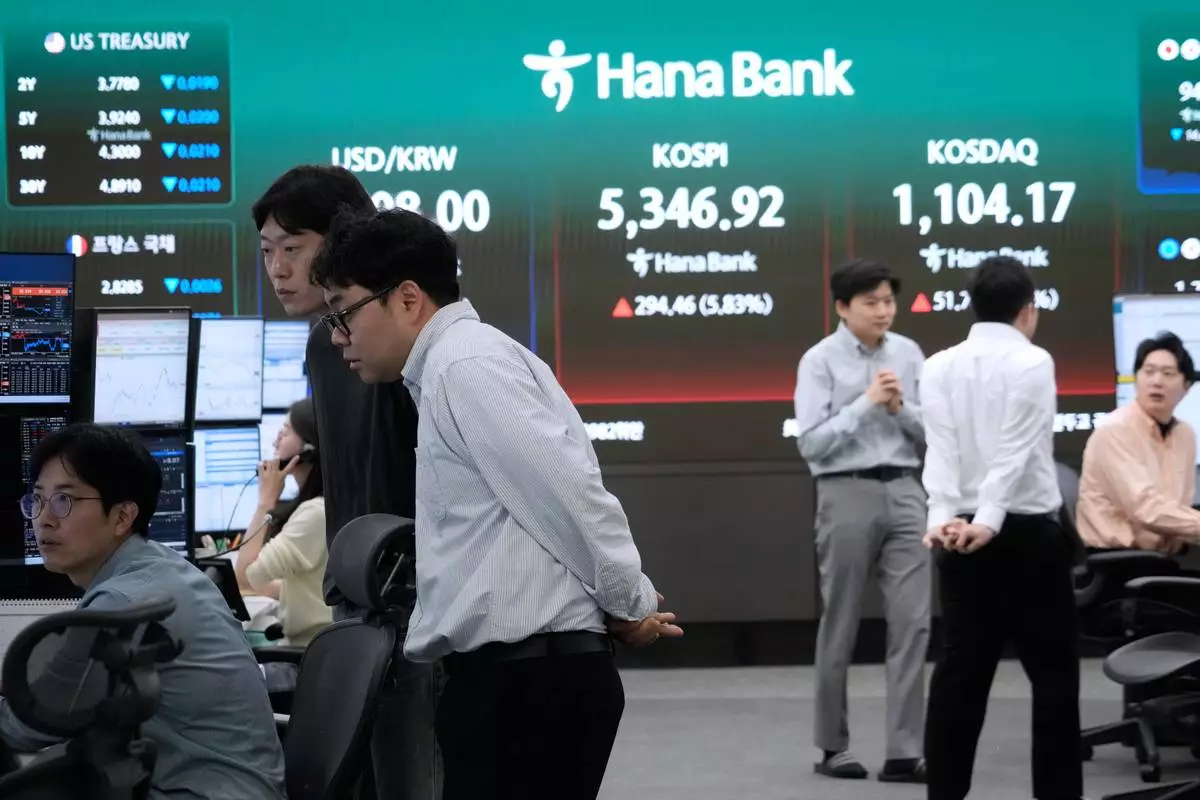
Currency traders work at the foreign exchange dealing room of the Hana Bank headquarters in Seoul, South Korea, Wednesday, April 1, 2026. (AP Photo/Ahn Young-joon)
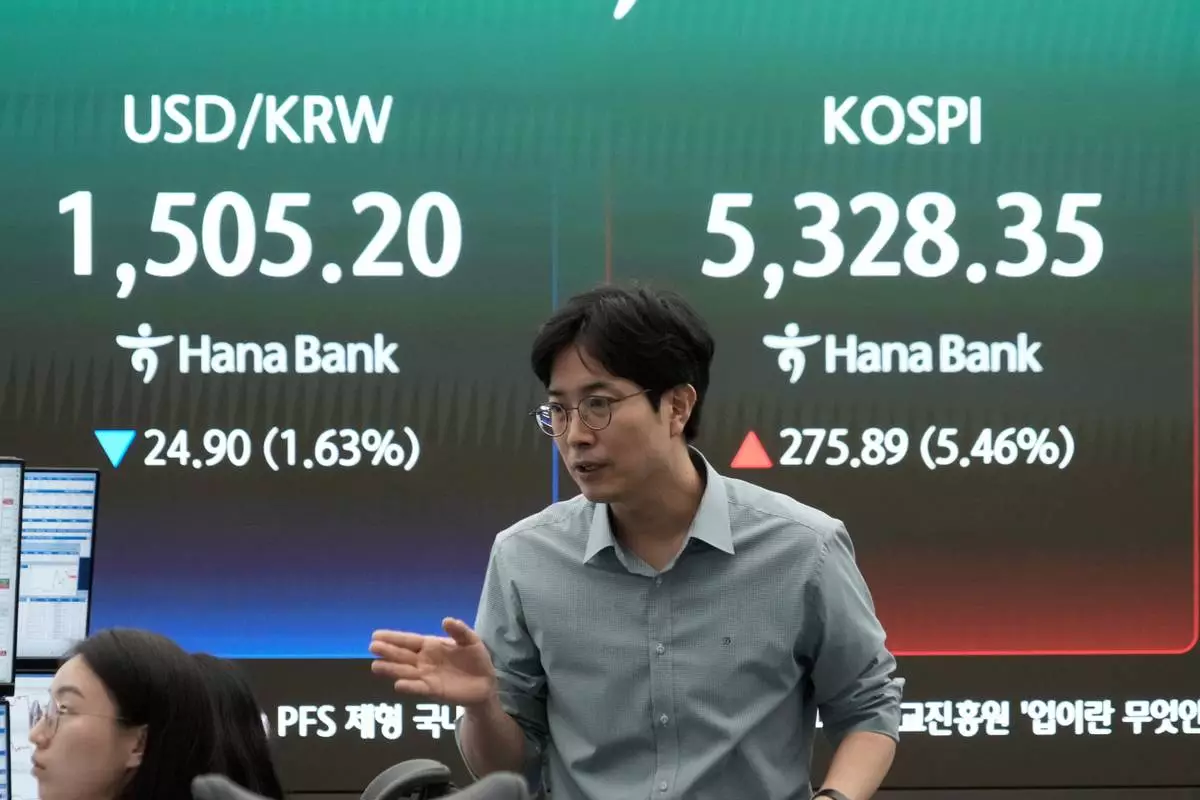
A currency trader reacts near a screen showing the Korea Composite Stock Price Index (KOSPI), right, and the foreign exchange rate between U.S. dollar and South Korean won at the foreign exchange dealing room of the Hana Bank headquarters in Seoul, South Korea, Wednesday, April 1, 2026. (AP Photo/Ahn Young-joon)

A screen displays financial information on the floor at the New York Stock Exchange in New York, Tuesday, March 31, 2026. (AP Photo/Seth Wenig)