Skip to Content Facebook Feature Image

Unitree founder encourages tech entrepreneurs to hold on to their dreams

China

China

China

Unitree founder encourages tech entrepreneurs to hold on to their dreams

2025-11-08 17:35 Last Updated At:11-09 11:57

The founder of Unitree, a leader in China's robotics industry, has shared his journey of turning imagination into reality in the world of consumer robotics, encouraging technology entrepreneurs to seize opportunities in this era and never give up on their dreams.

Founded in east China's tech hub of Hangzhou in 2016, by Wang Xingxing, who was only 26 years old at that time, this world-renowned robotics company has been consistently enhancing the operational capabilities of robots to perform practical tasks for humans.

Unitree Robotics launched its humanoid robot project in 2023. Leveraging years of technological accumulation in quadruped robotics, the company developed its first bipedal robot prototype in just six months.

Powered by AI advancements, the humanoid robots launched by Unitree Robotics in 2024 exhibited superhuman flexibility, making them capable of executing highly dynamic maneuvers. This year, through data capture and reinforcement learning technologies, the robots have mastered martial arts maneuvers, including aerial cartwheels and kip-ups, garnering widespread attention.

Recently, a netizen dug up Wang's master's thesis and discovered that he had developed a prototype of the four-legged robot as early as 2016. This has sparked heated discussions online about Wang's foresight in predicting technology and trends.

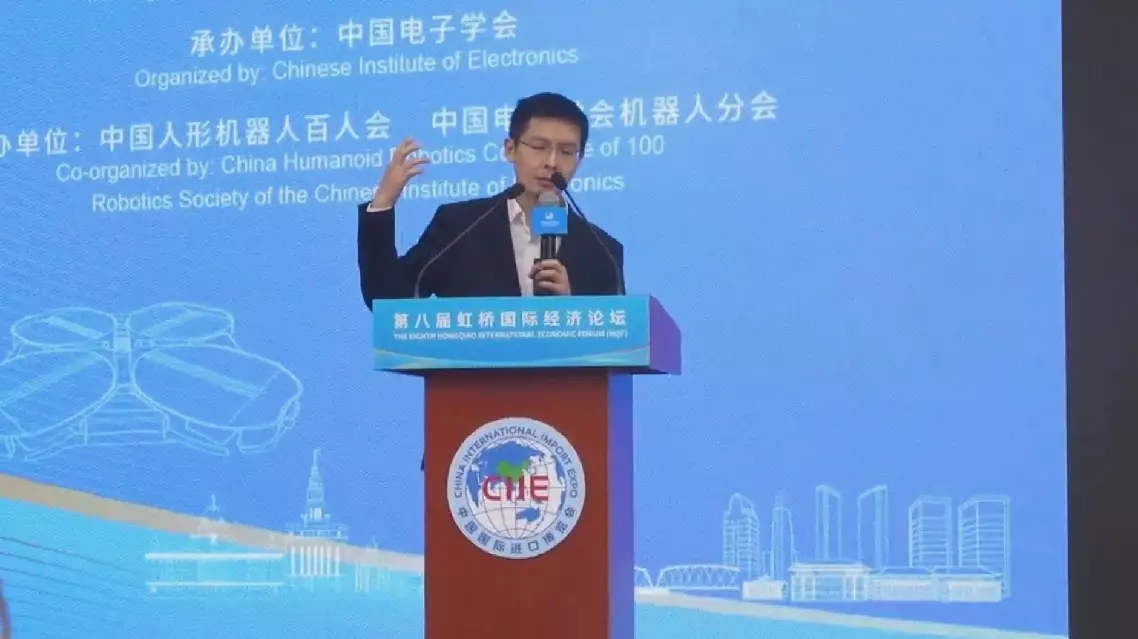
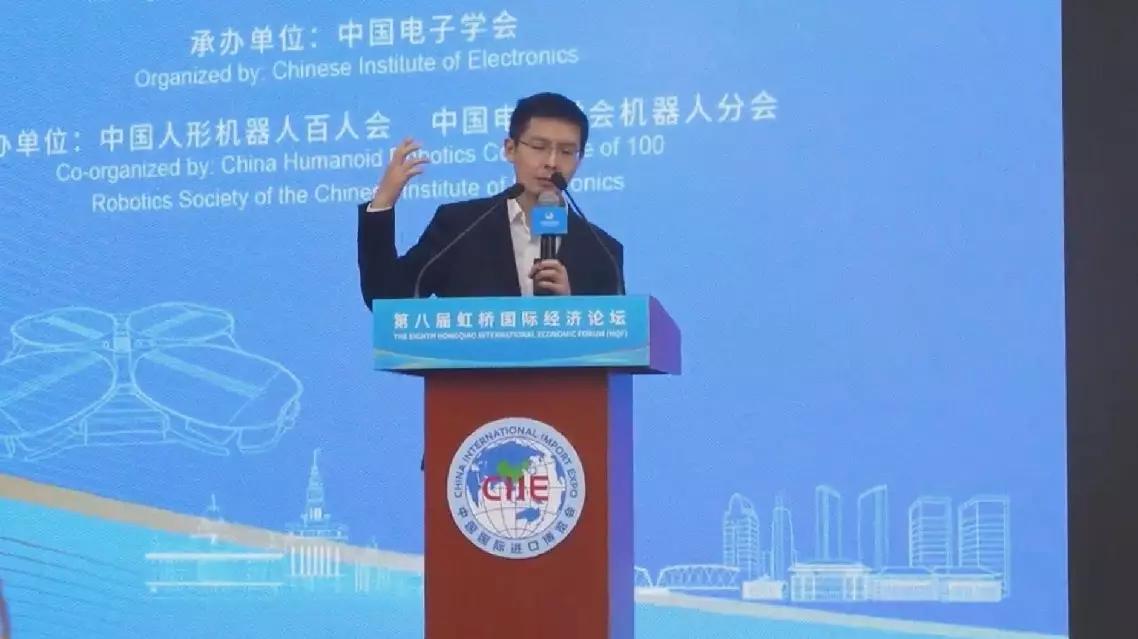
During the eighth Hongqiao International Economic Forum in Shanghai, an integral part of the China International Import Expo (CIIE) which opened on Wednesday, Wang talked about the paper for the first time in an interview with China Central Television.

"This idea popped up in my mind quite a long time ago. I came up with the plan for that robot dog back in 2013. When I first envisioned the design, I was thinking about whether to drop out of school and start up my own business. Yet, nothing was materialized then. It was merely a thought because I had nothing tangible to work with. But I eventually brought the idea to fruition," Wang said.

"In fact, I had already considered most of the company's business and development direction, at least regarding quadruped robots, as early as 2014 or 2015, and we then realized them. In 2009, I myself made a small humanoid robot. But there was no such a thing in the world and I saw no hope for commercialization or practical value. For many years, our company didn't make humanoid robots. Later, however, the remarkable progress in robot AI, including large-scale AI models, was obvious to all, which reopened everyone's imagination. That's why you've witnessed the incredibly rapid advancement of humanoid robots in recent years," he said.

Unitree Robotics, notably, is the first company in the world to start public retail of high-performance quadruped robots, and leads the global market in terms of robot sales volume.

Led by pioneers like Unitree, China's technological prowess is making its mark in the global humanoid robotics arena. A Morgan Stanley report forecasts China's humanoid robot market will grow to 6 trillion yuan (about 836.88 billion U.S. dollars) by 2050 -- with the total number of humanoid robots reaching 59 million.

The success of this post-90s entrepreneur and his robotics business are undoubtedly regarded as a model for China's younger generation to lead the global transformation of the technology industry. Wang encouraged young people to embrace innovation, seize the opportunities of the times, and realize their dreams.

"The tech field is always forward-looking. You need to imagine what direction you should develop in the future. As long as you head in the right direction, success is inevitable. However, also because this industry now requires forward-thinking, getting started can be challenging. This difficulty also has its advantages -- it keeps others out, which means that as long as you can persist in this field, the potential for explosive growth is immense," Wang said.

"I truly believe this era is incredibly favorable for young people, for anyone with dreams, especially those with tech aspirations. When we started our venture in 2016, the company valuation and market attention were completely different from what they are now, at least dozens or even hundreds of times lower. So, starting up a business is actually much easier now, but the challenges are also much greater. Yet I believe everyone has more opportunities to realize their dreams," he said.

On Wednesday, Wang delivered a keynote speech on next-generation intelligent terminals for embodied robots at a sub-forum themed "Cooperation of Humanoid Robotics Innovation and Development" at the 8th Hongqiao International Economic Forum, stressing Unitree's vision of making robots "truly work" in various scenarios such as factories and households in the future.
Unitree founder encourages tech entrepreneurs to hold on to their dreams
Unitree founder encourages tech entrepreneurs to hold on to their dreams
Unitree founder encourages tech entrepreneurs to hold on to their dreams

Unitree founder encourages tech entrepreneurs to hold on to their dreams

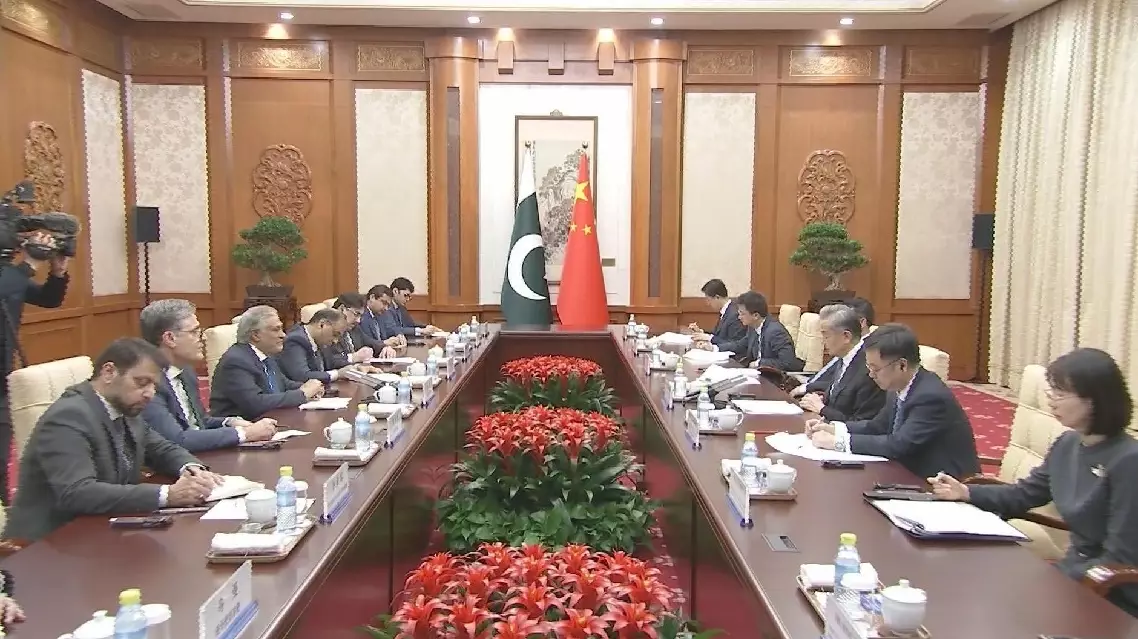
Chinese Foreign Minister Wang Yi said on Tuesday that mediation efforts of the Pakistani side regarding the Middle East tensions are in the common interests of all parties.

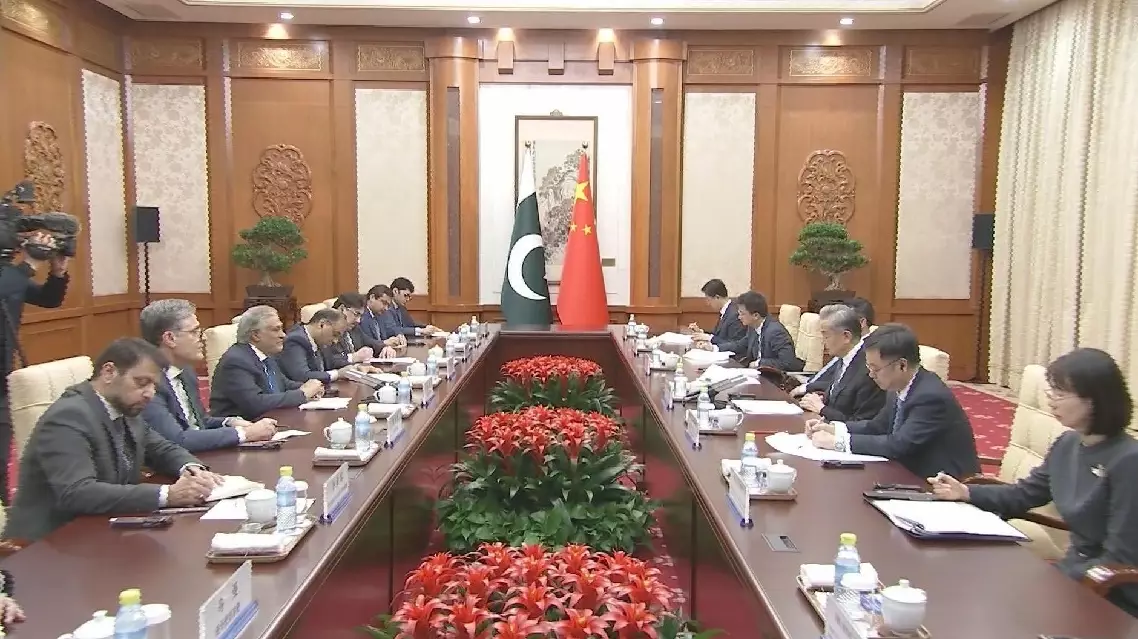
Wang, also a member of the Political Bureau of the Communist Party of China Central Committee, made the remarks in his talks with Pakistani Deputy Prime Minister and Foreign Minister Mohammad Ishaq Dar in Beijing.

During their talks, the two sides exchanged views on current international issues and regional conflicts.

Wang welcomed the visit of the Pakistani side to Beijing for discussion on easing tensions in the Middle East, just after its holding of a quadrilateral foreign ministers' meeting in Islamabad.

He said China supports and looks forward to Pakistan playing a unique and important role in easing the situation and resuming peace talks. This process is no easy task, and Pakistan's mediation efforts are in line with the common interests of all parties, Wang added.

He noted China is willing to make joint efforts with Pakistan to end the hostilities as soon as possible, create opportunities for peace and open the window for peace talks.

On bilateral ties, Wang said this year marks the 75th anniversary of the establishment of diplomatic relations between China and Pakistan, calling on both sides to implement the important consensus reached by the leaders of the two countries and constantly advance the building of a China-Pakistan community with a shared future.

For his part, Dar said the Pakistan-China friendship is precious and deeply rooted in people's hearts, adding that Pakistan is willing to work with China to promote the continuous development of the all-weather strategic cooperative partnership between the two countries.

Dar thanked China for supporting Pakistan's mediation of the situation in Iran, adding that the current conflict has disrupted international energy supplies and caused heavy damage to developing countries.

Noting that solutions can only be found through negotiation, Dar said Pakistan is willing to strengthen communication and coordination with China to push all parties to start peace talks as soon as possible and restore regional peace.

The two sides also put forward a five-point initiative for restoring peace and stability in the Gulf and the Middle East region:

I. Immediate cessation of hostilities: China and Pakistan call for immediate cessation of hostilities and utmost efforts to prevent the conflict from spreading. Humanitarian assistance must be allowed to all war-affected areas.

II. Start of peace talks as soon as possible. Sovereignty, territorial integrity, national independence and security of Iran and the Gulf states should be safeguarded. Dialogue and diplomacy is the only viable option to resolve conflicts. China and Pakistan support the relevant parties in initiating talks, with all parties committing to peaceful resolution of disputes, and refraining from the use or the threat of use of force during peace talks.

III. Security of nonmilitary targets. The principle of protecting civilians in military conflict should be observed. China and Pakistan call on parties to the conflict to immediately stop attacks on civilians and nonmilitary targets, and fully adhere to International Humanitarian Law, and stop attacking important infrastructure, including energy, desalination and power facilities, and peaceful nuclear infrastructure, such as nuclear power plants.

IV. Security of shipping lanes. The Strait of Hormuz, together with its adjacent waters, is an important global shipping route for goods and energy. China and Pakistan call on the parties to protect the security of ships and crew members stranded in the Strait of Hormuz, allow the early and safe passage of civilian and commercial ships, and restore normal passage through the Strait as soon as possible.

V. Primacy of the United Nations Charter. China and Pakistan call for efforts to practice true multilateralism, to jointly strengthen the primacy of the United Nations, and to support the conclusion of an agreement for establishing a comprehensive peace framework and realizing lasting peace based on the purposes and principles of the UN Charter and international law.

Pakistan's mediation efforts in common interests of all parties: Chinese FM

Pakistan's mediation efforts in common interests of all parties: Chinese FM

Pakistan's mediation efforts in common interests of all parties: Chinese FM

Pakistan's mediation efforts in common interests of all parties: Chinese FM

Recommended Articles