Skip to Content Facebook Feature Image

Residents turn to community patrols as illegal gold mining grows in Ghana

News

Residents turn to community patrols as illegal gold mining grows in Ghana
News

News

Residents turn to community patrols as illegal gold mining grows in Ghana

2025-11-09 13:23 Last Updated At:13:40

JEMA, Ghana (AP) — As day broke in a remote part of western Ghana, a priest, farmers and other residents combed through the forests, looking for signs of illegal gold mining.

They have done this for the past year as part of a grassroots task force created to combat the mining that has poisoned rivers in one of the world's largest gold producing countries.

More Images
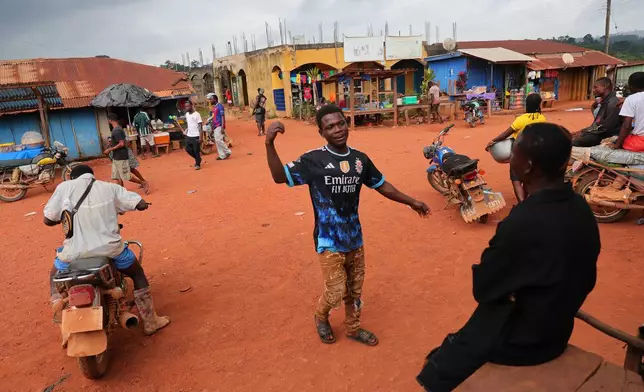
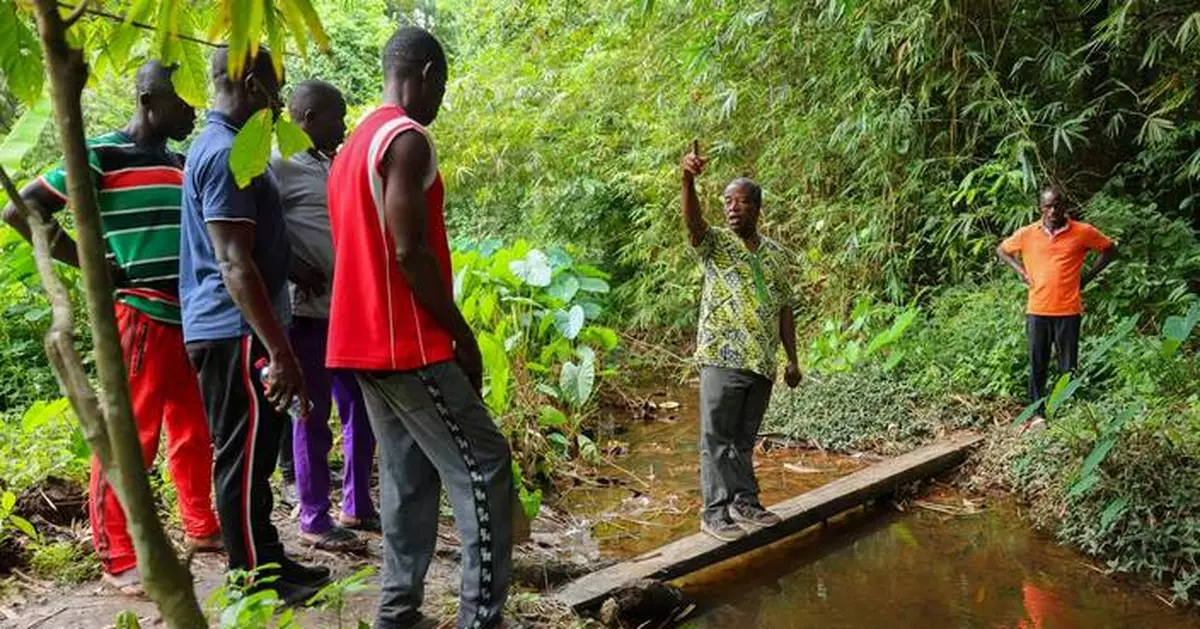
Residents of the Jema community in the Western North Region, Ghana, Friday, Sept. 12, 2025. (AP Photo/Tsraha Yaw)
Residents of the Jema community in the Western North Region, Ghana, Friday, Sept. 12, 2025. (AP Photo/Tsraha Yaw)

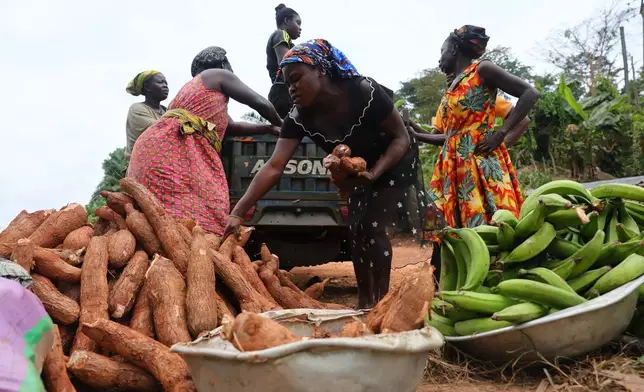
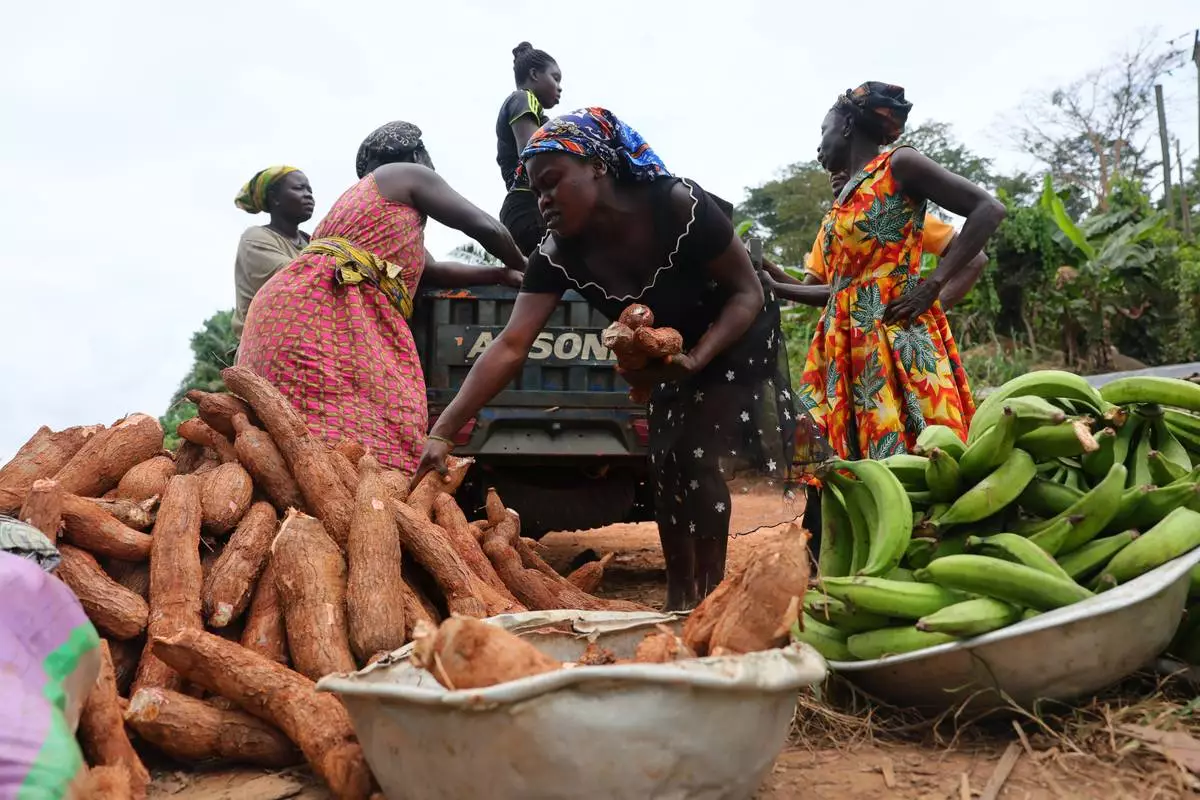
Farmers gather food crops for transport in the Jema community in the Western North Region, Ghana, Thursday, Sept. 11, 2025. (AP Photo/Tsraha Yaw)
Farmers gather food crops for transport in the Jema community in the Western North Region, Ghana, Thursday, Sept. 11, 2025. (AP Photo/Tsraha Yaw)

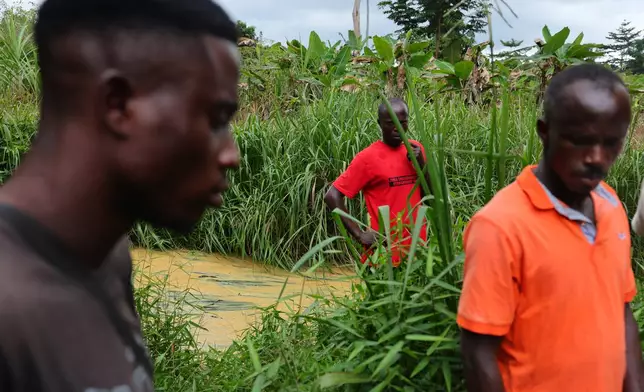
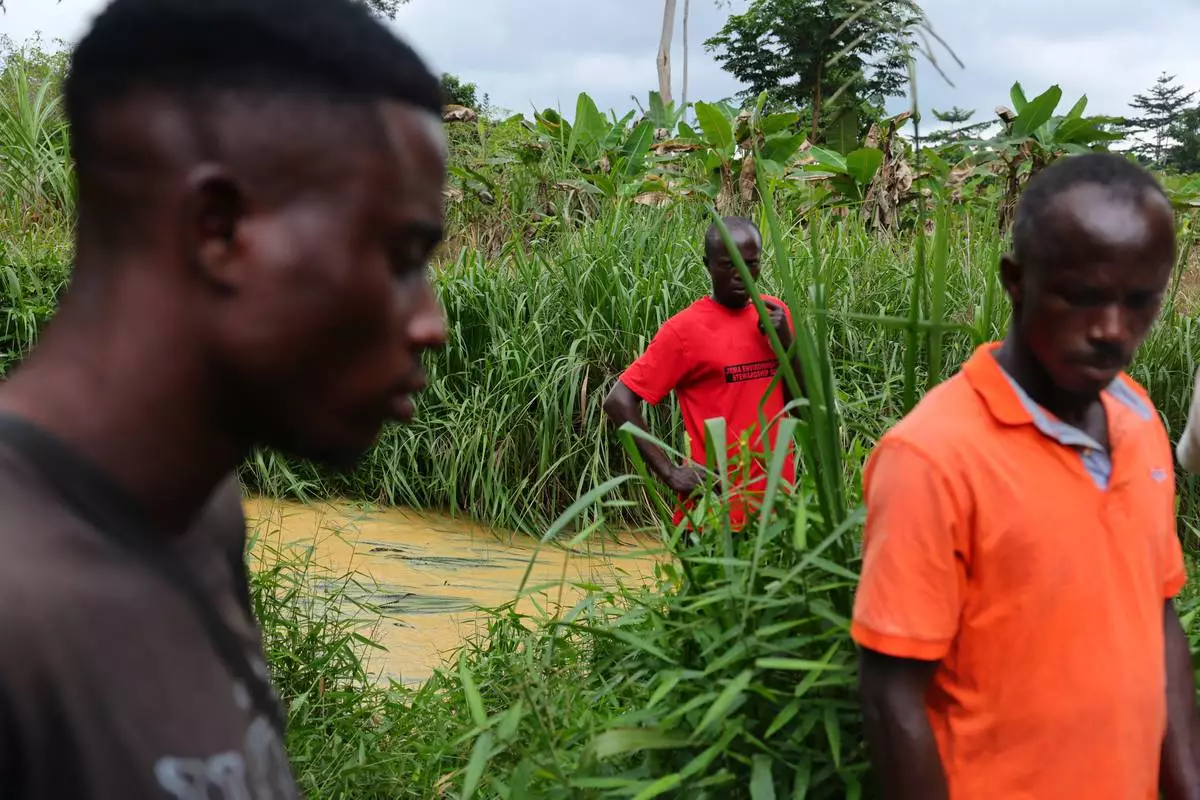
Members of a local anti-illegal gold mining task force patrol a river polluted by illegal gold mining in the Jema community of the Western North Region, Ghana, Thursday, Sept. 11, 2025. (AP Photo/Tsraha Yaw)
Members of a local anti-illegal gold mining task force patrol a river polluted by illegal gold mining in the Jema community of the Western North Region, Ghana, Thursday, Sept. 11, 2025. (AP Photo/Tsraha Yaw)

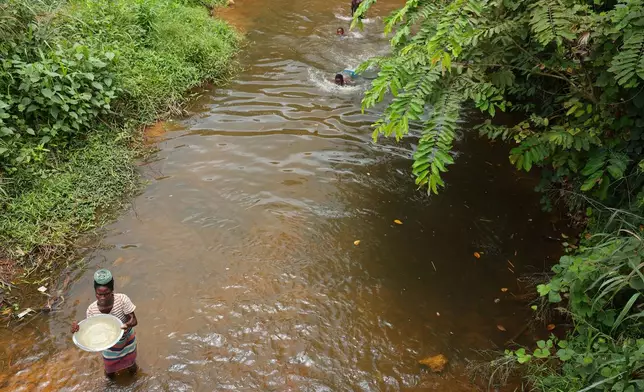
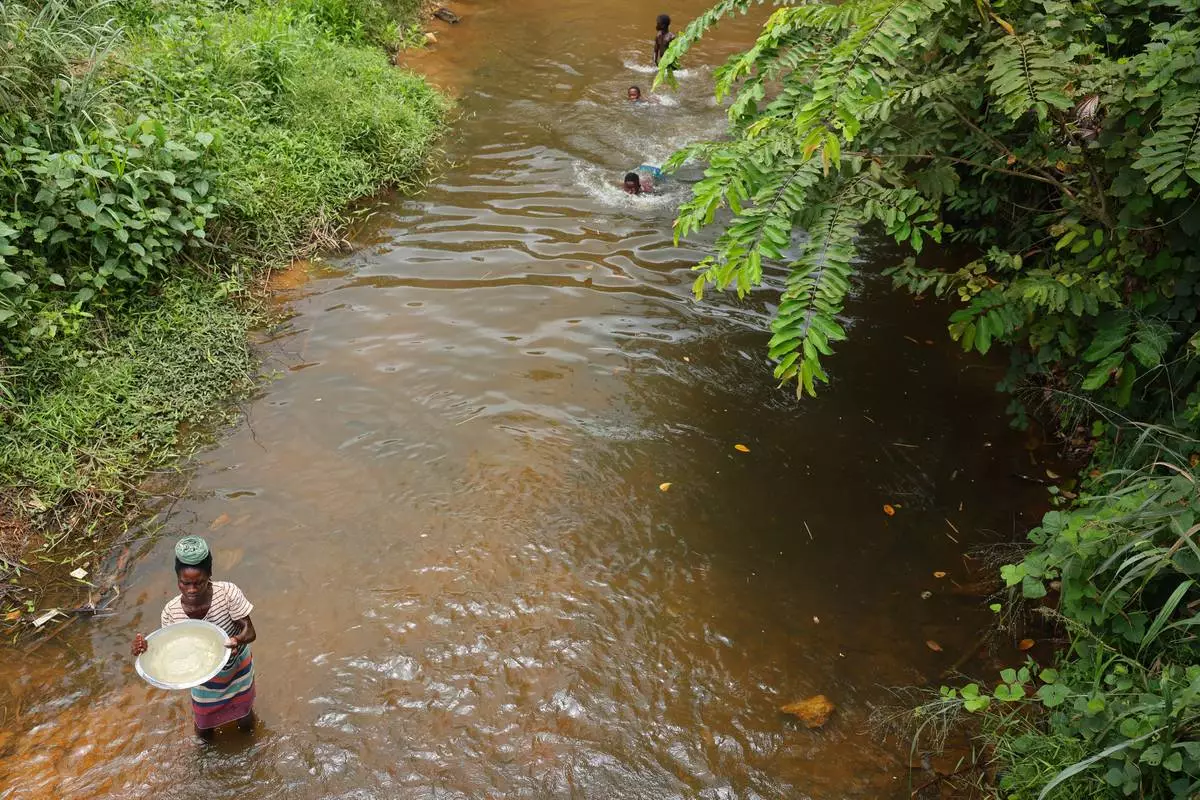
A woman fetches water from a stream in the Jema community in the Western North Region, Ghana, Thursday, Sept. 11, 2025. (AP Photo/Tsraha Yaw)
A woman fetches water from a stream in the Jema community in the Western North Region, Ghana, Thursday, Sept. 11, 2025. (AP Photo/Tsraha Yaw)

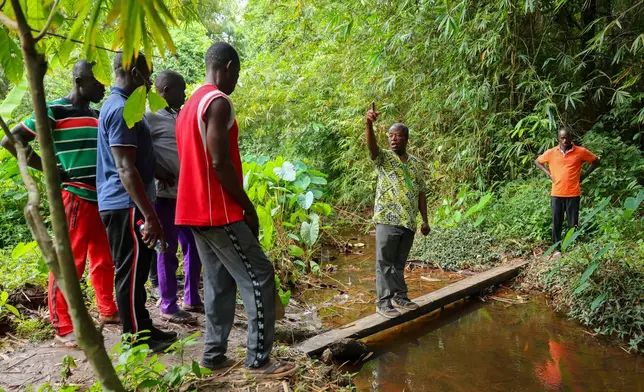
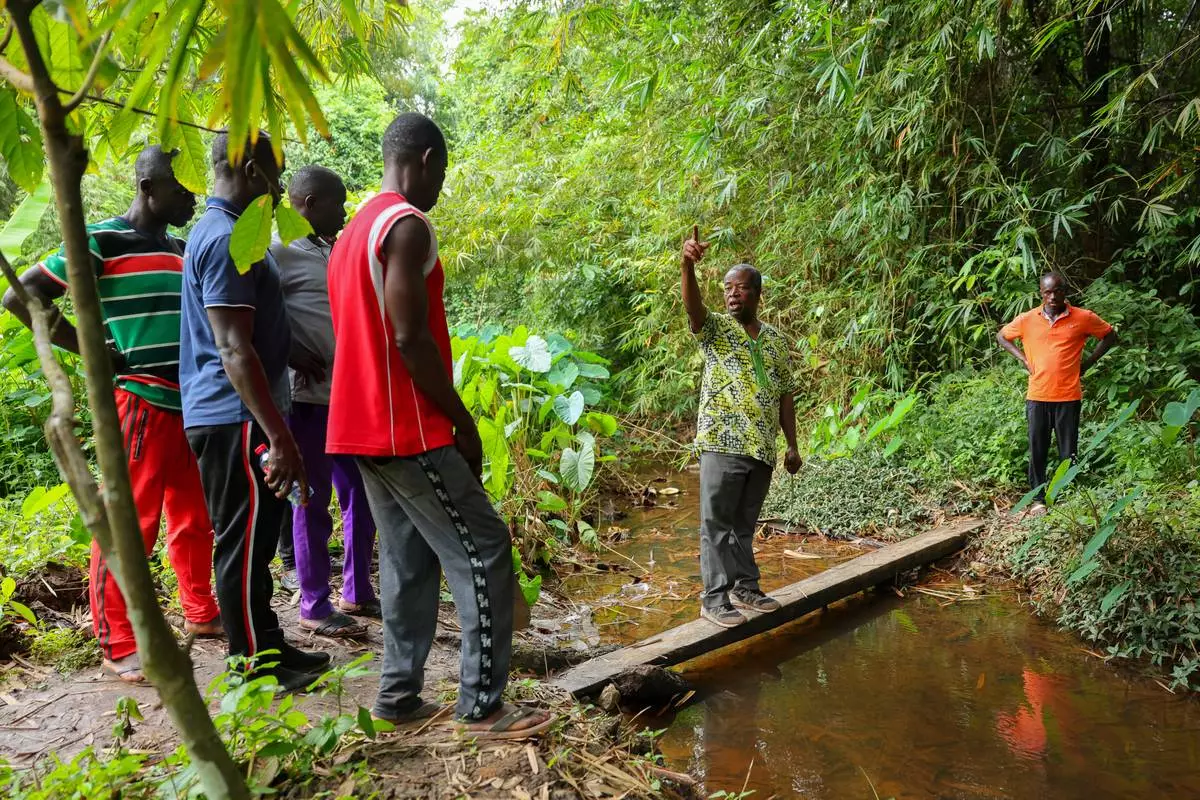
Friar Joseph Kwame Blay, center, a Ghanaian Franciscan Catholic Pries and native of Jema, and members of a local anti-illegal gold mining task force patrol a forest reserve in the Jema community in the Western North Region, Ghana, Thursday, Sept. 11, 2025. (AP Photo/Tsraha Yaw)

Friar Joseph Kwame Blay, center, a Ghanaian Franciscan Catholic Pries and native of Jema, and members of a local anti-illegal gold mining task force patrol a forest reserve in the Jema community in the Western North Region, Ghana, Thursday, Sept. 11, 2025. (AP Photo/Tsraha Yaw)

The group is also driven by the sight of Ghana's unemployed youth being attracted to illegal mining and the elusive promise of quick wealth. Meanwhile, the economy suffers: Ghana has lost $11.4 billion in the last five years to gold smuggling, the development nonprofit Swissaid said this year.

The task force's 14 members call themselves the Jema Anti-Galamsey Advocacy, and their arrests of suspected illegal miners have sparked debate in Ghana’s Western North region over their potential abuse of power.

Members point to the 450-square-kilometer (173-square-mile) Jema area's relatively clean water bodies as evidence that their approach can be effective.

Rampant illegal mining, or galamsey — local shorthand for “gather and sell” — is a growing concern in this West African nation, Africa’s top gold producer.

Ghana's once-promising economy collapsed under the strain of the COVID-19 pandemic. Inflation hit a 21-year high of over 50%. Nearly 39% of youth are unemployed, according to government data, pushing thousands into illegal mining.

The illegal mining has contaminated significant portions of Ghana’s water bodies with cyanide and mercury, according to government authorities and environmental groups.

As of January 2024, illegal miners were present in 44 of the country’s 288 forest reserves, Ministry of Lands and Natural Resources data show. It said nine of them were “completely taken by armed thugs.”

Since 2015, the Jema community of about 15,000 people has banned all mining on its land, empowered by a law that grants local chiefs powers to make and enforce customary law. Chiefs and the heads of clans and families serve as land custodians.

The new task force usually patrols water bodies and the Jema Forest Reserve, wielding sticks in place of guns, at least once a week, watching for changes in water color as a sign of mining activity upstream and for new clearings in the forests.

When it receives a tip-off from villagers, it arrests the suspects and hands them over to the district police office. Such arrests are allowed by laws that grant powers to citizens to make arrests in certain cases.

So far, the group has arrested two Nigerien nationals caught attempting to mine gold in the forest. The court case has proceeded slowly, and villagers seek the establishment of special courts to try illegal miners.

Task force members say they are filling a void left by a lack of government enforcement.

“All our water bodies that take their source here are clean because of our strong resistance to galamsey,” said Joseph Blay, a Catholic priest and Jema resident who helped to form the task force.

“If we stop fighting, we will lose everything,” he said.

Another member, Patrick Fome, said the local Ehole River was starting to turn a milky brown color, a sign that illegal miners appeared to be working upstream.

“We cannot go there now without adequate preparation,” Fome said, calling their unarmed patrol work dangerous. ”We sometimes receive death threats."

A year ago, Ghana saw nationwide protests against illegal mining. Thousands took to the streets to demand a government crackdown.

President John Mahama, who took office in January, has inaugurated a national task force to combat the practice. But he has rejected calls for a state of emergency, which would grant more powers to police and the military to tackle the issue, saying his government has not exhausted all other approaches.

The government’s inability to crack down on illegal mining points to a lack of political will, said Daryl Bosu, deputy national director for the A Rocha Ghana conservation nonprofit.

While the Jema task force could have its benefits, operating without the supervision of security forces could lead to human rights abuses by its members, said Festus Kofi Aubyn, a regional coordinator with the West Africa Network for Peacebuilding, a civil society group.

“If the task force is not properly regulated by the state, it could have dangerous consequences, including ethnic targeting or stereotyping,” he said.

Some Jema residents said they don't support the task force because they want to work with the illegal miners for financial gain.

One 27-year-old resident said he was willing to sell his land to the miners, citing the lack of profit in farming. Fertilizer prices have tripled since 2022. He spoke on condition of anonymity for fear of retaliation.

Local leaders acknowledged that declining farming income and limited job opportunities could create divisions and weaken community enforcement of the mining ban. Residents called for investment in other work to make illegal mining less attractive.

Blay, the priest, proposed turning the Jema Forest Reserve into a tourism park to create sustainable jobs.

“And if the government is really serious to fight, we can use the Jema template to also diffuse it in other communities," he said.

——

For more on Africa and development: https://apnews.com/hub/africa-pulse

The Associated Press receives financial support for global health and development coverage in Africa from the Gates Foundation. The AP is solely responsible for all content. Find AP’s standards for working with philanthropies, a list of supporters and funded coverage areas at AP.org.
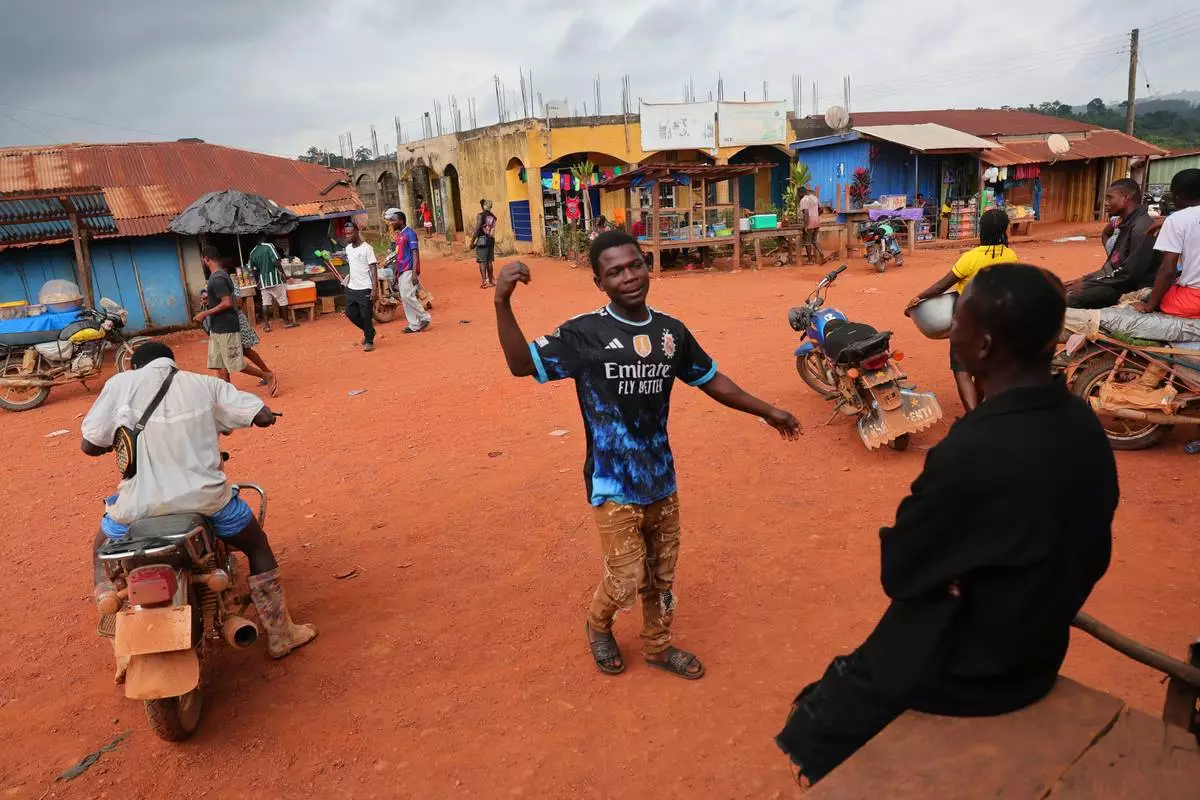
Residents of the Jema community in the Western North Region, Ghana, Friday, Sept. 12, 2025. (AP Photo/Tsraha Yaw)
Residents of the Jema community in the Western North Region, Ghana, Friday, Sept. 12, 2025. (AP Photo/Tsraha Yaw)

Farmers gather food crops for transport in the Jema community in the Western North Region, Ghana, Thursday, Sept. 11, 2025. (AP Photo/Tsraha Yaw)
Farmers gather food crops for transport in the Jema community in the Western North Region, Ghana, Thursday, Sept. 11, 2025. (AP Photo/Tsraha Yaw)

Members of a local anti-illegal gold mining task force patrol a river polluted by illegal gold mining in the Jema community of the Western North Region, Ghana, Thursday, Sept. 11, 2025. (AP Photo/Tsraha Yaw)
Members of a local anti-illegal gold mining task force patrol a river polluted by illegal gold mining in the Jema community of the Western North Region, Ghana, Thursday, Sept. 11, 2025. (AP Photo/Tsraha Yaw)

A woman fetches water from a stream in the Jema community in the Western North Region, Ghana, Thursday, Sept. 11, 2025. (AP Photo/Tsraha Yaw)
A woman fetches water from a stream in the Jema community in the Western North Region, Ghana, Thursday, Sept. 11, 2025. (AP Photo/Tsraha Yaw)

Friar Joseph Kwame Blay, center, a Ghanaian Franciscan Catholic Pries and native of Jema, and members of a local anti-illegal gold mining task force patrol a forest reserve in the Jema community in the Western North Region, Ghana, Thursday, Sept. 11, 2025. (AP Photo/Tsraha Yaw)

Friar Joseph Kwame Blay, center, a Ghanaian Franciscan Catholic Pries and native of Jema, and members of a local anti-illegal gold mining task force patrol a forest reserve in the Jema community in the Western North Region, Ghana, Thursday, Sept. 11, 2025. (AP Photo/Tsraha Yaw)
NEW YORK (AP) — The U.S. stock market is slipping Thursday after oil prices resumed their climb.

The S&P 500 fell 0.3% and is on track for a fourth drop in five days after setting its all-time high. The Dow Jones Industrial Average was down 83 points, or 0.2%, as of 1:01 a.m. Eastern time, and the Nasdaq composite was 0.4% lower.

A halt in the torrid run for stocks benefiting from the artificial-intelligence boom has slowed the U.S. market recently. Not even another better-than-expected profit report from Nvidia was enough to kick it back into gear.

The chip company reported stronger profit and revenue for the latest quarter than analysts expected, while also forecasting revenue for the current quarter that cleared analysts’ estimates. “The buildout of AI factories — the largest infrastructure expansion in human history — is accelerating at extraordinary speed,” CEO Jensen Huang said.

But such performances and such talk have become routine, and Nvidia's stock swiveled between losses and gains before falling 1.4%.

Some analysts said the weakness may have simply been because investors were locking in profits after Nvidia’s stock had soared nearly 70% over the prior year, more than double the S&P 500’s 27% jump. The broad AI industry is also getting criticism for becoming too expensive, as well as too circular as Nvidia has bought ownership stakes in companies that use its own chips that drive Nvidia’s revenue.

Pressure built on Wall Street, meanwhile, as the price for a barrel of Brent crude oil climbed 1.7% to $106.81 and trimmed its loss for the week. Oil prices have been swinging up and down with uncertainty about how long the war with Iran will keep the Strait of Hormuz shut, which is preventing oil tankers from exiting the Persian Gulf to deliver crude.

The higher oil prices pushed Treasury yields upward in the bond market, resuming rises following a slowdown the day before.

Climbing yields have cranked up the pressure on financial markets worldwide. They're slowing economies and weighing on prices for stocks and all kinds of other investments. Besides driving up rates for mortgages, high yields could also curtail companies’ borrowing to build the AI data centers that have been supporting the U.S. economy’s growth recently.

The yield on the 10-year Treasury rose to 4.61% from 4.57% late Wednesday.

It had gotten near 4.63% in the morning, after a report gave the latest signal that the U.S. job market remains in better shape than economists expected. The number of U.S. workers applying for unemployment benefits last week unexpectedly declined in an indication of fewer layoffs.

But yields eased a bit following a mixed preliminary report showing weaker-than-expected growth for business activity among U.S. services businesses and improved growth for U.S. manufacturers. Companies are feeling the effects of accelerating inflation and are seeing subdued growth in their order books, the preliminary data from an S&P Global survey said.

“The damaging economic impact from the war in the Middle East is becoming increasingly evident in the business surveys,” according to Chris Williamson, chief business economist at S&P Global Market Intelligence.

Inflation is worsening even beyond the high oil prices caused by the Iran war, while U.S. households are showing widespread discouragement about the economy.

Elsewhere on Wall Street, Walmart fell 7.2% following its profit report. The retailer delivered another quarter of impressive revenue but offered up weaker forecasts for upcoming profit than analysts expected.

On the winning side of Wall Street was Ralph Lauren, which jumped 12.2% after reporting stronger profit and revenue for the latest quarter than analysts expected.

In stock markets abroad, indexes were mixed in Europe following bigger moves in Asia.

South Korea’s Kospi Kospi soared 8.4% thanks to strength for technology stocks. Samsung Electronics jumped 8.5% after its labor union and management reached an agreement late Wednesday that averted a strike. SK Hynix, a chip company partnering with Nvidia, surged 11.2%.

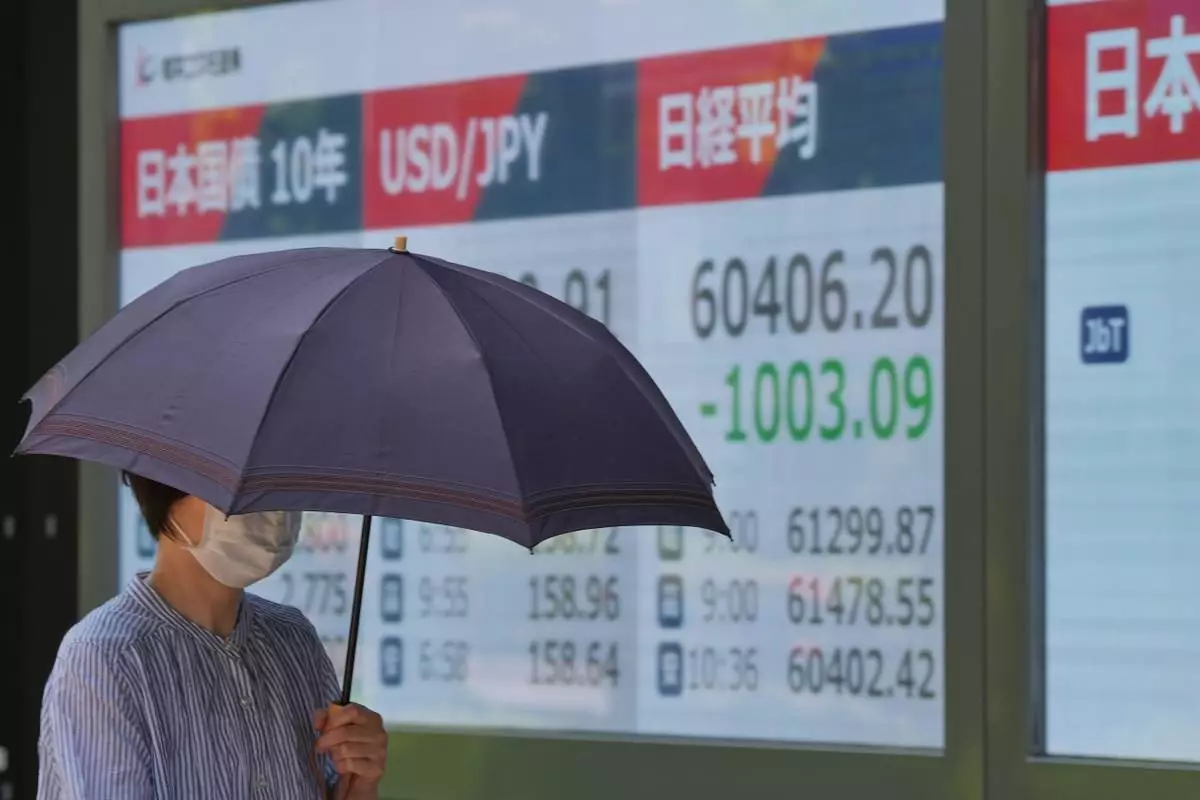
Tokyo’s Nikkei 225 jumped 3.1%, while indexes fell 1% in Hong Kong and 2% in Shanghai.

AP Business Writers Matt Ott and Elaine Kurtenbach contributed.

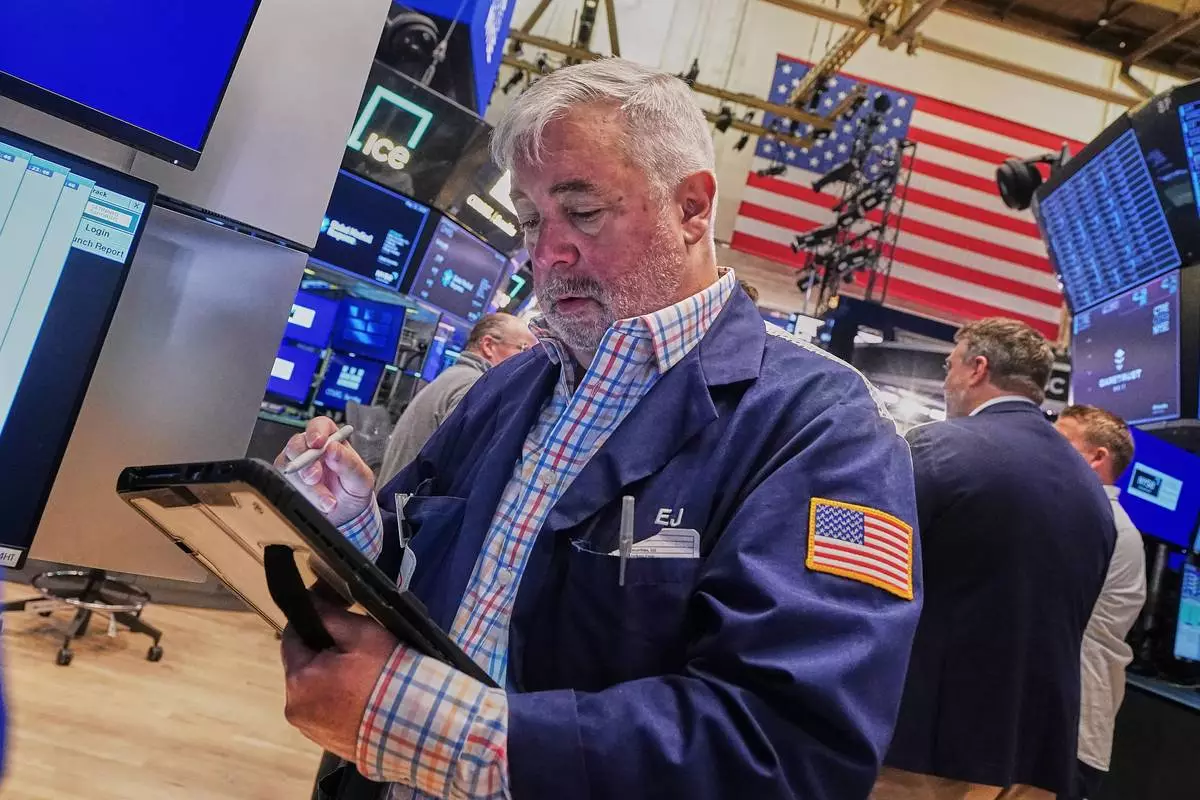
Trader Aaron Ford works on the floor of the New York Stock Exchange, Thursday, May 7, 2026. (AP Photo/Richard Drew)

Trader Aaron Ford works on the floor of the New York Stock Exchange, Thursday, May 7, 2026. (AP Photo/Richard Drew)

Trader Edward McCarthy works on the floor of the New York Stock Exchange, Wednesday, May 13, 2026. (AP Photo/Richard Drew)

Trader Edward McCarthy works on the floor of the New York Stock Exchange, Wednesday, May 13, 2026. (AP Photo/Richard Drew)

A Global Medical Response helicopter sits in front of the New York Stock Exchange before the planned IPO of GMR Solutions, Inc., Wednesday, May 13, 2026. (AP Photo/Richard Drew)

A Global Medical Response helicopter sits in front of the New York Stock Exchange before the planned IPO of GMR Solutions, Inc., Wednesday, May 13, 2026. (AP Photo/Richard Drew)

A person walks in front of an electronic stock board showing Japan's Nikkei index at a securities firm Monday, May 18, 2026, in Tokyo. (AP Photo/Eugene Hoshiko)

A person walks in front of an electronic stock board showing Japan's Nikkei index at a securities firm Monday, May 18, 2026, in Tokyo. (AP Photo/Eugene Hoshiko)

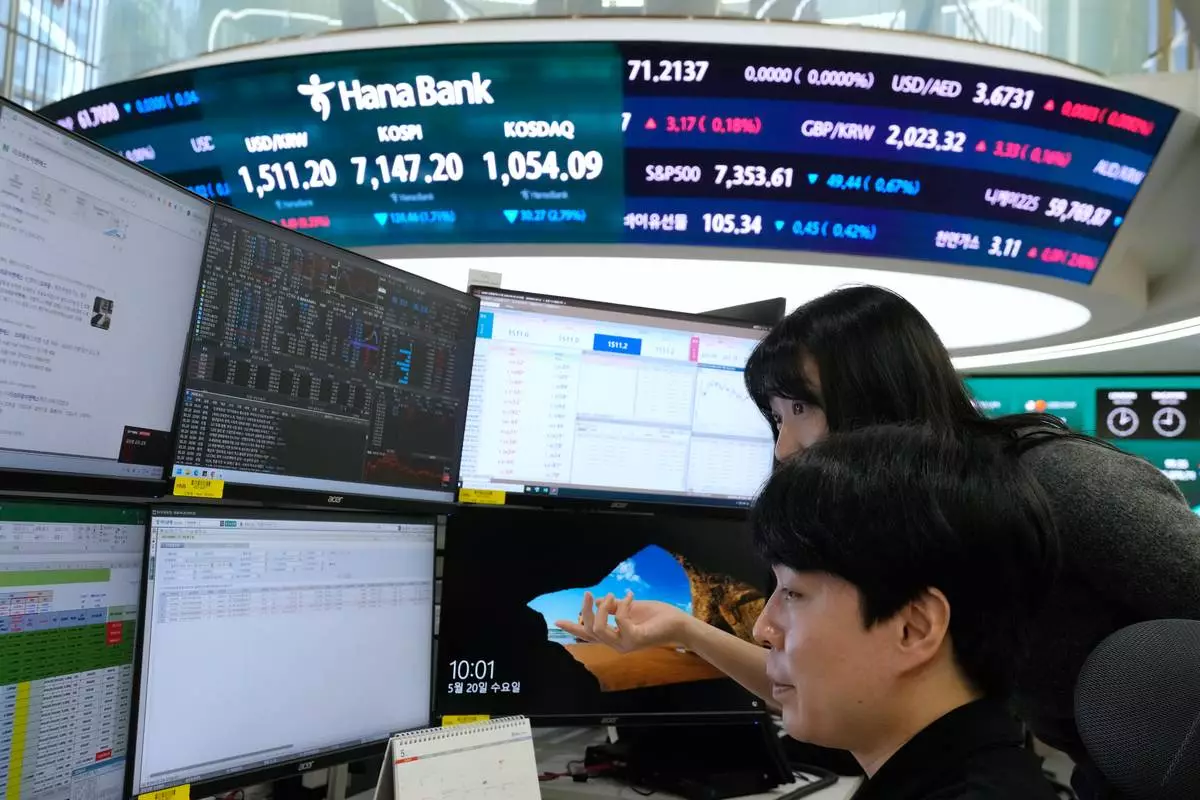
Currency traders watch monitors at the foreign exchange dealing room of the Hana Bank headquarters in Seoul, South Korea, Wednesday, May 20, 2026. (AP Photo/Ahn Young-joon)

Currency traders watch monitors at the foreign exchange dealing room of the Hana Bank headquarters in Seoul, South Korea, Wednesday, May 20, 2026. (AP Photo/Ahn Young-joon)

A currency trader talks on the phone near a screen showing the Korea Composite Stock Price Index (KOSPI) and the foreign exchange rate between U.S. dollar and South Korean won, left, at the foreign exchange dealing room of the Hana Bank headquarters in Seoul, South Korea, Wednesday, May 20, 2026. (AP Photo/Ahn Young-joon)

A currency trader talks on the phone near a screen showing the Korea Composite Stock Price Index (KOSPI) and the foreign exchange rate between U.S. dollar and South Korean won, left, at the foreign exchange dealing room of the Hana Bank headquarters in Seoul, South Korea, Wednesday, May 20, 2026. (AP Photo/Ahn Young-joon)

Recommended Articles