China's leading tech startups are making new progress in robotics and artificial intelligence (AI) technology, unveiling innovative products that offer a glimpse into futuristic lifestyles.
During the 2025 World Internet Conference (WIC) Wuzhen Summit in Wuzhen, east China's Zhejiang Province, many Chinese tech startups have brought their latest creations to global audience. Highlights included smart glasses capable of serving as on-site tour guides.
Leading the pack of Chinese tech startups are six companies based in China's e-commerce capital of Hangzhou City in Zhejiang. Known as the "Six Little Dragons", the group includes Game Science, DeepSeek, Unitree Robotics, DEEP Robotics, BrainCo and Manycore Tech, excelling in cutting-edge fields such as artificial intelligence, robotics, gaming technology, brain-machine interface, and the metaverse.
The humanoid robots developed by Unitree Robotics have caught spectators’ attentions at the Wuzhen Summit. With continuous updates, the humanoid robots are now able to perform complicated movements such as consecutive backflips. The flexibility of the robots is making them one step closer to entering people's daily life.
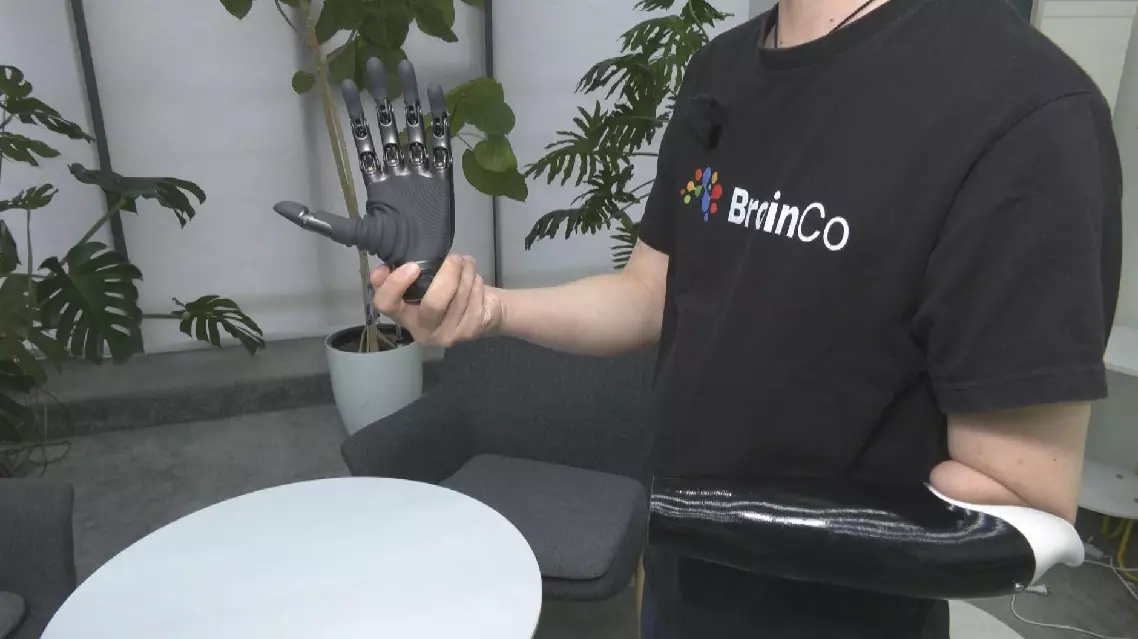
At BrainCo, the latest version of the bionic hand can operate completely detached from the user. Leveraging advanced brain-machine interface technology, it allows remote control for precise and dexterous movements.
"The brain sends a signal to control the bionic hand. Then through AI algorithms, the hand interprets the actions I want to perform. It also enables remote operation of robotic hands or dexterous hands to complete tasks in hazardous environments," said Gu Yue, a research and development engineer and product experience officer at BrainCo.
The new four-legged robot dog released by DEEP Robotics this year can achieve autonomous navigation after receiving instructions, which means it no longer needs real-time remote control by humans.
The robot dog can also move at a speed of four meters per second, and can effortlessly handle obstacles like avoiding hurdles and climbing stairs.
"For example, to move from point A to point C via point B, we need to give it some instructions in advance, and then the robot dog can perform the movement automatically and do the inspections along the route. It can be used in substations, factories, and chemical plants, conducting inspection tasks in harsh indoor and outdoor environments," said He Yabiao, a technical engineer at DEEP Robotics.
Manycore Tech has launched its spatial large language model not long ago. Users now can give instructions in natural language, and the robots can use the virtual room created by the spatial AI model to understand the tasks and execute movements.
"I gave it (the robot) an instruction to fold the quilt. [With the help of this virtual room], it will understand how to navigate from the washing machine to the bed. For all the robots, they need the data like ours to assist them when performing tasks in real world," said Yu Fan, product specialist at Manycore Tech.
Meanwhile, Game Science revealed the trailer of its much-anticipated game “Black Myth: Zhong Kui” in August this year. DeepSeek has unveiled an AI model that uses visual perception to compress text input.
Leading Chinese tech startups unveil AI, robotics breakthroughs