Siemens stays committed to its ambitious 2030 and 2050 goals of greenhouse gas emissions reduction, said Matthias Rebellius, Member of the Managing Board of Siemens AG and CEO on Smart Infrastructure at Siemens AG, during the 8th China International Import Expo in Shanghai.
The company will accomplish the goals through ways including using low-carbon technologies in China, he said in an interview with China Global Television Network (CGTN). China has shown high-level attention and taken proactive actions towards sustainability, including in aspect of artificial intelligence, said Rebellius.
"We are building lots of data centers, and to provide the capabilities to leverage AI demand, which is skyrocketing also in China. So this is a potential for business, but also then we need to have the energy, so we need to have renewable energy integration," said Rebellius.
"We are fully committed on all of the Scope 1, 2, and 3 emissions to support our customers around the globe. And I do see lots of interests and also activities regarding sustainability here in China. With global and economic and political changes, it becomes even more important to get closer to each other and to our partners in China. And we are continuing to innovate local for local. That is important for us, also with Chinese partners here and around the country, to develop future innovations for the company. And we are committed, as Siemens, to contributing," said Rebellius.
Siemens is on a determined path to achieve a net zero carbon footprint across own operations by 2030 and reach net-zero greenhouse gas emissions across the value chain by 2050.
In 2024, Siemens Energy completed a corporate carbon footprint assessment and publicly disclosed its greenhouse gas (GHG) emissions according to the GHG Protocol.
The GHG Protocol divides GHG emissions from production processes into three scopes: scope 1 includes direct emissions from owned or controlled sources, while scope 2 considers indirect emissions from purchased energy generation, and scope 3 includes all other indirect emissions that occur in a company's value chain.
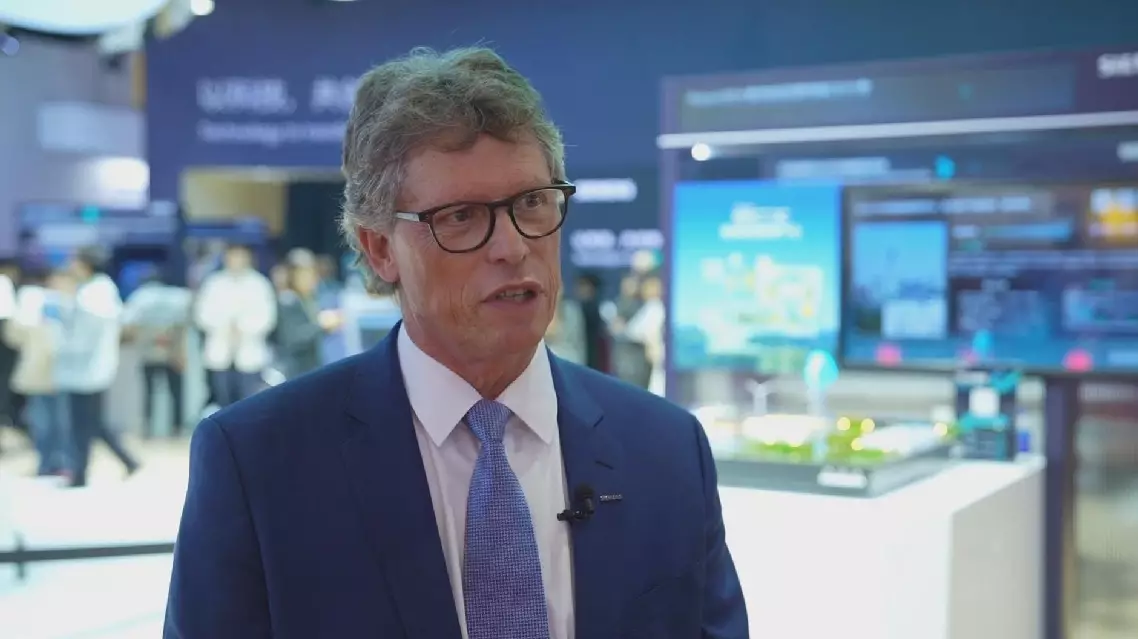
Siemens stays committed to emission reduction goals: smart infrastructure CEO