ByHeart, a manufacturer of organic baby formula, recalled all of its products sold nationwide Tuesday, days after some batches were recalled in an expanding outbreak of infant botulism.
At least 15 babies in 12 states have been sickened in the outbreak since August, with more cases pending, according to state and federal health officials. All of the infants were hospitalized after consuming ByHeart formula, officials said. No deaths have been reported.
Click to Gallery
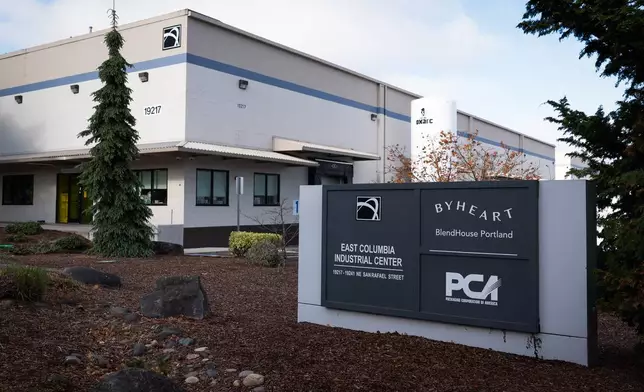
A sign for ByHeart, a manufacturer of organic baby formula, is displayed outside a building that houses a plant for the company on Tuesday, Nov. 11, 2025, in Portland, Ore. (AP Photo/Jenny Kane)
Vehicles are seen at a building that houses ByHeart, a manufacturer of organic baby formula, plant on Tuesday, Nov. 11, 2025, in Portland, Ore. (AP Photo/Jenny Kane)
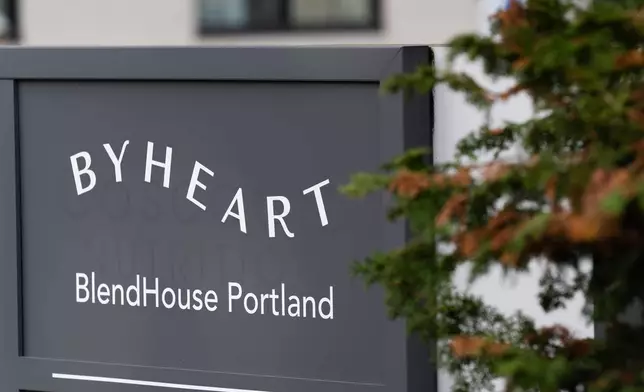
A sign for ByHeart, a manufacturer of organic baby formula, is displayed outside a building that houses a plant for the company on Tuesday, Nov. 11, 2025, in Portland, Ore. (AP Photo/Jenny Kane)
A sign for ByHeart, a manufacturer of organic baby formula, is displayed outside a building that houses a plant for the company on Tuesday, Nov. 11, 2025, in Portland, Ore. (AP Photo/Jenny Kane)
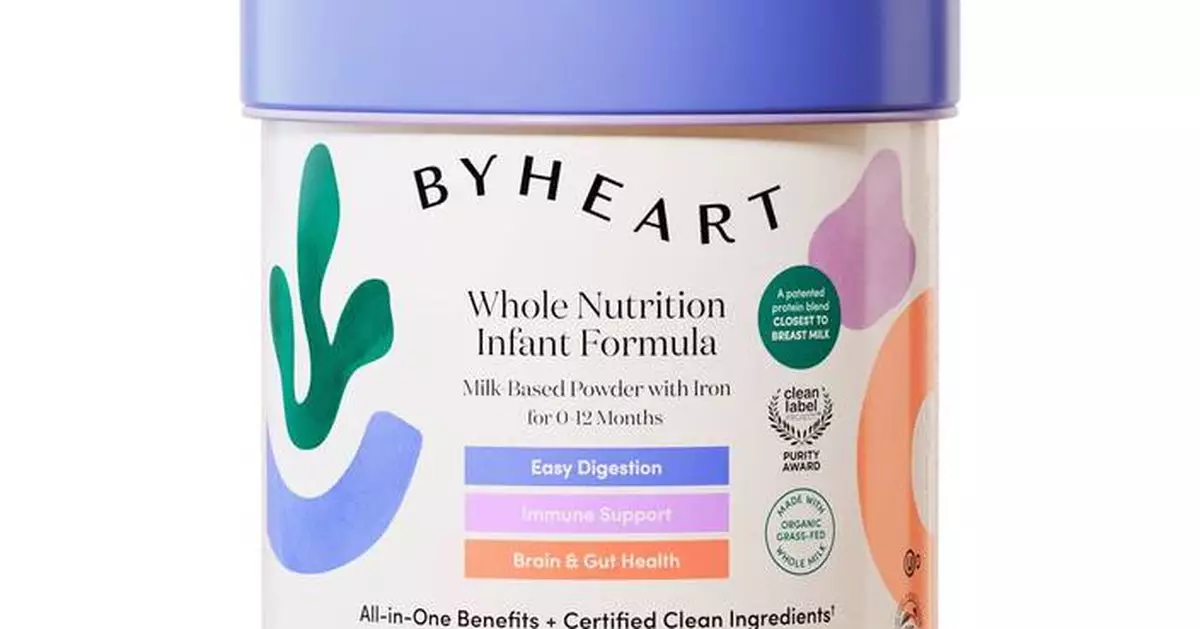
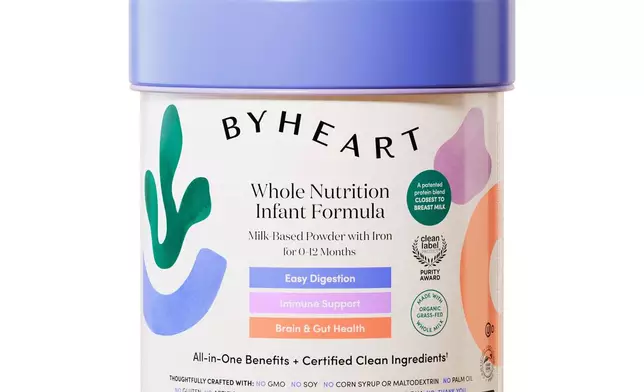
This undated image provided by ByHeart shows ByHeart formula products.(ByHeart via AP)
ByHeart officials expanded the voluntary recall from two lots announced Saturday to all products in consumers' homes and in stores. That includes ByHeart Whole Nutrition Infant Formula and Anywhere Pack pouches of powdered formula. The company sells about 200,000 cans of infant formula a month online and in stores such as Target, Walmart, Albertsons and Whole Foods, according to Dr. Devon Kuehn, chief medical officer.
Parents and caregivers who have the formula in their homes “should immediately discontinue use and dispose of the product,” Kuehn said.
Company officials said they enacted the unusual recall “in close collaboration” with the U.S. Food and Drug Administration even though no product that was previously unopened tested positive for the contamination. The type of bacteria that produces the toxin is widespread in the environment and could come from sources other than the formula, company officials said.
“This action underscores ByHeart’s core mission: protecting babies above all else,” the company said in a statement.
California health officials earlier confirmed that a sample from an open can of ByHeart baby formula fed to an infant who got sick contained the toxin-producing type of bacteria.
The U.S. Food and Drug Administration recommended that ByHeart expand its recall because of the number of ill infants that reported consuming the formula, the identification of additional lot codes, the growing case count and the results of the California testing.
The FDA is investigating 84 cases of infant botulism detected since August. Of those, 15 consumed ByHeart formula, the agency said in a statement.
“This information shows that ByHeart brand formula is disproportionately represented among sick infants in this outbreak, especially given that ByHeart represents an estimated 1% of all infant formula sales in the United States,” the FDA statement said.
Illnesses began between Aug. 9 and Nov. 10, federal officials said. Cases were reported in Arizona, California, Illinois, Kentucky, Minnesota, North Carolina, New Jersey, Oregon, Pennsylvania, Rhode Island, Texas and Washington.
Investigators have not identified any other infant formula brands or other sources of exposure in the outbreak, officials said.
ByHeart produces formula powder at a plant in Allerton, Iowa, and then ships it to a site in Portland, Oregon, for canning and distribution, Kuehn said. U.S. Food and Drug Administration inspectors were at the Portland plant Monday, she added.
In addition to the broad recall, the company said it is testing every batch of formula with an independent third-party laboratory, providing health officials full access to its sites and sharing results with regulators as they become available.
Infant botulism is a rare and serious illness that occurs in babies under age 1, whose gut microbiomes are immature. It is caused when the infants consume bacteria that contain spores that produce a toxin in the gut. Symptoms include constipation, poor feeding, drooping eyelid, weak muscle tone, difficulty swallowing and breathing problems, among others.
Babies who develop those symptoms need immediate medical attention. The sole treatment for the infection is BabyBIG, an IV medication made from blood plasma of people immunized against botulism.
The Associated Press Health and Science Department receives support from the Howard Hughes Medical Institute’s Department of Science Education and the Robert Wood Johnson Foundation. The AP is solely responsible for all content.

A sign for ByHeart, a manufacturer of organic baby formula, is displayed outside a building that houses a plant for the company on Tuesday, Nov. 11, 2025, in Portland, Ore. (AP Photo/Jenny Kane)
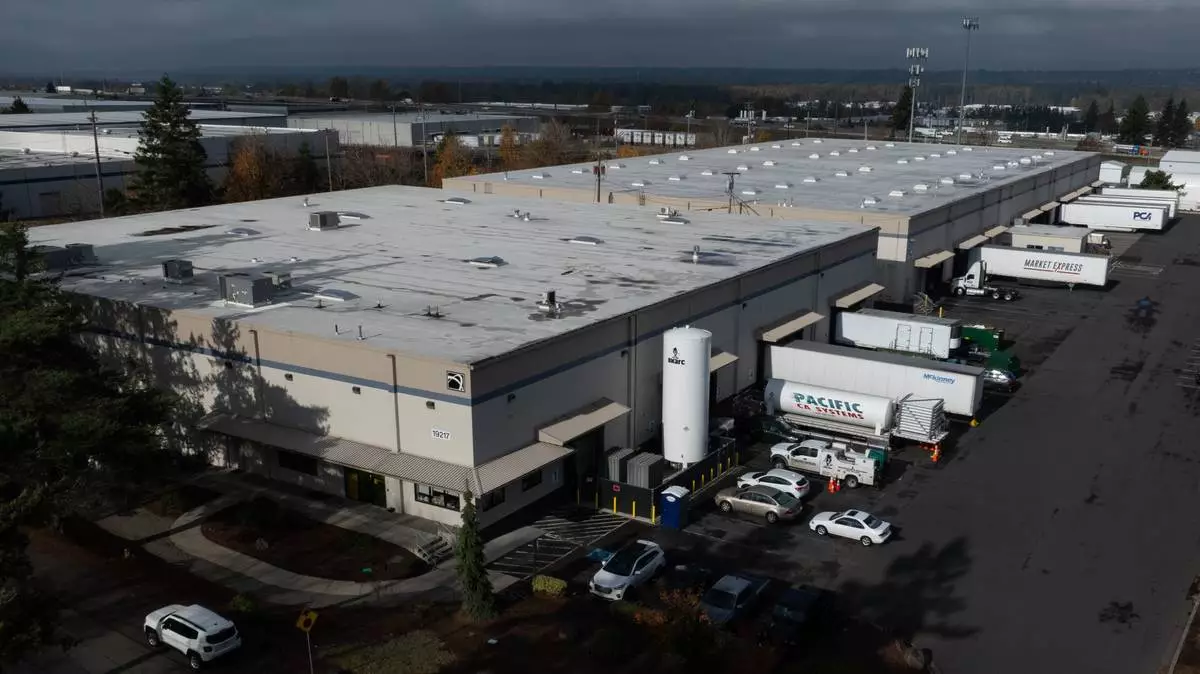
Vehicles are seen at a building that houses ByHeart, a manufacturer of organic baby formula, plant on Tuesday, Nov. 11, 2025, in Portland, Ore. (AP Photo/Jenny Kane)
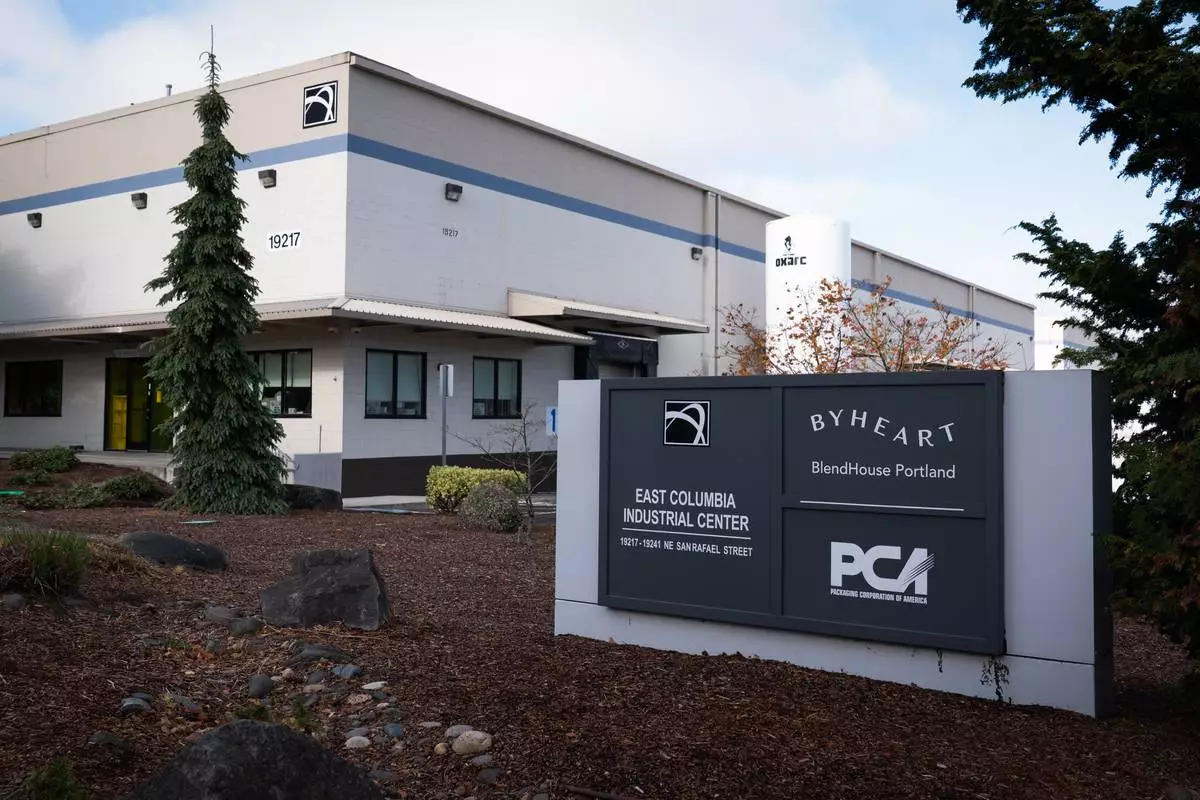
A sign for ByHeart, a manufacturer of organic baby formula, is displayed outside a building that houses a plant for the company on Tuesday, Nov. 11, 2025, in Portland, Ore. (AP Photo/Jenny Kane)
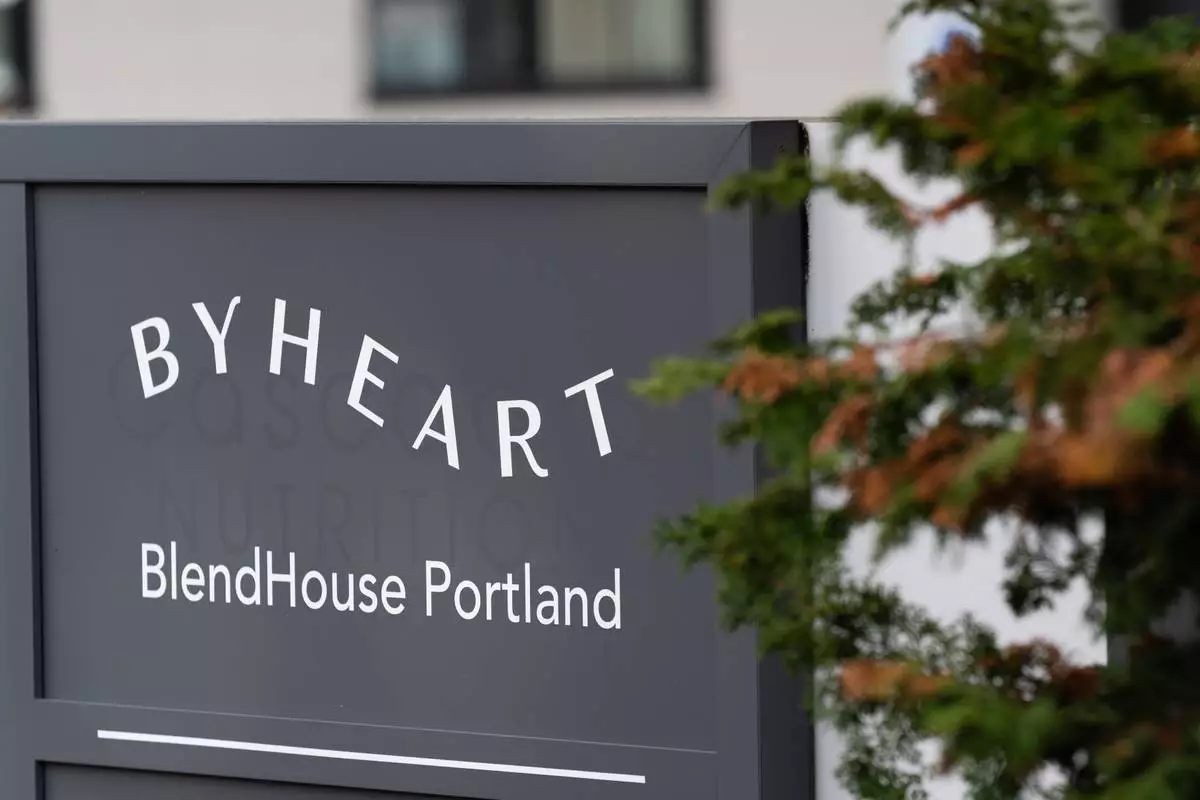
A sign for ByHeart, a manufacturer of organic baby formula, is displayed outside a building that houses a plant for the company on Tuesday, Nov. 11, 2025, in Portland, Ore. (AP Photo/Jenny Kane)

This undated image provided by ByHeart shows ByHeart formula products.(ByHeart via AP)
WASHINGTON (AP) — The Supreme Court is taking up one of the term’s most consequential cases, President Donald Trump’s executive order on birthright citizenship declaring that children born to parents who are in the United States illegally or temporarily are not American citizens, and he was in the courtroom on Wednesday for some of the arguments.
The justices are hearing Trump’s appeal of a lower-court ruling from New Hampshire that struck down the citizenship restrictions, one of several courts that have blocked them. They have not taken effect anywhere in the country.
Trump is the first sitting president to attend oral arguments at the nation’s highest court. He spent just over an hour inside the courtroom, hearing arguments by the government’s lawyer, Solicitor General D. John Sauer. He left shortly after Sauer wrapped up and the plaintiff was invited to present her case.
The case frames another test of Trump's assertions of executive power that defy long-standing precedent for a court that has largely ruled in the president's favor — but with some notable exceptions that Trump has responded to with starkly personal criticisms of the justices. A definitive ruling is expected by early summer.
The birthright citizenship order, which Trump signed the first day of his second term, is part of his Republican administration’s broad immigration crackdown.
Birthright citizenship is the first Trump immigration-related policy to reach the court for a final ruling. The justices previously struck down global tariffs Trump had imposed under an emergency powers law that had never been used that way.
Trump reacted furiously to the late February tariffs decision, saying he was ashamed of the justices who ruled against him and calling them unpatriotic.
He issued a preemptive broadside against the court on Sunday on his Truth Social platform. “Birthright Citizenship is not about rich people from China, and the rest of the World, who want their children, and hundreds of thousands more, FOR PAY, to ridiculously become citizens of the United States of America. It is about the BABIES OF SLAVES!,” the president wrote. “Dumb Judges and Justices will not a great Country make!”
Trump's order would upend the long-standing view that the Constitution’s 14th Amendment, ratified in 1868, and federal law since 1940 confer citizenship on everyone born on American soil, with narrow exceptions for the children of foreign diplomats and those born to a foreign occupying force.
The 14th Amendment was intended to ensure that Black people, including former slaves, had citizenship, though the Citizenship Clause is written more broadly. “All persons born or naturalized in the United States, and subject to the jurisdiction thereof, are citizens of the United States and of the State wherein they reside,” it reads.
In a series of decisions, lower courts have struck down the executive order as illegal, or likely so, under the Constitution and federal law. The decisions have invoked the high court's 1898 ruling in Wong Kim Ark, which held that the U.S.-born child of Chinese nationals was a citizen.
The Trump administration argues that the common view of citizenship is wrong, asserting that children of noncitizens are not “subject to the jurisdiction” of the United States and therefore are not entitled to citizenship.
The court should use the case to set straight “long-enduring misconceptions about the Constitution’s meaning,” wrote Sauer, the solicitor general.
No court has accepted that argument, and lawyers for pregnant women whose children would be affected by the order said the Supreme Court should not be the first to do so.
“We have the president of the United States trying to radically reinterpret the definition of American citizenship,” said Cecillia Wang, the American Civil Liberties Union legal director who is facing off against Sauer at the Supreme Court.
More than one-quarter of a million babies born in the U.S. each year would be affected by the executive order, according to research by the Migration Policy Institute and Pennsylvania State University’s Population Research Institute.
While Trump has largely focused on illegal immigration in his rhetoric and actions, the birthright restrictions also would apply to people who are legally in the United States, including students and applicants for green cards, or permanent resident status.
Associated Press writer Darlene Superville contributed to this report.
Follow the AP’s coverage of the U.S. Supreme Court at https://apnews.com/hub/us-supreme-court.
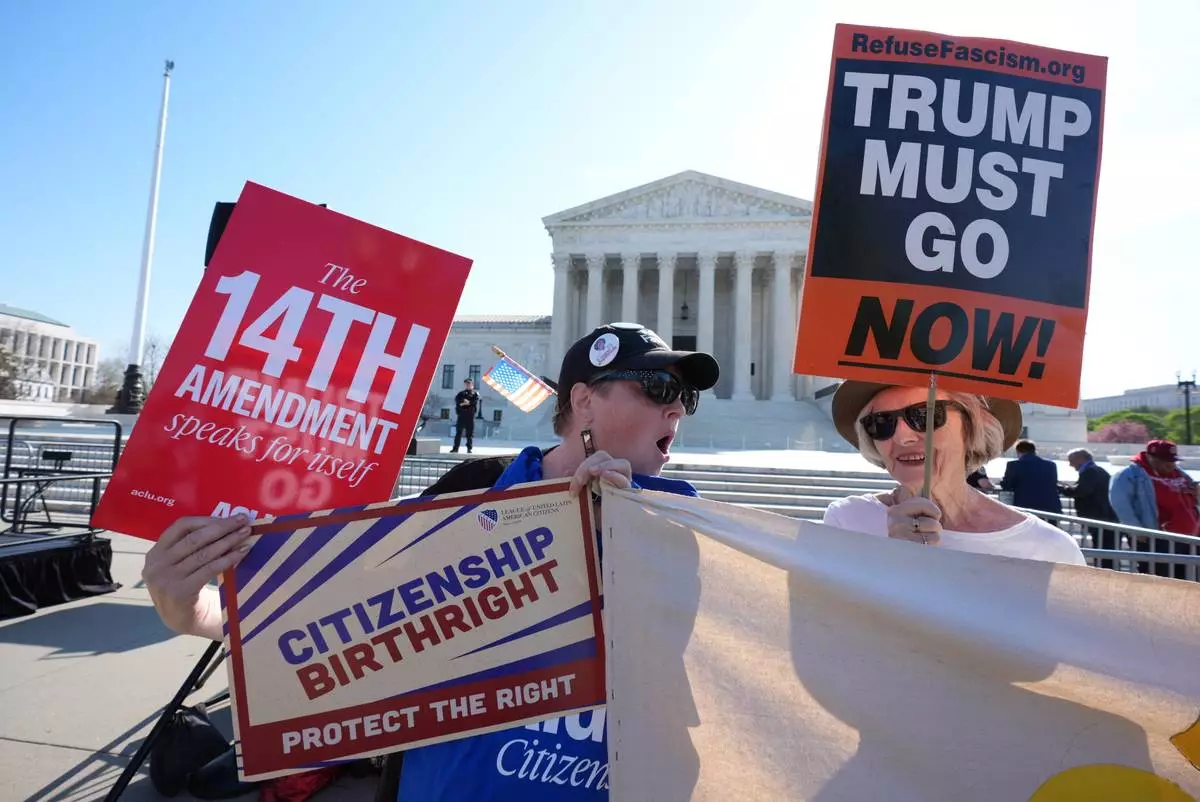
Pro and anti-Trump demonstrators rally outside the U.S. Supreme Court, before justices hear oral arguments on whether President Donald Trump can deny citizenship to children born to parents who are in the United States illegally or temporarily, on Capitol Hill, in Washington, Wednesday, April 1, 2026. (AP Photo/J. Scott Applewhite)
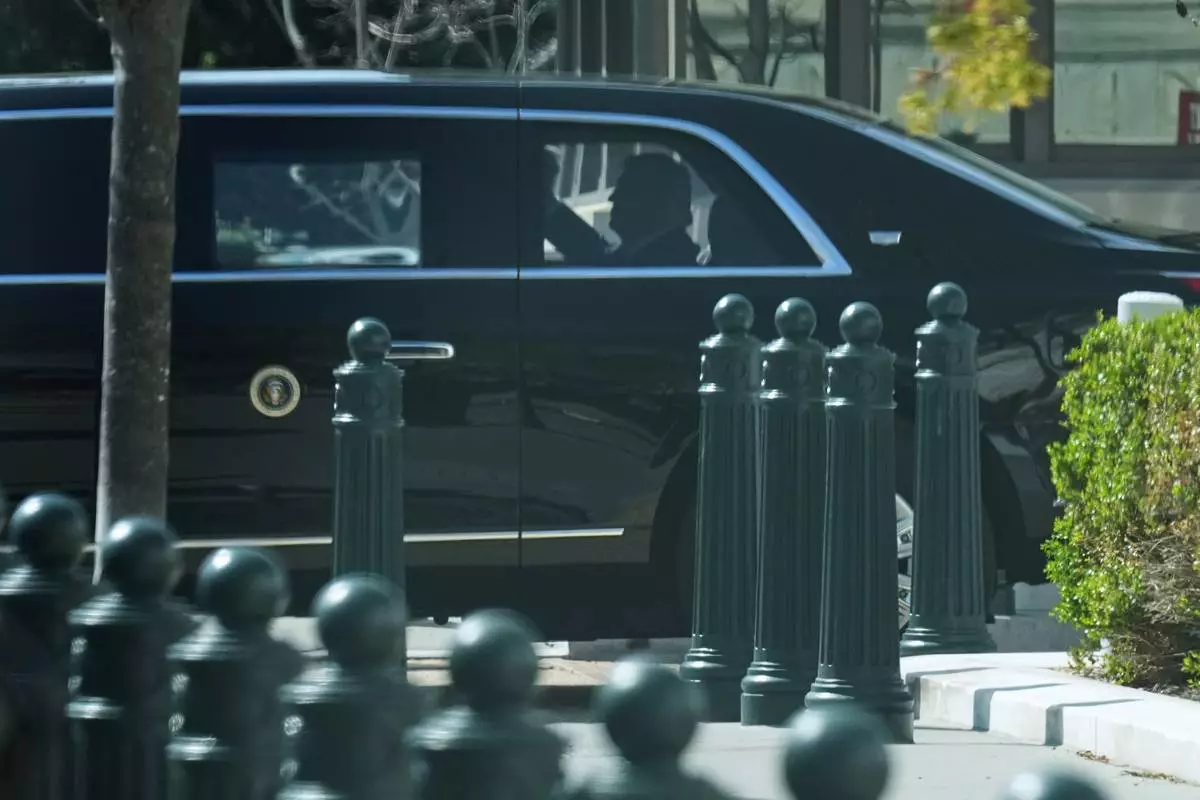
President Donald Trump leaves the U.S. Supreme Court, Wednesday, April 1, 2026, in Washington. (AP Photo/Mark Schiefelbein)
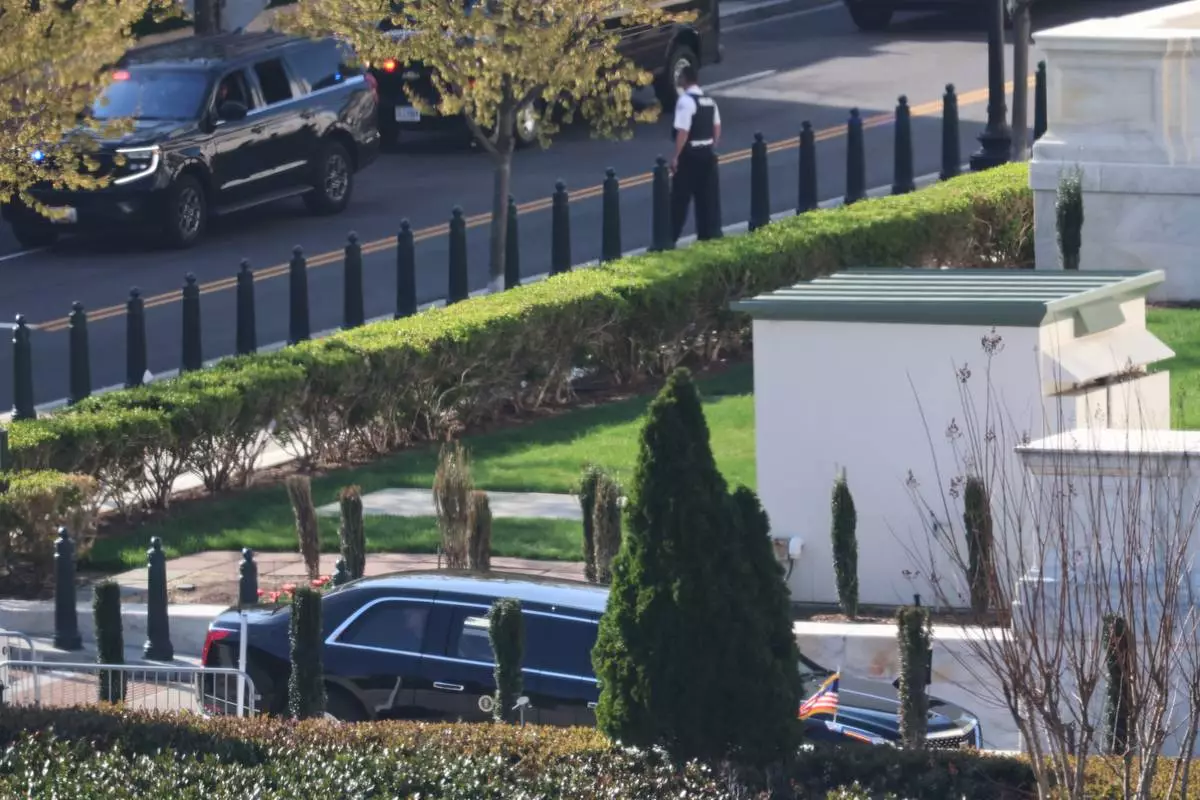
President Donald Trump's motorcade arrives at the U.S. Supreme Court, Wednesday, April 1, 2026, in Washington. (AP Photo/Tom Brenner)
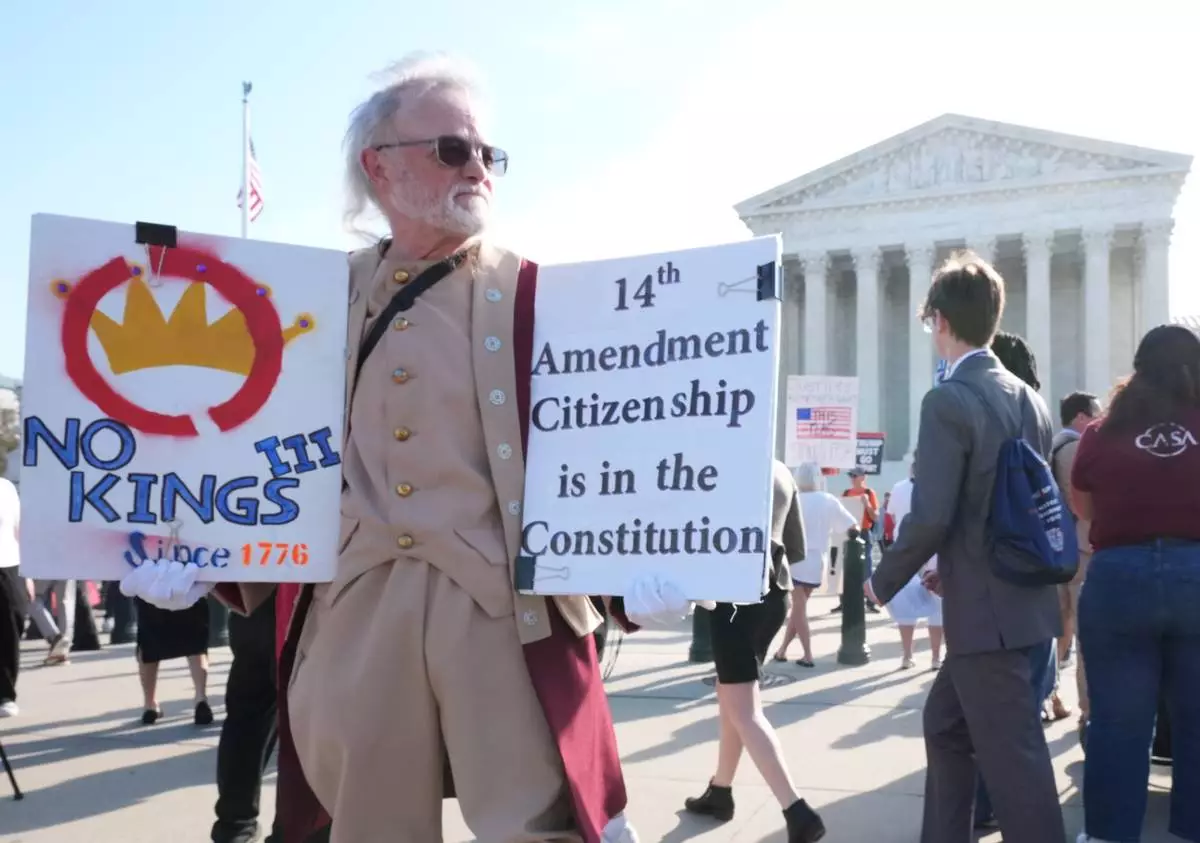
Pro and anti-Trump demonstrators rally outside the U.S. Supreme Court, before justices hear oral arguments on whether President Donald Trump can deny citizenship to children born to parents who are in the United States illegally or temporarily, on Capitol Hill, in Washington, Wednesday, April 1, 2026. (AP Photo/J. Scott Applewhite)
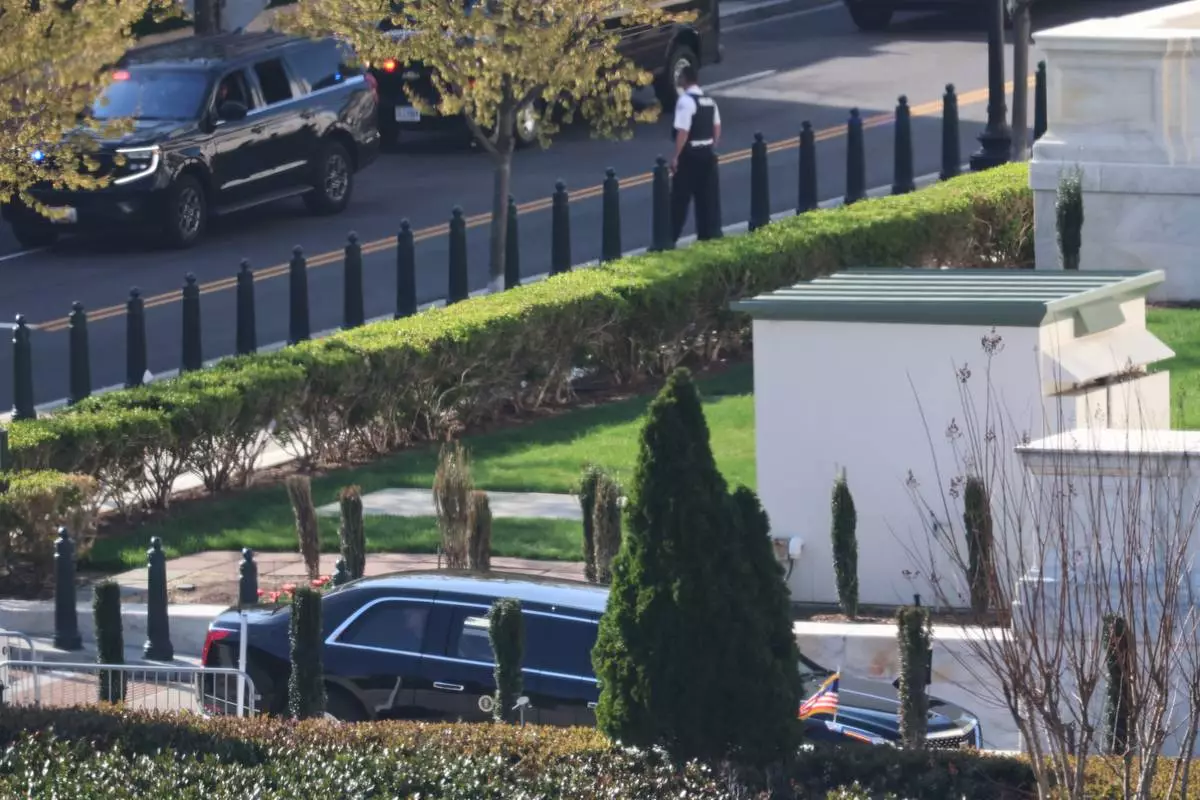
President Donald Trump's motorcade arrives at the U.S. Supreme Court, Wednesday, April 1, 2026, in Washington. (AP Photo/Tom Brenner)
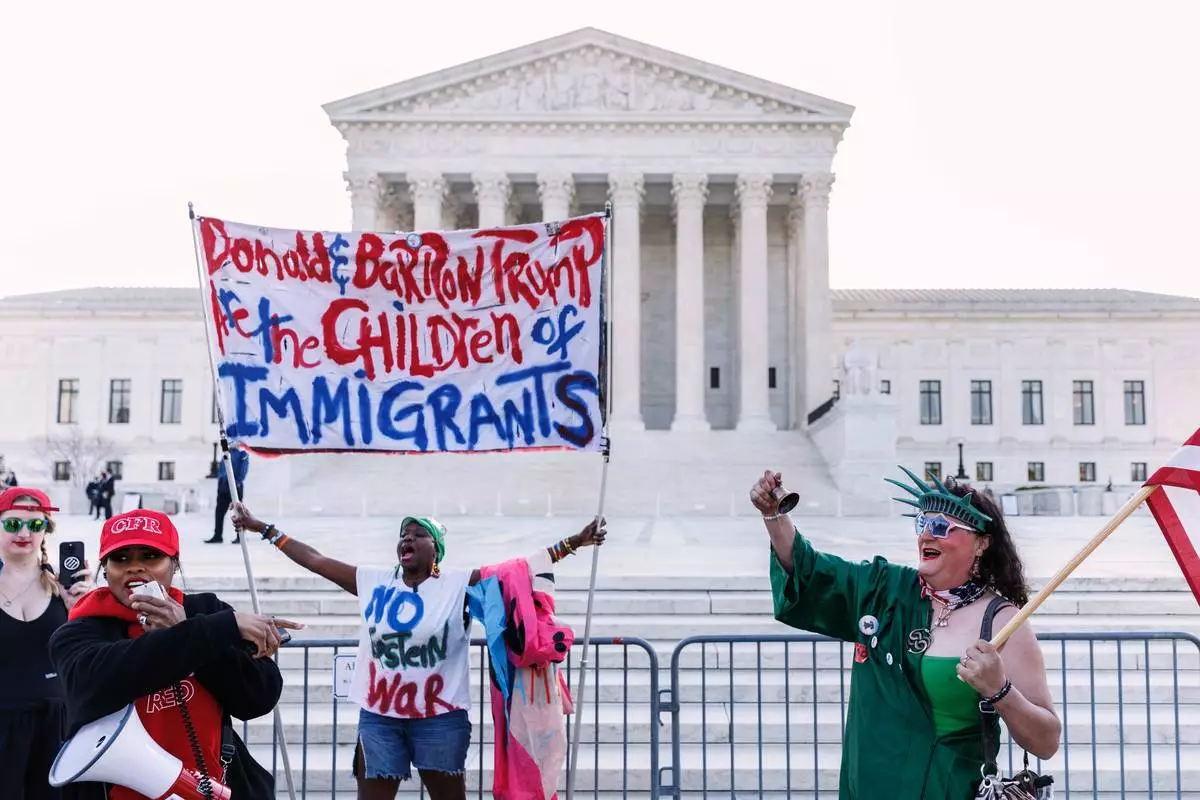
Demonstrators holding opposing views verbally engage ahead of President Donald Trump's arrival at the U.S. Supreme Court, Wednesday, April 1, 2026, in Washington. (AP Photo/Tom Brenner)
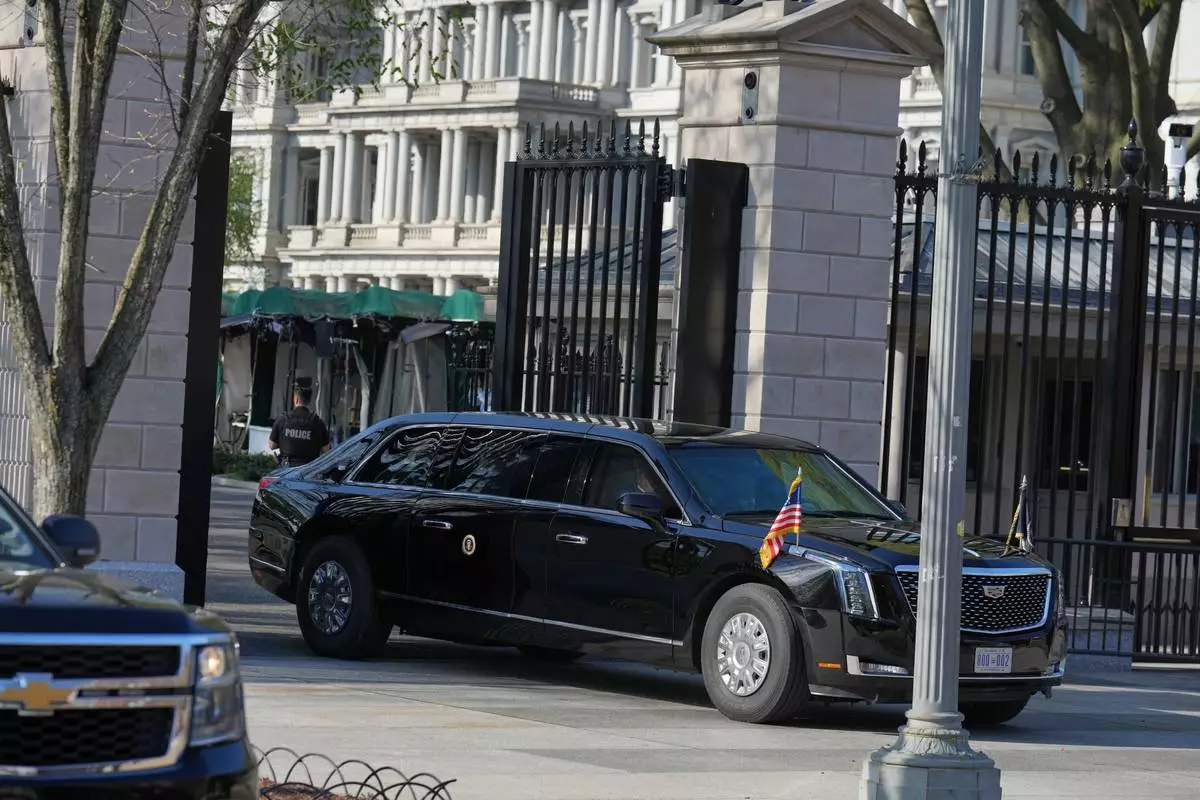
President Donald Trump's limo exits the White House en route to the Supreme Court, Wednesday, April 1, 2026, in Washington. (AP Photo/Mark Schiefelbein)
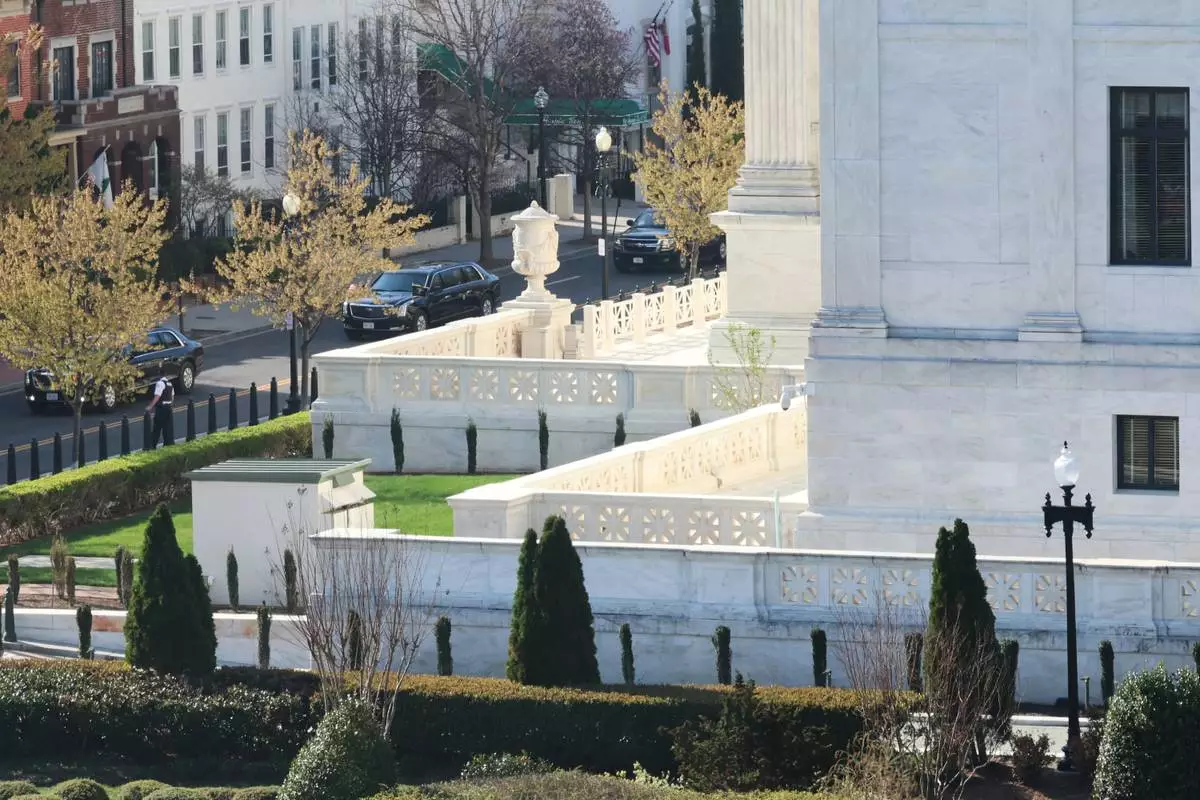
President Donald Trump's motorcade arrives at the U.S. Supreme Court, Wednesday, April 1, 2026, in Washington. (AP Photo/Tom Brenner)

Pro and anti-Trump demonstrators rally outside the U.S. Supreme Court, before justices hear oral arguments on whether President Donald Trump can deny citizenship to children born to parents who are in the United States illegally or temporarily, on Capitol Hill, in Washington, Wednesday, April 1, 2026. (AP Photo/J. Scott Applewhite)
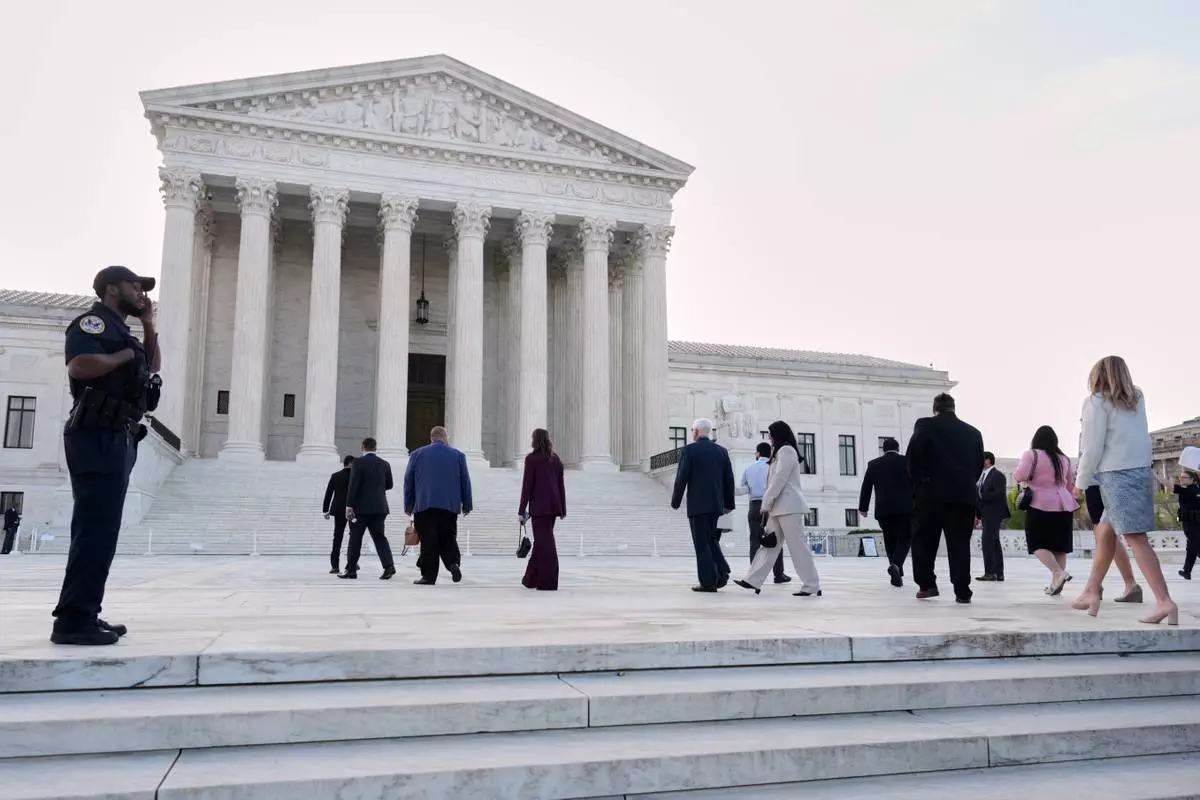
People arrive to walk inside the U.S. Supreme Court, on Capitol Hill in Washington, Wednesday, April 1, 2026. The Supreme Court justices will hear oral arguments today on whether President Donald Trump can deny citizenship to children born to parents who are in the United States illegally or temporarily. (AP Photo/J. Scott Applewhite)
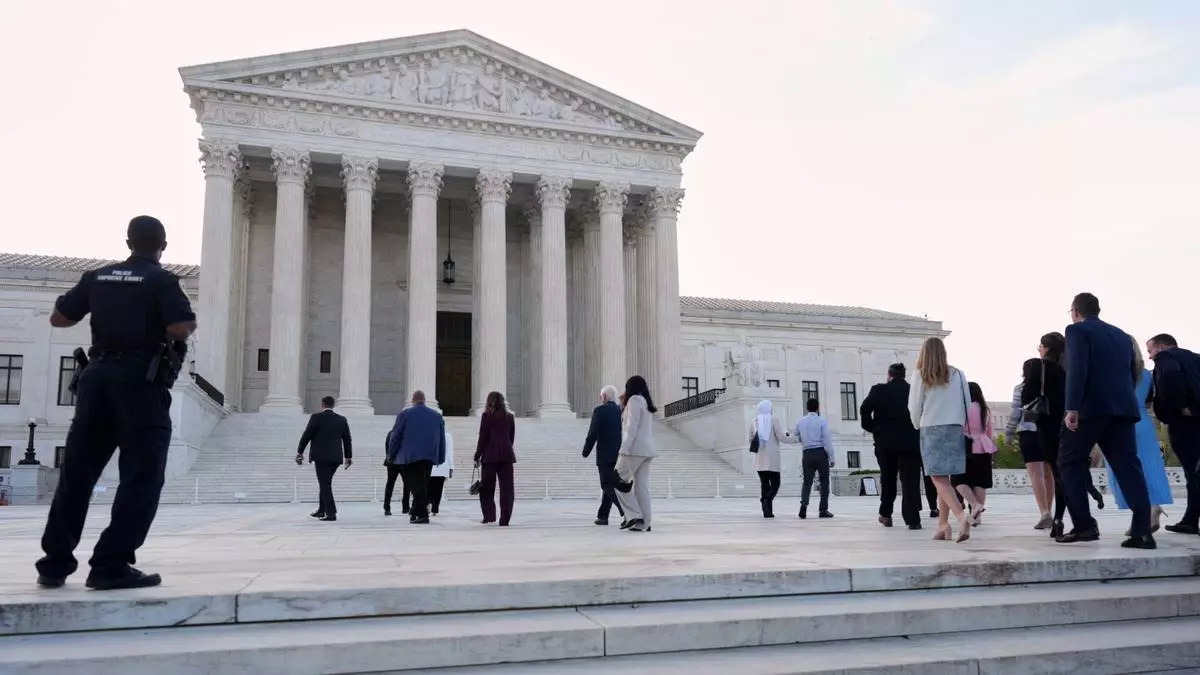
People arrive to walk inside the U.S. Supreme Court, on Capitol Hill in Washington, Wednesday, April 1, 2026. The Supreme Court justices will hear oral arguments today on whether President Donald Trump can deny citizenship to children born to parents who are in the United States illegally or temporarily. (AP Photo/J. Scott Applewhite)
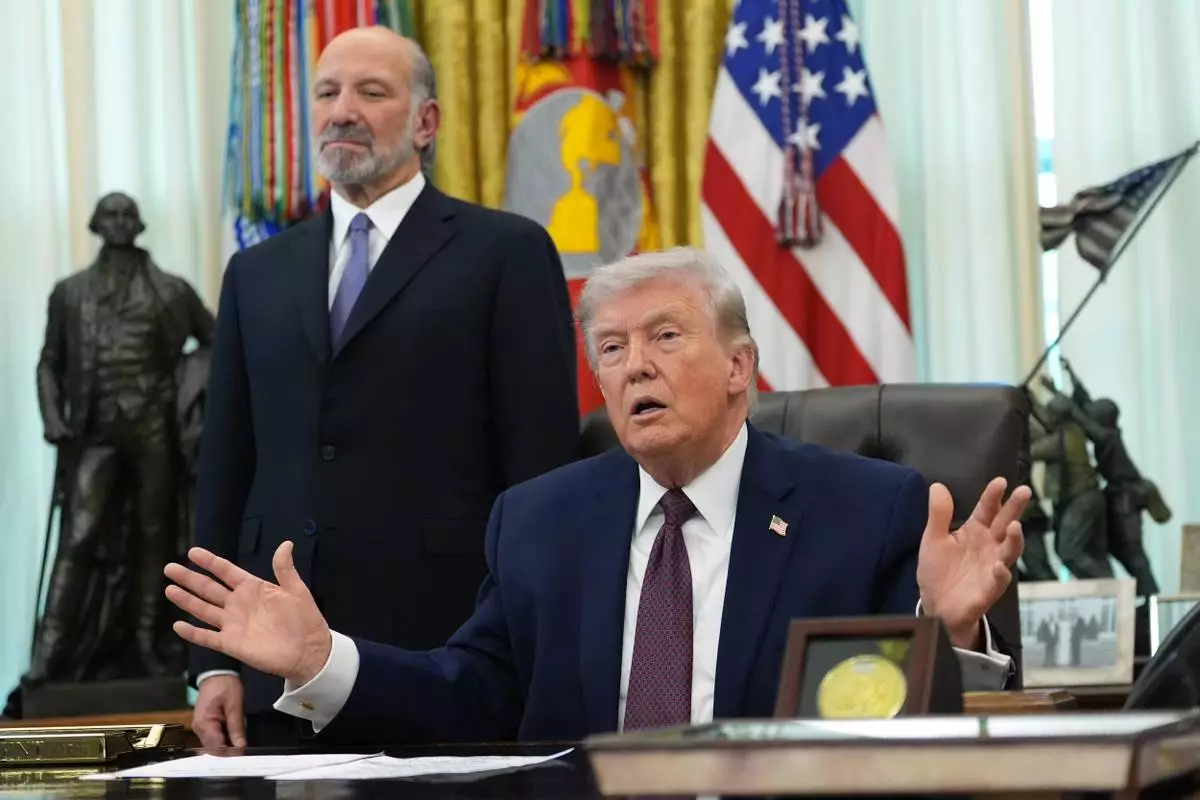
President Donald Trump answers questions from reporters after signing an executive order in the Oval Office of the White House Tuesday, March 31, 2026, in Washington, as Commerce Secretary Howard Lutnick listens. (AP Photo/Alex Brandon)
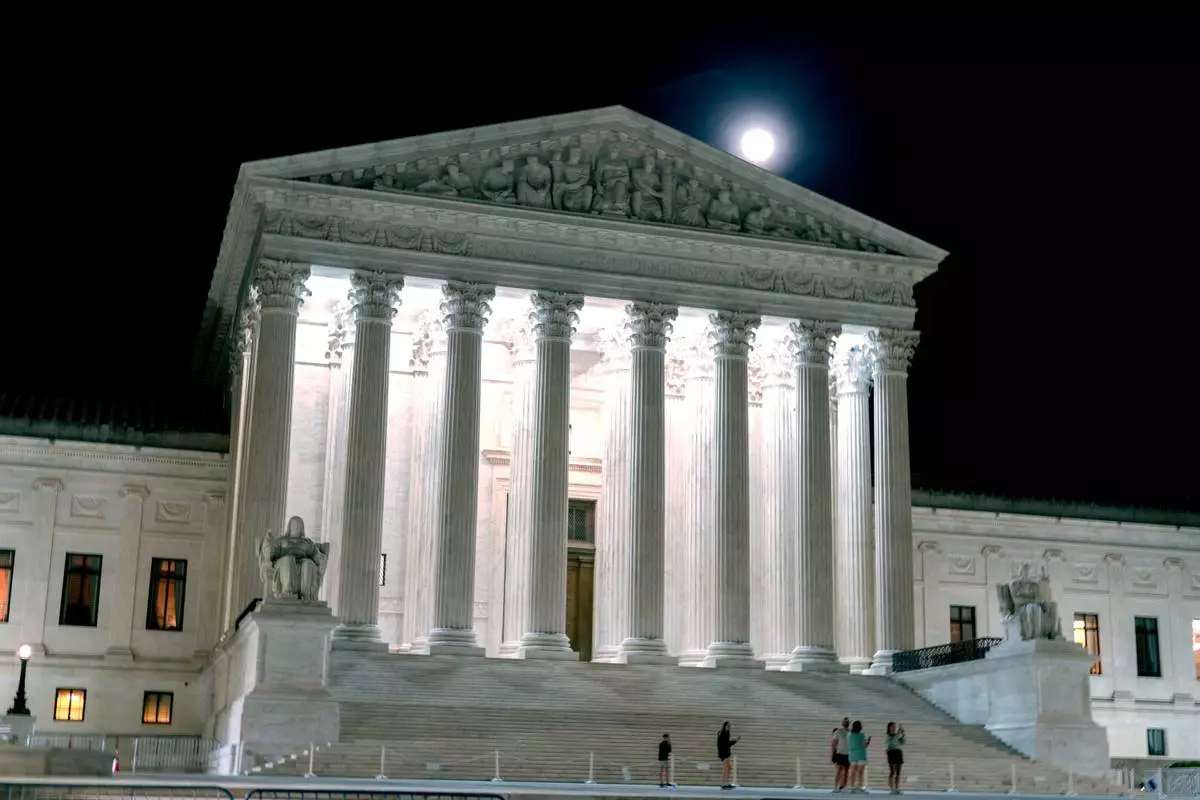
The U.S. Supreme Court is seen as the moon rises Tuesday, March 31, 2026, in Washington. (AP Photo/Jose Luis Magana)