DENVER--(BUSINESS WIRE)--Nov 13, 2025--
Should technology channel companies pay attention to stablecoins?
This press release features multimedia. View the full release here: https://www.businesswire.com/news/home/20251113089058/en/
Yes, particularly with the recent GENIUS (Guiding and Establishing National Innovation for U.S. Stablecoins) Act signed into law by US President Donald J. Trump.
"Stablecoins can modernise financial transactions, but regulatory vagueness prevents wider business adoption. The GENIUS act significantly reduces that friction," says Ben Jonsson, Business Research Analyst at the WeFi Technology Group.
The stablecoin market is small yet growing fast. McKinsey reports that stablecoin circulation has doubled since the start of 2024, facilitating $30 billion of transactions daily. Even though this amount represents less than 1% of global money flows, the consulting firm advises that "[payment industry] incumbents and disruptors alike must make urgent preparations."
Fast money
Stablecoins are a type of cryptocurrency: digital stores of value using peer-validated ledgers on blockchain networks to manage transactions and ownership. Colloquially, 'cryptocurrencies' refers to more speculative assets, such as Bitcoin and Ethereum. Stablecoins are also cryptocurrencies but are pegged to stable financial instruments such as a national currency (typically the US dollar).
This combination of fiscal stability and digital ease is useful for cross-border payments. A sender can convert local currency into stablecoins and transfer capital rapidly over a blockchain, settling within minutes while removing most intermediaries and reducing fees.
"Stablecoins allow you to get all the benefits of blockchain technology without the volatility, or at least the same volatility as a fiat currency," says Jonsson.
An era of stability
But uptake has been slow. Regulatory uncertainty limits wider investment in the knowledge and technology that stablecoins require. They operate in a grey area with limited oversight, leading to fears of liquidity shortfalls, bank-run dynamics, and enforcement actions from regulators.
The GENIUS Act establishes the United States as a reliable regulator and supporter of stablecoins. It provides a clear legal framework for issuing US dollar–pegged stablecoins, including requirements for full reserve backing and strong consumer protections that help reduce risks.
The act's framework makes stablecoin issuance more secure and transparent. It defines safeguards such as high-quality liquid asset backing, regular reserve disclosures, AML/KYC rules, attestations, operational risk and custody standards, and other financial safeguards.
"Although not the first stablecoin regulation globally, the GENIUS Act is very significant and a likely blueprint for most other similar regulations, perhaps comparable to how the EU's GDPR influenced data privacy regulations," says Jonsson.
What stablecoins mean for technology channels
Regulatory clarity from the world's largest technology market is a welcome development for technology companies that transact globally. This is especially relevant with emerging markets with strict capital controls or high inflation. Stablecoins can make cross-border transactions less complicated and risky.
"For example, you can send over a larger amount and then pay multiple parties by splitting it into their digital wallets. Recipients can convert those stablecoins to local currency or hold the stablecoins in a digital wallet as a dollar-denominated asset. This makes cross-border transfers faster, cheaper, and more accessible than conventional international banking," says Jonsson.
This impact is evident in cross-border transaction values. Stablecoins represented less than 1% of 2024's $194.8 trillion cross-border transactions. Yet, the savings from reducing intermediaries and the significance of flows to and from emerging markets give stablecoins a potential total addressable market value of $16.5 trillion, according to financial data analysts FXCintelligence
Preparing for payment opportunities
Stablecoins are not new. However, the establishment of the GENIUS Act marks a new chapter for them and will increase momentum behind other digital-based transactions and instruments, such as central bank digital currencies (CBDCs), bank-issued tokenised deposits, smart contracts, and asset tokenisation.
Admittedly, stablecoins are not the only opportunity. Payment providers have been working on streamlining cross-border and emerging market transactions through automation, artificial intelligence, and platform integrations with clients' finance processes.
However, companies like Mastercard, PayPal, Payoneer, and WeFi are exploring the potential of stablecoins. PayPal launched its PYUSD stablecoin in 2023 to explore B2B use cases.
Channel vendors, financiers, and their downstream peers can prepare by taking stock of their transaction volumes and relevant geographic markets, what regulatory requirements apply to them, and the technical capabilities and integration needs of their existing business systems. They should also understand their risks, such as tax liabilities around crypto assets or what happens if a stablecoin issuer fails.
But they gain nothing by ignoring the potential of stablecoins. The GENIUS Act signals a window to understand and implement stablecoin technologies, Jonsson advises.
"This is a good time for people to become more familiar with stablecoins and establish relationships with companies like WeFi. It's a revolution that's been waiting in the wings. GENIUS will move it to centre stage."

Ben Jonsson, Business Research Analyst at WeFi Technology Group.
WASHINGTON (AP) — The Supreme Court is taking up one of the term’s most consequential cases, President Donald Trump’s executive order on birthright citizenship declaring that children born to parents who are in the United States illegally or temporarily are not American citizens, and he was in the courtroom on Wednesday for some of the arguments.
The justices are hearing Trump’s appeal of a lower-court ruling from New Hampshire that struck down the citizenship restrictions, one of several courts that have blocked them. They have not taken effect anywhere in the country.
Trump is the first sitting president to attend oral arguments at the nation’s highest court. He spent just over an hour inside the courtroom, hearing arguments by the government’s lawyer, Solicitor General D. John Sauer. He left shortly after Sauer wrapped up and the plaintiff was invited to present her case.
The case frames another test of Trump's assertions of executive power that defy long-standing precedent for a court that has largely ruled in the president's favor — but with some notable exceptions that Trump has responded to with starkly personal criticisms of the justices. A definitive ruling is expected by early summer.
The birthright citizenship order, which Trump signed the first day of his second term, is part of his Republican administration’s broad immigration crackdown.
Birthright citizenship is the first Trump immigration-related policy to reach the court for a final ruling. The justices previously struck down global tariffs Trump had imposed under an emergency powers law that had never been used that way.
Trump reacted furiously to the late February tariffs decision, saying he was ashamed of the justices who ruled against him and calling them unpatriotic.
He issued a preemptive broadside against the court on Sunday on his Truth Social platform. “Birthright Citizenship is not about rich people from China, and the rest of the World, who want their children, and hundreds of thousands more, FOR PAY, to ridiculously become citizens of the United States of America. It is about the BABIES OF SLAVES!,” the president wrote. “Dumb Judges and Justices will not a great Country make!”
Trump's order would upend the long-standing view that the Constitution’s 14th Amendment, ratified in 1868, and federal law since 1940 confer citizenship on everyone born on American soil, with narrow exceptions for the children of foreign diplomats and those born to a foreign occupying force.
The 14th Amendment was intended to ensure that Black people, including former slaves, had citizenship, though the Citizenship Clause is written more broadly. “All persons born or naturalized in the United States, and subject to the jurisdiction thereof, are citizens of the United States and of the State wherein they reside,” it reads.
In a series of decisions, lower courts have struck down the executive order as illegal, or likely so, under the Constitution and federal law. The decisions have invoked the high court's 1898 ruling in Wong Kim Ark, which held that the U.S.-born child of Chinese nationals was a citizen.
The Trump administration argues that the common view of citizenship is wrong, asserting that children of noncitizens are not “subject to the jurisdiction” of the United States and therefore are not entitled to citizenship.
The court should use the case to set straight “long-enduring misconceptions about the Constitution’s meaning,” wrote Sauer, the solicitor general.
No court has accepted that argument, and lawyers for pregnant women whose children would be affected by the order said the Supreme Court should not be the first to do so.
“We have the president of the United States trying to radically reinterpret the definition of American citizenship,” said Cecillia Wang, the American Civil Liberties Union legal director who is facing off against Sauer at the Supreme Court.
More than one-quarter of a million babies born in the U.S. each year would be affected by the executive order, according to research by the Migration Policy Institute and Pennsylvania State University’s Population Research Institute.
While Trump has largely focused on illegal immigration in his rhetoric and actions, the birthright restrictions also would apply to people who are legally in the United States, including students and applicants for green cards, or permanent resident status.
Associated Press writer Darlene Superville contributed to this report.
Follow the AP’s coverage of the U.S. Supreme Court at https://apnews.com/hub/us-supreme-court.
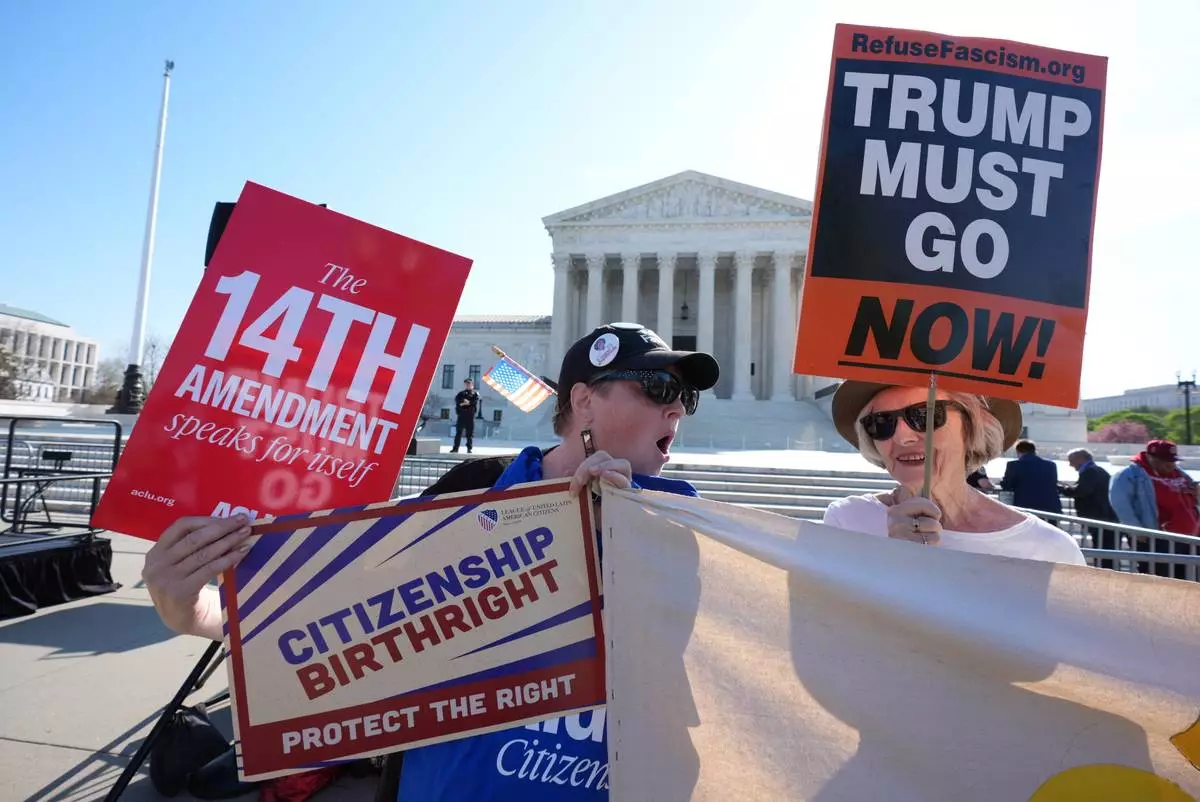
Pro and anti-Trump demonstrators rally outside the U.S. Supreme Court, before justices hear oral arguments on whether President Donald Trump can deny citizenship to children born to parents who are in the United States illegally or temporarily, on Capitol Hill, in Washington, Wednesday, April 1, 2026. (AP Photo/J. Scott Applewhite)
President Donald Trump leaves the U.S. Supreme Court, Wednesday, April 1, 2026, in Washington. (AP Photo/Mark Schiefelbein)

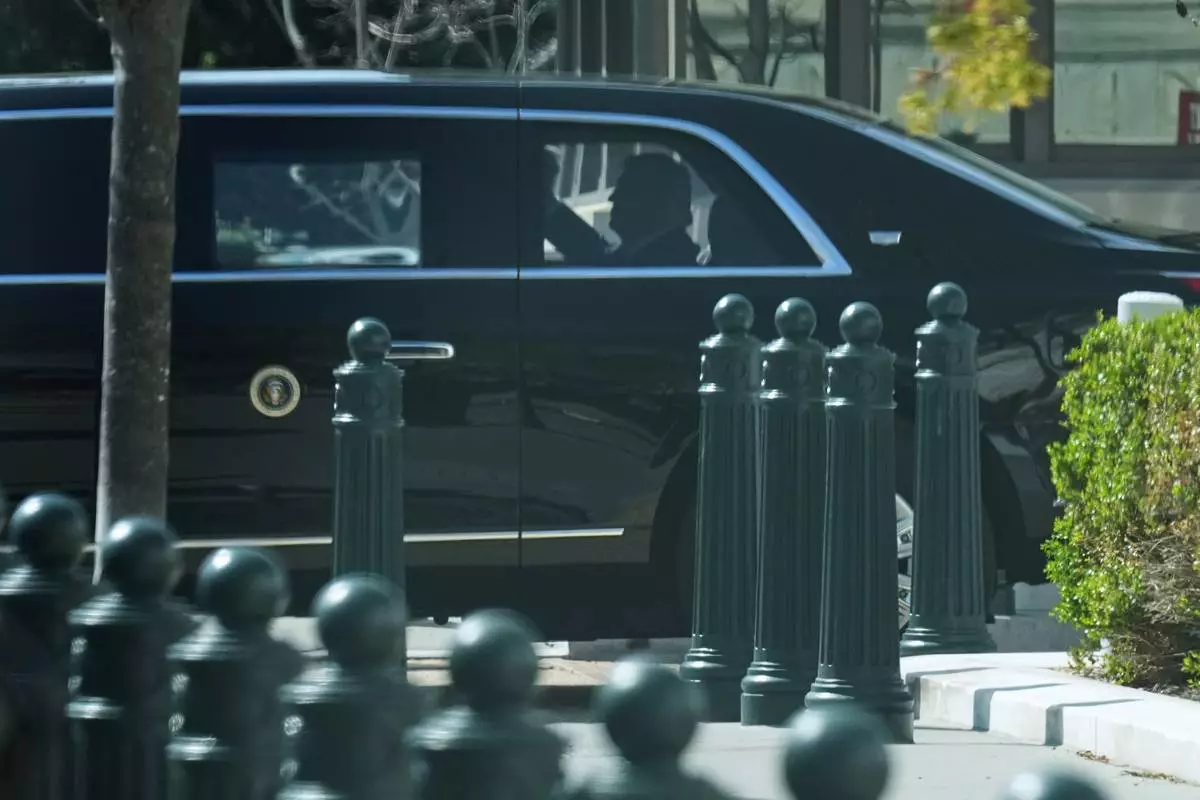
President Donald Trump's motorcade arrives at the U.S. Supreme Court, Wednesday, April 1, 2026, in Washington. (AP Photo/Tom Brenner)
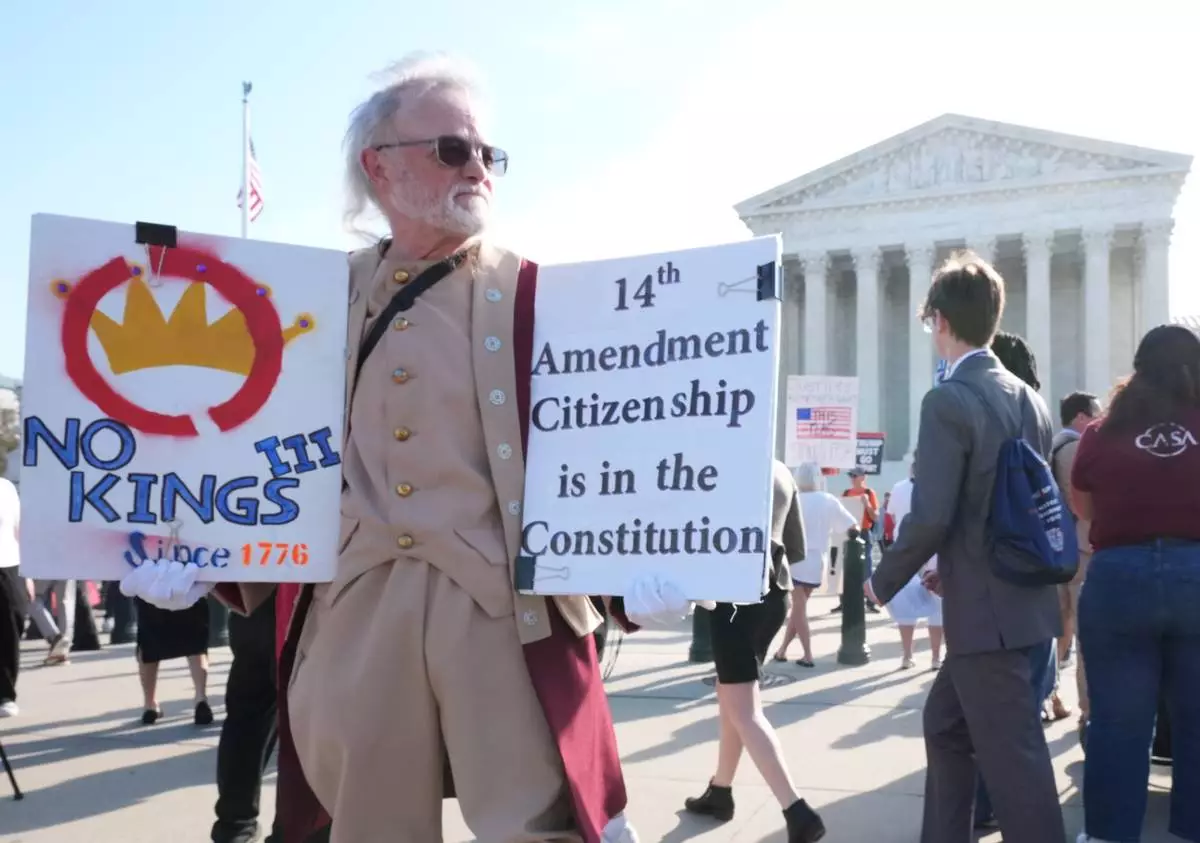
Pro and anti-Trump demonstrators rally outside the U.S. Supreme Court, before justices hear oral arguments on whether President Donald Trump can deny citizenship to children born to parents who are in the United States illegally or temporarily, on Capitol Hill, in Washington, Wednesday, April 1, 2026. (AP Photo/J. Scott Applewhite)

President Donald Trump's motorcade arrives at the U.S. Supreme Court, Wednesday, April 1, 2026, in Washington. (AP Photo/Tom Brenner)
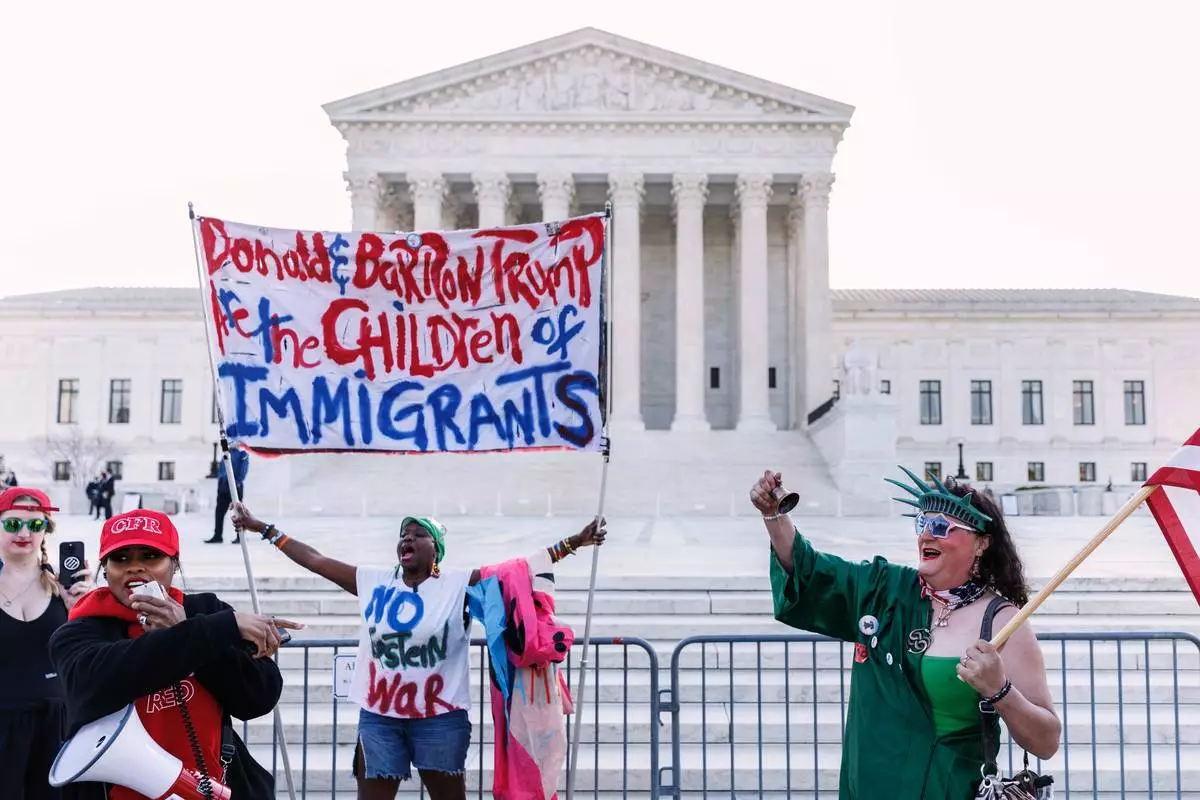
Demonstrators holding opposing views verbally engage ahead of President Donald Trump's arrival at the U.S. Supreme Court, Wednesday, April 1, 2026, in Washington. (AP Photo/Tom Brenner)
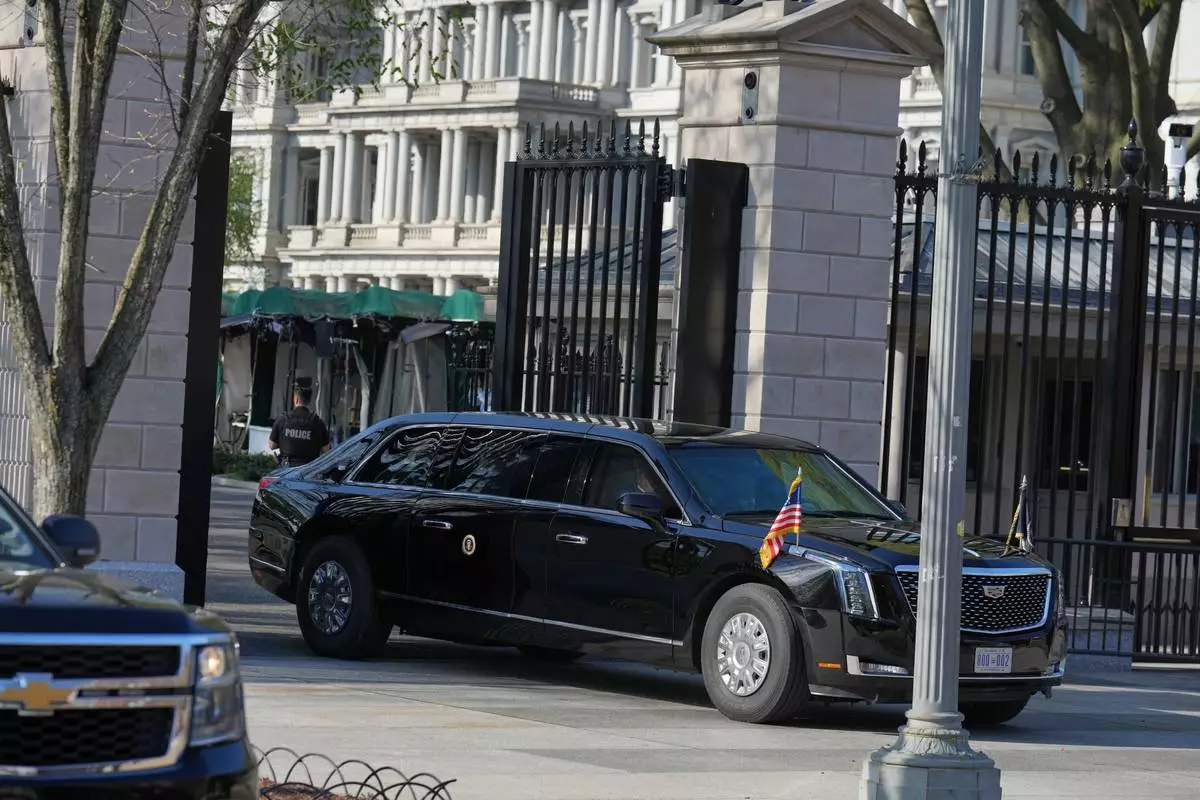
President Donald Trump's limo exits the White House en route to the Supreme Court, Wednesday, April 1, 2026, in Washington. (AP Photo/Mark Schiefelbein)
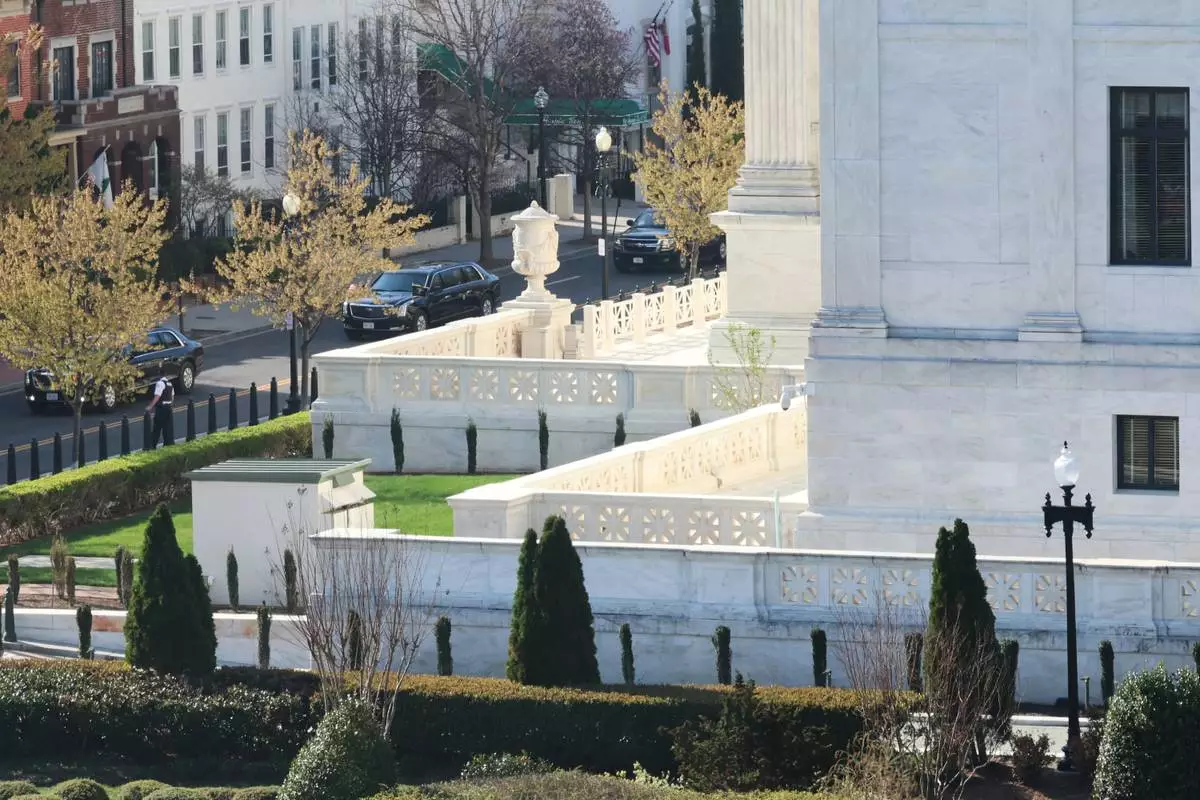
President Donald Trump's motorcade arrives at the U.S. Supreme Court, Wednesday, April 1, 2026, in Washington. (AP Photo/Tom Brenner)

Pro and anti-Trump demonstrators rally outside the U.S. Supreme Court, before justices hear oral arguments on whether President Donald Trump can deny citizenship to children born to parents who are in the United States illegally or temporarily, on Capitol Hill, in Washington, Wednesday, April 1, 2026. (AP Photo/J. Scott Applewhite)
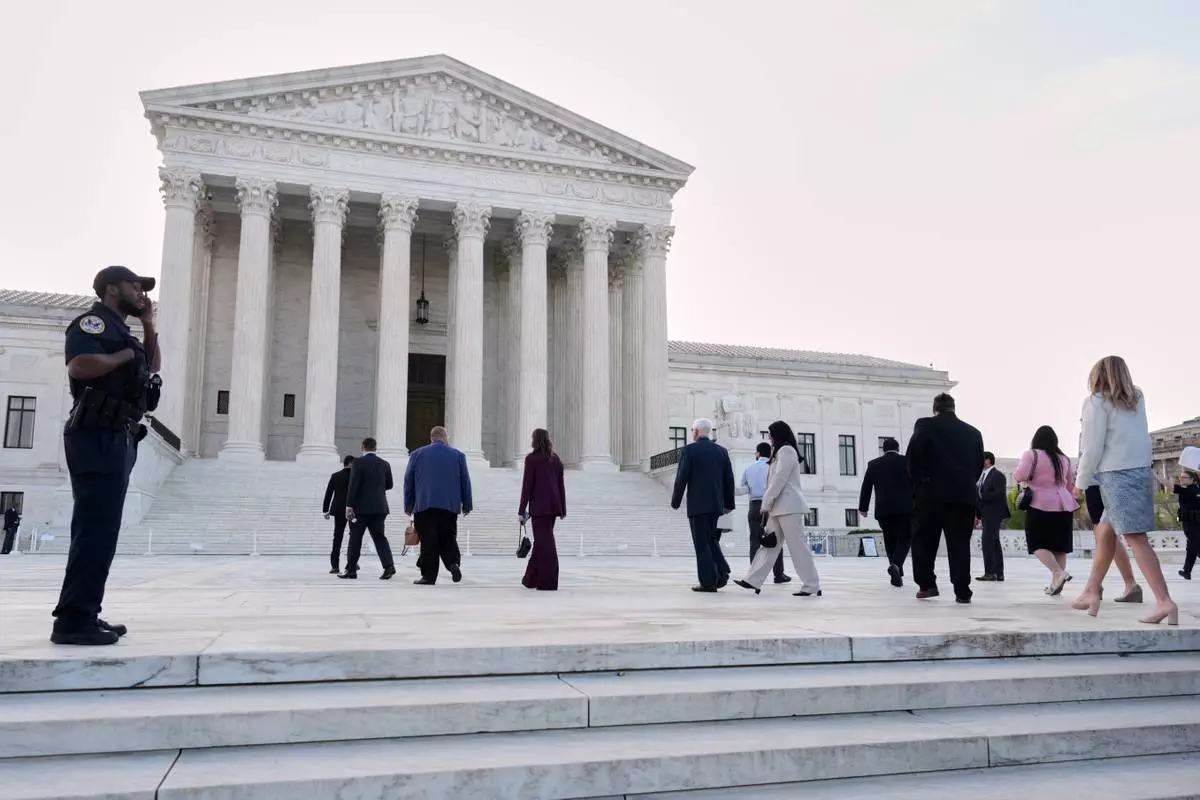
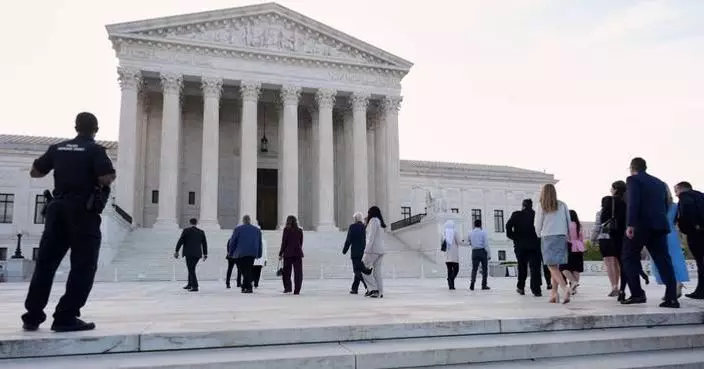
People arrive to walk inside the U.S. Supreme Court, on Capitol Hill in Washington, Wednesday, April 1, 2026. The Supreme Court justices will hear oral arguments today on whether President Donald Trump can deny citizenship to children born to parents who are in the United States illegally or temporarily. (AP Photo/J. Scott Applewhite)
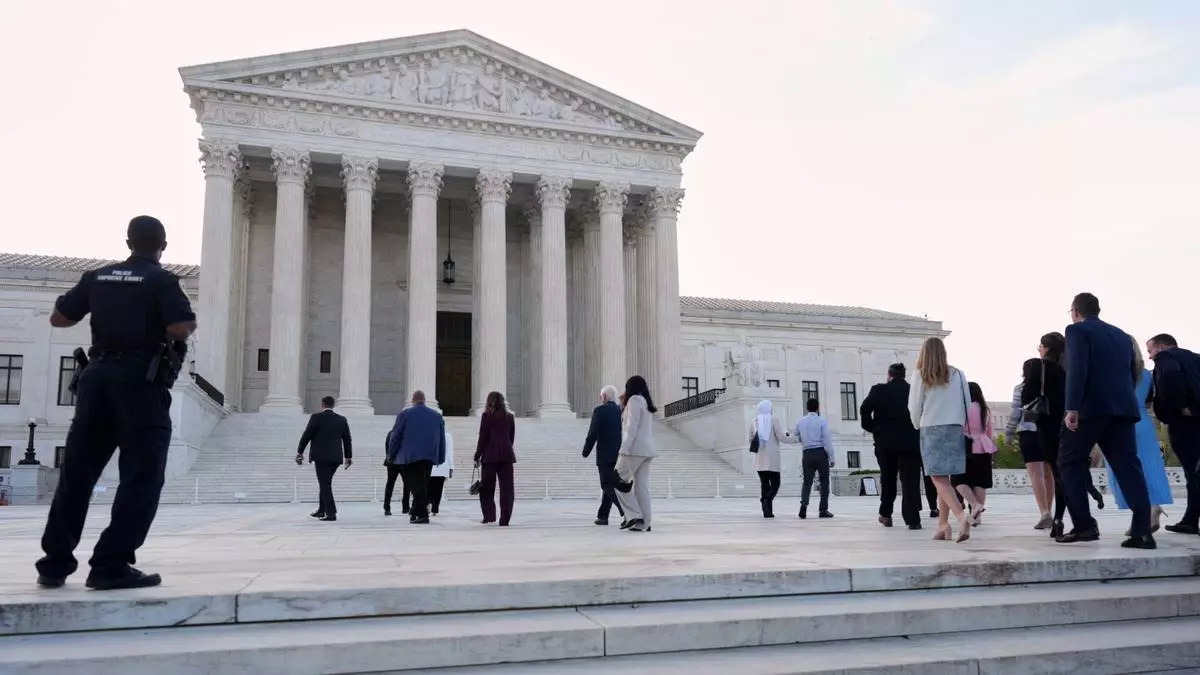
People arrive to walk inside the U.S. Supreme Court, on Capitol Hill in Washington, Wednesday, April 1, 2026. The Supreme Court justices will hear oral arguments today on whether President Donald Trump can deny citizenship to children born to parents who are in the United States illegally or temporarily. (AP Photo/J. Scott Applewhite)
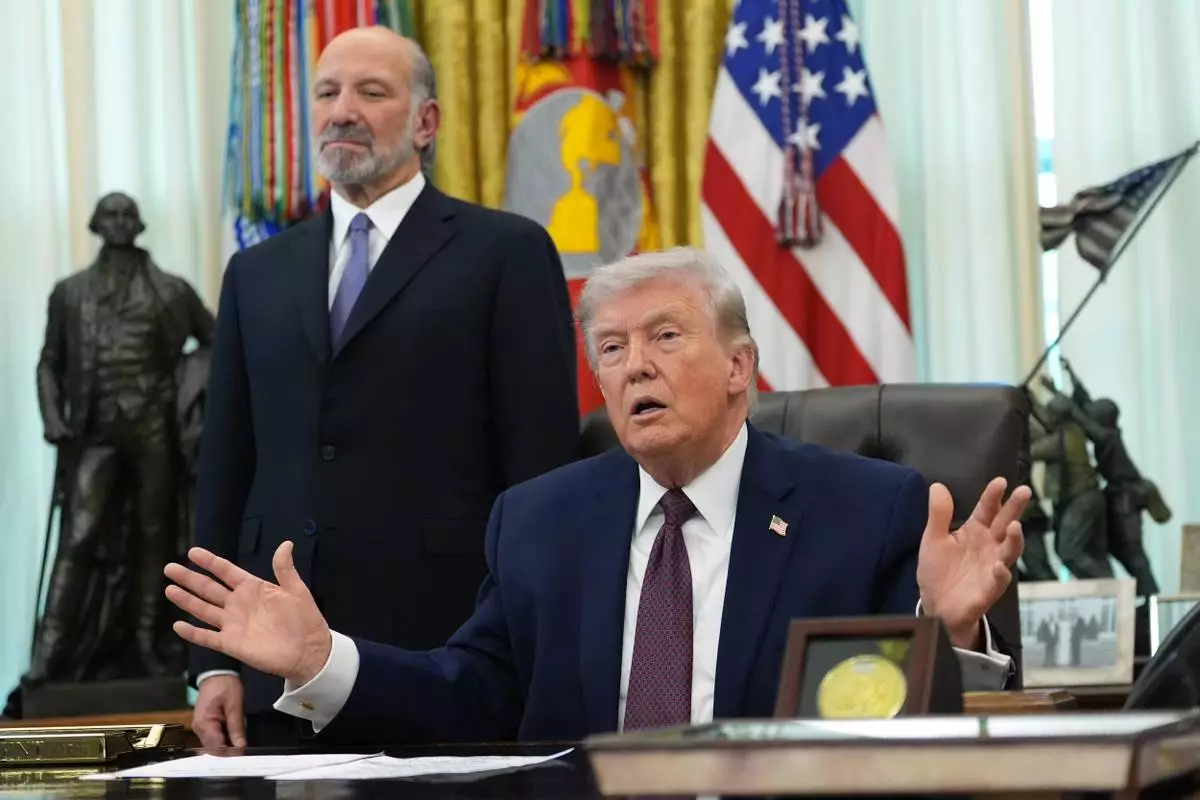
President Donald Trump answers questions from reporters after signing an executive order in the Oval Office of the White House Tuesday, March 31, 2026, in Washington, as Commerce Secretary Howard Lutnick listens. (AP Photo/Alex Brandon)
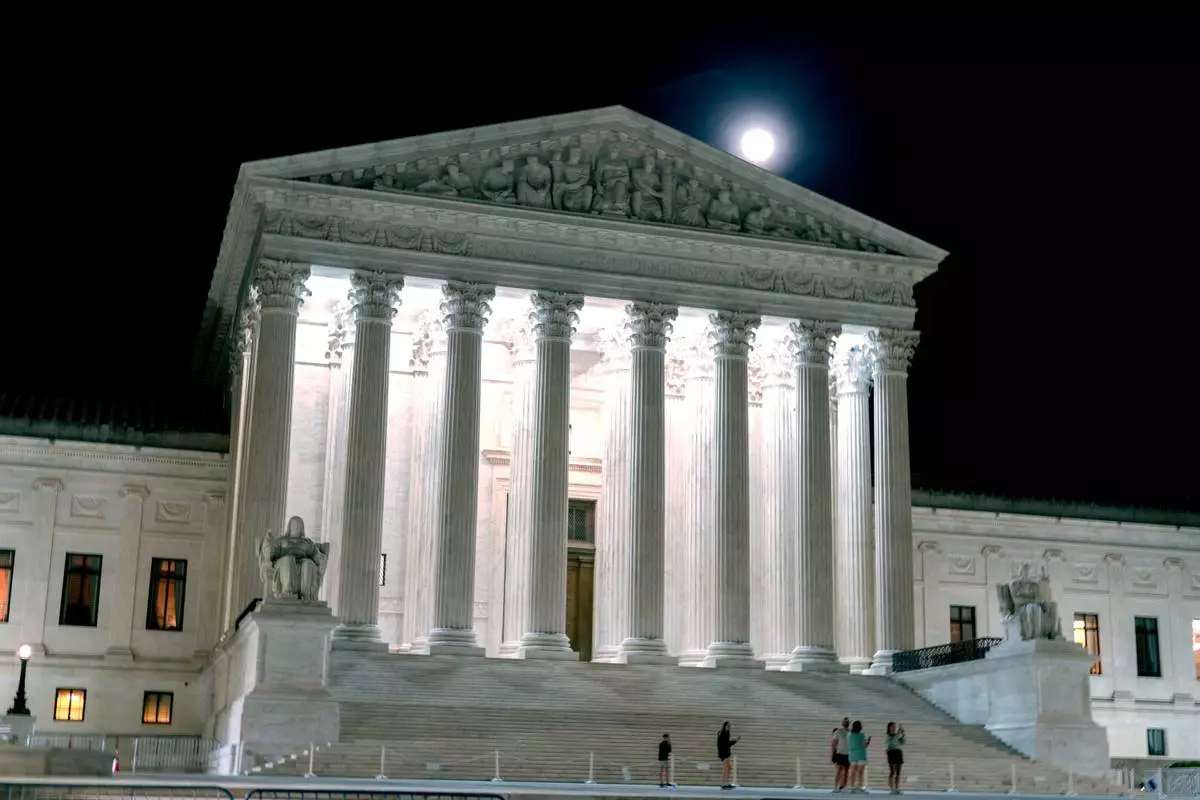
The U.S. Supreme Court is seen as the moon rises Tuesday, March 31, 2026, in Washington. (AP Photo/Jose Luis Magana)