Skip to Content Facebook Feature Image

PHOTO ESSAY: Scientists trying to unravel one of the body's biggest mysteries

News

PHOTO ESSAY: Scientists trying to unravel one of the body's biggest mysteries
News

News

PHOTO ESSAY: Scientists trying to unravel one of the body's biggest mysteries

2025-11-13 23:01 Last Updated At:23:11

A peek inside some leading research labs shows how scientists-turned-detectives are painstakingly decoding what causes autoimmune diseases and how to stop the immune system from attacking you instead of protecting you.

It’s a huge challenge. By the National Institutes of Health’s newest count there are about 140 autoimmune diseases affecting tens of millions of people.

More Images
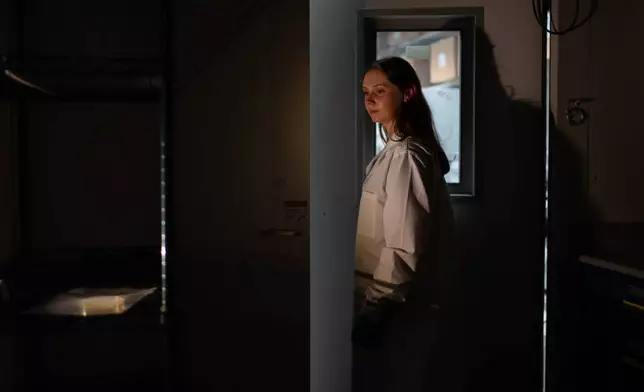
Researcher Abigail McGahan poses for a portrait in the warm room of a lab before she leaves E. coli bacteria incubating in a petri dish overnight for antibody production at Johns Hopkins University in Baltimore, Md., Tuesday, May 13, 2025. Most treatments for autoimmune diseases broadly suppress the immune system. McGahan is part of a team developing new options to target just rogue immune cells, not healthy ones. "I really enjoy the protein engineering aspect as in finding new tools to harness the immune system and this, I think, is, like, really close to having an impact in patients' lives." (AP Photo/David Goldman)
Researcher Abigail McGahan poses for a portrait in the warm room of a lab before she leaves E. coli bacteria incubating in a petri dish overnight for antibody production at Johns Hopkins University in Baltimore, Md., Tuesday, May 13, 2025. Most treatments for autoimmune diseases broadly suppress the immune system. McGahan is part of a team developing new options to target just rogue immune cells, not healthy ones. "I really enjoy the protein engineering aspect as in finding new tools to harness the immune system and this, I think, is, like, really close to having an impact in patients' lives." (AP Photo/David Goldman)

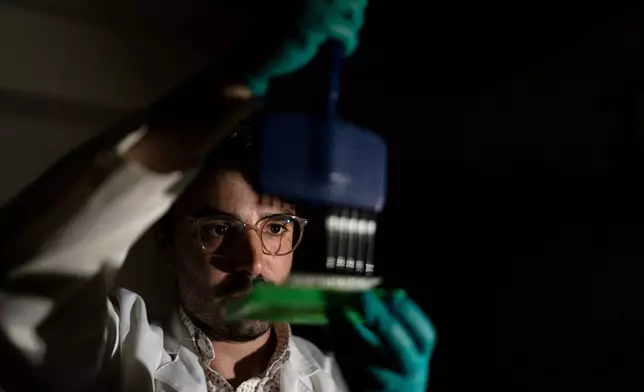
Research fellow Colin Gliech poses for a portrait while preparing to test cells in a lab where he studies autoimmune diseases at Johns Hopkins University in Baltimore, Md., Tuesday, May 13, 2025. "I've always been really passionate about understanding how things work in biology. Immunotherapies have seen a lot of promise in the field of cancer and we've seen a lot of success specifically with treating blood cancers. But that's by no means the only application for these really kind of exciting and new technologies. So I really see autoimmune diseases as one of those new frontiers." (AP Photo/David Goldman)
Research fellow Colin Gliech poses for a portrait while preparing to test cells in a lab where he studies autoimmune diseases at Johns Hopkins University in Baltimore, Md., Tuesday, May 13, 2025. "I've always been really passionate about understanding how things work in biology. Immunotherapies have seen a lot of promise in the field of cancer and we've seen a lot of success specifically with treating blood cancers. But that's by no means the only application for these really kind of exciting and new technologies. So I really see autoimmune diseases as one of those new frontiers." (AP Photo/David Goldman)

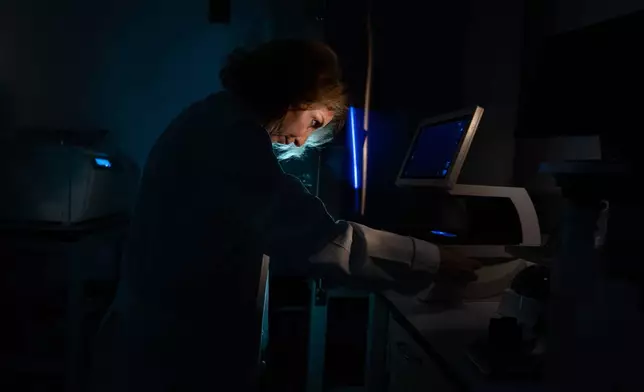
Dr. Mariana Kaplan, a rheumatologist and autoimmunity researcher, poses for a portrait working with a cell sample on a microscope in her lab at the National Institutes of Health, Monday, Aug. 25, 2025, in Bethesda, Md. Kaplan is an NIH Distinguished Investigator who leads research on systemic autoimmune diseases at the National Institute of Arthritis and Musculoskeletal and Skin Diseases. Kaplan's path to a career trying to unravel autoimmune diseases began while she was a doctor-in-training and helped care for young women severely ill with lupus, including one who died, at a time when there were fewer treatments. "No matter what I did, the diseases just progressed. I felt so impotent and frustrated about it, and so sad for them. The immune system in general fascinated me but this concept of autoimmunity and losing tolerance to yourself – what was causing this?" (AP Photo/David Goldman)
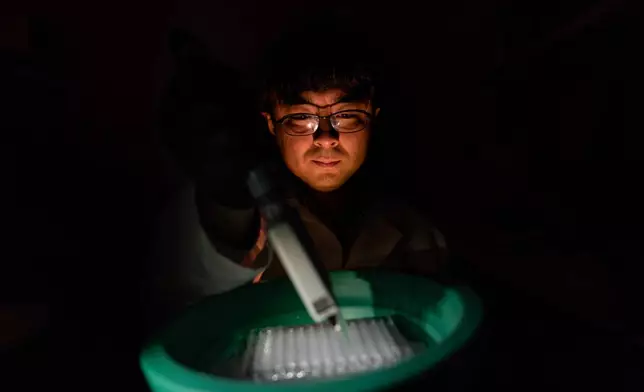
Dr. Mariana Kaplan, a rheumatologist and autoimmunity researcher, poses for a portrait working with a cell sample on a microscope in her lab at the National Institutes of Health, Monday, Aug. 25, 2025, in Bethesda, Md. Kaplan is an NIH Distinguished Investigator who leads research on systemic autoimmune diseases at the National Institute of Arthritis and Musculoskeletal and Skin Diseases. Kaplan's path to a career trying to unravel autoimmune diseases began while she was a doctor-in-training and helped care for young women severely ill with lupus, including one who died, at a time when there were fewer treatments. "No matter what I did, the diseases just progressed. I felt so impotent and frustrated about it, and so sad for them. The immune system in general fascinated me but this concept of autoimmunity and losing tolerance to yourself – what was causing this?" (AP Photo/David Goldman)

Dr. Norio Hanata, a research fellow, poses for a portrait while diluting patient blood samples in the lab where he works at the National Institutes of Health, Monday, Aug. 25, 2025, in Bethesda, Md. As a rheumatologist in Japan, he saw a lot of patients with autoimmune diseases. "By doing this research we can overcome some unmet needs for the patients. We can know what we don't know." (AP Photo/David Goldman)
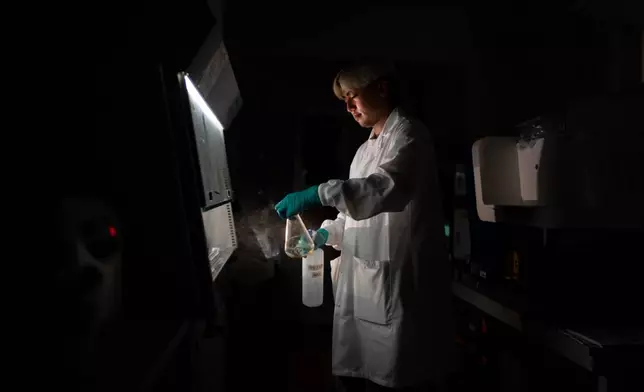
Dr. Norio Hanata, a research fellow, poses for a portrait while diluting patient blood samples in the lab where he works at the National Institutes of Health, Monday, Aug. 25, 2025, in Bethesda, Md. As a rheumatologist in Japan, he saw a lot of patients with autoimmune diseases. "By doing this research we can overcome some unmet needs for the patients. We can know what we don't know." (AP Photo/David Goldman)

Researcher Kyle Kaeo poses for a portrait as he sterilizes a flask to prepare hampster cells for protein production in a lab at Johns Hopkins University in Baltimore, Md., Tuesday, May 13, 2025. Kaeo is part of a team developing antibodies that could recognize faulty immune cells driving autoimmune diseases and help eliminate them. "I pivoted from doing cancer research to autoimmunity. It kind of seems like this is the frontier of something new. It's very cutting-edge. You know, not a lot in this field, kind of like what we're doing now has been done before. So that was really attractive to me, kind of the novelty and the idea that this can change patient care from what it's been traditionally." (AP Photo/David Goldman)

Researcher Kyle Kaeo poses for a portrait as he sterilizes a flask to prepare hampster cells for protein production in a lab at Johns Hopkins University in Baltimore, Md., Tuesday, May 13, 2025. Kaeo is part of a team developing antibodies that could recognize faulty immune cells driving autoimmune diseases and help eliminate them. "I pivoted from doing cancer research to autoimmunity. It kind of seems like this is the frontier of something new. It's very cutting-edge. You know, not a lot in this field, kind of like what we're doing now has been done before. So that was really attractive to me, kind of the novelty and the idea that this can change patient care from what it's been traditionally." (AP Photo/David Goldman)

Staff scientist Carmelo Carmona-Rivera poses for a portrait while working with antibodies used in autoimmunity research inside a cold room in the lab where he works at the National Institutes of Health, Monday, Aug. 25, 2025, in Bethesda, Md. "For me, I love helping people. In this lab, whatever I do can be translated to the patients. I really want to make a difference in how those patients are suffering. The key ingredient is passion. As long as you have passion, you will be able to persist to achieve your goal. In this lab we are applying so many groundbreaking techniques. I feel proud to be part of this." (AP Photo/David Goldman)

Staff scientist Carmelo Carmona-Rivera poses for a portrait while working with antibodies used in autoimmunity research inside a cold room in the lab where he works at the National Institutes of Health, Monday, Aug. 25, 2025, in Bethesda, Md. "For me, I love helping people. In this lab, whatever I do can be translated to the patients. I really want to make a difference in how those patients are suffering. The key ingredient is passion. As long as you have passion, you will be able to persist to achieve your goal. In this lab we are applying so many groundbreaking techniques. I feel proud to be part of this." (AP Photo/David Goldman)

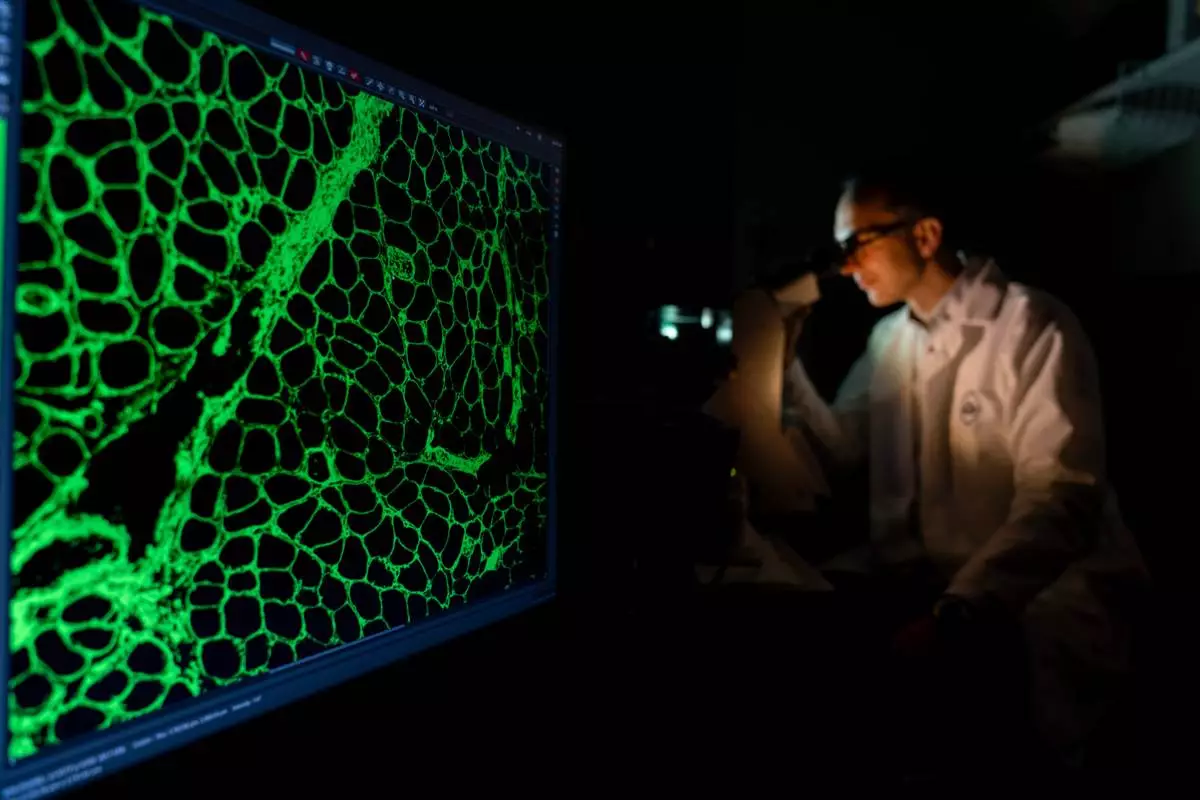
Dr. Iago Pinal-Fernandez, a staff clinician, poses for a portrait while examining cells from a muscle biopsy in a light imaging lab at the National Institutes of Health, Monday, Aug. 25, 2025, in Bethesda, Md. Pinal-Fernandez studies myositis, a group of muscle-weakening autoimmune diseases. "When I started, nothing was known about the type of autoimmune disease we study. Now finally we're able to tell patients, 'You have this disease and this is the mechanism of disease. And this is the reason why we're treating you – because the disease works in this way.'" (AP Photo/David Goldman)
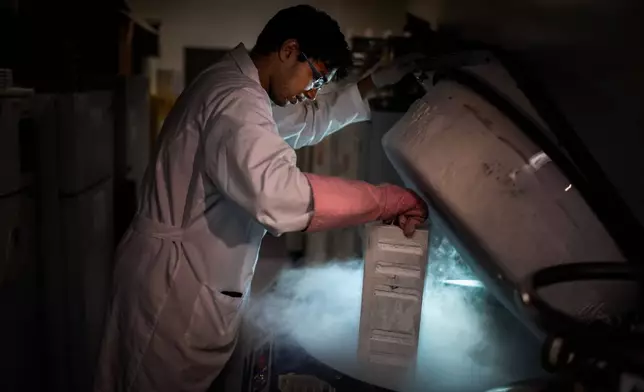
Dr. Iago Pinal-Fernandez, a staff clinician, poses for a portrait while examining cells from a muscle biopsy in a light imaging lab at the National Institutes of Health, Monday, Aug. 25, 2025, in Bethesda, Md. Pinal-Fernandez studies myositis, a group of muscle-weakening autoimmune diseases. "When I started, nothing was known about the type of autoimmune disease we study. Now finally we're able to tell patients, 'You have this disease and this is the mechanism of disease. And this is the reason why we're treating you – because the disease works in this way.'" (AP Photo/David Goldman)

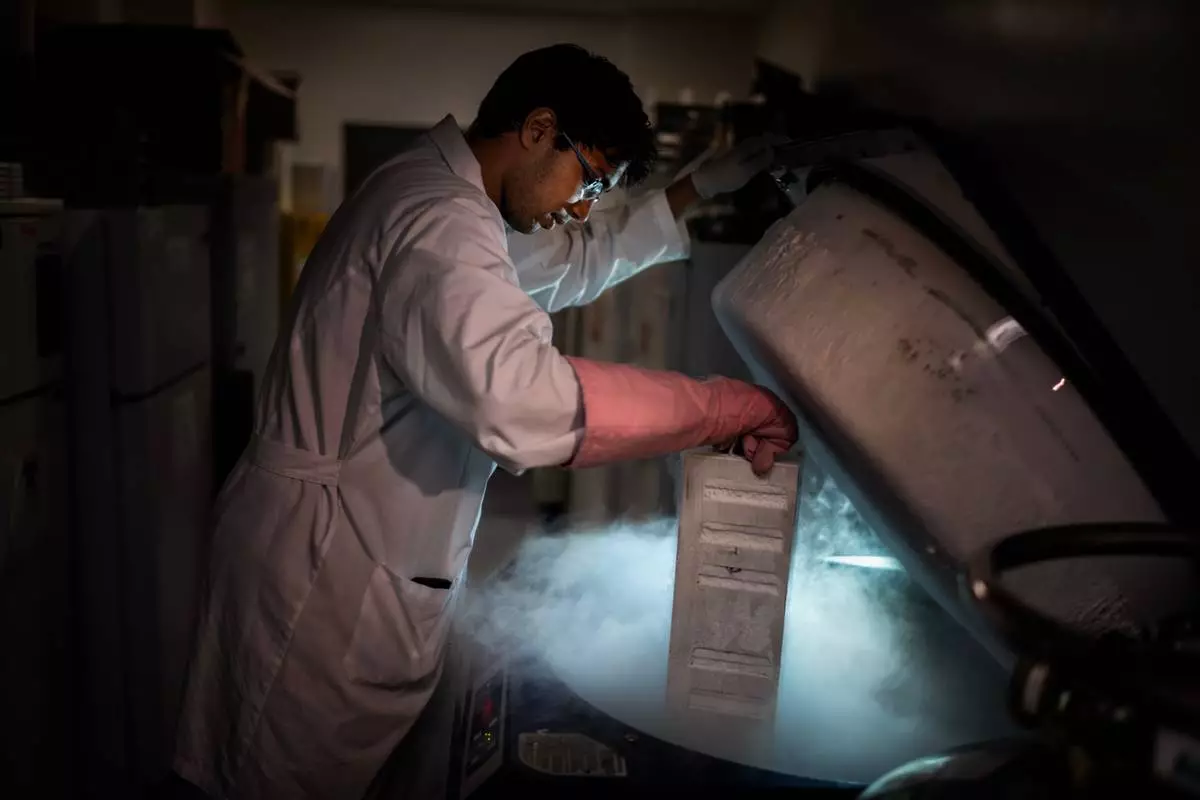
Researcher Manav Jain poses for a portrait while pulling human T-cells from a liquid nitrogen storage tank in a biomedical engineering lab at Johns Hopkins University in Baltimore, Md., Tuesday, May 13, 2025. Jain helps design biodegradable nanoparticles that could deliver new treatments for autoimmune diseases, making sure they're the right size to reach rogue immune cells in different parts of the body. "I think the engineering thing that I feel was drilled into me from day one is thinking about identifying problems and then figuring out how to pinpoint what needs to be solved or improved upon. It's small baby steps that then amount to big steps. The field that I work in has moved quite fast. I think it's really exciting seeing what's coming out." (AP Photo/David Goldman)

Researcher Manav Jain poses for a portrait while pulling human T-cells from a liquid nitrogen storage tank in a biomedical engineering lab at Johns Hopkins University in Baltimore, Md., Tuesday, May 13, 2025. Jain helps design biodegradable nanoparticles that could deliver new treatments for autoimmune diseases, making sure they're the right size to reach rogue immune cells in different parts of the body. "I think the engineering thing that I feel was drilled into me from day one is thinking about identifying problems and then figuring out how to pinpoint what needs to be solved or improved upon. It's small baby steps that then amount to big steps. The field that I work in has moved quite fast. I think it's really exciting seeing what's coming out." (AP Photo/David Goldman)

Dr. William Ambler, a translational research scholar who studies how biological sex affects the risk of autoimmune diseases, poses for a portrait while preparing a solution in the lab where he works at the National Institutes of Health, Monday, Aug. 25, 2025, in Bethesda, Md. "I'm fascinated in autoimmunity in general because the causes of it are so misunderstood. There is so much area to understand for treatment and hopefully prevention. What we're doing is very fundamental and has implications beyond autoimmunity. I do feel like we're at an inflection point of some sorts." (AP Photo/David Goldman)

Dr. William Ambler, a translational research scholar who studies how biological sex affects the risk of autoimmune diseases, poses for a portrait while preparing a solution in the lab where he works at the National Institutes of Health, Monday, Aug. 25, 2025, in Bethesda, Md. "I'm fascinated in autoimmunity in general because the causes of it are so misunderstood. There is so much area to understand for treatment and hopefully prevention. What we're doing is very fundamental and has implications beyond autoimmunity. I do feel like we're at an inflection point of some sorts." (AP Photo/David Goldman)

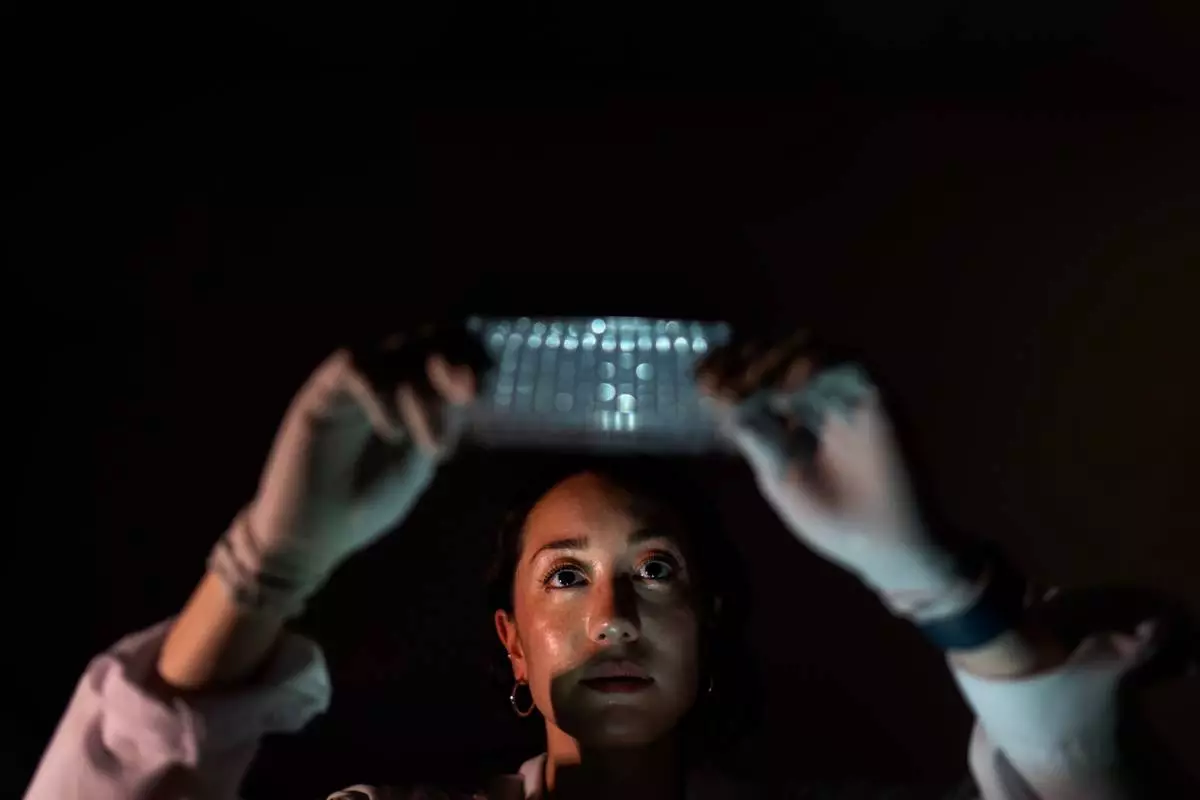
Researcher Kathryn Luly poses for a portrait holding a plate of mice cell samples in a biomedical engineering lab at Johns Hopkins University in Baltimore, Md., Tuesday, May 13, 2025. Luly is part of a team using mRNA technology to develop new treatments for autoimmune diseases. Cell tests show if the different formulas are reaching the correct targets. "The thing that's really amazing about the immune system is that it's all this very unique balance. It's like a little bit of this is good, but too much is bad. So as an engineer, it's a very unique problem of trying to sort of thread the needle and find that balance between activation and suppression. I think it appeals to the engineering side of my brain and then also some of the biology of the immune system is just really fascinating. It's a really nice blend of biology and engineering that comes together.” (AP Photo/David Goldman)

Researcher Kathryn Luly poses for a portrait holding a plate of mice cell samples in a biomedical engineering lab at Johns Hopkins University in Baltimore, Md., Tuesday, May 13, 2025. Luly is part of a team using mRNA technology to develop new treatments for autoimmune diseases. Cell tests show if the different formulas are reaching the correct targets. "The thing that's really amazing about the immune system is that it's all this very unique balance. It's like a little bit of this is good, but too much is bad. So as an engineer, it's a very unique problem of trying to sort of thread the needle and find that balance between activation and suppression. I think it appeals to the engineering side of my brain and then also some of the biology of the immune system is just really fascinating. It's a really nice blend of biology and engineering that comes together.” (AP Photo/David Goldman)

Dr. Justin Kwong, a research fellow, poses for a portrait as he removes cells from an incubator in the lab where he works at the National Institutes of Health, Monday, Aug. 25, 2025, in Bethesda, Md. Kwong coaxes human stem cells to grow into a kind of immune cell involved in autoimmune diseases, and has to replenish batches with fresh nutrients. "These are my babies. It's very rewarding to do this. It's very exciting but difficult to manage. I have to come in every day to feed them. Seven days a week. That's why I have a personal attachment to the cells. It takes a lot of your life, like a baby." (AP Photo/David Goldman)
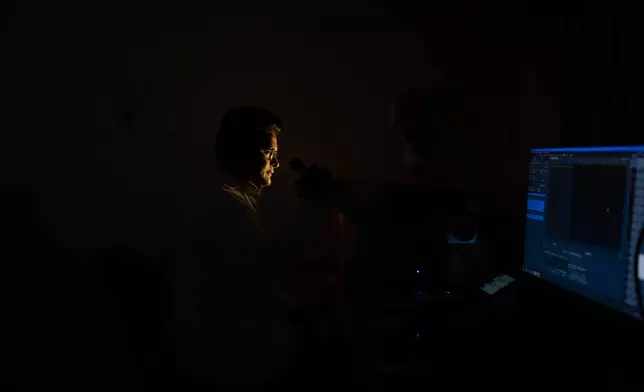
Dr. Justin Kwong, a research fellow, poses for a portrait as he removes cells from an incubator in the lab where he works at the National Institutes of Health, Monday, Aug. 25, 2025, in Bethesda, Md. Kwong coaxes human stem cells to grow into a kind of immune cell involved in autoimmune diseases, and has to replenish batches with fresh nutrients. "These are my babies. It's very rewarding to do this. It's very exciting but difficult to manage. I have to come in every day to feed them. Seven days a week. That's why I have a personal attachment to the cells. It takes a lot of your life, like a baby." (AP Photo/David Goldman)

Research fellow Sachin Surwase poses for a portrait while examining a mouse pancreas tissue through a microscope in a biomedical engineering lab at Johns Hopkins University in Baltimore, Md., Tuesday, May 13, 2025. Surwase is part of a team developing possible new ways to treat Type 1 diabetes, an autoimmune disease, by reprogramming the immune system to protect and not harm insulin-producing cells in the pancreas. "For me, it started with my grandmother, she died of cancer, so that was the motivation to work on these diseases. But then I got interested in autoimmunity. That fascinated me that why in one disease we need to increase the response of immunity but in others we need to suppress our own immunity. It's like a two-edged sword." (AP Photo/David Goldman)
Research fellow Sachin Surwase poses for a portrait while examining a mouse pancreas tissue through a microscope in a biomedical engineering lab at Johns Hopkins University in Baltimore, Md., Tuesday, May 13, 2025. Surwase is part of a team developing possible new ways to treat Type 1 diabetes, an autoimmune disease, by reprogramming the immune system to protect and not harm insulin-producing cells in the pancreas. "For me, it started with my grandmother, she died of cancer, so that was the motivation to work on these diseases. But then I got interested in autoimmunity. That fascinated me that why in one disease we need to increase the response of immunity but in others we need to suppress our own immunity. It's like a two-edged sword." (AP Photo/David Goldman)

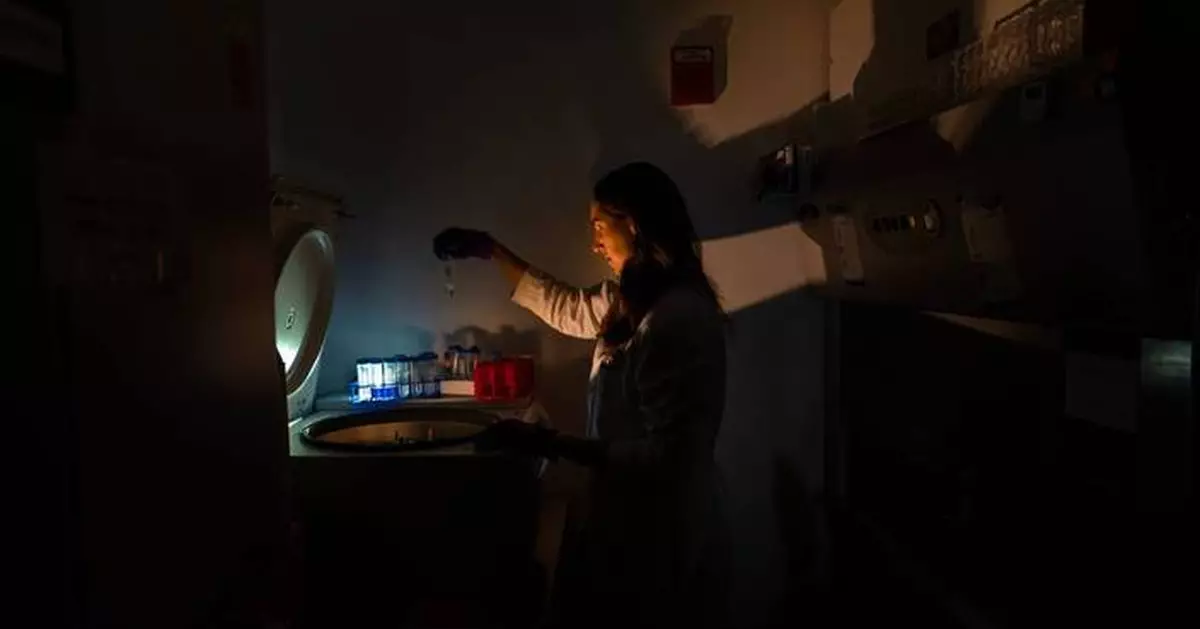
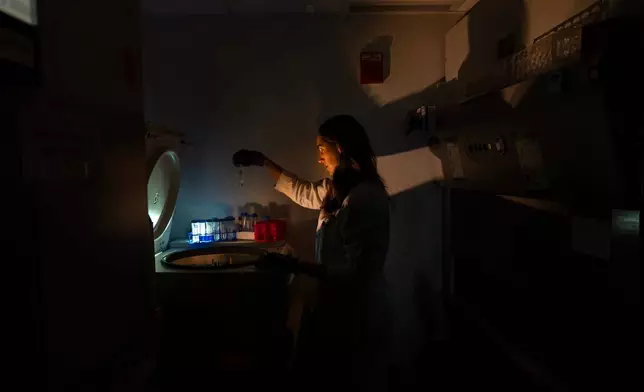
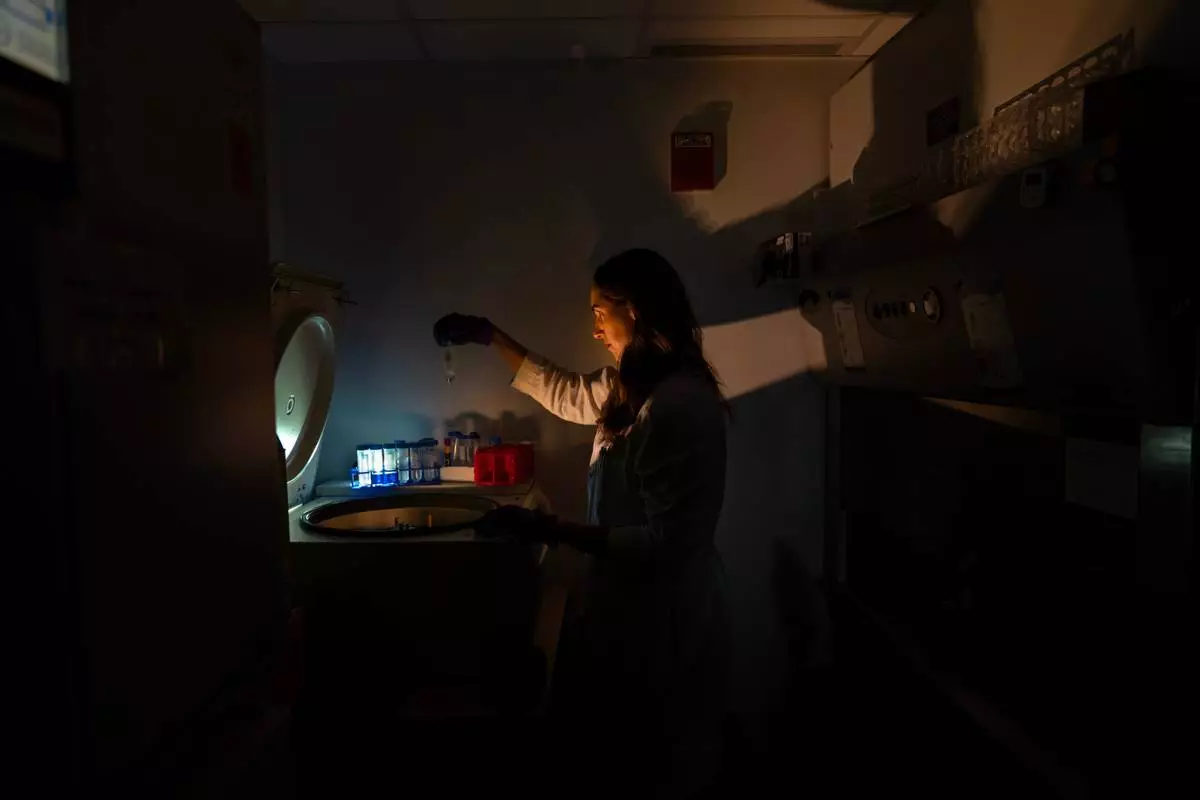
Dr. Laura Lewandowski, a pediatric rheumatologist and assistant clinical investigator, poses for a portrait at a centrifuge with tubes containing patient samples for autoimmunity testing in the lab where she works at the National Institutes of Health, Monday, Aug. 25, 2025, in Bethesda, Md. Lewandowski leads a team studying the genetics of pediatric lupus. "I've always been a person who loves puzzles and problem solving and the big picture of how people get sick. What I'm explaining to my family is that I'm a gene hunter. I could do back flips, inside that's how I feel when I can see something new. It's amazing. What I am studying, I feel it's a super exciting moment to be doing this." (AP Photo/David Goldman)

Dr. Laura Lewandowski, a pediatric rheumatologist and assistant clinical investigator, poses for a portrait at a centrifuge with tubes containing patient samples for autoimmunity testing in the lab where she works at the National Institutes of Health, Monday, Aug. 25, 2025, in Bethesda, Md. Lewandowski leads a team studying the genetics of pediatric lupus. "I've always been a person who loves puzzles and problem solving and the big picture of how people get sick. What I'm explaining to my family is that I'm a gene hunter. I could do back flips, inside that's how I feel when I can see something new. It's amazing. What I am studying, I feel it's a super exciting moment to be doing this." (AP Photo/David Goldman)

Unraveling them requires patience, persistence — and sophisticated technology to even see the suspects. Researchers use laser-powered machinery and brightly colored fluorescent dyes to tell rogue cells from normal ones.

Take Type 1 diabetes, caused when cells in the pancreas that produce insulin are gradually killed off by rogue T cells. In a biomedical engineering lab at Johns Hopkins University, researchers examine mouse pancreas cells on a computer screen. Red marks the killer cells. In yellow are “peacemaker” cells that are supposed to tamp down autoimmune reactions – but they’re outnumbered.

Another type of immune cell, B cells, drive autoimmune diseases by producing antibodies that mistake healthy tissue for foreign invaders. At NIH, Dr. Iago Pinal-Fernandez studies myositis, a poorly understood group of muscle-weakening diseases. His research shows rogue antibodies don’t just damage muscles by latching onto their surface. They can sneak inside muscle cells and disrupt their normal functions in ways that help explain varying symptoms.

“When I started, nothing was known about the type of autoimmune disease we study. Now finally we’re able to tell patients, ’You have this disease and this is the mechanism of disease,” he said.

In another NIH lab, Dr. Mariana Kaplan’s team is hunting the root causes of lupus and other autoimmune diseases — what makes the immune system run amok in the first place — and why they so often strike women.

Today's drugs tamp down symptoms but don't correct the problem. Now in early-phase clinical trials are treatments that instead aim to fix dysfunctional immune pathways.

At Hopkins, scientists are working on next-generation versions, not yet ready to try in people. In one lab, they're developing nanoparticle-based treatment to dial down pancreas-killing cells in Type 1 diabetes and ramp up “peacemaker” cells.

And in another Hopkins lab, researchers are developing what they hope will become more precise treatments for rheumatoid arthritis, lupus and other antibody-driven illnesses – drugs that search out and destroy “bad” B cells.

—-

The Associated Press Health and Science Department receives support from the Howard Hughes Medical Institute’s Department of Science Education and the Robert Wood Johnson Foundation. The AP is solely responsible for all content.

This is a documentary photo story curated by AP photo editors.

Researcher Abigail McGahan poses for a portrait in the warm room of a lab before she leaves E. coli bacteria incubating in a petri dish overnight for antibody production at Johns Hopkins University in Baltimore, Md., Tuesday, May 13, 2025. Most treatments for autoimmune diseases broadly suppress the immune system. McGahan is part of a team developing new options to target just rogue immune cells, not healthy ones. "I really enjoy the protein engineering aspect as in finding new tools to harness the immune system and this, I think, is, like, really close to having an impact in patients' lives." (AP Photo/David Goldman)

Researcher Abigail McGahan poses for a portrait in the warm room of a lab before she leaves E. coli bacteria incubating in a petri dish overnight for antibody production at Johns Hopkins University in Baltimore, Md., Tuesday, May 13, 2025. Most treatments for autoimmune diseases broadly suppress the immune system. McGahan is part of a team developing new options to target just rogue immune cells, not healthy ones. "I really enjoy the protein engineering aspect as in finding new tools to harness the immune system and this, I think, is, like, really close to having an impact in patients' lives." (AP Photo/David Goldman)

Research fellow Colin Gliech poses for a portrait while preparing to test cells in a lab where he studies autoimmune diseases at Johns Hopkins University in Baltimore, Md., Tuesday, May 13, 2025. "I've always been really passionate about understanding how things work in biology. Immunotherapies have seen a lot of promise in the field of cancer and we've seen a lot of success specifically with treating blood cancers. But that's by no means the only application for these really kind of exciting and new technologies. So I really see autoimmune diseases as one of those new frontiers." (AP Photo/David Goldman)

Research fellow Colin Gliech poses for a portrait while preparing to test cells in a lab where he studies autoimmune diseases at Johns Hopkins University in Baltimore, Md., Tuesday, May 13, 2025. "I've always been really passionate about understanding how things work in biology. Immunotherapies have seen a lot of promise in the field of cancer and we've seen a lot of success specifically with treating blood cancers. But that's by no means the only application for these really kind of exciting and new technologies. So I really see autoimmune diseases as one of those new frontiers." (AP Photo/David Goldman)

Dr. Mariana Kaplan, a rheumatologist and autoimmunity researcher, poses for a portrait working with a cell sample on a microscope in her lab at the National Institutes of Health, Monday, Aug. 25, 2025, in Bethesda, Md. Kaplan is an NIH Distinguished Investigator who leads research on systemic autoimmune diseases at the National Institute of Arthritis and Musculoskeletal and Skin Diseases. Kaplan's path to a career trying to unravel autoimmune diseases began while she was a doctor-in-training and helped care for young women severely ill with lupus, including one who died, at a time when there were fewer treatments. "No matter what I did, the diseases just progressed. I felt so impotent and frustrated about it, and so sad for them. The immune system in general fascinated me but this concept of autoimmunity and losing tolerance to yourself – what was causing this?" (AP Photo/David Goldman)

Dr. Mariana Kaplan, a rheumatologist and autoimmunity researcher, poses for a portrait working with a cell sample on a microscope in her lab at the National Institutes of Health, Monday, Aug. 25, 2025, in Bethesda, Md. Kaplan is an NIH Distinguished Investigator who leads research on systemic autoimmune diseases at the National Institute of Arthritis and Musculoskeletal and Skin Diseases. Kaplan's path to a career trying to unravel autoimmune diseases began while she was a doctor-in-training and helped care for young women severely ill with lupus, including one who died, at a time when there were fewer treatments. "No matter what I did, the diseases just progressed. I felt so impotent and frustrated about it, and so sad for them. The immune system in general fascinated me but this concept of autoimmunity and losing tolerance to yourself – what was causing this?" (AP Photo/David Goldman)

Dr. Norio Hanata, a research fellow, poses for a portrait while diluting patient blood samples in the lab where he works at the National Institutes of Health, Monday, Aug. 25, 2025, in Bethesda, Md. As a rheumatologist in Japan, he saw a lot of patients with autoimmune diseases. "By doing this research we can overcome some unmet needs for the patients. We can know what we don't know." (AP Photo/David Goldman)

Dr. Norio Hanata, a research fellow, poses for a portrait while diluting patient blood samples in the lab where he works at the National Institutes of Health, Monday, Aug. 25, 2025, in Bethesda, Md. As a rheumatologist in Japan, he saw a lot of patients with autoimmune diseases. "By doing this research we can overcome some unmet needs for the patients. We can know what we don't know." (AP Photo/David Goldman)

Researcher Kyle Kaeo poses for a portrait as he sterilizes a flask to prepare hampster cells for protein production in a lab at Johns Hopkins University in Baltimore, Md., Tuesday, May 13, 2025. Kaeo is part of a team developing antibodies that could recognize faulty immune cells driving autoimmune diseases and help eliminate them. "I pivoted from doing cancer research to autoimmunity. It kind of seems like this is the frontier of something new. It's very cutting-edge. You know, not a lot in this field, kind of like what we're doing now has been done before. So that was really attractive to me, kind of the novelty and the idea that this can change patient care from what it's been traditionally." (AP Photo/David Goldman)

Researcher Kyle Kaeo poses for a portrait as he sterilizes a flask to prepare hampster cells for protein production in a lab at Johns Hopkins University in Baltimore, Md., Tuesday, May 13, 2025. Kaeo is part of a team developing antibodies that could recognize faulty immune cells driving autoimmune diseases and help eliminate them. "I pivoted from doing cancer research to autoimmunity. It kind of seems like this is the frontier of something new. It's very cutting-edge. You know, not a lot in this field, kind of like what we're doing now has been done before. So that was really attractive to me, kind of the novelty and the idea that this can change patient care from what it's been traditionally." (AP Photo/David Goldman)

Staff scientist Carmelo Carmona-Rivera poses for a portrait while working with antibodies used in autoimmunity research inside a cold room in the lab where he works at the National Institutes of Health, Monday, Aug. 25, 2025, in Bethesda, Md. "For me, I love helping people. In this lab, whatever I do can be translated to the patients. I really want to make a difference in how those patients are suffering. The key ingredient is passion. As long as you have passion, you will be able to persist to achieve your goal. In this lab we are applying so many groundbreaking techniques. I feel proud to be part of this." (AP Photo/David Goldman)
Staff scientist Carmelo Carmona-Rivera poses for a portrait while working with antibodies used in autoimmunity research inside a cold room in the lab where he works at the National Institutes of Health, Monday, Aug. 25, 2025, in Bethesda, Md. "For me, I love helping people. In this lab, whatever I do can be translated to the patients. I really want to make a difference in how those patients are suffering. The key ingredient is passion. As long as you have passion, you will be able to persist to achieve your goal. In this lab we are applying so many groundbreaking techniques. I feel proud to be part of this." (AP Photo/David Goldman)

Dr. Iago Pinal-Fernandez, a staff clinician, poses for a portrait while examining cells from a muscle biopsy in a light imaging lab at the National Institutes of Health, Monday, Aug. 25, 2025, in Bethesda, Md. Pinal-Fernandez studies myositis, a group of muscle-weakening autoimmune diseases. "When I started, nothing was known about the type of autoimmune disease we study. Now finally we're able to tell patients, 'You have this disease and this is the mechanism of disease. And this is the reason why we're treating you – because the disease works in this way.'" (AP Photo/David Goldman)
Dr. Iago Pinal-Fernandez, a staff clinician, poses for a portrait while examining cells from a muscle biopsy in a light imaging lab at the National Institutes of Health, Monday, Aug. 25, 2025, in Bethesda, Md. Pinal-Fernandez studies myositis, a group of muscle-weakening autoimmune diseases. "When I started, nothing was known about the type of autoimmune disease we study. Now finally we're able to tell patients, 'You have this disease and this is the mechanism of disease. And this is the reason why we're treating you – because the disease works in this way.'" (AP Photo/David Goldman)

Researcher Manav Jain poses for a portrait while pulling human T-cells from a liquid nitrogen storage tank in a biomedical engineering lab at Johns Hopkins University in Baltimore, Md., Tuesday, May 13, 2025. Jain helps design biodegradable nanoparticles that could deliver new treatments for autoimmune diseases, making sure they're the right size to reach rogue immune cells in different parts of the body. "I think the engineering thing that I feel was drilled into me from day one is thinking about identifying problems and then figuring out how to pinpoint what needs to be solved or improved upon. It's small baby steps that then amount to big steps. The field that I work in has moved quite fast. I think it's really exciting seeing what's coming out." (AP Photo/David Goldman)

Researcher Manav Jain poses for a portrait while pulling human T-cells from a liquid nitrogen storage tank in a biomedical engineering lab at Johns Hopkins University in Baltimore, Md., Tuesday, May 13, 2025. Jain helps design biodegradable nanoparticles that could deliver new treatments for autoimmune diseases, making sure they're the right size to reach rogue immune cells in different parts of the body. "I think the engineering thing that I feel was drilled into me from day one is thinking about identifying problems and then figuring out how to pinpoint what needs to be solved or improved upon. It's small baby steps that then amount to big steps. The field that I work in has moved quite fast. I think it's really exciting seeing what's coming out." (AP Photo/David Goldman)

Dr. William Ambler, a translational research scholar who studies how biological sex affects the risk of autoimmune diseases, poses for a portrait while preparing a solution in the lab where he works at the National Institutes of Health, Monday, Aug. 25, 2025, in Bethesda, Md. "I'm fascinated in autoimmunity in general because the causes of it are so misunderstood. There is so much area to understand for treatment and hopefully prevention. What we're doing is very fundamental and has implications beyond autoimmunity. I do feel like we're at an inflection point of some sorts." (AP Photo/David Goldman)
Dr. William Ambler, a translational research scholar who studies how biological sex affects the risk of autoimmune diseases, poses for a portrait while preparing a solution in the lab where he works at the National Institutes of Health, Monday, Aug. 25, 2025, in Bethesda, Md. "I'm fascinated in autoimmunity in general because the causes of it are so misunderstood. There is so much area to understand for treatment and hopefully prevention. What we're doing is very fundamental and has implications beyond autoimmunity. I do feel like we're at an inflection point of some sorts." (AP Photo/David Goldman)

Researcher Kathryn Luly poses for a portrait holding a plate of mice cell samples in a biomedical engineering lab at Johns Hopkins University in Baltimore, Md., Tuesday, May 13, 2025. Luly is part of a team using mRNA technology to develop new treatments for autoimmune diseases. Cell tests show if the different formulas are reaching the correct targets. "The thing that's really amazing about the immune system is that it's all this very unique balance. It's like a little bit of this is good, but too much is bad. So as an engineer, it's a very unique problem of trying to sort of thread the needle and find that balance between activation and suppression. I think it appeals to the engineering side of my brain and then also some of the biology of the immune system is just really fascinating. It's a really nice blend of biology and engineering that comes together.” (AP Photo/David Goldman)

Researcher Kathryn Luly poses for a portrait holding a plate of mice cell samples in a biomedical engineering lab at Johns Hopkins University in Baltimore, Md., Tuesday, May 13, 2025. Luly is part of a team using mRNA technology to develop new treatments for autoimmune diseases. Cell tests show if the different formulas are reaching the correct targets. "The thing that's really amazing about the immune system is that it's all this very unique balance. It's like a little bit of this is good, but too much is bad. So as an engineer, it's a very unique problem of trying to sort of thread the needle and find that balance between activation and suppression. I think it appeals to the engineering side of my brain and then also some of the biology of the immune system is just really fascinating. It's a really nice blend of biology and engineering that comes together.” (AP Photo/David Goldman)

Dr. Justin Kwong, a research fellow, poses for a portrait as he removes cells from an incubator in the lab where he works at the National Institutes of Health, Monday, Aug. 25, 2025, in Bethesda, Md. Kwong coaxes human stem cells to grow into a kind of immune cell involved in autoimmune diseases, and has to replenish batches with fresh nutrients. "These are my babies. It's very rewarding to do this. It's very exciting but difficult to manage. I have to come in every day to feed them. Seven days a week. That's why I have a personal attachment to the cells. It takes a lot of your life, like a baby." (AP Photo/David Goldman)

Dr. Justin Kwong, a research fellow, poses for a portrait as he removes cells from an incubator in the lab where he works at the National Institutes of Health, Monday, Aug. 25, 2025, in Bethesda, Md. Kwong coaxes human stem cells to grow into a kind of immune cell involved in autoimmune diseases, and has to replenish batches with fresh nutrients. "These are my babies. It's very rewarding to do this. It's very exciting but difficult to manage. I have to come in every day to feed them. Seven days a week. That's why I have a personal attachment to the cells. It takes a lot of your life, like a baby." (AP Photo/David Goldman)

Research fellow Sachin Surwase poses for a portrait while examining a mouse pancreas tissue through a microscope in a biomedical engineering lab at Johns Hopkins University in Baltimore, Md., Tuesday, May 13, 2025. Surwase is part of a team developing possible new ways to treat Type 1 diabetes, an autoimmune disease, by reprogramming the immune system to protect and not harm insulin-producing cells in the pancreas. "For me, it started with my grandmother, she died of cancer, so that was the motivation to work on these diseases. But then I got interested in autoimmunity. That fascinated me that why in one disease we need to increase the response of immunity but in others we need to suppress our own immunity. It's like a two-edged sword." (AP Photo/David Goldman)
Research fellow Sachin Surwase poses for a portrait while examining a mouse pancreas tissue through a microscope in a biomedical engineering lab at Johns Hopkins University in Baltimore, Md., Tuesday, May 13, 2025. Surwase is part of a team developing possible new ways to treat Type 1 diabetes, an autoimmune disease, by reprogramming the immune system to protect and not harm insulin-producing cells in the pancreas. "For me, it started with my grandmother, she died of cancer, so that was the motivation to work on these diseases. But then I got interested in autoimmunity. That fascinated me that why in one disease we need to increase the response of immunity but in others we need to suppress our own immunity. It's like a two-edged sword." (AP Photo/David Goldman)

Dr. Laura Lewandowski, a pediatric rheumatologist and assistant clinical investigator, poses for a portrait at a centrifuge with tubes containing patient samples for autoimmunity testing in the lab where she works at the National Institutes of Health, Monday, Aug. 25, 2025, in Bethesda, Md. Lewandowski leads a team studying the genetics of pediatric lupus. "I've always been a person who loves puzzles and problem solving and the big picture of how people get sick. What I'm explaining to my family is that I'm a gene hunter. I could do back flips, inside that's how I feel when I can see something new. It's amazing. What I am studying, I feel it's a super exciting moment to be doing this." (AP Photo/David Goldman)
Dr. Laura Lewandowski, a pediatric rheumatologist and assistant clinical investigator, poses for a portrait at a centrifuge with tubes containing patient samples for autoimmunity testing in the lab where she works at the National Institutes of Health, Monday, Aug. 25, 2025, in Bethesda, Md. Lewandowski leads a team studying the genetics of pediatric lupus. "I've always been a person who loves puzzles and problem solving and the big picture of how people get sick. What I'm explaining to my family is that I'm a gene hunter. I could do back flips, inside that's how I feel when I can see something new. It's amazing. What I am studying, I feel it's a super exciting moment to be doing this." (AP Photo/David Goldman)
NASA's launch team has loaded more than 700,000 gallons of fuel into the 32-story Space Launch System rocket, setting the stage for the Artemis II mission crew members to board.

The mission is NASA’s planned lunar fly-around by four astronauts that will be the first moon trip in 53 years.

The Space Launch System rocket is poised to blast off Wednesday evening with a two-hour launch window beginning at 6:24 p.m. EDT at Kennedy Space Center in Florida.

Artemis astronauts Reid Wiseman, Victor Glover, Christina Koch and Jeremy Hansen will be on board. They’ll hurtle several thousand miles beyond the moon, hang a U-turn and then come straight back. No circling around the moon, no stopping for a moonwalk — just a quick out-and-back lasting less than 10 days. NASA promises more boot prints in the gray lunar dust, but not before a couple practice missions.

Unlike the Apollo missions that sent astronauts to the moonfrom 1968 through 1972, Artemis’ debut crew includes a woman, a person of color and a Canadian citizen.

Artemis II is the opening shot of NASA’s grand plans for a permanent moon base. The space program is aiming for a moon landing near the lunar south pole in 2028.

The Latest:

Wiseman, Glover, Koch and Hansen have left the Neil Armstrong Operations and Checkout Building and are on their way to launch pad 39B.

Waving to family, colleagues and news photographers, the crew boarded the so-called astrovan for the 9-mile ride to the launch pad and their awaiting SLS rocket.

Before their highly anticipated walkout, commander Reid Wiseman and his crew played a quick card game with NASA’s chief astronaut Scott Tingle. It’s a preflight tradition since the space shuttle era.

Losing is good: It means the astronaut has gotten rid of all bad luck before launching.

The four thanked the suit techs and posed for photos, keeping a safe distance from many of the bystanders to avoid germs. They then went down the elevator at the Neil Armstrong Operations & Checkout Building and walk out to a barrage of cameras and cheers.

They’ll take a custom-designed astrovan for the ride to the launch pad

House Speaker Mike Johnson posted on the social media site X ahead of the planned Artemis II launch.

“Praying for the safety and success of the Artemis II crew and @NASA as they undertake a mission that will carry humanity farther into space than we have gone in over half a century. I had the privilege of hosting these courageous pioneers at the State of the Union earlier this year. Americans are watching proudly as our Golden Age reaches new heights!” Johnson wrote.

Wiseman, 50, a retired Navy captain from Baltimore, was serving as NASA’s chief astronaut when asked three years ago to lead humanity’s first lunar trip since 1972.

His wife Carroll’s death from cancer in 2020 gave him pause.

His two teenage daughters, especially the older one, had “zero interest” in him launching again after a 2014 trip to the International Space Station.

“We talked about it and I said, ’Look, of all the people on planet Earth right now, there are four people that are in a position to go fly around the moon,” he said. “I cannot say no to that opportunity.”

The next day, homemade moon cupcakes awaited him, along with his daughters’ support.

Artemis is the twin sister of Apollo in Greek mythology. They are the children of Zeus and Leto. Artemis has long been associated with the moon.

While the Artemis name builds on the Apollo program and pays homage to it, “there is no way we could be that same mission or ever hope to even be,” said NASA astronaut Christina Koch, part of the Artemis II crew.

The Apollo program was all about beating the Russians to the moon and planting the U.S. flag. NASA sent 24 astronauts to the moon between 1968 and 1972, including 12 moonwalkers. Now China is the competition.

NASA is striving for a long-term lunar presence under Artemis, with Mars to follow.

The Artemis II astronauts are now in their orange Orion spacesuits that they will wear for launch and reentry. Testing these new suits is one of the main goals of the mission.

The four are expected to emerge for their trip to the pad sometime before 2pm.

NASA created bright orange custom spacesuits for launch and reentry. Astronauts will also use them in case of a depressurization or some other emergency.

They can survive up to six days in the suits, inserting a straw into the helmet to sip water or protein shakes and relying on undergarment bags and bladders as a built-in toilet.

Future Artemis crews to the lunar surface will wear white moonwalking suits designed by Axiom Space.

During the Apollo era, astronauts wore the same white bulky spacesuits for launch and return as well as for moonwalks because there wasn’t enough storage on board for different outfits.

“We should have done Artemis 50 years ago,” said John Tribe, a propulsion engineer during the Apollo era.

The launch team has loaded more than 700,000 gallons of fuel into the 32-story Space Launch System rocket, setting the stage for the Artemis II crew to board.

The wind is picking up at Cape Canaveral, more clouds are appearing and rain is expected in about two hours. But there is no lightning threat, NASA says, and there’s still an 80% chance the weather will be good enough to launch.

L-minus tracks the overall time to liftoff, counting down the days, hours and minutes away before the planned blastoff. It doesn’t include built-in holds, or pauses — that’s T-minus time.

The T-minus countdown in the final 10 minutes is where nerves tense up and hearts start pounding. Automated software kicks off a series of highly choreographed milestones. During this period, the clock can be stopped if a problem is spotted and restarted if it’s fixed in time.

T-0 is the moment of liftoff — zero — when the boosters ignite and the rocket begins its journey.

NASA has a narrow time frame each month to fly to the moon.

The Earth and moon must be aligned just so to achieve the proper trajectory for the mission. In any given month, there’s only about a week when Artemis II astronauts can lift off.

The Orion capsule needs to get a check of its life-support and other systems in near-Earth orbit. If that goes well, Orion will fire its main engine to hurtle toward the moon, taking advantage of the moon and Earth’s gravity to get there and back in a slingshot maneuver that requires little if any fuel.

Orion also needs sunlight for power and can’t be in darkness for more than 90 minutes at a time. Plus NASA wants to minimize heating during reentry at flight’s end.

The latest launch window runs through April 6. The next opportunity opens on April 30.

The hydrogen tank of the rocket’s core stage is 100% filled. NASA said no significant leaks have been observed so far in fueling. It was hydrogen leaks that prevented the rocket from flying in February.

The alarm clocks just went off in Kennedy Space Center’s crew quarters.

That means it’s rise and shine for the three Americans and one Canadian who are about to become the first lunar visitors in more than 53 years.

They have a long day ahead of them, whether they launch or not.

After breakfast, they’ll start suiting up. NASA’s launch window opens at 6:24 p.m. and lasts a full two hours.

Launch director Charlie Blackwell-Thompson is wearing green as are many of the controllers alongside her in the firing room.

Green represents “go” for NASA, a color symbolizing good luck.

The team is monitoring the fueling of the 322-foot moon rocket, set to blast off Wednesday evening.

A plush toy named Rise will ride with the Artemis II astronauts around the moon, carrying the names of more than 5.6 million people.

Rise is what’s known as a zero gravity indicator, which gives the astronauts a visual cue of when they reach space.

The design was inspired by the iconic “Earthrise” photo during Apollo 8, showing the planet as a shadowed blue marble from space in 1968.

Rise was selected from more than 2,600 contest submissions. It was designed by Lucas Ye of California.

Commander Reid Wiseman and his crew tucked a small memory card into Rise before the toy was loaded into the Orion capsule. The card bears the names of all those who signed up with NASA to vicariously tag along on the nearly 10-day journey.

“Zipping that little pocket on the bottom of Rise was kind of the moment that put it all together for me,” Wiseman said. “We are going for all and by all. It’s time to fly.”

NASA is fueling the new rocket that will send four astronauts to the moon.

Launch teams have begun pumping more than 700,000 gallons (2.6 million liters) of liquid hydrogen and liquid oxygen into the Space Launch System rocket at Kennedy Space Center in Florida.

It’s the latest milestone in the two-day countdown that kicked off on Monday when launch controllers reported to duty.

It will take at least four hours to fully load the rocket before astronauts climb aboard for humanity’s first flight to the moon since Apollo 17 in 1972.

The two-hour launch window opens at 6:24 p.m. EDT.

▶ Read more about Apollo vs. Artemis

The Americans who blazed the trail to the moon more than half a century ago were white men chosen for their military test pilot experience.

The Artemis II crew includes a woman, a person of color and a Canadian, products of a more diversified astronaut corps.

▶ Read more about Christina Koch, Victor Glover, Jeremy Hansen and Reid Wiseman

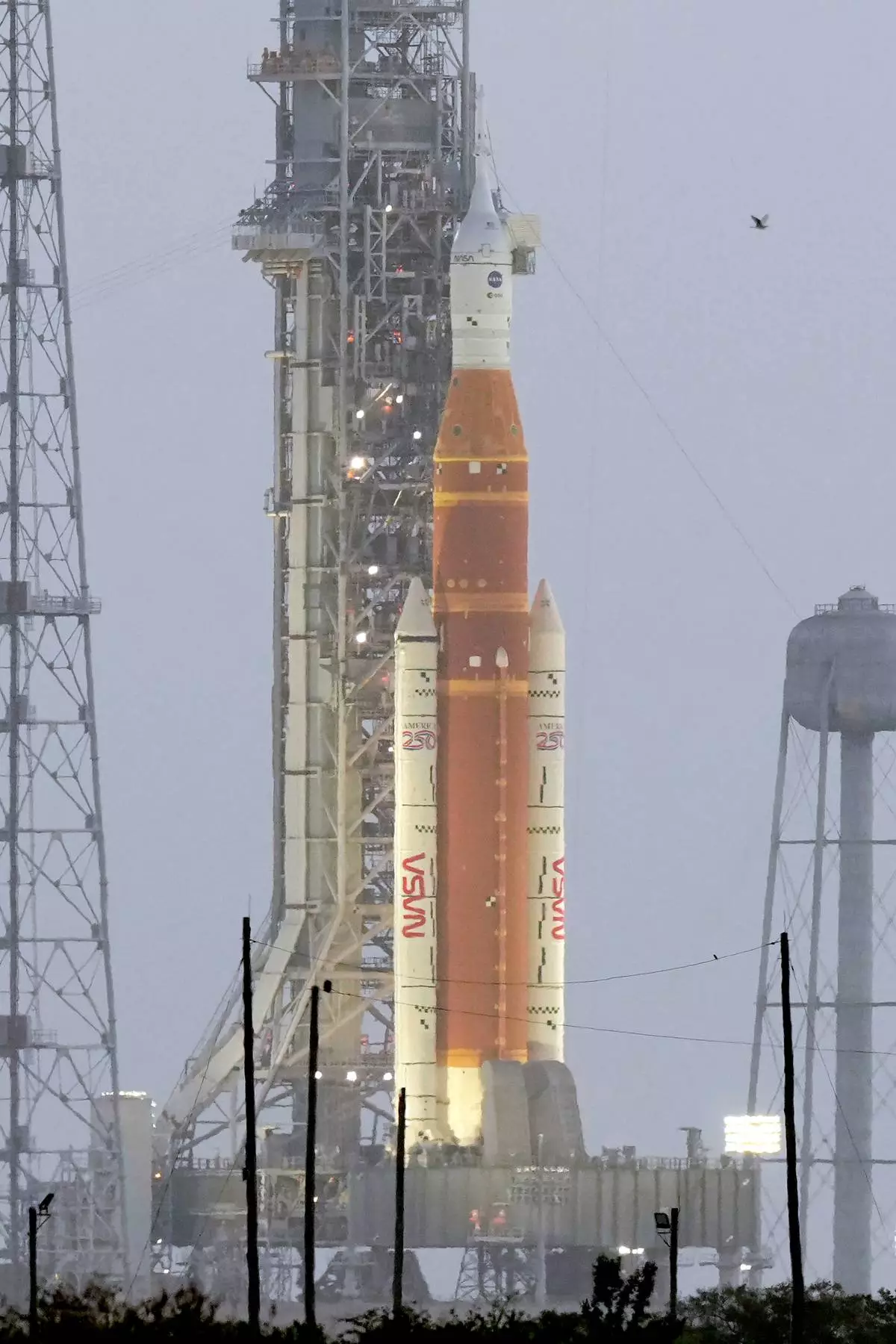
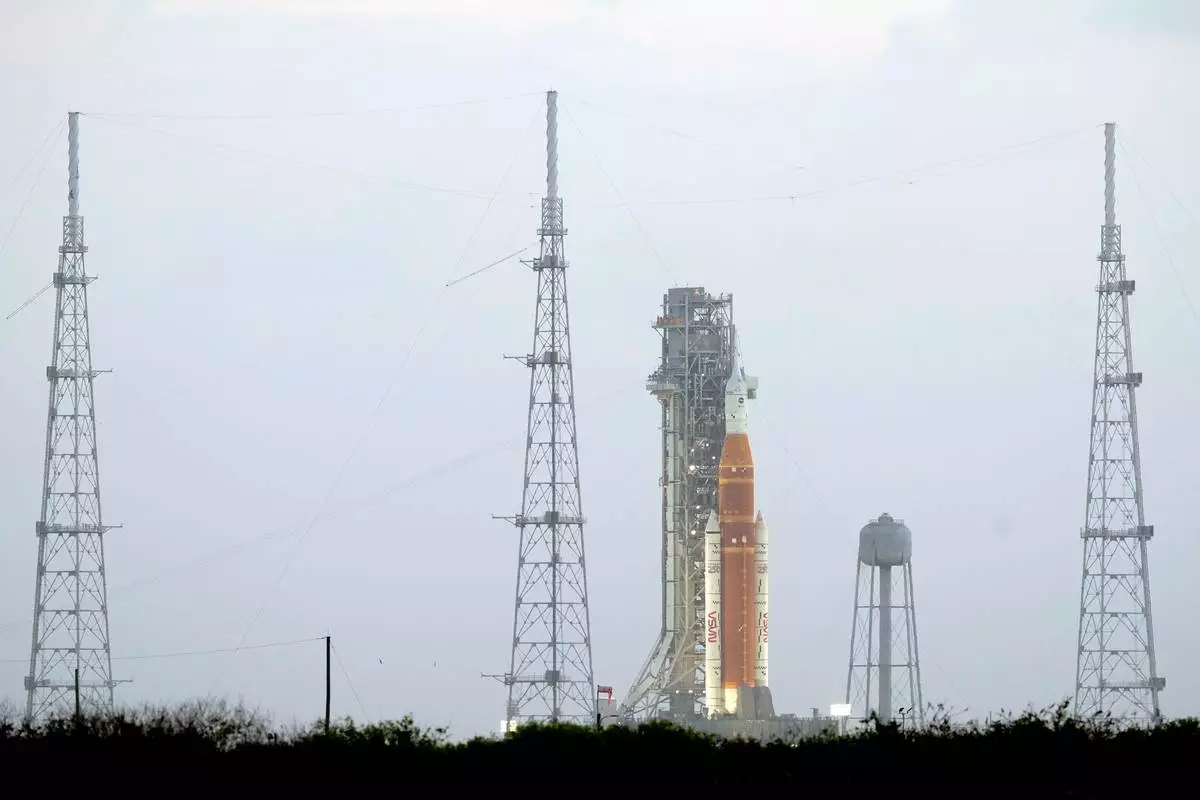
NASA's Artermis II moon rocket sits on Launch Pad 39-B at the Kennedy Space Center hours ahead of planned liftoff Wednesday, April 1, 2026, in Cape Canaveral, Fla. (AP Photo/Chris O'Meara)

NASA's Artermis II moon rocket sits on Launch Pad 39-B at the Kennedy Space Center hours ahead of planned liftoff Wednesday, April 1, 2026, in Cape Canaveral, Fla. (AP Photo/Chris O'Meara)

NASA's Artermis II moon rocket sits on Launch Pad 39-B at the Kennedy Space Center hours ahead of a planned launch attempt Wednesday, April 1, 2026, in Cape Canaveral, Fla. (AP Photo/Chris O'Meara)

NASA's Artermis II moon rocket sits on Launch Pad 39-B at the Kennedy Space Center hours ahead of a planned launch attempt Wednesday, April 1, 2026, in Cape Canaveral, Fla. (AP Photo/Chris O'Meara)

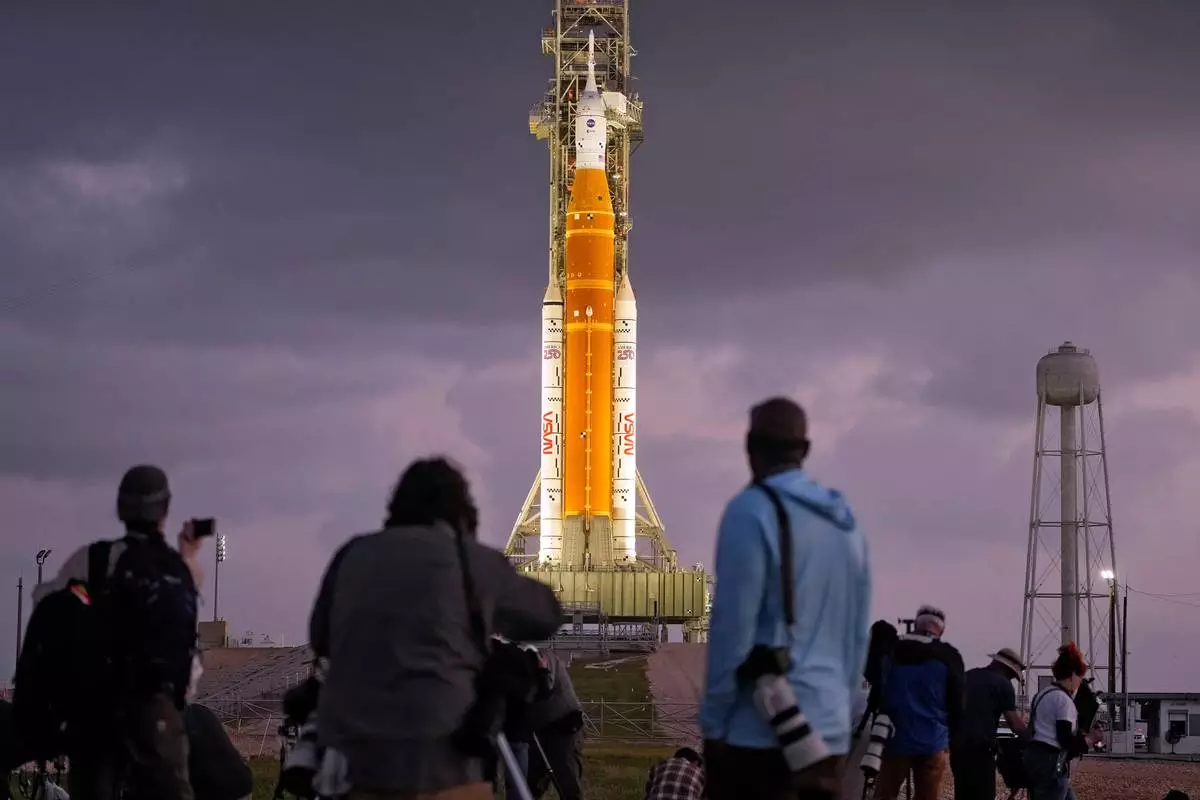
Photographers set up remote cameras near NASA's Artermis II moon rocket on Launch Pad 39-B just before sunrise at the Kennedy Space Center Tuesday, March 31, 2026, in Cape Canaveral, Fla. (AP Photo/Chris O'Meara)

Photographers set up remote cameras near NASA's Artermis II moon rocket on Launch Pad 39-B just before sunrise at the Kennedy Space Center Tuesday, March 31, 2026, in Cape Canaveral, Fla. (AP Photo/Chris O'Meara)

Recommended Articles