WASHINGTON (AP) — Unapproved peptide drugs have become a trendy new hack among wellness influencers, fitness coaches and celebrities, pitched as a way to build muscle, shed pounds and look younger.
Online stores will offer injectable vials for $300 to $600 each. Longevity and wellness clinics offer in-office evaluations and injections, sometimes with membership fees of thousands of dollars per month.
But many of the products have never been extensively studied in humans, raising concerns that they could cause allergic reactions, metabolic problems and other dangerous side effects.
Here’s a closer look at the science, the hype and the potential risks surrounding the trend.
Within the human body, peptides are short chains of amino acids that perform essential functions.
Insulin, for example, controls blood sugar levels and helps break down foods into energy. Likewise the popular weight loss drugs, GLP-1s — short for glucagon-like peptides — are based on a hormone found in the intestines that helps regulate blood sugar.
The Food and Drug Administration has approved both substances as drugs. But there are many more peptides that have never been approved by regulators as safe and effective, though some have shown interesting study results in rodents and other animals.
Synthesized peptides are not new. Some doctors have prescribed them for decades off-label, or for unapproved uses, in patients with gastric ulcers, nervous system disorders and other conditions.
In recent years, peptides have become a focus for wellness gurus and other public figures with large online followings. That’s driven interest in using obscure peptides for unsubstantiated uses like healing injuries, improving complexion and even extending life. Peptides in this group include an alphabet soup of injectable compounds, including BPC-157, thymosin alpha, GHK-Copper and many more. Some are banned by sports regulators as doping substances.
Experts who have studied the field are particularly concerned that some people are combining multiple peptides.
“These influencers are often advocating taking a stack of peptides each month, so it could be two, three, four different peptides,” said Dr. Eric Topol of Scripps Research Translational Institute. “This is really what I consider dangerous.”
Interest in the trend is being amplified by celebrities.
Joe Rogan has repeatedly talked about using BPC-157 to recover from injuries. Jennifer Aniston has talked about using weekly peptide injections to improve her skin and currently serves as a paid spokesperson for a company selling peptide-enriched supplements.
“If any celebrity is using a peptide, and they’re saying this is what worked for me, then of course it’s going to be more mainstream and people are going to be looking into it," said Kay Robins, a clinical nurse and operator of Pure Alchemy Wellness, a clinic outside of San Diego that sells peptide infusions and injections.
Robins says she no longer offers BPC-157 and other peptides that have been targeted by the FDA.
Most of the unproven peptides promoted online are technically being sold illegally.
Any substance that is injected to produce a health benefit or prevent a medical condition is classified as a drug, which cannot be sold without FDA approval.
The agency considers many peptides to be biologics, the most complicated and potentially high-risk type of drugs, requiring extra precautions in their manufacture and storage. In recent years, the agency has added more than two dozen peptides to a list of substances that should not be produced by pharmacies due to safety risks.
Some companies market their peptides as dietary supplements, particularly those sold as pills, gummies or powders.
While dietary supplements are less tightly regulated than drugs, the FDA still requires them to only contain ingredients found on a list of approved substances. Most peptides are not on that list and therefore are ineligible to be sold as supplements.
Experts generally agree that consuming peptides by mouth likely has little or no effect, since they will dissolve in the gut.
Most of the injectable peptides sold in the U.S. are produced by compounding pharmacies, which custom-mix medications that aren’t available from drug manufacturers. Pharmacies are regulated at the state level and are generally not subject to the same scrutiny as companies overseen by FDA.
In recent years, compounding pharmacies have jumped into the market for blockbuster GLP-1 drugs. Under FDA regulations, compounding pharmacies can produce their own versions of a prescription drug when there’s a shortage.
Earlier this year the FDA determined that the shortage of GLP-1s had ended, meaning compounders were expected to halt production. But many have continued making custom versions of the drugs — adding extra ingredients like vitamin B, which they say benefits patients.
“There had never been the monetary incentive to push the envelope of what is legally permissible with compounding before,” said Nathaniel Lacktman, a lawyer specializing in FDA-related issues. “The dollars weren’t there.”
Some of the industry's new production capacity has gone into producing unapproved peptides, such as BPC-157.
The trend recently caught the attention of the FDA, which has added more than two dozen peptides to an interim list of substances that should not be compounded due to safety concerns.
Health Secretary Robert F. Kennedy Jr. is among those who have touted the potential benefits of peptides. He has repeatedly vowed to end “FDA’s war” on peptides, which have become popular among many followers of his Make America Healthy Again movement.
Some of Kennedy’s friends and associates are also prominent marketers of peptides, including self-described “biohacker” Gary Brecka and functional medicine physician and author Dr. Mark Hyman.
Some in the peptide field expect Kennedy to roll back FDA’s restrictions on the industry, which could include releasing a list of peptides that the agency will no longer try to keep off the market.
AP video journalist Javier Arciga contributed to this story from San Diego
The Associated Press Health and Science Department receives support from the Howard Hughes Medical Institute’s Science and Educational Media Group and the Robert Wood Johnson Foundation. The AP is solely responsible for all content.

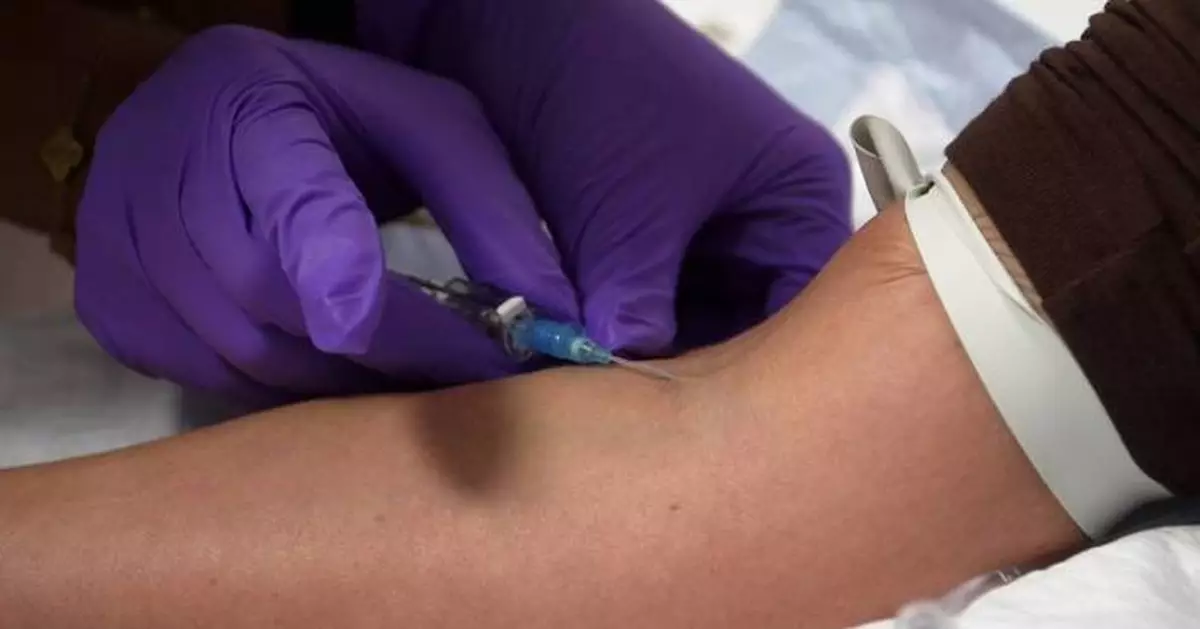
Andrea Steinbrenner receives an IV infusion at Pure Alchemy Wellness, Tuesday, Nov. 11, 2025, in Chula Vista, Calif. (AP Photo/Javier Arciga)
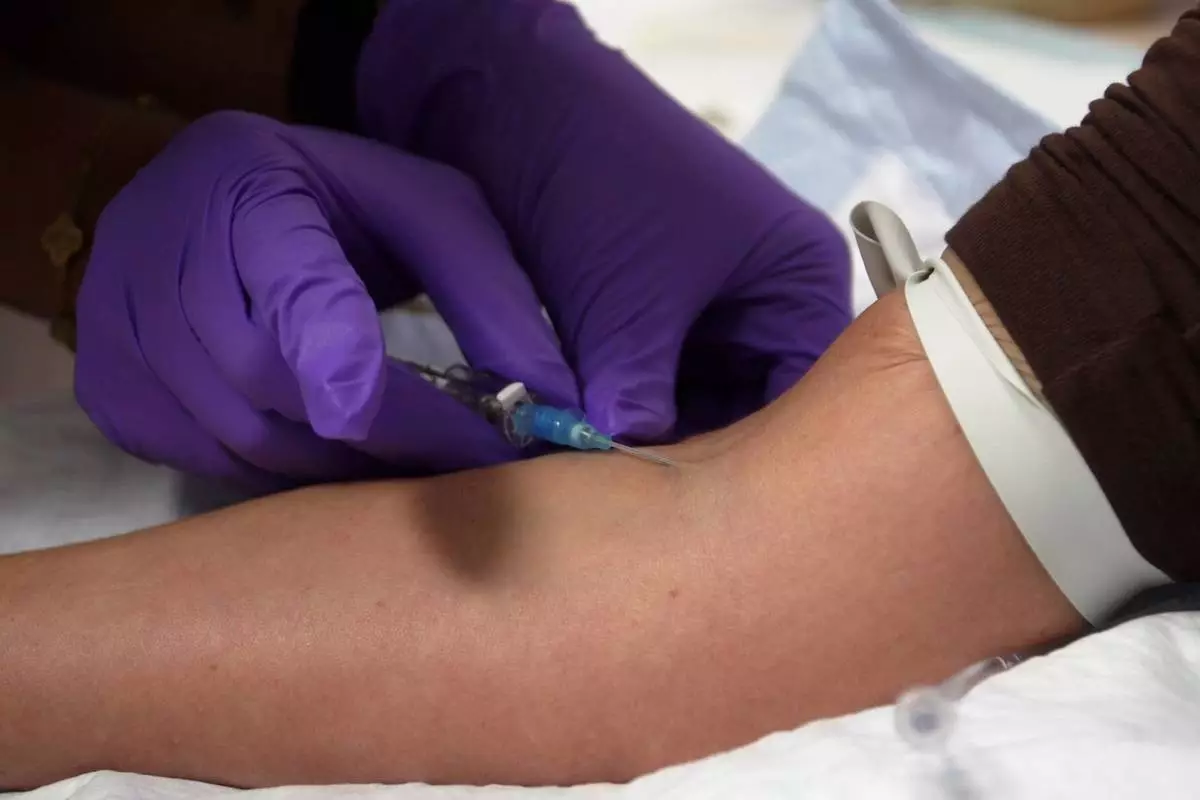
In this image taken from video, an IV infusion is administered at Pure Alchemy Wellness, Tuesday, Nov. 11, 2025, in Chula Vista, Calif. (AP Photo/Javier Arciga)
WASHINGTON (AP) — The Supreme Court is taking up one of the term’s most consequential cases, President Donald Trump’s executive order on birthright citizenship declaring that children born to parents who are in the United States illegally or temporarily are not American citizens, and he was in the courtroom on Wednesday for some of the arguments.
The justices are hearing Trump’s appeal of a lower-court ruling from New Hampshire that struck down the citizenship restrictions, one of several courts that have blocked them. They have not taken effect anywhere in the country.
Trump is the first sitting president to attend oral arguments at the nation’s highest court. He spent just over an hour inside the courtroom, hearing arguments by the government’s lawyer, Solicitor General D. John Sauer. He left shortly after Sauer wrapped up and the plaintiff was invited to present her case.
The case frames another test of Trump's assertions of executive power that defy long-standing precedent for a court that has largely ruled in the president's favor — but with some notable exceptions that Trump has responded to with starkly personal criticisms of the justices. A definitive ruling is expected by early summer.
The birthright citizenship order, which Trump signed the first day of his second term, is part of his Republican administration’s broad immigration crackdown.
Birthright citizenship is the first Trump immigration-related policy to reach the court for a final ruling. The justices previously struck down global tariffs Trump had imposed under an emergency powers law that had never been used that way.
Trump reacted furiously to the late February tariffs decision, saying he was ashamed of the justices who ruled against him and calling them unpatriotic.
He issued a preemptive broadside against the court on Sunday on his Truth Social platform. “Birthright Citizenship is not about rich people from China, and the rest of the World, who want their children, and hundreds of thousands more, FOR PAY, to ridiculously become citizens of the United States of America. It is about the BABIES OF SLAVES!,” the president wrote. “Dumb Judges and Justices will not a great Country make!”
Trump's order would upend the long-standing view that the Constitution’s 14th Amendment, ratified in 1868, and federal law since 1940 confer citizenship on everyone born on American soil, with narrow exceptions for the children of foreign diplomats and those born to a foreign occupying force.
The 14th Amendment was intended to ensure that Black people, including former slaves, had citizenship, though the Citizenship Clause is written more broadly. “All persons born or naturalized in the United States, and subject to the jurisdiction thereof, are citizens of the United States and of the State wherein they reside,” it reads.
In a series of decisions, lower courts have struck down the executive order as illegal, or likely so, under the Constitution and federal law. The decisions have invoked the high court's 1898 ruling in Wong Kim Ark, which held that the U.S.-born child of Chinese nationals was a citizen.
The Trump administration argues that the common view of citizenship is wrong, asserting that children of noncitizens are not “subject to the jurisdiction” of the United States and therefore are not entitled to citizenship.
The court should use the case to set straight “long-enduring misconceptions about the Constitution’s meaning,” wrote Sauer, the solicitor general.
No court has accepted that argument, and lawyers for pregnant women whose children would be affected by the order said the Supreme Court should not be the first to do so.
“We have the president of the United States trying to radically reinterpret the definition of American citizenship,” said Cecillia Wang, the American Civil Liberties Union legal director who is facing off against Sauer at the Supreme Court.
More than one-quarter of a million babies born in the U.S. each year would be affected by the executive order, according to research by the Migration Policy Institute and Pennsylvania State University’s Population Research Institute.
While Trump has largely focused on illegal immigration in his rhetoric and actions, the birthright restrictions also would apply to people who are legally in the United States, including students and applicants for green cards, or permanent resident status.
Associated Press writer Darlene Superville contributed to this report.
Follow the AP’s coverage of the U.S. Supreme Court at https://apnews.com/hub/us-supreme-court.
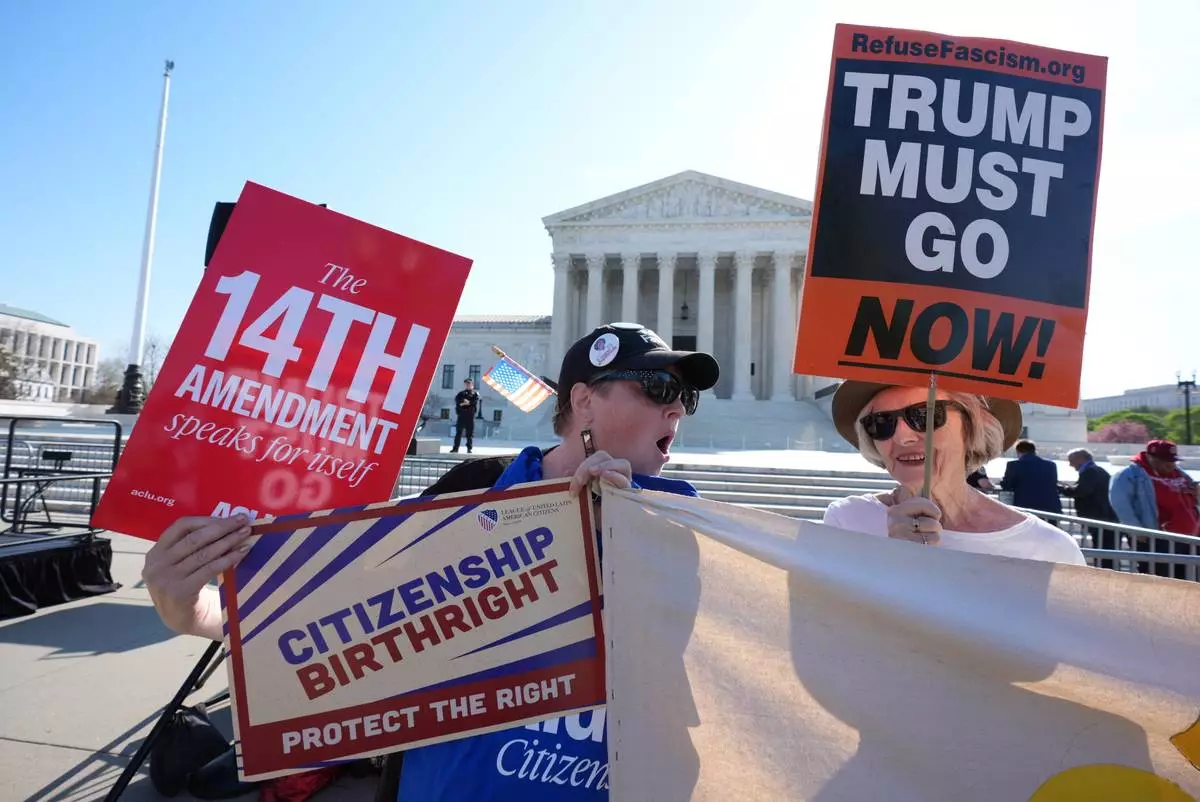
Pro and anti-Trump demonstrators rally outside the U.S. Supreme Court, before justices hear oral arguments on whether President Donald Trump can deny citizenship to children born to parents who are in the United States illegally or temporarily, on Capitol Hill, in Washington, Wednesday, April 1, 2026. (AP Photo/J. Scott Applewhite)
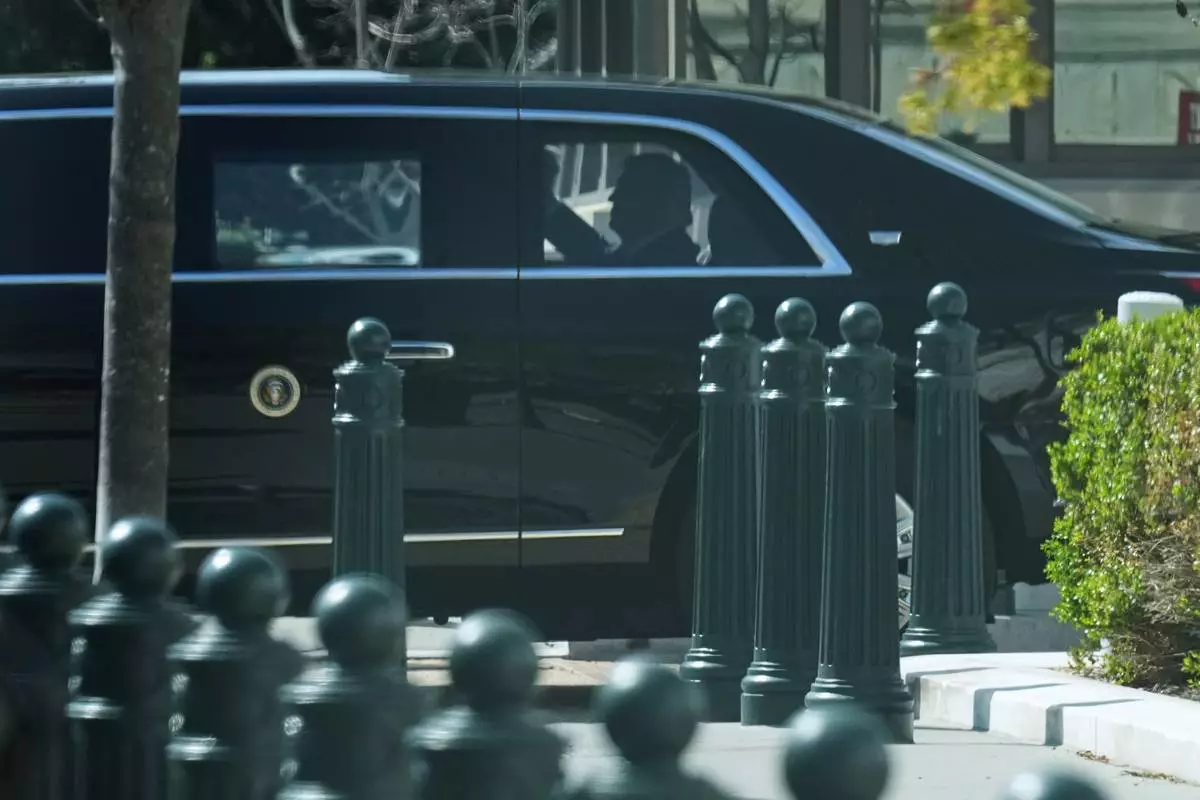
President Donald Trump leaves the U.S. Supreme Court, Wednesday, April 1, 2026, in Washington. (AP Photo/Mark Schiefelbein)

President Donald Trump's motorcade arrives at the U.S. Supreme Court, Wednesday, April 1, 2026, in Washington. (AP Photo/Tom Brenner)
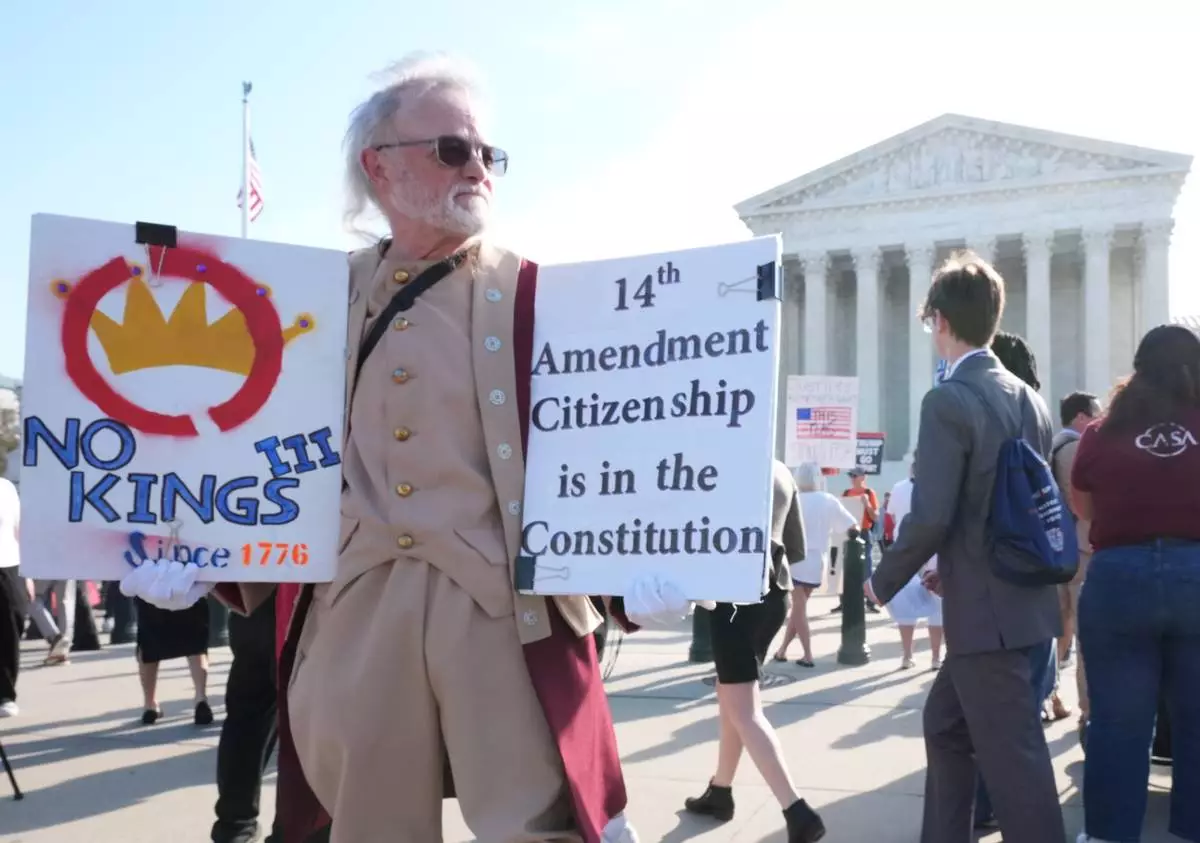
Pro and anti-Trump demonstrators rally outside the U.S. Supreme Court, before justices hear oral arguments on whether President Donald Trump can deny citizenship to children born to parents who are in the United States illegally or temporarily, on Capitol Hill, in Washington, Wednesday, April 1, 2026. (AP Photo/J. Scott Applewhite)

President Donald Trump's motorcade arrives at the U.S. Supreme Court, Wednesday, April 1, 2026, in Washington. (AP Photo/Tom Brenner)
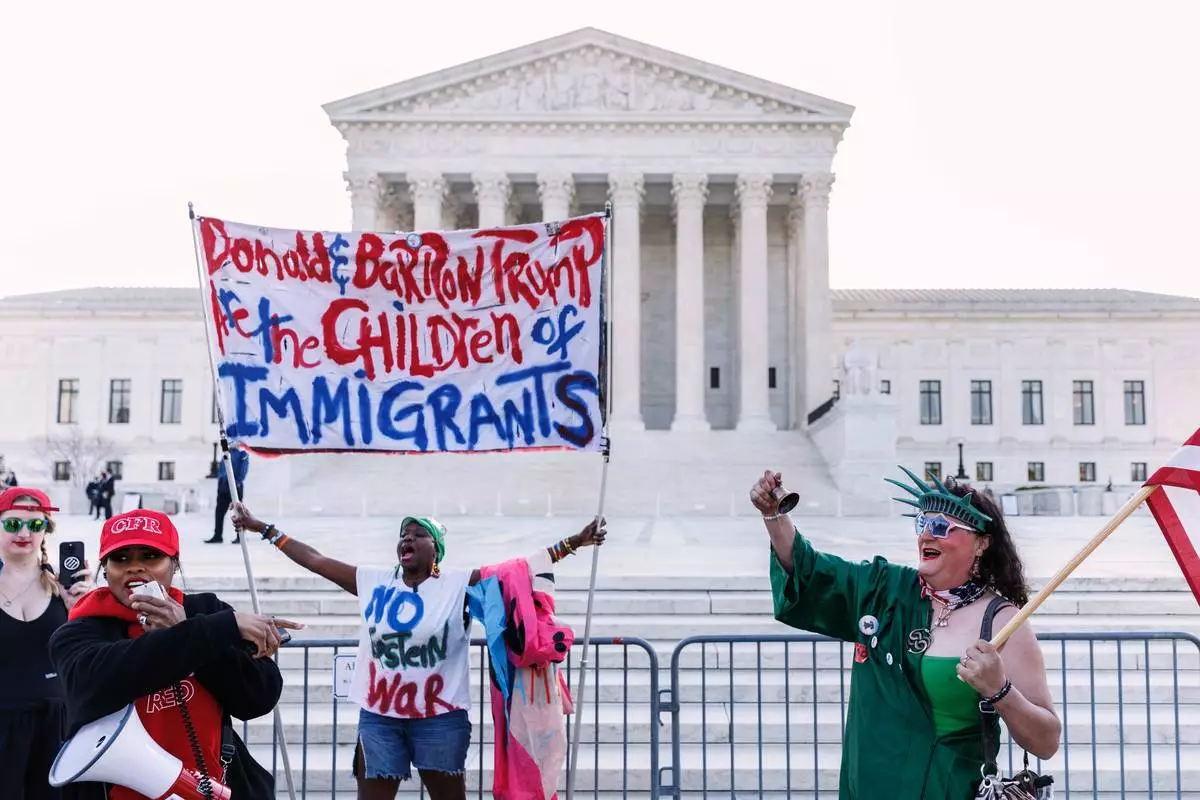
Demonstrators holding opposing views verbally engage ahead of President Donald Trump's arrival at the U.S. Supreme Court, Wednesday, April 1, 2026, in Washington. (AP Photo/Tom Brenner)
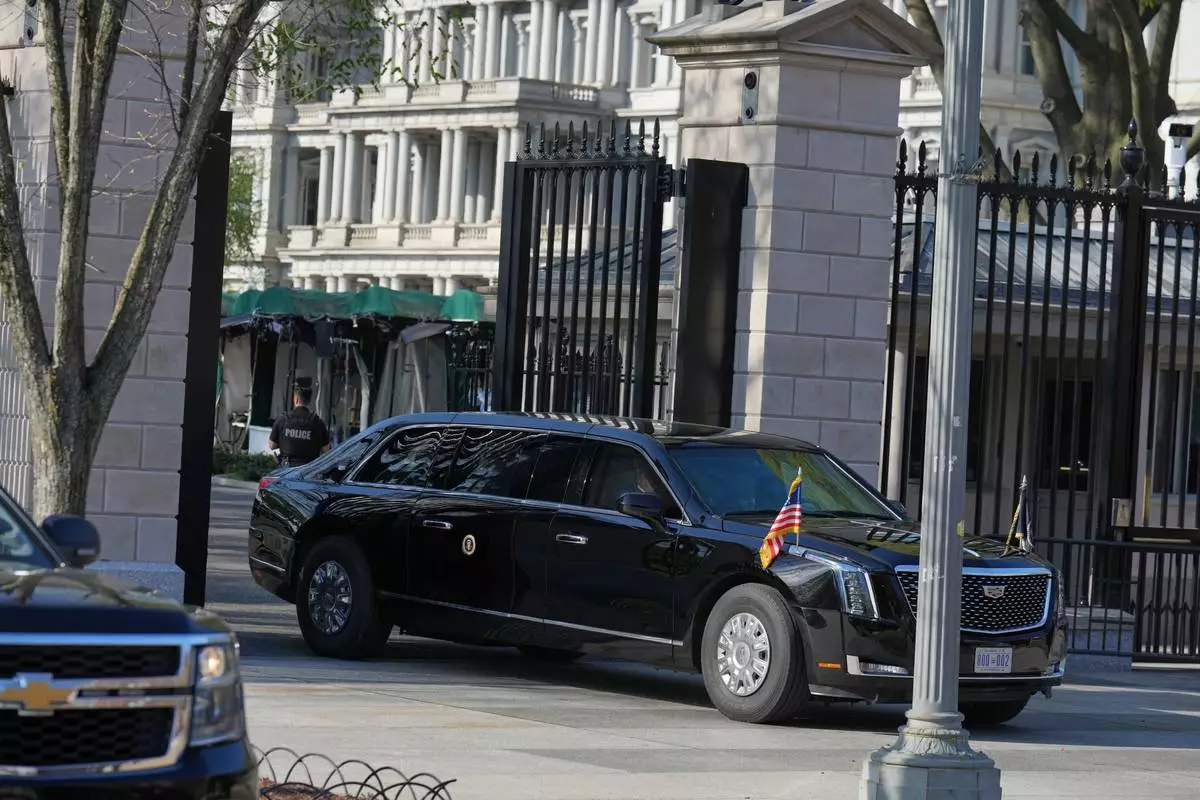
President Donald Trump's limo exits the White House en route to the Supreme Court, Wednesday, April 1, 2026, in Washington. (AP Photo/Mark Schiefelbein)
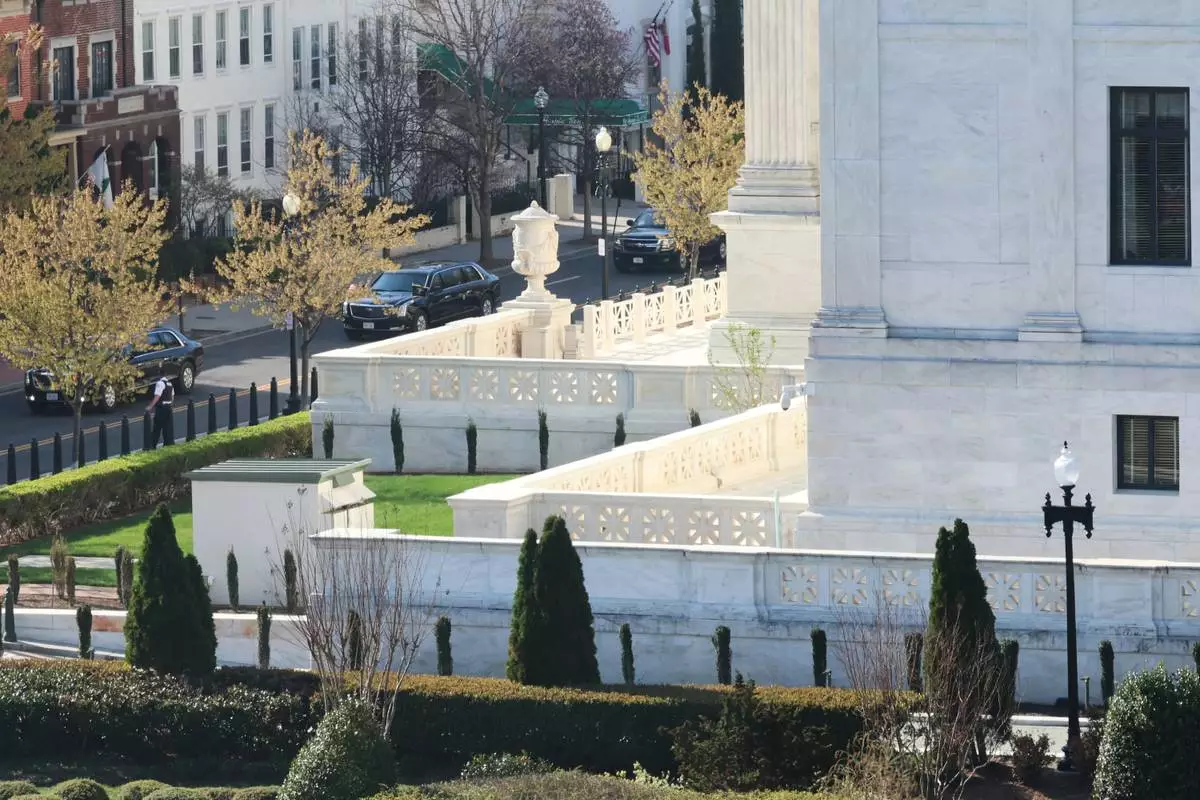
President Donald Trump's motorcade arrives at the U.S. Supreme Court, Wednesday, April 1, 2026, in Washington. (AP Photo/Tom Brenner)

Pro and anti-Trump demonstrators rally outside the U.S. Supreme Court, before justices hear oral arguments on whether President Donald Trump can deny citizenship to children born to parents who are in the United States illegally or temporarily, on Capitol Hill, in Washington, Wednesday, April 1, 2026. (AP Photo/J. Scott Applewhite)
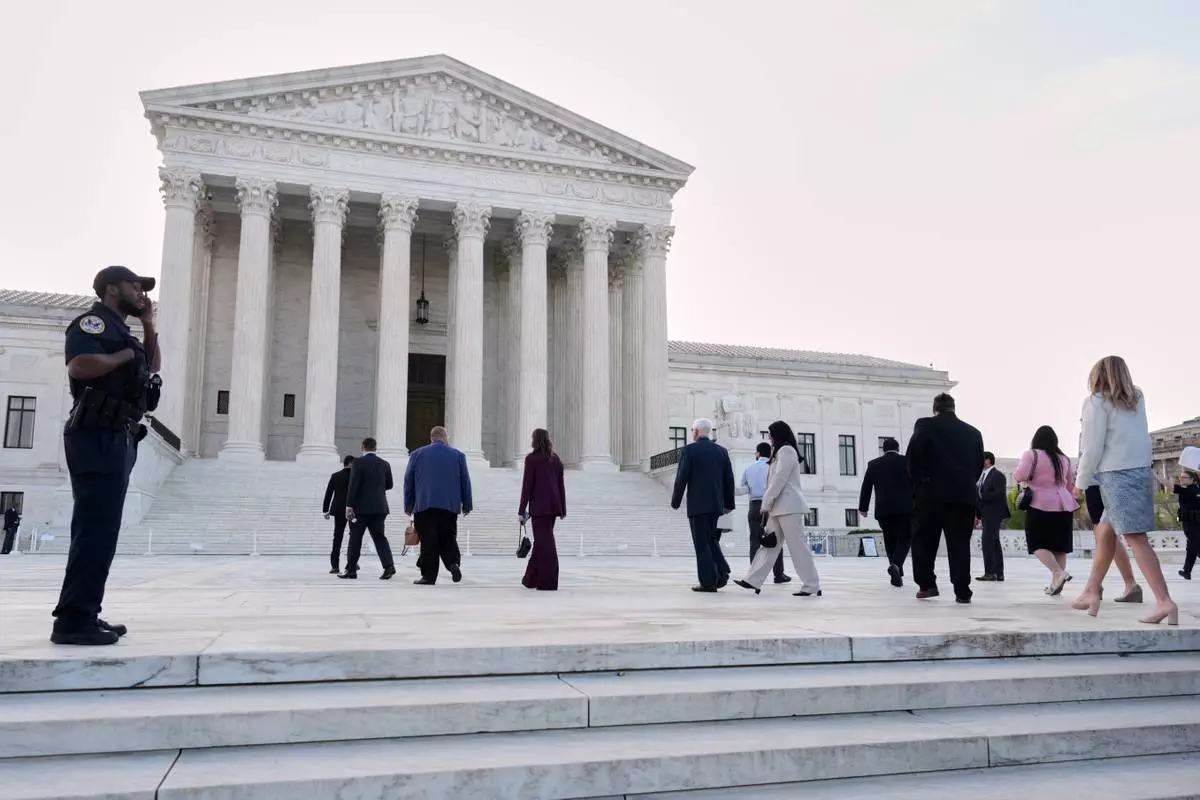
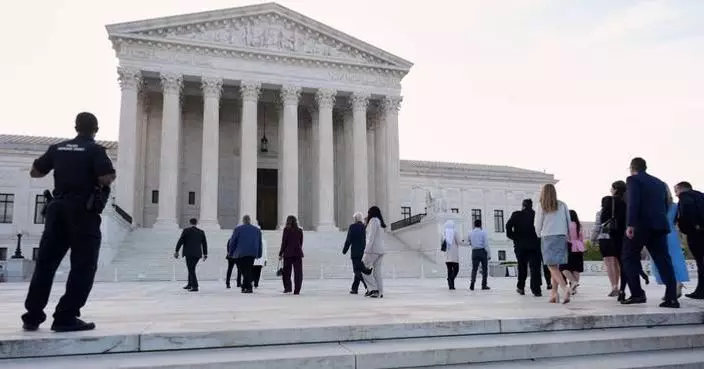
People arrive to walk inside the U.S. Supreme Court, on Capitol Hill in Washington, Wednesday, April 1, 2026. The Supreme Court justices will hear oral arguments today on whether President Donald Trump can deny citizenship to children born to parents who are in the United States illegally or temporarily. (AP Photo/J. Scott Applewhite)
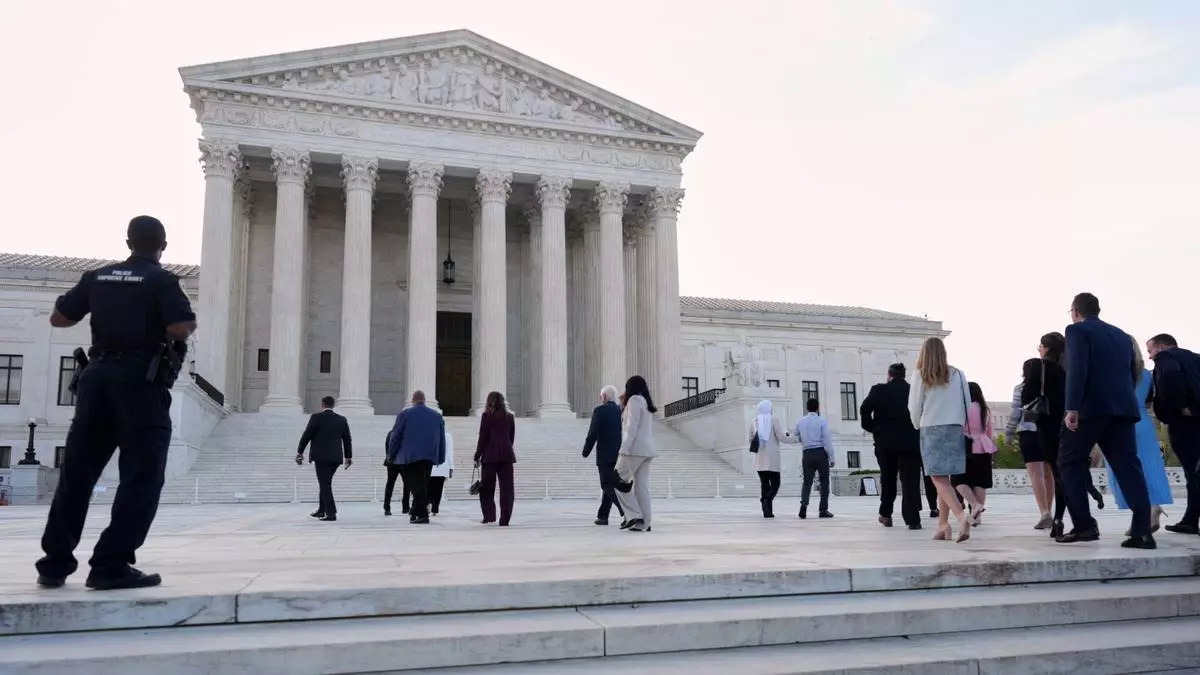
People arrive to walk inside the U.S. Supreme Court, on Capitol Hill in Washington, Wednesday, April 1, 2026. The Supreme Court justices will hear oral arguments today on whether President Donald Trump can deny citizenship to children born to parents who are in the United States illegally or temporarily. (AP Photo/J. Scott Applewhite)
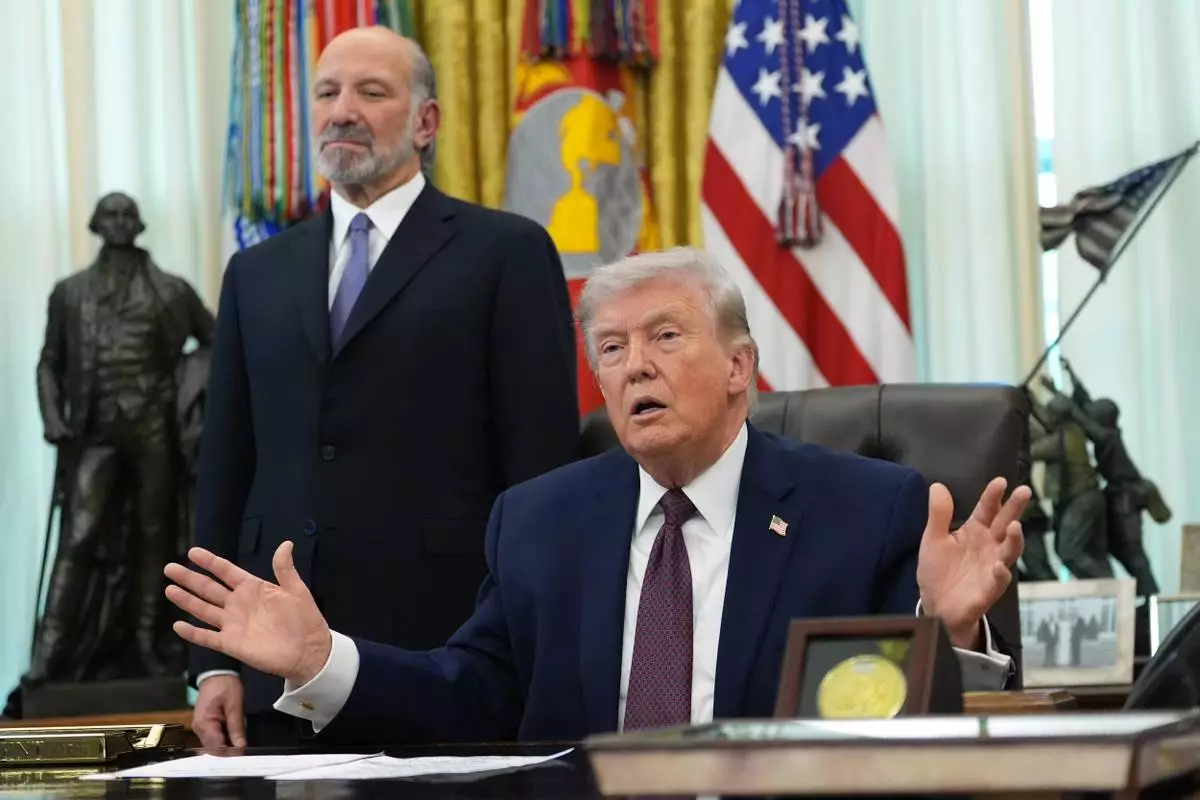
President Donald Trump answers questions from reporters after signing an executive order in the Oval Office of the White House Tuesday, March 31, 2026, in Washington, as Commerce Secretary Howard Lutnick listens. (AP Photo/Alex Brandon)
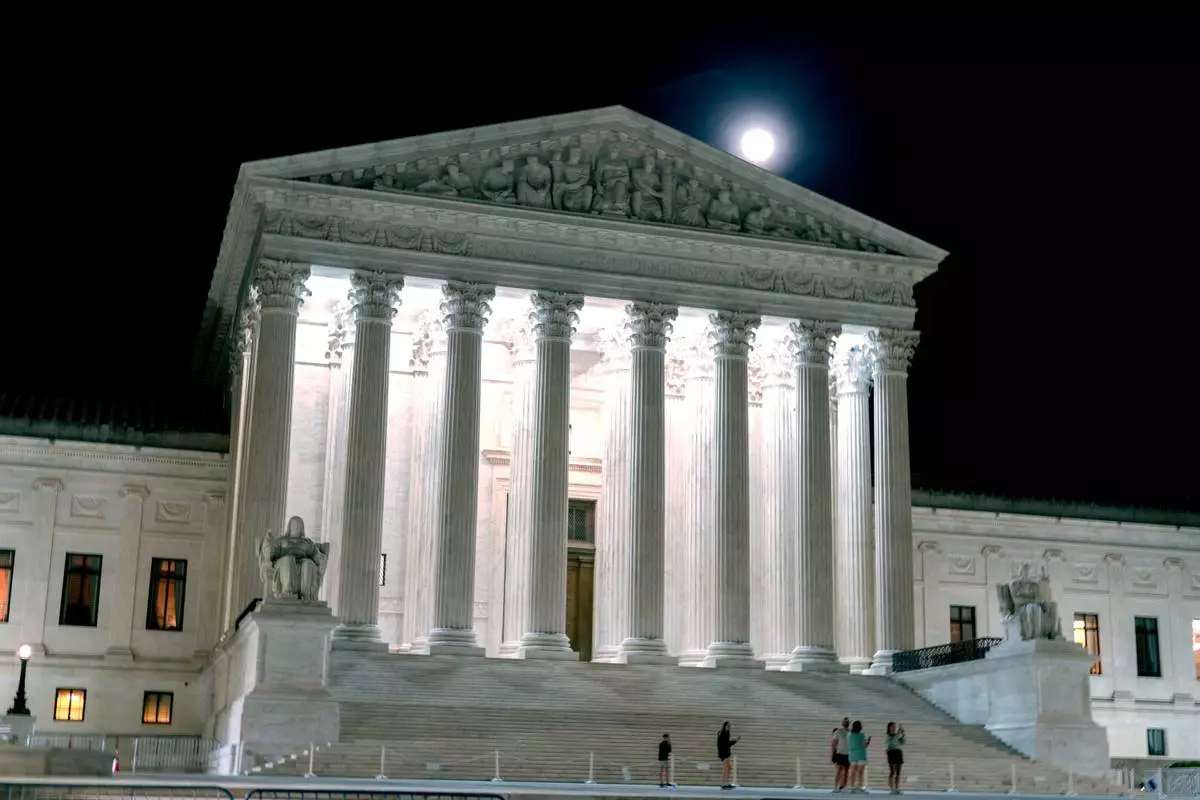
The U.S. Supreme Court is seen as the moon rises Tuesday, March 31, 2026, in Washington. (AP Photo/Jose Luis Magana)