Analysts in Latin America have accused the United States of long-standing efforts to overthrow Venezuela's government with a shift from direct coups to prolonged destabilization and sweeping sanctions, saying the true motives stem from Washington's greed for Venezuela's vast oil reserves and ideological interests.
Such pressure campaign continues to this day and fuels heightened tensions across the Caribbean.
Washington's tactics towards Venezuela date back to as early as 1999, when late President Hugo Chavez took office. His policies were viewed by Washington as a challenge to U.S. energy dominance, geopolitical interests and ideology, directly confronting what analysts call the United States' traditional hegemony in Latin America.
In 2002, the United States was widely believed to have backed a coup attempt targeting Venezuela's leftist government, though the operation ultimately failed.
The coup erupted on April 11, with opposition forces detaining then President Chavez. In response, thousands of Chavez's supporters rallied at Llaguno Bridge in downtown Caracas, vowing to resist external interference and defend national sovereignty.
Chavez returned to office within 48 hours, marking the end of the coup but the beginning of a prolonged confrontation between Washington and Caracas.
The Venezuelan government maintained that the United States was aware of the plot in advance and enabled it by supporting opposition groups through diplomatic channels, media resources and funding.
During the coup, the U.S. government swiftly recognized the short-lived de facto authorities, a step researchers described as a textbook example of interfering in another country's internal affairs.
Multiple studies found that the so-called democracy-promotion agencies in the U.S. funnel millions of dollars annually to the Venezuelan opposition organization around that time.
Since the failed coup, Washington's heavy-handed interference in the Latin American country has become its standard practice.
In 2015, the Obama administration laid the groundwork by designating Venezuela an "unusual and extraordinary threat" to U.S. national security, establishing the legal framework for wide-ranging sanctions.
In 2017, the Trump administration expanded restrictive measures by barring the Venezuelan government and its state oil company from U.S. financial markets, and in 2019 imposed direct sanctions on the country's oil exports.
That same year, Washington recognized Venezuelan opposition leader Juan Guaido as "interim president" and transferred control of certain Venezuelan overseas assets to his camp, a decision experts say underscored the political nature of the U.S. pressure campaign.
A Venezuelan expert on international affairs said that after years of sanctions and political coercion, the U.S. objective remains unchanged, that is to topple the Venezuelan government.
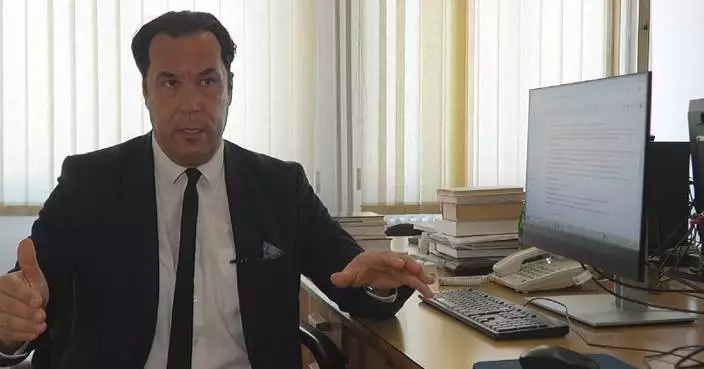
"In the case of Venezuela, the United States employed multiple forms of intervention, including attacks on the power industry, attacks on the energy industry, attempts to divide the Venezuelan armed forces, attempts to assassinate President [Nicolas] Maduro, and the coup against former President Chavez. Therefore, we have already endured 26 years of pressure and destruction simply because we are trying to build a sovereign and independent development model, which goes against the wishes of the United States," said Rodriguez Gelfenstein.
Washington's motives go far beyond the political issue, according to Marcos Cordeiro Pires, a scholar at the São Paulo State University (UNESP) in Brazil.
"The so-called 'war on drugs' is nothing but an excuse, not only to put pressure on Venezuela but also to justify regime change and the overthrow of President Maduro. Its real objective is to topple the Venezuelan government. Beyond ideological factors, the core issue is the pursuit of natural resources, as Venezuela holds the largest known oil reserves in the world," he said.
Another Venezuelan political analyst, Fernando Rivero, recalled that even the 2002 coup itself bore clear signs of U.S. involvement.
"Both domestic and international observers saw that when the coup took place in April 2022, U.S. vessels appeared near the Venezuelan coast. Therefore, the United States, with its interventionist policy, indeed took part in that coup. Since Chavez assumed the presidency, especially after the failure of the coup in April 2002, and the oil strike from late 2002 to 2003, the United States has exerted political and diplomatic pressure on the Venezuelan government because Venezuela follows an independent policy line," Rivero said.
Latin American political observers expose true motives behind U.S. intervention in Venezuela
Latin American political observers expose true motives behind U.S. intervention in Venezuela
Latin American political observers expose true motives behind U.S. intervention in Venezuela