Skip to Content Facebook Feature Image

Daily crossings through Strait of Hormuz drop to 7 vessels: Kpler data

China

China

China

Daily crossings through Strait of Hormuz drop to 7 vessels: Kpler data

2026-05-02 21:29 Last Updated At:22:37

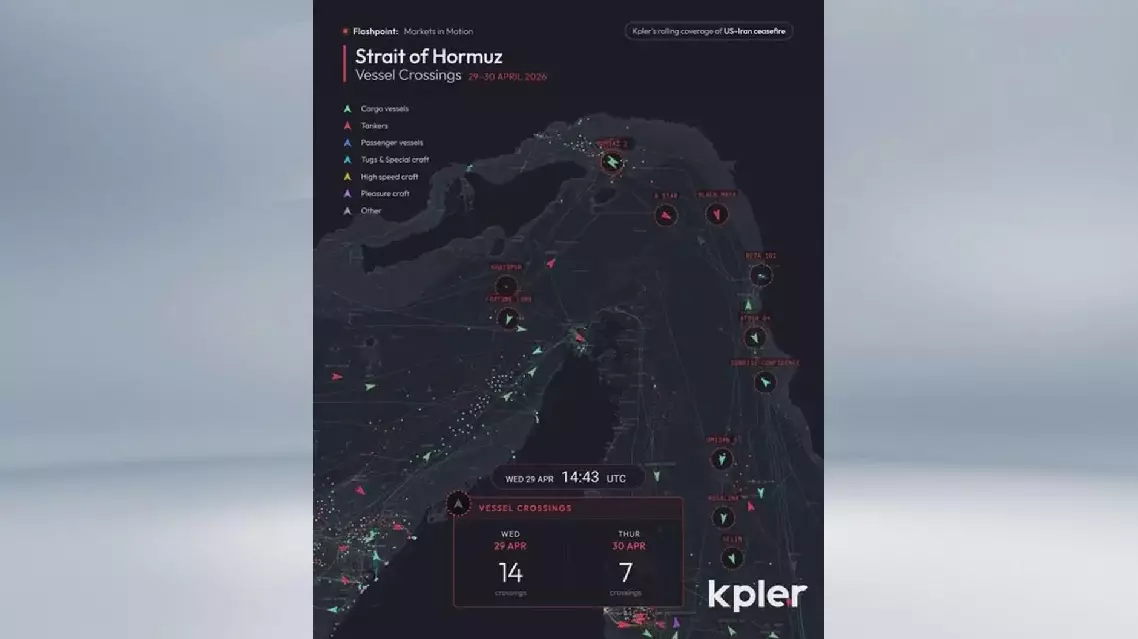
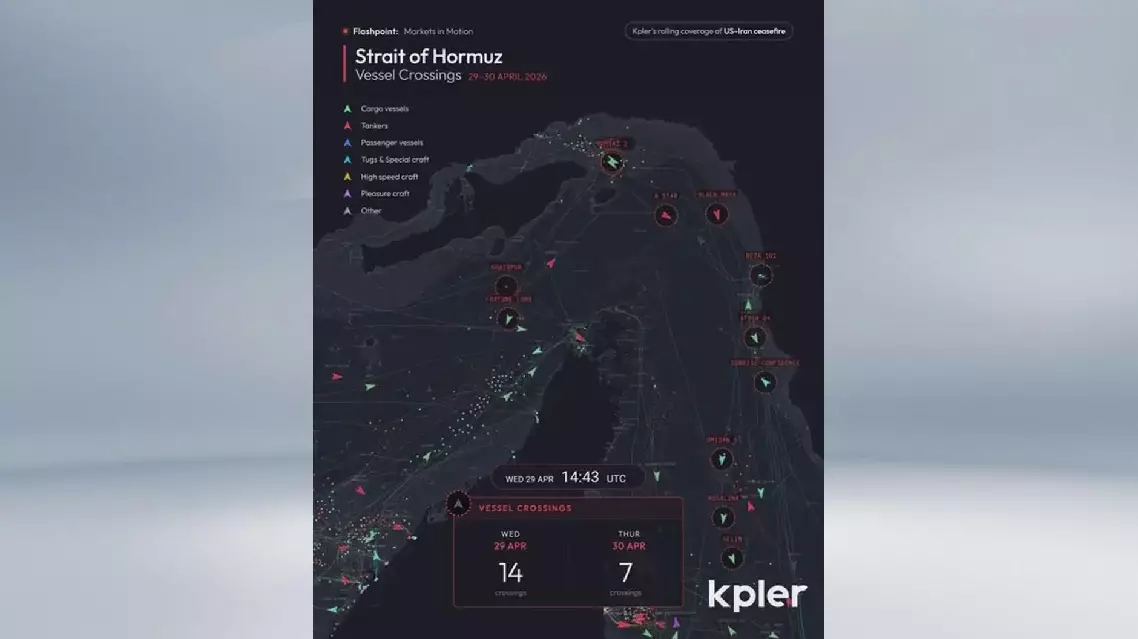
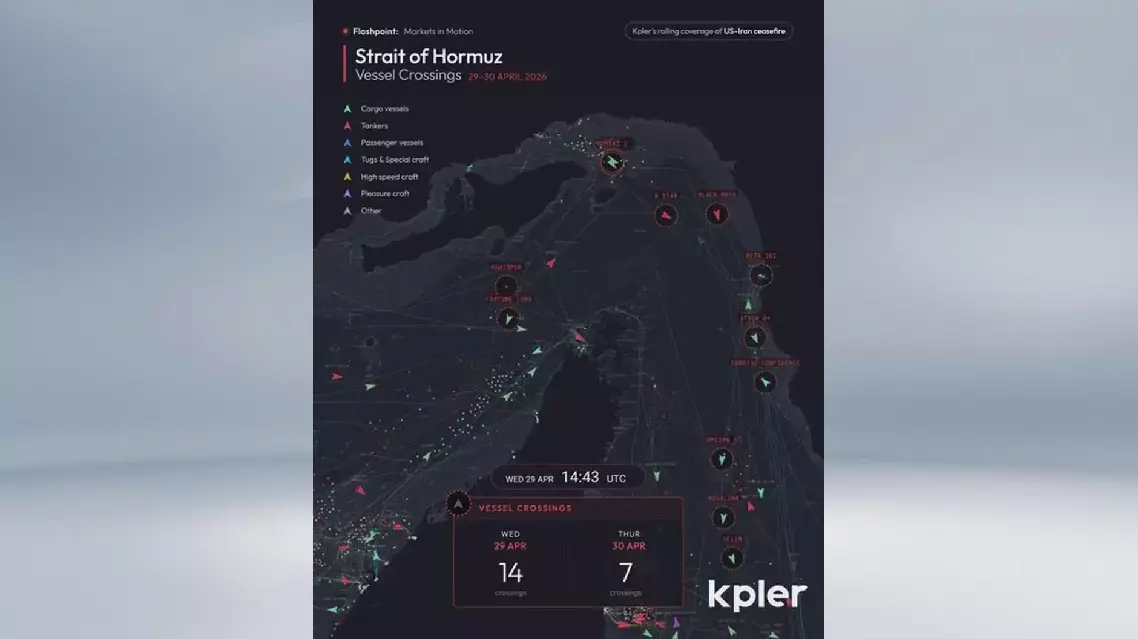
Maritime traffic through the Strait of Hormuz declined sharply this week, with daily transits falling to just seven vessels on Thursday, half the volume recorded the day before, Belgian shipping analytics firm Kpler said in a social media update on Friday.

Of the seven vessels, four were outbound from the Persian Gulf and three inbound. Three of the ships were identified as having links to Iran, Kpler noted.

Meanwhile, the U.S. Department of Treasury warned Friday that any shippers paying tolls to Iran for passage through the strategic waterway are at risk of punitive sanctions.

The Office of Foreign Assets Control (OFAC) under the department said the United States is aware of "Iranian threats to shipping" and demands for payments to receive safe passage through the strait, and the demands may include several payment options, including fiat currency, digital assets, offsets, informal swaps, or nominally charitable donations made to the Iranian Red Crescent Society.

"OFAC is issuing this alert to warn U.S. and non-U.S. persons about the sanctions risks of making these payments to, or soliciting guarantees from, the Iranian regime for safe passage," an OFAC advisory said. "These risks exist regardless of payment method."

The Strait of Hormuz handles roughly 20 percent of the world's seaborne oil flows. Iran tightened its grip on the vital waterway after Israel and the United States launched their joint strikes on Iran on Feb. 28. The U.S. imposed a naval blockade targeting ships going to and from Iran.
Daily crossings through Strait of Hormuz drop to 7 vessels: Kpler data
Daily crossings through Strait of Hormuz drop to 7 vessels: Kpler data
Daily crossings through Strait of Hormuz drop to 7 vessels: Kpler data

Daily crossings through Strait of Hormuz drop to 7 vessels: Kpler data

Daily crossings through Strait of Hormuz drop to 7 vessels: Kpler data
Daily crossings through Strait of Hormuz drop to 7 vessels: Kpler data

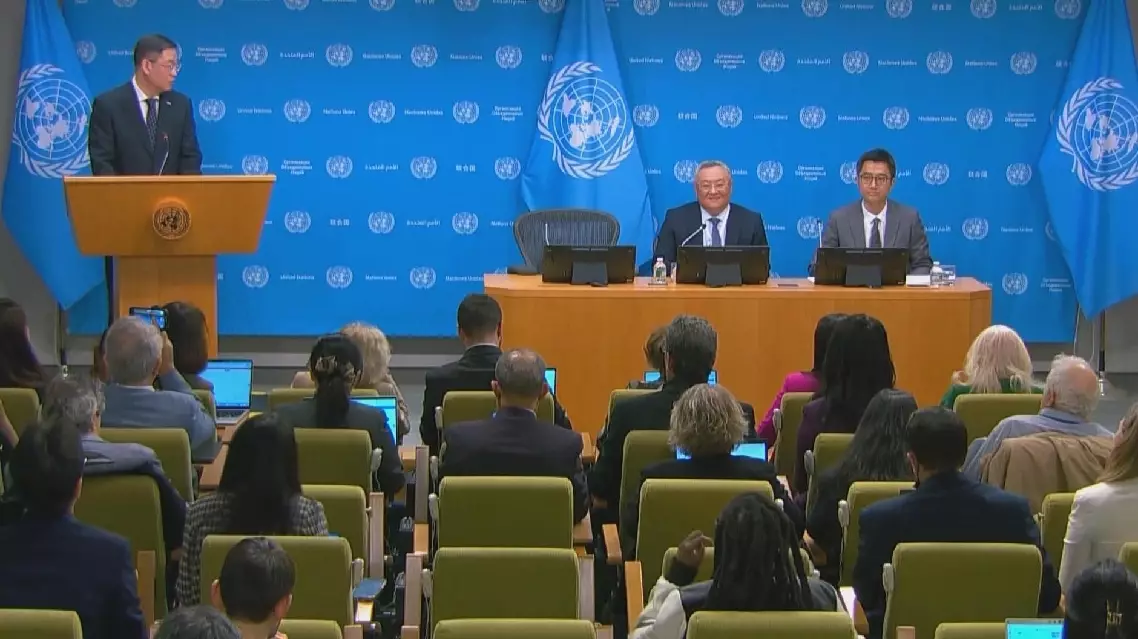
With China assuming the rotating presidency on Friday, the United Nations Security Council will focus its work in May on revitalizing the authority of the UN Charter and the role of the United Nations, while advancing the political settlement of the Middle East issue, and promoting the stability and development of African countries.

Briefing reporters on the Security Council's priorities for May, Fu Cong, China's permanent representative to the United Nations and president of the Security Council for May, made the statement on Friday.

In recent years, the world has been witnessing growing turbulence in the international landscape, with conflicts increasing, divisions widening, and the multilateral system, along with international law, under considerable strain, he said, urging the international community to take urgent actions to uphold the authority of the UN Charter and strengthen the role of the United Nations to prevent the world from "relapsing into the jungle" and "to save succeeding generations from the scourge of war".

In this context, Fu said, the Security Council will convene a high-level open debate in May under the theme of upholding the purposes and the principles of the UN Charter and strengthening the UN-centered international system.

Security Council to focus on UN's role, Middle East, Africa in May: Chinese envoy

Security Council to focus on UN's role, Middle East, Africa in May: Chinese envoy

Recommended Articles