A dazzling array of multi-talented robot assistants took center stage at the 9th Digital China Summit in Fuzhou City, southeast China's Fujian Province, covering a wide spectrum of daily life and industrial scenarios.
The summit, which kicked off on Wednesday and opened to the public on Friday, features more than 6,000 technologies, products, and application projects, with robot assistants among the most captivating exhibits.
Replacing human volunteers and performers, domestically developed full-scene robots can now greet and guide guests, dance, and even write calligraphy. Powered by rapidly advancing embodied intelligence, these machines are making the leap from the laboratory to reality.
"From the bottom-level model architecture to upper-level multimodal perception fusion, motion control algorithms, and reinforcement learning, all these technological building blocks come together to form our full-stack technical framework," said exhibitor Li Xu.
In addition to humanoids, robot dogs are emerging as ideal babysitters and guide dogs. At the exhibition, a smart robotic dog, after being stroked by a child, responded much like a real pet, barking and crouching playfully and showing affection. With voice commands, it can also perform backflips.
"Focused on home-based care for the elderly and children, we have deployed a dedicated intelligent large model on the cloud and added tactile sensing technologies such as an electronic skin suit. It can also serve as a guide dog," said exhibitor Xing Sijia.
Beyond daily life, robots are also clocking in at an accelerating pace across the industrial sector. On the exhibition floor, robot "employees" underwent pre-job training, precisely completing a full sequence of tasks on a simulated production line, from picking materials and manufacturing to transport.
"After collecting the data, we combine it with the data from our original manual demonstrations to form a comprehensive dataset, which we then feed into the model for training," said exhibitor Fan Ji'an.
Some participating companies also demonstrated the training process for embodied Intelligence robots to handle non-standardized production tasks, ranging from sorting diverse industrial parts and taking on packaging tasks.
"In sectors such as automobile manufacturing, 3C electronics, and food processing, there is massive demand for embodied Intelligence robots. So far this year, we have seen at least a 30 percent increase in robot orders compared to last year," said exhibitor Lai Jianqiang.
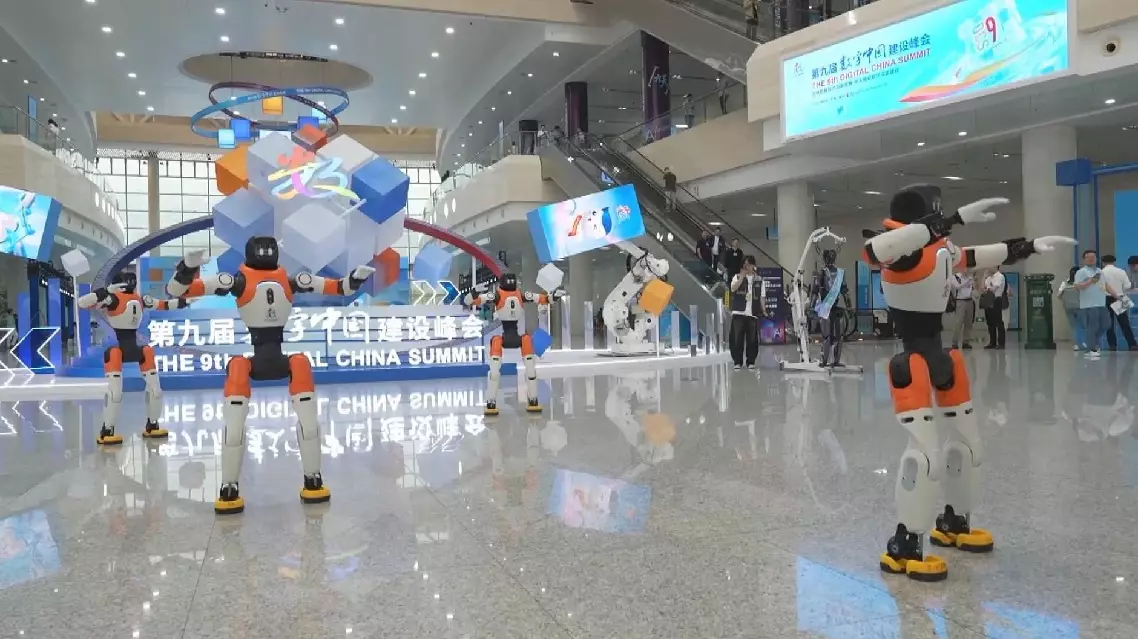
Versatile robot assistants steal the show at Digital China Summit in Fuzhou
China's latest medical science and technology is drawing attention for its role in reshaping patient care from diagnosis to surgery and to rehabilitation at the ongoing third phase of the 139th China Import and Export Fair, or Canton Fair, in Guangzhou, capital of south China's Guangdong Province.
The five-day segment of the world's largest trade fair opened on Friday, showcasing frontier achievements in fields such as smart healthcare, functional textiles, and green materials, with an exhibition area of 515,000 square meters and 25,000 booths. Walking through the exhibition, visitors see that medical innovation is no longer confined to technical parameters. It is being designed to accompany patients through every stage of treatment.
In the exhibition hall, surgical robots allow doctors to operate with clear 3D vision and flexible wrist-like instruments, while requiring only minimal network support.
According to exhibitors, in some cases, a simple mobile connection is enough to keep the system running. This lowers deployment thresholds and makes advanced surgery more accessible.
Earlier this year, one such robot enabled a doctor in Chengdu, capital of the southwestern province of Sichuan, to complete a gastric surgery for a patient in Brazil, spanning half the globe.
High-tech rehabilitation devices are emerging among the most engaging exhibits.
Mobile robots capable of navigating stairs and slopes, along with brain-machine interface exoskeletons that help stroke patients regain mobility, show how innovation is being applied to everyday needs.
These practical devices have attracted strong interest from international buyers, especially those from the United States, Europe and Mexico.
Artificial intelligence is extending its role in medical imaging.
In the exhibition, large-scale models on display can analyze X-rays and CT scans to detect conditions ranging from kidney stones to cardiovascular blockages.
Exhibitors say the technology can help transfer the expertise of senior doctors from top-tier hospitals to community clinics, helping improve access to quality healthcare nationwide.
Since June last year, the system has already been used in multiple hospitals, which can help find problems in 32 human organs and produce 92 auxiliary models to support doctors in screening and diagnosis, according to exhibitors.
Established in 1957, the Canton Fair is held twice a year in Guangzhou. It is the longest-running of several comprehensive international trade events in China, and has been hailed as the barometer of the country's foreign trade.
The first phase of the 139th edition of the Canton Fair ran from April 15 to 19, followed by the second phase from April 23 to 27.
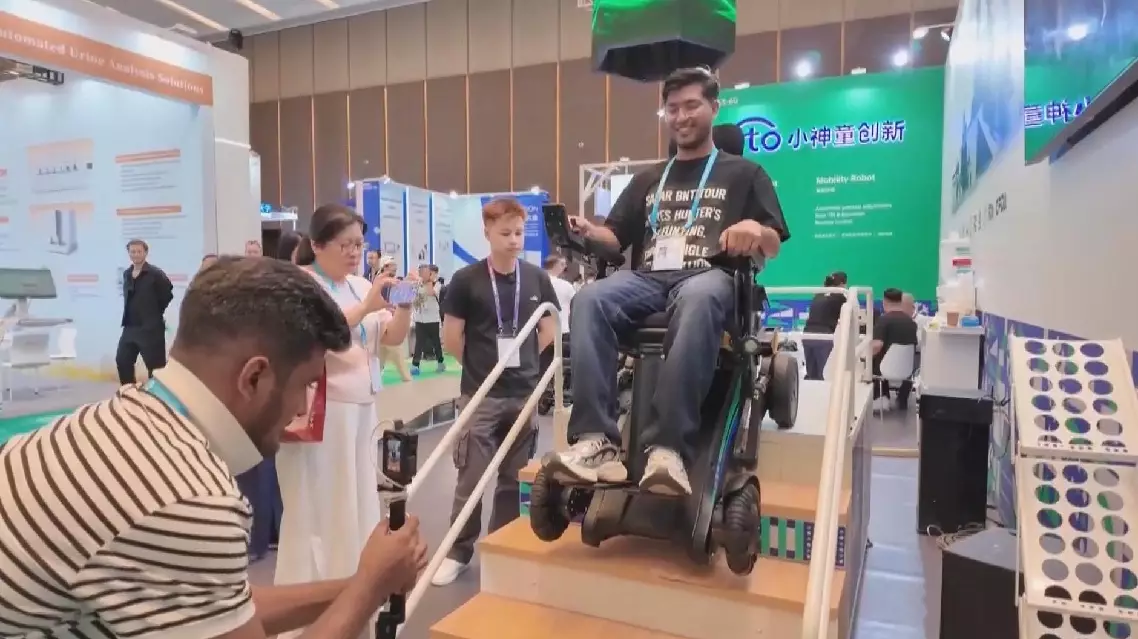
Smart healthcare highlights innovation at Canton Fair