Skip to Content Facebook Feature Image

Japan PM’s Taiwan remarks signal aggression toward China, revive militarist ambitions: scholar

China

China

China

Japan PM’s Taiwan remarks signal aggression toward China, revive militarist ambitions: scholar

2025-11-16 02:07 Last Updated At:04:17

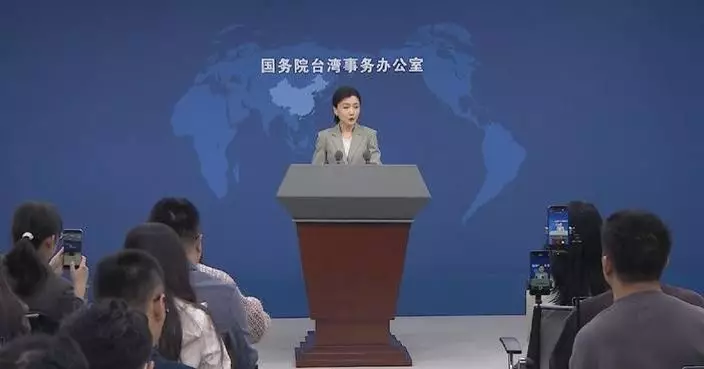
Japanese Prime Minister Sanae Takaichi’s erroneous remarks regarding China’s Taiwan region represent an act of aggression toward China and expose an ambition to revive Japanese militarism, according to a scholar.

During a hearing in the Diet, Japan’s legislature, on Nov 7, Takaichi claimed that a Taiwan emergency involving the use of military vessels and military force by China’s central government could constitute a “survival-threatening situation” for Japan.

This marks the first time since Japan's surrender in 1945 that a Japanese leader has openly linked a Taiwan scenario to the exercise of self-defense, drawing strong condemnation from China.

The National Defense Ministry said the remarks challenge the postwar international order and send very wrong signals to separatist forces in Taiwan.

Commenting on Takaichi’s remarks, Liu Kuangyu, an associate research fellow at the Institute of Taiwan Studies under the Chinese Academy of Social Sciences, said her statements serve several purposes.

"Takaichi's remarks at this juncture serve three primary objectives. First, demonstrating an extreme hardline stance of 'pro-Taiwan and anti-China,' continuing to court and incite Japan's right-wing populists, amplifying domestic anti-China sentiment. Second, exploiting the hype surrounding intervention in the Taiwan Strait to advance the lifting of restrictions and expansion of Japan's collective self-defense rights, as well as the long-term political ambition to breach the Peace Constitution and revive Japanese militarism," he said.

Takaichi’s remarks have also drawn criticism from media in the Republic of Korea and from several Japanese outlets, including the Asahi Shimbun and the Okinawa Times.

Liu said such remarks are, in nature, a war threat against the Chinese nation.

"On one hand, Japan bears an undeniable historical responsibility regarding the Taiwan question. Far from truly repenting or reflecting on its past, Japan now seeks to actually replay the Lugou Bridge Invasion, clamoring for aggression against China under the flimsy pretext of 'self-defense.' This constitutes a sovereignty provocation and war threat targeting the entire Chinese nation," he said.

Japan PM’s Taiwan remarks signal aggression toward China, revive militarist ambitions: scholar

Japan PM’s Taiwan remarks signal aggression toward China, revive militarist ambitions: scholar
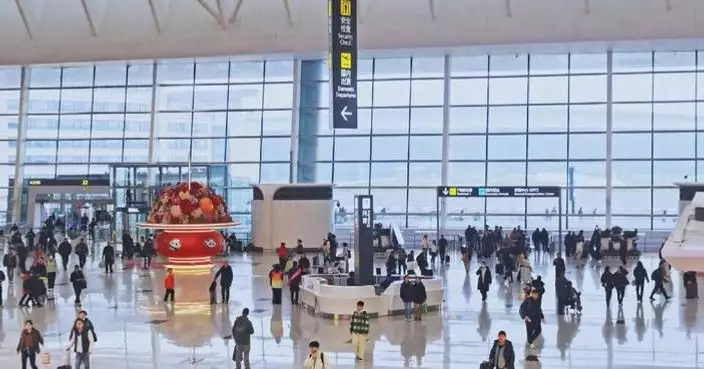
The spillover effects of the ongoing conflict in the Middle East are having a noticeable impact as far afield as Peru, a country highly reliant on energy imports, with the costs of transportation and daily supplies all climbing due to the hike in fuel prices.

Global oil prices have been rising as a result of the ongoing U.S.-Israeli-Iran conflict and concerns over the disruption to shipping through the Strait of Hormuz -- a vital passageway that typically carries about one-quarter of global seaborne oil trade.

Prices in Peru have also been worsened in the country after a natural gas pipeline explosion in the Cusco Province last month, which caused a significant gas supply shortage.

At present, the prices of gasoline and diesel in Peru have doubled since the start of the conflict in late February, forcing companies to raise the costs of passenger and freight transportation to offset their losses.

Many are concerned that this will have a considerable knock-on effect which could hamper economic activities and ultimately harm the wallets of local residents who are being forced to pay the price.

"What's the worst is that transportation will affect all activities throughout the economy, including the passenger sector, both intra-city and inter-provincial," said Martin Ojeda, the leader of a transportation workers' union.

"Everything has become more expensive. Both daily necessities and transportation are all very expensive," said a local vendor in the capital Lima.

"Previously, a roast chicken cost me about 45 soles (12.8 U.S. dollars), but now it has risen to 60 soles (over 17 U.S. dollars). This doesn't fit my financial situation, so I have to give up a lot of consumption. People like me who live on pensions are greatly affected," said another resident.

Meanwhile, the prices of fertilizers like urea have risen by around 16 percent over the past month as a result of the conflict, with the Middle East being a major global supplier of fertilizers, as these spiraling costs are also affecting food production and animal husbandry in Peru.

Transportation, living costs rise in Peru as conflict rages on in Middle East

Transportation, living costs rise in Peru as conflict rages on in Middle East

Recommended Articles