LONDON (AP) — Conor Benn gained revenge — for himself and his family — by dominating Chris Eubank Jr. to score a unanimous points victory in their rematch at the Tottenham Hotspur Stadium on Saturday.
Benn had lost to Eubank Jr. nearly seven months ago in their long-anticipated middleweight bout, which came more than 30 years after their fathers squared off in two memorable fights.
Click to Gallery
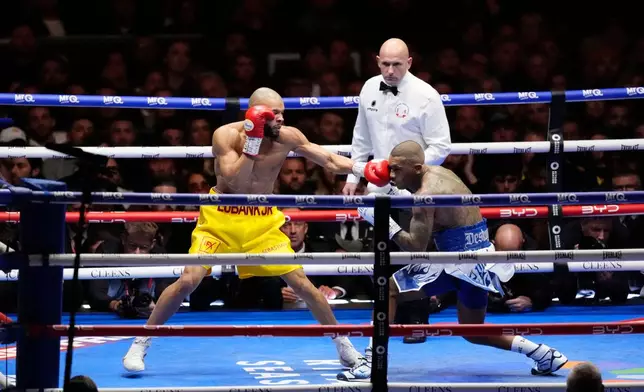
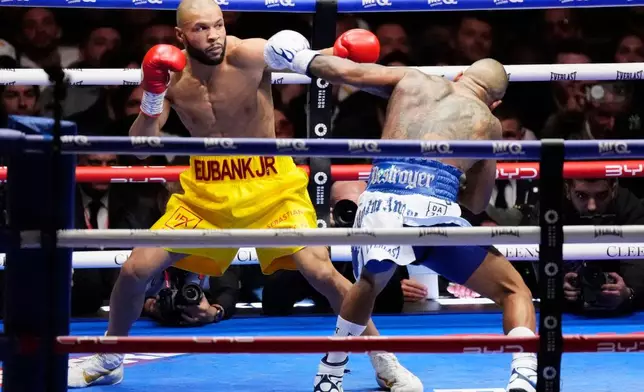
Chris Eubank Jr. right, and Conor Benn tangle up during a middleweight bout, Saturday, Nov. 15, 2025, in London. (Nick Potts/PA via AP)
Chris Eubank Jr. walks out with 50 Cent, left, before Eubank's fight against Conor Benn at the Tottenham Hotspur Stadium in London on Saturday, Nov. 15, 2025. (Nick Potts/PA via AP)
Chris Eubank Jr. left. and Conor Benn battle during a middleweight bout, Saturday, Nov. 15, 2025, in London. (Nick Potts/PA via AP)
Chris Eubank Jr., left, battles Conor Benn during a middleweight bout, Saturday, Nov. 15, 2025, in London. (Nick Potts/PA via AP)
Eubank Sr. beat Nigel Benn with a ninth-round stoppage in 1990 to take the WBO middleweight title. Their 1993 rematch ended in a split-decision draw.
The 29-year-old Benn was in control in Saturday's non-title fight and dropped Eubank Jr. twice in the 12th round.
The judges scored the bout 119-107, 116-110, 118-108 for Benn (24-1, 14 KOs), who gained revenge for his only professional loss.
“This is the end of the Benn-Eubank saga. This ends here,” Benn said in the ring. “This is generational. This has never been done before in history.”
In late April, Eubank Jr. won by unanimous decision in a slugfest. But the 36-year-old boxer (35-4, 25 KOs) looked sluggish Saturday, unable to land jabs the way he did in the first fight.
“The kid fought hard, he fought tough. He’s got power, this kid,” Eubank Jr. said. “Conor Benn was the best man tonight, so congratulations to him.”
American rapper 50 Cent accompanied Eubank Jr. on his ring walk and performed his hit “Many Men” as they emerged from the tunnel.
AP Boxing: https://apnews.com/hub/boxing
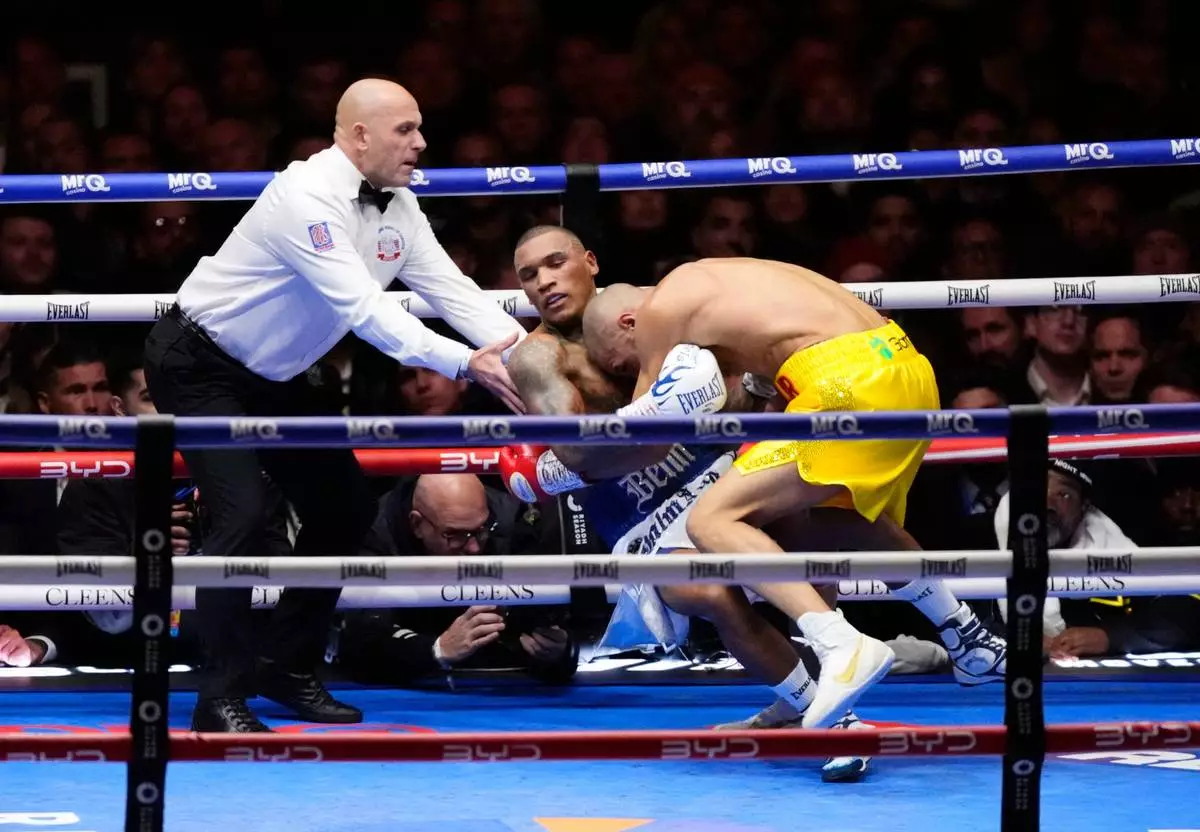
Chris Eubank Jr. right, and Conor Benn tangle up during a middleweight bout, Saturday, Nov. 15, 2025, in London. (Nick Potts/PA via AP)
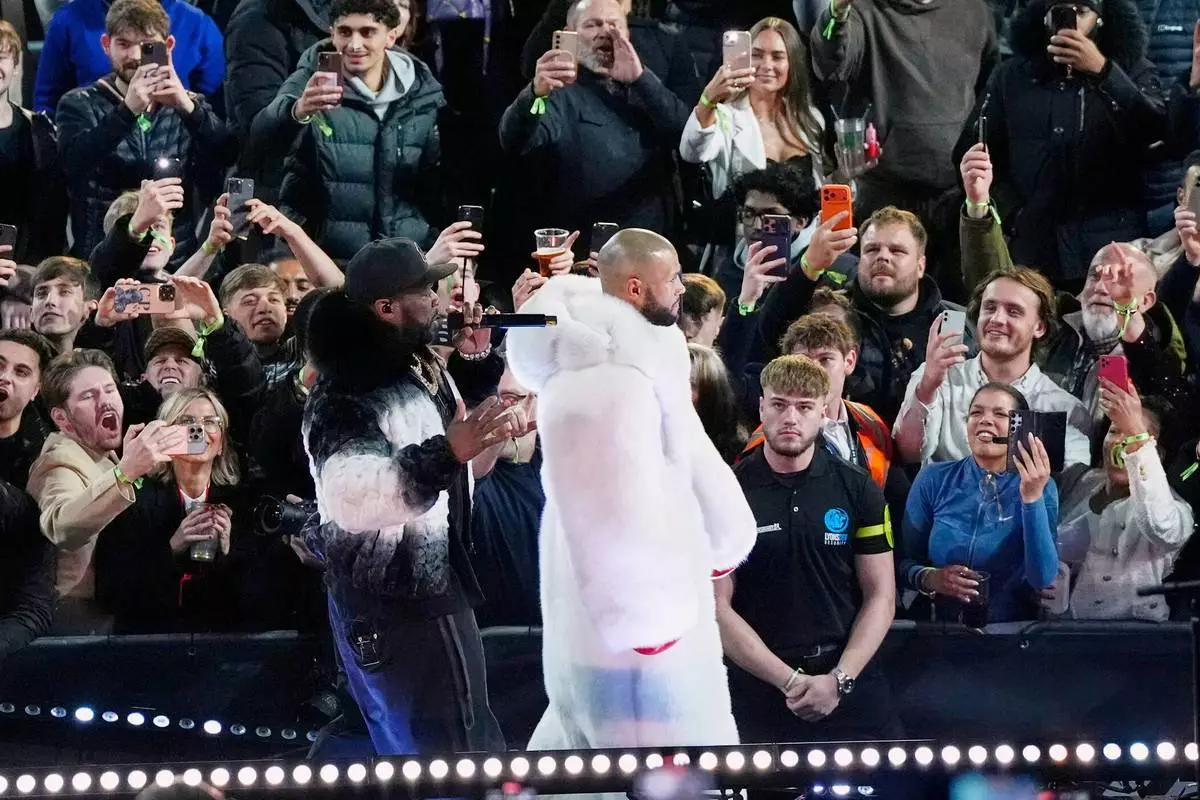
Chris Eubank Jr. walks out with 50 Cent, left, before Eubank's fight against Conor Benn at the Tottenham Hotspur Stadium in London on Saturday, Nov. 15, 2025. (Nick Potts/PA via AP)
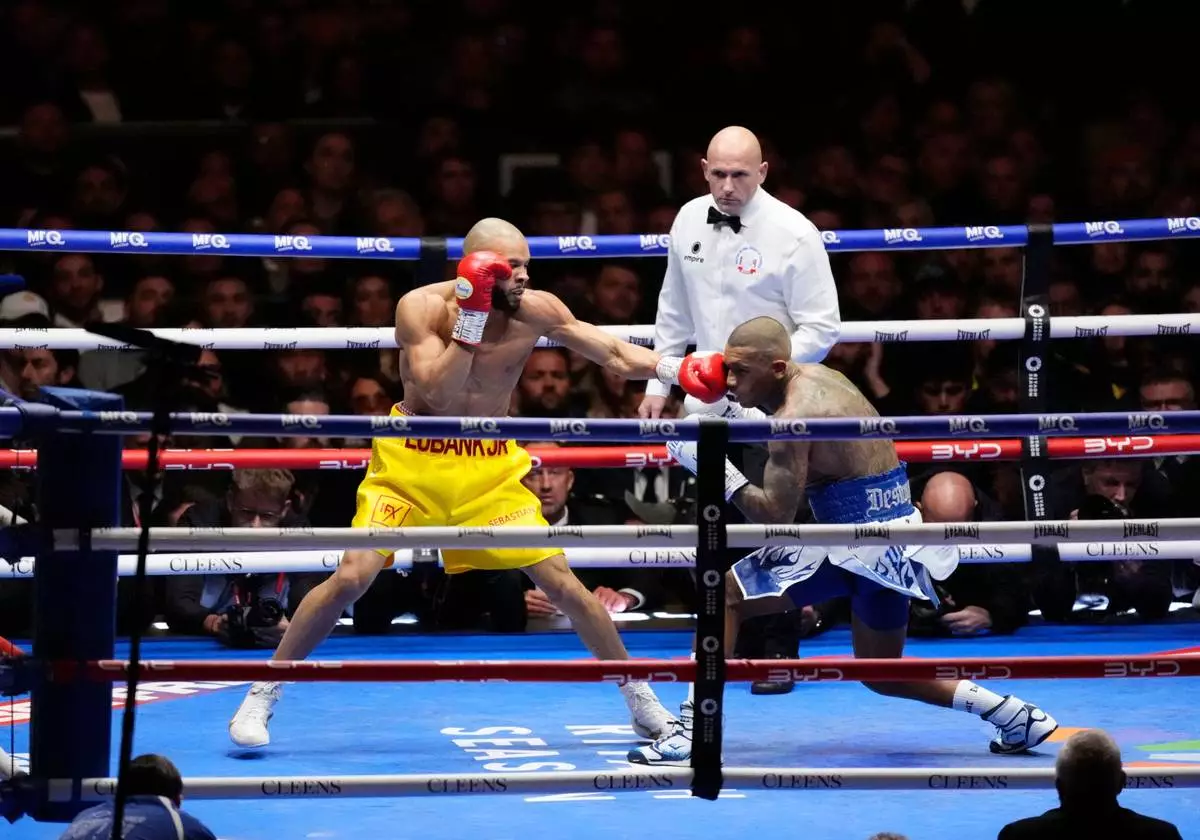
Chris Eubank Jr. left. and Conor Benn battle during a middleweight bout, Saturday, Nov. 15, 2025, in London. (Nick Potts/PA via AP)
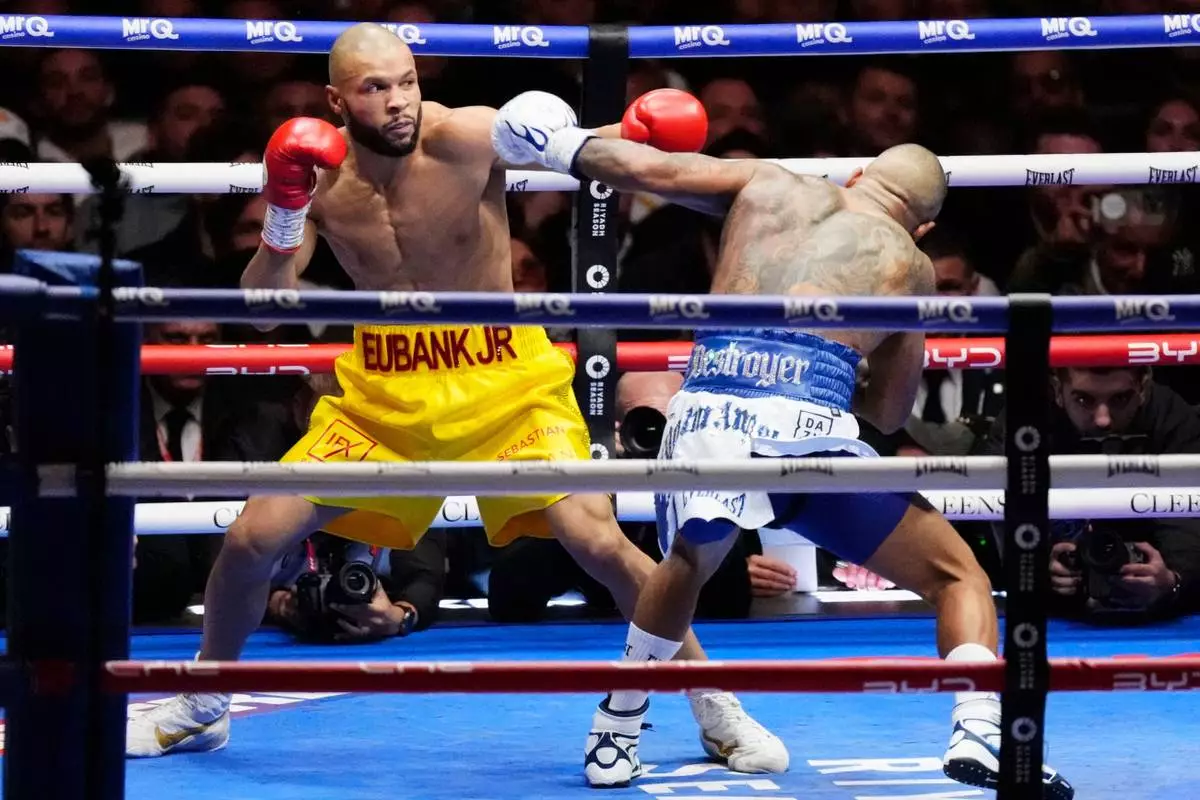
Chris Eubank Jr., left, battles Conor Benn during a middleweight bout, Saturday, Nov. 15, 2025, in London. (Nick Potts/PA via AP)
The onset of $30 million football rosters funded mostly by companies providing third-party payments to players on behalf of their schools is within the rules but “has not sort of matched” the system some of its founders intended, the head of the College Sports Commission said Tuesday.
Bryan Seeley delivered an update on the CSC's progress over the last two months. While he was bullish about the new agency's ability to analyze deals quickly, he said the influx of third-party deals — contracts that help schools blow past the $20.5 million salary cap they're allowed to pay players directly — has led to increased review times.
The CSC's new numbers, updated through February, included a 65% increase over the preceding two months in the volume of the third-party deals, which are sometimes known as associated deals, among schools in the Power Four conferences.
Seeley said those figures led him to believe that most schools are trying to follow the rules by submitting their deals for review to the CSC, which is tasked with making sure they are not simple pay-for-play contracts but have a “valid business purpose” and are priced fairly.
He also said he had been told that "there was a belief that perhaps up to 90% of deals flowing through the system would do so automatically that would not need any kind of human review.
“It must have been based on an assumption that this would be a somewhat organic market with a lot of not associated deals," he said. "And that is turning out to be not the case.”
Those associated deals have brought the CSC under scrutiny for lag time in approving contracts. More importantly, they speak to wider concerns that the cost of populating competitive college rosters has spiraled out of control less than a year into the system that was activated by the House settlement — the endgame in a lawsuit that allows schools to share revenue directly with players, then augment that through third-party deals.
The discussion has reached as far as the White House, where last week President Donald Trump held a “summit” with sports leaders to discuss ways of reining in costs.
Trump has promised an executive order this week that will address issues in an industry where, he said, “the amount of money being spent and lost by otherwise very successful schools is astounding, just in a short period of time. And it’s only going to get worse."
Seeley, still focused on standing up an agency that will play a massive role in policing college sports, said he did not want to delve into whether the current system is sustainable.
“I read the same things you read. I see the same public comments in the media and I talk to schools,” Seeley said. “And I do get the sense that some schools had the belief that the settlement as implemented had not sort of matched what they expected. I think that's a fair thing to say.”
Seeley also acknowledged the problems his 8-month-old agency could face if a “participation agreement” that vests enforcement power in the CSC isn't signed by all 68 of the Power Four schools.
Shortly after the CSC distributed the document, a handful of states and schools said they wouldn't sign; some were concerned about language that forbid suing the commission.
In an impassioned plea at NCAA meetings in January, Seeley urged schools to sign the deal. Nearly two months later, he said he is still waiting. Parties have spent month making tweaks, some of which “weaken the document” to the point where it might not be worth the CSC signing it, Seeley said.
“If we don’t have a participant agreement, we’re going to still try to do what we need to do,” he said. “But I think those tools are really important.”
Get poll alerts and updates on the AP Top 25 throughout the season. Sign up here and here (AP mobile app). AP college basketball: https://apnews.com/hub/ap-top-25-college-basketball-poll and https://apnews.com/hub/college-basketball
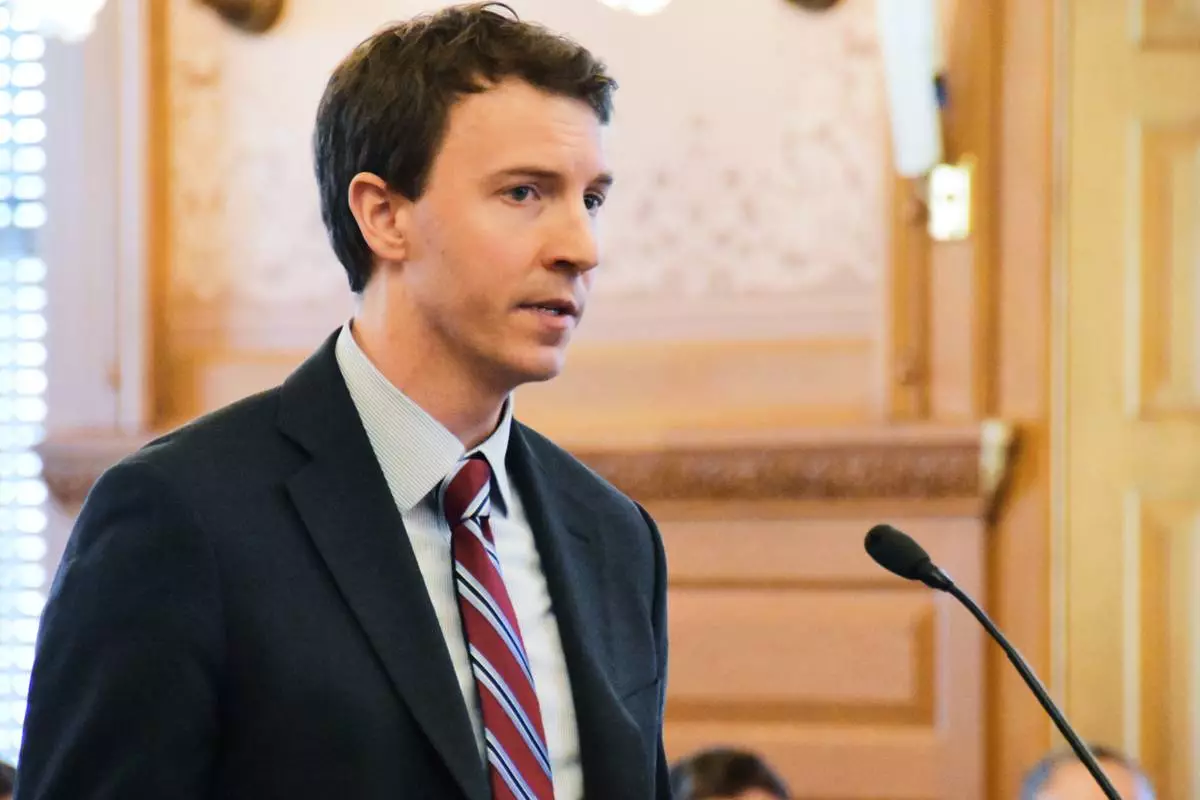
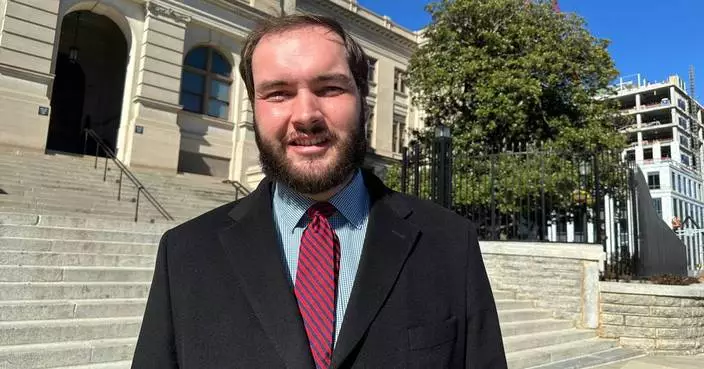
FILE - Bryan Seeley, a Major League Baseball senior vice president, testifies on a bill during a legislative committee hearing, March 13, 2018, at the Statehouse in Topeka, Kan. (AP Photo/Mitchell Willetts, File)