The onset of $30 million football rosters funded mostly by companies providing third-party payments to players on behalf of their schools is within the rules but “has not sort of matched” the system some of its founders intended, the head of the College Sports Commission said Tuesday.
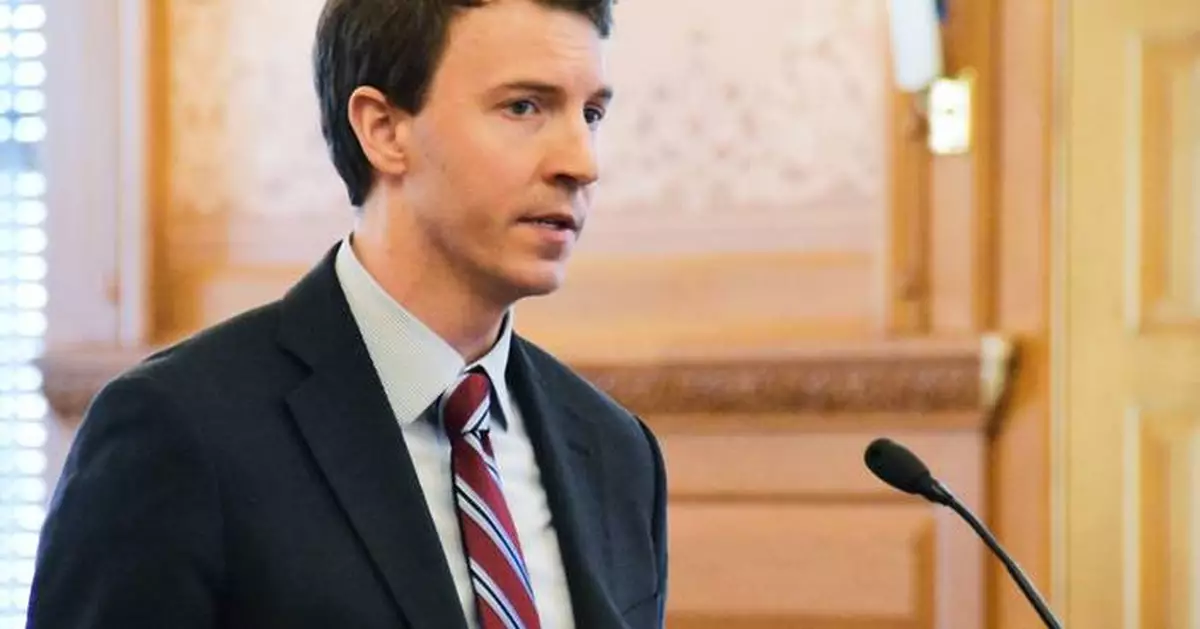
Bryan Seeley delivered an update on the CSC's progress over the last two months. While he was bullish about the new agency's ability to analyze deals quickly, he said the influx of third-party deals — contracts that help schools blow past the $20.5 million salary cap they're allowed to pay players directly — has led to increased review times.
The CSC's new numbers, updated through February, included a 65% increase over the preceding two months in the volume of the third-party deals, which are sometimes known as associated deals, among schools in the Power Four conferences.
Seeley said those figures led him to believe that most schools are trying to follow the rules by submitting their deals for review to the CSC, which is tasked with making sure they are not simple pay-for-play contracts but have a “valid business purpose” and are priced fairly.
He also said he had been told that "there was a belief that perhaps up to 90% of deals flowing through the system would do so automatically that would not need any kind of human review.
“It must have been based on an assumption that this would be a somewhat organic market with a lot of not associated deals," he said. "And that is turning out to be not the case.”
Those associated deals have brought the CSC under scrutiny for lag time in approving contracts. More importantly, they speak to wider concerns that the cost of populating competitive college rosters has spiraled out of control less than a year into the system that was activated by the House settlement — the endgame in a lawsuit that allows schools to share revenue directly with players, then augment that through third-party deals.
The discussion has reached as far as the White House, where last week President Donald Trump held a “summit” with sports leaders to discuss ways of reining in costs.
Trump has promised an executive order this week that will address issues in an industry where, he said, “the amount of money being spent and lost by otherwise very successful schools is astounding, just in a short period of time. And it’s only going to get worse."
Seeley, still focused on standing up an agency that will play a massive role in policing college sports, said he did not want to delve into whether the current system is sustainable.
“I read the same things you read. I see the same public comments in the media and I talk to schools,” Seeley said. “And I do get the sense that some schools had the belief that the settlement as implemented had not sort of matched what they expected. I think that's a fair thing to say.”
Seeley also acknowledged the problems his 8-month-old agency could face if a “participation agreement” that vests enforcement power in the CSC isn't signed by all 68 of the Power Four schools.
Shortly after the CSC distributed the document, a handful of states and schools said they wouldn't sign; some were concerned about language that forbid suing the commission.
In an impassioned plea at NCAA meetings in January, Seeley urged schools to sign the deal. Nearly two months later, he said he is still waiting. Parties have spent month making tweaks, some of which “weaken the document” to the point where it might not be worth the CSC signing it, Seeley said.
“If we don’t have a participant agreement, we’re going to still try to do what we need to do,” he said. “But I think those tools are really important.”
Get poll alerts and updates on the AP Top 25 throughout the season. Sign up here and here (AP mobile app). AP college basketball: https://apnews.com/hub/ap-top-25-college-basketball-poll and https://apnews.com/hub/college-basketball
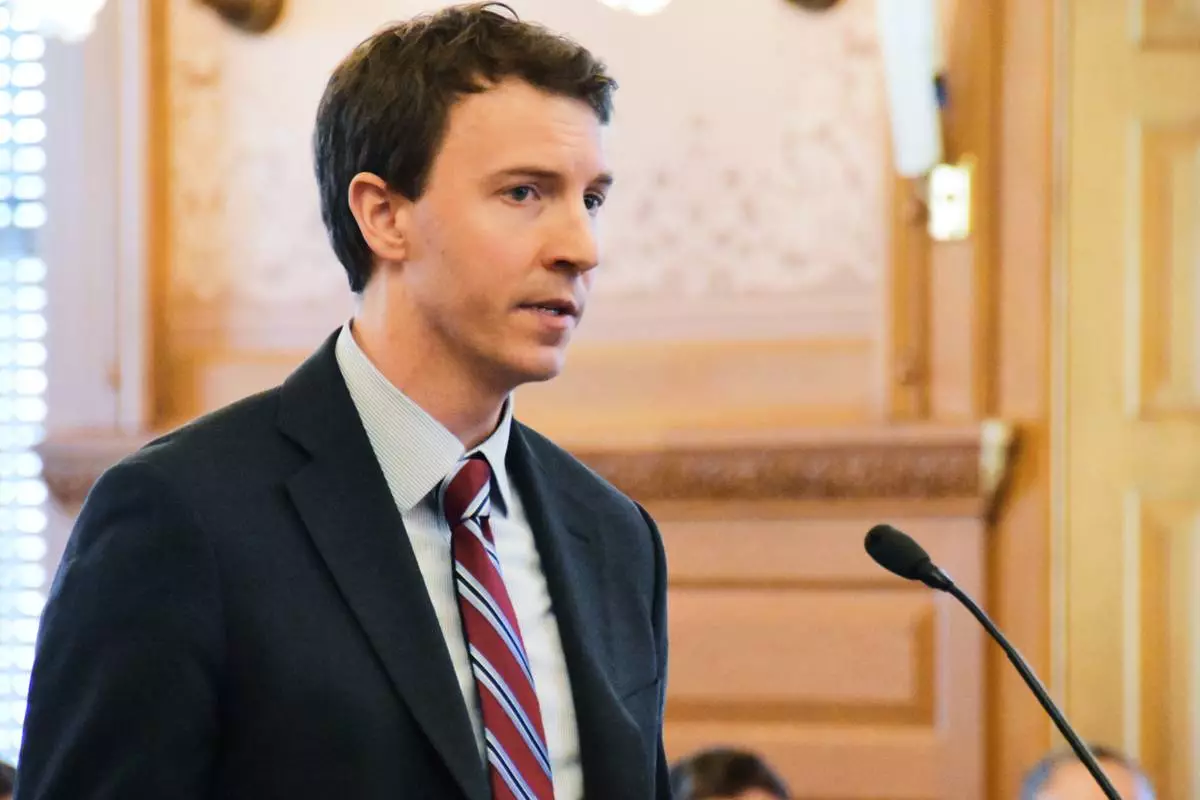
FILE - Bryan Seeley, a Major League Baseball senior vice president, testifies on a bill during a legislative committee hearing, March 13, 2018, at the Statehouse in Topeka, Kan. (AP Photo/Mitchell Willetts, File)
NEW YORK (AP) — The U.S. stock market held steadier Tuesday as Wall Street waited for the next signal on when the war with Iran may end.
The S&P 500 dipped 0.2%, a day after its latest wild swings caused by extreme moves in the oil market. The Dow Jones Industrial Average fell 34 points, or 0.1%, and the Nasdaq composite edged higher by less than 0.1%.
Oil prices, meanwhile, remained sharply below their peaks hit on Monday. Such spikes have been rocking financial markets worldwide because of worries that the war could block the global flow of oil and natural gas for a long time.
The price for a barrel of Brent crude, the international standard, settled at $87.80. That’s down 11.3% from its settlement price the day before, but much of that drop happened on Monday before the U.S. stock market finished trading. That’s why it did not give much of a boost to U.S. stocks Tuesday.
Oil prices plunged Monday afternoon from a high of nearly $120 per barrel, its most expensive level since 2022, after President Donald Trump told CBS News he thinks “the war is very complete, pretty much.” That raised hopes that the war may end relatively soon, which could allow oil to flow freely again from the Middle East to customers around the world.
But Trump’s comments later Monday, after the U.S. stock market finished trading, were not as clear. And a spokesperson for Iran’s paramilitary Revolutionary Guard said that “Iran will determine when the war ends.” Iran launched new attacks Tuesday at Israel and Gulf Arab countries, keeping pressure on the Middle East in a war started by Israel and the United States.
That has Wall Street waiting for the next clue about how long the war may last.
One point where Trump remained clear was his desire to keep the Strait of Hormuz open. The war has effectively blocked the waterway off Iran’s coast, where a fifth of the world’s oil sails on a typical day. That’s been a central reason for extreme swings in oil prices recently, which have dominated other financial markets and raised worries about the global economy.
“If Iran does anything that stops the flow of Oil within the Strait of Hormuz, they will be hit by the United States of America TWENTY TIMES HARDER than they have been hit thus far,” Trump said in a posting on his social media network late Monday.
“The outlook for oil right now is about as binary as it gets,” according to Hakan Kaya, senior portfolio manager at Neuberger Berman.
“Either the Strait of Hormuz reopens and you see a massive unwind of the risk premium, or it stays shut and we are looking at the largest supply disruption in modern history. There is no middle ground, and that is why putting a number on it is almost irresponsible.”
The U.S. stock market has a history of bouncing back relatively quickly from military conflicts, as long as oil prices don’t stay too high for too long. Uncertainty about whether that may happen this time around has led to stunning swings up and down for markets worldwide, often hour-to-hour.
If oil prices do stay high for long, household budgets already stretched by high inflation could break under the pressure. Companies would see their own bills jump for fuel and to stock items on their store shelves or in their data warehouses. It all raises the possibility of a worst-case scenario for the global economy, “stagflation,” where growth stagnates and inflation remains high.
On Wall Street, Vertex Pharmaceuticals leaped 8.3% for the biggest gain in the S&P 500 after reporting encouraging trends from a trial for its treatment for a life-threatening kind of kidney disease.
West Pharmaceutical Services sank 5.7% after Eric Green said he’ll retire as CEO and chair once the board finds and hires his successor.
All told, the S&P 500 fell 14.51 points to 6,781.48. The Dow Jones Industrial Average dipped 34.29 to 47,706.51, and the Nasdaq composite added 1.16 to 22,697.10.
Stock markets in Asia and Europe jumped after getting their first chances to react to Trump’s comments from late Monday and the subsequent easing of oil prices. Indexes leaped 5.3% in South Korea, 2.2% in Hong Kong and 1.8% in France.
Tokyo’s Nikkei 225 rose 2.9% after the government also released revised economic data showing Japan’s economy grew faster in the final quarter of last year than initially estimated.
In the bond market, the yield on the 10-year Treasury rose to 4.15% from 4.12% late Monday.
AP Business Writers Yuri Kageyama and Matt Ott and AP Videographer Ayaka McGill contributed.
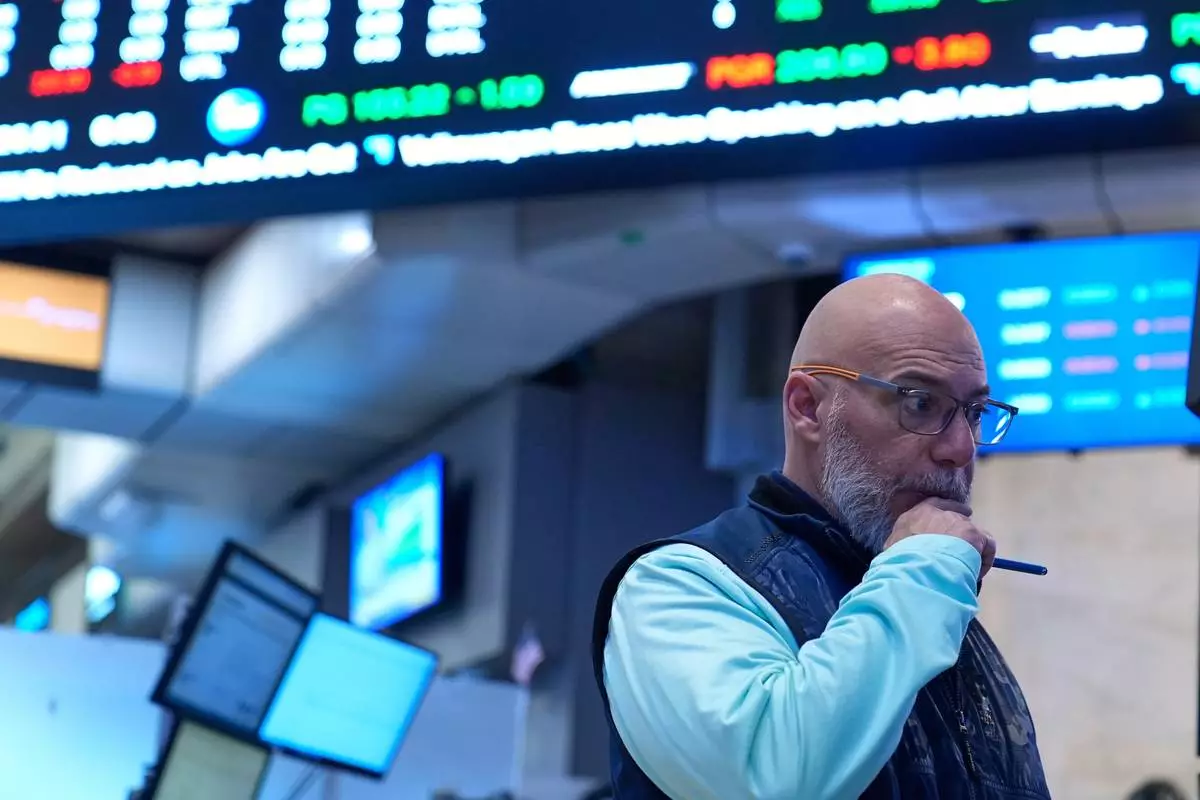
Traders work on the floor at the New York Stock Exchange in New York, Tuesday, March 10, 2026. (AP Photo/Seth Wenig)
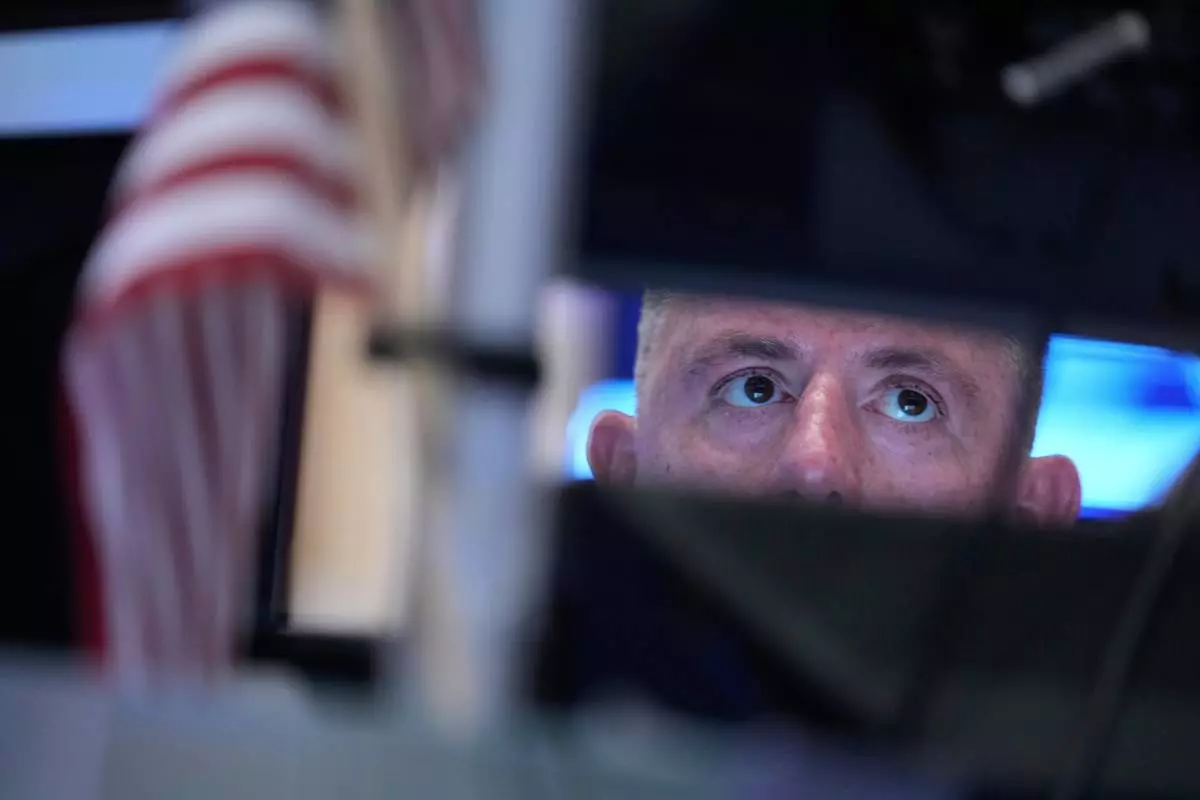
Traders work on the floor at the New York Stock Exchange in New York, Tuesday, March 10, 2026. (AP Photo/Seth Wenig)
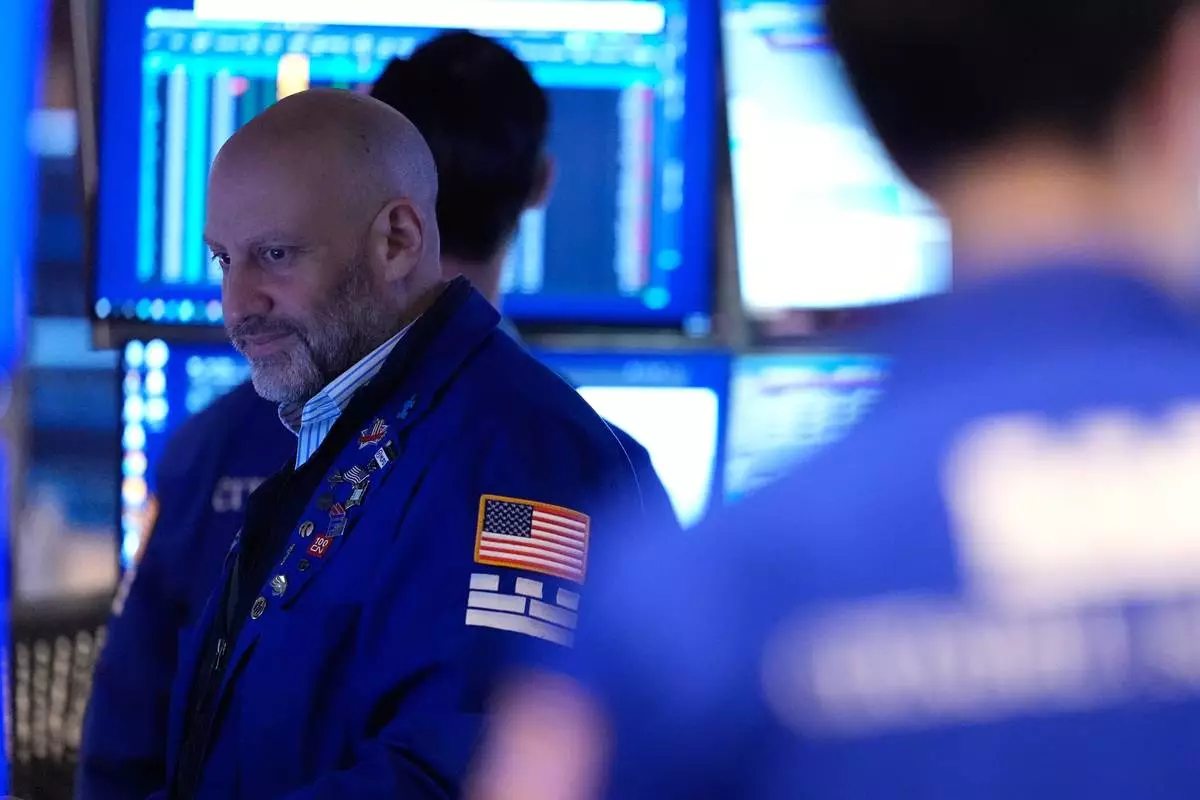
Meric Greenbaum works on the floor at the New York Stock Exchange in New York, Friday, March 6, 2026. (AP Photo/Seth Wenig)
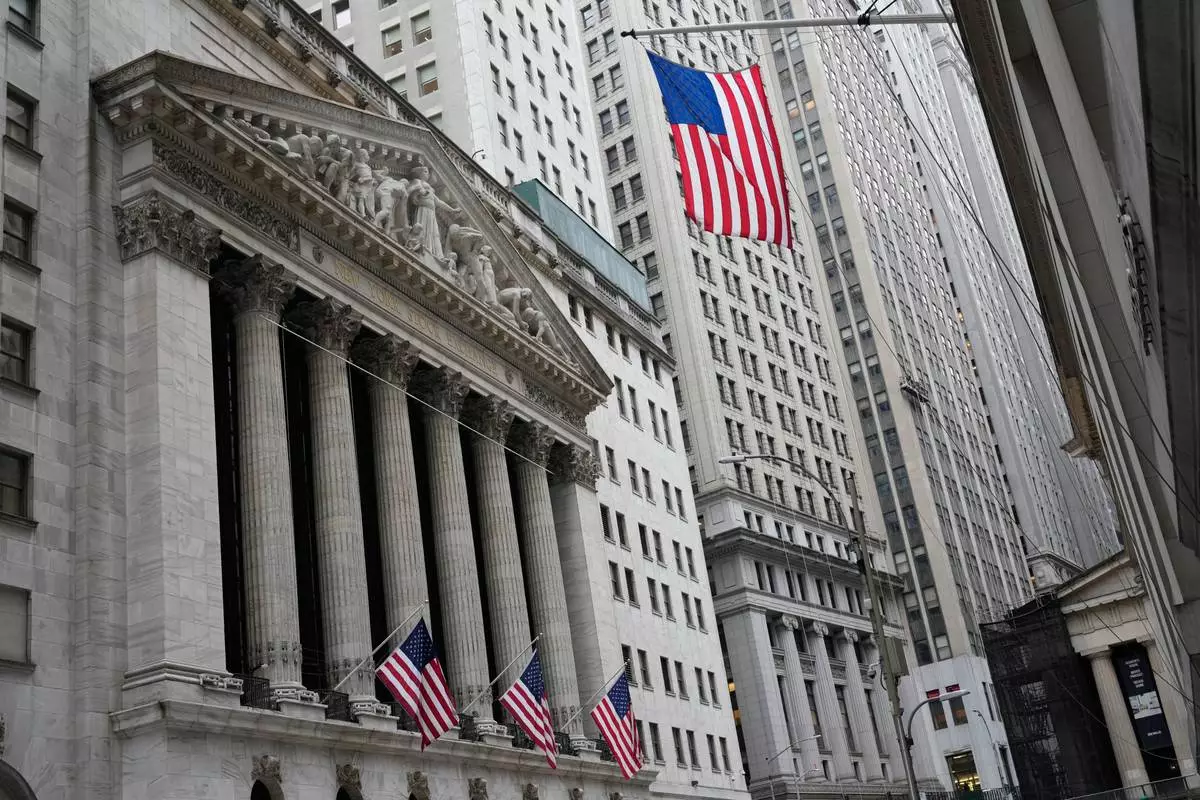
The New York Stock Exchange is seen in New York, Friday, March 6, 2026. (AP Photo/Seth Wenig)
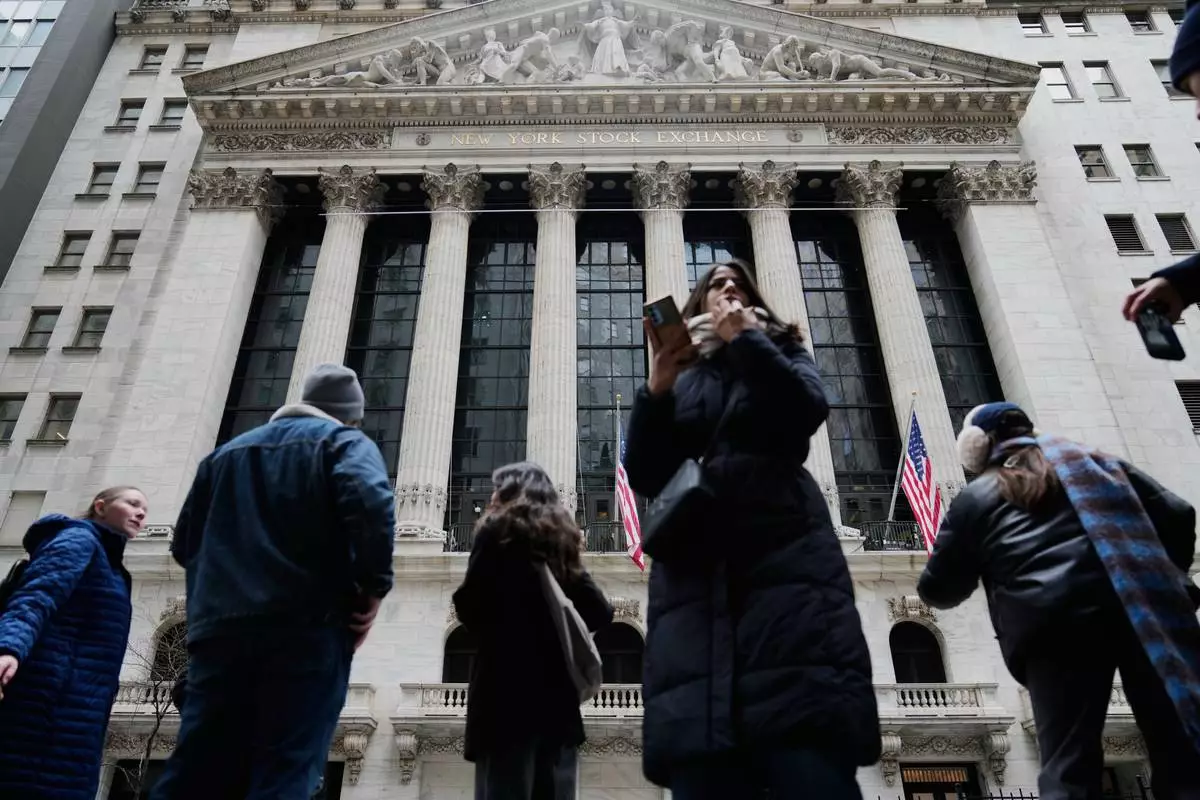
Pedestrians mill about outside the New York Stock Exchange in New York, Friday, March 6, 2026. (AP Photo/Seth Wenig)

Currency traders watch monitors near a screen showing the Korea Composite Stock Price Index (KOSPI), right, and the foreign exchange rate between U.S. dollar and South Korean won at the foreign exchange dealing room of the Hana Bank headquarters in Seoul, South Korea, Tuesday, March 10, 2026. (AP Photo/Ahn Young-joon)

Currency traders work at the foreign exchange dealing room of the Hana Bank headquarters in Seoul, South Korea, Tuesday, March 10, 2026. (AP Photo/Ahn Young-joon)

U.S. President Donald Trump is seen on a screen as traders work at the foreign exchange dealing room of the Hana Bank headquarters in Seoul, South Korea, Tuesday, March 10, 2026. (AP Photo/Ahn Young-joon)

Currency trader react near a screen showing the Korea Composite Stock Price Index (KOSPI), rear left, at the foreign exchange dealing room of the Hana Bank headquarters in Seoul, South Korea, Tuesday, March 10, 2026. (AP Photo/Ahn Young-joon)

A currency trader passes by a screen showing the Korea Composite Stock Price Index (KOSPI), rear center, and the foreign exchange rate between U.S. dollar and South Korean won, rear left, at the foreign exchange dealing room of the Hana Bank headquarters in Seoul, South Korea, Tuesday, March 10, 2026. (AP Photo/Ahn Young-joon)