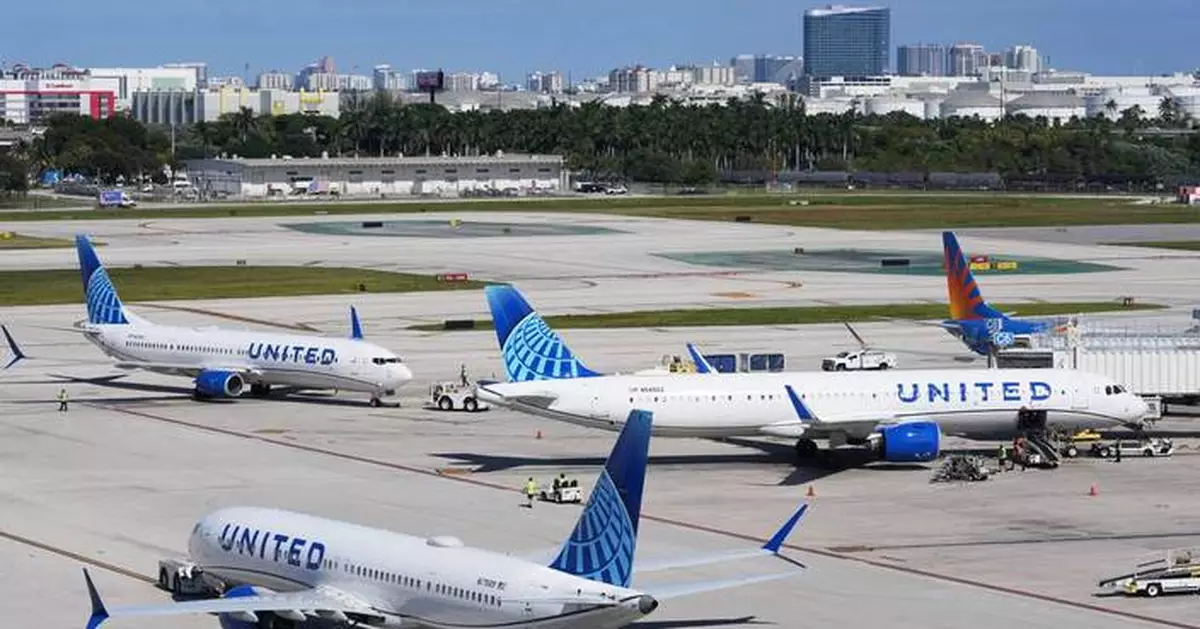
The Federal Aviation Administration said Sunday it is lifting all restrictions on commercial flights that were imposed at 40 major airports during the country's longest government shutdown.
Airlines can resume their regular flight schedules beginning Monday at 6 a.m. EST, the agency said.
The announcement was made in a joint statement by Transportation Secretary Sean P. Duffy and FAA Administrator Bryan Bedford.
Citing safety concerns as staffing shortages grew at air traffic control facilities during the shutdown, the FAA issued an unprecedented order to limit traffic in the skies. It had been in place since Nov. 7, affecting thousands of flights across the country.
Impacted airports included large hubs in New York, Chicago, Los Angeles and Atlanta.
The flight cuts started at 4% and later grew to 6% before the FAA on Friday rolled the restrictions back to 3%, citing continued improvements in air traffic controller staffing since the record 43-day shutdown ended on Nov. 12.
The number of flights canceled this weekend was at its lowest point since the order took effect and was well below the 3% cuts FAA was requiring for Saturday and Sunday. Data from aviation analytics firm Cirium showed that less than 1% of all flights were canceled this weekend. The flight tracking website FlightAware said 149 flights were cut Sunday and 315 were canceled on Saturday.
The FAA statement said an agency safety team recommended the order be rescinded after “detailed reviews of safety trends and the steady decline of staffing-trigger events in air traffic control facilities.”
The statement said the FAA “is aware of reports of non-compliance by carriers over the course of the emergency order. The agency is reviewing and assessing enforcement options.” It did not elaborate.
Cancellations hit their highest point Nov. 9, when airlines cut more than 2,900 flights because of the FAA order, ongoing controller shortages and severe weather in parts of the country. Conditions began to improve throughout last week as more controllers returned to work amid news that Congress was close to a deal to end the shutdown. That progress also prompted the FAA to pause plans for further rate increases.
The agency had initially aimed for a 10% reduction in flights. Duffy had said worrisome safety data showed the move was necessary to ease pressure on the aviation system and help manage worsening staffing shortages at air traffic control facilities as the shutdown entered its second month and flight disruptions began to pile up.
Air traffic controllers were among the federal employees who had to continue working without pay throughout the shutdown. They missed two paychecks during the impasse.
Duffy hasn’t shared the specific safety data that prompted the cuts, but he cited reports during the shutdown of planes getting too close in the air, more runway incursions and pilot concerns about controllers’ responses.
Airline leaders have expressed optimism that operations would rebound in time for the Thanksgiving travel period after the FAA lifted its order.
Yamat reported from Las Vegas and Funk reported from Omaha, Nebraska.
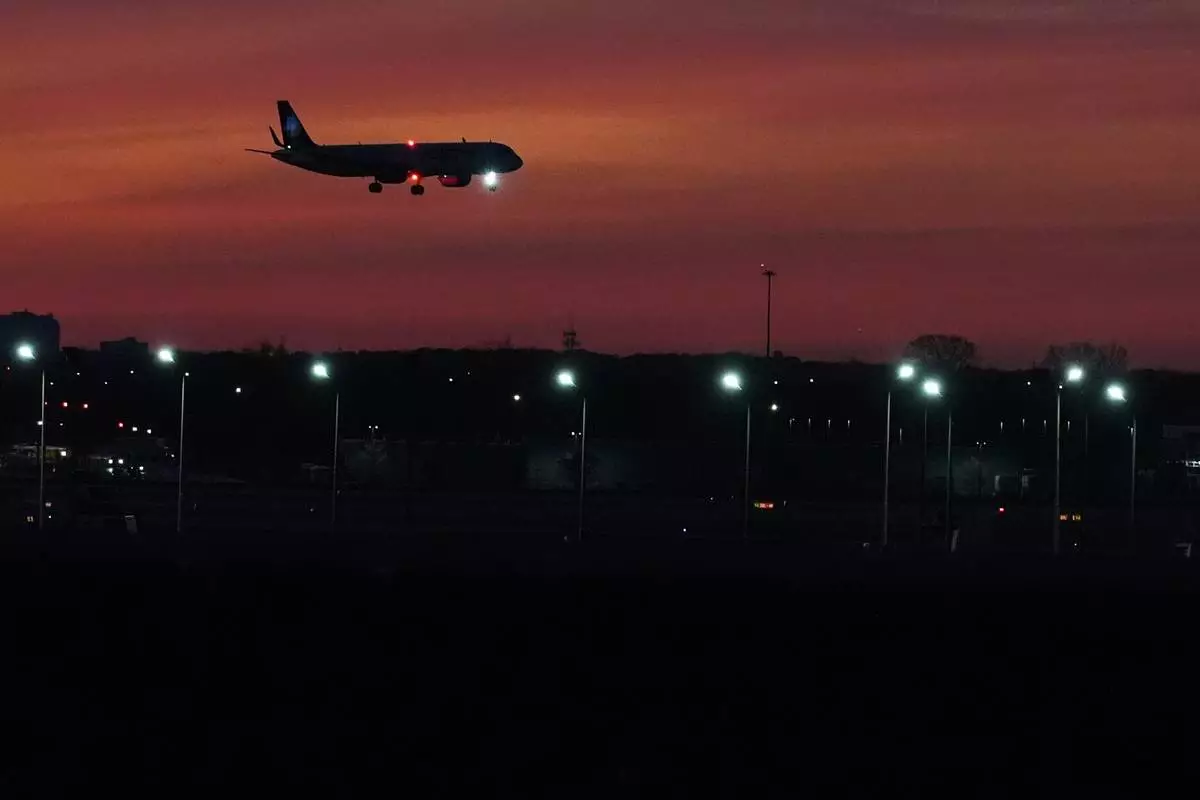
An airplane prepares to land at O'Hare International Airport, in Chicago, Wednesday, Nov. 12, 2025. (AP Photo/Nam Y. Huh)
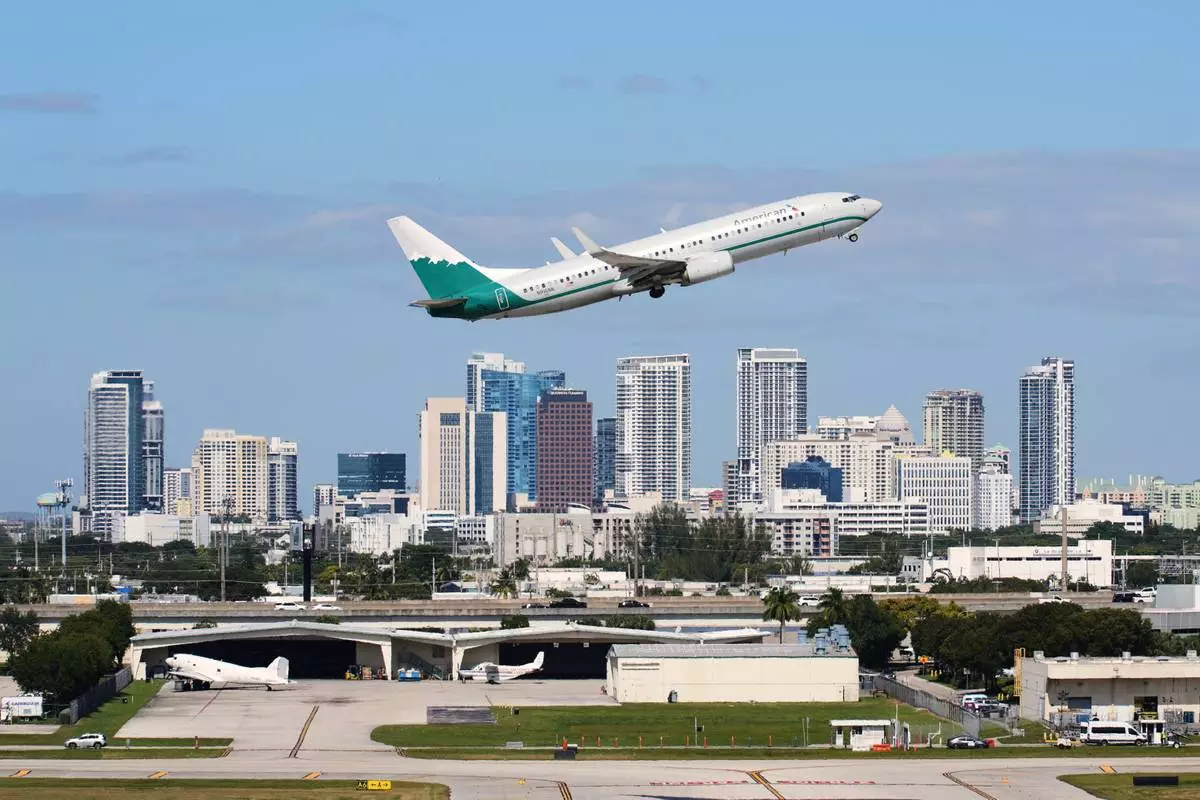
An American Airlines aircraft takes off from Fort Lauderdale-Hollywood International Airport, Thursday, Nov. 13, 2025, in Fort Lauderdale, Fla. (AP Photo/Lynne Sladky)
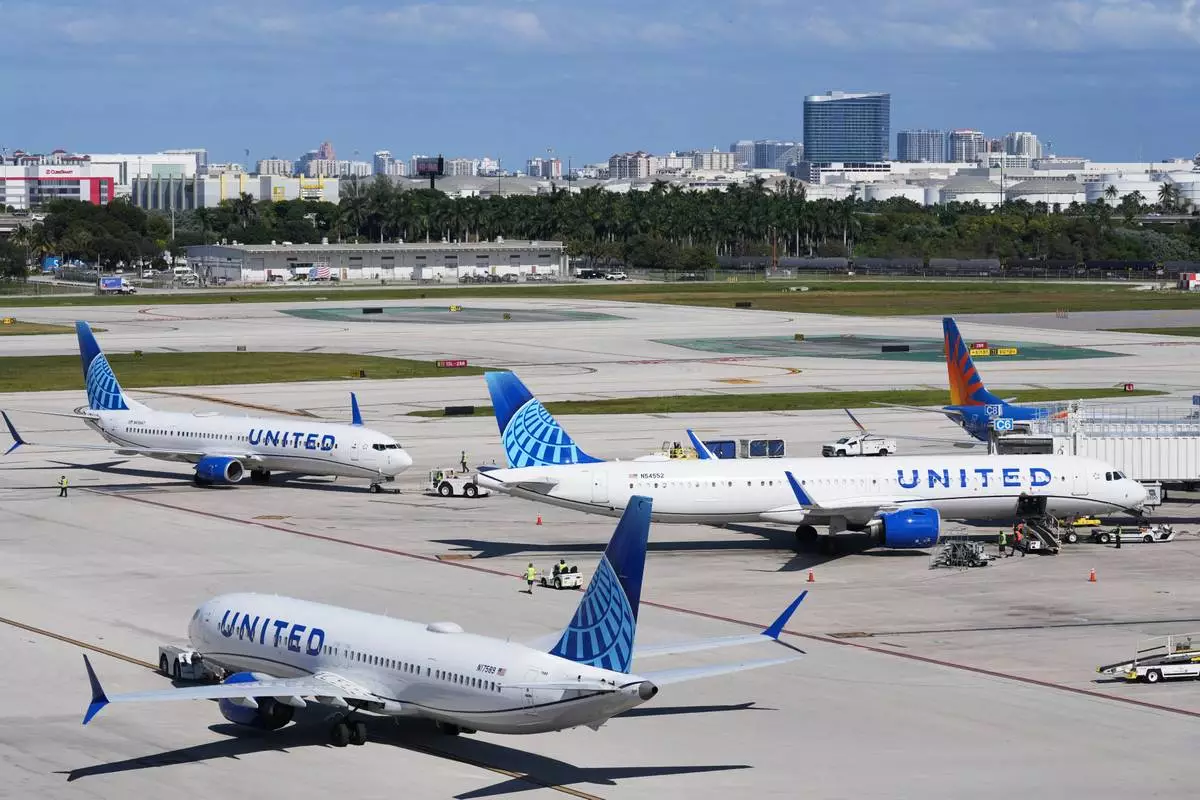
United Airlines aircraft move from the gate at Fort Lauderdale-Hollywood International Airport, Thursday, Nov. 13, 2025, in Fort Lauderdale, Fla. (AP Photo/Lynne Sladky)
President Donald Trump said U.S. forces on Friday “obliterated” targets on Iran’s Kharg Island, which is home to the primary terminal that handles the country’s oil exports. The speaker of the Iranian Parliament had warned that such strikes would provoke a new level of retaliation.
Meanwhile, an American official said 2,500 more Marines and an amphibious assault ship are being sent to the Middle East nearly two weeks into the war with the Islamic Republic.
Iran has continued to launch widespread missile and drone attacks on Israel and neighboring Gulf states, and has effectively closed the Strait of Hormuz, through which a fifth of the world’s traded oil passes, even as U.S. and Israeli warplanes pummel military and other targets across Iran.
The moves appear to signal the two-week-old war is not nearing an end.
Here is the latest:
Iran’s semi-official Fars news agency reported at least 15 explosions with thick smoke rising over Kharg Island, earlier hit by U.S. strikes.
It said the strikes targeted an air defense facility, a naval base, the airport control tower, and an offshore oil company’s helicopter hangar, adding no oil infrastructure was damaged in the attack.
Iran’s joint military command reiterated its threat to attack U.S.-linked oil and energy facilities in the region if the Islamic Republic’s oil infrastructure were hit.
Ebrahim Zolfaghari, spokesperson for the Khatam al-Anbiya Central Headquarters made the threat early Saturday, according to Iran’s state-run television.
He warned that Iran will target “all oil, economic, and energy infrastructures belonging to oil companies across the region that have American shares or cooperate with America” if energy and economic infrastructure in Iran is attacked.
There was no immediate comment from the U.S. Embassy in Baghdad after a strike hit it’s compound in the Iraqi capital.
On Friday, the embassy renewed its Level 4 security alert for Iraq, warning that Iran and Iran-aligned militia groups have previously carried out attacks against U.S. citizens, interests and infrastructure, and “may continue to target them.”
The sprawling embassy complex, one of the largest U.S. diplomatic facilities in the world, has been repeatedly targeted by rockets and drones in the past by Iran-aligned militias.
The groups have recently stepped up attacks on bases hosting U.S. and coalition troops.
A drone strike in northern Iraq on Thursday killed a French soldier and wounded several others stationed there as part of an international coalition.
A missile struck a helipad inside the U.S. Embassy in Baghdad, two security officials said.
The projectile landed within the embassy’s boundaries after the Green Zone, the heavily fortified district in central Baghdad that houses Iraqi government institutions and foreign embassies, added the security officials, who spoke on the condition of anonymity as they are not authorized to speak with the press.
Video obtained by The Associated Press showed smoke billowing from inside the compound.
By Qassim Abdul-Zahra

Family members ride in a damaged car, as they flee the site of an Israeli airstrike that hit an apartment building in the southern port city of Sidon, Lebanon, Friday, March 13, 2026. (AP Photo/Mohammed Zaatari)
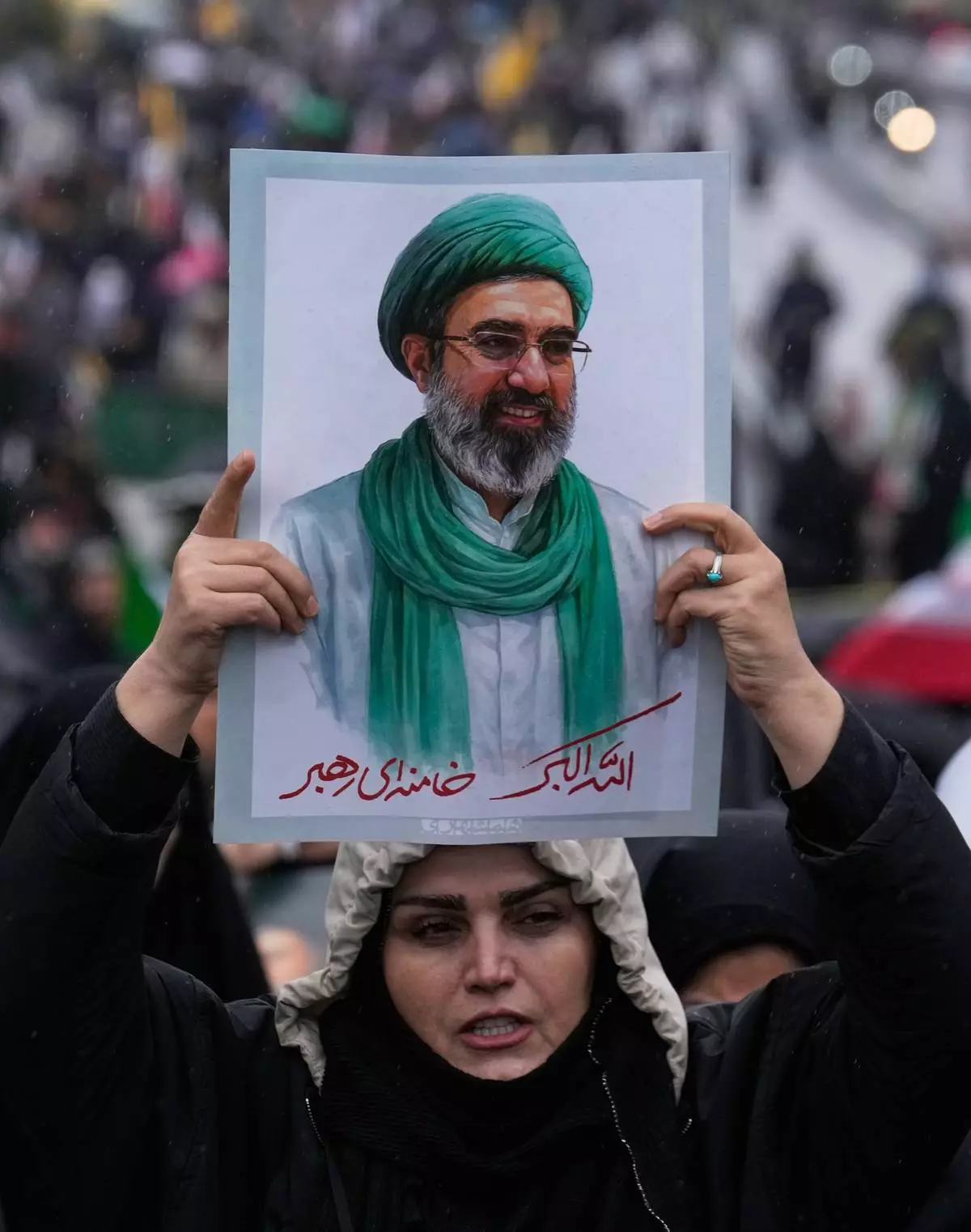
A woman holds up a poster of the Iranian Supreme Leader Ayatollah Mojtaba Khamenei during the annual anti-Israeli Quds Day, or Jerusalem Day, rally in support of Palestinians in Tehran, Iran, Friday, March 13, 2026. (AP Photo/Vahid Salemi)
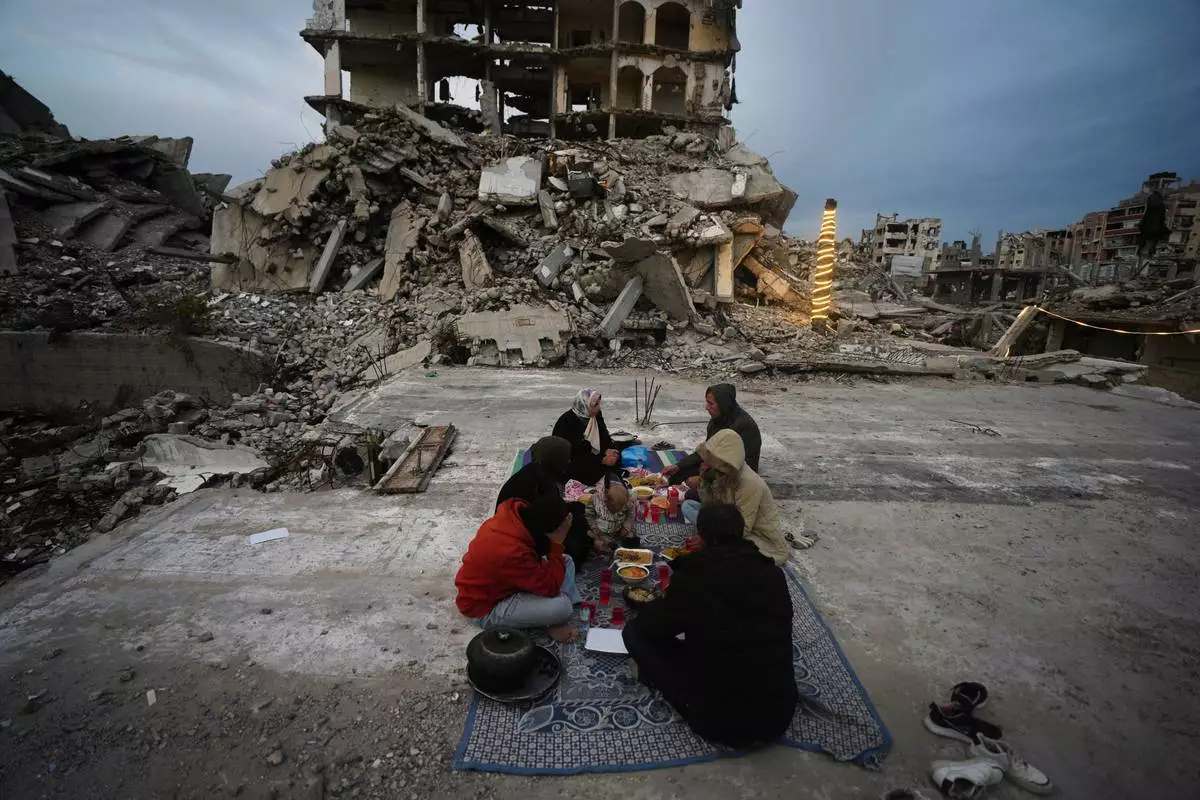
Members of the Al-Najar family break their fast during the Muslim holy month of Ramadan amid the rubble of destroyed buildings in Gaza City Friday, March 13, 2026. (AP Photo/Jehad Alshrafi)
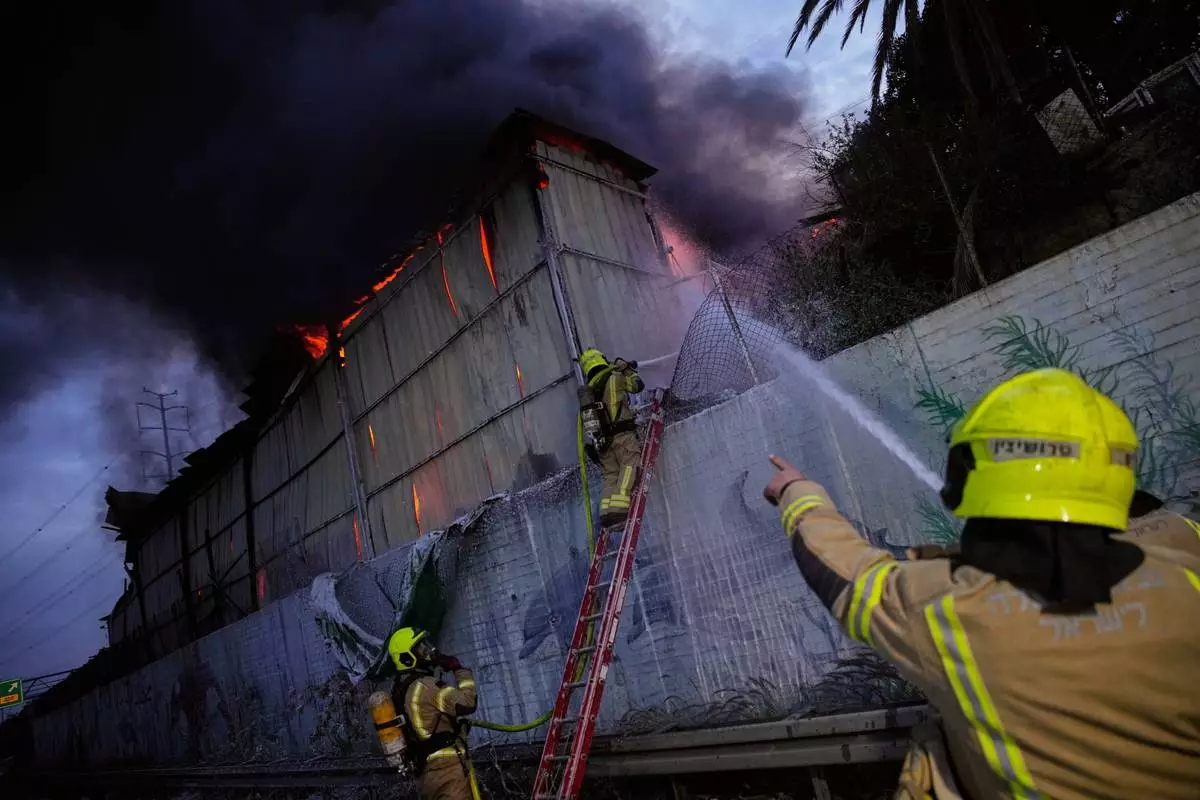
Firefighters try to extinguish flames at the site of a direct hit by an Iranian missile strike in Holon, central Israel, Friday, March 13, 2026. (AP Photo/Ohad Zwigenberg)
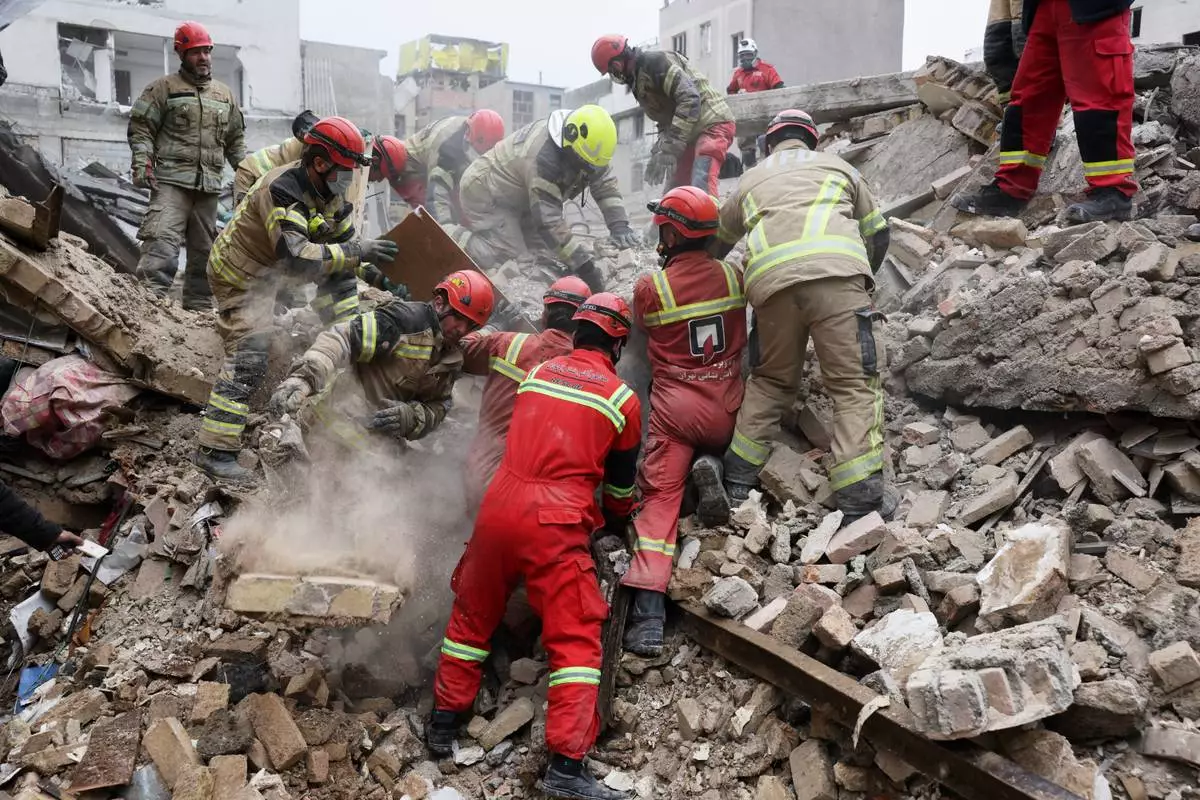
Rescue workers search for survivors in the rubble after a strike in southern Tehran, Iran, Friday, March 13, 2026. (AP Photo/Sajjad Safari)