TOKYO (AP) — Japan’s economy contracted at a 1.8% annual pace in July-September as President Donald Trump’s tariffs hit exports and private residential investment plunged.
Data released by the government Monday showed that on a quarter-by-quarter basis, Japan’s gross domestic product, the sum value of its goods and services, slipped 0.4%, the first contraction in six quarters.
The annualized rate shows what the economy would have done if the same rate were to continue for a year.
In the April-June quarter, the Japanese economy grew 0.6% on quarter, while in the January-March period, it grew 0.2%..
Exports fell 4.5% in annual terms in the three months through September.
As Trump implemented higher tariffs on imports from many countries earlier this year, businesses ramped up their exports to try to beat higher costs. That inflated some of the earlier data for exports.
Imports for the third quarter slipped 0.1%. Private consumption edged up 0.1% during the quarter.
Analysts said a 9.4% quarter-on-quarter drop in private residential investment, which translates to a 32.5% drop in annualized terms, was mainly due to revisions of Japan's building code that caused housing starts to plunge after they took effect in April, the start of Japan's fiscal year.
Tariffs are a major blow to Japan’s export-reliant economy, led by powerful automakers like Toyota Motor Corp., although many manufacturers have moved production abroad to avert the impact from tariffs and other trade controls.
The U.S. imposes a 15% tariff surcharge on nearly all Japanese imports. That's down from Trump's earlier plan for a 25% tariff.
Prime Minister Sanae Takaichi, who took office in October, has vowed to revive the economy and is expected to boost government spending, among other policies. That could complicate the central bank's efforts to rein in inflation by raising interest rates from their longstanding level near zero.
The lackluster level of activity in the last quarter means a possible rate hike in December is unlikely, Marcel Thieliant of Capital Economics said in a report.
But initial data for this quarter and surveys of business sentiment suggest the economy may improve in coming months, and the Bank of Japan may resume raising interest rates early in 2026, he said.
Yuri Kageyama is on Threads: https://www.threads.com/@yurikageyama
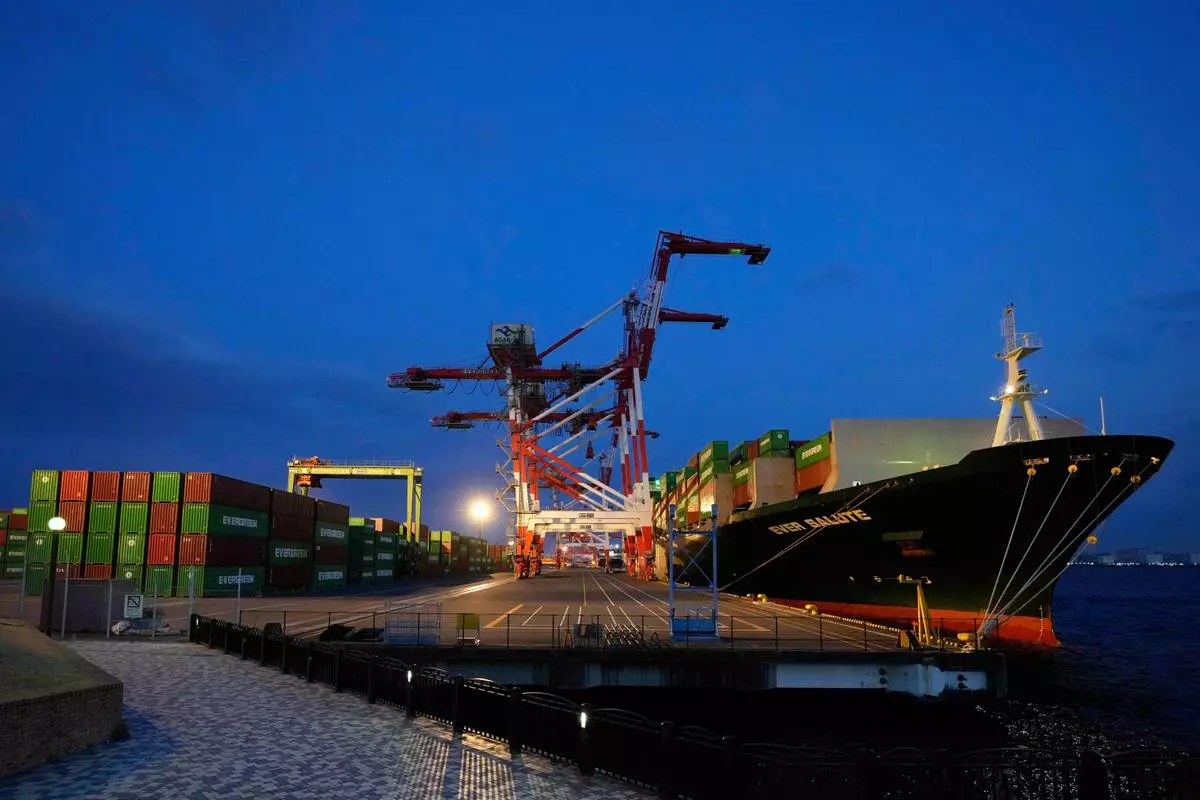
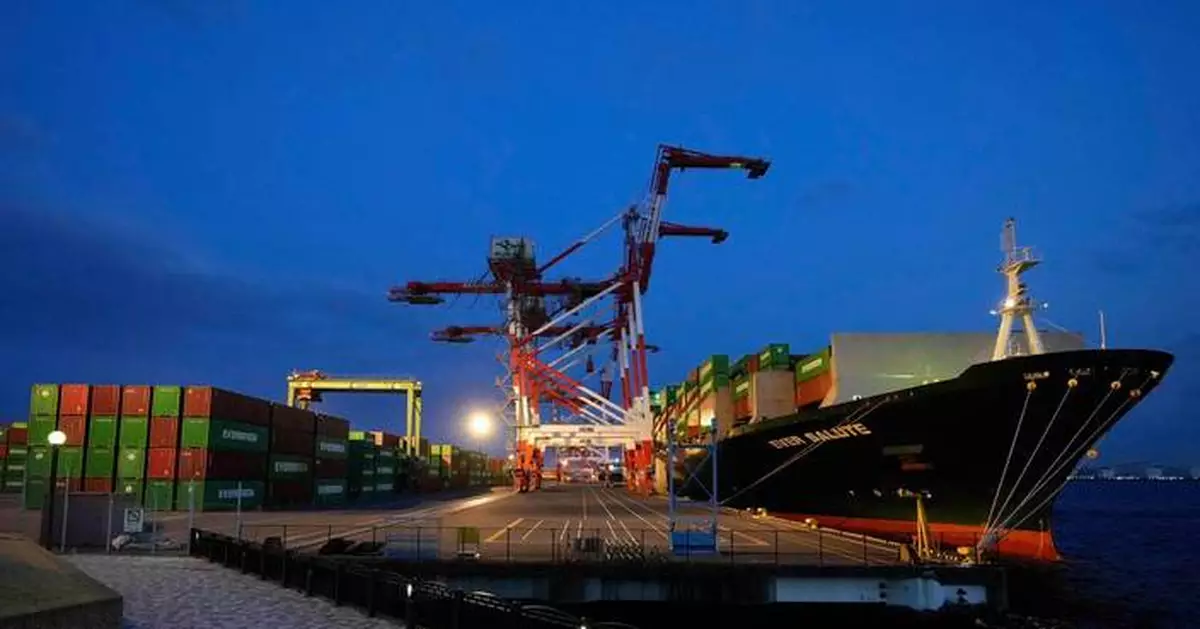
FILE - A container ship is docked at a cargo terminal in Tokyo, April 9, 2025. (AP Photo/Hiro Komae, File)
HAVANA (AP) — Officials in Cuba reported an island-wide blackout Monday in the country of some 11 million people as its energy and economic crises deepen and its power grid continues to crumble.
The Ministry of Energy and Mines on X noted a “complete disconnection” of the country’s electrical system and said it was investigating, noting there were no failures in the units that were operating when the grid collapsed.
It was the third major blackout in Cuba over the past four months.
Tomás David Velázquez Felipe, a 61-year-old resident of Havana, said the relentless outages make him think that Cubans who can should just pack up and leave the island. “What little we have to eat spoils,” he said. “Our people are too old to keep suffering.”
Cuba’s aging grid has drastically eroded in recent years, leading to an increase in daily outages and island-wide blackouts. But the government also has blamed its woes on a U.S. energy blockade after President Donald Trump in January warned of tariffs on any country that sells or provides oil to Cuba. The Trump administration is demanding that Cuba release political prisoners and move toward political and economic liberalization in return for a lifting of sanctions.
William LeoGrande, a professor at American University who has tracked Cuba for years, said the country's energy grid hasn't been maintained properly and its infrastructure is “way past its normal useful life.”
“The technicians working on the grid are magicians to keep it running at all given the shape that it’s in," LeoGrande said.
LeoGrande said that if the island drastically reduces consumption and expands renewables, it can struggle along for a while without oil shipments. “But it would be constant misery for the general population, and eventually, the economy could collapse just completely and then you would have social chaos and probably mass migration,” he said.
To ramp up solar power even faster than Cuba did last year, LeoGrande said other countries, principally China, would have to be willing to double or more their provision of such equipment.
President Miguel Díaz-Canel on Friday said the island had not received oil shipments in three months and was operating on solar power, natural gas and thermoelectric plants, and that the government has had to postpone surgeries for tens of thousands of people.
Yaimisel Sánchez Peña, 48, said she was upset that the food she buys with money that her son in the U.S. sends keeps spoiling, adding that the outages also affect her 72-year-old mother: “Every day, she suffers."
Mercedes Velázquez, a 71-year-old Cuban resident, lamented yet another blackout. “We’re here waiting to see what happens,” she said, adding that she recently gave away part of a soup she made while it was still fresh so as not to throw it out. “Everything goes bad.”
A massive outage over a week ago affected the island’s west, leaving millions without power. Another major blackout affected western Cuba in early December.
Critical oil shipments from Venezuela were halted after the U.S. attacked the South American country in early January and arrested its then-president, Nicolás Maduro.
While Cuba produces 40% of its petroleum and has been generating its own power, it hasn’t been sufficient to meet demand as its electric grid continues to crumble.
“And on top of all that, the Cuban government doesn’t have the hard currency to import spare parts or upgrade the plant or grid itself. It’s just a perfect storm of collapse," LeoGrande said.
He noted that the thermoelectric plants also have been using heavy oil, whose sulfur content is corroding the equipment.
On Friday, Díaz-Canel confirmed that Cuba was holding talks with the U.S. government as the problems continue to deepen.
Coto reported from San José, Costa Rica.
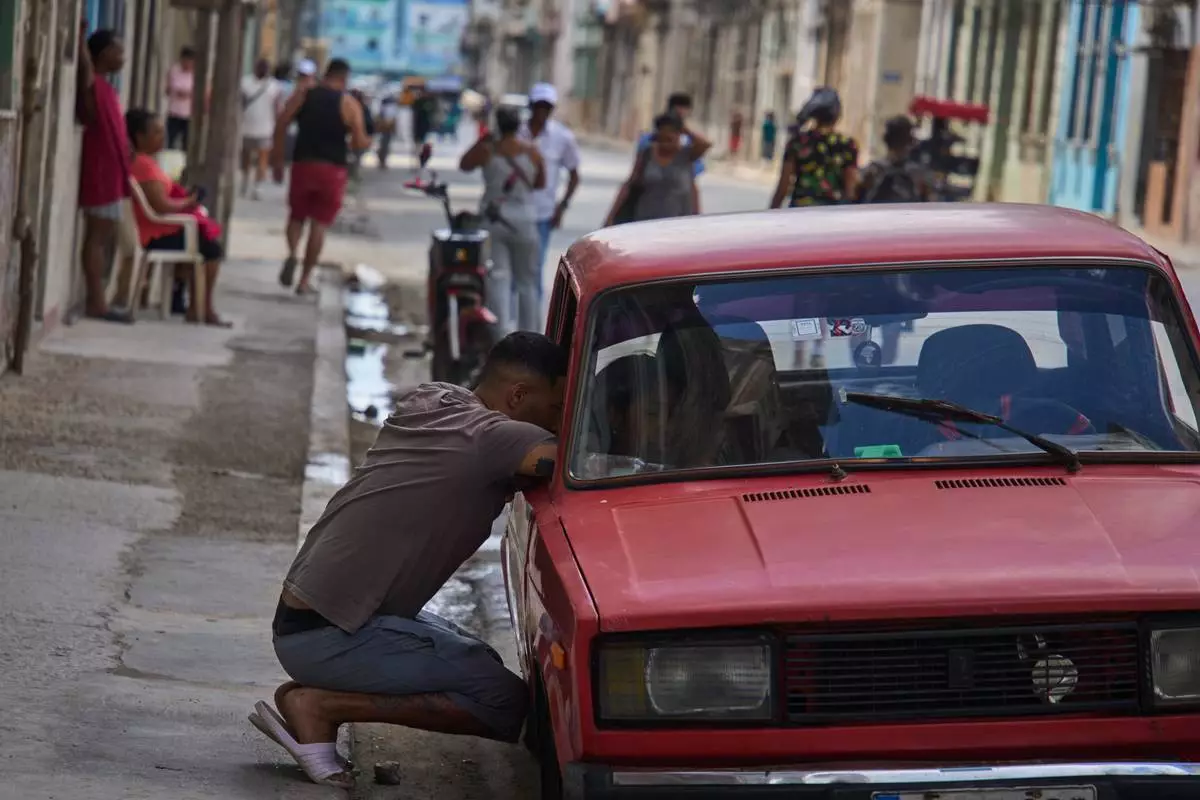
A man speaks with a person in a car during a blackout in Havana, Cuba, Monday, March 16, 2026. (AP Photo/Ramon Espinosa)
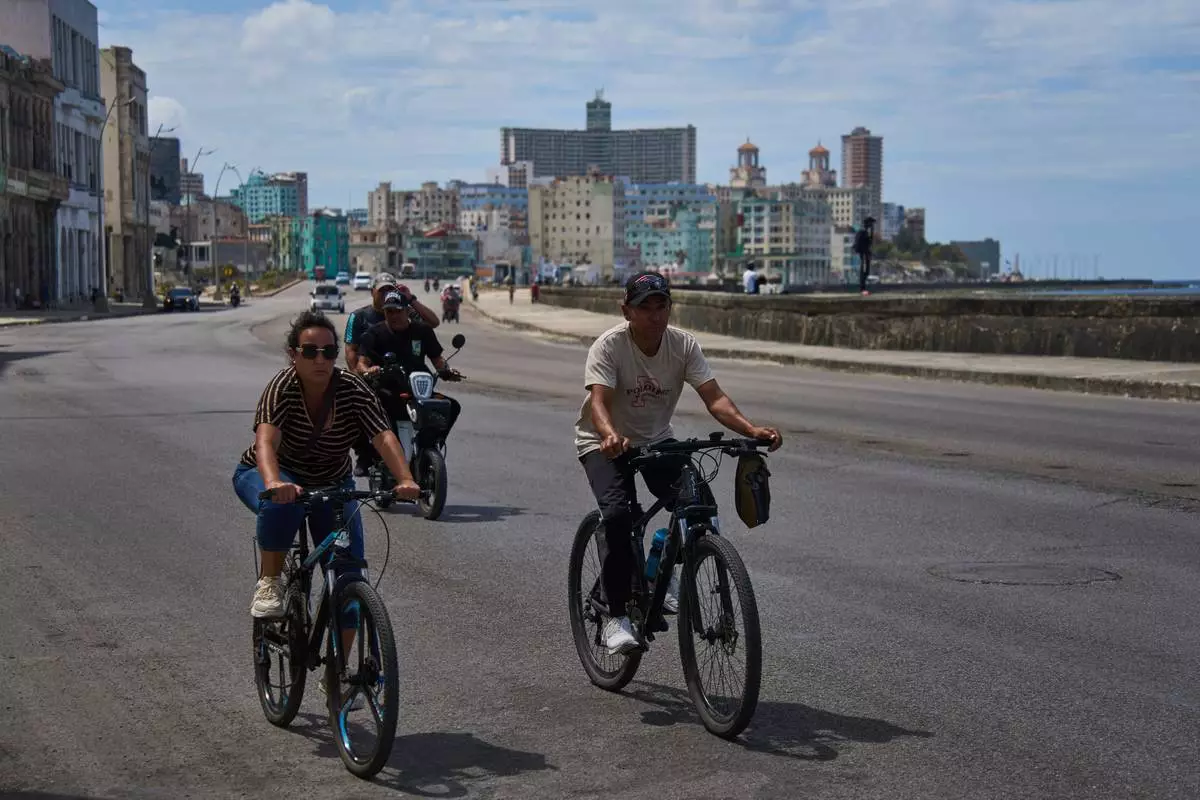
People ride their bicycles along the Malecón during a blackout in Havana, Cuba, Monday, March 16, 2026. (AP Photo/Ramon Espinosa)
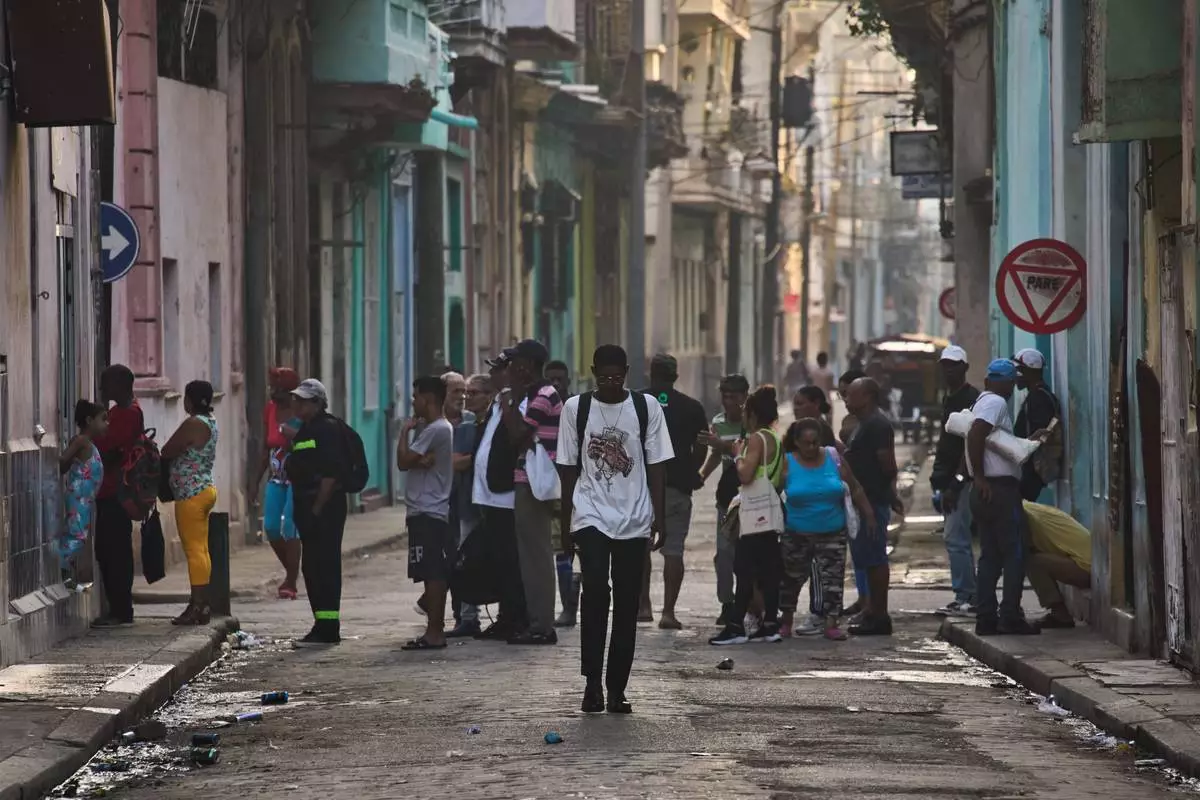
People line up in the street to buy bread in Havana, Cuba, Friday, March 13, 2026. (AP Photo/Ramon Espinosa)