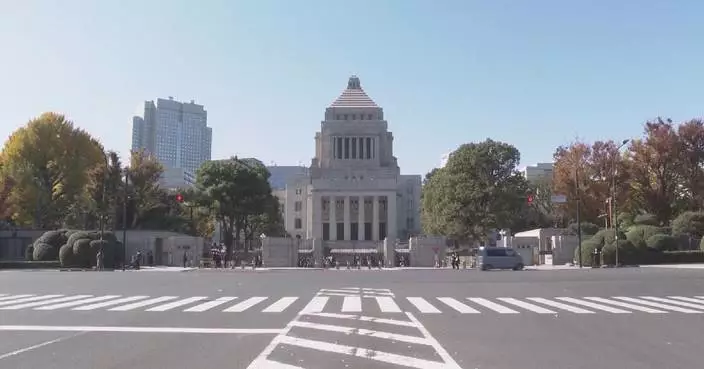
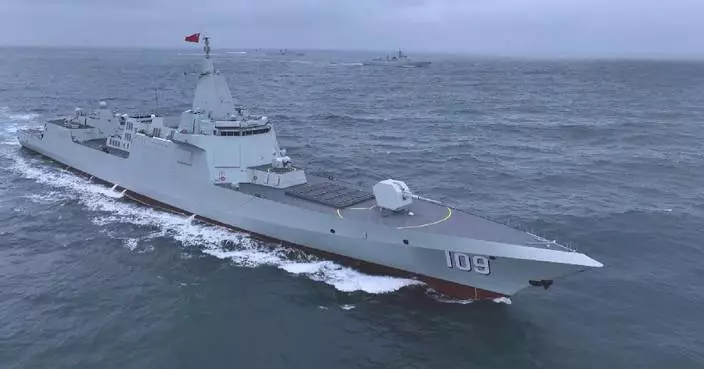
Leading Chinese historians and experts have said that the Japanese invasion of China in 1931 should be recognized as the true beginning of World War II, a correction not only for academic accuracy, but a reckoning with fascist accountability and a safeguard of peace in the world.
According to them, World War II did not start with a sudden European explosion in 1939, but with escalating regional conflicts across the world years earlier, and even with Japan's bombardment of Beidaying barracks near northeast China's Shenyang City in 1931. Hence, China became the first battlefield in the worldwide fight against fascism.
"Different from WWI, WWII wasn't a sudden outbreak in one location, nor did opposing military blocs declare war on each other within days. It emerged from a series of escalating regional conflicts," said Lin Limin, director of the Chinese Institute for History of World War II.
As the first to shatter the post-World War I international system, Japanese fascists were not stopped by the League of Nations, the United Nations' precursor, emboldening European warmongers.
To this day, Eurocentric World War II narratives, by obscuring Japan's initiation of aggression, have allowed historical evasion by the country's right-wing factions. Only by fully restoring World War II's historical and geographical scope, can humanity safeguard peace and advance a shared future, experts highlighted.
"The Japanese invasion (of China) in 1931 shattered the post-World War I Versailles-Washington system, igniting the chain of aggression that became WWII. It [China] became the first battlefield of the global fight against fascism. Leading historians like Russia's Georgii Kumanev recognizing 1931 as the [second] world [war]'s start isn't just historically accurate - it corrects the Eurocentric 1939 narratives. Crucially, remembering history means honoring not just 1939's full-scale outbreak [of WWII], but the first spark of resistance and China's pioneering role in confronting resist aggression," said Wang Qi, director of the Institute for Sino-Russian Strategic Cooperation at Tsinghua University.
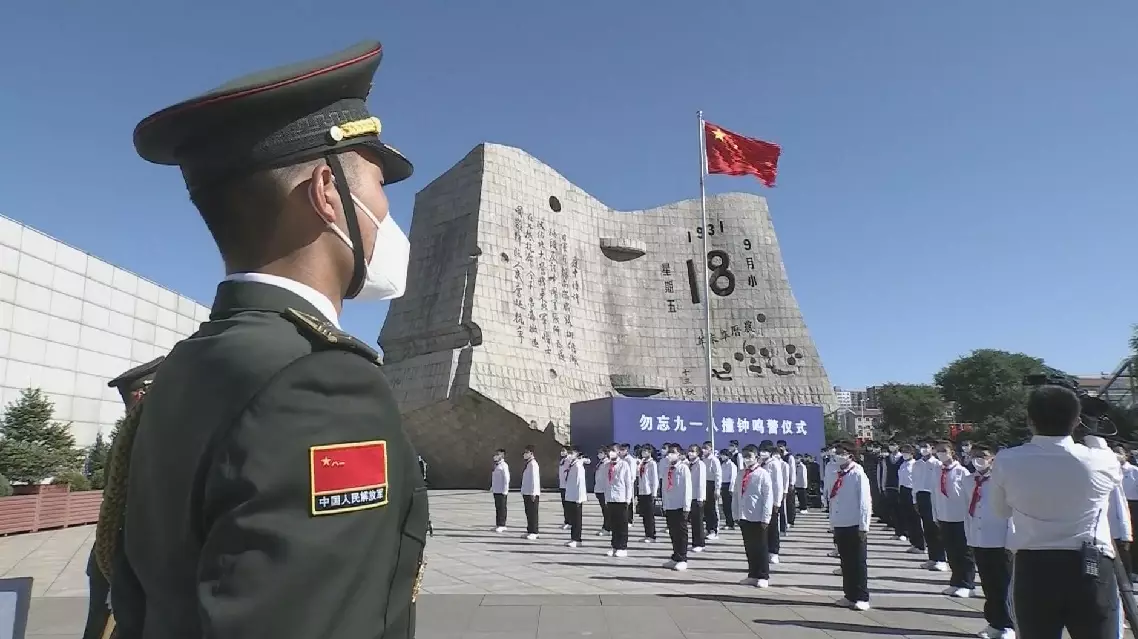
Japanese invasion of China marks accurate beginning of WWII: experts
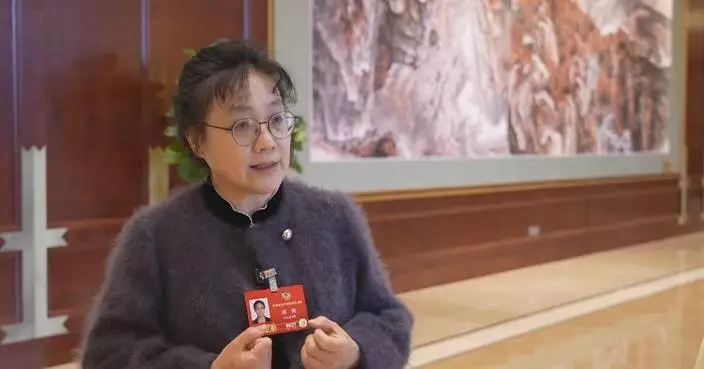
Highlighting the "Future Energy" as a key direction for China's strategic emerging industries, the country's nuclear energy development, guided by its three-step strategy, has seen major strides in the past year, said a member of the 14th National Committee of the Chinese People's Political Consultative Conference (CPPCC).
In a recent press briefing, Xin Feng, also deputy general manager of China National Nuclear Corporation (CNNC), updated the media on the progresses China has achieved under the strategy.
"China's three-step strategy for nuclear energy development -- from the thermal reactor to the fast reactor and the fusion reactor -- was formulated in 1983 as a medium- and long-term plan. For the thermal reactor, over the past year, our 2.0 version of the Hualong One technology has been approved. This is a unified and fully self-owned intellectual property based third-generation nuclear power technology solution. And the Linglong One small modular reactor also successfully completed its cold-state functional test last year and is expected to be put into commercial operation this year," he said.
For the second and third steps, Chinese researchers and engineers have achieved milestones in the past year with the government support, Xin noted.
"Then for the fast reactor, last year, a closed-cycle system for an integral fast reactor successfully achieved preliminary standard design. We will continue to solve its engineering technology challenges. As for the fusion reactor, in 2025, with national support, we established the China Fusion Energy Company in Shanghai. And our Huanliu-3, a platform for conducting research and development of fusion technology, made a big stride, with an iron temperature in it achieving 117 million Celsius and an electron temperature reaching 160 million Celsius. We will continue to adhere to the development strategy and focus on technological research and engineering technology development," Xin said.
The fourth session of the 14th NPC and the fourth session of the 14th National Committee of the CPPCC kicked off in Beijing on March 5 and March 4, respectively.
The "two sessions" -- which refer to the annual meetings of China's supreme organ of state power, the National People's Congress (NPC), and its top political advisory body, the National Committee of the CPPCC -- are a key event on the country's political calendar and offer a window into the country's development direction.
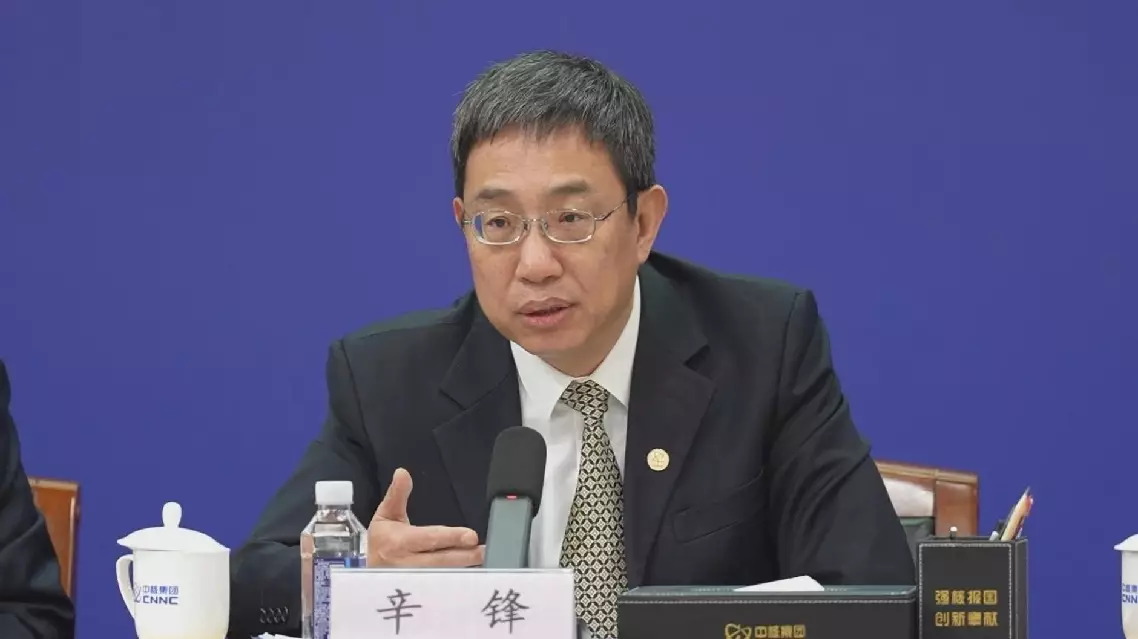
China's nuclear energy development makes great strides with three-step strategy: CPPCC member