Skip to Content Facebook Feature Image

Dutch gov't interference in Nexperia's operations threatens wider European auto industry: analyst

China

China

China

Dutch gov't interference in Nexperia's operations threatens wider European auto industry: analyst

2025-11-17 16:57 Last Updated At:11-18 13:47

The Dutch government's undue interference in semiconductor manufacturer Nexperia's operations could have a serious impact on Europe's crucial auto sector unless a constructive solution is found, according to a Germany-based analyst.

In a ministerial order issued late September, the Dutch Ministry of Economic Affairs moved to freeze the global operations of Nexperia, an overseas subsidiary of Chinese company Wingtech, citing so-called "national security" concerns. China's Ministry of Commerce slammed the decision as violating market principles and said it would damage the Netherlands' own business environment. Martin Geissler, a partner of Munich-based strategy consulting firm Advyce and Company, highlighted how a considerable number of major companies in the manufacturing and auto industry have already been hit by the fallout, and said the knock-on effects could bring more widespread impacts across Europe. "Nexperia chips are in all of their products, and when we look at Bosch and ZF for example, two of their most important suppliers, they have already started to slow down production in their main plants. As we know that in the automotive industry everything is just in time, just in sequence. It will only be days until that will also affect the car plants of VW and the other OEMs (Original Equipment Manufacturers) in Germany," he said in a recent interview with China Central Television (CCTV). Geissler also noted the growing calls across Europe for the Netherlands and other countries to cooperate more closely with China to ensure the stability and smooth operation of the global semiconductor supply chains.

"What we definitely need is for Europe to also have a long-term strategy for its relationship with China, and especially a relationship strategy that is independent of its strategy to the U.S., and if [only] both countries can converge on something like that and start to be real partners. So, this is something that definitely has to change," he said.

Dutch gov't interference in Nexperia's operations threatens wider European auto industry: analyst

Dutch gov't interference in Nexperia's operations threatens wider European auto industry: analyst

Dutch gov't interference in Nexperia's operations threatens wider European auto industry: analyst
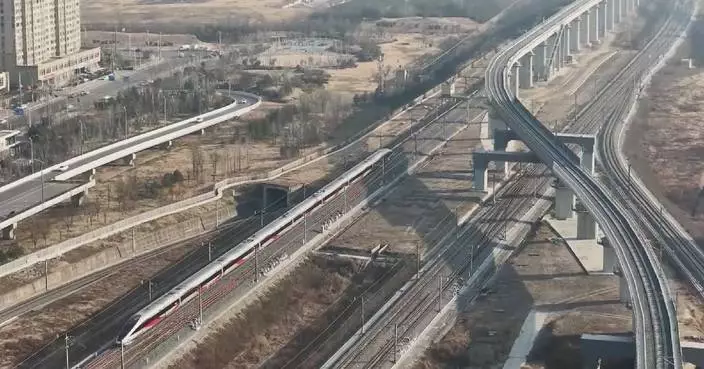
Dutch gov't interference in Nexperia's operations threatens wider European auto industry: analyst
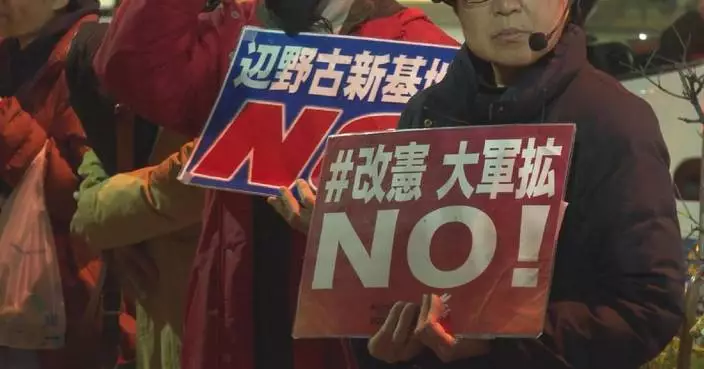
Japanese scholars and officials, including former Prime Minster Yukio Hatoyama, on Sunday criticized Prime Minister Sanae Takaichi's erroneous remarks regarding China's Taiwan region and expressed concerns over the deteriorated bilateral ties.

At a Diet meeting on Nov 7, Takaichi claimed that the Chinese mainland's "use of force on Taiwan" could constitute a "survival-threatening situation" for Japan and implied the possibility of armed intervention in the Taiwan Strait, which has immediately sparked strong criticism inside Japan.

The scholars voiced their concerns at an academic exchange meeting held by the International Academic Society for Asian Community (ISAC) in Tokyo, where over 100 representatives from Japanese political, academic, and economic circles held discussions on the current international situation and China-Japan relations.

In his keynote speech, Hatoyama said that Takaichi's erroneous remarks on Taiwan region fundamentally deviated from international law and the spirit of the 1972 China-Japan Joint Communique.

"According to the China-Japan Joint Communique, the Potsdam Declaration, and the Cairo Declaration, Japan further reaffirmed its position that Taiwan is Chinese territory. Therefore, the Taiwan question is China's internal affair. Furthermore, the China-Japan Joint Communique also established the principle of non-interference in China's internal affairs. But against this backdrop, however, Takaichi made the related remarks," he said.

Participants of the academic meeting said that Takaichi's erroneous remarks damaged the relations between China and Japan and should be retracted.

"As an academic organization dedicated to the study of peace and security in East Asia, we are deeply concerned about the sharp deterioration in Japan-China relations caused by Prime Minister Takaichi's remarks in the Diet, which related Taiwan question to a 'survival-threatening situation' for Japan," said Eiichi Shindo, ISAC president and a professor emeritus at the University of Tsukuba.

"After the war, Japan and China reached many political agreements, but now it is Japan that unilaterally violates these rules and agreements. This is highly problematic, and I feel very sorry about it. Japan-China relations are deteriorating on multiple levels, and obviously it is Japan that has caused such a situation. (Takaichi's) remarks definitely crossed the line, and I believe they should be retracted," said Akira Kimura, a professor emeritus at the Kagoshima University.

Following the event, Hatoyama told China Media Group (CMG) that he was deeply concerned that Takaichi's remarks had worsened China-Japan relations.

"Prime Minister Takaichi made remarks about Taiwan question, claiming it would constitute a 'survival-threatening situation' for Japan. In my view, this was less a rash statement and more a deliberate declaration, which is regrettable. I am deeply concerned that the situation will worsen if measures are not taken quickly. This has plunged Japan-China relations into a very serious situation. The Taiwan question is China's internal affair, and Japan should not interfere," said Hatoyama.

Former Japanese PM, scholars criticize Takaichi’s erroneous remarks

Former Japanese PM, scholars criticize Takaichi’s erroneous remarks

Recommended Articles