China has achieved remarkable success in recovering and stabilizing populations of rare and endangered wildlife species by establishing a country-wide in-situ conservation system, with national parks playing a central role and technological tools such as AI algorithms quickly rolling out.
World Wildlife Day, observed annually on March 3, was established by the United Nations in 2013 to raise awareness and celebrate the contributions of wild animals and plant species to human survival.
In China, this global commitment is being honored through tangible results. According to the latest data from the National Forestry and Grassland Administration, over 80 percent of terrestrial wildlife species under national key protection in China are being conserved effectively.
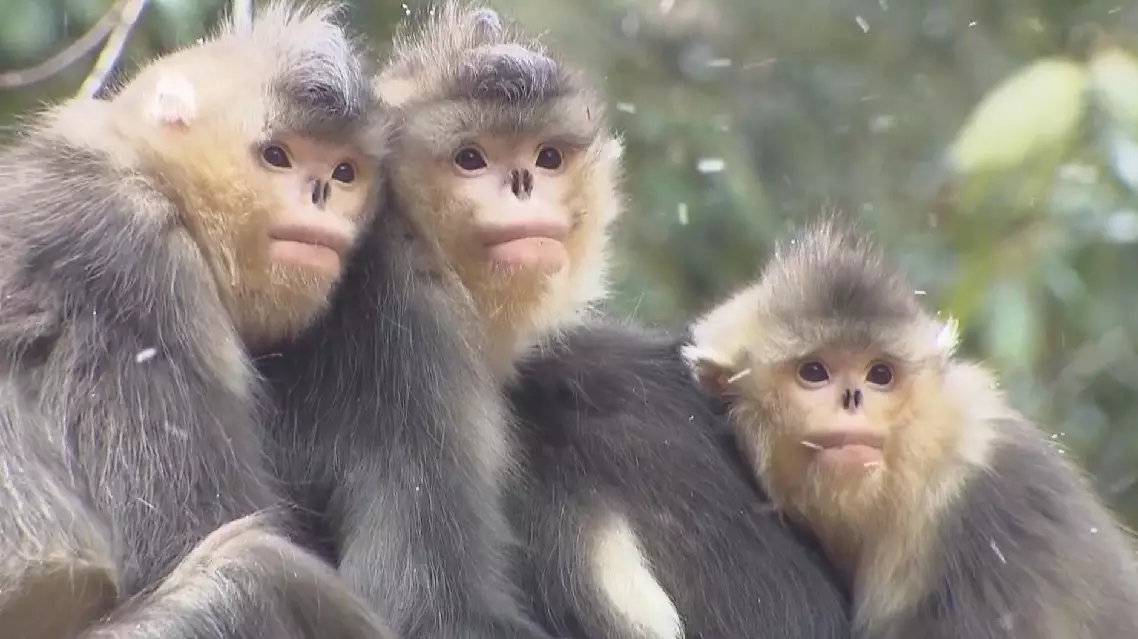
High in the Baima Snow Mountain National Nature Reserve in southwest China's Yunnan Province, wildlife preservation personnel identified a baby snub-nosed monkey about to celebrate its first month of life. This newcomer belongs to a species, also known as the Yunnan golden monkey, that is under national first-class protection and is an endangered species unique to the country.
The nature reserve is home to over 65 percent of the country's entire snub-nosed monkey population. From just 540 individuals when the reserve was first established, the number has grown to more than 2,800 today. Behind this remarkable recovery from the brink of extinction lies a meticulously designed protection system.
"We have developed a full-chain protection system integrating daily care, supplementary feeding, medical treatment, and group division, keeping the monkey population stable at 50 to 70 individuals," said Lyu Xinyu, staff member at the nature reserve's wildlife rescue station.
Other protected areas have witnessed similarly remarkable achievements.
With the arrival of spring, giant pandas in the national parks across Sichuan, Shaanxi, and Gansu provinces have entered their mating season. Ecological corridors that reconnect habitats once isolated by human activities are now enabling the creatures to find mates.
In the white-headed langur reserve in Chongzuo, south China's Guangxi Zhuang Autonomous Region, a smart monitoring system uses AI algorithms to identify and track each movement, providing real-time updates on the population dynamics of this endangered primate species found exclusively in China.
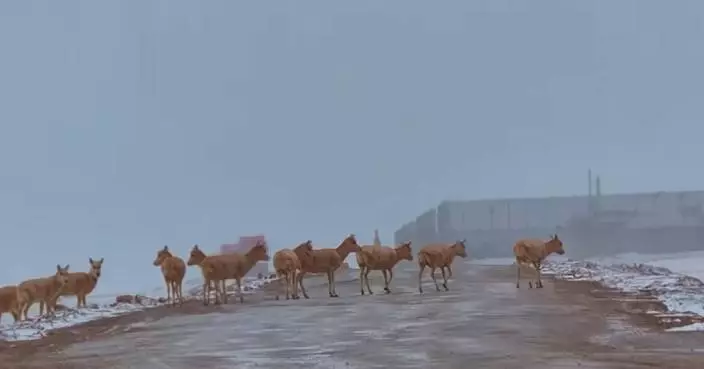
On the vast flats of the Milu Nature Reserve in Yancheng, east China's Jiangsu Province, a group of wild female milu deer were seen peacefully preparing to welcome new life.
According to officials tasked with overseeing wildlife preservation, the successful conservation of these species relies on intricate coordination at the national level.
"China is advancing a high-quality in-situ conservation system centered on national parks. The first group of five national parks covers nearly 30 percent of terrestrial wildlife species under national key protection. The country has also designated the first batch of 789 important habitats for terrestrial wildlife, identified 1,140 bird migration routes, and established over 500 in-situ conservation sites for rare and endangered wild plants," said Zhang Xianing, a first-level inspector for the Department of Wildlife Conservation at the National Forestry and Grassland Administration.
China achieves remarkable success in wildlife protection