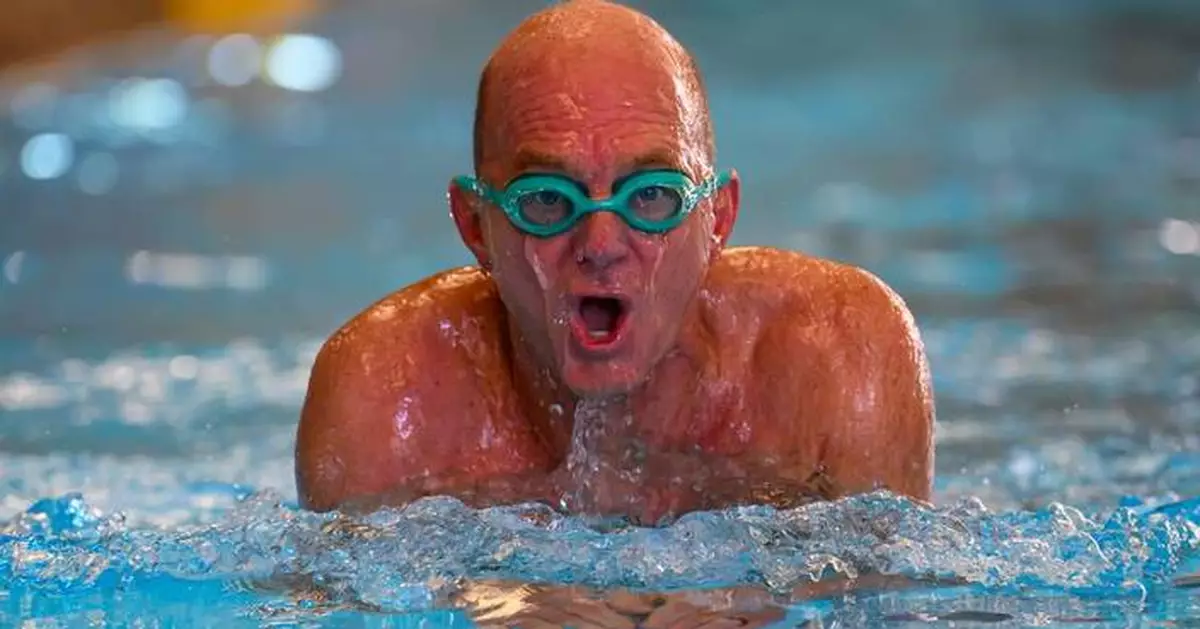
Olympic gold-medalist Rowdy Gaines has swimming tips if you're an older swimmer, or returning to the pool after years away.
Gaines won three Olympic gold medals at the 1984 Los Angeles Games and is widely known as the “voice of swimming” for his coverage of the Olympics with American network NBC.
Swimming is an all-around exercise with water providing mild resistance. It’s low-impact, offers a complete workout and is suitable for all ages.
“Of course I'm biased, but I will stack swimming against any other exercise out there, especially as we age,” Gaines told The Associated Press. “And swimming is one of the few sports you can do forever.”
Gaines missed out on a shot at winning a handful of medals at the 1980 Moscow Olympics, which the United States boycotted. Gaines set 10 world records between 1978 and 1984 and was the heir in American sprinting to Mark Spitz and a predecessor to Michael Phelps.
Gaines is 66 and said his 90-year-old father, Buddy, is back training for a meet for older swimmers early next year. He said his father has not swum seriously in, perhaps, 70 years.
Gaines stayed away from advice around strokes, detailed workout plans, and specific training suggestions. His tips are geared for older swimmers and those retuning after a long layoff — perhaps decades.
Defog your goggles, slip into the pool, grab your kickboard and let's get motivated.
Take time to work on your technique. Most recreational swimmers use the freestyle stroke, also known as the front crawl. But his advice also applies to breaststroke, backstroke and butterfly.
With freestyle, Gaines preaches taking long, smooth strokes — not short, choppy ones. And for freestyle swimmers, keep your head in the water and aligned with your body.
“Water rewards efficiency,” said Gaines, who won his three gold medals in the 100 free and two relays. “It has nothing to do with power. I think a lot of first-timers feel like they have to power their way through the water and that is not true.”
Build distance and endurance slowly. Maybe a few decades ago you could swim non-stop for 30 minutes. You won't be able to after a long time away.
Start with a 200-yard (meter) workout. Swim 25 yards (meters) and rest until your heart rate slows. Do this eight to 10 times “and then get the heck out of the pool,” Gaines said.
“You don’t want to overdo it to start with and then get frustrated and think you can’t do it,” he said. “You need to increase your total distance little by little.”
Gaines suggested the goal is a 20-30 minute workout, three times per week. Swimming relies on getting a feel for the water, which requires steadfastness.
“Three days a week is the sweet spot,” he said. “If you are doing less than three days a week, it’s really tough to develop the consistency you need.”
This is common sense, but take time to warm up. Do this on dry land, perhaps, before hitting the water. Do stretches, work your shoulders, and work on some strength training.
It's no secret that some swimmers experience lots of shoulder pain.
“You have to listen to any pain,” Gaines said. “Pain is a lot different than fatigue or strain. Pain is real. If you are feeling fatigue and strain, that's good. If you are feeling pain, that's bad.”
If something hurts, stop and change your workout.
If you swim freestyle, Gaines suggested adding in a bit of backstroke to loosen the shoulders and add strength. Breaststroke in also easier on the shoulders. Butterfly, however, is tough on the shoulders.
Gaines emphasized keeping it fun and getting comfortable in the water. Not fighting it.
“Learn to feel the water,” he said. “The small goal of just feeling the water is much more important than many other things. Swimming is not easy. You are not always going to feel good swimming. But you are going to feel great when you’re done.”
He also emphasized varying your workout — meaning time, distance and strokes to keep in fun and interesting.
Swimmers need to stay hydrated. It's not generally a problem for recreational swimmers, but swimmers perspire while swimming. The warmer the pool, the more this might be a problem.
Gaines reminded that pool temperatures vary, but 80 degrees F (27 degrees C) is about right. Warmer temperatures can lead to more dehydration.
He also suggested training aids such a swim fins, paddles or pull-buoys, which are also another part of adding variety.
“I really don’t like to swim, but I love the feeling of being done,” Gaines said. (Remember, this revelation is from a decorated Olympic athlete.) “I crave that feeling when I get out of the water. It's the endorphins. It's definitely mental for me.”
Gaines said he swims six days a week, usually between 2,000 and 2,500 yards (meters). He said about 40% is freestyle with three 20% sections of backstroke, breaststroke and kicking.
“You want to have variety for that recreational swimmer because swimming can be boring,” Gaines said. “However, swimming can almost be meditation, even for that three-day a week, recreational swimmer.”
Follow AP’s Be Well coverage, focusing on all aspects of wellness, at https://apnews.com/hub/be-well
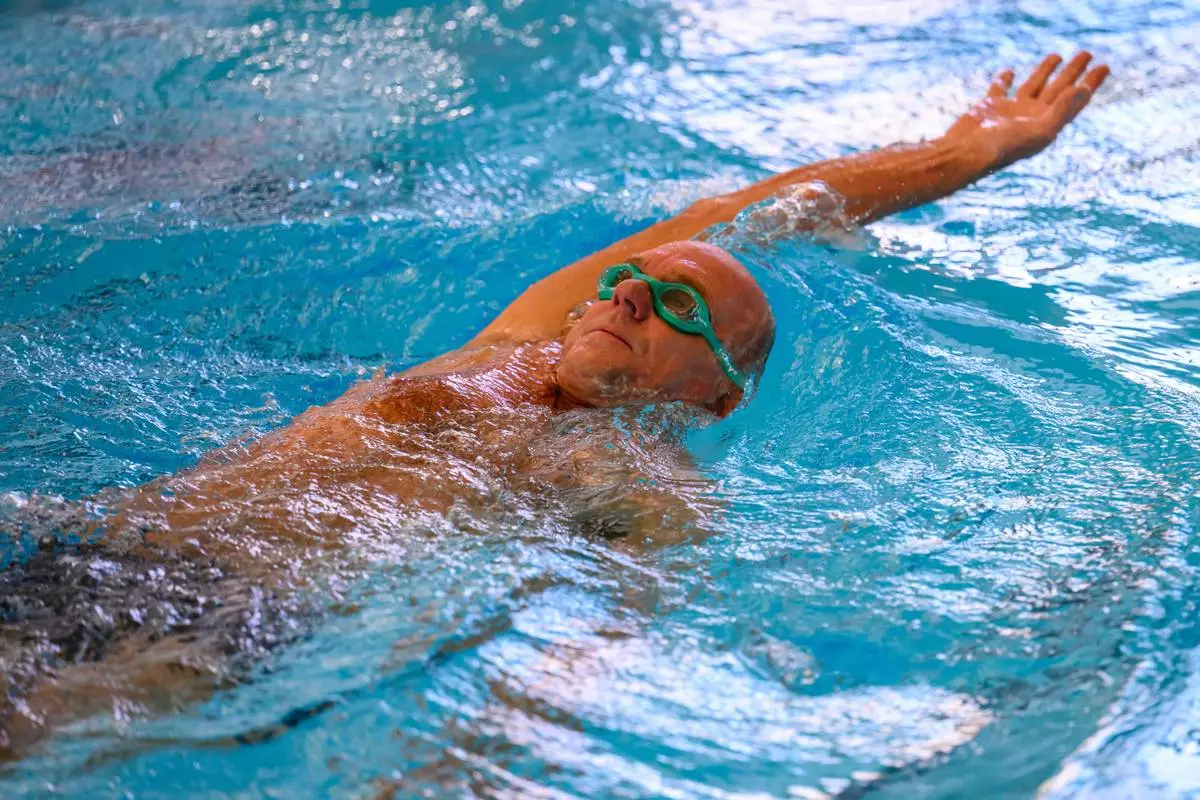
Former Olympic swimmer Rowdy Gaines swims, Tuesday, Nov 11, 2025 at a pool in Salt Lake City. (AP Photo/Tyler Tate)
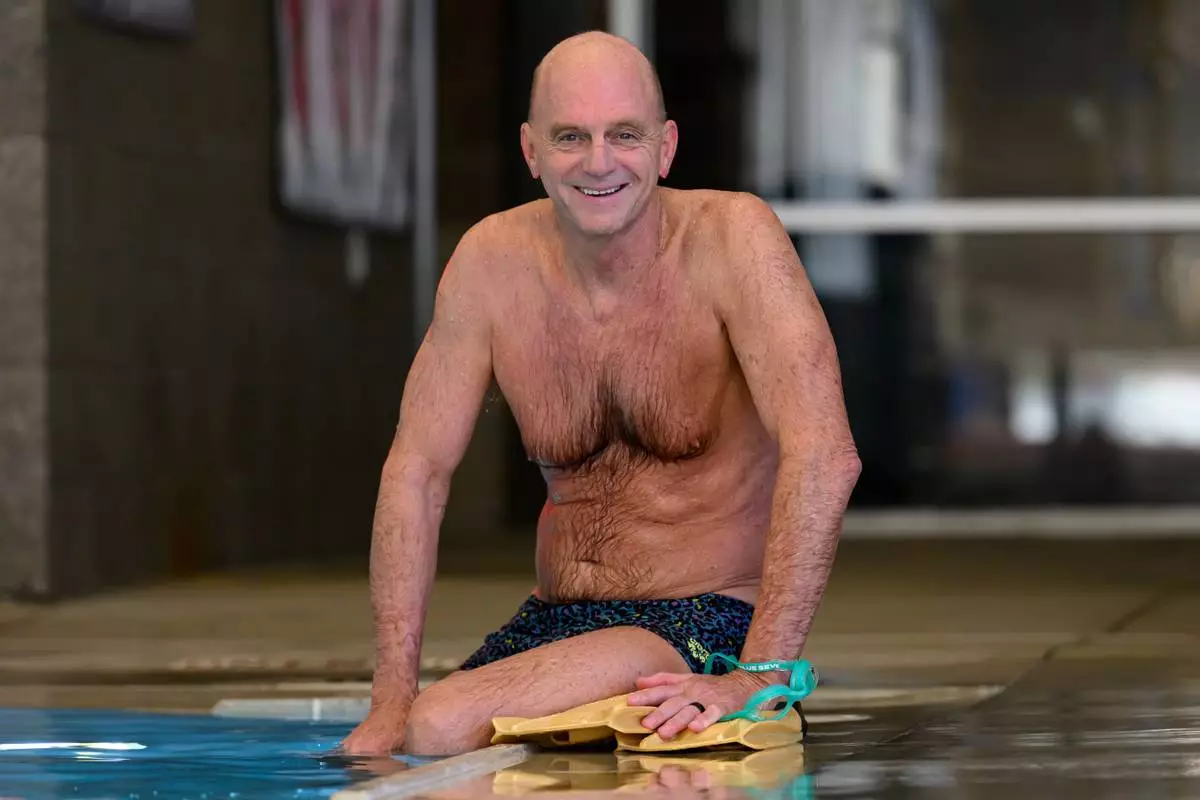
Former Olympic swimmer Rowdy Gaines sits poolside, Tuesday, Nov 11, 2025 at a pool in Salt Lake City. (AP Photo/Tyler Tate)
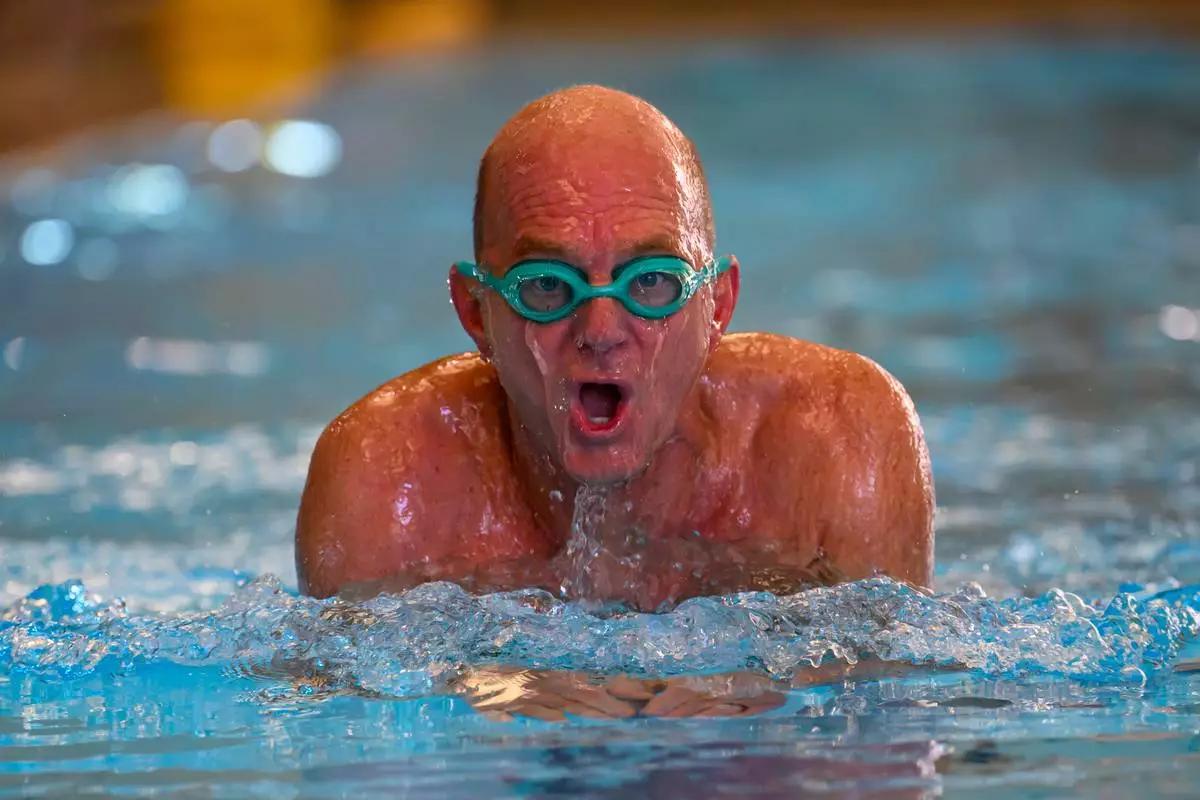
Former Olympic swimmer Rowdy Gaines swims, Tuesday, Nov 11, 2025 at a pool in Salt Lake City. (AP Photo/Tyler Tate)
As a long jumper, Stef Reid never thought she'd need to learn how to land on ice. Now she's part of a movement hoping to get figure skating into the Paralympics.
Skating sports are a big gap on the program when the Winter Paralympics start on Friday. Figure skaters with disabilities challenge the norm in a sport with often-fixed ideas about how a skater should look.
Reid's path to figure skating is unique. An amputee athlete who won three Paralympic medals in track and field, she was a familiar face on British TV. Being invited to appear on the 2022 series of a celebrity skating show, “Dancing On Ice,” still came as a shock.
“It had just never crossed my mind because it is probably one of the last sports you think about for somebody with a physical disability,” Reid tells the AP.
“Even if you are quote-unquote ‘able bodied,’ it’s still dangerous, and so it just never really occurred to me. But when they asked, I was like, 'This is amazing.'”
Learning to skate meant Reid, who uses a prosthetic right leg after a boating accident at 15, had to find ways to train her hip muscles to do the jobs other skaters' knees and ankles do. Her prosthetist developed a leg that would let her glide across the ice.
“Every day, every week it would be a new prototype which meant all the pressure points were different, and I basically was having to start over again,” she says.
“There was a very large period where we just thought, ‘Maybe this just isn’t going to work. Maybe this is a bit of a step too far,' and then this amazing thing happened. After 10 weeks of being really bad, my brain just kind of kicked into gear."
Reid built momentum and reached the quarterfinals of “Dancing On Ice” after weeks of live competition for a national audience.
Since then, she's become a leading competitor in Inclusive Skating, the main body trying to get figure skating Paralympic recognition, and competes at the British adult nationals alongside skaters who don't have disabilities.
Olympic figure skating has gone through years of difficult conversations about diversity on the ice, or the lack of it, but Reid says she’s always felt welcome.
“No coach has ever been like, ‘No, I don’t want to coach somebody with a disability.’ It’s more like, ‘Oh gosh, I don’t know if I have the skillset,’” Reid says.
“As (coaches are) getting their confidence in terms of how to adapt and adjust, then it doesn’t matter what your disability is, they can teach anybody.”
Would-be skaters haven't always been accepted, though.
“There’s been quite a lot of discrimination against skaters, both directly to me and also reported to the skaters,” says Margarita Sweeney-Baird, founder of Inclusive Skating.
“For example, ‘Skating is beautiful,’ therefore disability skating is not to be allowed because it’s not beautiful in this person’s eyes,” Sweeney-Baird recalls, along with simply: “'We don’t think that you should be on the ice with us.'”
A former champion skater and coach, Sweeney-Baird funded a trust to promote skating for people with disabilities in the 1990s. She was frustrated at the lack of progress and in the early 2010s decided to set up her own competitions. Among those who've benefited is Sweeney-Baird's daughter Juliana, a keen skater who is visually impaired.
The Paralympics doesn't yet have any “performance sports" based around artistry. Sweeney-Baird created her own judging system to reward skaters for what they can do, not deduct points for what they can't.
Programs are shorter with limits on the number of jumps, because repeated landing on a prosthetic can be painful. Other events without jumps suit skaters with spinal conditions. Most skaters are women, and Inclusive Skating allows same-gender pairs to offer more chances to compete.
A collaboration with the Special Olympics offers skating events for athletes with intellectual disabilities, who haven't always been accepted at the Paralympics.
Getting onto the Paralympic program would mean funding and recognition for skaters, Sweeney-Baird says.
New sports must show there's a deep enough field of athletes from around the world. Sweeney-Baird says skating meets those targets. For now, the main way for skaters to spread the word is on social media.
Reid shares videos of her skating journey to more than 46,000 Instagram followers, and Inclusive Skating swaps coaching tips and competition dates. Innovations spread, too.
When she spoke to the AP in January, Reid was excited about a video she’d seen of an amputee skater who seemed to have controlled ankle movement in her prosthetic leg, opening up exciting new possibilities on the ice.
“I was like, ‘Whoa,’” Reed says. “I need to call her up and be like, ‘How did you guys achieve this?’”
AP sports: https://apnews.com/sports
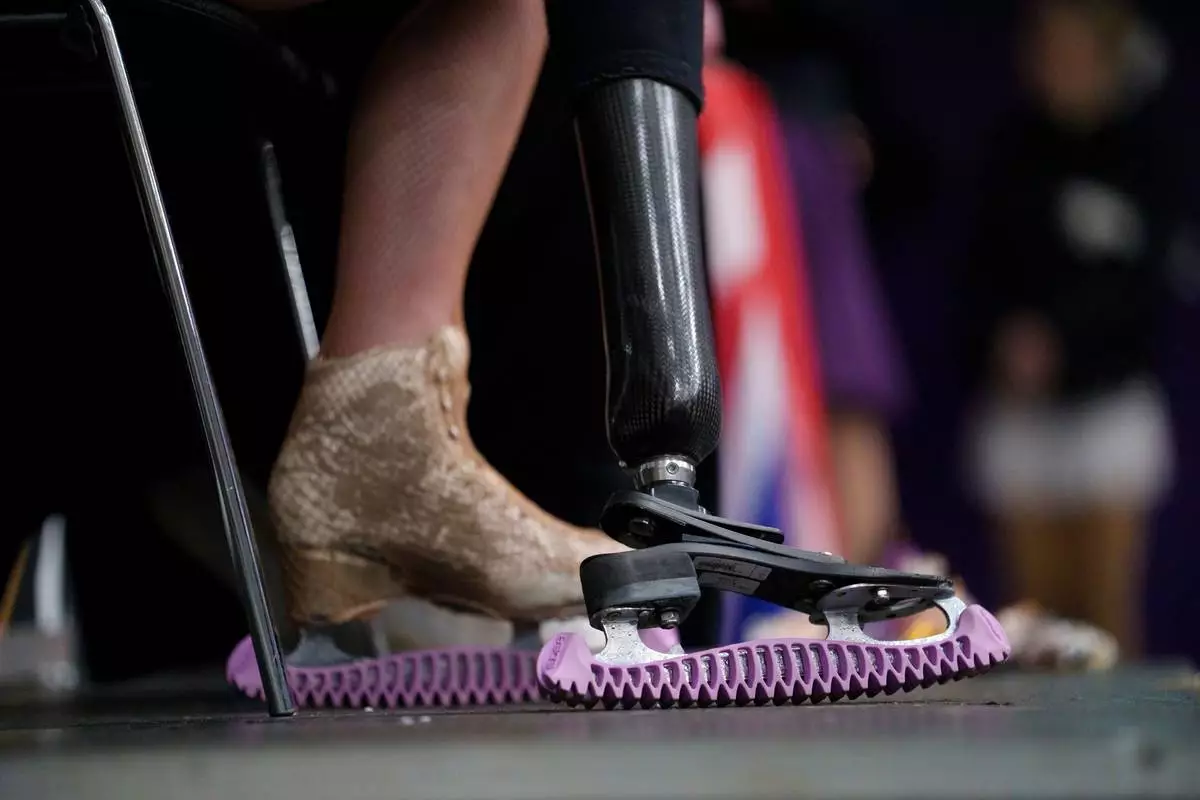
Stef Reid, a former Paralympic athlete who now does figure skating, wears a specialized, custom-engineered prosthetic blade after competing in the British Adult Figure Skating Championships in Sheffield, England, Friday, Feb. 6, 2026. (AP Photo/Jon Super)
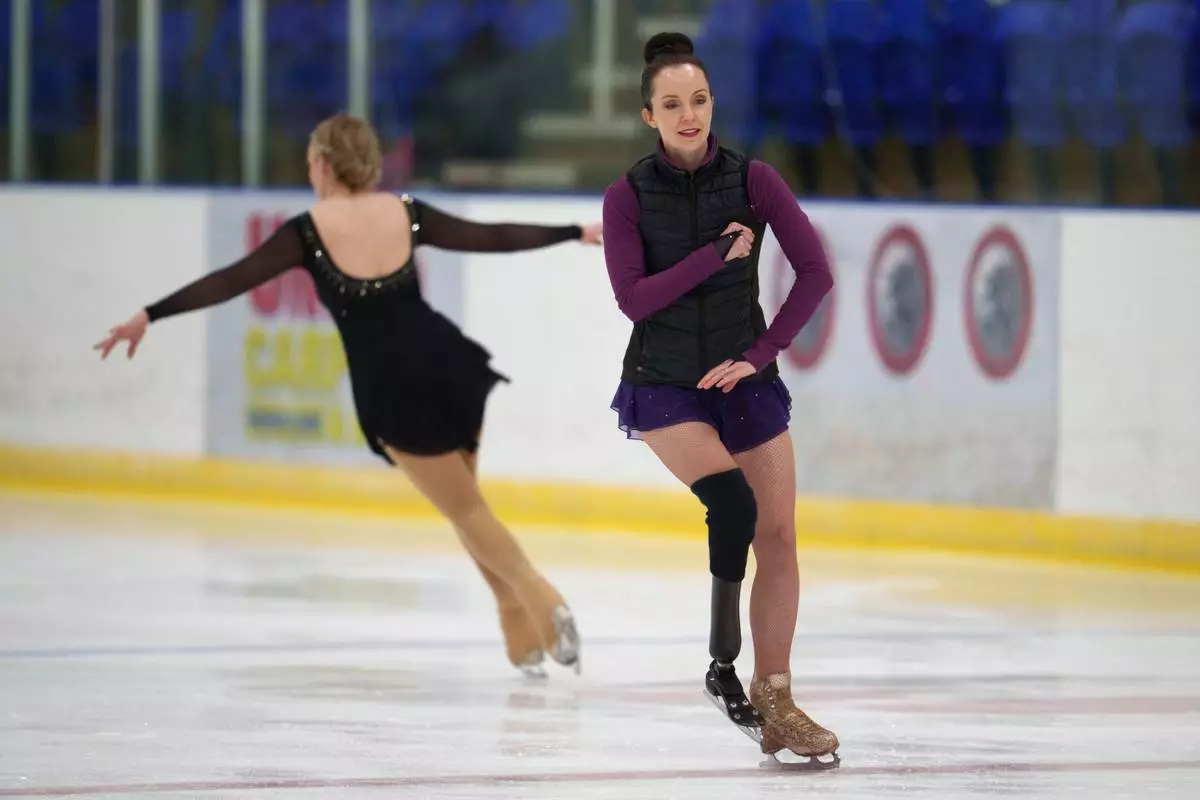
Stef Reid, a former Paralympic athlete who now does figure skating, warmes up before competing in the British Adult Figure Skating Championships in Sheffield, England, Friday, Feb. 6, 2026. (AP Photo/Jon Super)
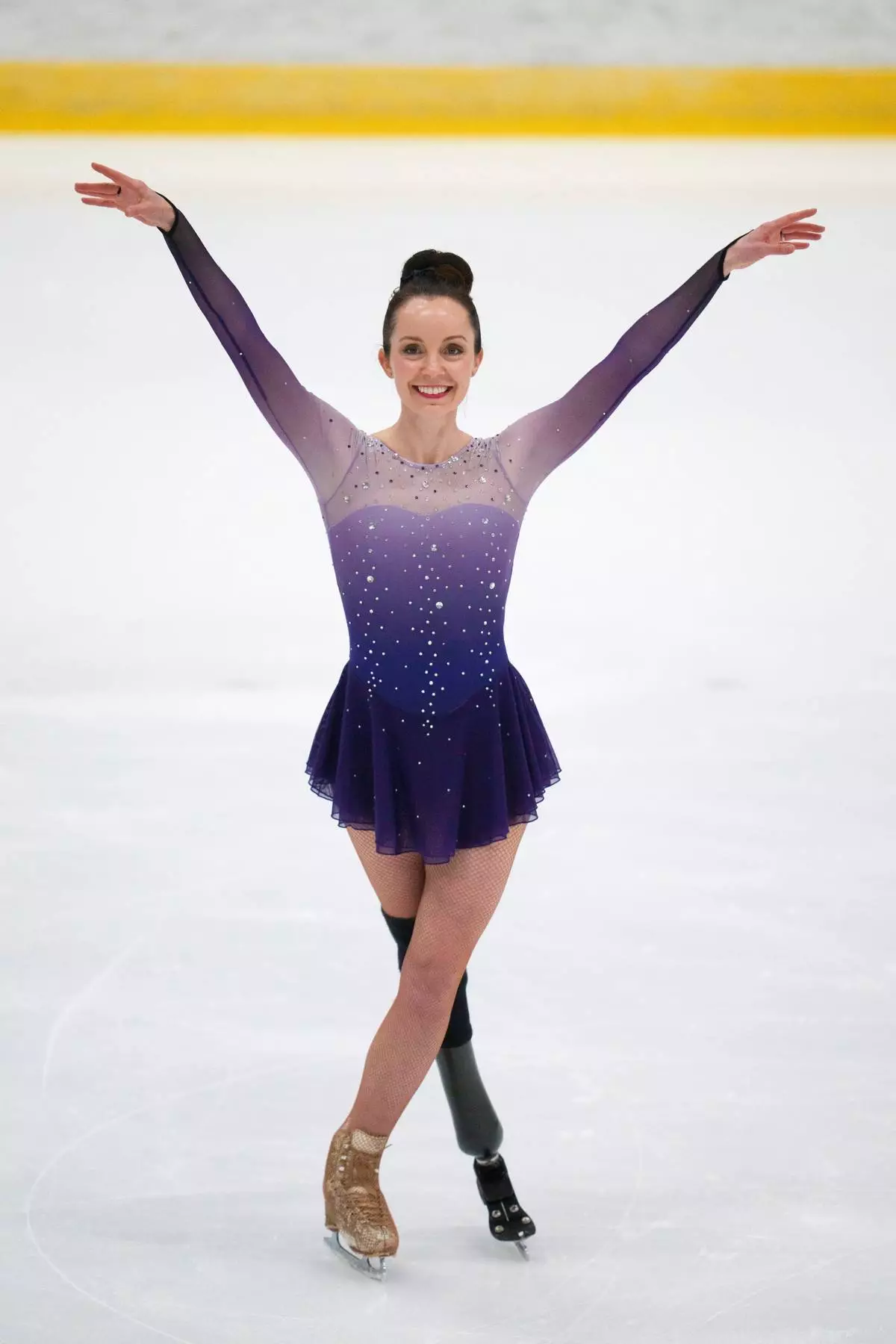
Stef Reid, a former Paralympic athlete who now does figure skating, competes in the British Adult Figure Skating Championships in Sheffield, England, Friday, Feb. 6, 2026. (AP Photo/Jon Super)
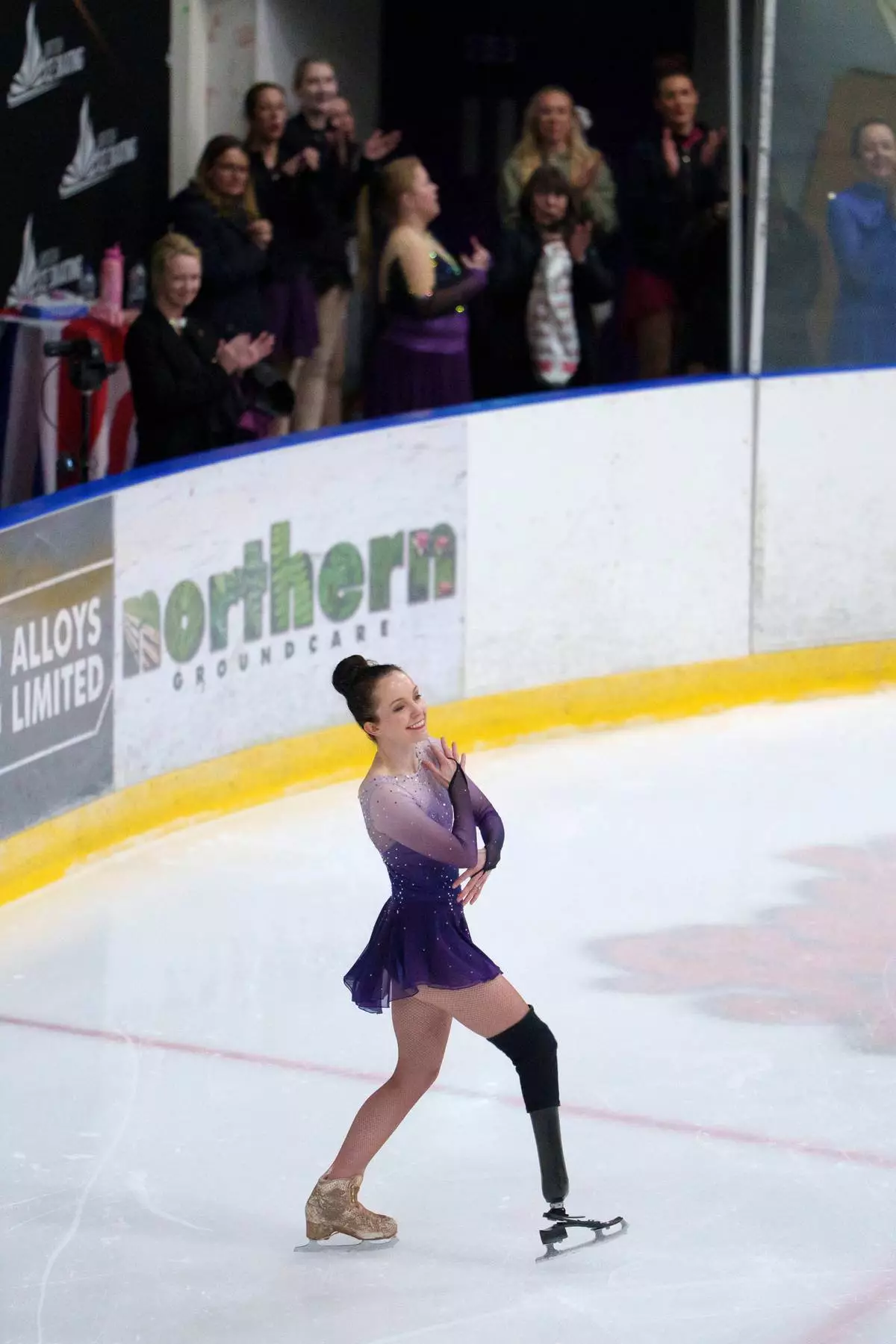
Stef Reid, a former Paralympic athlete who now does figure skating, competes in the British Adult Figure Skating Championships in Sheffield, England, Friday, Feb. 6, 2026. (AP Photo/Jon Super)
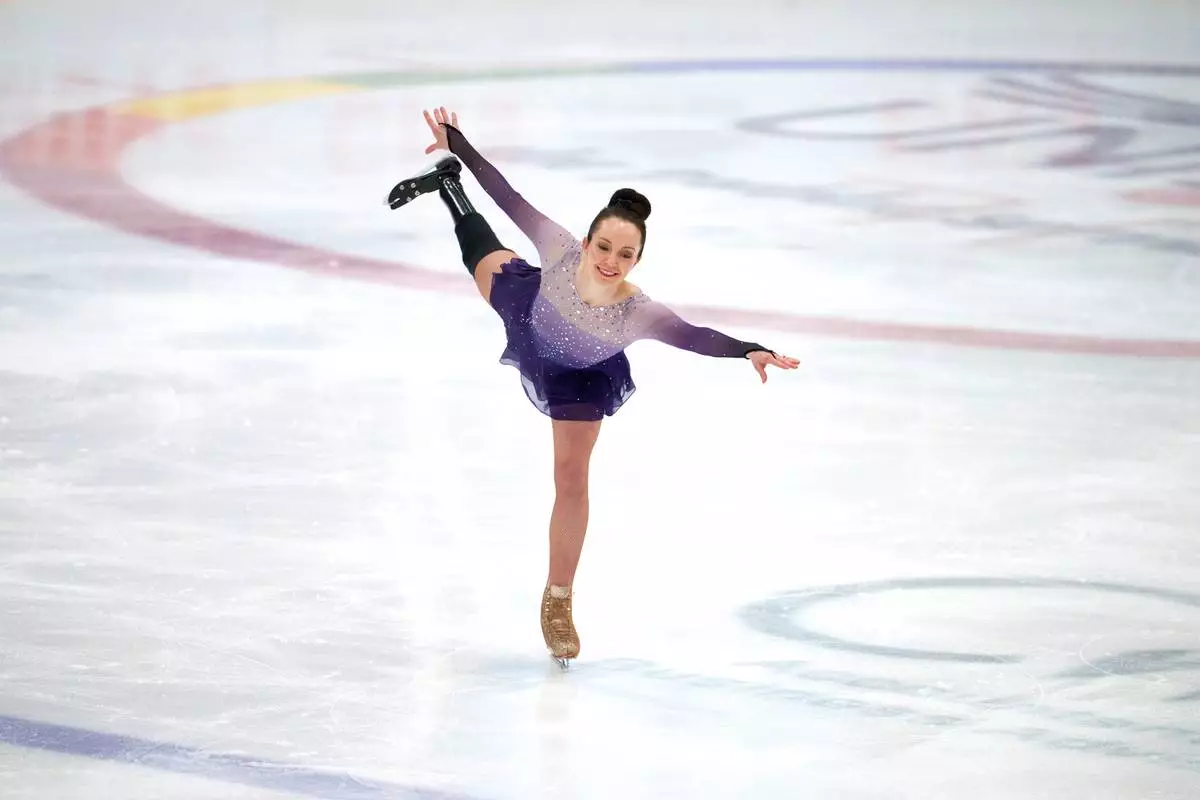
Stef Reid, a former Paralympic athlete who now does figure skating, competes in the British Adult Figure Skating Championships in Sheffield, England, Friday, Feb. 6, 2026. (AP Photo/Jon Super)