EDITOR/NEWS DIRECTORS:
Foreign enrollment at U.S. colleges held steady this fall despite a Trump administration crackdown on student visas, but the impact was felt unevenly and on some campuses brought decreases big enough to put budgets in crisis.
A new report from the Institute of International Education offers new clarity on fall enrollment figures at more than 800 colleges. Total international enrollment fell by 1% since last fall, far less than some had predicted. But that figure tells only part of the story: The number of new students coming to the U.S. for the first time fell by 17%, reflecting the impact of visa issues and other travel restrictions placed on 19 countries.
That decrease was mostly offset by rising numbers of students staying in the U.S. for a temporary work period after graduation, known as Optional Practical Training. Undergraduate enrollment ticked up by 2%.
The report offers a preview of national trends before full data is released next year. At the same time, many campuses are releasing their own fall enrollment figures indicating how they fared. Many of the most prestigious colleges appear to have weathered the turmoil, while smaller regional colleges and even big public universities have reported downswings.
It’s pinching finances at some colleges that rely on foreign enrollment to support their budgets. International students pay higher tuition rates and effectively subsidize education for U.S. students. Some campuses have cited foreign enrollment decreases as a driver for spending cuts, including at DePaul University in Chicago and Kent State University in Ohio.
Most alarming to some experts was a decrease in the number of graduate students coming from abroad. Those enrollment numbers fell by 12% this fall. Graduate students account for a majority of foreign students in the United States. Numbers had started to level off last year after a post-pandemic surge, but colleges cited visa issues as a primary factor in their decreases.
The survey didn’t report which countries saw the biggest decreases, but some experts believe a visa slowdown in India may have blocked large numbers of graduate students this fall. India is the biggest source of foreign students in the U.S., surpassing China in recent years.
Here are some resources for localizing the story.
READ AP’S STORY
Foreign enrollment at US colleges holds steady, for now, despite Trump’s visa crackdown
FIND YOUR STATE IN THE OPEN DOORS REPORT
The findings about this fall come from a “snapshot” survey that doesn’t provide breakdowns by state. But alongside that survey, IIE released full findings about last year’s international enrollment, with breakdowns by state and a list of top universities for international students. You can use those breakdowns to see how your state was trending going into this fall, along with other key data points like the top countries of origin for international students and the top college destinations in each state.
That state-by-state data is here: https://opendoorsdata.org/wp-content/uploads/2025/11/OpenDoors_FactSheet_All-States_-2025-1.pdf
CHECK WITH YOUR LOCAL COLLEGES
The best local information will come directly from college campuses. Some publish annual reports with information about their foreign students, including the University of Illinois, and others may have it available upon request. Here are some suggestions on what to ask for.
— Year-over-year breakdowns: Ask your local college for international enrollment figures for fall 2024 and 2025 to see how they fared. Along with totals, ask for breakdowns by level of study (undergraduate and graduate). Also ask for year-over-year numbers of new, first-time international students.
— Country of origin: Some colleges will provide breakdowns by country of origin. India and China are the biggest countries of origin for America’s foreign students, but it varies by campus. Some have also increased recruiting in places like Nigeria, Vietnam and Nepal. Ask which areas the campus has focused on in its marketing and recruitment efforts.
— Visa disruption: Colleges that saw decreases this fall cited visa problems as a primary factor. Ask your college if it has any information about how many students were unable to come to campus in time for classes because of visa problems. What did campus officials do to help students navigate problems? Was it worse in certain countries? Those questions can help illustrate the challenges schools and students faced this year.
— Flexibility: More colleges are allowing students to defer their enrollment because of visa problems. Most are letting students put off their enrollment until the spring, and many are allowing deferrals until fall 2026. What are your local colleges offering, and how many deferrals have they seen this fall?
— Talk to students: Check in with new international students to see what obstacles they may have faced getting here, and if they know of others back home who weren’t able to get visas. Some campuses have affinity groups for international students that can be a good place to get connected.
Localize It is a resource produced regularly by The Associated Press for its customers’ use. Questions can be directed to the Local News Success team at localizeit@ap.org. View guides published in the last 30 days here.
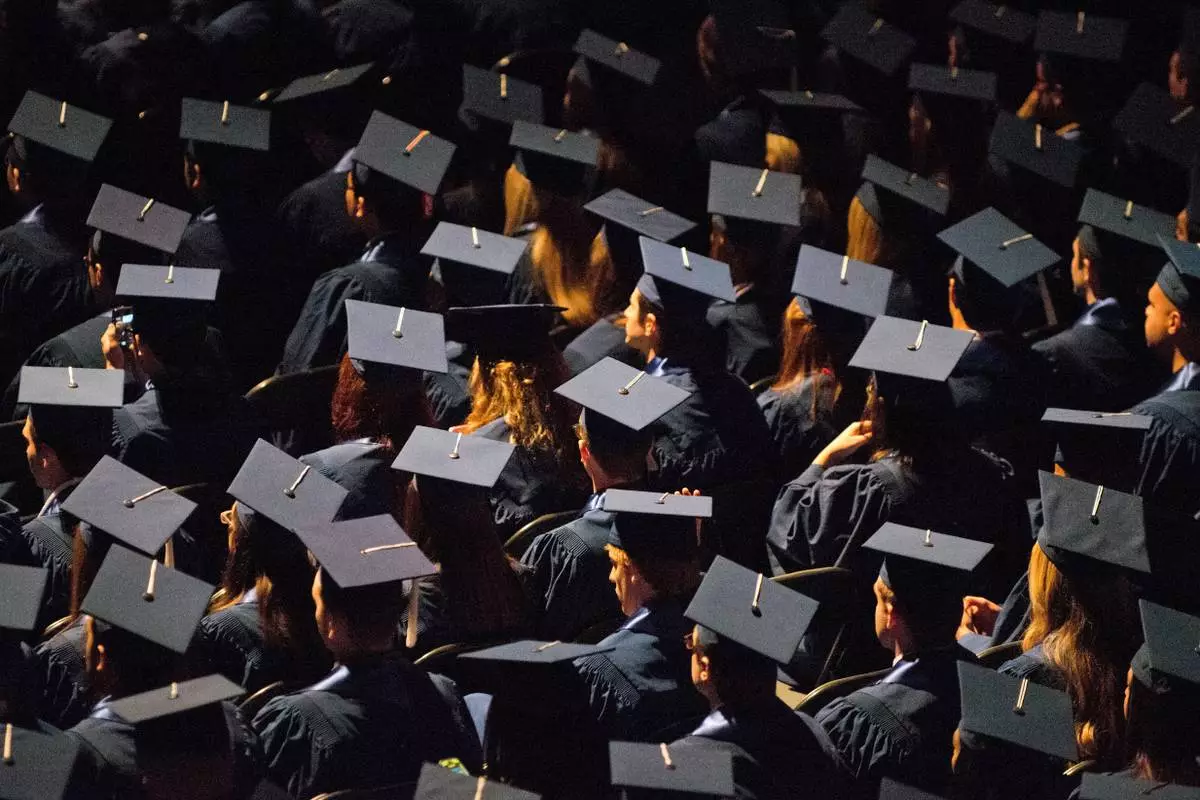
FILE - Students attend commencement ceremonies in the State Farm Center at the University of Illinois in Champaign, Ill., on Sunday, May 12, 2013. (Darrell Hoemann/The News-Gazette via AP, File)