LONDON (AP) — Britain's Royal Mint is celebrating Freddie Mercury with a new coin design that marks 40 years since his iconic Live Aid concert performance.
The coin features an image of the Queen front man, head thrown back and holding the microphone stand mid-performance. A musical stave that runs around the edge of the coin represents his four-octave vocal range.
The first coin was struck by Mercury’s sister Kashmira Bulsara at the Royal Mint in Wales last week.
“As Freddie died young, he didn’t get the chance of being awarded a royal medal for his talents in the music world. So to have a royal coin this way is wonderful and very fitting,” she said.
“The coin perfectly captures his passion and the joy he brought to millions through his music," she added. “I think the design is very impressive and they managed to catch the most iconic pose of Freddie, which is so recognizable worldwide.”
The Royal Mint’s director of commemorative coin, Rebecca Morgan, said the timing was perfect for Mercury to be celebrated with his own coin. She said fans had been “calling out” for it and “this felt like the year to do it," because it’s 40 years since he captivated audiences at the 1985 Live Aid concert, hailed by many as the greatest live gig of all time.
This year also marks the 40th anniversary of Mercury’s solo studio album, “Mr Bad Guy.”
Mercury died at age 45 in 1991, just one day after he publicly announced he was HIV positive.
The Royal Mint has issued special coins to celebrate other music legends including David Bowie, George Michael, Shirley Bassey and Paul McCartney.
The coins go on sale on the Royal Mint website on Tuesday. Prices start at 18.50 pounds ($24.4) for an uncirculated 5-pound denomination version. A 2 oz. gold proof coin costs 9,350 pounds ($12,315.)
The Royal Mint said it will donate a special gold edition of the coin to the Mercury Phoenix Trust, a charity that was started in the singer's memory and donates funds to those living with AIDS and HIV.

FILE - The lead singer of the band Queen, Freddie Mercury, performs during an open air concert in Cologne, Germany, on July 20, 1986. (AP Photo/Marco Arndt, File)
Footage obtained by The Associated Press of a cruise ship at the center of a rare-virus outbreak shows deserted decks and gathering areas, medical teams in protective gear, and a still landscape ahead as the vessel and its nearly 150 passengers and crew waited another day for direction and help off the coast of West Africa.
Three passengers have died and at least four people are sick in what health officials say is an outbreak of hantavirus, which usually spreads by inhaling contaminated rodent droppings. The World Health Organization said passengers are isolating in their cabins and that the vessel — in the Atlantic off Cape Verde — might be moved to Spain’s Canary Islands. But Spanish officials said Tuesday that they were monitoring the situation and haven't made a decision.
The MV Hondius, a Dutch ship on a weekslong polar cruise, departed April 1 from Argentina for Antarctica and several isolated islands in the South Atlantic.
“Our days have been close to normal, just waiting for authorities to find a solution,” passenger Qasem Elhato, 31 — who sent AP the video footage — said via WhatsApp. “But morale on the ship is high and we’re keeping ourselves busy with reading, watching movies, having hot drinks and that kind of things.”
Helene Goessaert, another passenger, told Belgian broadcaster VRT that everyone onboard is “in the same boat, literally.”
“You don’t embark on a trip with the idea that one of your fellow passengers won’t make it,” she said.
“We receive information at regular intervals. It is accurate. For the rest, it is a waiting game,” she added. “Today we received fresh fruit and fresh vegetables. That was very important to us.”
Authorities in Cape Verde have said they sent teams of doctors, surgeons, nurses and laboratory specialists to the Hondius. They were seen in Elhato's video footage — wearing white overalls, boots and face masks as they disembarked to a smaller vessel.
Officials in Cape Verde’s capital of Praia, a city of less than 200,000 people, said they have stepped up safety protocols, particularly near the port, as a precautionary measure against the rodent-borne illness — which doesn't usually spread person to person, though health authorities say it might be possible.
Elhato said passengers were wearing masks and social distancing — practices that became hallmarks of the early days of the COVID-19 pandemic. Ship operator Oceanwide Expeditions said it had implemented its highest level of response plan, with isolation measures, hygiene protocols and medical monitoring.
WHO said late Monday that sick passengers would soon be evacuated to the Netherlands for medical care. But it remained unclear Tuesday when any evacuations would happen.
Dr. Maria Van Kerkhove, WHO's director of epidemic and pandemic preparedness, told reporters in Geneva on Tuesday that the ship would “continue on to the Canary Islands.”
“We’re working with Spanish authorities, who will welcome the ship,” Van Kerkhove said, emphasizing that sick passengers would first be moved.
But Spanish health officials said in a statement that they were monitoring and that "the most appropriate port of call will be decided. Until then, the Ministry of Health will not adopt any decision, as we have informed the World Health Organization.”
WHO said Tuesday that it's looking at seven cases in all — three people who have died, one critically ill passenger who was previously taken off the ship, and three onboard reporting mild symptoms.
Two of the cases — a woman who died and the evacuated man — tested positive for hantavirus.
A Dutch man was the first death, on April 11. His body was taken off the vessel nearly two weeks later, on the British territory of St. Helena, some 1,200 miles (1,900 kilometers) off the African coast, according to South Africa’s Department of Health.
His wife traveled by plane from St. Helena to South Africa; she collapsed at a Johannesburg airport and died at a hospital on April 26, according to WHO and the South African Department of Health.
The ship sailed on to Ascension Island, an isolated Atlantic outpost about 800 miles (1,300 kilometers) to the north, where a sick British man was taken off the ship and evacuated first to Ascension Island and then to South Africa by plane. He is in intensive care in a South African hospital, according to WHO.
Van Kerkhove said that WHO is investigating possible human-to-human transmission on the ship, and that officials suspect the first infected person likely contracted the virus before boarding. She said officials have been told there are no rats on board.
Officials in Argentina — where hantavirus led to 28 deaths nationwide last year, according to the health ministry — said they confirmed no passengers had symptoms when the Hondius departed. Symptoms can appear up to eight weeks after exposure, officials have said.
In South Africa, authorities said they have started contact tracing — another practice used extensively in the coronavirus pandemic. But officials have emphasized that the chance of a major public health threat is low.
Asadu reported from Abuja, Nigeria; Risemberg from Dakar, Senegal. AP journalists Suman Naishadham in Madrid; Mogomotsi Magome in Johannesburg, South Africa; Mike Corder in The Hague, Netherlands; and Geir Moulson in Berlin contributed.
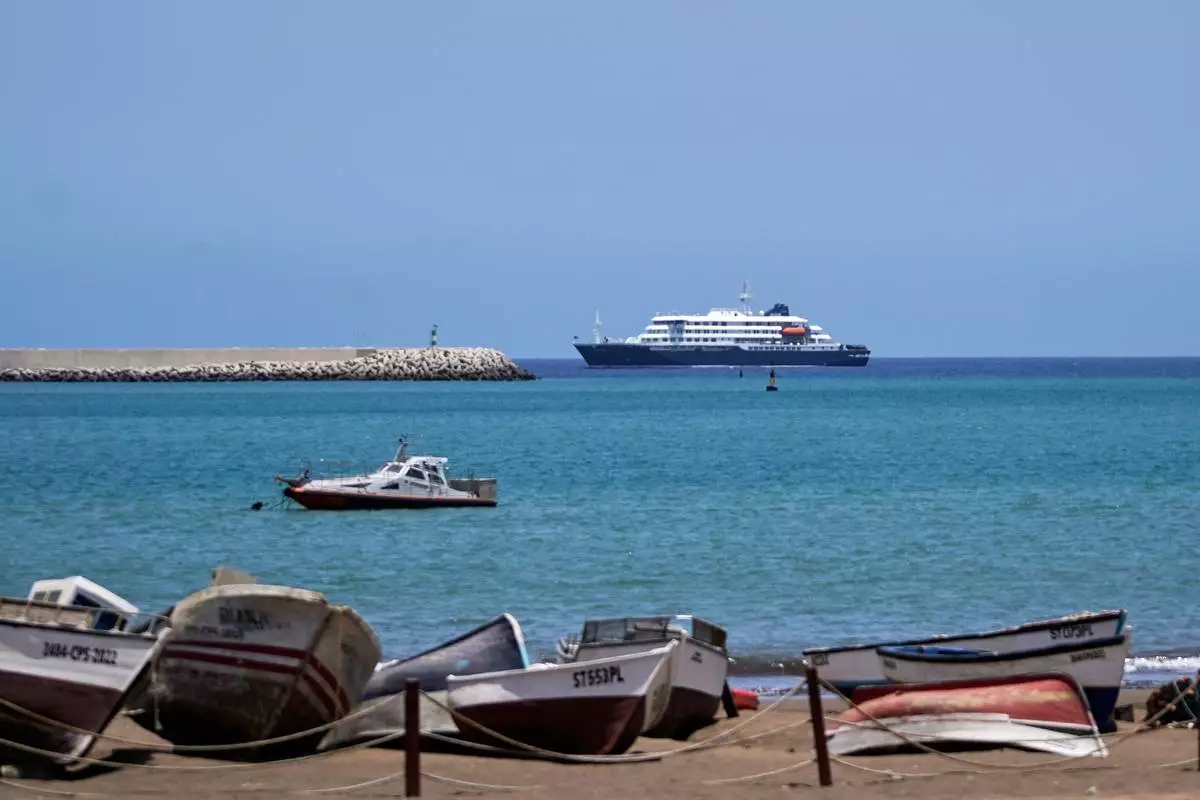
The MV Hondius cruise ship is anchored at a port in Praia, Cape Verde, Monday, May 4, 2026. (AP Photo/Arilson Almeida)

Research scientist Robert Nofchissey prepares samples of inactivated material as part of hantavirus research at the Center for Global Health at the University of New Mexico Health Sciences Center in Albuquerque, New Mexico, on Monday, May 4, 2026. (AP Photo/Susan Montoya Bryan)
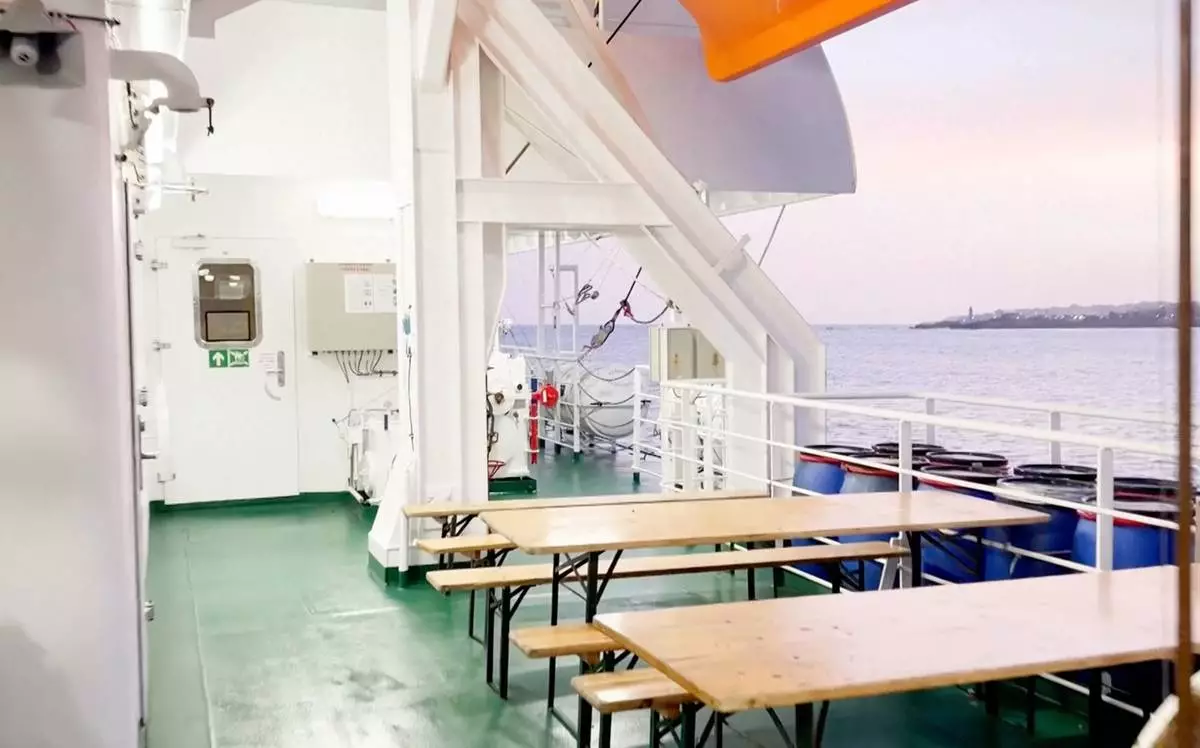
The Dutch-flagged MV Hondius, a cruise ship carrying nearly 150 people remains off Cape Verde on Monday, May 4, 2026 after three passengers died and several others fell seriously ill in a suspected hantavirus outbreak. (Qasem Elhato via AP)
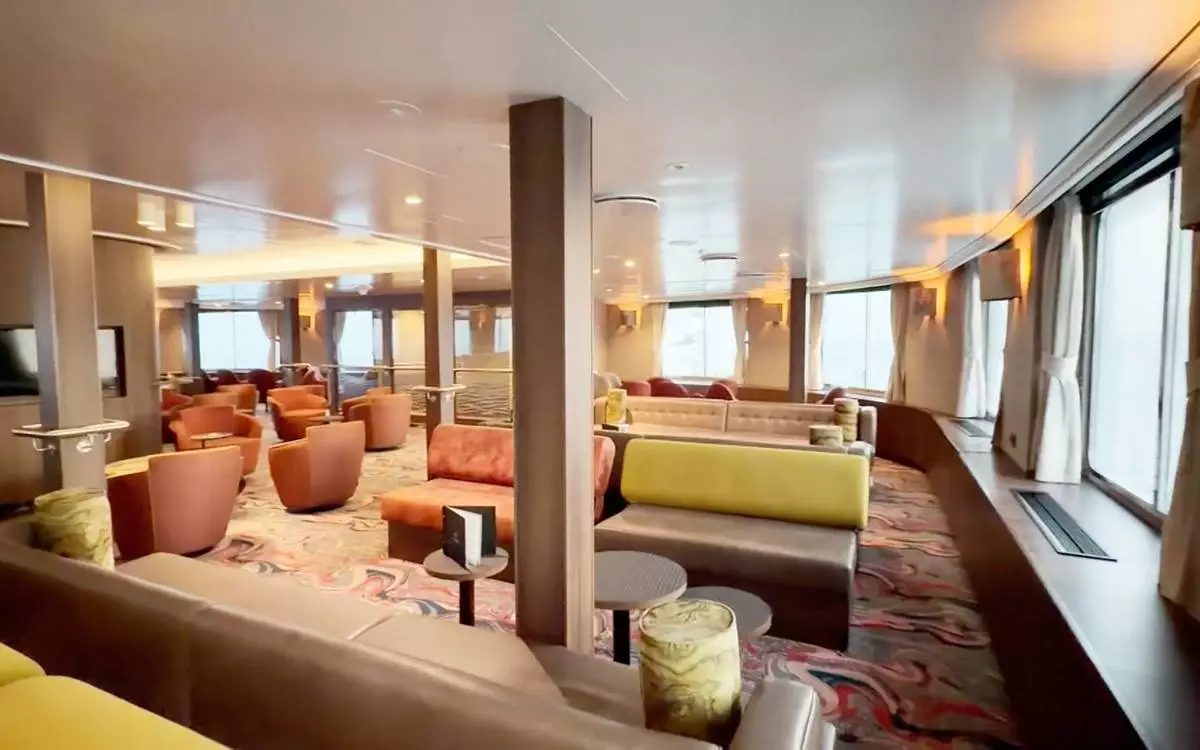
A view of the inside of the Dutch-flagged MV Hondius, a cruise ship carrying nearly 150 people as it remains off Cape Verde on Monday, May 4, 2026 after three passengers died and several others fell seriously ill in a suspected hantavirus outbreak. (Qasem Elhato via AP)

Health workers get off the Dutch-flagged MV Hondius, a cruise ship carrying nearly 150 people as it remains off Cape Verde on Monday, May 4, 2026 after three passengers died and several others fell seriously ill in a suspected hantavirus outbreak. (Qasem Elhato via AP)