Skip to Content Facebook Feature Image

Global Anglican ties are under stress. It's unclear if they're at the breaking point

News

Global Anglican ties are under stress. It's unclear if they're at the breaking point
News

News

Global Anglican ties are under stress. It's unclear if they're at the breaking point

2025-11-18 14:10 Last Updated At:14:20

After decades of fierce controversies over sexuality and theology in the Anglican Communion, some leaders of a conservative coalition say it's time to make a final break from what has long been one of the world's largest Protestant church families.

That would make a slow-growing Anglican schism complete — if it happens.

But how many church provinces go along with the rupture remains to be seen. Some of the communion’s largest and fastest-growing churches in Africa belong to the conservative group that announced the break — known as the Global Anglican Future Conference, or Gafcon. But several member churches have been silent on the plan, weeks after it was announced.

Gafcon's announcement came shortly after the October appointment of Bishop Sarah Mullally as the first woman to be archbishop of Canterbury, the Anglican Communion's symbolic spiritual leader. Many in England and other Western countries hailed this as a historic breaking of a stained-glass ceiling.

But leaders of Gafcon criticized the appointment, as did some other bishops. Some said only men should be bishops, but their bigger criticism was her support for some LGBTQ+-inclusive policies — the key fault line in the communion.

Within days of Mullally's appointment, Gafcon issued another declaration. It completely rejected the Anglican Communion as it has been structured historically. That structure has included a set of governing and advisory bodies and recognition of the archbishop of Canterbury as a symbolic “first among equals" among leaders of self-governing national churches, known as provinces. Since provinces are self-governing, the archbishop's authority is highly limited.

The ”future has arrived,” said Gafcon’s chairman, Archbishop Laurent Mbanda of Rwanda, in its October statement. “We declare that the Anglican Communion will be reordered.” His statement decried churches it said had violated a 1998 statement by the communion's bishops, opposing same-sex unions and describing “homosexual practice as incompatible with Scripture.”

Gafcon proclaimed what it calls a restructured “Global Anglican Communion.” It would be overseen by a new council of top national bishops, or primates. Whoever is elected chairman would be “first among equals.”

The question remains is: How many Gafcon members are actually going along with this plan, and how many want to remain in the existing Anglican Communion as a loyal opposition?

Primates of Africa's two largest national provinces, Nigeria and Uganda, have joined their Rwandan counterpart in endorsing the measure, according to Bishop Paul Donison, Gafcon's general secretary. So have smaller churches ranging from Myanmar to the Americas.

Nigeria Archbishop Henry Ndukuba confirmed his church's endorsement of Gafcon's plan. He called Mullally’s stances on same-sex issues “devastating.”

“This election is a further confirmation that the global Anglican world could no longer accept the leadership of the Church of England and that of the Archbishop of Canterbury,” he said in a statement.

Donison said Gafcon's statement was drafted at a meeting in Australia, which included several church leaders on Zoom, though several others did not participate. Gafcon's statement said its bishops would “confer and celebrate” restructuring at their next major meeting, scheduled this March in Nigeria.

Among those signing on to the Gafcon statement is the conservative Anglican Church in North America, formed in a break from the more liberal U.S. and Canadian churches.

The Gafcon move will “mark a decisive moment in the life of the Anglican family,” said ACNA Archbishop Stephen Wood, in a statement issued shortly before he took a leave of absence amid allegations of sexual and other misconduct, which he denies.

The Anglican primate of Congo is committed to maintaining Anglican ties.

In a statement, Archbishop Georges Titre Ande decried liberal trends in some churches but added: “The Anglican Church of Congo has no intention to leave the Anglican Communion, rather to keep working ... to reform, heal and revitalise the Anglican Communion without leaving it."

The communion consists of churches descended from the Church of England. Anglicanism, with its unique mix of Protestant theology and Catholic-like ritual and sacraments, spread worldwide via colonial and missionary activity. It is especially vibrant in Africa. The London-based communion estimates it has about 85 million members across 165 countries.

Simmering tensions in Anglicanism exploded after 2003, when the U.S. Episcopal Church ordained its first of several openly gay bishops. Conservatives formed Gafcon and other structures. Large provinces such as Uganda's and Nigeria's have largely stopped participating in traditional Anglican structures.

The Anglican Communion itself is weighing a proposed new structuring that would de-emphasize Canterbury and share leadership roles more widely.

The proposals “won’t solve all the differences in the Anglican Communion, but they do seek to provide a structure within which people of deeply different convictions can remain in good conscience within that Communion,” said Bishop Graham Tomlin, chair of the committee that drafted the proposals. The plan will be aired before an advisory council next year.

Presiding Bishop Sean Rowe of the Episcopal Church said the latest Gafcon statement was “more of the same” from a subgroup that has largely disengaged from the Anglican Communion.

“There’s a pretty clear agenda here, which I don’t think has very much to do with the church," he said. “I’m really interested in being in relationship with people who want to continue our relationships across the communion.”

Even if the communion remains intact, its profound divisions surfaced with Mullally's appointment.

Mullally has affirmed the Church of England's current definition of church marriage as between a man and a woman, but she supported a plan for blessings of same-sex couples and has acknowledged “the harm that we have done” as a church to LGBTQ+ people.

Homosexuality remains taboo in many African countries, in some cases criminalized under colonial-era laws or newer legislation. Uganda enacted legislation in 2023 prescribing the death penalty for some homosexual offenses.

Stephen Kaziimba, Uganda's archbishop, lamented Mullally’s "support and advocacy for unbiblical positions on sexuality.”

Her appointment widened “the tear in the fabric of the Anglican Communion," Kaziimba added in a letter to Anglicans.

Bishop Lukas Katenda, leader of the conservative Reformed Evangelical Anglican Church of Namibia, a Gafcon-aligned faction independent of the Church of England, dismissed Mullally's appointment as “a joke.”

“She is not a person to look up to for evangelism, for mission, for proclamation of the gospel of Jesus Christ, for winning souls or to call people for repentance,” Katenda told The Namibian newspaper.

When the Anglican Diocese of Upper Shire in Malawi shared the Gafcon statement criticizing the appointment of Mullally on its Facebook page, it attracted approving comments from followers who said “Amen.” However, the diocese also reposted a statement from the general secretary of the Anglican Communion, urging it to stay together.

In Accra, Ghana, Patrick Okaijah-Bortier, parish priest of St. Andrew Anglican Church, said many clergy in his country were unhappy about Mullally, notably because of her support for same-sex blessings.

“It is worrying,” he said. “If she pushes this agenda, she may end up losing almost all of us.”

Another cleric in Accra, Georgina Naa Anyema Collison of the St. Joseph the Worker Anglican Church, said she supported Mullally’s appointment because “I’m a female” yet opposed her position on same-sex unions.

But in South Africa, where same-sex marriages are legal, Archbishop Thabo Makgoba of Cape Town, primate of the Anglican Church of Southern Africa, offered “warm congratulations” to Mullally. In another statement, Makgoba's office said he is focused on interfaith peacemaking efforts and “has neither the time nor any interest in engaging with these internal Anglican differences.”

Contributors include Farai Mutsaka in Harare, Zimbabwe; Dyepkazah Shibayan in Abuja, Nigeria; and Edward Acquah in Accra, Ghana.

Associated Press religion coverage receives support through the AP’s collaboration with The Conversation US, with funding from Lilly Endowment Inc. The AP is solely responsible for this content.
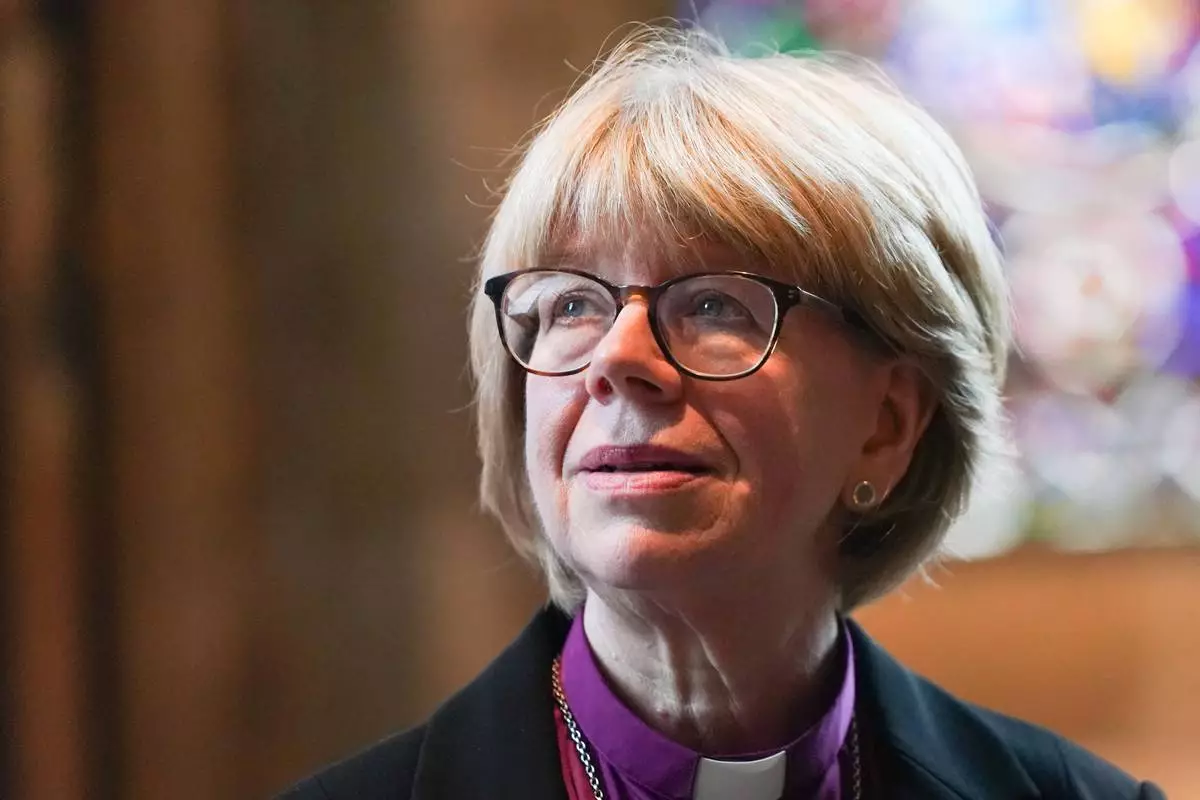
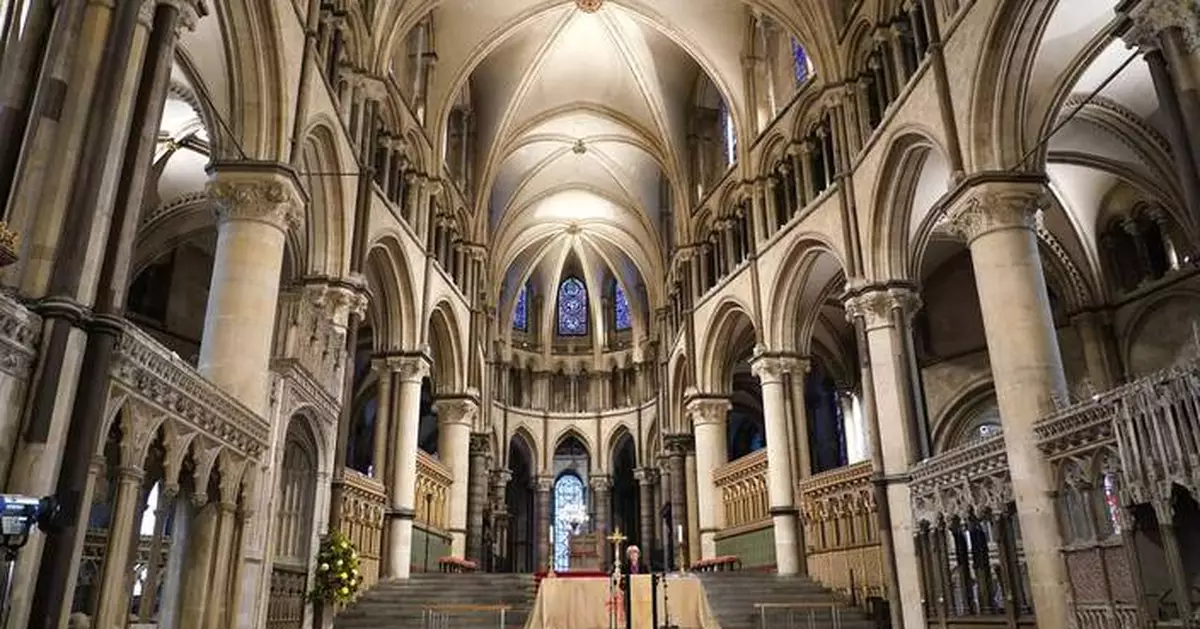
FILE - Sarah Mullally, the new Archbishop of Canterbury, spiritual leader of the world's 85 million Anglicans, poses for the media inside Canterbury Cathedral in Canterbury, England, Oct. 3, 2025. (AP Photo/Alberto Pezzali, File)

FILE - Sarah Mullally, the new Archbishop of Canterbury, spiritual leader of the world's 85 million Anglicans, poses for the media inside Canterbury Cathedral in Canterbury, England, Oct. 3, 2025. (AP Photo/Alberto Pezzali, File)


FILE - Sarah Mullally, the new Archbishop of Canterbury, spiritual leader of the world's 85 million Anglicans, speaks inside Canterbury Cathedral in Canterbury, England, Oct. 3, 2025. (AP Photo/Alberto Pezzali, File)

FILE - Sarah Mullally, the new Archbishop of Canterbury, spiritual leader of the world's 85 million Anglicans, speaks inside Canterbury Cathedral in Canterbury, England, Oct. 3, 2025. (AP Photo/Alberto Pezzali, File)

HOMS, Syria (AP) — A year ago, Mohammad Marwan found himself stumbling, barefoot and dazed, out of Syria’s notorious Saydnaya prison on the outskirts of Damascus as rebel forces pushing toward the capital threw open its doors to release the prisoners.

Arrested in 2018 for fleeing compulsory military service, the father of three had cycled through four other lockups before landing in Saydnaya, a sprawling complex just north of Damascus that became synonymous with some of the worst atrocities committed under the rule of now ousted President Bashar Assad.

He recalled guards waiting to welcome new prisoners with a gauntlet of beatings and electric shocks. “They said, ‘You have no rights here, and we’re not calling an ambulance unless we have a dead body,’” Marwan said.

His Dec. 8, 2024 homecoming to a house full of relatives and friends in his village in Homs province was joyful.

But in the year since then, he has struggled to overcome the physical and psychological effects of his six-year imprisonment. He suffered from chest pain and difficulty breathing that turned out to be the result of tuberculosis. He was beset by crippling anxiety and difficulty sleeping.

He’s now undergoing treatment for tuberculosis and attending therapy sessions at a center in Homs focused on rehabilitating former prisoners, and Marwan said his physical and mental situations have gradually improved.

“We were in something like a state of death” in Saydnaya, he said. “Now we’ve come back to life.”

Marwan's country is also struggling to heal a year after the Assad dynasty’s repressive 50-year reign came to an end following 14 years of civil war that left an estimated half a million people dead, millions more displaced, and the country battered and divided.

Assad's downfall came as a shock, even to the insurgents who unseated him. In late November 2024, groups in the country’s northwest — led by Hayat Tahrir al-Sham, an Islamist rebel group whose then-leader, Ahmad al-Sharaa, is now the country’s interim president — launched an offensive on the city of Aleppo, aiming to take it back from Assad’s forces.

They were startled when the Syrian army collapsed with little resistance, first in Aleppo, then the key cities of Hama and Homs, leaving the road to Damascus open. Meanwhile, insurgent groups in the country’s south mobilized to make their own push toward the capital.

The rebels took Damascus on Dec. 8 while Assad was whisked away by Russian forces and remains in exile in Moscow. But Russia, a longtime Assad ally, did not intervene militarily to defend him and has since established ties with the country's new rulers and maintained its bases on the Syrian coast.

Hassan Abdul Ghani, spokesperson for Syrian Ministry of Defense, said HTS and its allies had launched a major organizational overhaul after suffering heavy losses in 2019 and 2020, when Assad’s forces regained control of a number of formerly rebel-controlled areas.

The rebel offensive in November 2024 was not initially aimed at seizing Damascus but was meant to preempt an expected offensive by Assad’s forces in opposition-held Idlib, Abdul Ghani said.

“The defunct regime was preparing a very large campaign against the liberated areas, and it wanted to finish the Idlib file,” he said. Launching an attack on Aleppo “was a military solution to expand the radius of the battle and thus safeguard the liberated interior areas.”

In timing the attack, the insurgents also aimed to take advantage of the fact that Russia was distracted by its war in Ukraine and that the Iran-backed Lebanese militant group Hezbollah, another Assad ally, was licking its wounds after a damaging war with Israel.

When the Syrian army’s defenses collapsed, the rebels pressed on, “taking advantage of every golden opportunity,” Abdul Ghani said.

Since his sudden ascent to power, al-Sharaa has launched a diplomatic charm offensive, building ties with Western and Arab countries that shunned Assad and that once considered al-Sharaa a terrorist.

A crowning moment of his success in the international arena: in November, he became the first Syrian president since the country’s independence in 1946 to visit Washington.

But the diplomatic successes have been offset by outbreaks of sectarian violence in which hundreds of civilians from the Alawite and Druze minorities were killed by pro-government Sunni fighters. Local Druze groups have now set up their own de facto government and military in the southern Sweida province.

There are ongoing tensions between the new government in Damascus and Kurdish-led forces controlling the country’s northeast, despite an agreement inked in March that was supposed to lead to a merger of their forces.

Israel is wary of Syria's new Islamist-led government even though al-Sharaa has said he wants no conflict with the country. Israel has seized a formerly U.N.-patrolled buffer zone in southern Syria and launched regular airstrikes and incursions since Assad’s fall. Negotiations for a security agreement have stalled.

Meanwhile, the country’s economy has remained sluggish, despite the lifting of most Western sanctions. While Gulf countries have promised to invest in reconstruction projects, little has materialized on the ground. The World Bank estimates that rebuilding the country’s war-damaged areas will cost $216 billion.

The rebuilding that has taken place so far has largely been on a small scale, with individual owners paying to fix their own damaged houses and businesses.

On the outskirts of Damascus, the once-vibrant Yarmouk Palestinian camp today largely resembles a moonscape. Taken over by a series of militant groups then bombarded by government planes, the camp was all but abandoned after 2018.

Since Assad’s fall, a steady stream of former residents have been coming back.

The most heavily damaged areas remain largely deserted but on the main street leading into the camp, bit by bit, blasted-out walls have been replaced in the buildings that remain structurally sound. Shops have reopened and families have come back to their apartments. But any sort of larger reconstruction initiative appears to still be far off.

“It’s been a year since the regime fell. I would hope they could remove the old destroyed houses and build towers,” said Maher al-Homsi, who is fixing his damaged home to move back to it even though the area doesn't even have a water connection.

His neighbor, Etab al-Hawari, was willing to cut the new authorities some slack.

“They inherited an empty country — the banks are empty, the infrastructure was robbed, the homes were robbed," she said.

Bassam Dimashqi, a dentist from Damascus, said of the country after Assad’s fall, “Of course it’s better, there’s freedom of some sort.”

But he remains anxious about the still-precarious security situation and its impact on the still-flagging economy.

“The job of the state is to impose security, and once you impose security, everything else will come," he said. "The security situation is what encourages investors to come and do projects.”

Marwan, the former prisoner, says the post-Assad situation in Syria is “far better” than before. But he has also been struggling economically.

From time to time, he picks up labor that pays only 50,000 or 60,000 Syrian pounds daily, the equivalent of about $5.

Once he finishes his tuberculosis treatment, he said, he plans to leave to Lebanon in search of better-paid work.

——

Sewell reported from Beirut. Associated Press journalist Omar Albam in Damascus contributed to this report.

A girl sits on a machine gun as visitors tour the "Syrian Revolution Military Exhibition," which opened last week ahead of the first anniversary of the ousting of the Bashar Assad regime in Damascus, Syria, Sunday, Dec. 7, 2025. (AP Photo/Ghaith Alsayed)

A girl sits on a machine gun as visitors tour the "Syrian Revolution Military Exhibition," which opened last week ahead of the first anniversary of the ousting of the Bashar Assad regime in Damascus, Syria, Sunday, Dec. 7, 2025. (AP Photo/Ghaith Alsayed)

A boy checks out military equipment as visitors tour the "Syrian Revolution Military Exhibition," which opened last week ahead of the first anniversary of the ousting of the Bashar Assad regime in Damascus, Syria, Sunday, Dec. 7, 2025. (AP Photo/Ghaith Alsayed)

A boy checks out military equipment as visitors tour the "Syrian Revolution Military Exhibition," which opened last week ahead of the first anniversary of the ousting of the Bashar Assad regime in Damascus, Syria, Sunday, Dec. 7, 2025. (AP Photo/Ghaith Alsayed)

A Syrian man silhouetted by a digital billboard showing the date of the ousting of the Bashar Assad regime during celebrations marking the first anniversary, in Damascus , Syria, Sunday, Dec. 7, 2025. The Arabic words read: "A history retold and a bond renewed." (AP Photo/Hussein Malla)

A Syrian man silhouetted by a digital billboard showing the date of the ousting of the Bashar Assad regime during celebrations marking the first anniversary, in Damascus , Syria, Sunday, Dec. 7, 2025. The Arabic words read: "A history retold and a bond renewed." (AP Photo/Hussein Malla)

Wanted portraits of former Syrian president Bashar Assad are displayed in the window of a coffeeshop, in Damascus Sunday, Dec. 7, 2025, as Syrians celebrate marking the first anniversary of the ousting of the Bashar Assad regime. (AP Photo/Hussein Malla)

Wanted portraits of former Syrian president Bashar Assad are displayed in the window of a coffeeshop, in Damascus Sunday, Dec. 7, 2025, as Syrians celebrate marking the first anniversary of the ousting of the Bashar Assad regime. (AP Photo/Hussein Malla)

Syrian men wearing anonymous masks flash victory signs, as they stand on top of their car with its front window covered by an Islamic flag, during celebrations marking the first anniversary of the ousting of the Bashar Assad regime in Damascus, Sunday, Dec. 7, 2025. (AP Photo/Hussein Malla)

Syrian men wearing anonymous masks flash victory signs, as they stand on top of their car with its front window covered by an Islamic flag, during celebrations marking the first anniversary of the ousting of the Bashar Assad regime in Damascus, Sunday, Dec. 7, 2025. (AP Photo/Hussein Malla)

Recommended Articles