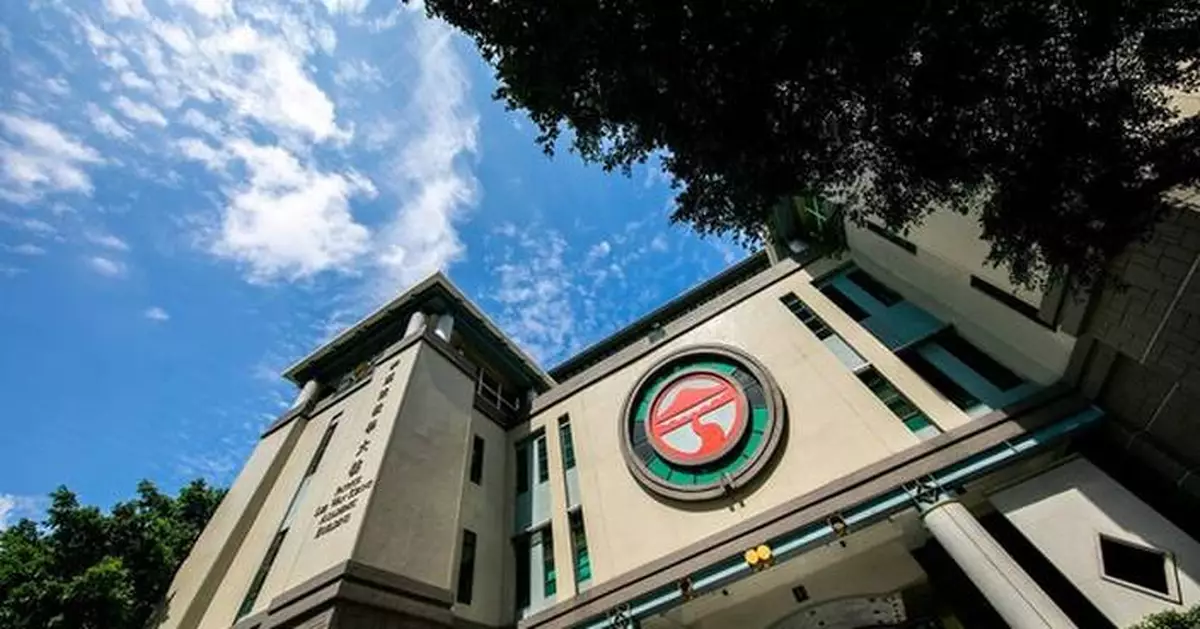
HONG KONG, Nov. 18, 2025 /PRNewswire/ -- On November 17th, Lingnan University's Teaching and Learning Centre (TLC) and The University of Sydney's Educational Innovation (EI) Team co-hosted a pivotal seminar titled "The Transformation of Global Higher Education Learning Pedagogies: Harnessing the Innovation and Technology Revolution". With an attendance of approximately 300 participants, both in person and online, the event highlighted the urgency to rethink and revolutionise educational practices to adapt to the AI era.
The need for transformation has never been more critical. As artificial intelligence technologies permeate learning environments, our existing pedagogies and assessment methods are insufficient to meet the demands of the student in the AI Era, argued Prof Frankie Lam, Director of the Teaching and Learning Centre of Lingnan University, Hong Kong SAR. Prof Jen Scott Curwood from The University of Sydney echoed this argument by presenting a thought-provoking and process-oriented framework for a shift in assessment focus. She and her colleagues emphasised a shift from the mere final product to the entire learning journey, and the importance of authentic assessments that incorporate learner-AI dialogues and critical reflections to foster deeper learning.
Likewise, Prof Albert Ko from Lingnan University offered a practical approach in his session titled "Empowering Non-STEM Degree Students to Apply Technology to Solve Humanitarian Challenges". His insights underscored the urgency of equipping non-STEM students with the technological skills necessary to address pressing social issues, reinforcing the need for educational evolution across diverse fields.
The seminar closed with a critical analysis from Prof Lam of Lingnan University regarding the imperative transformation of assessment. With AI tools becoming increasingly accessible to students, higher education institutions must leverage innovative technologies to enhance student outcomes and accelerate the development of essential graduate attributes including critical thinking, effective communication, collaboration, social responsibility, and AI literacy. The imperative to adopt new pedagogies and assessment strategies in the age of AI is inevitable. Higher education must embrace this transformational moment to prepare students for a future where technology and human skills intertwine seamlessly.
** The press release content is from PR Newswire. Bastille Post is not involved in its creation. **
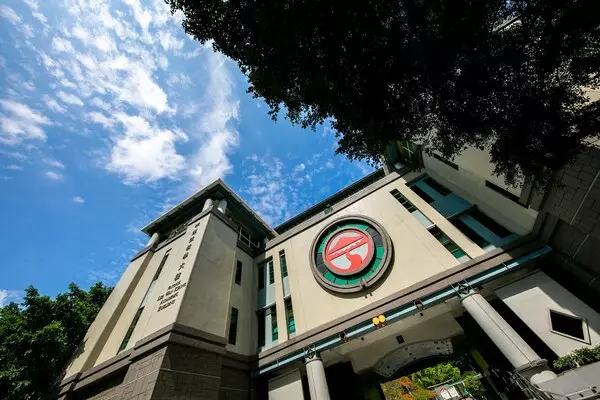
Urgent call for the transformation of education learning practices in the AI era
BISHKEK, Kyrgyzstan, July 29, 2026 /PRNewswire/ -- The 2026 Shanghai Cooperation Organization (SCO) Media and Think Tank Summit, themed "The Shanghai Spirit in the New Era: From Shared Values to Practical Cooperation," opened Monday in Bishkek, the capital of Kyrgyzstan.
The summit gathers about 260 representatives from nearly 150 mainstream media organizations, leading think tanks, government departments and the SCO Secretariat across SCO countries.
Daiyrbek Orunbekov, head of the Information Policy Service of the Presidential Administration of Kyrgyzstan, said in a keynote speech at the opening ceremony that media organizations and think tanks shoulder great responsibilities in guiding public opinion and safeguarding trust and security among countries in today's world.
Coordination between media organizations and think tanks will provide a reliable shield against disinformation, he said, expressing confidence that the summit would serve as a platform for generating new ideas and initiatives and contribute to strengthening information security within the SCO, deepening academic cooperation and building bridges of friendship.
Xi Yanchun, vice president of Xinhua News Agency, said in her keynote speech that Xinhua has always been committed to telling SCO stories well and amplifying the SCO's voice.
Under the SCO framework, media organizations and think tanks should continue to serve as bridges and links, she said.
She called on them to seek common ground while respecting differences and promote solidarity and mutual trust; pursue mutual benefit and drive development and revitalization; uphold openness and inclusiveness and build bridges for people-to-people exchanges; uphold fairness and justice and advocate multilateralism; and remain practical and efficient while taking the lead in action-oriented cooperation.
Mederbek Shermetaliev, director of the Kabar News Agency of Kyrgyzstan, said while digital technologies have facilitated information exchange, they have also brought risks such as disinformation and cybersecurity threats.
SCO member states should jointly establish regular dialogue mechanisms among think tanks, conduct joint research, cultivate young experts, promote in-depth exchanges among media professionals, and continuously deepen intellectual, information and people-to-people cooperation, he said.
Liu Jiangping, Chinese ambassador to Kyrgyzstan, said media organizations and think tanks are not only chroniclers of the times but also advocates of cooperation, and that cooperation between them has become an important way of putting the Shanghai Spirit into practice.
At a time when methods of information dissemination are undergoing profound changes, the world needs objective, truthful and comprehensive reporting more than ever, as well as in-depth and rational research, efforts to overcome prejudice, bridge differences and enhance mutual understanding, and stronger dialogue and cooperation, Liu said.
Kadyrbek Sarbayev, a senior expert with the SCO Secretariat, said the summit will help further deepen exchanges and cooperation between media organizations and think tanks under the SCO framework and contribute to the organization's long-term development.
Mirzokhid Rakhimov, head of the Department of Contemporary History at the Academy of Sciences of Uzbekistan, said that the SCO should build on the Silk Road's legacy of exchanges among civilizations, and promote regional connectivity as well as sustainable and stable development through deeper think tank exchanges.
The summit runs from Sunday to Thursday and is jointly hosted by Xinhua News Agency and the Kabar News Agency of Kyrgyzstan.
During the summit, think tank reports "Contemporary Features and Global Significance of Xi Jinping Thought on Party Building" in Kyrgyz and Russian, and "Upholding Fairness and Justice and Improving Global Governance -- Achievements, Opportunities, and Prospects for SCO Cooperation" in multiple languages were released.
** This press release is distributed by PR Newswire through automated distribution system, for which the client assumes full responsibility. **
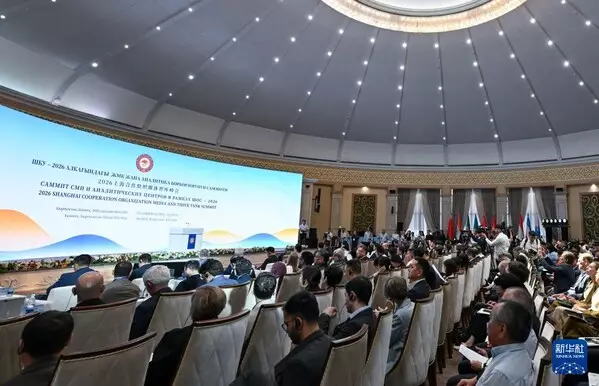
SCO Media and Think Tank Summit calls for broader consensus, stronger cooperation