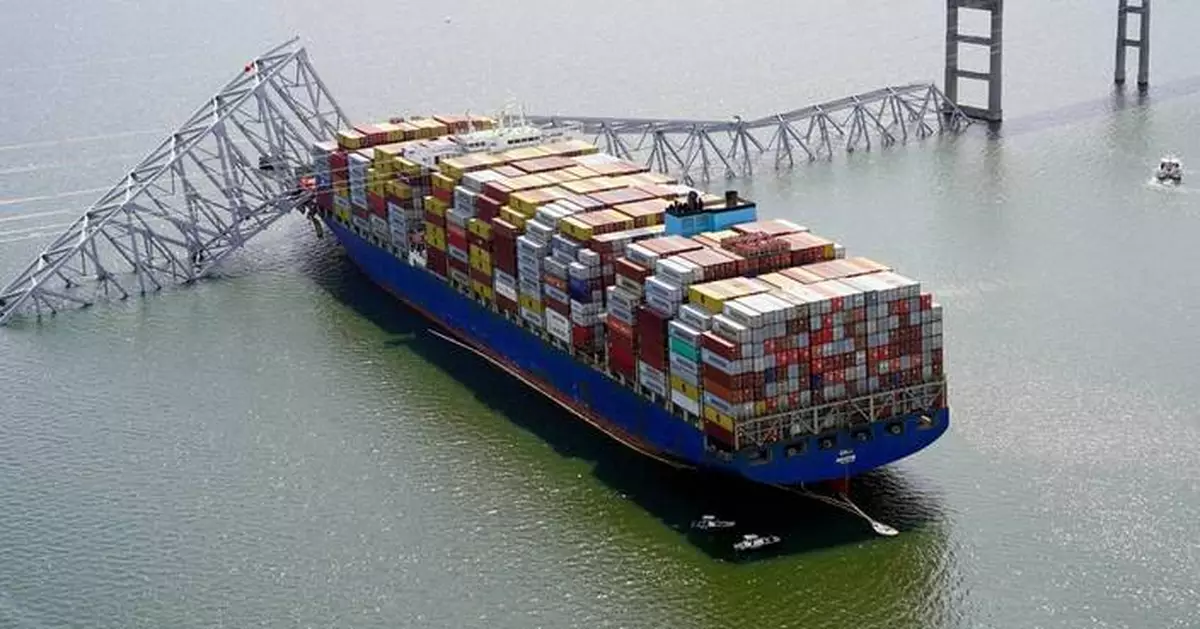
ANNAPOLIS, Md. (AP) — The loss of electrical power from a loose wire caused a huge cargo ship to lose propulsion and steering before crashing into Baltimore’s Francis Scott Key Bridge, causing it to collapse last year and kill six construction workers, National Transportation Safety Board officials said Tuesday.
The board approved the findings and a set of recommendations to prevent similar tragedies during a hearing in Washington. Investigators managed to identify one loose wire out of thousands on the container ship called the Dali. The label on the wire slid down too close to the end and prevented it from being fully inserted into the terminal.
The board also found the crew didn't have enough time to recover propulsion and avoid collision because the Dali was so close to the bridge when it lost power.
“The crew’s actions were as timely as they could be, and they were appropriate and also impressive considering the circumstance,” board member Michael Graham said.
Graham also said the maritime shipping industry needs to strengthen its safety systems and better manage risks to be more in line with the rigorous approach taken in aviation.
“Many of these issues we have discussed today as part of this accident could have been identified, addressed, and either mitigated or eliminated,” Graham said.
The Dali was leaving Baltimore bound for Sri Lanka when it crashed into a supporting column of the bridge about 1:30 a.m. on March 26, 2024, causing the bridge to collapse into the Patapsco River.
Six men on a road crew, who were filling potholes during an overnight shift, fell to their deaths. The collapse snarled commercial shipping traffic through the Port of Baltimore for months before the channel was fully opened that June.
The lack of countermeasures to reduce the bridge's vulnerability to collapse after being struck by a ship also contributed to the disaster, the board said. Countermeasures could have been implemented if a vulnerability assessment had been conducted by the Maryland Transportation Authority as recommended by the American Association of State Highway and Transportation Authorities, the board said.
The Maryland agency said in a statement after the NTSB meeting that it maintains the bridge collapse and tragic loss of life “were the sole fault of the Dali and the gross negligence of its owners and operators.”
The board also found that the lack of effective and immediate communications to notify the highway workers to evacuate the bridge contributed to the loss of life. But the pilot at the controls of the Dali quickly notified law enforcement, who stopped all traffic from entering the bridge, preventing further deaths.
“This tragedy should have never occurred,” NTSB Chair Jennifer Homendy said. "Lives should have never been lost. As with all accidents that we investigate, this was preventable.”
The Dali, which sailed under the Singapore flag, experienced two power blackouts on its way out of Baltimore.
The crew got the power back on after the first blackout, but a second shortly thereafter was caused by a lack of fuel because the flushing pump used to supply the generators doesn’t restart automatically the way the main pumps do. The flushing pump must be restarted manually by a crew member leaving the engine room and heading down two decks in complete darkness to reach that pump.
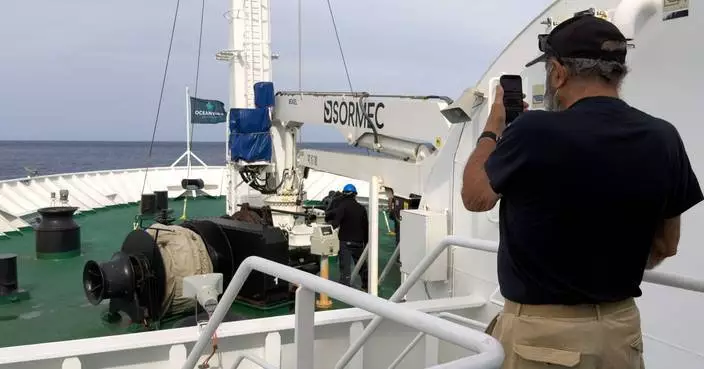
NTSB investigator Todd Gianelloni said the crew did periodically inspect the 947-foot (289-meter) container ship, but there were no instructions on how to check individual wire connections, and doing so would have been labor intensive and impractical on a ship with thousands of wires.
Gianelloni said the NTSB believes that if the crew had used infrared thermal imaging to inspect the connections, the loose critical wire might have been discovered ahead of time. Investigators noted that infrared thermal imaging, which can detect problems that aren't visible, is frequently used in the maritime industry.
Homendy noted there was no issue with the ship's fuel. That was something speculated about shortly after the crash.
NTSB investigator Bridget Quinn said the growing size of container ships over the years has presented a greater threat to bridges, but the Baltimore bridge wasn’t adequately fortified to protect against today’s massive cargo ships, even though stakeholders in the port first discussed improving bridge pier protections as early as two decades before the collapse.
Board members expressed frustration with the way several of the companies involved responded to the NTSB investigation.
Homendy questioned why the ship’s operator, Synergy, still hasn’t updated its policies to advise its crews not to use the fuel flushing pump to supply fuel to the generators the way the Dali crew did. Synergy and the other companies involved in manufacturing and operating the container ship have had access to all of NTSB’s findings as the investigation unfolded.
“It’s been 20 months, right? I mean, that’s the reason you’re a party to our investigation. So you should take that action,” Homendy said.
Homendy said she was also frustrated with Hyundai Heavy Industry declining to consider reconfiguring the engines of these ships. Instead the shipmaker argued that crews should just be trained better to use an emergency procedure that NTSB investigators already determined wouldn’t have helped in an emergency like this.
The meeting came a day after Maryland officials more than doubled the estimated bridge replacement cost, to between $4.3 billion and $5.2 billion, and added two years to the projected completion date — now 2030.
U.S. Transportation Secretary Sean Duffy again criticized the way Maryland officials are managing this project after the cost estimate doubled.
“The Trump administration does not write blank checks, and as the Secretary warned (Gov.) Wes Moore, oversight of this project is sorely needed to ensure taxpayers dollars are being used efficiently,” a Transportation Department spokesman said.
Funk reported from Omaha, Nebraska.
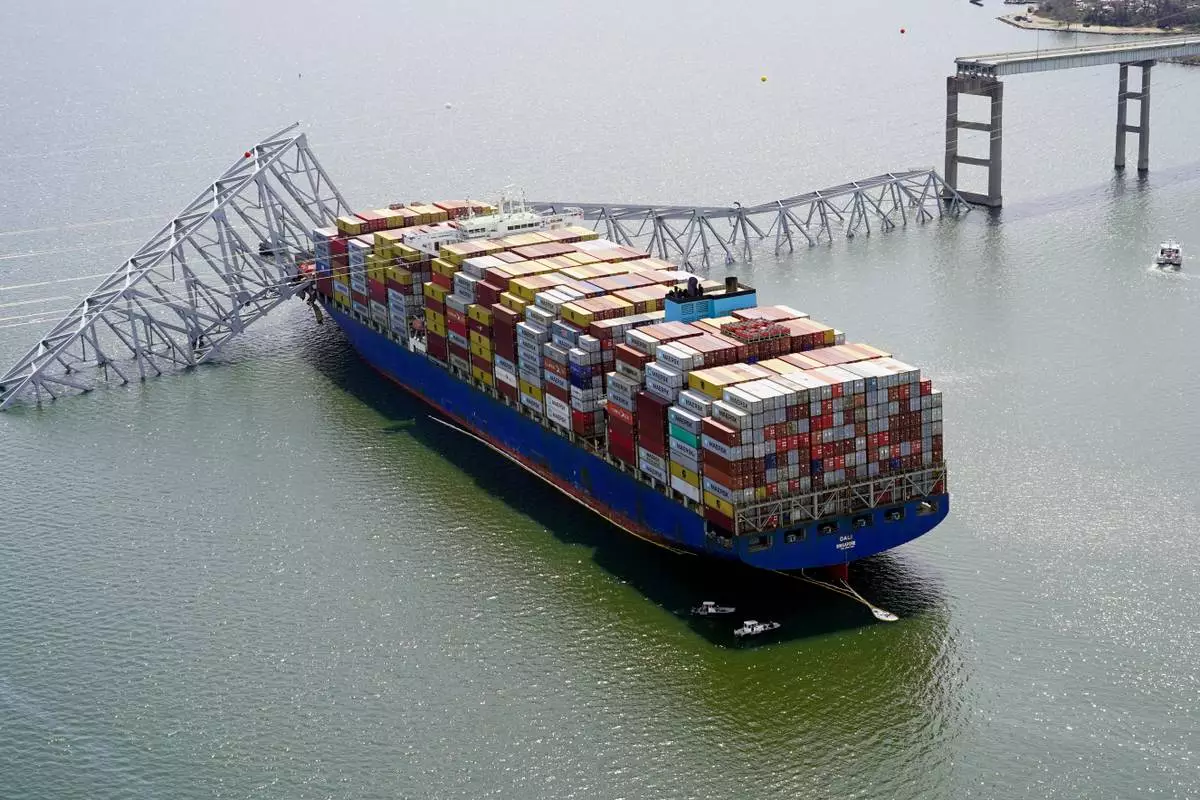
FILE - In this photo provided by the Maryland National Guard, the cargo ship Dali is stuck under part of the structure of the Francis Scott Key Bridge after the ship hit the bridge March 26, 2024, in Baltimore. (Maryland National Guard via AP, File)