The Chinese People's Liberation Army Navy (PLAN) announced Tuesday that the aircraft carrier formation of the PLAN's Fujian has completed its first live-force training at sea since commissioning.
During the mission, the formation carried out a series of training exercises, including fleet navigation, vessel-aircraft joint search and rescue, and carrier-based aircraft takeoffs and landings.
In the joint search and rescue exercise, vessels and aircraft coordinated under formation command to swiftly complete a simulated emergency rescue. According to the PLAN, the drill enhanced the formation’s contingency response capabilities.
Various types of carrier-based aircraft, including the J-35, J-15T, J-15DT, and KJ-600, conducted rounds of catapult-assisted takeoffs and landings on the Fujian. These exercises tested the carrier’s electromagnetic catapult, recovery systems, and deck operations, further validating its vessel-aircraft compatibility, the PLAN said.
"Through the live-force training, we have gained a more precise understanding of the electromagnetic catapults and arrestor gear's performance parameters, improving our proficiency in operating various equipment, and enhancing coordination between different battle stations and carrier-based pilots," said Bao Yu, a crew member on the aircraft carrier.
The Fujian was commissioned on November 5.
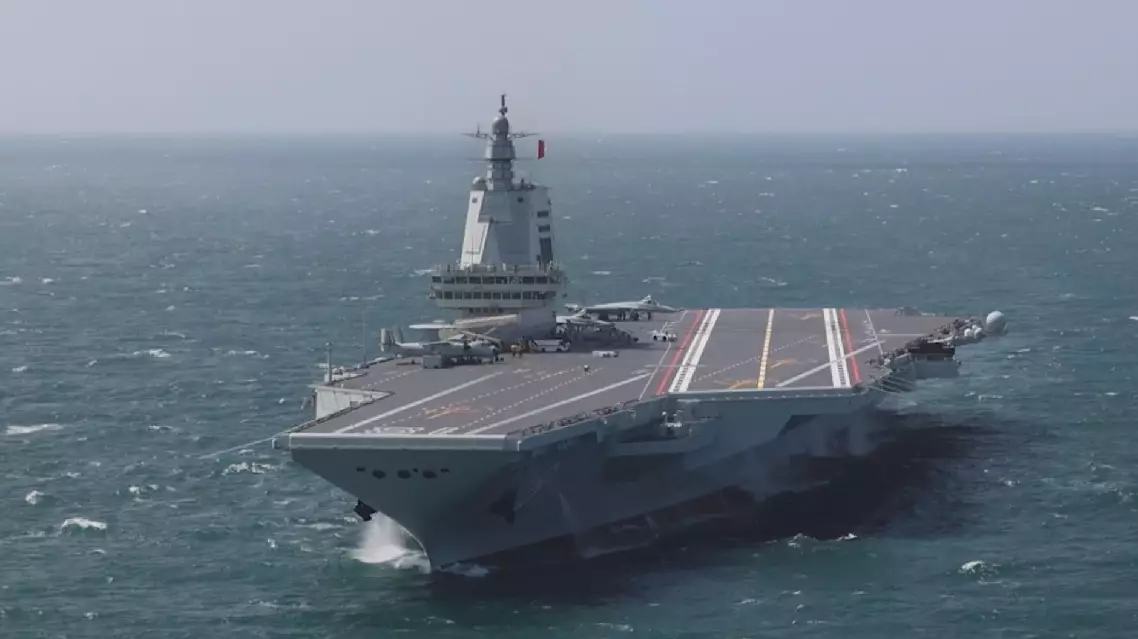
China’s Fujian aircraft carrier completes first live-force sea training
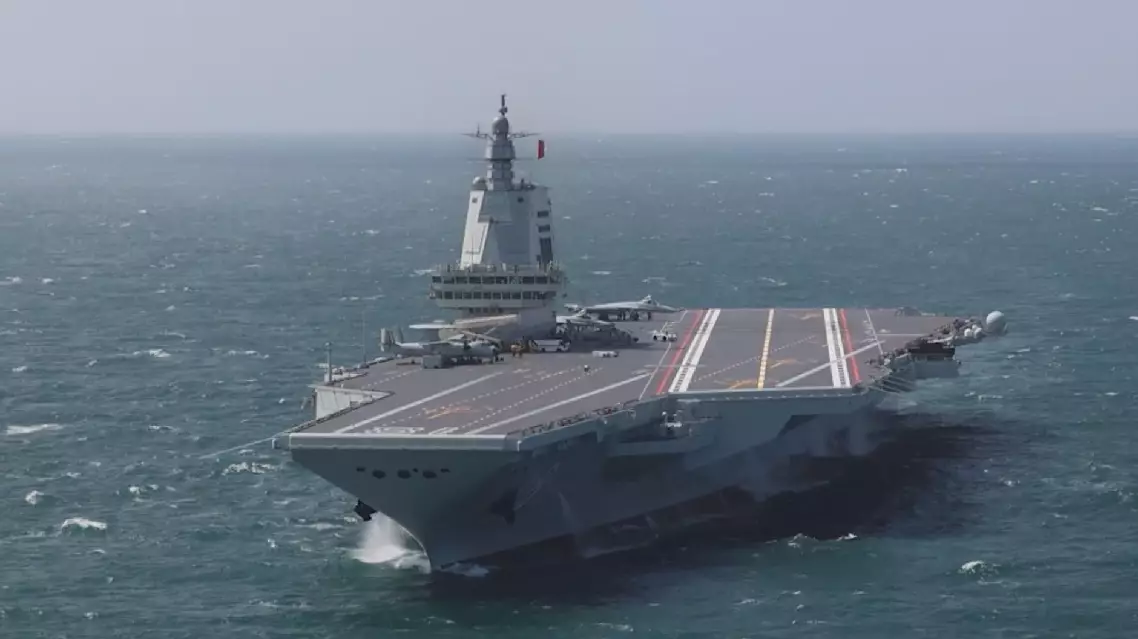

China's 42nd Antarctic Expedition team has started unloading supplies for scientific exploration after arriving at waters near the Zhongshan Station, a Chinese research base in Antarctica.
The ongoing seven-month scientific exploration mission is supported by Chinese icebreakers the Xuelong and the Xuelong 2, which set sail from Shanghai on Nov 1.
The two icebreakers will deliver about 2,000 tons of supplies to the Zhongshan Station for scientific exploration.
The Xuelong 2 arrived first at a designated unloading spot about 12 kilometers from the Zhongshan Station. Later, the ship's Ka-32 helicopter transported in batches more than 300 tons of polar fuel to the research base when weather conditions were favorable.
"Nearly 90 members of the expedition team carried by the two ship are already at the Zhongshan Station, preparing for receiving supplies and assignments for scientific exploration," said Wang Tao, person in charge of unloading operations at the Zhongshan Station.
Thanks to more than 30 hours of efforts by the Xuelong 2 to widen the channel and lead the way, the Xuelong, which was carrying about 1,500 tons of supplies, has also arrived at the unloading spot.
The unloading operations, involving a combination of sea-ice transport and helicopter lifts, are expected to be finished within two weeks.
And then, the Xuelong and the Xuelong 2 will proceed to China's Qingling Station and Changcheng Station in Antarctica, respectively.
The expedition team includes more than 500 members from over 80 institutions on the Chinese mainland, along with researchers from more than 10 other countries and regions, such as Thailand, Chile and Portugal, as well as China's Hong Kong and Macao Special Administrative Regions, in support of broader international scientific collaboration.
They will conduct multi-disciplinary scientific surveys, advance several major national research projects, and test domestically developed equipment under polar conditions.
Particularly, scientific drilling experiments in lakes deep in the Antarctic inland ice sheet will be carried out for the first time.
China's 42nd Antarctic Expedition team unloads supplies at Zhongshan Station