LONDON (AP) — Britain's domestic intelligence agency on Tuesday warned U.K. lawmakers that Chinese spies were actively reaching out to “recruit and cultivate” them via headhunters or cover companies.
Writing to lawmakers, House of Commons Speaker Lindsay Hoyle said a new MI5 “espionage alert” warned that Chinese nationals were ”using LinkedIn profiles to conduct outreach at scale" on behalf of the Chinese Ministry of State Security.
“Their aim is to collect information and lay the groundwork for long-term relationships, using professional networking sites, recruitment agents and consultants acting on their behalf,” he said.
MI5 issued the alert because the activity was “targeted and widespread,” he added.
The Chinese Embassy in London dismissed the allegations as “pure fabrication and malicious slander” and warned the U.K. against further undermining bilateral relations.
The MI5 alert cited LinkedIn profiles of two women, Amanda Qiu and Shirly Shen, and said other similar recruiters' profiles were acting as fronts for espionage.
Home Office Minister Dan Jarvis said that apart from parliamentary staff, others including economists, think tank consultants and government officials have been similarly targeted.
“This activity involves a covert and calculated attempt by a foreign power to interfere with our sovereign affairs in favor of its own interests, and this government will not tolerate it," Jarvis told Parliament.
British intelligence officials have in recent years steadily ramped up their warnings about espionage threats from China, the U.K.’s third largest trading partner.
Jarvis said the government is rolling out a series of measures to tackle the risk, including investing 170 million pounds ($224 million) to renew encrypted technology used by civil servants to safeguard sensitive work. Opposition parties say authorities are not doing enough and are too wary of jeopardizing trade ties with China.
The latest warning came after critics widely questioned how the prosecution of two men charged with spying for Beijing in Britain collapsed just before they were due to stand trial.
Academic Christopher Berry and parliamentary researcher Christopher Cash were charged last year with providing information or documents to China that could be “prejudicial to the safety or interests” of the U.K. Their case was dropped in September.
The Director of Public Prosecutions Stephen Parkinson said it was because the government refused to testify under oath that China was a threat to national security at the time of the alleged offenses, between 2021 and 2023. Prime Minister Keir Starmer has denied claims of government interference in the case.
In January 2022, the Security Service issued a similar security alert to all lawmakers warning that a London-based lawyer was knowingly engaged in “political interference activities in the U.K.” in coordination with the Chinese Communist Party’s United Front Work Department, an organization known to exert Chinese influence abroad.
The lawyer, Christine Lee, was accused of facilitating covert donations to British parties and legislators “on behalf of foreign nationals.”
MI5 Director-General Ken McCallum told reporters last month that Chinese state actors present a national security threat to the U.K. “every day.”
McCallum said Beijing-backed meddling has included cyberespionage, stealing technology secrets and “efforts to interfere covertly in U.K. public life.”
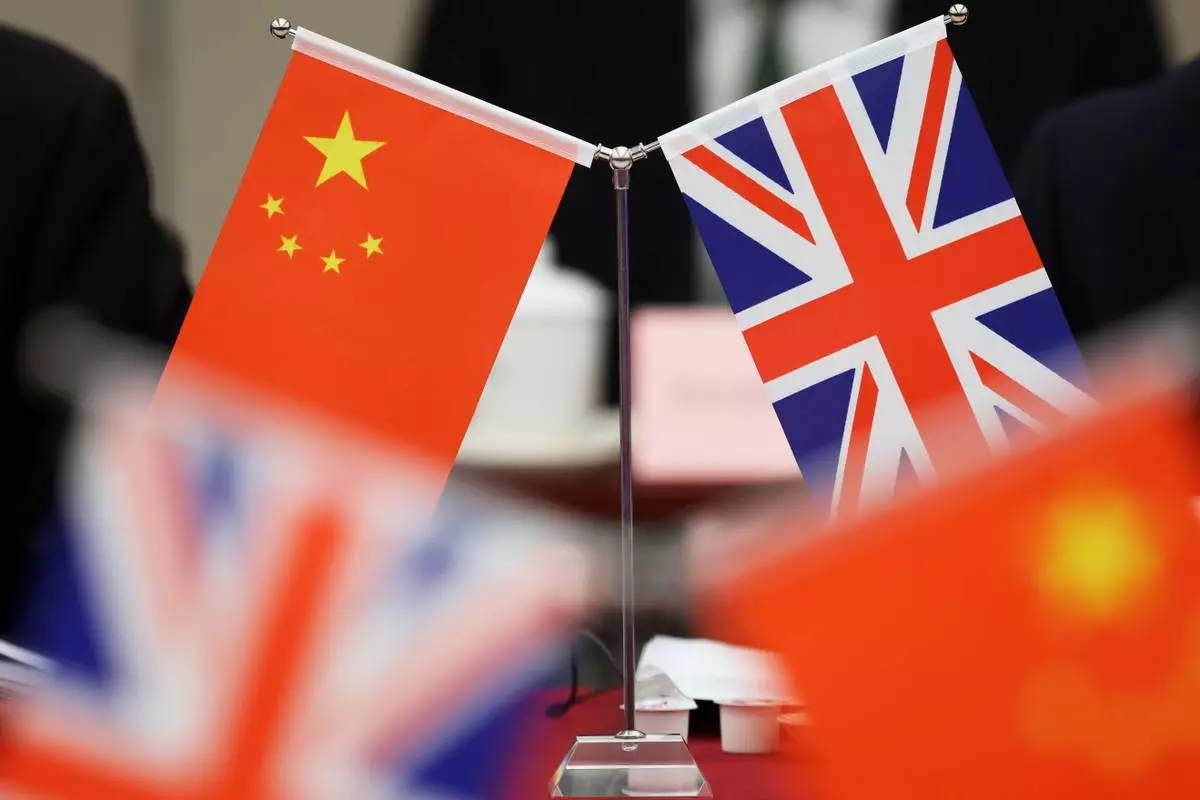
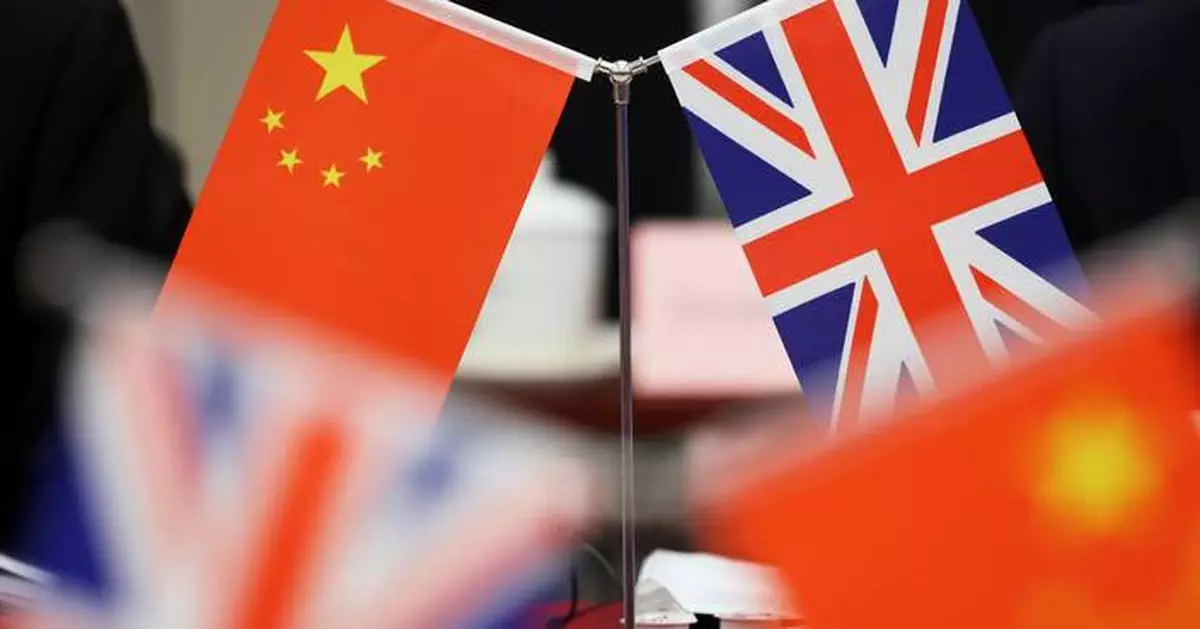
FILE - Flags of China and the Union Jack stand during the China-UK Energy Dialogue in Beijing, China, March 17, 2025. (Florence Lo/Pool Photo via AP, file)
WASHINGTON (AP) — Chief Justice John Roberts has led the Supreme Court 's conservative majority on a steady march of increasing the power of the presidency, starting well before Donald Trump's time in the White House.
The justices could take the next step in a case being argued Monday that calls for a unanimous 90-year-old decision limiting executive authority to be overturned.
The court's conservatives, liberal Justice Elena Kagan noted in September, seem to be “raring to take that action.”
They already have allowed Trump, in the opening months of the Republican's second term, to fire almost everyone he has wanted, despite the court's 1935 decision in Humphrey's Executor that prohibits the president from removing the heads of independent agencies without cause.
The officials include Rebecca Slaughter, whose firing from the Federal Trade Commission is at issue in the current case, as well as officials from the National Labor Relations Board, the Merit Systems Protection Board and the Consumer Product Safety Commission.
The only officials who have so far survived efforts to remove them are Lisa Cook, a Federal Reserve governor, and Shira Perlmutter, a copyright official with the Library of Congress. The court already has suggested that it will view the Fed differently from other independent agencies, and Trump has said he wants her out because of allegations of mortgage fraud. Cook says she did nothing wrong.
Humphrey's Executor has long been a target of the conservative legal movement that has embraced an expansive view of presidential power known as the unitary executive.
The case before the high court involves the same agency, the FTC, that was at issue in 1935. The justices established that presidents — Democrat Franklin D. Roosevelt at the time — could not fire the appointed leaders of the alphabet soup of federal agencies without cause.
The decision ushered in an era of powerful independent federal agencies charged with regulating labor relations, employment discrimination, the air waves and much else.
Proponents of the unitary executive theory have said the modern administrative state gets the Constitution all wrong: Federal agencies that are part of the executive branch answer to the president, and that includes the ability to fire their leaders at will.
As Justice Antonin Scalia wrote in a 1988 dissent that has taken on mythical status among conservatives, “this does not mean some of the executive power, but all of the executive power.”
Since 2010 and under Roberts' leadership, the Supreme Court has steadily whittled away at laws restricting the president's ability to fire people.
In 2020, Roberts wrote for the court that “the President’s removal power is the rule, not the exception” in a decision upholding Trump’s firing of the head of the Consumer Financial Protection Bureau despite job protections similar to those upheld in Humphrey’s case.
In the 2024 immunity decision that spared Trump from being prosecuted for his efforts to overturn the 2020 election results, Roberts included the power to fire among the president's “conclusive and preclusive” powers that Congress lacks the authority to restrict.
But according to legal historians and even a prominent proponent of the originalism approach to interpreting the Constitution that is favored by conservatives, Roberts may be wrong about the history underpinning the unitary executive.
“Both the text and the history of Article II are far more equivocal than the current Court has been suggesting,” wrote Caleb Nelson, a University of Virginia law professor who once served as a law clerk to Justice Clarence Thomas.
Jane Manners, a Fordham University law professor, said she and other historians filed briefs with the court to provide history and context about the removal power in the country's early years that also could lead the court to revise its views. “I'm not holding my breath,” she said.
Slaughter's lawyers embrace the historians' arguments, telling the court that limits on Trump's power are consistent with the Constitution and U.S. history.
The Justice Department argues Trump can fire board members for any reason as he works to carry out his agenda and that the precedent should be tossed aside.
“Humphrey’s Executor was always egregiously wrong,” Solicitor General D. John Sauer wrote.
A second question in the case could affect Cook, the Fed governor. Even if a firing turns out to be illegal, the court wants to decide whether judges have the power to reinstate someone.
Justice Neil Gorsuch wrote earlier this year that fired employees who win in court can likely get back pay, but not reinstatement.
That might affect Cook's ability to remain in her job. The justices have seemed wary about the economic uncertainty that might result if Trump can fire the leaders of the central bank. The court will hear separate arguments in January about whether Cook can remain in her job as her court case challenging her firing proceeds.
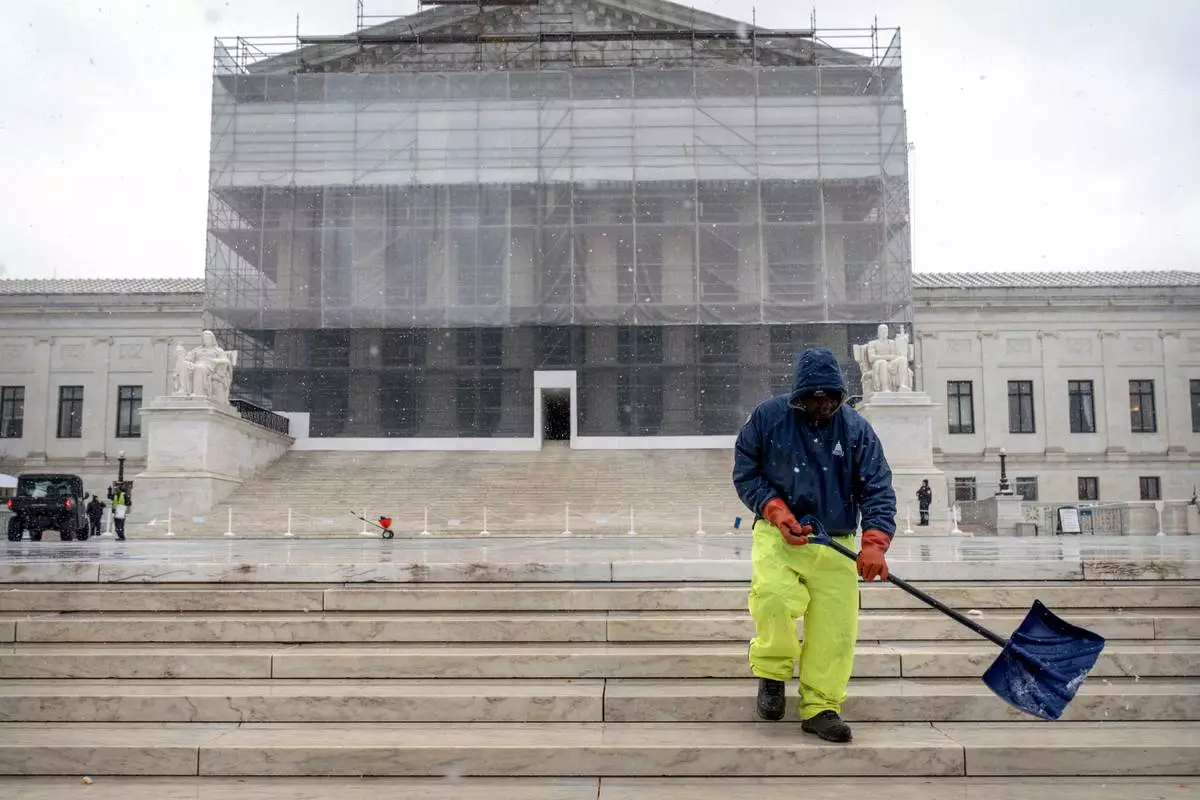
A worker shovels snow and ice in front of the Supreme Court building during the first snowfall of the winter season on Friday, Dec. 5, 2025, in Washington. (AP Photo/Mark Schiefelbein)
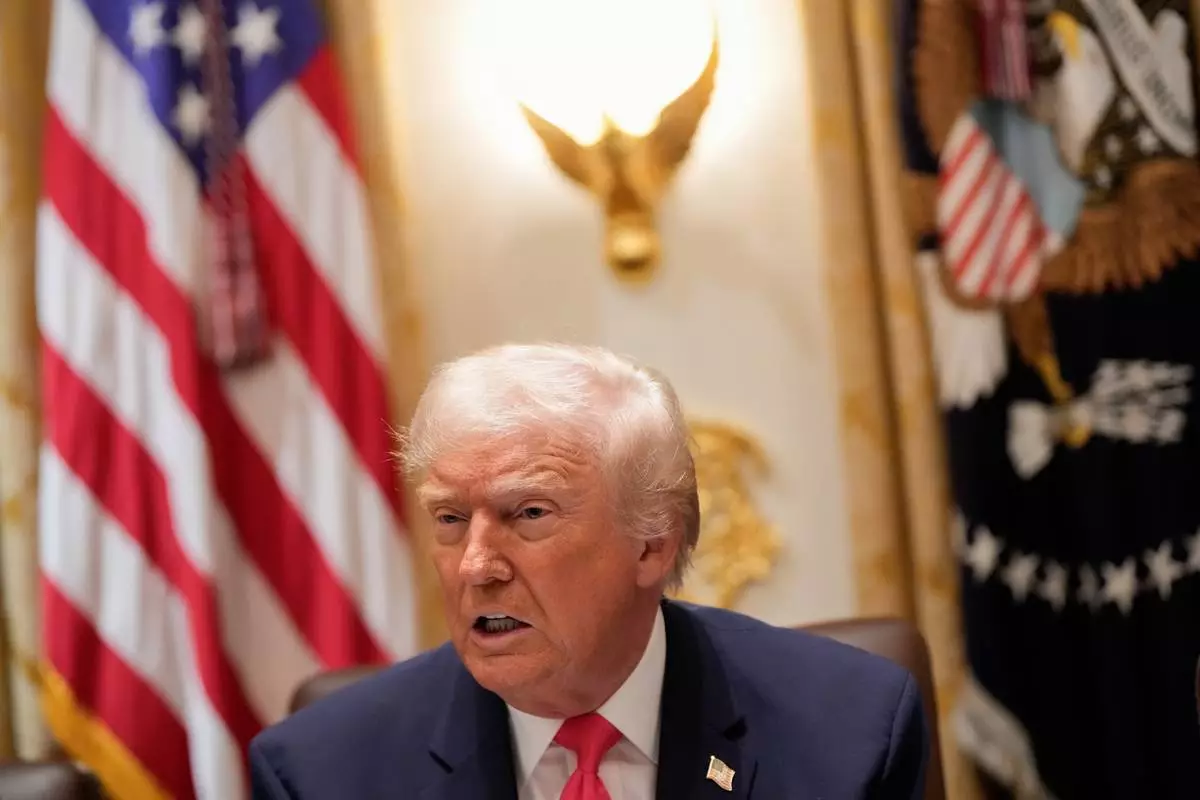
President Donald Trump speaks during a Cabinet meeting at the White House, Tuesday, Dec. 2, 2025, in Washington. (AP Photo/Julia Demaree Nikhinson)