WASHINGTON (AP) — Tyler Adams has set a bold goal for the U.S. soccer team, aiming to reach the World Cup semifinals for the first time since the inaugural tournament in 1930.
“Everyone’s going to want us to say winning it is obviously the goal,” the American midfielder said Friday after the World Cup draw, "but I think setting the benchmark of the furthest the U.S. team has gone is also realistic.”
The 14th-ranked U.S. will start Group D against No. 39 Paraguay on June 12 in Inglewood, California, and then play 26th-ranked Australia six days later at Seattle. The Americans conclude the group stage on June 25 back at SoFi Stadium against the winner of playoffs among Turkey (25), Slovakia (45), Romania (47) and Kosovo (80).
"Getting three points right off right off the bat like that would be would be an amazing start for us and just put us in a great position in the group,” star Christian Pulisic said.
It appears to be among the less difficult of the 12 groups. The top two in each advance to the new round of 32 along with the best four third-place teams.
“Listen, we all want to win a World Cup," defender Tim Ream said. “You don’t play a tournament just to be there and so we’ve had conversations, Chris and I have had conversations about, yeah, we wan to win. I think people can laugh and say whatever they want.”
In recent friendlies, the U.S. lost 2-1 to Turkey in June, beat Australia 2-1 in October and defeated Paraguay 2-1 last month.
“Potentially we played all three of these teams in the last six months but that can be a little bit of a false kind of sense of security,” defender Ream said.
In nearly a century of World Cup play, the U.S. is 1-7 in knockout games, getting outscored 22-7. The Americans’ only win was 2-0 over Mexico in 2002’s round of 16, which was followed by a 1-0 quarterfinal loss to Germany. The Americans are winless in their last 12 World Cup matches against European teams, outscored 20-10.
“There’s no easy game in a World Cup. In fact, I think some of our hardest games in the previous World Cup were against the lesser opponents,” Adams said.
At the 2022 tournament in Qatar, the U.S. tied Wales 1-1 and England 0-0 before beating Iran 1-0 on a Pulisic goal to advance.
“It’s fair to say that the last World Cup we couldn’t set a bar or standard for anything. We didn’t know what to expect," Adams said. “Now looking back on it, I think we have more experience. We’re a lot more mature. We’ve grown a lot as individuals and as a team.”
Coach Mauricio Pochettino has scheduled friendlies against Belgium and Portugal in March and vs. a team to be determined and Germany just before the tournament.
As he mulls his roster, Pochettino thinks about “Miracle,” a 2004 movie he watched last month about the 1980 U.S. Olympic hockey team of young players that upset the heavily favored Soviet Union and went on to win the gold medal. Coach Herb Brooks' decisions made an impression on Pochettino.
“We don’t need the best players, we need the right players to make a team a strong team,” Pochettino said. “The right players to build a powerful team with the possibility to fight with any team in the in the world. Good and right are completely different.”
AP soccer: https://apnews.com/hub/soccer

U.S. team coach Mauricio Pochettino attends the draw for the 2026 soccer World Cup at the Kennedy Center in Washington, Friday, Dec. 5, 2025. (Dan Mullan/Pool Photo via AP)

U.S. team coach Mauricio Pochettino arrives to attend the draw for the 2026 soccer World Cup at the Kennedy Center in Washington, Friday, Dec. 5, 2025. (AP Photo/Julia Demaree Nikhinson)
President Donald Trump said U.S. forces will keep hitting Iran “very hard” in the next two or three weeks and bring the country “back to the Stone Ages,” even as he touted the success of U.S. operations and argued that all of Washington’s objectives have so far been met or exceeded.
Trump said Iran would continue to face a barrage of attacks in the short term.
“We are going to hit them extremely hard over the next two to three weeks,” Trump said. “We’re going to bring them back to the Stone Ages, where they belong.”
Trump didn’t say anything about negotiations with Iran or bring up the April 6 deadline he set for Iran to open the Strait of Hormuz, the critical waterway for global oil and gas transport. He has threatened to attack Iran's energy infrastructure if the strait was not reopened.
Trump also did not offer a clear path to end the supply disruptions that have sent energy prices soaring. He did not mention the possibility of sending U.S. ground troops into Iran, or NATO, the trans-Atlantic alliance he has railed against for not helping the U.S. secure the waterway.
Oil rose more than 4% and Asian stocks fell after the comments. Oil prices were sharply higher following Trump’s remarks. Brent crude, the international standard, jumped 4.9% to $106.16 per barrel. Benchmark U.S. crude rose 4% to $104.15 a barrel.
U.S. gas prices jumped past an average of $4 a gallon for the first time since 2022 on Tuesday, as the Iran war continues to push fuel prices higher worldwide. Analysts say those high fuel costs will trickle into groceries as businesses’ transportation and packaging costs pile up.
Here is the latest:
A New York-based think tank said Thursday that U.S. President Donald Trump’s speech suggests he “is willing to leave the Strait of Hormuz off the table, leaving other nations to deal with the consequences.”
“Trump’s message was that the United States can sustain its own economic and energy ecosystem, while countries dependent on regional exports will either have to buy from the United States or manage the Strait themselves,” the Soufan Center wrote.
“While Trump explicitly thanked U.S. allies in the Persian Gulf for their cooperation and allyship, an expedited U.S. withdrawal without securing the Strait will leave many of these countries, whose economies are dependent on energy exports, in the lurch.”
Fuel prices in Thailand soared again on Thursday after the government further cut subsidies, sending diesel price to over 44 baht ($1.35) per liter, about 12% increase.
The surge was the second time in a week, after a majority of fuel prices rose by 6 baht ($0.18) per liter last Thursday.
Democrats are criticizing Trump’s primetime address to the American people on the war in Iran as “incoherent” and as doing little to answer “the most basic questions the American people,” according to statements from two Democratic lawmakers released on Wednesday.
Sen. Mark Warner, D-Va., noted that Trump owed Americans more answers about a conflict that has driven up prices on gas “alongside rising prices for diesel, fertilizer, aluminum, and other essentials, with consequences that will continue to ripple through the economy for a long time to come” in his statement.
Meanwhile, Sen. Chris Murphy, D-Conn., released a statement that said the “speech was grounded in a reality that only exists in Donald Trump’s mind.”
Murphy went on to add that “no one in America, after listening to that speech, knows whether we are escalating or deescalating.”
Oil rose more than 4% and Asian stocks fell after U.S. President Donald Trump said in his first national address since the Iran war began that the U.S. will keep hitting Iran very hard.
Trump also said the United States will “finish the job” in Iran and that military operations could wrap up soon.
Tokyo’s Nikkei 225 was down 1.4% to 53,004.81 in early Asia trading on Thursday. South Korea’s Kospi lost 3.4% to 5,292.36. Hong Kong’s Hang Seng fell 0.8% to 25,082.59.
U.S. futures were down more than 0.7%.
Oil prices were sharply higher following Trump’s remarks. Brent crude, the international standard, jumped 5% to $106.22 per barrel. Benchmark U.S. crude rose 4.2% to $104.36 a barrel.
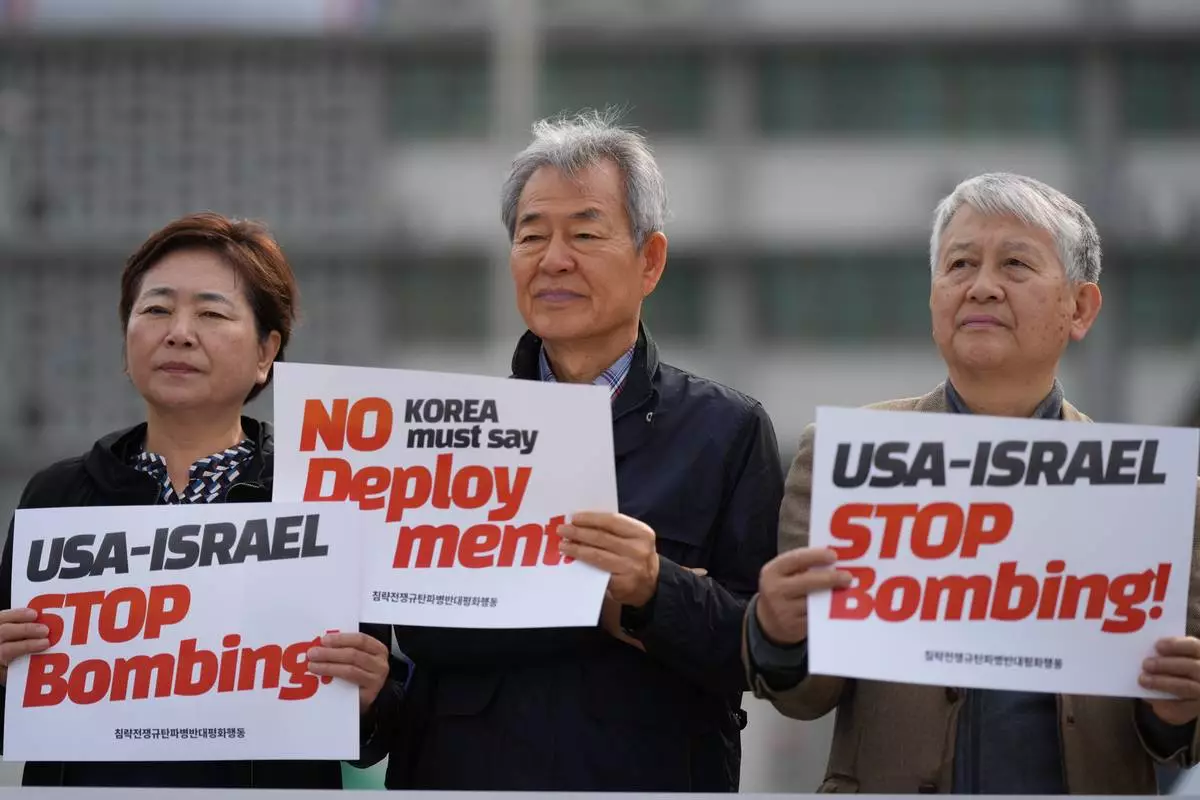
Members of civic groups hold signs against the U.S. and Israel attacks on Iran near the U.S. Embassy in Seoul, South Korea, Wednesday, April 1, 2026. (AP Photo/Lee Jin-man)
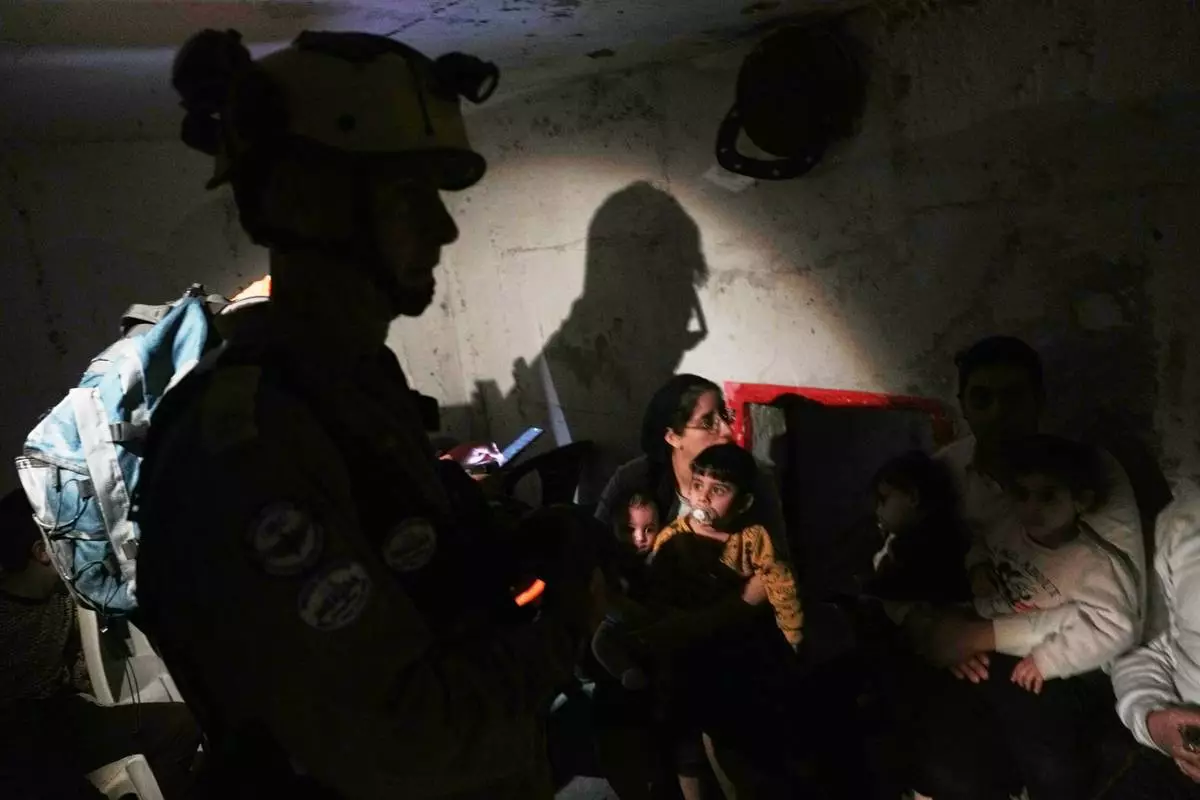
Israel's rescue teams and residents take shelter as sirens sounds next to a site struck by an Iranian missile in Bnei Brak, Wednesday, April 1, 2026. (AP Photo/Oded Balilty)
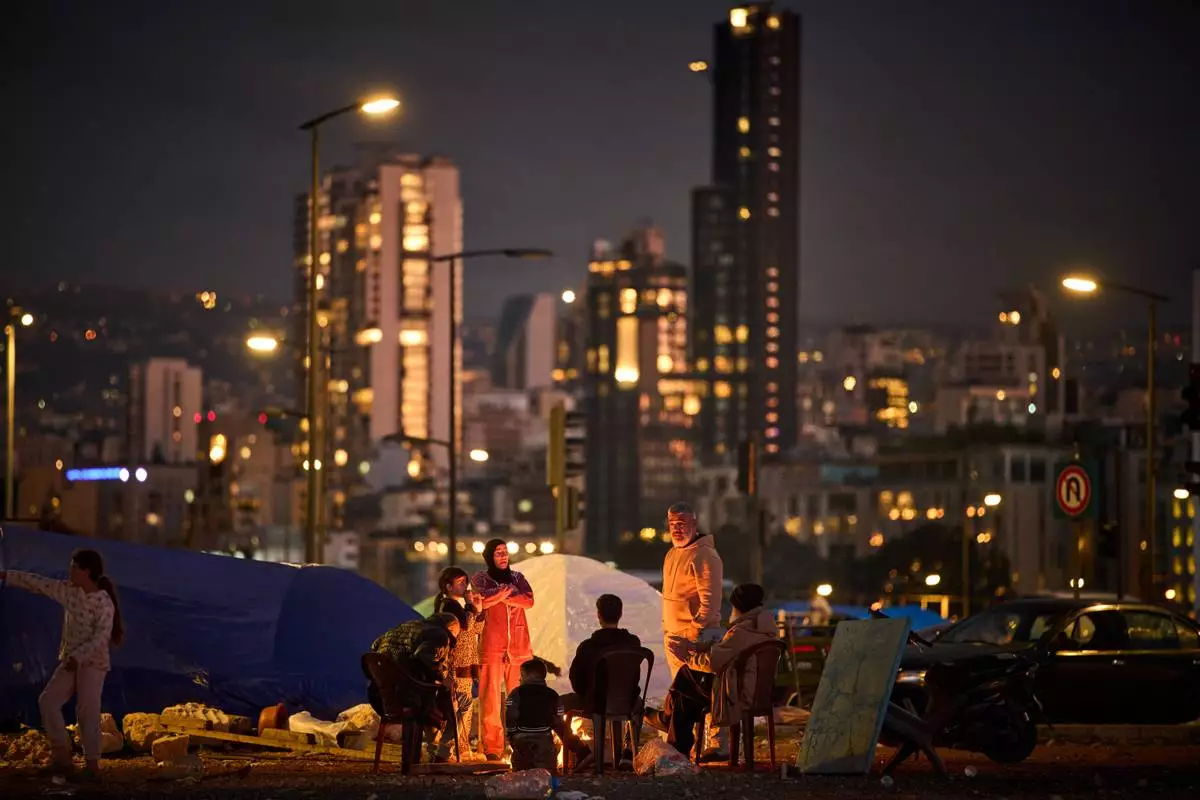
A family who fled Israeli shelling in southern Lebanon warm themselves by a bonfire next to tents used as shelters in Beirut, Lebanon, Tuesday, March 31, 2026. (AP Photo/Emilio Morenatti)
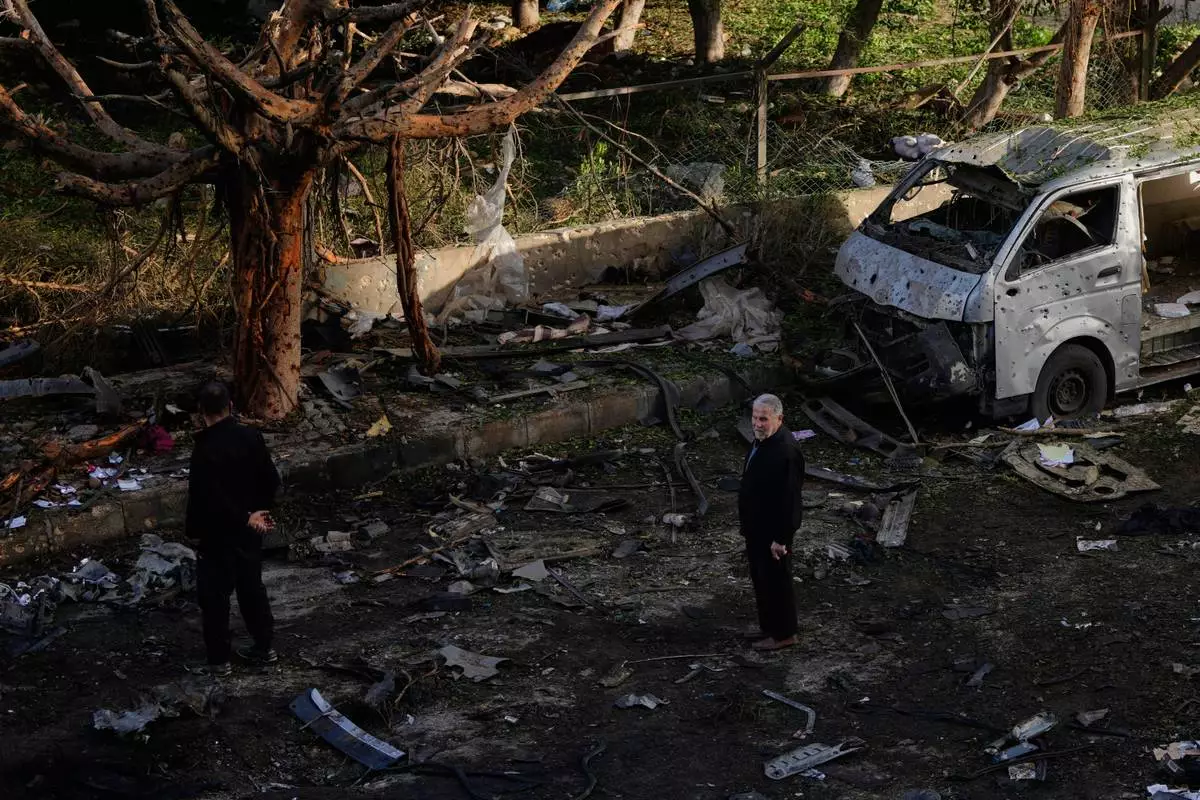
People stand near a damaged van beside scattered debris following an Israeli strike in Beirut, Lebanon, Wednesday, April 1, 2026. (AP Photo/Hassan Ammar)
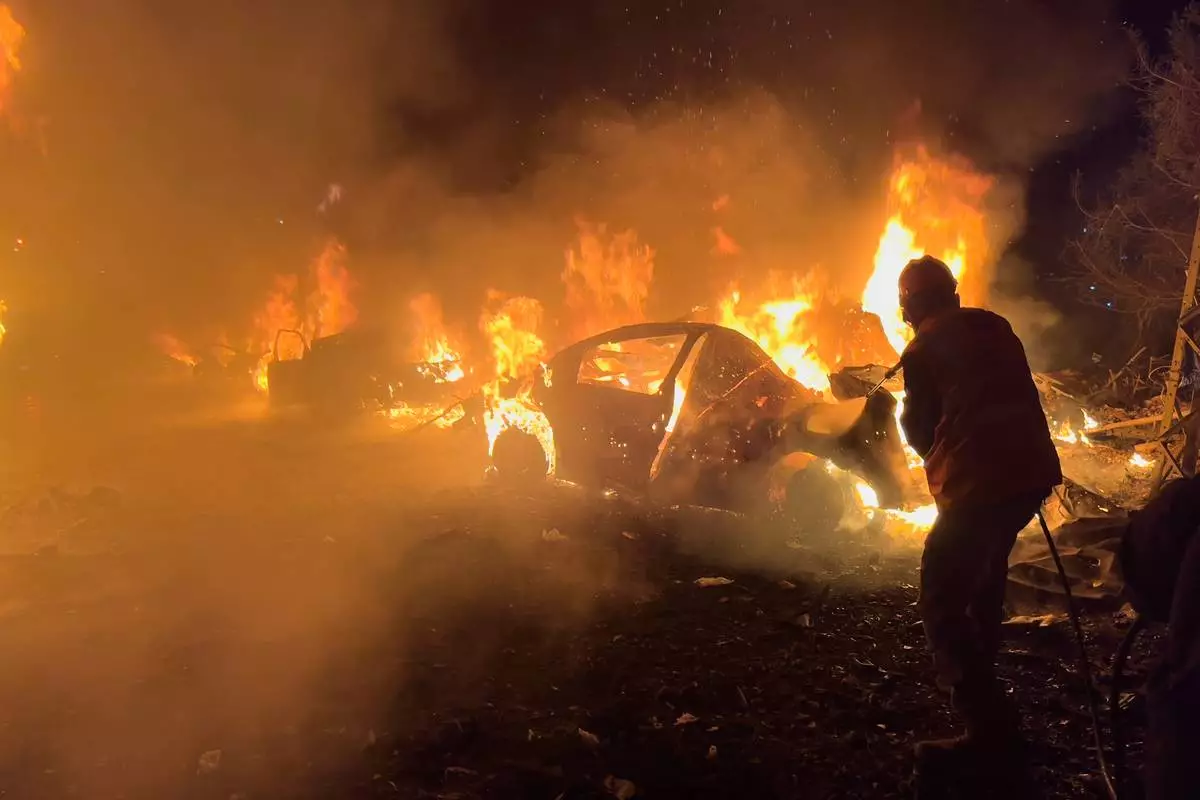
A firefighter extinguishes a car at the site of Israeli airstrikes, in Beirut, Lebanon, Wednesday, April 1, 2026. (AP Photo/Hussein Malla)