PITTSBURGH (AP) — Aaron Rodgers might get a chance to say goodbye to one of his favorite places after all.
Pittsburgh coach Mike Tomlin said Tuesday there's a chance that Rodgers and his fractured left wrist could still play on Sunday when the Steelers visit Chicago.
Rodgers injured his non-throwing wrist late in the first half of Pittsburgh's 32-14 victory over Cincinnati on Sunday. While Tomlin said Rodgers wanted to come back in, the four-time MVP remained in the locker room for evaluation while backup Mason Rudolph helped the AFC North-leading Steelers pull away to improve to 6-4.
The 41-year-old Rodgers, the NFL's oldest active player, will not need surgery on the wrist. He will not practice on Wednesday. What happens after that will depend on how Rodgers adjusts to the brace he will wear and how that impacts his ability to operate normally.
Tomlin doesn't expect pain tolerance to be an issue, though Rodgers will have to show he's able to protect himself.
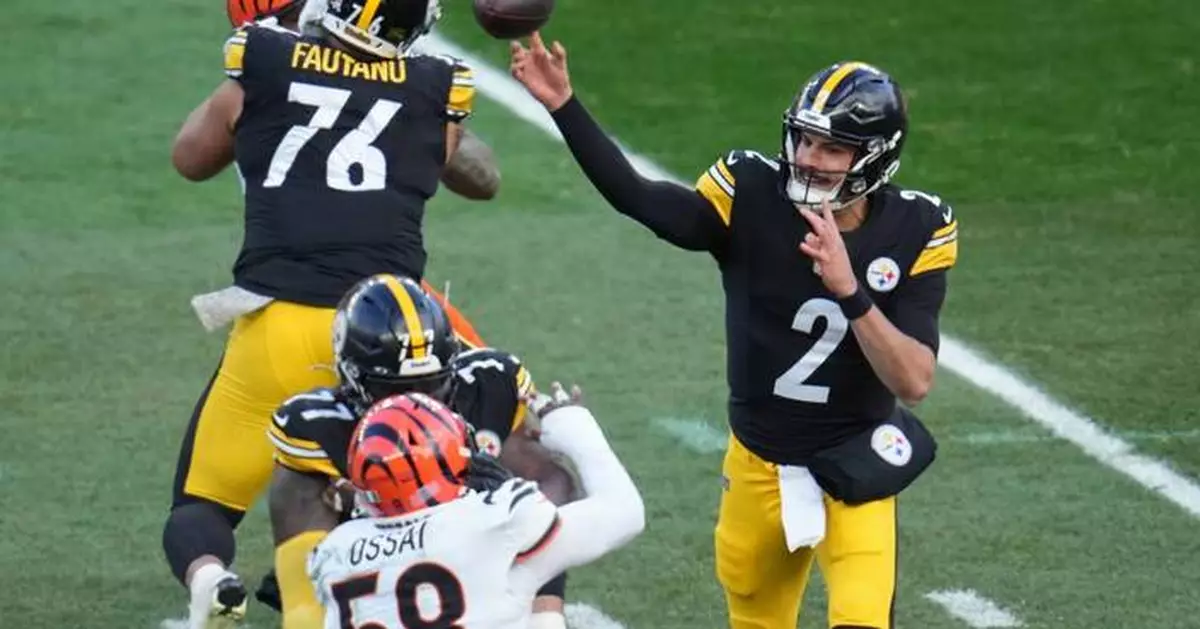
Rudolph, who filled in capably in the second half against the Bengals, would start for Pittsburgh against the NFC North-leading Bears (7-3) if Rodgers can't go.
Rodgers has a long history with Chicago, dating to his highly successful run in Green Bay earlier in his career. He is 11-1 as a starter at Soldier Field and once famously proclaimed he “owned” one of the NFL's oldest franchises.
Tomlin brushed aside the idea that Rodgers' dominance over the Bears will play a factor in whether he plays.
“Aaron always wants to play. Opponent has nothing to do with it,” Tomlin said. “It’s his love affair with the game of football.”
Tomlin isn't sure exactly when Rodgers sustained the injury, though cameras caught Rodgers clutching the wrist after a second-down heave to the back of the end zone with Pittsburgh driving late in the first half. Rodgers was hit at the end of the play, though he did stay in to make one more pass, an incompletion to Roman Wilson.
Rudolph completed 12 of 16 passes for 127 yards and a touchdown against the Bengals and will practice with the starters until Rodgers returns, whenever that might be.
Tomlin has sometimes allowed veteran players to miss an entire week of practice and then play on Sunday. Former quarterback Ben Roethlisberger spent a week on the COVID-19 list in 2021 but was cleared to play the night before a visit to the Los Angeles Chargers.
The unknown of how the brace will affect Rodgers means he won't be given that accommodation. Tomlin said the team will need to see how the brace affects what he called Rodgers' “functionality" before deciding whether he can play.
Asked what kind of input Rodgers will have, the NFL's longest-tenured head coach chuckled.
“It’s his body, so certainly he’s gonna be a component of the discussion,” Tomlin said.
Rudolph gives Pittsburgh a reliable fallback option. The 30-year-old — now in his second stint with the Steelers following a lengthy run as primarily a backup from 2018-23 — memorably won three straight starts at the end of the 2023 season to help the Steelers make the playoffs.
“He’s proven over his time here that he’s capable of coming in and playing winning football for us,” Tomlin said. “And that’s no small task.”
While offensive coordinator Arthur Smith and Rodgers work closely in putting the game plan together, Smith also seeks input from Rudolph, one of the reasons Pittsburgh's offense didn't miss a beat against the Bengals and the NFL's worst defense.
The challenge will be more difficult in Chicago, where the Steelers have won just once in 13 tries. The Bears lead the NFL in takeaways and are second in third-down efficiency.
Rodgers isn't the only player whose status is uncertain for this week. Outside linebacker Alex Highsmith continues to deal with a pectoral injury that forced him to sit out against the Bengals. Cornerback Darius Slay could be back after spending last week in the concussion protocol.
Running back Jaylen Warren, who injured his ankle in the third quarter against Cincinnati, will be limited this week but could be available. Kenny Gainwell compiled 105 total yards and two receiving touchdowns on Sunday while getting an expanded look, which seems likely to continue.
While Warren was cleared to return late against the Bengals — and even went back onto the field at one point, only for the Steelers to call timeout — Tomlin opted to stick with Gainwell, whom Tomlin felt had the “hot hand.”
The trip to Soldier Field begins a daunting three-week stretch for Pittsburgh, which has a tenuous one-game lead over Baltimore. Pittsburgh hosts Buffalo on Nov. 29, then opens December by visiting the Ravens.
NOTES: Tomlin, who initially took issue with cornerback Jalen Ramsey being ejected on Sunday for taking a swing at Bengals wide receiver Ja'Marr Chase, offered a different perspective on Tuesday, a day after the league suspended Chase one game for spitting on Ramsey. Asked how he'd like to see Ramsey address something similar in the future, Tomlin said: “I have no message if someone spits in your face. Do what comes natural.”
AP NFL: https://apnews.com/hub/NFL
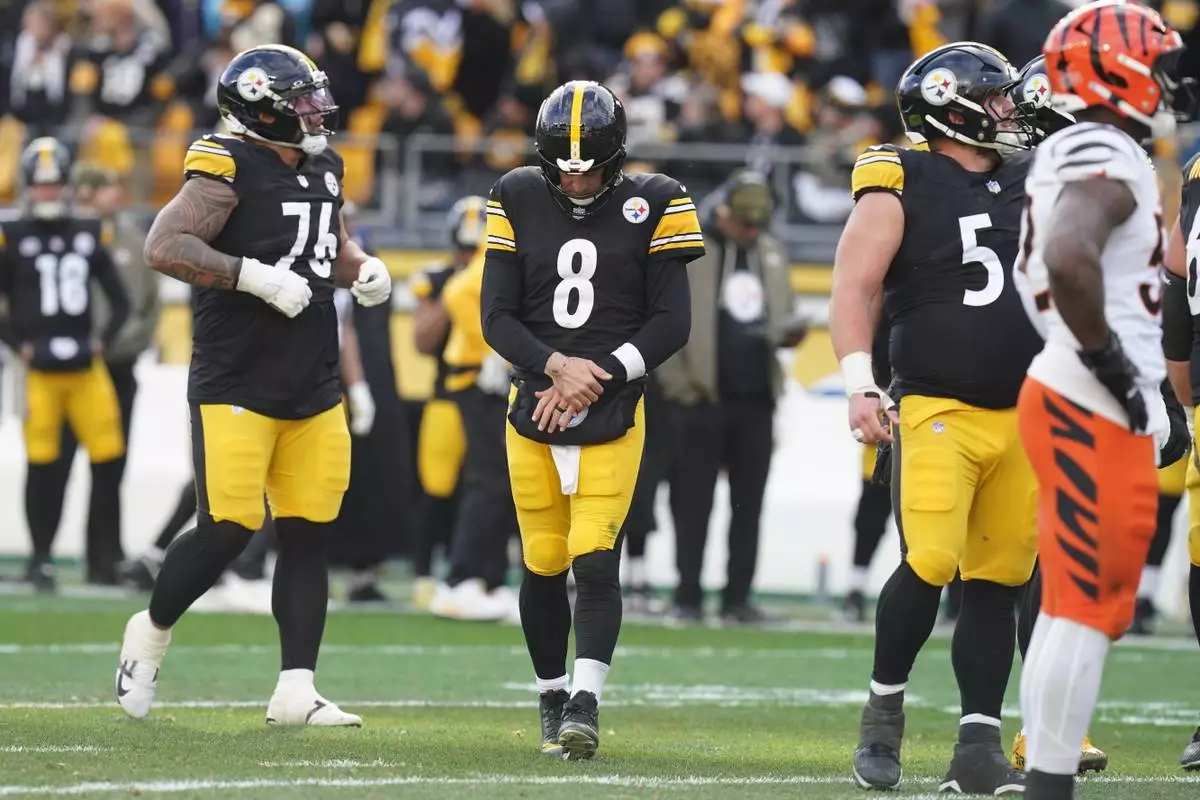
Pittsburgh Steelers quarterback Aaron Rodgers (8) holds his arm after a hit by the Cincinnati Bengals during the first half of an NFL football game Sunday, Nov. 16, 2025, in Pittsburgh. (AP Photo/Matt Freed)
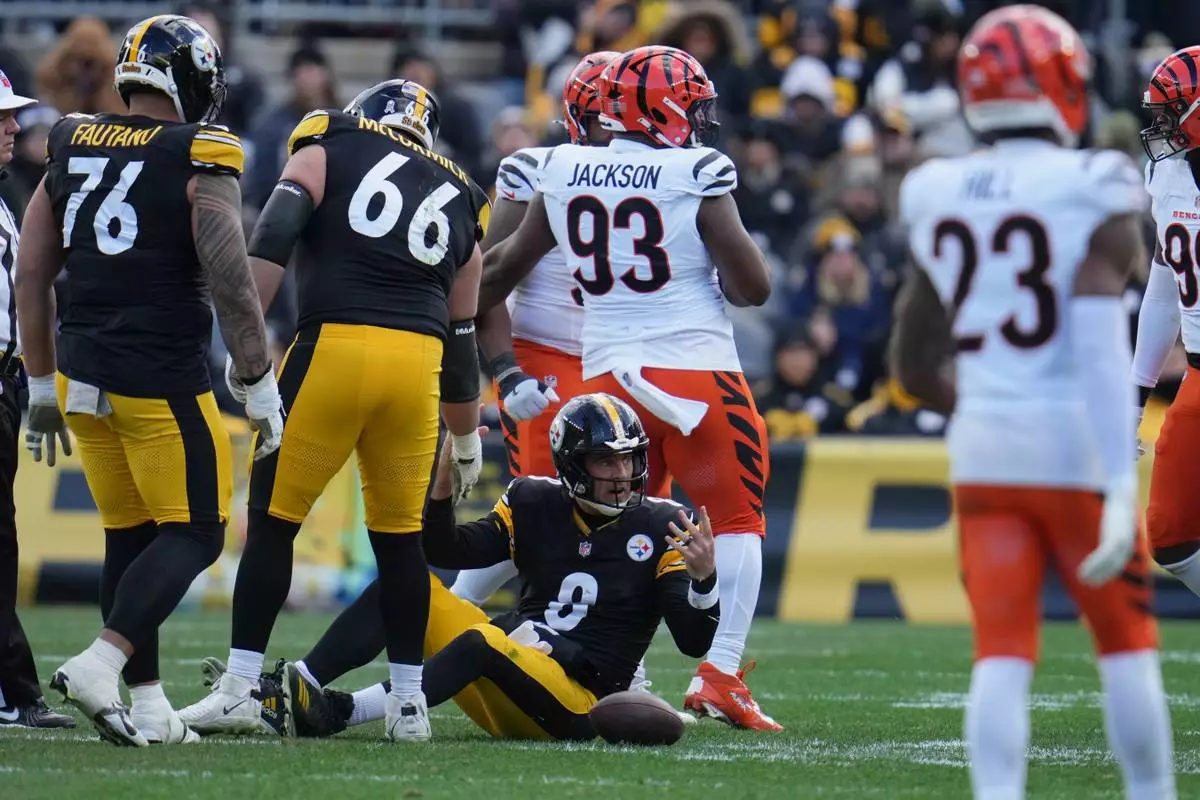
Pittsburgh Steelers quarterback Aaron Rodgers (8) reacts after he was sacked against the Cincinnati Bengals during the first half of an NFL football game Sunday, Nov. 16, 2025, in Pittsburgh. (AP Photo/Gene J. Puskar)
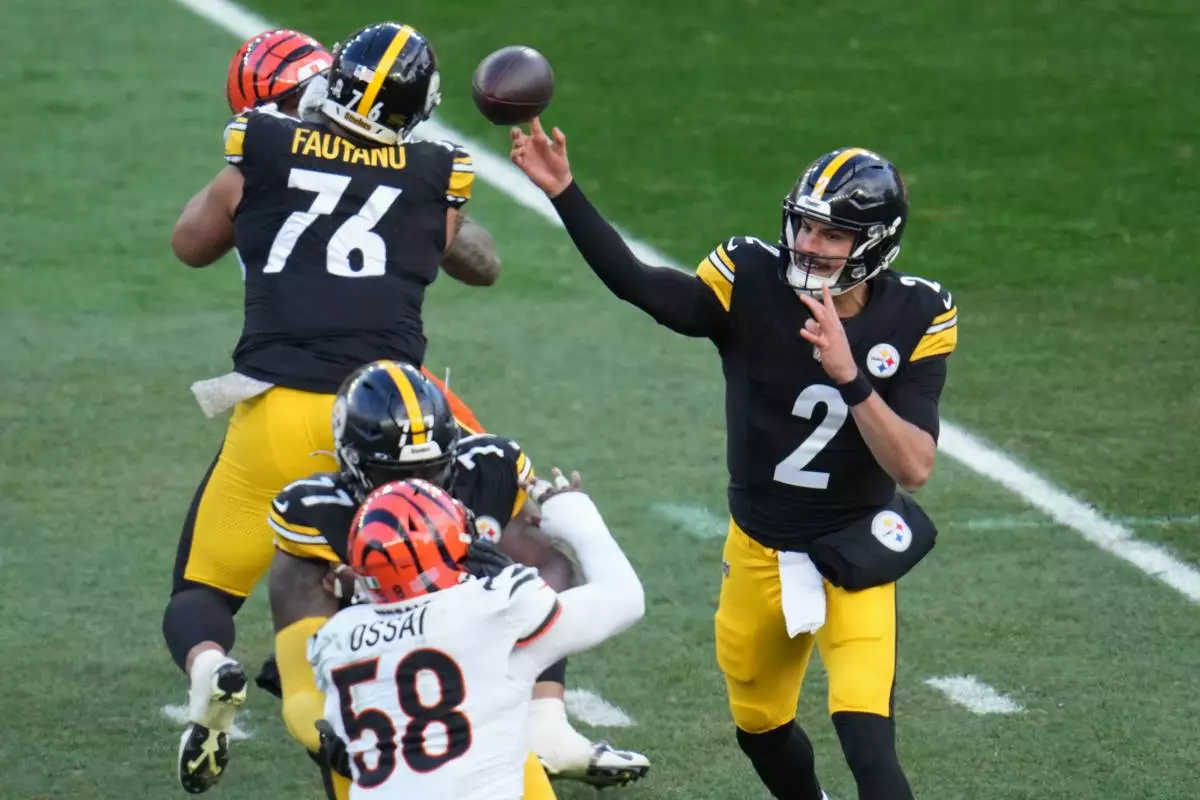
Pittsburgh Steelers quarterback Mason Rudolph (2) throws against the Cincinnati Bengals during the first second of an NFL football game Sunday, Nov. 16, 2025, in Pittsburgh. (AP Photo/Gene J. Puskar)
WASHINGTON (AP) — The Supreme Court is taking up one of the term’s most consequential cases, President Donald Trump’s executive order on birthright citizenship declaring that children born to parents who are in the United States illegally or temporarily are not American citizens, and he was in the courtroom on Wednesday for some of the arguments.
The justices are hearing Trump’s appeal of a lower-court ruling from New Hampshire that struck down the citizenship restrictions, one of several courts that have blocked them. They have not taken effect anywhere in the country.
Trump is the first sitting president to attend oral arguments at the nation’s highest court. He spent just over an hour inside the courtroom, hearing arguments by the government’s lawyer, Solicitor General D. John Sauer. He left shortly after Sauer wrapped up and the plaintiff was invited to present her case.
The case frames another test of Trump's assertions of executive power that defy long-standing precedent for a court that has largely ruled in the president's favor — but with some notable exceptions that Trump has responded to with starkly personal criticisms of the justices. A definitive ruling is expected by early summer.
The birthright citizenship order, which Trump signed the first day of his second term, is part of his Republican administration’s broad immigration crackdown.
Birthright citizenship is the first Trump immigration-related policy to reach the court for a final ruling. The justices previously struck down global tariffs Trump had imposed under an emergency powers law that had never been used that way.
Trump reacted furiously to the late February tariffs decision, saying he was ashamed of the justices who ruled against him and calling them unpatriotic.
He issued a preemptive broadside against the court on Sunday on his Truth Social platform. “Birthright Citizenship is not about rich people from China, and the rest of the World, who want their children, and hundreds of thousands more, FOR PAY, to ridiculously become citizens of the United States of America. It is about the BABIES OF SLAVES!,” the president wrote. “Dumb Judges and Justices will not a great Country make!”
Trump's order would upend the long-standing view that the Constitution’s 14th Amendment, ratified in 1868, and federal law since 1940 confer citizenship on everyone born on American soil, with narrow exceptions for the children of foreign diplomats and those born to a foreign occupying force.
The 14th Amendment was intended to ensure that Black people, including former slaves, had citizenship, though the Citizenship Clause is written more broadly. “All persons born or naturalized in the United States, and subject to the jurisdiction thereof, are citizens of the United States and of the State wherein they reside,” it reads.
In a series of decisions, lower courts have struck down the executive order as illegal, or likely so, under the Constitution and federal law. The decisions have invoked the high court's 1898 ruling in Wong Kim Ark, which held that the U.S.-born child of Chinese nationals was a citizen.
The Trump administration argues that the common view of citizenship is wrong, asserting that children of noncitizens are not “subject to the jurisdiction” of the United States and therefore are not entitled to citizenship.
The court should use the case to set straight “long-enduring misconceptions about the Constitution’s meaning,” wrote Sauer, the solicitor general.
No court has accepted that argument, and lawyers for pregnant women whose children would be affected by the order said the Supreme Court should not be the first to do so.
“We have the president of the United States trying to radically reinterpret the definition of American citizenship,” said Cecillia Wang, the American Civil Liberties Union legal director who is facing off against Sauer at the Supreme Court.
More than one-quarter of a million babies born in the U.S. each year would be affected by the executive order, according to research by the Migration Policy Institute and Pennsylvania State University’s Population Research Institute.
While Trump has largely focused on illegal immigration in his rhetoric and actions, the birthright restrictions also would apply to people who are legally in the United States, including students and applicants for green cards, or permanent resident status.
Associated Press writer Darlene Superville contributed to this report.
Follow the AP’s coverage of the U.S. Supreme Court at https://apnews.com/hub/us-supreme-court.
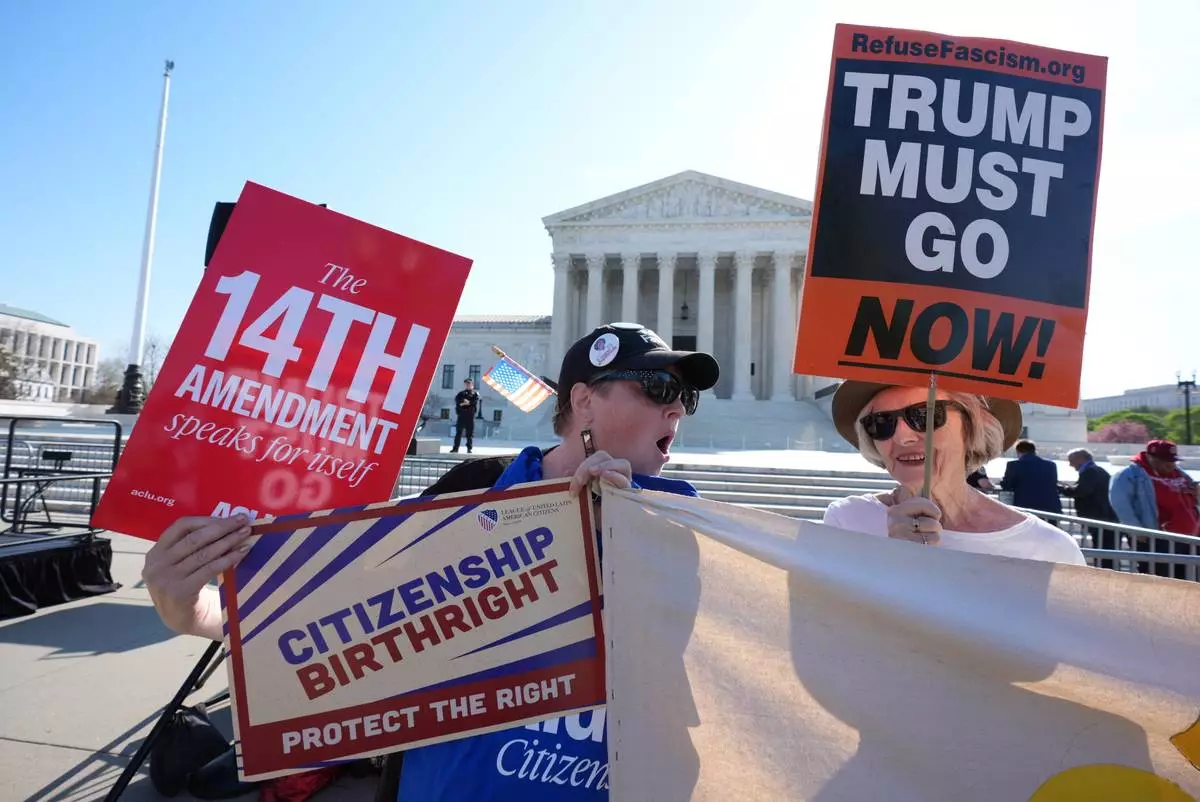
Pro and anti-Trump demonstrators rally outside the U.S. Supreme Court, before justices hear oral arguments on whether President Donald Trump can deny citizenship to children born to parents who are in the United States illegally or temporarily, on Capitol Hill, in Washington, Wednesday, April 1, 2026. (AP Photo/J. Scott Applewhite)
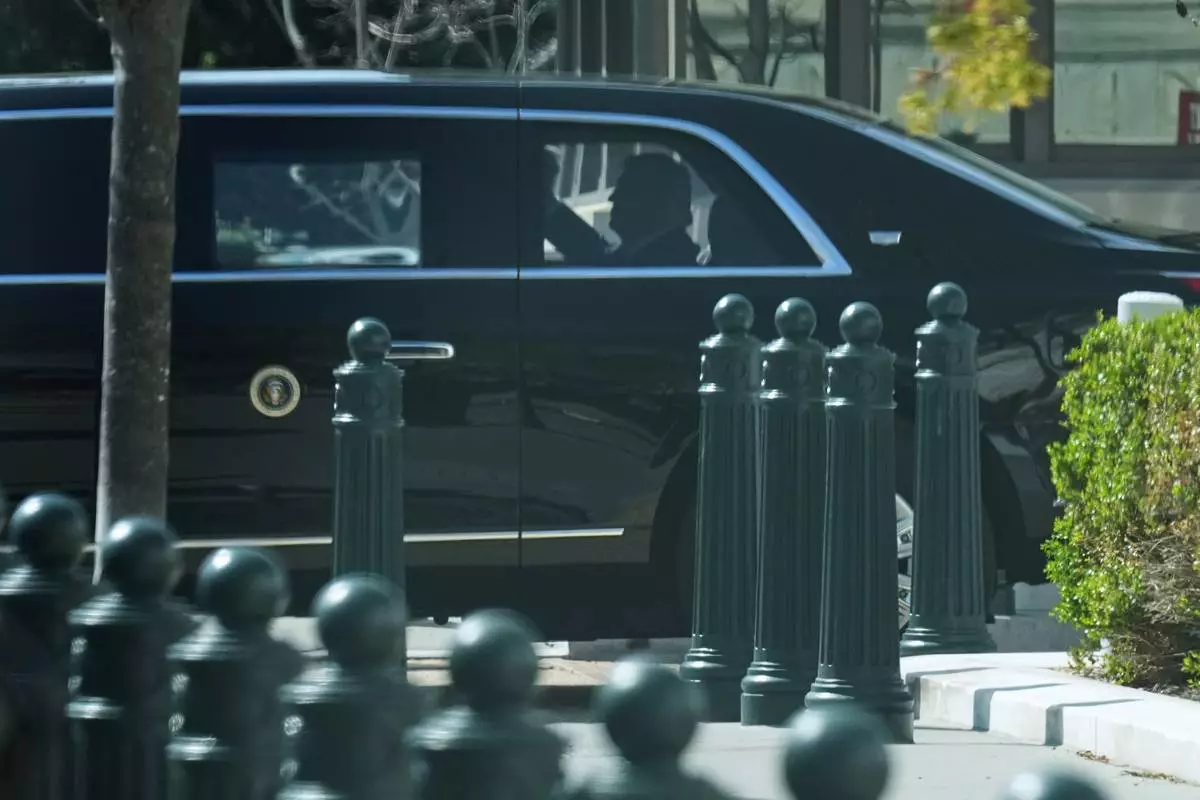
President Donald Trump leaves the U.S. Supreme Court, Wednesday, April 1, 2026, in Washington. (AP Photo/Mark Schiefelbein)
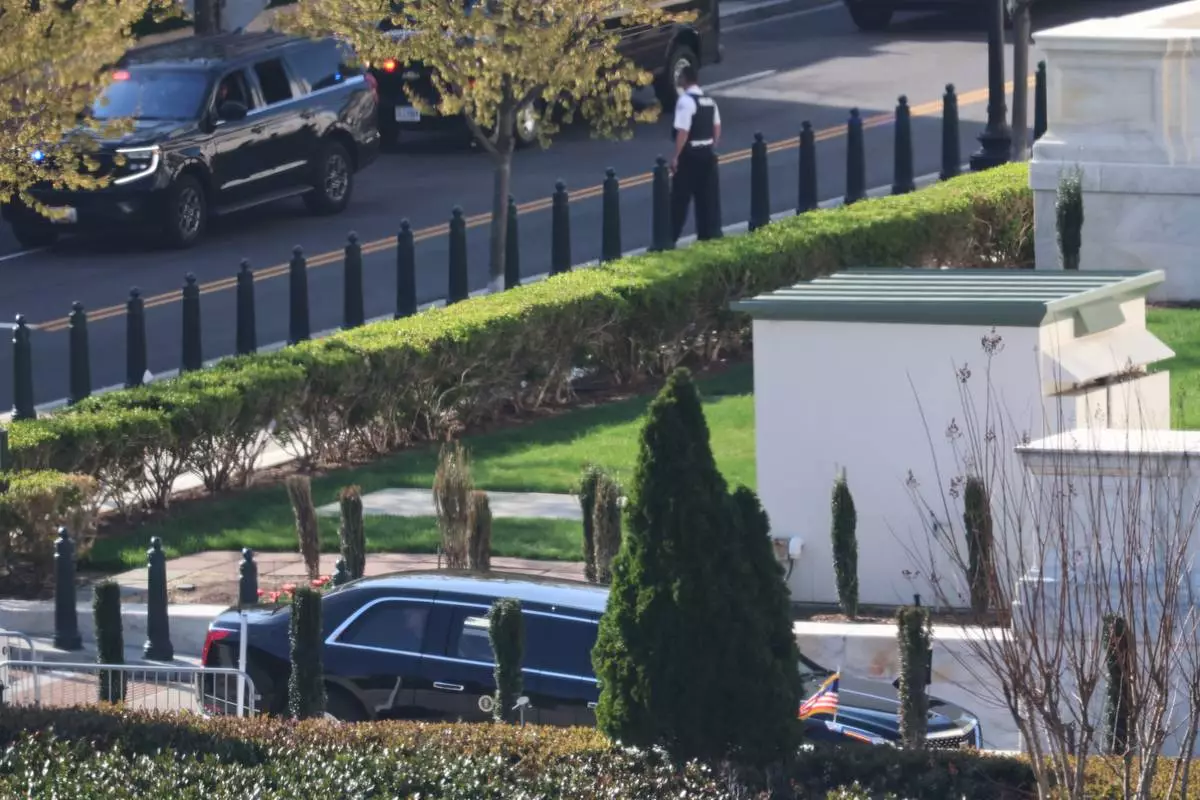
President Donald Trump's motorcade arrives at the U.S. Supreme Court, Wednesday, April 1, 2026, in Washington. (AP Photo/Tom Brenner)
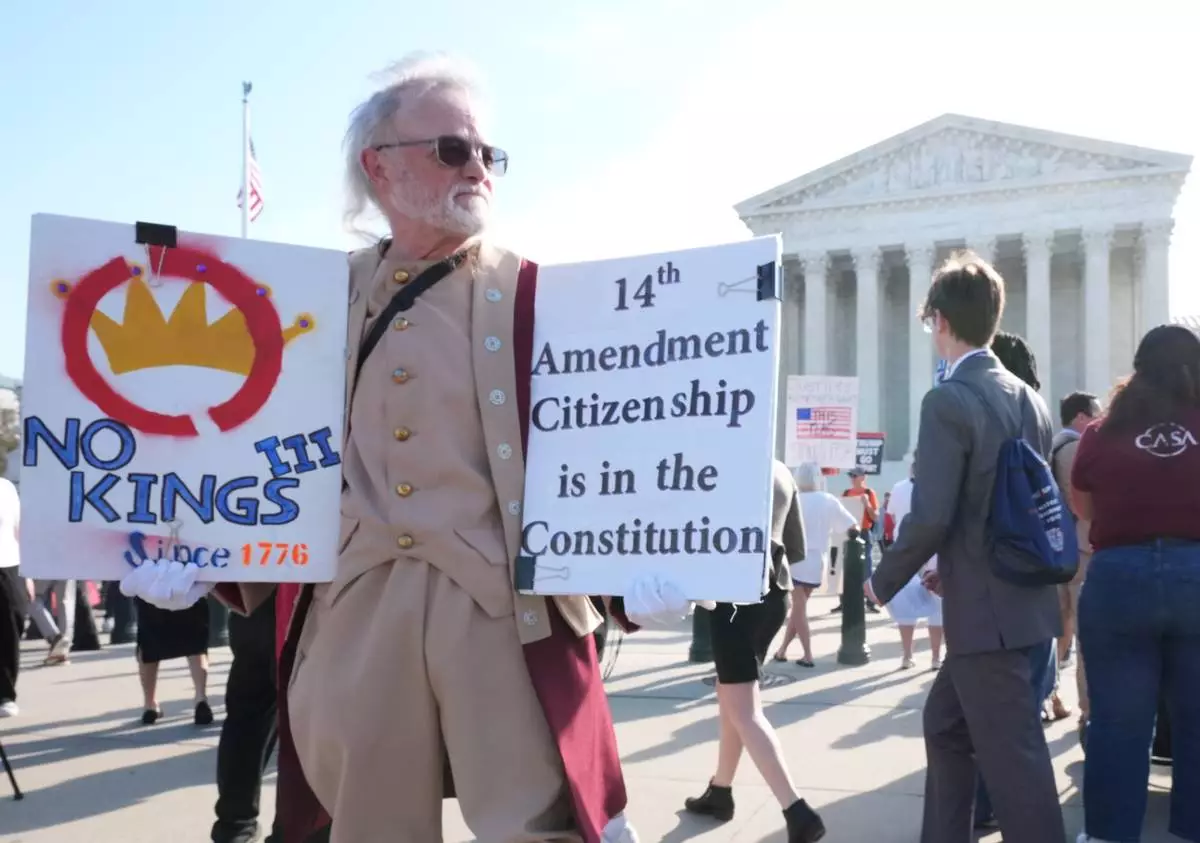
Pro and anti-Trump demonstrators rally outside the U.S. Supreme Court, before justices hear oral arguments on whether President Donald Trump can deny citizenship to children born to parents who are in the United States illegally or temporarily, on Capitol Hill, in Washington, Wednesday, April 1, 2026. (AP Photo/J. Scott Applewhite)
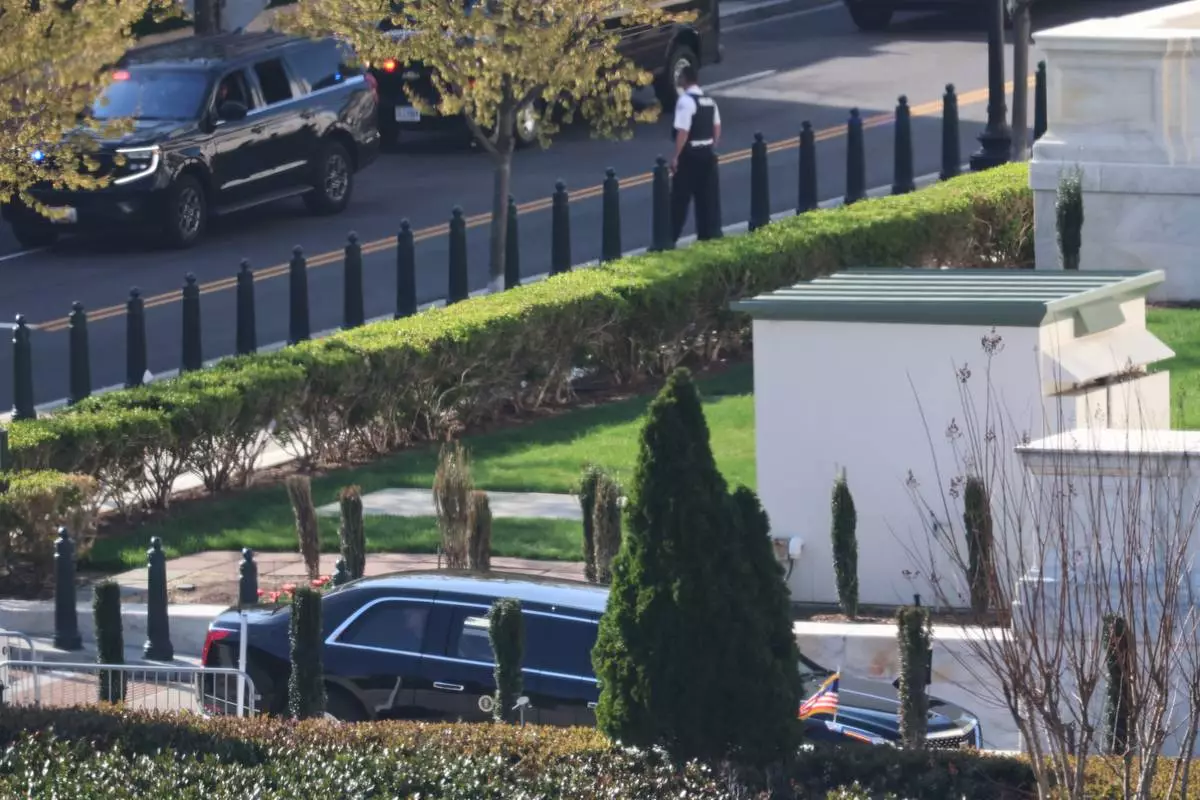
President Donald Trump's motorcade arrives at the U.S. Supreme Court, Wednesday, April 1, 2026, in Washington. (AP Photo/Tom Brenner)
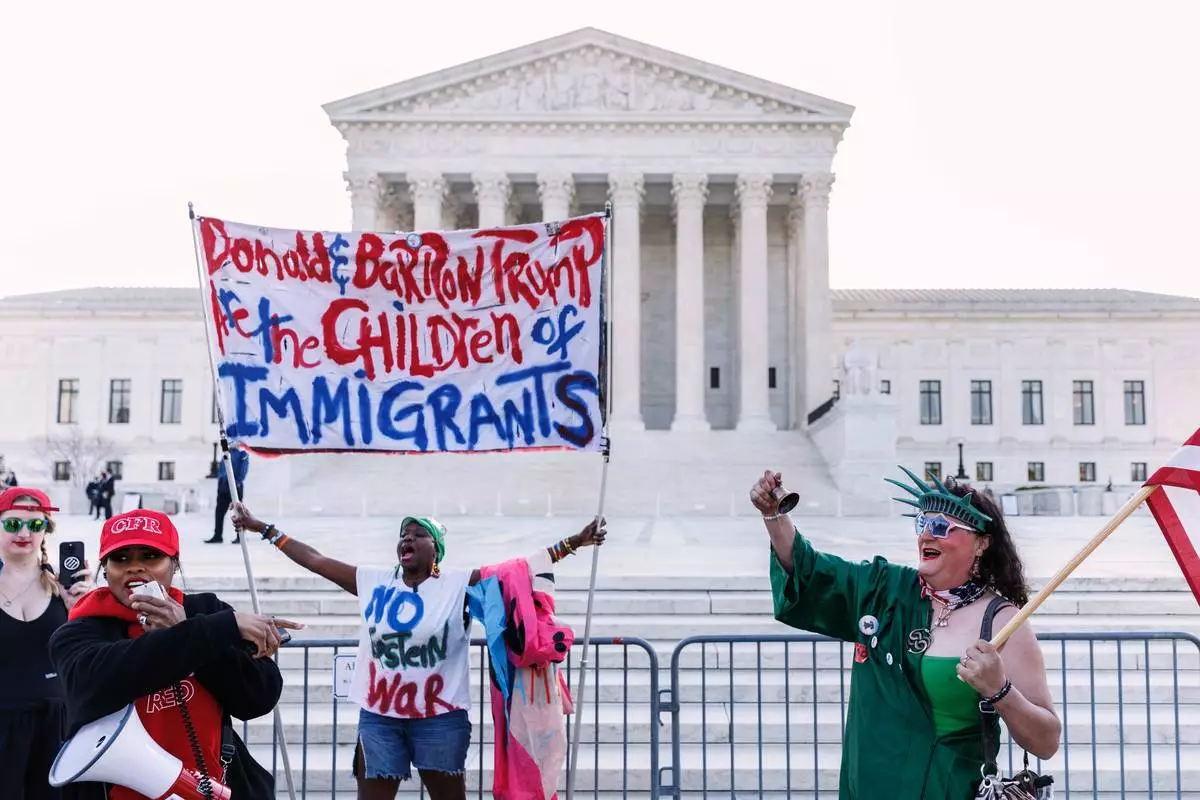
Demonstrators holding opposing views verbally engage ahead of President Donald Trump's arrival at the U.S. Supreme Court, Wednesday, April 1, 2026, in Washington. (AP Photo/Tom Brenner)
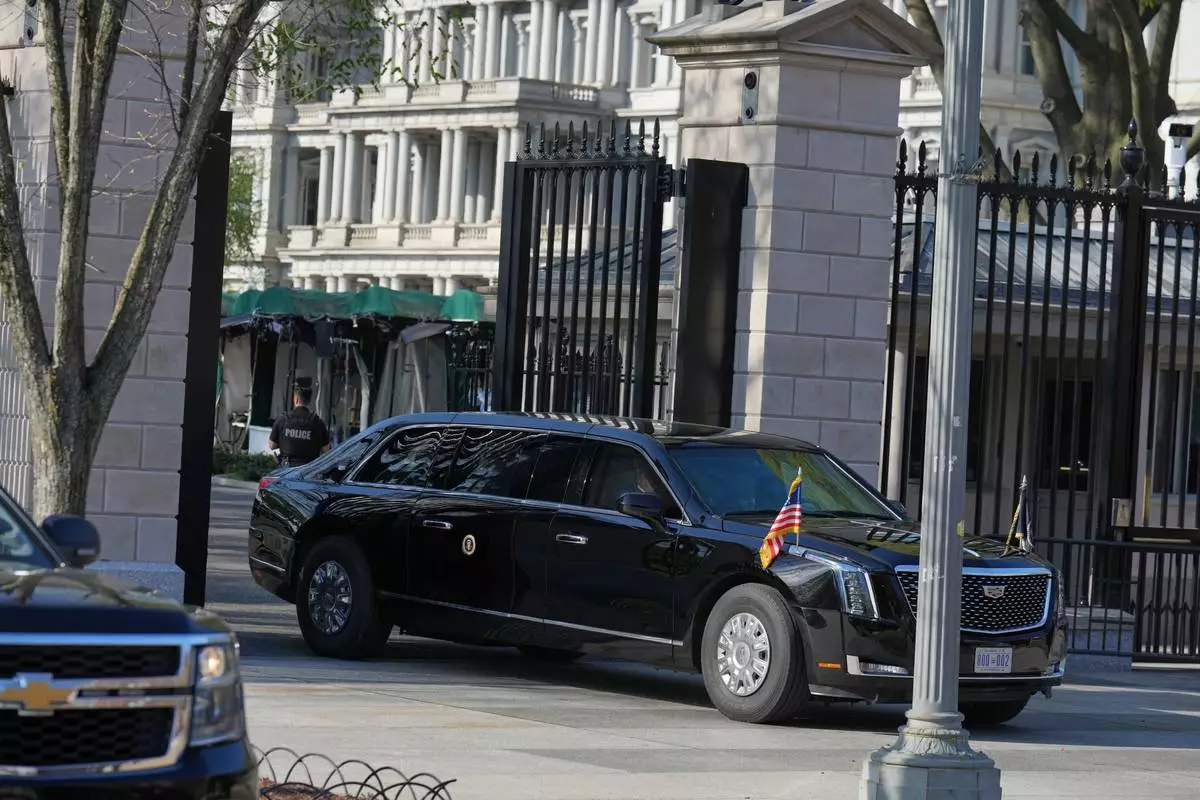
President Donald Trump's limo exits the White House en route to the Supreme Court, Wednesday, April 1, 2026, in Washington. (AP Photo/Mark Schiefelbein)
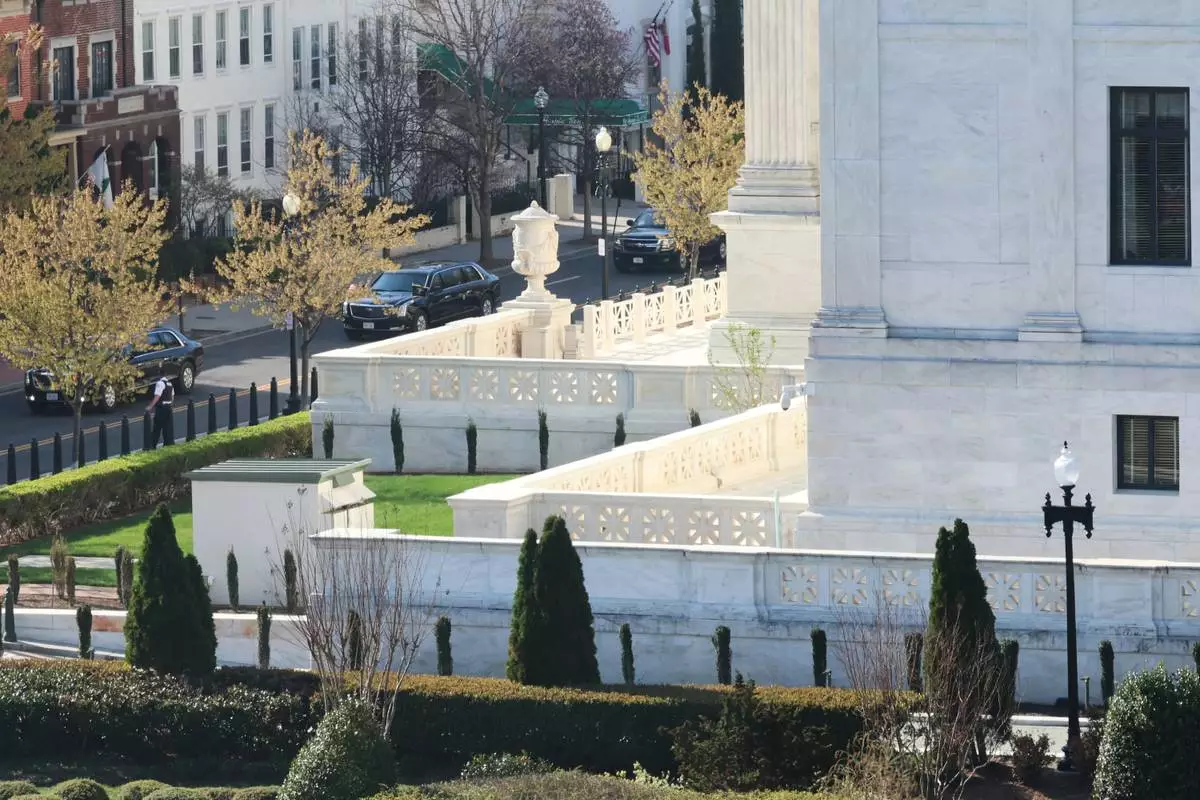
President Donald Trump's motorcade arrives at the U.S. Supreme Court, Wednesday, April 1, 2026, in Washington. (AP Photo/Tom Brenner)

Pro and anti-Trump demonstrators rally outside the U.S. Supreme Court, before justices hear oral arguments on whether President Donald Trump can deny citizenship to children born to parents who are in the United States illegally or temporarily, on Capitol Hill, in Washington, Wednesday, April 1, 2026. (AP Photo/J. Scott Applewhite)
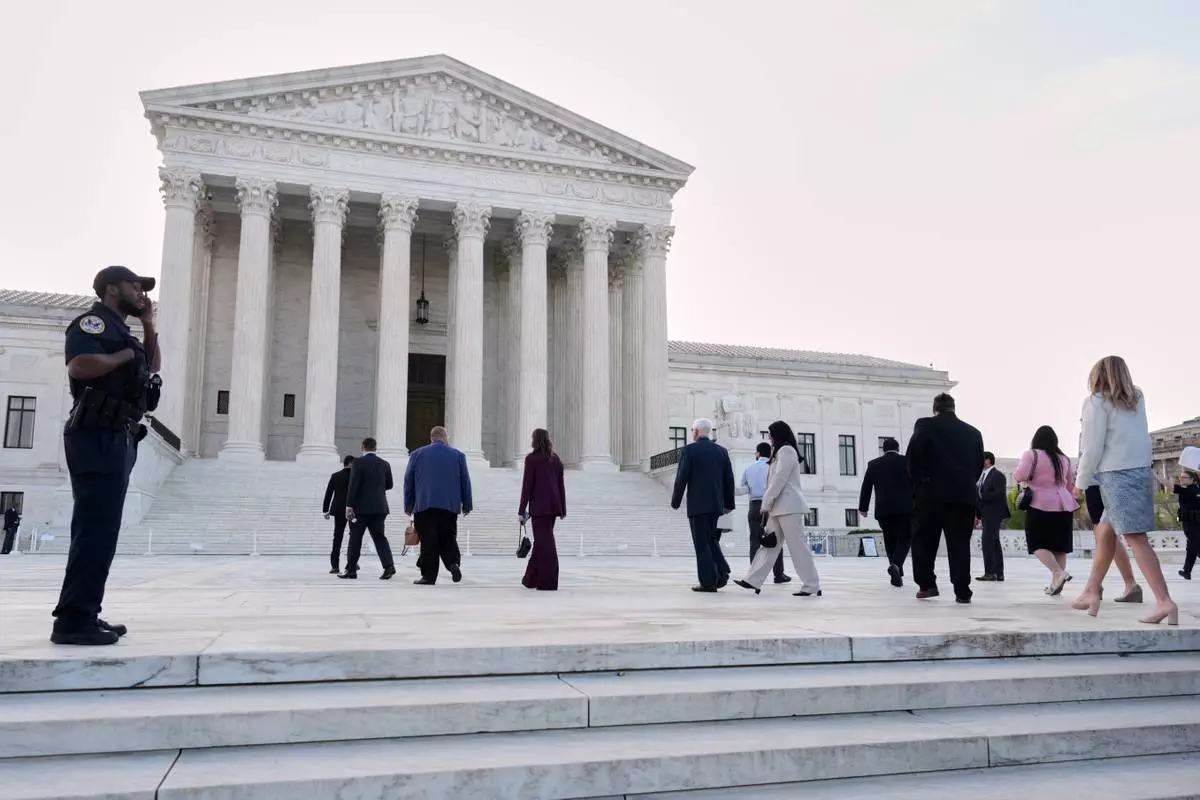
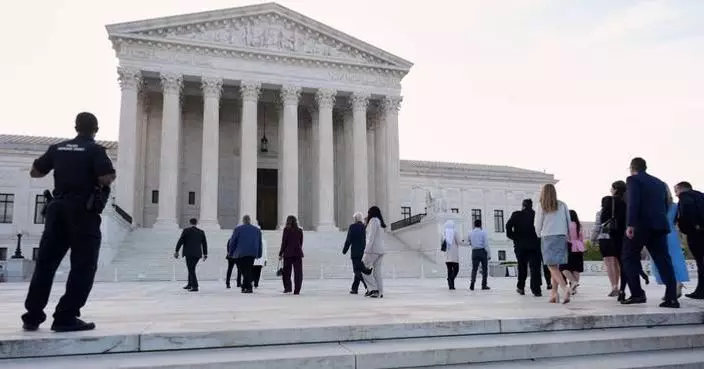
People arrive to walk inside the U.S. Supreme Court, on Capitol Hill in Washington, Wednesday, April 1, 2026. The Supreme Court justices will hear oral arguments today on whether President Donald Trump can deny citizenship to children born to parents who are in the United States illegally or temporarily. (AP Photo/J. Scott Applewhite)
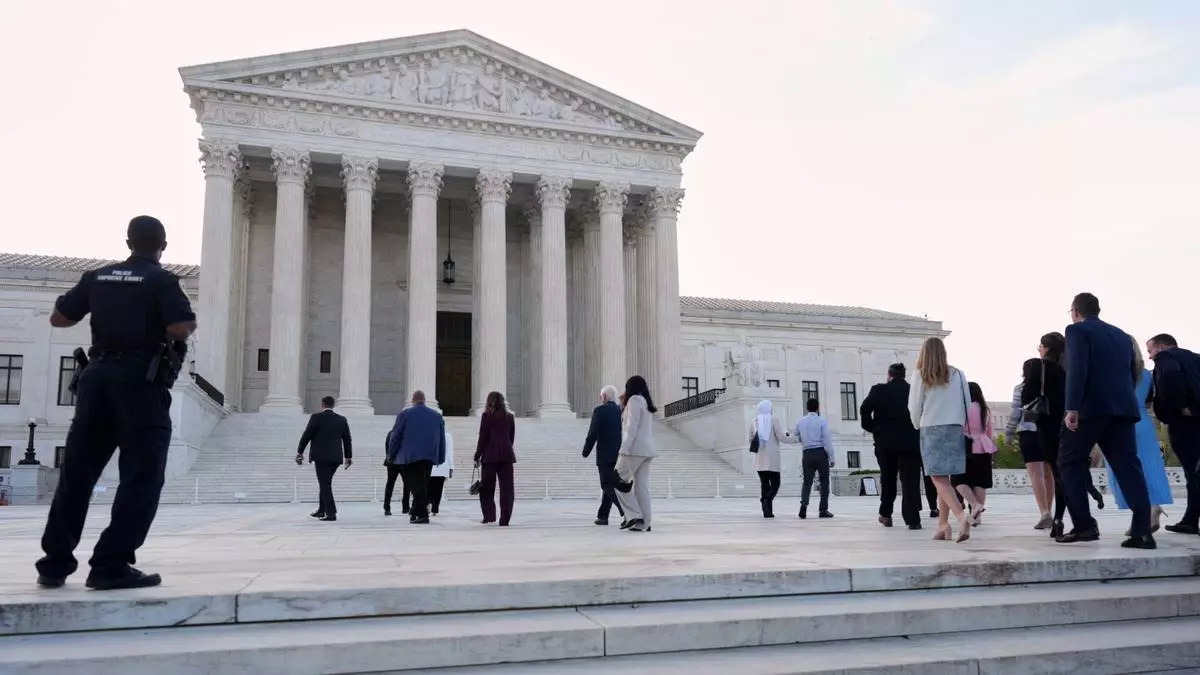
People arrive to walk inside the U.S. Supreme Court, on Capitol Hill in Washington, Wednesday, April 1, 2026. The Supreme Court justices will hear oral arguments today on whether President Donald Trump can deny citizenship to children born to parents who are in the United States illegally or temporarily. (AP Photo/J. Scott Applewhite)
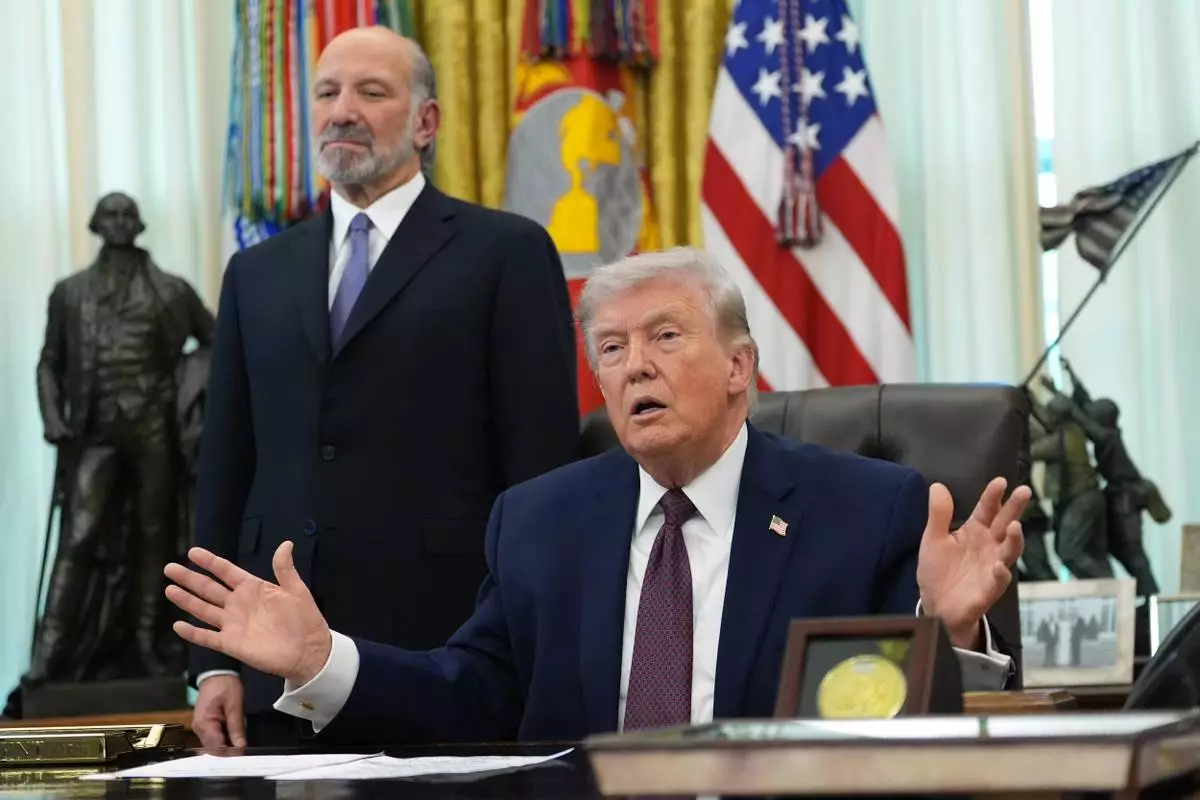
President Donald Trump answers questions from reporters after signing an executive order in the Oval Office of the White House Tuesday, March 31, 2026, in Washington, as Commerce Secretary Howard Lutnick listens. (AP Photo/Alex Brandon)
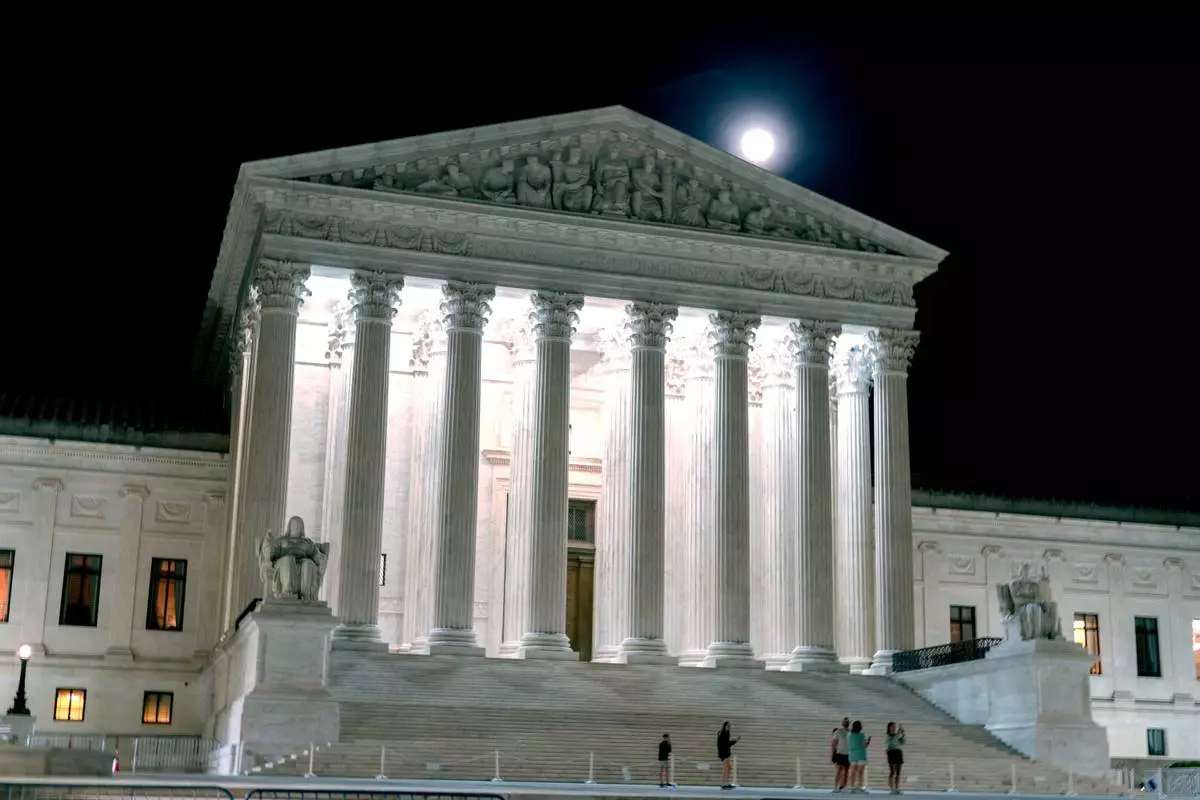
The U.S. Supreme Court is seen as the moon rises Tuesday, March 31, 2026, in Washington. (AP Photo/Jose Luis Magana)