Skip to Content Facebook Feature Image

Owkin Unveils Europe’s First Pan-European Agentic Infrastructure for Biology at the Franco-German Digital Sovereignty Summit

Business

Owkin Unveils Europe’s First Pan-European Agentic Infrastructure for Biology at the Franco-German Digital Sovereignty Summit
Business

Business

Owkin Unveils Europe’s First Pan-European Agentic Infrastructure for Biology at the Franco-German Digital Sovereignty Summit

2025-11-19 04:49 Last Updated At:14:46

BERLIN--(BUSINESS WIRE)--Nov 18, 2025--

At today’s Franco-German Summit on Digital Sovereignty in Berlin, Owkin, together with leading academic partners Gustave Roussy (France) and Charité Comprehensive Cancer Center (Germany), announced a landmark initiative to build the first pan-European agentic infrastructure to make biological data AI-ready, as a key step towards biological super intelligence.

This press release features multimedia. View the full release here: https://www.businesswire.com/news/home/20251118529021/en/

The project aims to develop and deploy modern AI methods to support biological research and drug development. An initial focus will be on supporting the harmonization and structuring of biomedical data across Europe to enhance scientific collaboration. It will combine agentic AI systems and cutting-edge biomedical data structuring, to power a new reasoning model capable of automating and augmenting every stage of biological research and drug development.

The development of specific AI methods and analytical procedures will be dynamic and will depend on the quality of available data as well as current advances in AI research. The partners are currently working on defining the technical and legal framework to meet the highest standards in data protection and data security.

The initiative underscores the partners' commitment to strengthening the European research landscape through innovative approaches while consistently considering data protection requirements.

Positioned as a flagship pilot for European digital sovereignty in health, the initiative aims to deliver open, reusable, and immediately impactful outputs for researchers, clinicians, and innovators across the EU. It seeks to demonstrate that Europe can lead globally in the emerging field of AI-native biology, a domain where the race is still open, even as large US players dominate the field of general-purpose LLMs.

“Europe can be number one in biological AI. While the race for general-purpose LLMs has largely been won by American companies, the field of biology-native reasoning systems remains wide open, and it plays directly to Europe’s strengths: its healthcare systems, its academic excellence, and its unmatched biomedical data,” said Thomas Clozel, MD, Co-Founder and CEO of Owkin.

“This initiative demonstrates how Europe can turn its scientific excellence into tangible advances for patients. By combining data across borders with next-generation AI, we can accelerate the translation of discoveries into clinical impact, responsibly and securely,” said Fabrice André, MD, PhD, Director of Research, Gustave Roussy

“True digital sovereignty in health depends on trust. This initiative sets new standards for data governance and collaboration, ensuring that innovation happens within European institutions, under European values, for the benefit of European patients,” said Ulrich Keilholz, MD, Senior Professor, Charité Comprehensive Cancer Center

By aligning major research institutions, next-generation AI capabilities, and a shared vision for sovereignty, this project paves the way toward biological artificial superintelligence, a strategic domain with the potential to transform healthcare, accelerate discoveries, and ensure that Europe remains in control of the technologies shaping its future.

About Owkin:
Owkin is an AI company on a mission to solve the complexity of biology. It is building the first Biology Super Intelligence (BASI) by combining powerful biological large language models, multimodal patient data, and agentic software. At the heart of this system is Owkin K, an AI copilot and its new LLM finetuned on biology called Owkin Zero, used by researchers, clinicians, and drug developers to better understand biology, validate scientific hypotheses, and deliver better diagnostics and therapies faster.

About Gustave Roussy:
Ranked first in France, first in Europe and sixth in the world, Gustave Roussy is a centre of global expertise entirely dedicated to patients living with cancer. The Institute is a founding pillar of the Paris Saclay Cancer Cluster. Source of therapeutic innovations and diagnostic breakthroughs, the Institute welcomes more than 50,000 patients each year, including 3,500 children and adolescents, and develops an integrated approach combining research, care and teaching. An expert in rare cancers and complex tumours, Gustave Roussy treats all cancers at all stages of life. It offers its patients personalised care that combines innovation and humanity, taking into account both care and the physical, psychological and social quality of life. With 4,100 employees at two sites, Villejuif and Chevilly-Larue, Gustave Roussy brings together the expertise essential for high-level cancer research; 32% of treated patients are included in clinical studies. To find out more about Gustave Roussy and follow the Institute’s news: www.gustaveroussy.fr/en, X, Facebook, LinkedIn, Instagram and Bluesky.

About Charité – Universitätsmedizin Berlin:
With more than 100 departments and institutes across four campuses and 3,293 beds, Charité – Universitätsmedizin Berlin is one of Europe’s largest university medical centers. At Charité, the areas of research, teaching, and medical and patient care are closely interconnected. Averaging about 20,600 employees Charité-wide and some 24,300 across the entire group of companies, Berlin’s university medicine organization remained one of the capital city’s largest employers in 2024. Charité is a leader in diagnosis and treatment of particularly severe, complex, and rare diseases and health conditions. A medical school and university medical center in one, Charité enjoys an outstanding reputation worldwide, combining first-class patient care with excellence in research and innovation, state-of-the-art teaching, and high-quality training and education. Everything Charité does revolves around people and their health. Charité pursues translational research in which scientific findings are applied to prevention, diagnostics, and treatment and clinical observations inform new approaches in research in turn. At Charité, the goal is to actively help shape the medicine of the future to benefit patients. www.charite.de/en/
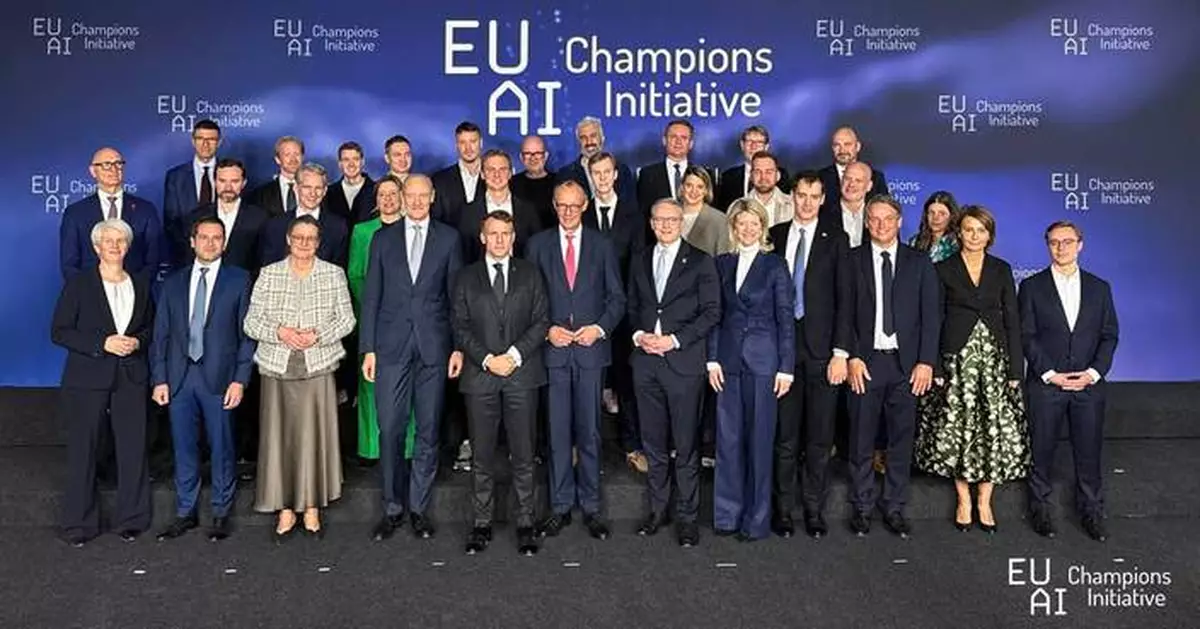
Thomas Clozel (CEO of Owkin) joins Emmanuel Macron, Friedrich Merz and others at the Franco-German Digital Sovereignty Summit
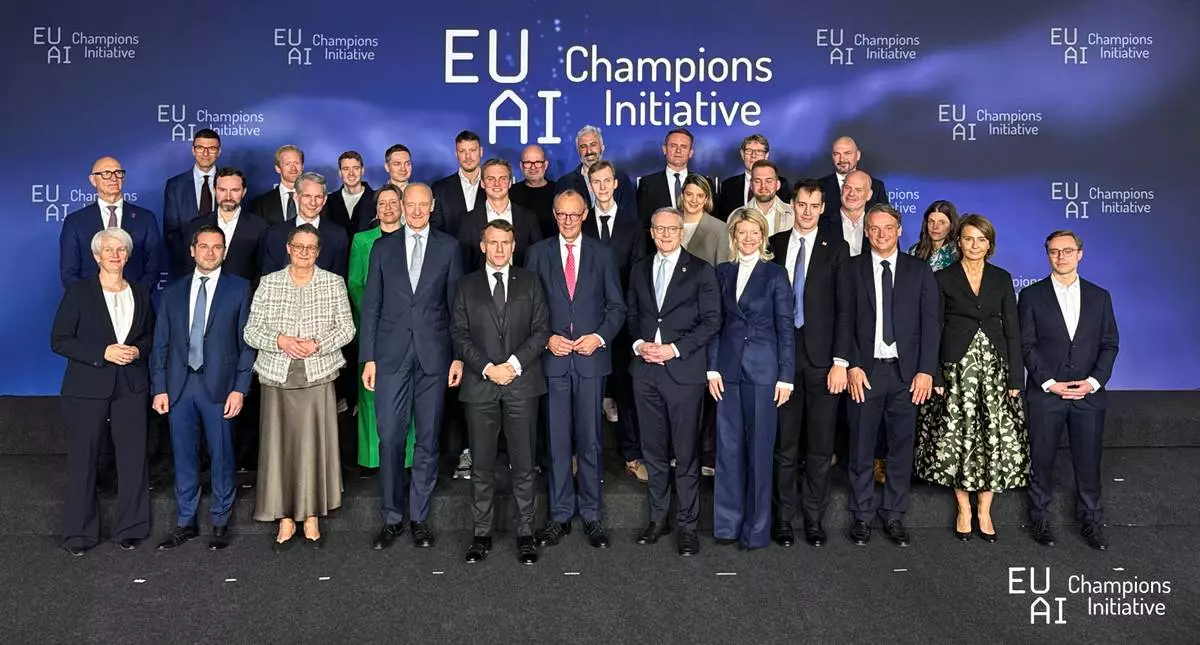
Thomas Clozel (CEO of Owkin) joins Emmanuel Macron, Friedrich Merz and others at the Franco-German Digital Sovereignty Summit

WASHINGTON (AP) — The Supreme Court is taking up one of the term’s most consequential cases, President Donald Trump’s executive order on birthright citizenship declaring that children born to parents who are in the United States illegally or temporarily are not American citizens, and he arrived at the court Wednesday to attend the arguments.

The justices will hear Trump’s appeal of a lower-court ruling from New Hampshire that struck down the citizenship restrictions, one of several courts that have blocked them. They have not taken effect anywhere in the country.

A definitive ruling is expected by early summer.

Trump will be the first sitting president to attend oral arguments at the nation’s highest court.

Crowds watched from the sidewalks as Trump’s motorcade drove along Constitution and Independence Avenues, passing the Washington Monument and the National Mall on the way to the court building.

The case frames another test of Trump's assertions of executive power that defy long-standing precedent for a court that has largely ruled in the president's favor — but with some notable exceptions that Trump has responded to with starkly personal criticisms of the justices.

The birthright citizenship order, which Trump signed the first day of his second term, is part of his Republican administration’s broad immigration crackdown.

Birthright citizenship is the first Trump immigration-related policy to reach the court for a final ruling. The justices previously struck down global tariffs Trump had imposed under an emergency powers law that had never been used that way.

Trump reacted furiously to the late February tariffs decision, saying he was ashamed of the justices who ruled against him and calling them unpatriotic.

He issued a preemptive broadside against the court on Sunday on his Truth Social platform. “Birthright Citizenship is not about rich people from China, and the rest of the World, who want their children, and hundreds of thousands more, FOR PAY, to ridiculously become citizens of the United States of America. It is about the BABIES OF SLAVES!,” the president wrote. “Dumb Judges and Justices will not a great Country make!”

Trump's order would upend the long-standing view that the Constitution’s 14th Amendment, ratified in 1868, and federal law since 1940 confer citizenship on everyone born on American soil, with narrow exceptions for the children of foreign diplomats and those born to a foreign occupying force.

The 14th Amendment was intended to ensure that Black people, including former slaves, had citizenship, though the Citizenship Clause is written more broadly. “All persons born or naturalized in the United States, and subject to the jurisdiction thereof, are citizens of the United States and of the State wherein they reside,” it reads.

In a series of decisions, lower courts have struck down the executive order as illegal, or likely so, under the Constitution and federal law. The decisions have invoked the high court's 1898 ruling in Wong Kim Ark, which held that the U.S.-born child of Chinese nationals was a citizen.

The Trump administration argues that the common view of citizenship is wrong, asserting that children of noncitizens are not “subject to the jurisdiction” of the United States and therefore are not entitled to citizenship.

The court should use the case to set straight “long-enduring misconceptions about the Constitution’s meaning,” Solicitor General D. John Sauer wrote.

No court has accepted that argument, and lawyers for pregnant women whose children would be affected by the order said the Supreme Court should not be the first to do so.

“We have the president of the United States trying to radically reinterpret the definition of American citizenship,” said Cecillia Wang, the American Civil Liberties Union legal director who is facing off against Sauer at the Supreme Court.

More than one-quarter of a million babies born in the U.S. each year would be affected by the executive order, according to research by the Migration Policy Institute and Pennsylvania State University’s Population Research Institute.

While Trump has largely focused on illegal immigration in his rhetoric and actions, the birthright restrictions also would apply to people who are legally in the United States, including students and applicants for green cards, or permanent resident status.

Follow the AP’s coverage of the U.S. Supreme Court at https://apnews.com/hub/us-supreme-court.

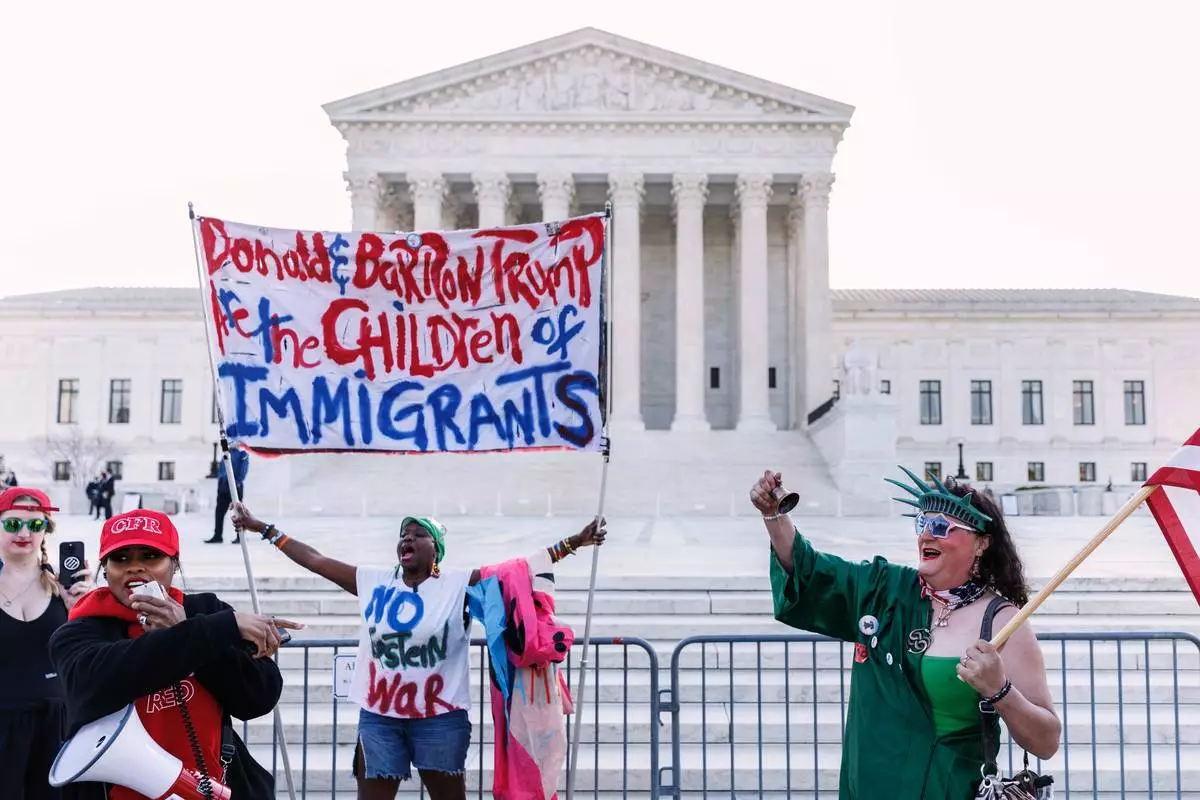
Demonstrators holding opposing views verbally engage ahead of President Donald Trump's arrival at the U.S. Supreme Court, Wednesday, April 1, 2026, in Washington. (AP Photo/Tom Brenner)

Demonstrators holding opposing views verbally engage ahead of President Donald Trump's arrival at the U.S. Supreme Court, Wednesday, April 1, 2026, in Washington. (AP Photo/Tom Brenner)

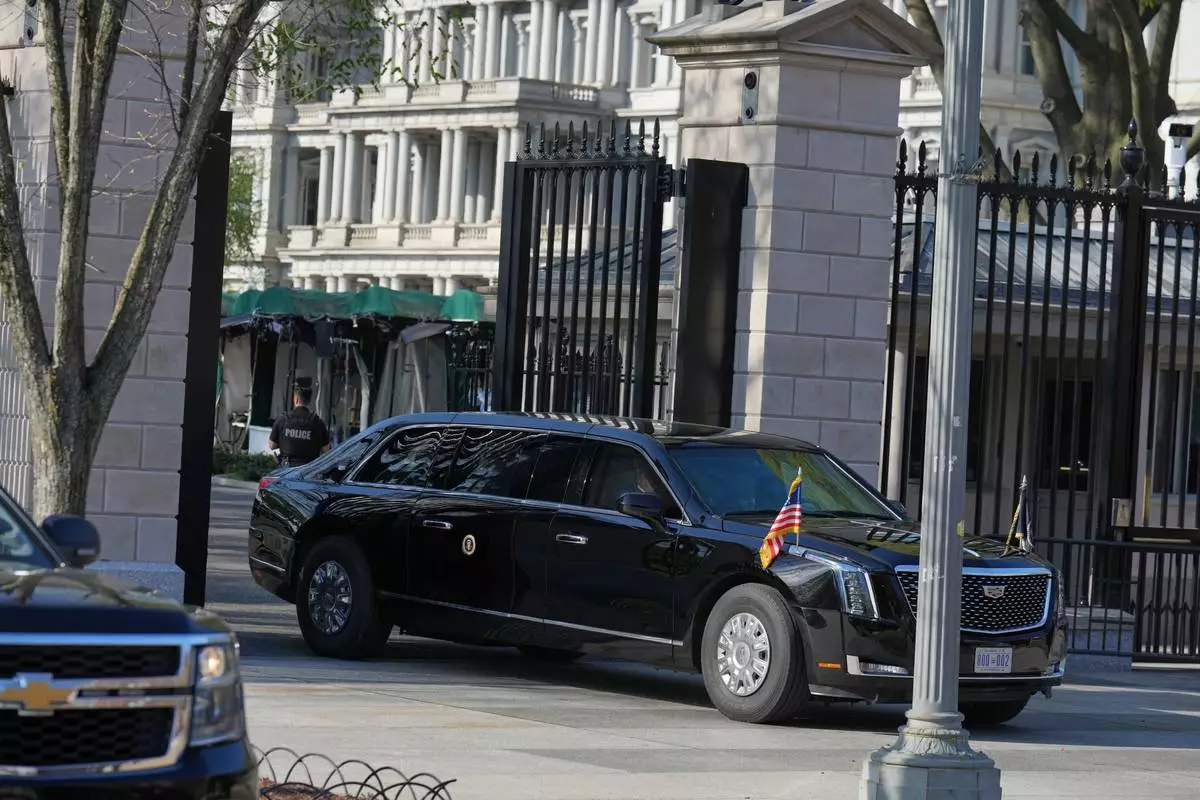
President Donald Trump's limo exits the White House en route to the Supreme Court, Wednesday, April 1, 2026, in Washington. (AP Photo/Mark Schiefelbein)

President Donald Trump's limo exits the White House en route to the Supreme Court, Wednesday, April 1, 2026, in Washington. (AP Photo/Mark Schiefelbein)

President Donald Trump's motorcade arrives at the U.S. Supreme Court, Wednesday, April 1, 2026, in Washington. (AP Photo/Tom Brenner)

President Donald Trump's motorcade arrives at the U.S. Supreme Court, Wednesday, April 1, 2026, in Washington. (AP Photo/Tom Brenner)

Pro and anti-Trump demonstrators rally outside the U.S. Supreme Court, before justices hear oral arguments on whether President Donald Trump can deny citizenship to children born to parents who are in the United States illegally or temporarily, on Capitol Hill, in Washington, Wednesday, April 1, 2026. (AP Photo/J. Scott Applewhite)

Pro and anti-Trump demonstrators rally outside the U.S. Supreme Court, before justices hear oral arguments on whether President Donald Trump can deny citizenship to children born to parents who are in the United States illegally or temporarily, on Capitol Hill, in Washington, Wednesday, April 1, 2026. (AP Photo/J. Scott Applewhite)

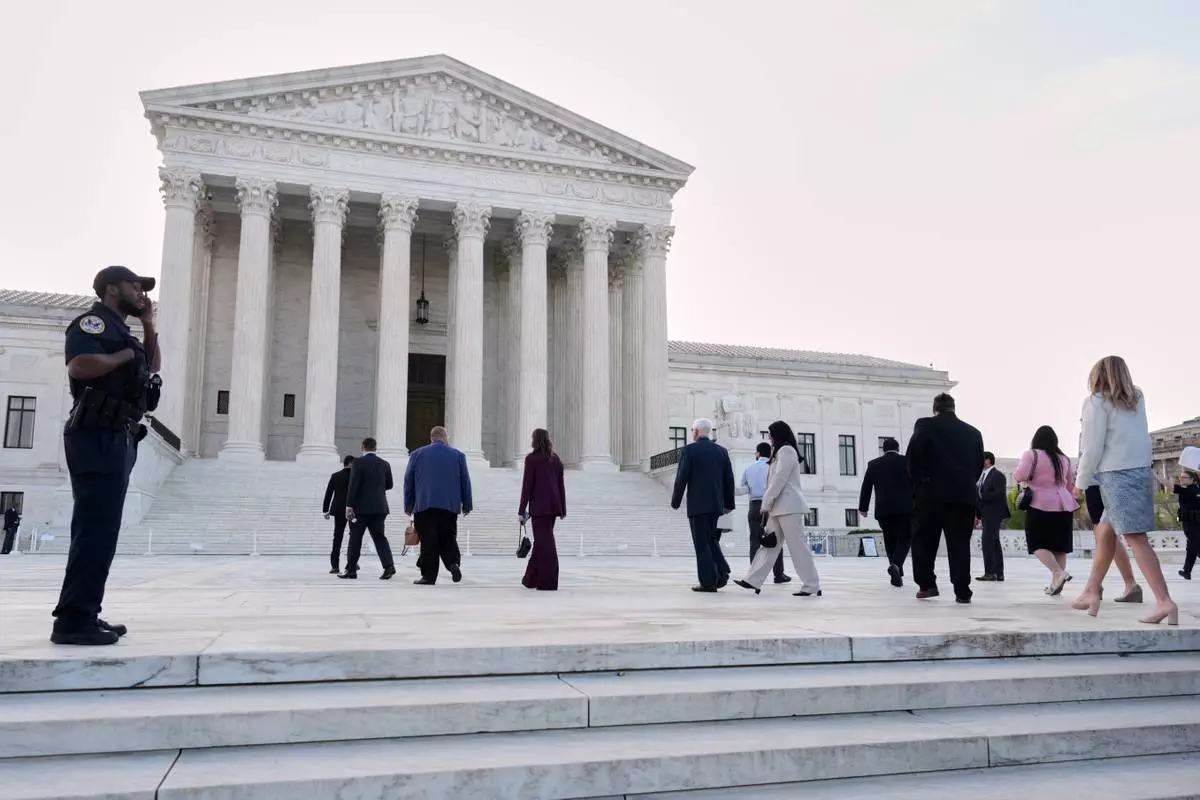
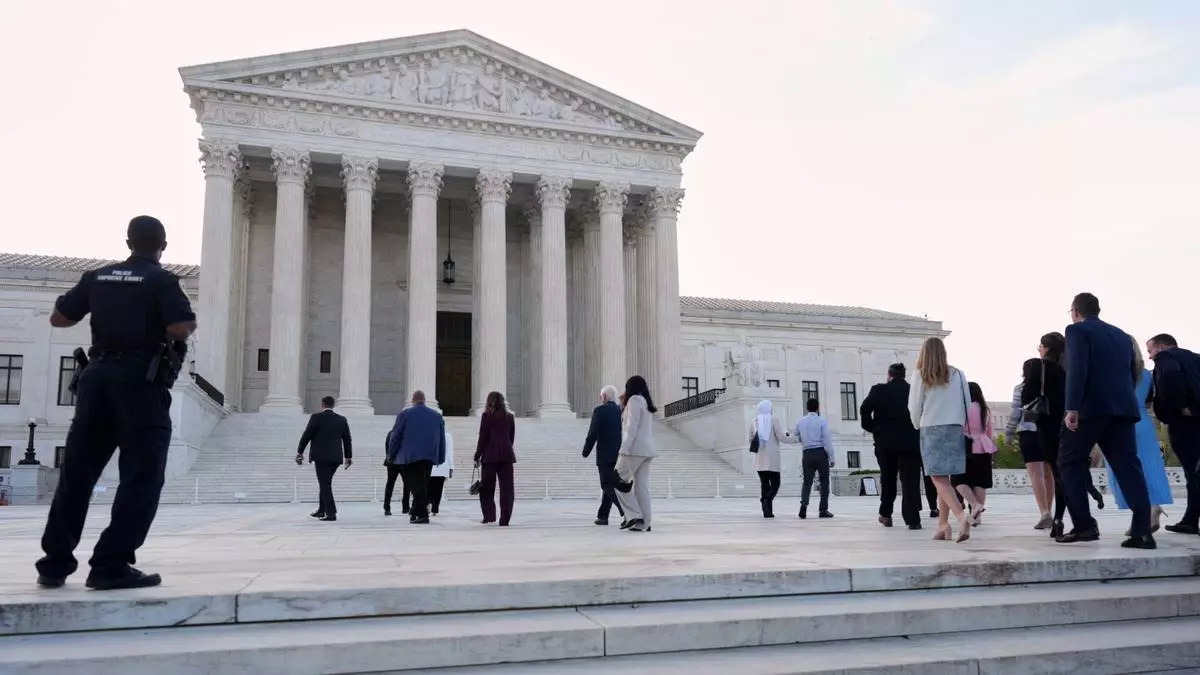
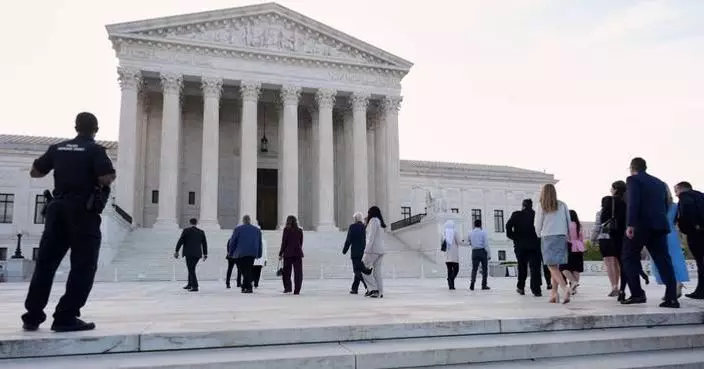
People arrive to walk inside the U.S. Supreme Court, on Capitol Hill in Washington, Wednesday, April 1, 2026. The Supreme Court justices will hear oral arguments today on whether President Donald Trump can deny citizenship to children born to parents who are in the United States illegally or temporarily. (AP Photo/J. Scott Applewhite)

People arrive to walk inside the U.S. Supreme Court, on Capitol Hill in Washington, Wednesday, April 1, 2026. The Supreme Court justices will hear oral arguments today on whether President Donald Trump can deny citizenship to children born to parents who are in the United States illegally or temporarily. (AP Photo/J. Scott Applewhite)

People arrive to walk inside the U.S. Supreme Court, on Capitol Hill in Washington, Wednesday, April 1, 2026. The Supreme Court justices will hear oral arguments today on whether President Donald Trump can deny citizenship to children born to parents who are in the United States illegally or temporarily. (AP Photo/J. Scott Applewhite)

People arrive to walk inside the U.S. Supreme Court, on Capitol Hill in Washington, Wednesday, April 1, 2026. The Supreme Court justices will hear oral arguments today on whether President Donald Trump can deny citizenship to children born to parents who are in the United States illegally or temporarily. (AP Photo/J. Scott Applewhite)

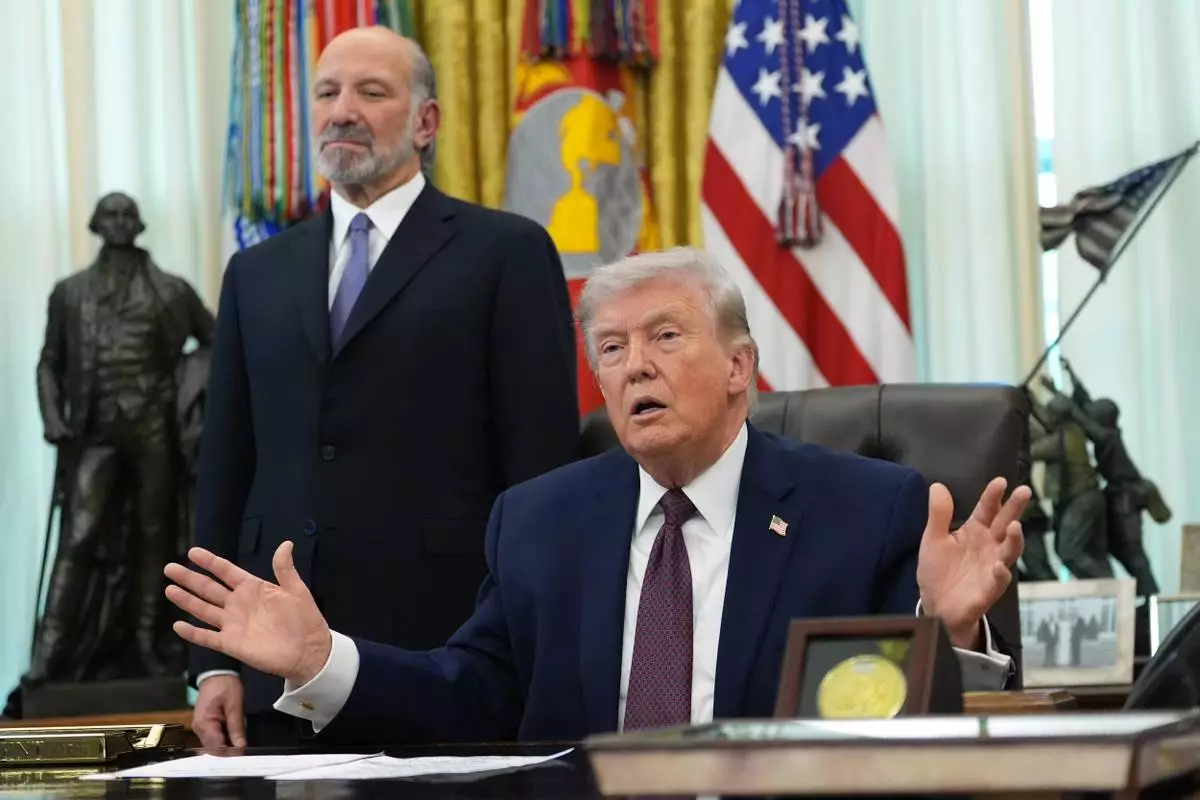
President Donald Trump answers questions from reporters after signing an executive order in the Oval Office of the White House Tuesday, March 31, 2026, in Washington, as Commerce Secretary Howard Lutnick listens. (AP Photo/Alex Brandon)

President Donald Trump answers questions from reporters after signing an executive order in the Oval Office of the White House Tuesday, March 31, 2026, in Washington, as Commerce Secretary Howard Lutnick listens. (AP Photo/Alex Brandon)

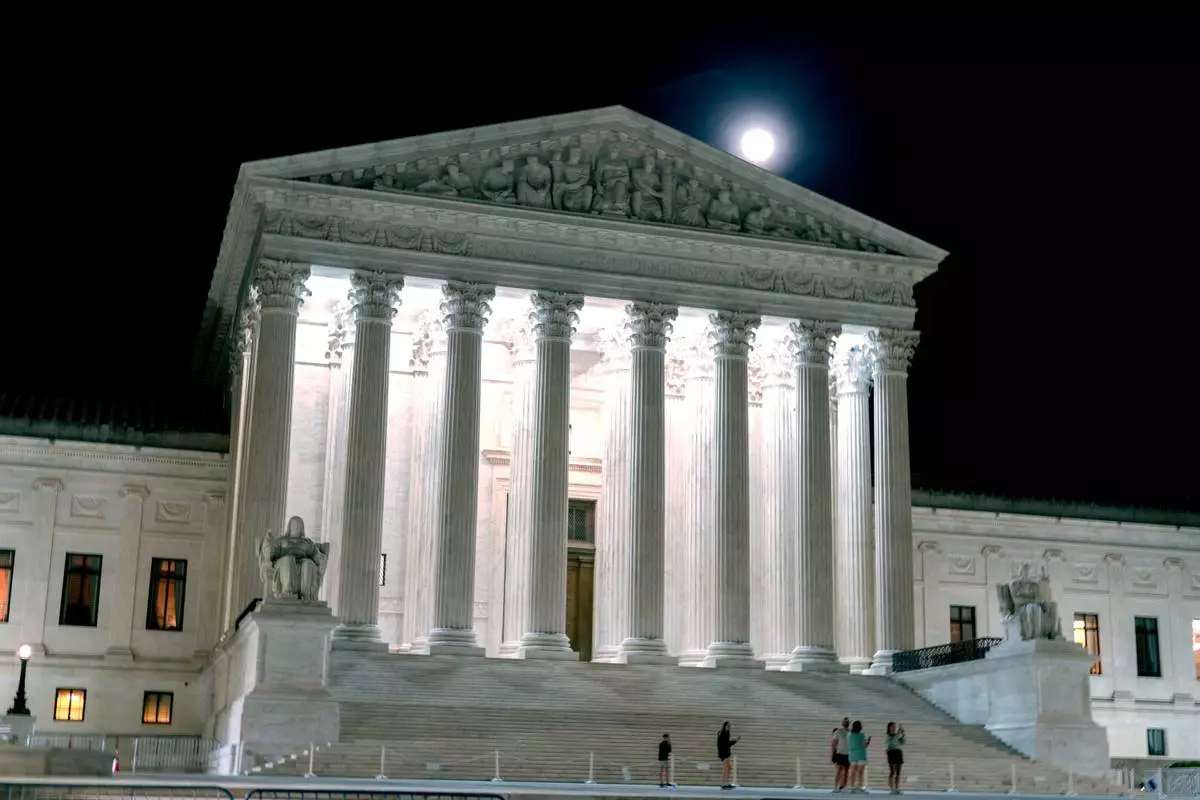
The U.S. Supreme Court is seen as the moon rises Tuesday, March 31, 2026, in Washington. (AP Photo/Jose Luis Magana)

The U.S. Supreme Court is seen as the moon rises Tuesday, March 31, 2026, in Washington. (AP Photo/Jose Luis Magana)

Recommended Articles