REDMOND, Wash.--(BUSINESS WIRE)--Nov 18, 2025--
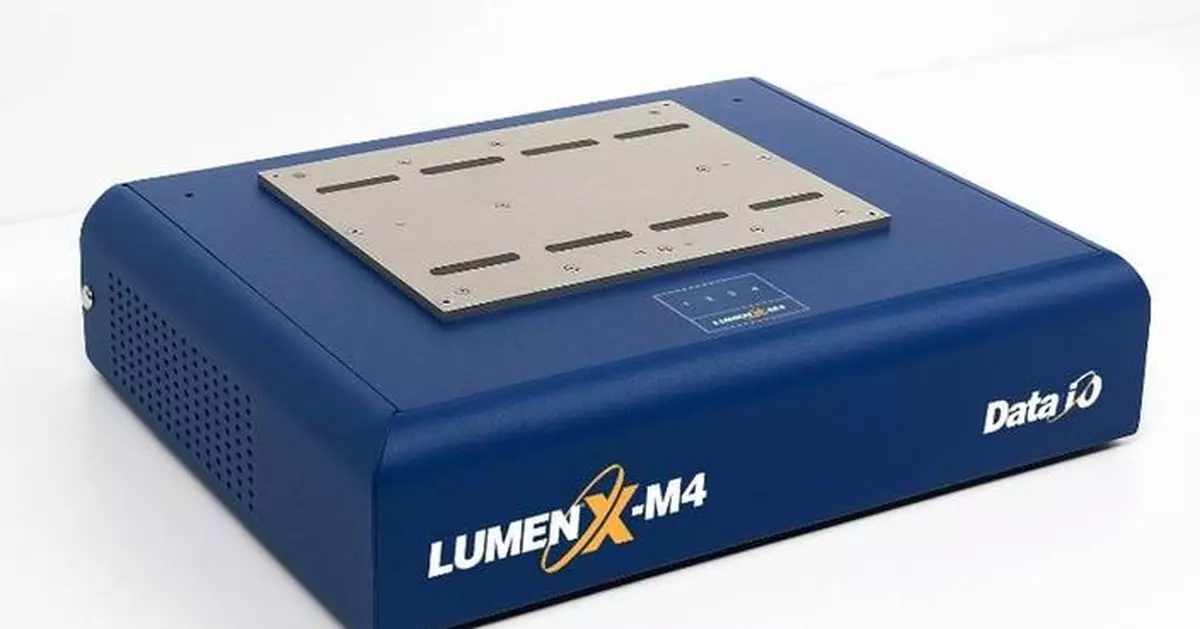
Data I/O Corporation (NASDAQ: DAIO), the leading global provider of data programming and security provisioning solutions for microcontrollers, security ICs and memory devices, announced today that it has been honored with a 2025 Global Technology Award in the Programming category for its LumenX2 programming platform and Lumen ® X2-M4 manual programmer. The award was presented during a ceremony at productronica in Munich, Germany, on Tuesday, November 18, 2025.
This press release features multimedia. View the full release here: https://www.businesswire.com/news/home/20251118818478/en/
The LumenX2 platform with more pins and power expands the breadth of device technologies supported on LumenX. The LumenX2 programming platform is available as a manual programmer, the LumenX2-M4, or integrated into Data I/O’s PSV automated programming systems. The LumenX2 platform creates a single, scalable programming solution supporting programming at design and new product introduction (NPI) through high-volume production and beyond.
“Winning the 2025 Global Technology Award for LumenX2 is an important validation of how critical next-generation programming technology has become for our industry,” said William Wentworth, President and CEO of Data I/O. “Semiconductor devices continue to evolve at record speed, and electronics manufacturers require a platform that anticipates their future needs while supporting their programming requirements today. LumenX2 delivers expanded capabilities, with broader device coverage with seamless integration across the preprogrammed parts supply chain. With the LumenX2 platform we’re helping our customers improve quality, reduce cost and compete in a fast-moving global market.”
The LumenX2-M4 is designed to help customers accelerate new product introduction with a seamless transition of validated programming jobs to automated systems as production ramps. It supports a wide range of devices—including eMMC, UFS, SPI NOR, Secure Elements, and microcontrollers—and delivers verify speeds up to 750 MB per second with VerifyBoost. Its tool-less changeover design makes it fast and simple to swap devices, while its shared adapter architecture keeps tooling costs low and allows users to scale throughput as needed.
With LumenX2 and LumenX2-M4, Data I/O continues to set the standard for programming performance, scalability, and quality in programming solutions worldwide.
Since 2005, the prestigious Global Technology Awards have recognized the absolute best new innovations in the printed circuit assembly and packaging industries. It brings together the global SMT and advanced packaging industry in a celebration of the companies and people that are achieving the highest standards and driving our industry forward. For more information, visit www.globalsmt.net.
About Data I/O Corporation
Since 1972, Data I/O has developed innovative solutions to enable the design and manufacture of electronic products for automotive, Internet-of-Things, medical, wireless, consumer electronics, industrial controls, and other electronics devices. Today, our customers use Data I/O security deployment and programming solutions to reliably, securely, and cost-effectively, bring innovative new products to life. These solutions are backed by a global network of Data I/O support and service professionals, ensuring success for our customers. For more information, please visit www.dataio.com.
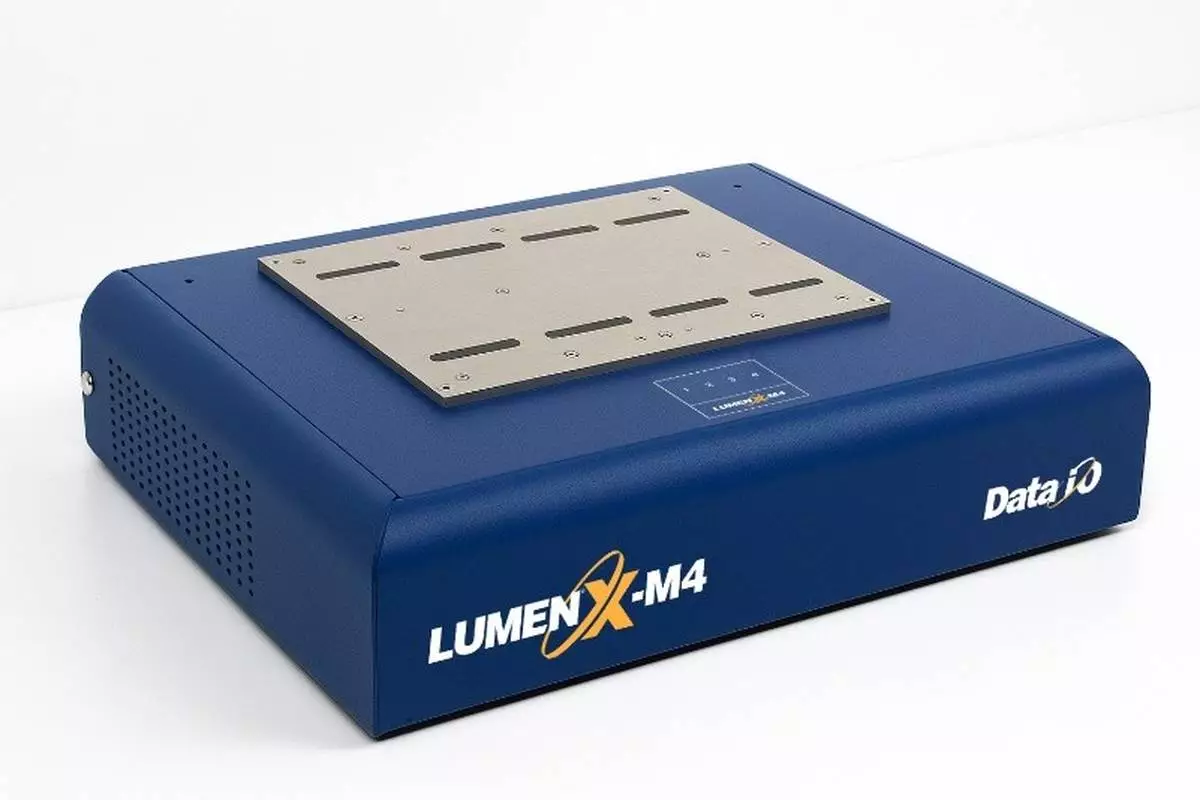
Data I/O’s New LumenX2 Programming Platform and Lumen®X2-M4
WASHINGTON (AP) — The Supreme Court is taking up one of the term’s most consequential cases, President Donald Trump’s executive order on birthright citizenship declaring that children born to parents who are in the United States illegally or temporarily are not American citizens, and he arrived at the court Wednesday to attend the arguments.
The justices will hear Trump’s appeal of a lower-court ruling from New Hampshire that struck down the citizenship restrictions, one of several courts that have blocked them. They have not taken effect anywhere in the country.
A definitive ruling is expected by early summer.
Trump will be the first sitting president to attend oral arguments at the nation’s highest court.
Crowds watched from the sidewalks as Trump’s motorcade drove along Constitution and Independence Avenues, passing the Washington Monument and the National Mall on the way to the court building.
The case frames another test of Trump's assertions of executive power that defy long-standing precedent for a court that has largely ruled in the president's favor — but with some notable exceptions that Trump has responded to with starkly personal criticisms of the justices.
The birthright citizenship order, which Trump signed the first day of his second term, is part of his Republican administration’s broad immigration crackdown.
Birthright citizenship is the first Trump immigration-related policy to reach the court for a final ruling. The justices previously struck down global tariffs Trump had imposed under an emergency powers law that had never been used that way.
Trump reacted furiously to the late February tariffs decision, saying he was ashamed of the justices who ruled against him and calling them unpatriotic.
He issued a preemptive broadside against the court on Sunday on his Truth Social platform. “Birthright Citizenship is not about rich people from China, and the rest of the World, who want their children, and hundreds of thousands more, FOR PAY, to ridiculously become citizens of the United States of America. It is about the BABIES OF SLAVES!,” the president wrote. “Dumb Judges and Justices will not a great Country make!”
Trump's order would upend the long-standing view that the Constitution’s 14th Amendment, ratified in 1868, and federal law since 1940 confer citizenship on everyone born on American soil, with narrow exceptions for the children of foreign diplomats and those born to a foreign occupying force.
The 14th Amendment was intended to ensure that Black people, including former slaves, had citizenship, though the Citizenship Clause is written more broadly. “All persons born or naturalized in the United States, and subject to the jurisdiction thereof, are citizens of the United States and of the State wherein they reside,” it reads.
In a series of decisions, lower courts have struck down the executive order as illegal, or likely so, under the Constitution and federal law. The decisions have invoked the high court's 1898 ruling in Wong Kim Ark, which held that the U.S.-born child of Chinese nationals was a citizen.
The Trump administration argues that the common view of citizenship is wrong, asserting that children of noncitizens are not “subject to the jurisdiction” of the United States and therefore are not entitled to citizenship.
The court should use the case to set straight “long-enduring misconceptions about the Constitution’s meaning,” Solicitor General D. John Sauer wrote.
No court has accepted that argument, and lawyers for pregnant women whose children would be affected by the order said the Supreme Court should not be the first to do so.
“We have the president of the United States trying to radically reinterpret the definition of American citizenship,” said Cecillia Wang, the American Civil Liberties Union legal director who is facing off against Sauer at the Supreme Court.
More than one-quarter of a million babies born in the U.S. each year would be affected by the executive order, according to research by the Migration Policy Institute and Pennsylvania State University’s Population Research Institute.
While Trump has largely focused on illegal immigration in his rhetoric and actions, the birthright restrictions also would apply to people who are legally in the United States, including students and applicants for green cards, or permanent resident status.
Follow the AP’s coverage of the U.S. Supreme Court at https://apnews.com/hub/us-supreme-court.

Demonstrators holding opposing views verbally engage ahead of President Donald Trump's arrival at the U.S. Supreme Court, Wednesday, April 1, 2026, in Washington. (AP Photo/Tom Brenner)
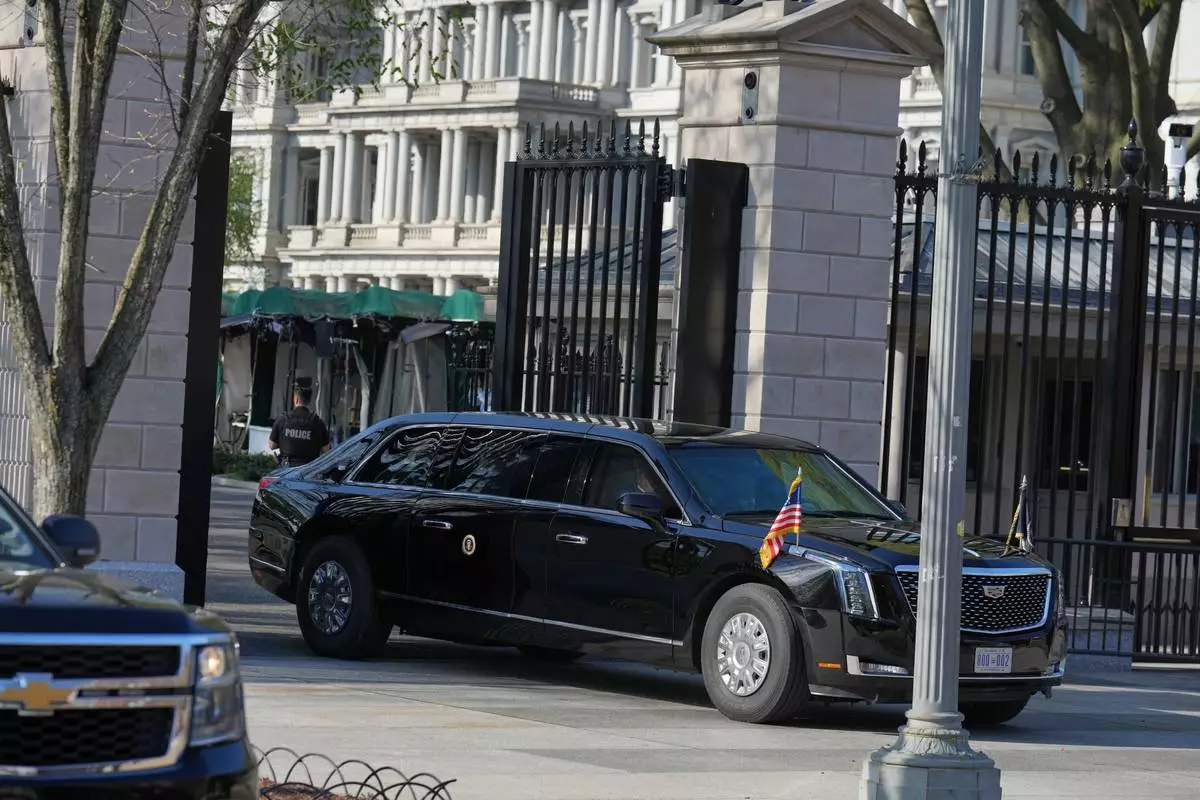
President Donald Trump's limo exits the White House en route to the Supreme Court, Wednesday, April 1, 2026, in Washington. (AP Photo/Mark Schiefelbein)

President Donald Trump's motorcade arrives at the U.S. Supreme Court, Wednesday, April 1, 2026, in Washington. (AP Photo/Tom Brenner)

Pro and anti-Trump demonstrators rally outside the U.S. Supreme Court, before justices hear oral arguments on whether President Donald Trump can deny citizenship to children born to parents who are in the United States illegally or temporarily, on Capitol Hill, in Washington, Wednesday, April 1, 2026. (AP Photo/J. Scott Applewhite)
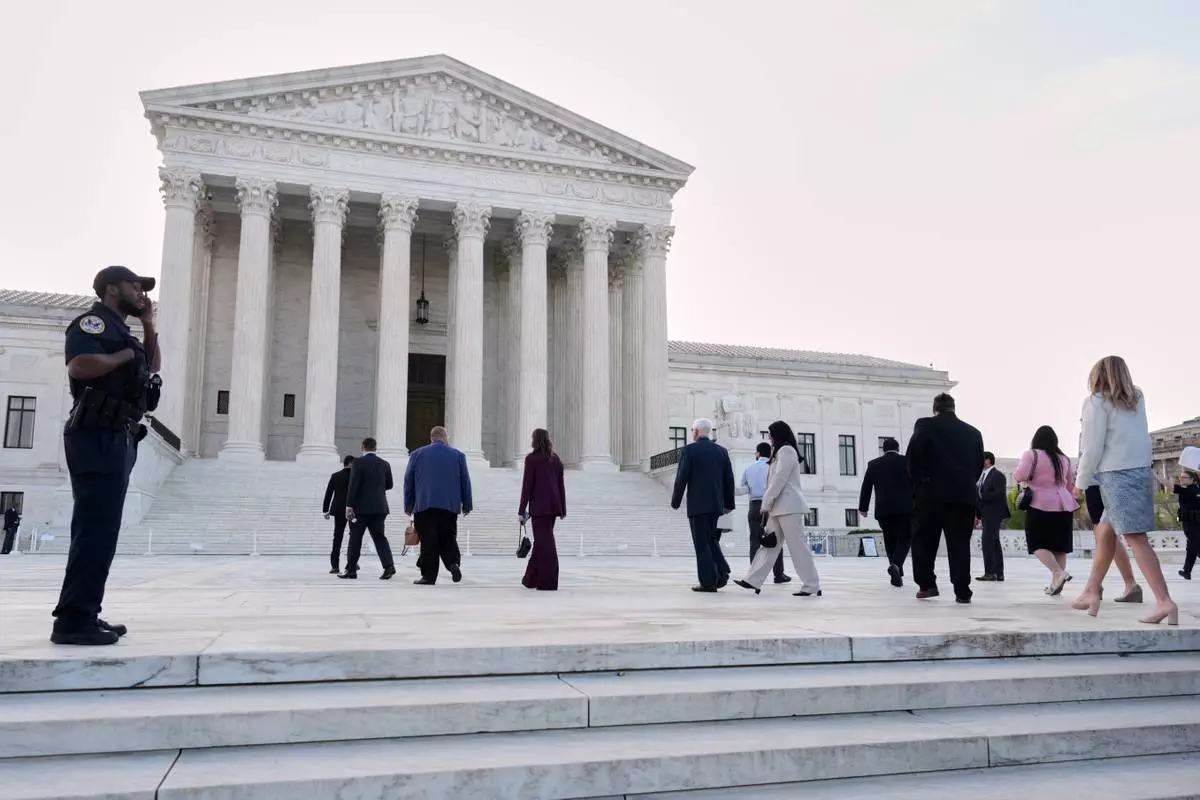
People arrive to walk inside the U.S. Supreme Court, on Capitol Hill in Washington, Wednesday, April 1, 2026. The Supreme Court justices will hear oral arguments today on whether President Donald Trump can deny citizenship to children born to parents who are in the United States illegally or temporarily. (AP Photo/J. Scott Applewhite)
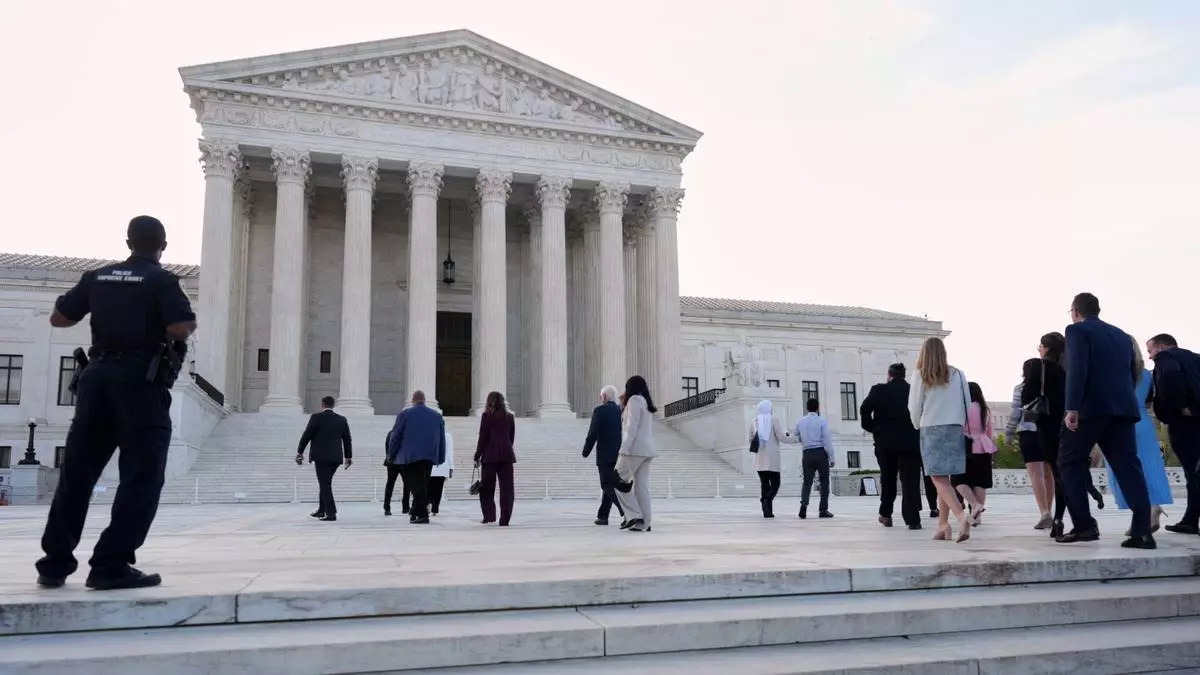
People arrive to walk inside the U.S. Supreme Court, on Capitol Hill in Washington, Wednesday, April 1, 2026. The Supreme Court justices will hear oral arguments today on whether President Donald Trump can deny citizenship to children born to parents who are in the United States illegally or temporarily. (AP Photo/J. Scott Applewhite)
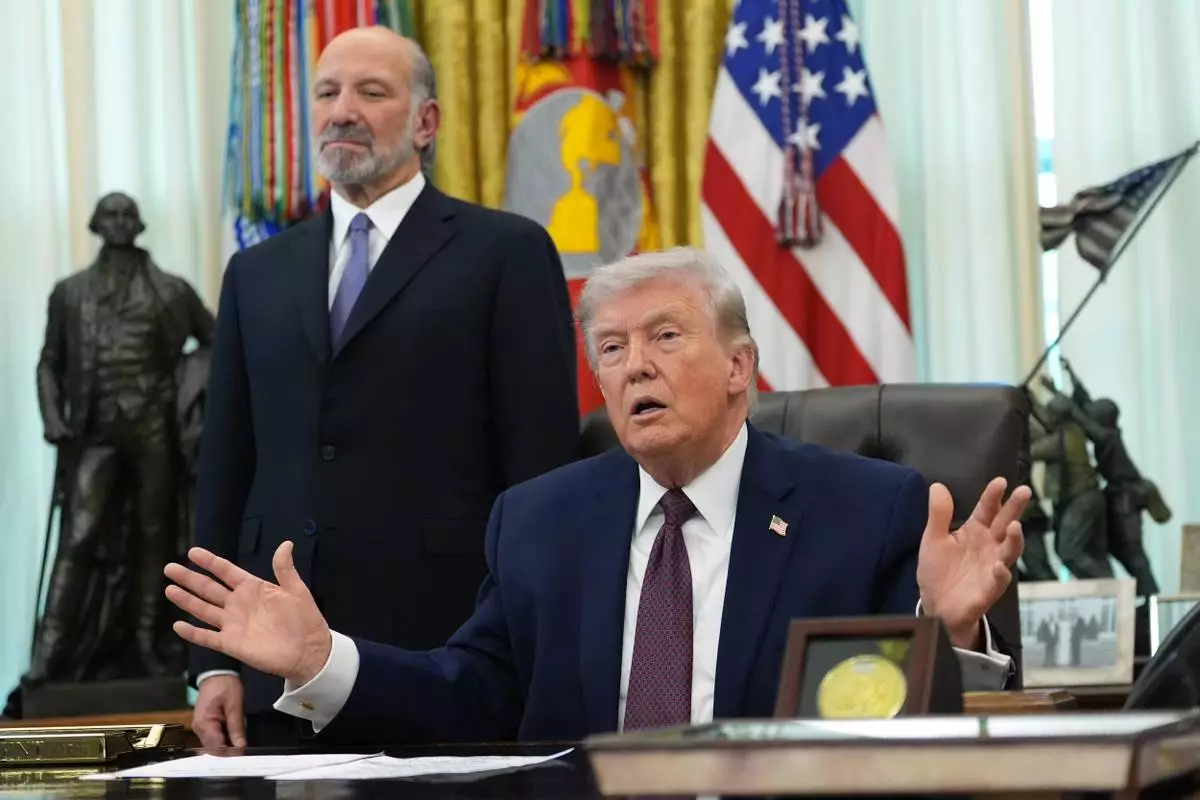
President Donald Trump answers questions from reporters after signing an executive order in the Oval Office of the White House Tuesday, March 31, 2026, in Washington, as Commerce Secretary Howard Lutnick listens. (AP Photo/Alex Brandon)
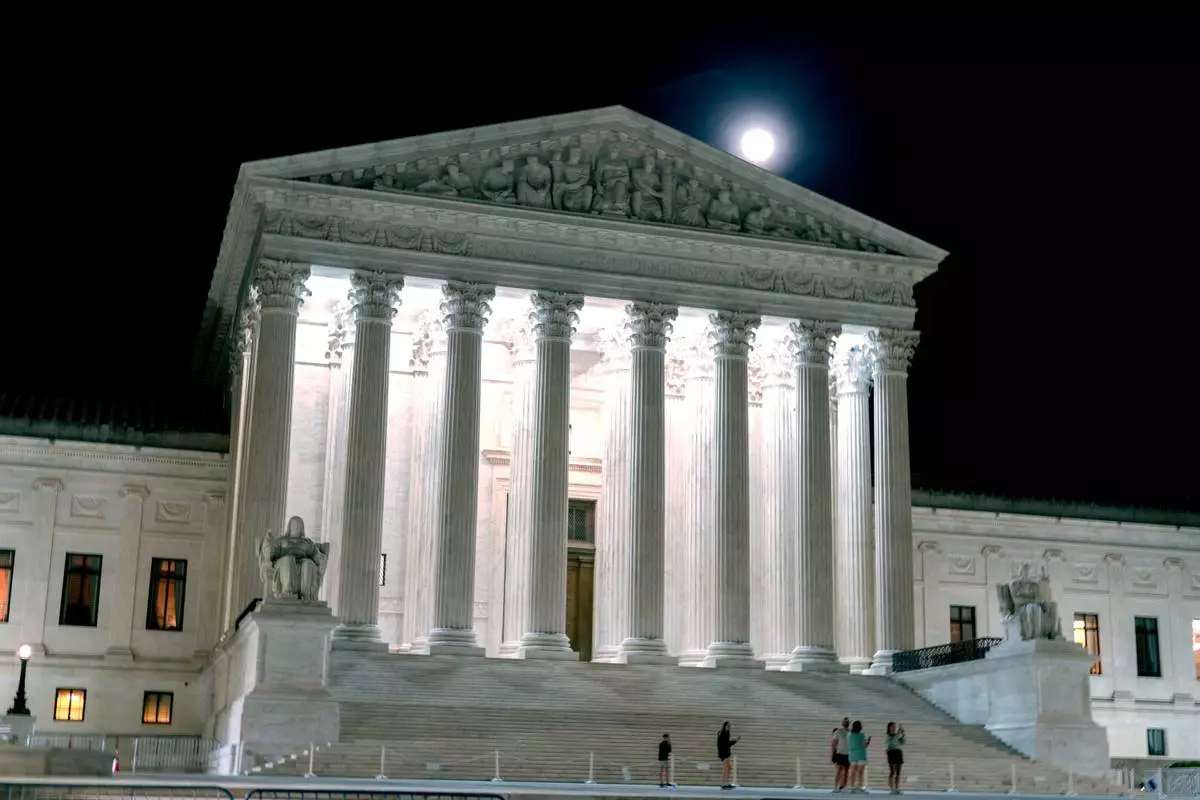
The U.S. Supreme Court is seen as the moon rises Tuesday, March 31, 2026, in Washington. (AP Photo/Jose Luis Magana)