Skip to Content Facebook Feature Image

City of Vacaville and ForeFront Power Energize Easterly Wastewater Treatment Plant Solar and Storage Project

Business

City of Vacaville and ForeFront Power Energize Easterly Wastewater Treatment Plant Solar and Storage Project
Business

Business

City of Vacaville and ForeFront Power Energize Easterly Wastewater Treatment Plant Solar and Storage Project

2025-11-19 07:56 Last Updated At:14:50

VACAVILLE, Calif.--(BUSINESS WIRE)--Nov 18, 2025--

Today, the City of Vacaville held a “Flip the Switch” ceremony to celebrate the energization of a new 5-megawatt DC (MW DC) solar and battery energy storage system at the City of Vacaville’s Easterly Wastewater Treatment Plant (EWWTP), marking a major milestone in Vacaville’s commitment to sustainability, operational resilience, and long-term cost savings.

This press release features multimedia. View the full release here: https://www.businesswire.com/news/home/20251118059375/en/

Developed in partnership with ForeFront Power, the project advances Vacaville’s sustainability strategy to reduce greenhouse gas emissions, stabilize energy costs, and strengthen reliability at a critical 24/7/365 public facility.

The EWWTP system will generate nearly 8.1 million kilowatt-hours of renewable electricity annually—enough to power the yearly electricity use of more than 1,400 homes. Designed to offset the annual electricity demand at the EWWTP facility, the solar and storage system increases overall energy efficiency while lowering utility bills. Over its 20-year lifespan, the system is projected to save the City more than $25 million in electricity costs.

Powering essential wastewater treatment operations with clean, low-cost solar further reduces carbon emissions and supports better air quality across Solano County. The new solar and energy storage system is expected to help Vacaville avoid approximately 4,500 tons of CO₂ emissions annually—equivalent to taking more than 900 gas-powered passenger vehicles off local roads each year.

“Vacaville’s sustainability goals are about better outcomes for people—healthier air, smarter use of resources, and reliable public services,” said Vacaville Mayor John Carli. “By pairing solar with smart battery storage at an industrial facility that treats an average of 7.5 million gallons of wastewater daily, this project will help power operations essential to minimizing public health risks and our environmental impact.”

During the day, the solar energy array will provide power to electrical loads—including large motors, equipment, HVAC, security systems, and IT—while the battery storage banks excess energy produced during extended sunshine. Stored energy can be dispatched at night, on cloudy days, or whenever facility demand exceeds solar production, ensuring consistent, cost-effective power for essential services. The EWWTP’s energy‑intensive operations can now draw on smart battery reserves to avoid paying utility peak rates, cutting local energy costs while easing strain on California’s grid.

“We applaud the City of Vacaville for its leadership in deploying clean, renewable energy at a mission-critical facility,” said Ruben R. Fontes, CEO of ForeFront Power. “The Easterly WWTP now benefits from solar energy generation paired with intelligent storage—producing power when it’s abundant and dispatching it when it matters most—supporting local public health and community resilience for decades to come.”

The EWWTP solar and storage system was developed through a 20-year Power Purchase Agreement (PPA) between the City and ForeFront Power. Under the terms of the PPA, ForeFront Power owns and maintains the system, while the City purchases the electricity at a fixed, lower rate than the utility, ensuring long-term budget predictability and protection from rate increases. ForeFront Power will continue to operate and maintain the system for the duration of the PPA at no cost to the City.

This project supports the City's broader sustainability initiatives, including the Energy and Conservation Action Strategy (ECAS), a long‑range plan to reduce carbon emissions and conserve resources. ECAS calls for community‑wide measures that boost energy independence, curtail utility spending, and improve air quality through reduced emissions from municipal facilities. The EWWTP solar and storage system advances these goals and complements the City’s ongoing Sustainable Energy Project, which focuses on deploying solar across multiple facilities, enhancing backup power at critical sites, and delivering long‑term taxpayer savings.

View the press package online to access high-resolution images and video.

About City of Vacaville

The City of Vacaville is a municipal government serving a community in Solano County, California, located along the Interstate 80 corridor between Sacramento and the San Francisco Bay Area. Incorporated in 1892, Vacaville provides essential public services—including Police, Fire, Public Works, Utilities, Parks & Recreation, and Community Development—to support a safe, vibrant, and fiscally responsible city. With a population of approximately 103,000 across roughly 27 square miles, Vacaville focuses on quality of life, economic vitality, environmental stewardship, and transparent, community‑oriented governance.

About ForeFront Power

ForeFront Power is a leading provider of energy solutions and advisory services. This includes commercial and industrial-scale (C&I) solar energy and battery storage projects in the U.S. and Mexico, as well as fleet electrification and asset management services. With over 15 years of experience, the ForeFront Power team has developed more than 1,900 behind-the-meter and community solar projects, totaling more than 1.6 gigawatt-DC of renewable electricity. In addition to project development and asset management, ForeFront Power provides strategic advisory services that help organizations navigate complex energy decisions—from sustainability and procurement planning to renewable project implementation. The company serves a wide array of business, government, education, healthcare, and community solar customers from its San Francisco headquarters and through teams based in New York, Mexico City, and across the U.S. For additional information, please visit www.forefrontpower.com.
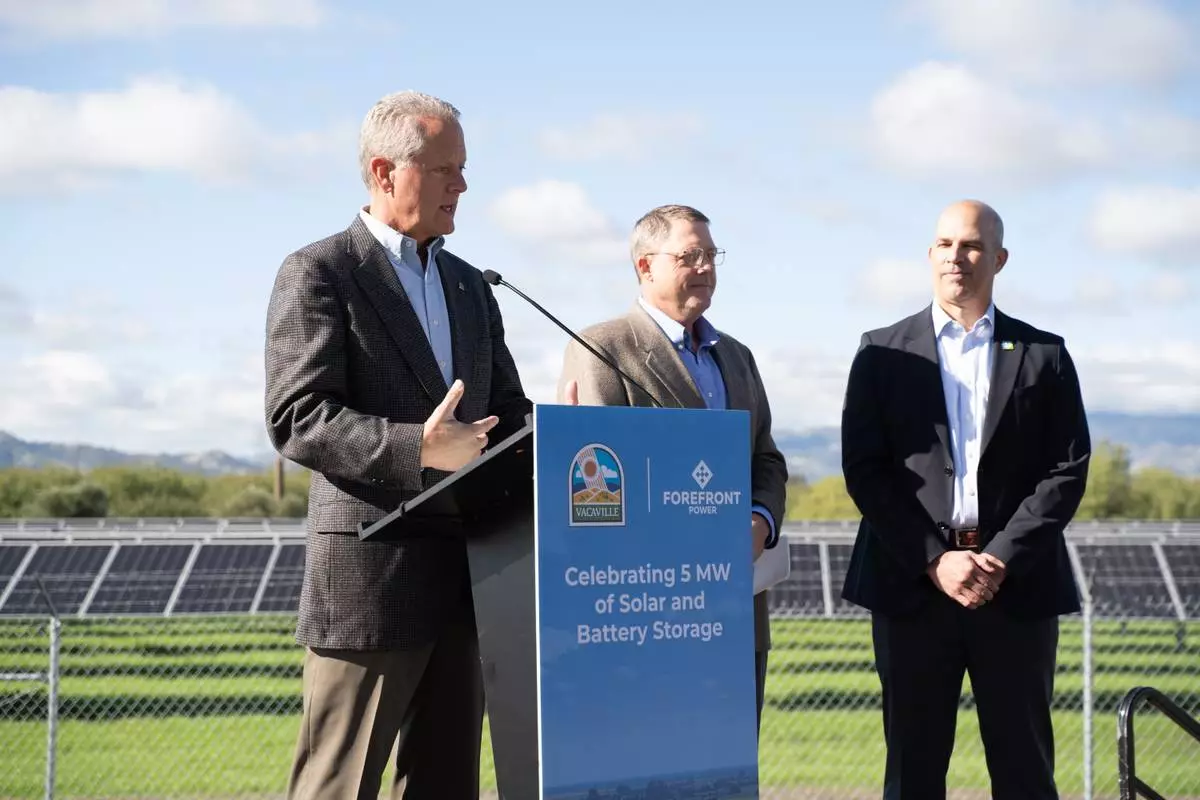
City of Vacaville Mayor John Carli speaks at a “Flip the Switch” ceremony on Tuesday, November 18, 2025, celebrating the energization of a new 5 MW solar and battery energy storage system at the City’s Easterly Wastewater Treatment Plant.
City of Vacaville Mayor John Carli speaks at a “Flip the Switch” ceremony on Tuesday, November 18, 2025, celebrating the energization of a new 5 MW solar and battery energy storage system at the City’s Easterly Wastewater Treatment Plant.
WASHINGTON (AP) — The U.S. Supreme Court is hearing arguments at 10 a.m. ET over the constitutionality of President Donald Trump’s order to end birthright citizenship for children born in the United States to someone in the country illegally or temporarily.

The birthright citizenship order, which Trump signed on Jan. 20, 2025, the first day of his second term, is part of his Republican administration’s broad immigration crackdown.

Trump plans to be in attendance. He will be the first sitting president to attend oral arguments at the nation’s highest court.

Every lower court to have considered the issue has found the order illegal and prevented it from taking effect. A definitive ruling by the nation’s highest court is expected by early summer.

Here’s the latest:

Way back in 1841, former President John Quincy Adams represented a shipload of African men and women who had been sold into slavery in the famous Amistad case.

Former President William Howard Taft became chief justice nearly eight years after leaving the White House in 1913. Charles Evans Hughes left the Supreme Court for a presidential run in 1912, which he nearly won, then returned to the court in 1930 as chief justice.

In 1966, Richard Nixon argued his only Supreme Court case, which he lost.

Twenty-four Democratic state attorneys general put out a statement Wednesday morning saying they’re “proud to lead the fight against this unlawful order.”

While Democratic attorneys general have sued the Trump administration scores of times, the plaintiffs in this case are represented by the American Civil Liberties Union and other civil rights groups.

The Democratic attorneys filed court papers supporting their position. Twenty-five of their Republican counterparts filed a friend-of-the-court brief backing the Trump administration.

The only state sitting this one out is New Hampshire.

More than 250,000 babies born in the U.S. each year would not be citizens, according to research from the Migration Policy Institute and Pennsylvania State University’s Population Research Institute.

The order would only apply going forward, the administration has said. But opponents have said a court ruling in Trump’s favor could pave the way for a later effort to take away citizenship from people who were born to parents who were not themselves U.S. citizens.

The president and first lady Melania Trump showed up for the court ritual marking the arrival of a new justice following the confirmations of Justice Neil Gorsuch in 2017 and Justice Brett Kavanaugh a year later.

The ceremony for Trump’s third appointee, Justice Amy Coney Barrett, was delayed a year because of the COVID-19 pandemic and Trump, who was no longer in office, did not attend.

Traditionally the president has avoided attending arguments to maintain distance between the government branches — since the executive officer’s presence is seen by many as a way to pressure the independent court to rule in their favor.

Given the unusual nature of it all — Trump’s presence in the courtroom spotlights how high the stakes are for him, as the court’s decision will have massive consequences on his longstanding promise to crack down on immigration.

Last year, Trump said that he badly wanted to attend a hearing on whether he overstepped federal law with his sweeping tariffs, but he decided against it, saying it would have been a distraction.

Adam Winkler, a constitutional law professor at UCLA, told the The Associated Press that Trump’s attending SCOTUS oral arguments signals how important the president views this case.

However, Trump’s presence “is unlikely to sway the justices,” Winkler said, adding that the SCOTUS justices “pride themselves in their independence, even if some agree with much of Trump’s agenda.”

The fanfare of Trump being in the courtroom will make for a different experience for the justices themselves, however, as “Trump’s presence will make the atmosphere a little bit more circus-like,” Winkler said.

Solicitor General D. John Sauer is making his ninth Supreme Court argument and second in as many weeks. Sauer’s biggest win to date was the presidential immunity decision that spared Trump from being tried for his effort to overturn the 2020 election.

Sauer was a Supreme Court law clerk to Justice Antonin Scalia early in his legal career.

ACLU legal director Cecillia Wang, the child of Chinese immigrants, is presenting her second argument to the Supreme Court. In the first Trump administration, a 5-4 conservative majority ruled against Wang’s clients in another immigration case.

It’s not an April Fool’s joke. Alito was born this day in 1950. Only Thomas, who turns 78 in June, is older than Alito among the nine justices.

In the post-pandemic era, the other justices allow the 77-year-old Thomas, the longest-serving member of the court, to pose a question or two before the free-for-all begins.

In a second round of questioning, the justices ask questions in order of seniority. Chief Justice John Roberts, whose center chair makes him the most senior, gets the first crack.

The justices have routinely gone beyond the allotted time since returning to the courtroom following the Covid-19 pandemic.

A buzzer and the court marshal’s cry, “All rise,” signal the justices’ entrance from behind red curtains. The livestream won’t kick in for several minutes, until after the ceremonial swearing-in of lawyers to the Supreme Court bar.

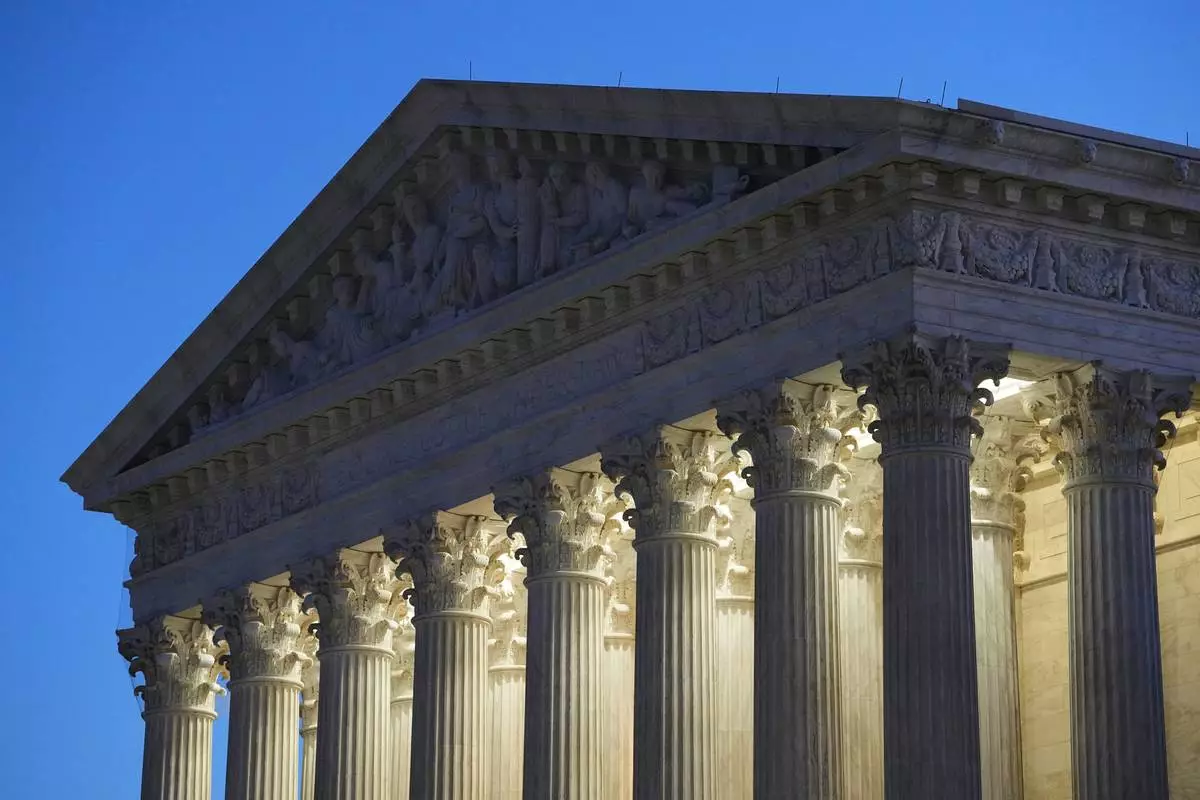
FILE - The U.S. Supreme Court is seen in Washington on Feb. 24, 2026. (AP Photo/Matt Rourke, File)

FILE - The U.S. Supreme Court is seen in Washington on Feb. 24, 2026. (AP Photo/Matt Rourke, File)

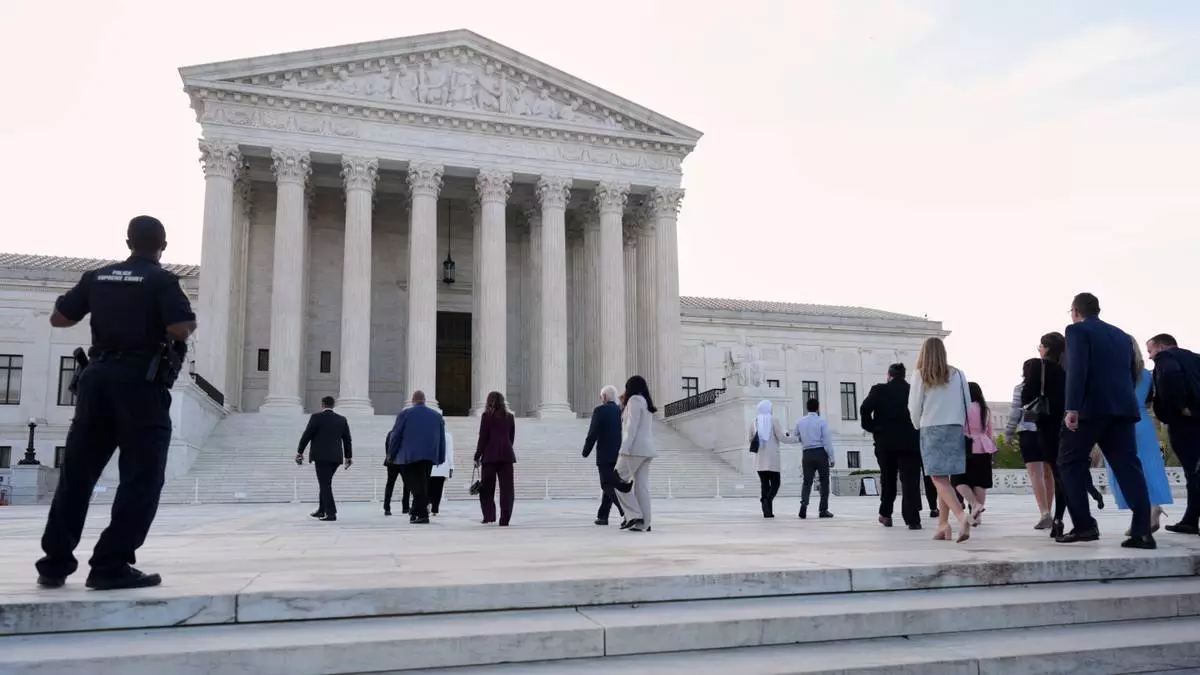
People arrive to walk inside the U.S. Supreme Court, on Capitol Hill in Washington, Wednesday, April 1, 2026. The Supreme Court justices will hear oral arguments today on whether President Donald Trump can deny citizenship to children born to parents who are in the United States illegally or temporarily. (AP Photo/J. Scott Applewhite)

People arrive to walk inside the U.S. Supreme Court, on Capitol Hill in Washington, Wednesday, April 1, 2026. The Supreme Court justices will hear oral arguments today on whether President Donald Trump can deny citizenship to children born to parents who are in the United States illegally or temporarily. (AP Photo/J. Scott Applewhite)

Recommended Articles