CHICAGO--(BUSINESS WIRE)--Nov 19, 2025--
NielsenIQ (NYSE: NIQ), a global leader in consumer intelligence, today released its CMO Outlook: Guide to 2026 report, revealing how chief marketing officers (CMOs) are navigating a critical inflection point between brand building and revenue accountability. According to the report, 83% of CMOs remain confident in their brand’s equity, even as they face tightening budgets and heightened scrutiny over ROI.
This press release features multimedia. View the full release here: https://www.businesswire.com/news/home/20251118947080/en/
“ Every marketing dollar is now under the microscope,” said Marta Cyhan-Bowles, Chief Communications Officer & Head of Global Marketing COE, NIQ. “ With organizations prioritizing cost reductions, CMOs are being challenged not just to spend wisely, but to prove how marketing directly drives awareness, growth, and loyalty. It’s no longer just about efficiency; it’s about proving impact – all with largely flat budgets. ”
Key Findings from NIQ’s 2026 CMO Outlook
CMOs remain confident in brand equity but are shifting focus under pressure.
Data fragmentation threatens ROI clarity.
AI integration accelerates, but CMOs are now measured by impact, not access.
Retail media networks (RMNs) surge as the next frontier of marketing ROI.
“ Marketers are redefining what performance means,” Cyhan-Bowles said. “ Data, AI, and retail media networks are reshaping the marketing playbook, and the most successful CMOs will be those who connect these forces to demonstrate measurable value for the organization.”
Strategic Focus Areas/Next Steps
As CMOs look ahead to 2026, NIQ’s findings point to four priorities that will define high-performing marketing organizations.
Together, these focus areas position CMOs to move beyond efficiency toward long-term resilience, driving both long-term brand equity and measurable business results.
The integration of AI and data driven strategies is not only a response to budget constraints but also a proactive approach to sustainable growth in a challenging economic environment.
Download the report for detailed insights and guidance for CMOs.
Note to Editors:
NIQ executives, including Chief Communications Officer & Head of Global Marketing COE Marta Cyhan-Bowles, will speak about findings from the 2026 CMO Outlook at The Wall Street Journal’s CMO Council Summit on November 19, 2025, in a session titled “ From Data to Decisions: The CMO’s ROI Reckoning.”
The 2026 CMO Outlook underscores NIQ’s commitment to delivering actionable intelligence to help brands navigate a fast-evolving media and technology landscape. By integrating advanced analytics with The Full View™ of consumer behavior, NIQ equips marketing leaders to measure what matters and act with confidence.
About the report:
NIQ’s CMO Outlook: Guide to 2026 report is based on a survey of more than 250 CMOs and senior marketing decision-makers from leading companies across industries and regions. The survey covers 14 countries representing Asia Pacific, Europe, Latin America, and North America. Marketing leaders are defined as CMOs or Brand Heads, Directors or VPs of Marketing, Brand, Marketing Operations, or Customer Experience.
About NIQ:
NielsenIQ (NIQ) is a leading consumer intelligence company, delivering the most complete understanding of consumer buying behavior and revealing new pathways to growth. Our global reach spans over 90 countries covering approximately 85% of the world’s population and more than $7.2 trillion in global consumer spend. With a holistic retail read and the most comprehensive consumer insights—delivered with advanced analytics through state-of-the-art platforms—NIQ delivers the Full View ™.
For more information, please visit niq.com.
Forward-Looking Statements Disclaimer
This CMO Outlook: Guide to 2026 press release may contain forward-looking statements regarding anticipated consumer behaviors, market trends, and industry developments. These statements reflect current expectations and projections based on available data, historical patterns, and various assumptions. Words such as “expects,” “anticipates,” “projects,” “believes,” “forecasts,” “plan,” “look ahead,” and similar expressions are intended to identify such forward-looking statements. These statements are not guarantees of future outcomes and are subject to inherent uncertainties, including changes in consumer preferences, economic conditions, technological advancements, and competitive dynamics. Actual results may differ materially from those expressed or implied in these statements. While we strive to base our insights on reliable data and sound methodologies, we undertake no obligation to update any forward-looking statements to reflect future events or circumstances, except to the extent required by applicable law.
© 2025 Nielsen Consumer LLC. All Rights Reserved.
NIQ-GENERAL

Top Marketers Challenge 2025

NIQ CMO Outlook: Guide to 2026
WASHINGTON (AP) — The Supreme Court is taking up one of the term’s most consequential cases, President Donald Trump’s executive order on birthright citizenship declaring that children born to parents who are in the United States illegally or temporarily are not American citizens, and he was in the courtroom on Wednesday for some of the arguments.
The justices are hearing Trump’s appeal of a lower-court ruling from New Hampshire that struck down the citizenship restrictions, one of several courts that have blocked them. They have not taken effect anywhere in the country.
Trump is the first sitting president to attend oral arguments at the nation’s highest court. He spent just over an hour inside the courtroom, hearing arguments by the government’s lawyer, Solicitor General D. John Sauer. He left shortly after Sauer wrapped up and the plaintiff was invited to present her case.
The case frames another test of Trump's assertions of executive power that defy long-standing precedent for a court that has largely ruled in the president's favor — but with some notable exceptions that Trump has responded to with starkly personal criticisms of the justices. A definitive ruling is expected by early summer.
The birthright citizenship order, which Trump signed the first day of his second term, is part of his Republican administration’s broad immigration crackdown.
Birthright citizenship is the first Trump immigration-related policy to reach the court for a final ruling. The justices previously struck down global tariffs Trump had imposed under an emergency powers law that had never been used that way.
Trump reacted furiously to the late February tariffs decision, saying he was ashamed of the justices who ruled against him and calling them unpatriotic.
He issued a preemptive broadside against the court on Sunday on his Truth Social platform. “Birthright Citizenship is not about rich people from China, and the rest of the World, who want their children, and hundreds of thousands more, FOR PAY, to ridiculously become citizens of the United States of America. It is about the BABIES OF SLAVES!,” the president wrote. “Dumb Judges and Justices will not a great Country make!”
Trump's order would upend the long-standing view that the Constitution’s 14th Amendment, ratified in 1868, and federal law since 1940 confer citizenship on everyone born on American soil, with narrow exceptions for the children of foreign diplomats and those born to a foreign occupying force.
The 14th Amendment was intended to ensure that Black people, including former slaves, had citizenship, though the Citizenship Clause is written more broadly. “All persons born or naturalized in the United States, and subject to the jurisdiction thereof, are citizens of the United States and of the State wherein they reside,” it reads.
In a series of decisions, lower courts have struck down the executive order as illegal, or likely so, under the Constitution and federal law. The decisions have invoked the high court's 1898 ruling in Wong Kim Ark, which held that the U.S.-born child of Chinese nationals was a citizen.
The Trump administration argues that the common view of citizenship is wrong, asserting that children of noncitizens are not “subject to the jurisdiction” of the United States and therefore are not entitled to citizenship.
The court should use the case to set straight “long-enduring misconceptions about the Constitution’s meaning,” wrote Sauer, the solicitor general.
No court has accepted that argument, and lawyers for pregnant women whose children would be affected by the order said the Supreme Court should not be the first to do so.
“We have the president of the United States trying to radically reinterpret the definition of American citizenship,” said Cecillia Wang, the American Civil Liberties Union legal director who is facing off against Sauer at the Supreme Court.
More than one-quarter of a million babies born in the U.S. each year would be affected by the executive order, according to research by the Migration Policy Institute and Pennsylvania State University’s Population Research Institute.
While Trump has largely focused on illegal immigration in his rhetoric and actions, the birthright restrictions also would apply to people who are legally in the United States, including students and applicants for green cards, or permanent resident status.
Associated Press writer Darlene Superville contributed to this report.
Follow the AP’s coverage of the U.S. Supreme Court at https://apnews.com/hub/us-supreme-court.
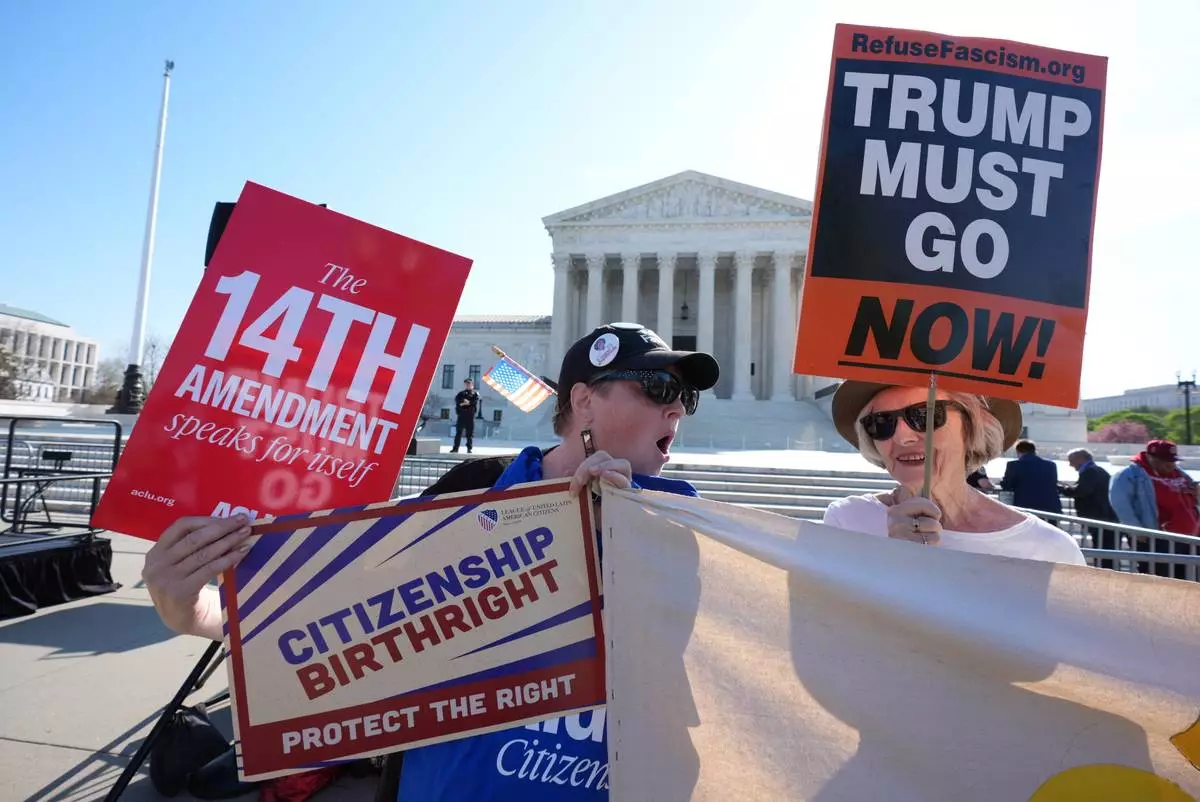
Pro and anti-Trump demonstrators rally outside the U.S. Supreme Court, before justices hear oral arguments on whether President Donald Trump can deny citizenship to children born to parents who are in the United States illegally or temporarily, on Capitol Hill, in Washington, Wednesday, April 1, 2026. (AP Photo/J. Scott Applewhite)

President Donald Trump leaves the U.S. Supreme Court, Wednesday, April 1, 2026, in Washington. (AP Photo/Mark Schiefelbein)

President Donald Trump's motorcade arrives at the U.S. Supreme Court, Wednesday, April 1, 2026, in Washington. (AP Photo/Tom Brenner)
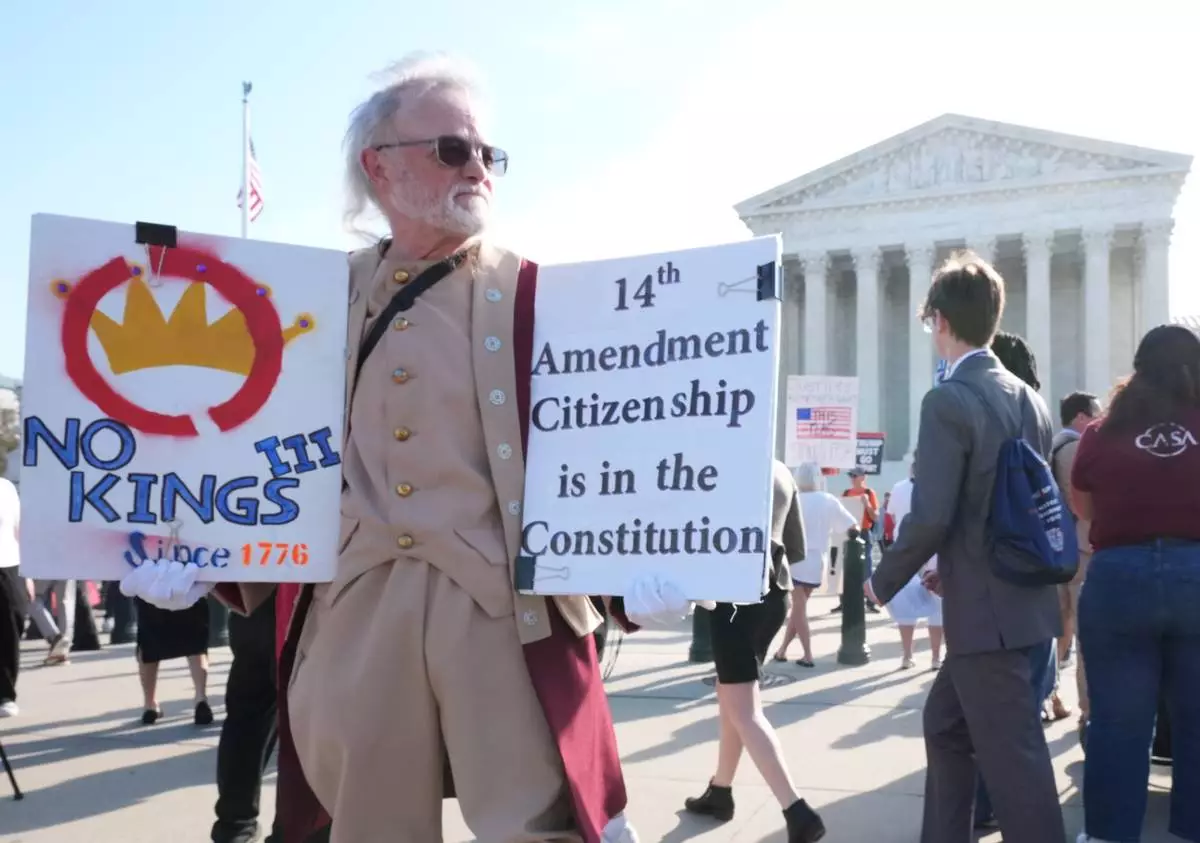
Pro and anti-Trump demonstrators rally outside the U.S. Supreme Court, before justices hear oral arguments on whether President Donald Trump can deny citizenship to children born to parents who are in the United States illegally or temporarily, on Capitol Hill, in Washington, Wednesday, April 1, 2026. (AP Photo/J. Scott Applewhite)

President Donald Trump's motorcade arrives at the U.S. Supreme Court, Wednesday, April 1, 2026, in Washington. (AP Photo/Tom Brenner)
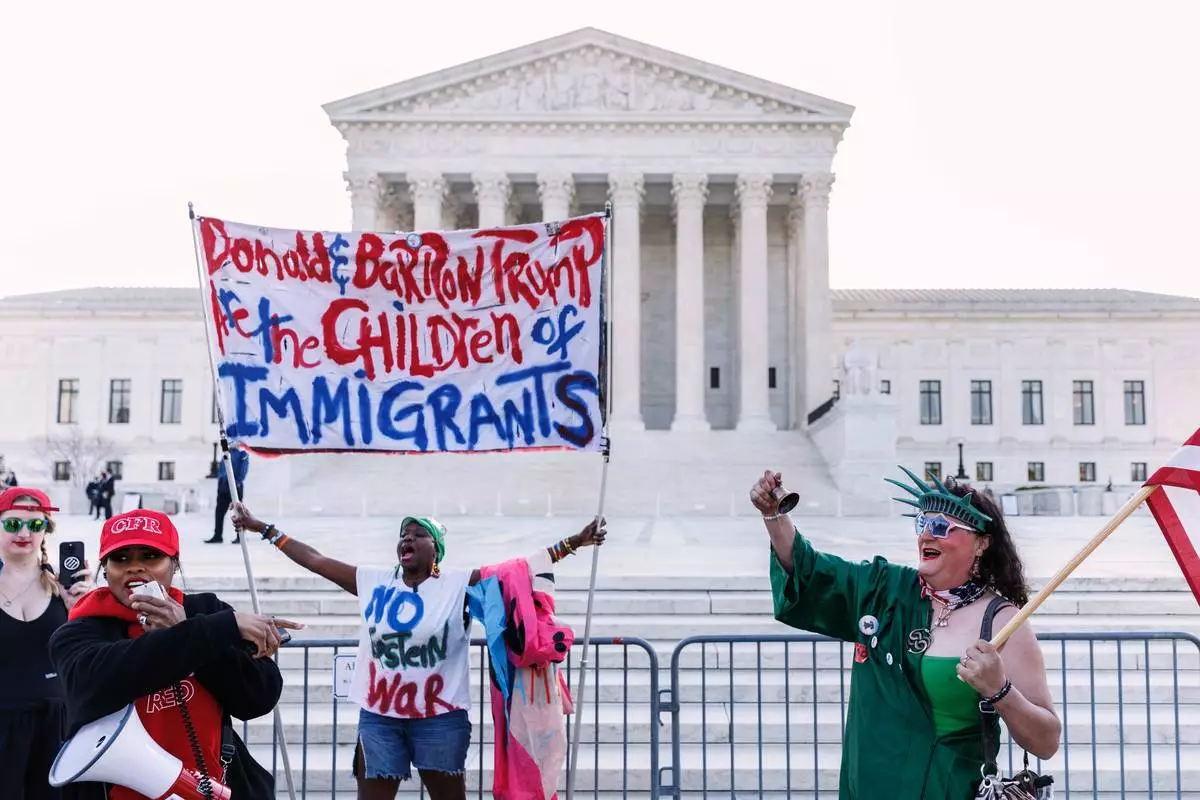
Demonstrators holding opposing views verbally engage ahead of President Donald Trump's arrival at the U.S. Supreme Court, Wednesday, April 1, 2026, in Washington. (AP Photo/Tom Brenner)
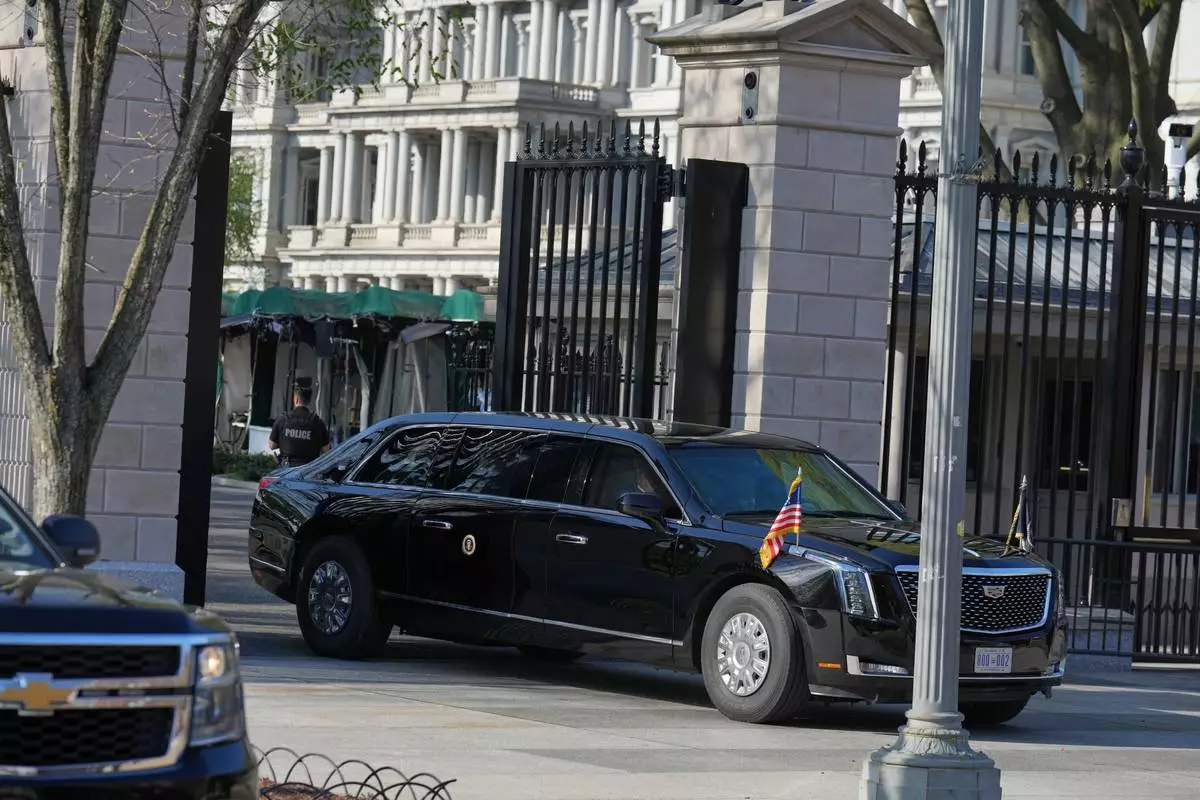
President Donald Trump's limo exits the White House en route to the Supreme Court, Wednesday, April 1, 2026, in Washington. (AP Photo/Mark Schiefelbein)

President Donald Trump's motorcade arrives at the U.S. Supreme Court, Wednesday, April 1, 2026, in Washington. (AP Photo/Tom Brenner)

Pro and anti-Trump demonstrators rally outside the U.S. Supreme Court, before justices hear oral arguments on whether President Donald Trump can deny citizenship to children born to parents who are in the United States illegally or temporarily, on Capitol Hill, in Washington, Wednesday, April 1, 2026. (AP Photo/J. Scott Applewhite)
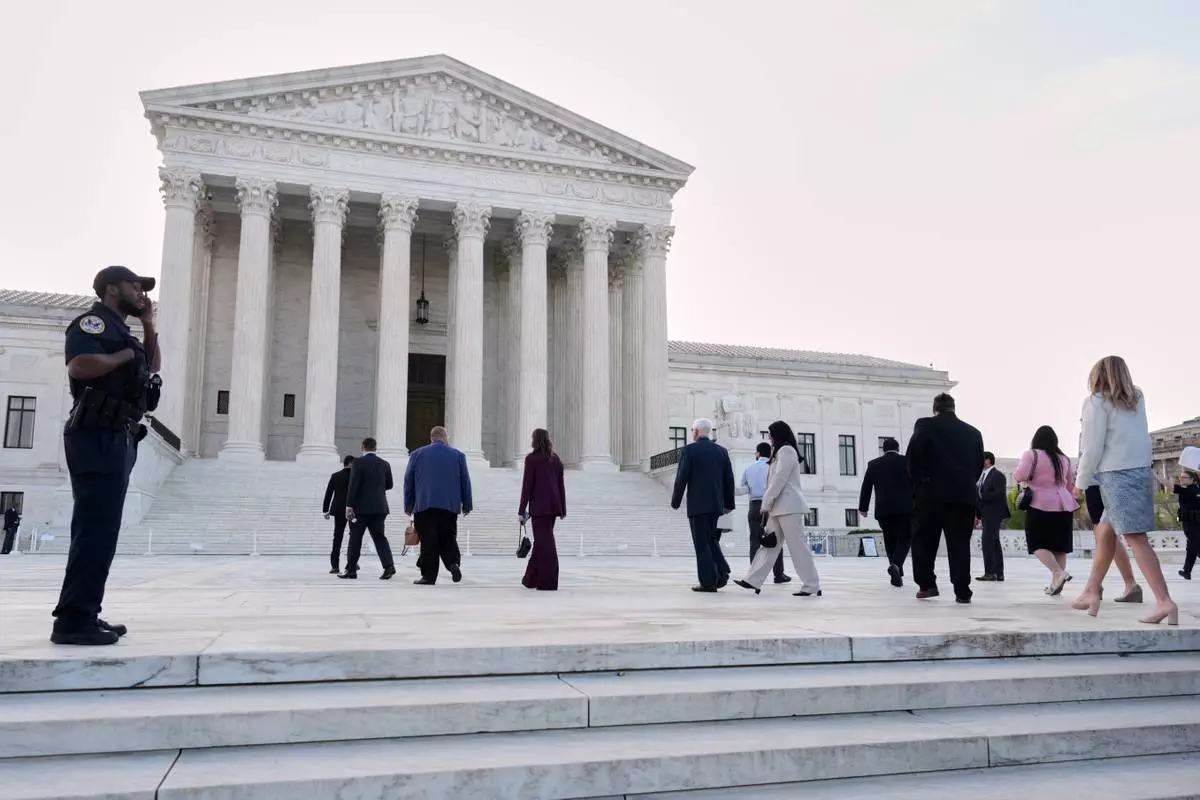
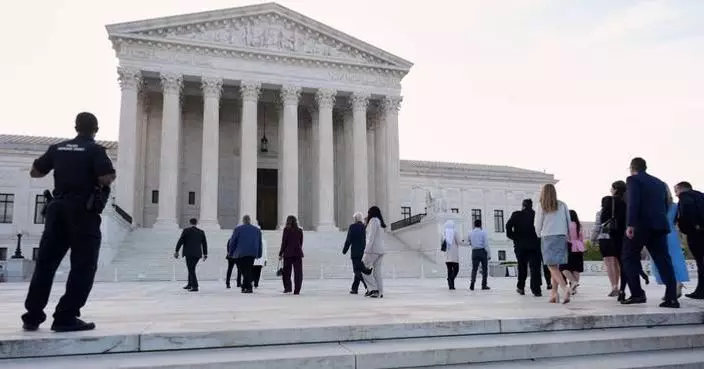
People arrive to walk inside the U.S. Supreme Court, on Capitol Hill in Washington, Wednesday, April 1, 2026. The Supreme Court justices will hear oral arguments today on whether President Donald Trump can deny citizenship to children born to parents who are in the United States illegally or temporarily. (AP Photo/J. Scott Applewhite)
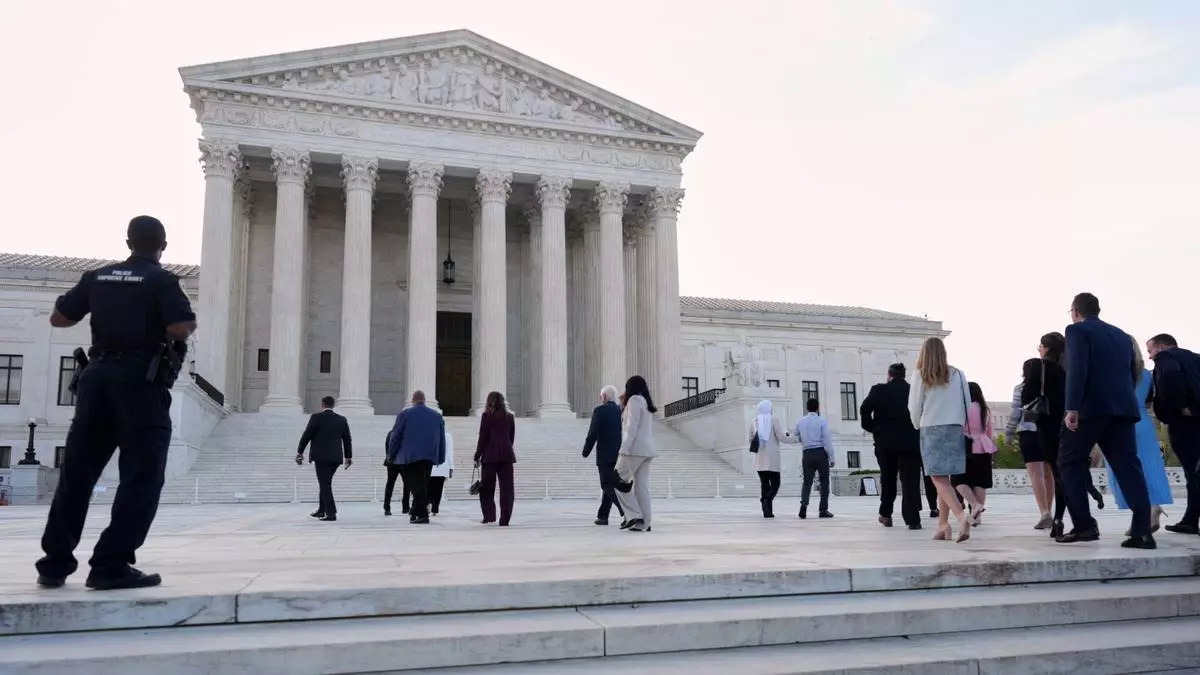
People arrive to walk inside the U.S. Supreme Court, on Capitol Hill in Washington, Wednesday, April 1, 2026. The Supreme Court justices will hear oral arguments today on whether President Donald Trump can deny citizenship to children born to parents who are in the United States illegally or temporarily. (AP Photo/J. Scott Applewhite)
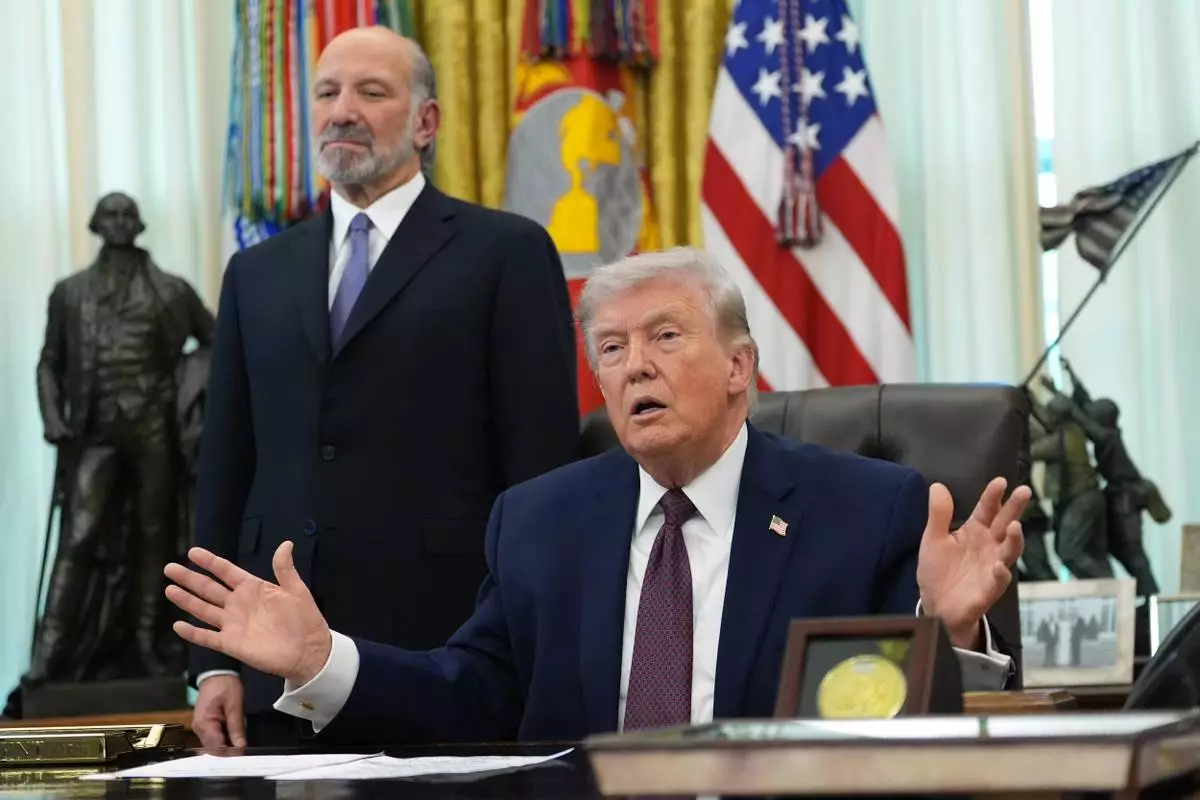
President Donald Trump answers questions from reporters after signing an executive order in the Oval Office of the White House Tuesday, March 31, 2026, in Washington, as Commerce Secretary Howard Lutnick listens. (AP Photo/Alex Brandon)
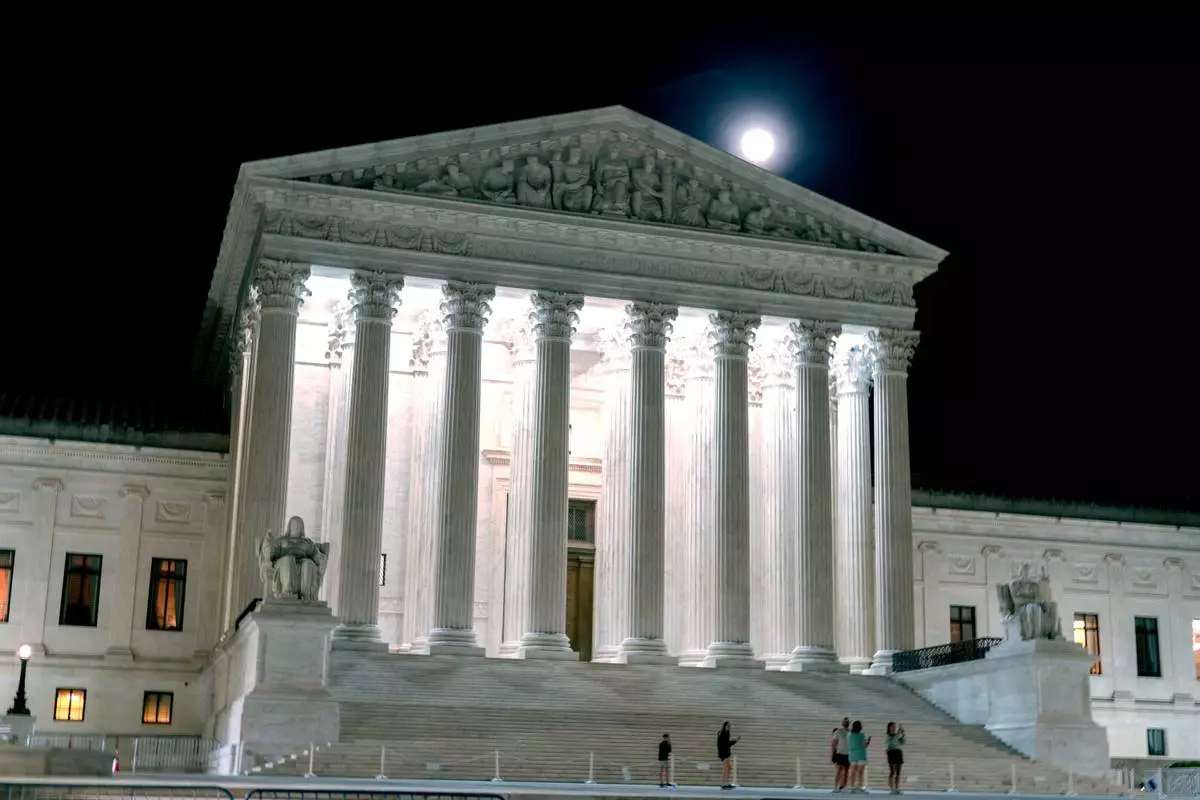
The U.S. Supreme Court is seen as the moon rises Tuesday, March 31, 2026, in Washington. (AP Photo/Jose Luis Magana)