Skip to Content Facebook Feature Image

City of Hope Opens Only Cancer Specialty Hospital in Orange County, Calif., Advancing a National Model for Cancer Research and Treatment

Business

City of Hope Opens Only Cancer Specialty Hospital in Orange County, Calif., Advancing a National Model for Cancer Research and Treatment
Business

Business

City of Hope Opens Only Cancer Specialty Hospital in Orange County, Calif., Advancing a National Model for Cancer Research and Treatment

2025-11-19 22:01 Last Updated At:11-20 13:37

IRVINE, Calif.--(BUSINESS WIRE)--Nov 19, 2025--

City of Hope ®, one of the largest and most advanced cancer research and treatment organizations in the United States, opens Orange County’s only cancer specialty hospital on its academic cancer campus, establishing a next-generation model of care for the 2 million Americans diagnosed with cancer each year.

This press release features multimedia. View the full release here: https://www.businesswire.com/news/home/20251119439980/en/

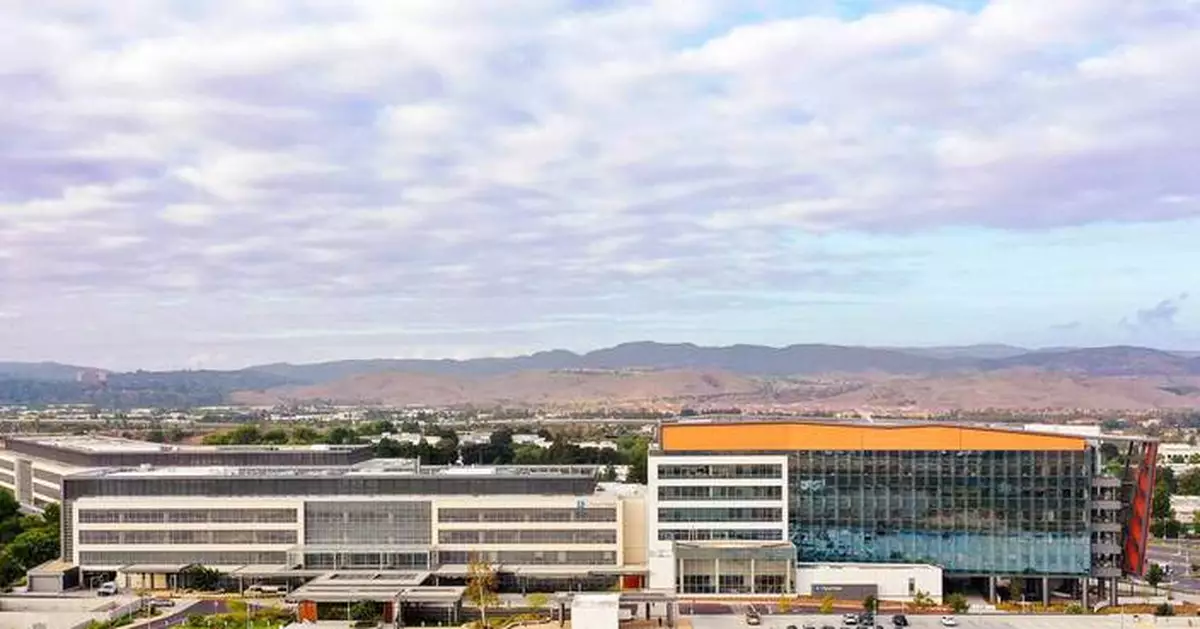
City of Hope’s cancer specialty hospital in Orange County, Calif., brings more cancer-focused expertise, breakthrough acute and outpatient care, novel clinical trials and groundbreaking technology. The hospital opens on Dec. 1, 2025. (Photo: City of Hope Orange County)

The visionary initiative completes the most advanced, integrated cancer care network in the region, bringing the nation’s sixth-largest county more cancer-focused expertise, breakthrough acute and outpatient care, novel clinical trials and groundbreaking technology.

City of Hope’s presence in Orange County is a comprehensive $1.5 billion response to a pressing need in a community where the cancer incidence rate is projected to increase by 18 percent over the next decade. One in three Americans will be diagnosed with cancer in their lifetime, and the incidence of many cancers is rising, particularly in women. About 80 percent of cancer patients receive treatment in a community setting. Yet, studies show people with cancer have better outcomes when treated at an academic cancer hospital or cancer center, where scientific discovery is integrated into treatment.

“At City of Hope, we are building on a more than 100-year legacy of breakthroughs, changing the trajectory of national cancer care by bringing the latest cancer discoveries and leading-edge treatments directly into more communities across the country,” said Robert Stone, CEO, City of Hope, and Helen and Morgan Chu Chief Executive Officer Distinguished Chair. “Our Orange County campus will be a living promise of hope where thousands of lives will be saved, transformed and made whole again.”

Opening Dec. 1, the Orange County cancer specialty hospital is a sister hospital to Helford Clinical Research Hospital in Duarte. City of Hope’s five cancer hospitals across the nation and network of clinical locations operate as a unified system, seamlessly sharing expertise, clinical trial access, and advanced technologies to deliver advanced, coordinated care.

Patients in Orange County will now benefit from the full continuum of nationally ranked cancer treatment and research — from prevention through survivorship — on one academic cancer campus built for the single purpose of saving lives.

“This hospital fulfills the promise we made to the 3.2 million people of Orange County and ushers in a new era of hope and innovation that will continue to grow,” said Annette M. Walker, president, City of Hope Orange County, and Ronald and Sandi Simon Presidential Chair. “This hospital was built with and for the community. Thank you to our generous philanthropic partners, our staff and physicians, and the Orange County community for sharing our vision and bringing Orange County’s hospital to life.”

Before City of Hope arrived in Orange County, up to 20 percent of people with cancer left the area to receive care from highly specialized physicians and to access pioneering clinical trials, which created an undue burden on patients and their families. More than 40,000 patients have received care at a City of Hope Orange County facility since 2020.

“City of Hope’s decision to establish a cancer campus of the future in Irvine that includes Orange County’s only cancer specialty hospital represents a major victory for our community. City of Hope has brought nationally recognized, cancer-focused expertise and breakthrough research to our residents, ensuring that lifesaving treatment, clinical trials, and support are no longer a distant option but a local reality,” said Larry Agran, Mayor of Irvine.

Distinguishing clinical services include:

Unsurpassed Cancer Expertise

This extraordinary bench of physicians on the Irvine campus works in collaboration with more than 2,000 City of Hope physicians and researchers across City of Hope’s national system. City of Hope is an internationally recognized leader in cancer research and specialized care, noted for driving advancements in CAR T and advanced cellular therapies, a national network of hundreds of clinical trials, unique supportive care and survivorship programs, and renowned experts across cancer sub-specialties.

“City of Hope provides patients not only the best of today’s cancer science but with the cancer breakthroughs of tomorrow,” said Edward S. Kim, M.D., M.B.A., physician-in-chief, City of Hope Orange County, Construction Industries Alliance City of Hope Orange County Physician-in-Chief Chair and vice physician-in-chief, City of Hope National Medical Center. “Our academic cancer campus is now home to more than 100 highly specialized physician-scientists who are pioneers in their fields. Their expertise is moving us closer to a cancer-free future on all fronts, for the hundreds of cancer types. We are not content with the standard of care. We are defining a new one.”

A Hospital Built with and for the Community

More than 500 people, including patients, their families and community members, provided input during the hospital design to ensure their diverse needs were met. Every feature — from the Feng Shui design to the natural light, colors, and textures to the carefully selected artwork — was intentionally designed to support healing of the body, mind and spirit. City of Hope pioneered a fully integrated supportive care model in the U.S. to ease the physical, emotional, and psychological burden of a cancer diagnosis.

Features include:

For more information, please visit: Cityofhope.org/thisishope

About City of Hope

City of Hope's mission is to make hope a reality for all touched by cancer and diabetes. Founded in 1913, City of Hope has grown into one of the largest cancer research and treatment organizations in the U.S. and one of the leading research centers for diabetes and other life-threatening illnesses. City of Hope research has been the basis for numerous breakthrough cancer medicines, as well as human synthetic insulin and monoclonal antibodies. With an independent, National Cancer Institute-designated comprehensive cancer center that is ranked among the nation’s top cancer centers by U.S. News & World Report at its core, City of Hope brings a uniquely integrated model to patients spanning cancer care, research and development, academics and training and innovation initiatives. City of Hope’s growing national system includes its Los Angeles campus, a network of clinical care locations across Southern California, a new cancer center in Orange County, California, and cancer treatment centers and outpatient facilities in the Atlanta, Chicago and Phoenix areas. City of Hope’s affiliated group of organizations includes Translational Genomics Research Institute and AccessHope ™. For more information about City of Hope, follow us on Facebook, X, YouTube, Instagram and LinkedIn.
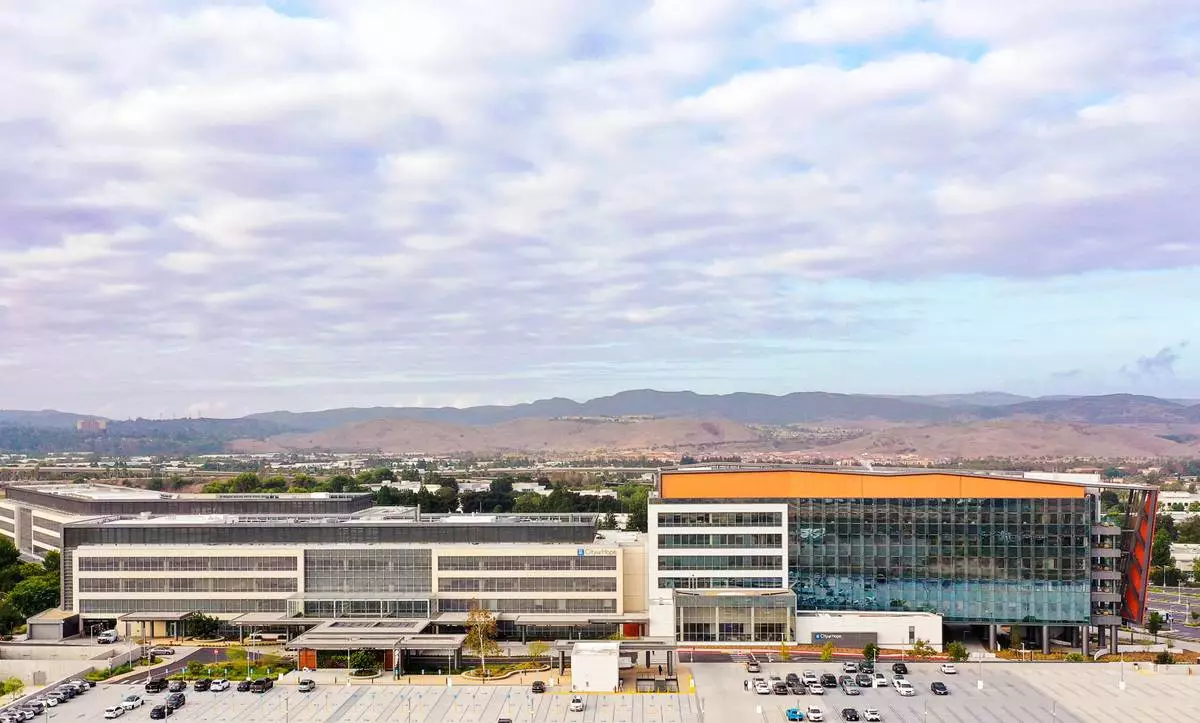
City of Hope’s academic cancer campus in Orange County, Calif., establishes a next-generation model of care for the 2 million Americans diagnosed with cancer each year. The cancer specialty hospital is seamlessly connected to the outpatient cancer center. (Photo: City of Hope Orange County)

City of Hope’s academic cancer campus in Orange County, Calif., establishes a next-generation model of care for the 2 million Americans diagnosed with cancer each year. The cancer specialty hospital is seamlessly connected to the outpatient cancer center. (Photo: City of Hope Orange County)
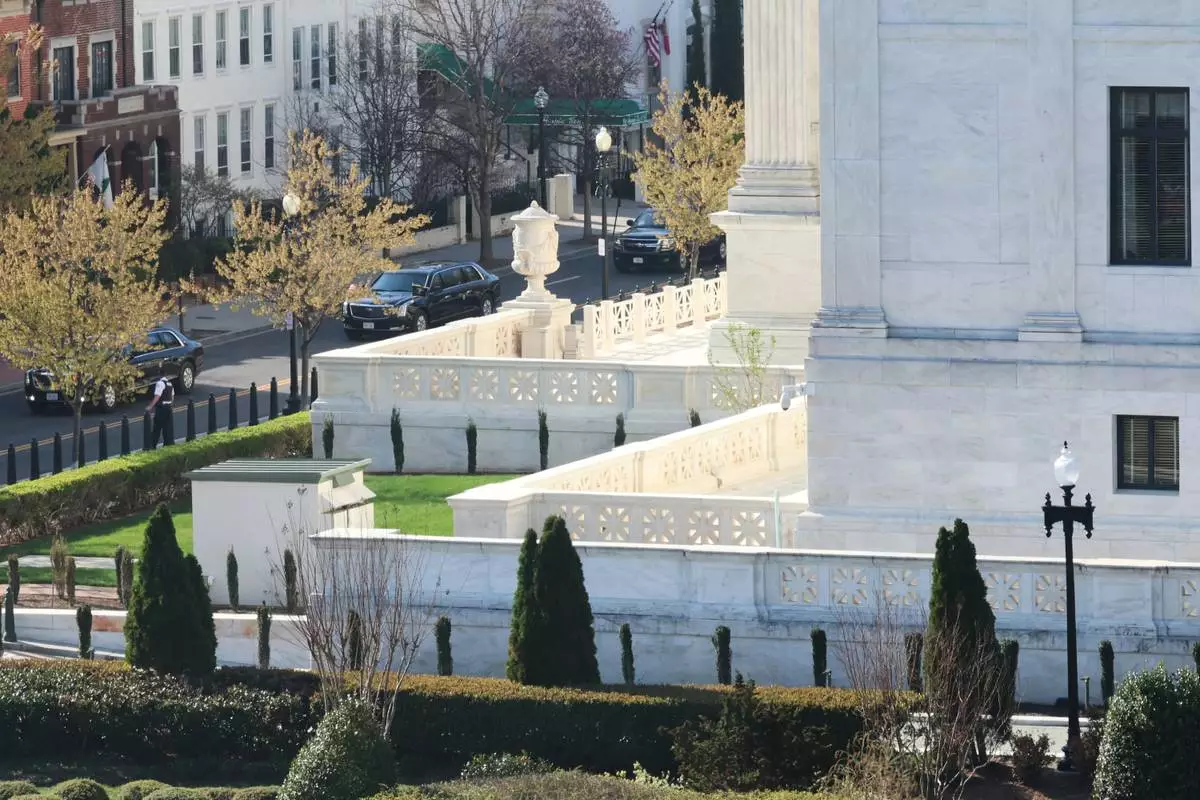
WASHINGTON (AP) — The Supreme Court is taking up one of the term’s most consequential cases, President Donald Trump’s executive order on birthright citizenship declaring that children born to parents who are in the United States illegally or temporarily are not American citizens, and he arrived at the court Wednesday to attend the arguments.

The justices will hear Trump’s appeal of a lower-court ruling from New Hampshire that struck down the citizenship restrictions, one of several courts that have blocked them. They have not taken effect anywhere in the country.

A definitive ruling is expected by early summer.

Trump will be the first sitting president to attend oral arguments at the nation’s highest court.

Crowds watched from the sidewalks as Trump’s motorcade drove along Constitution and Independence Avenues, passing the Washington Monument and the National Mall on the way to the court building.

The case frames another test of Trump's assertions of executive power that defy long-standing precedent for a court that has largely ruled in the president's favor — but with some notable exceptions that Trump has responded to with starkly personal criticisms of the justices.

The birthright citizenship order, which Trump signed the first day of his second term, is part of his Republican administration’s broad immigration crackdown.

Birthright citizenship is the first Trump immigration-related policy to reach the court for a final ruling. The justices previously struck down global tariffs Trump had imposed under an emergency powers law that had never been used that way.

Trump reacted furiously to the late February tariffs decision, saying he was ashamed of the justices who ruled against him and calling them unpatriotic.

He issued a preemptive broadside against the court on Sunday on his Truth Social platform. “Birthright Citizenship is not about rich people from China, and the rest of the World, who want their children, and hundreds of thousands more, FOR PAY, to ridiculously become citizens of the United States of America. It is about the BABIES OF SLAVES!,” the president wrote. “Dumb Judges and Justices will not a great Country make!”

Trump's order would upend the long-standing view that the Constitution’s 14th Amendment, ratified in 1868, and federal law since 1940 confer citizenship on everyone born on American soil, with narrow exceptions for the children of foreign diplomats and those born to a foreign occupying force.

The 14th Amendment was intended to ensure that Black people, including former slaves, had citizenship, though the Citizenship Clause is written more broadly. “All persons born or naturalized in the United States, and subject to the jurisdiction thereof, are citizens of the United States and of the State wherein they reside,” it reads.

In a series of decisions, lower courts have struck down the executive order as illegal, or likely so, under the Constitution and federal law. The decisions have invoked the high court's 1898 ruling in Wong Kim Ark, which held that the U.S.-born child of Chinese nationals was a citizen.

The Trump administration argues that the common view of citizenship is wrong, asserting that children of noncitizens are not “subject to the jurisdiction” of the United States and therefore are not entitled to citizenship.

The court should use the case to set straight “long-enduring misconceptions about the Constitution’s meaning,” Solicitor General D. John Sauer wrote.

No court has accepted that argument, and lawyers for pregnant women whose children would be affected by the order said the Supreme Court should not be the first to do so.

“We have the president of the United States trying to radically reinterpret the definition of American citizenship,” said Cecillia Wang, the American Civil Liberties Union legal director who is facing off against Sauer at the Supreme Court.

More than one-quarter of a million babies born in the U.S. each year would be affected by the executive order, according to research by the Migration Policy Institute and Pennsylvania State University’s Population Research Institute.

While Trump has largely focused on illegal immigration in his rhetoric and actions, the birthright restrictions also would apply to people who are legally in the United States, including students and applicants for green cards, or permanent resident status.

Follow the AP’s coverage of the U.S. Supreme Court at https://apnews.com/hub/us-supreme-court.

Demonstrators holding opposing views verbally engage ahead of President Donald Trump's arrival at the U.S. Supreme Court, Wednesday, April 1, 2026, in Washington. (AP Photo/Tom Brenner)

Demonstrators holding opposing views verbally engage ahead of President Donald Trump's arrival at the U.S. Supreme Court, Wednesday, April 1, 2026, in Washington. (AP Photo/Tom Brenner)

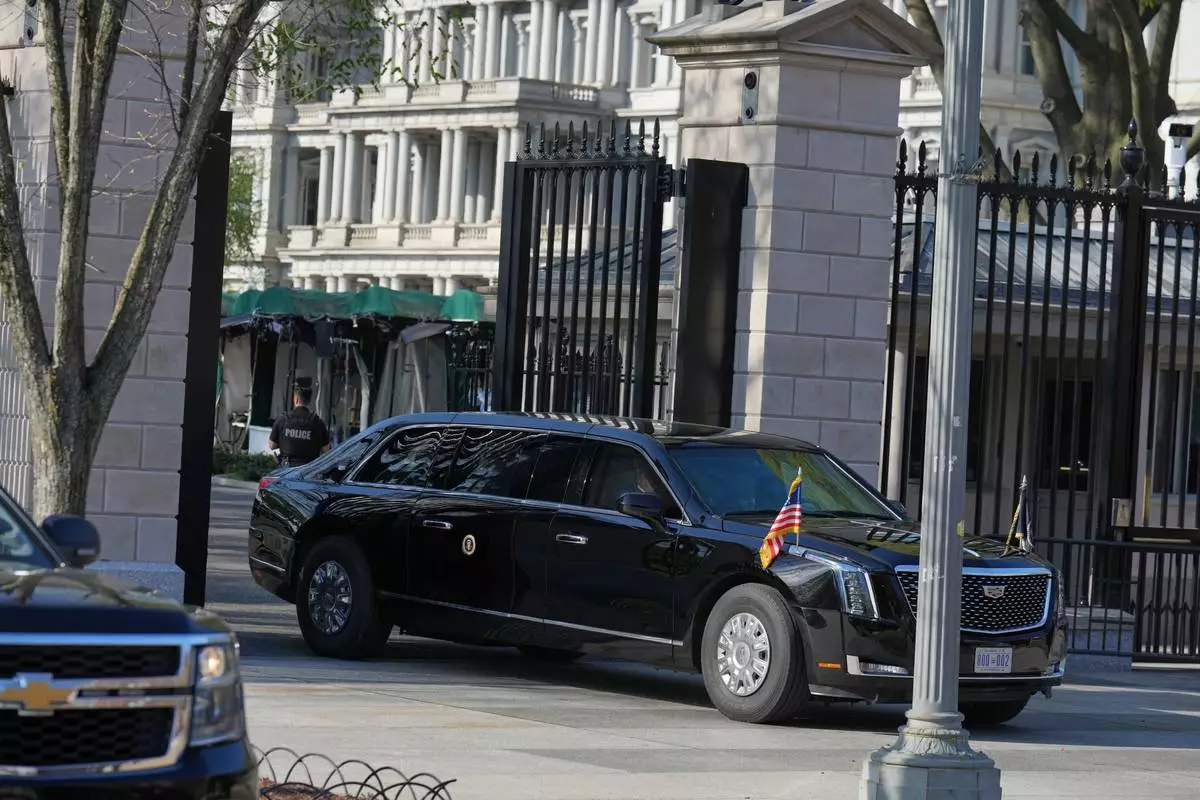
President Donald Trump's limo exits the White House en route to the Supreme Court, Wednesday, April 1, 2026, in Washington. (AP Photo/Mark Schiefelbein)

President Donald Trump's limo exits the White House en route to the Supreme Court, Wednesday, April 1, 2026, in Washington. (AP Photo/Mark Schiefelbein)

President Donald Trump's motorcade arrives at the U.S. Supreme Court, Wednesday, April 1, 2026, in Washington. (AP Photo/Tom Brenner)

President Donald Trump's motorcade arrives at the U.S. Supreme Court, Wednesday, April 1, 2026, in Washington. (AP Photo/Tom Brenner)

Pro and anti-Trump demonstrators rally outside the U.S. Supreme Court, before justices hear oral arguments on whether President Donald Trump can deny citizenship to children born to parents who are in the United States illegally or temporarily, on Capitol Hill, in Washington, Wednesday, April 1, 2026. (AP Photo/J. Scott Applewhite)

Pro and anti-Trump demonstrators rally outside the U.S. Supreme Court, before justices hear oral arguments on whether President Donald Trump can deny citizenship to children born to parents who are in the United States illegally or temporarily, on Capitol Hill, in Washington, Wednesday, April 1, 2026. (AP Photo/J. Scott Applewhite)

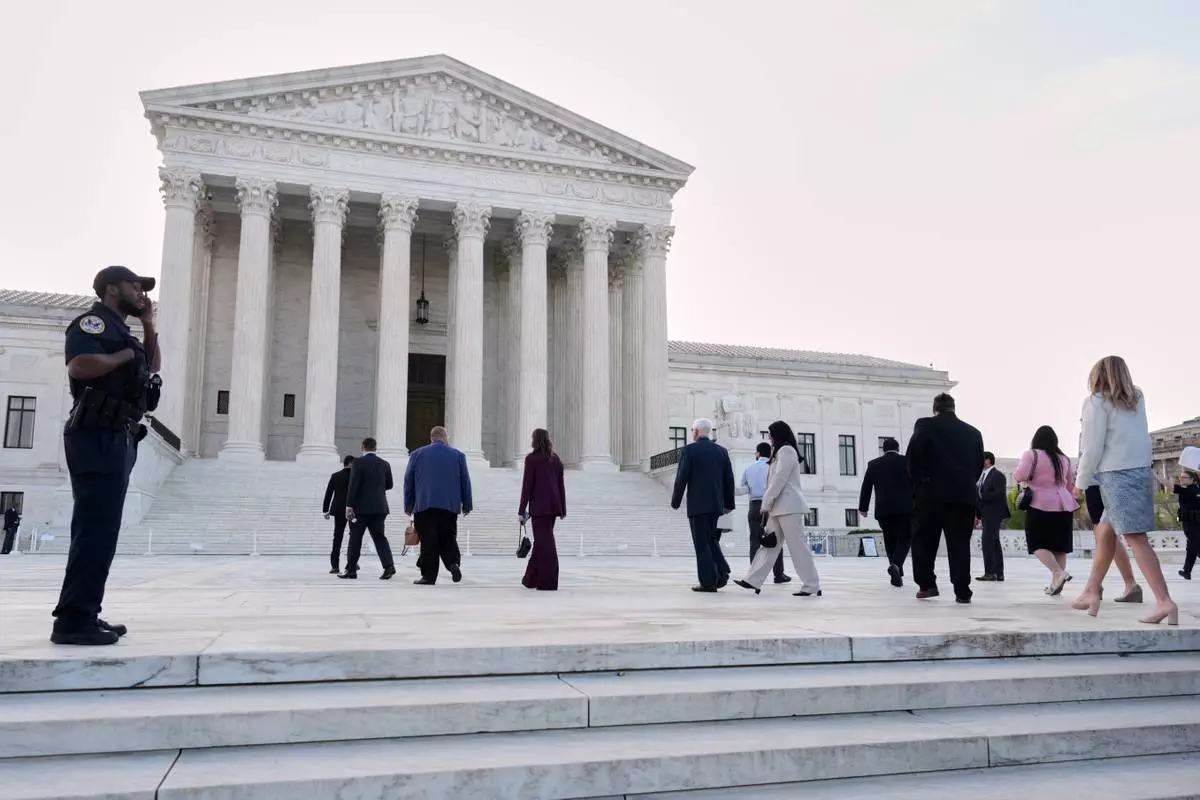
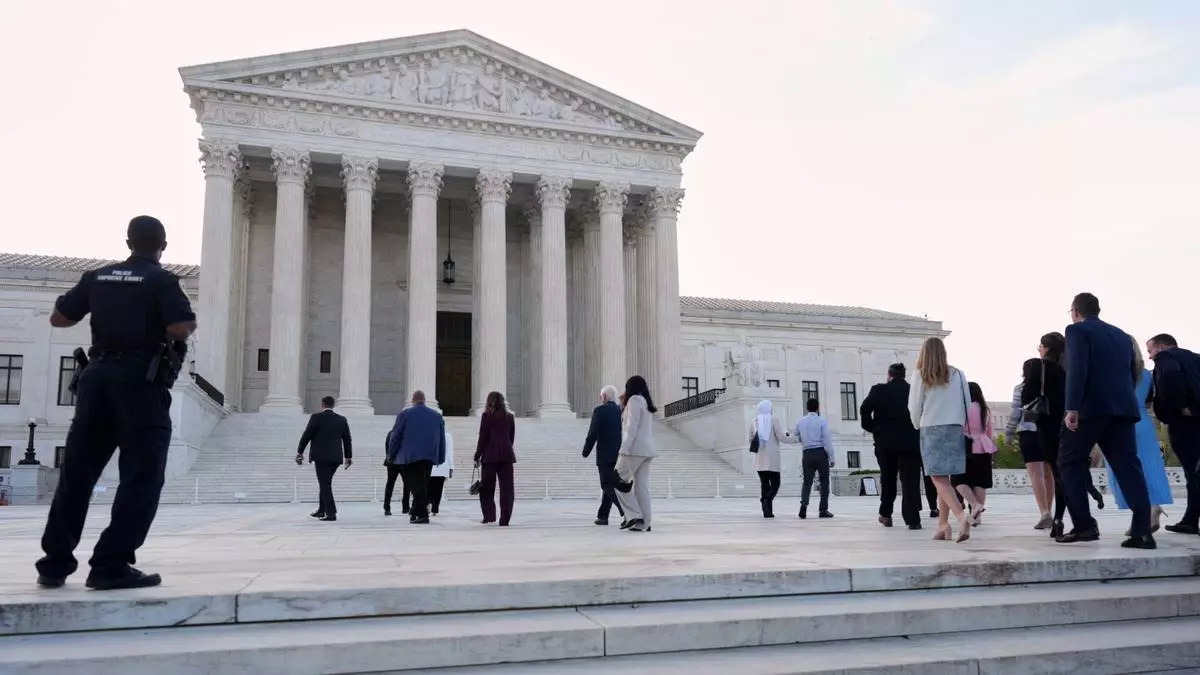
People arrive to walk inside the U.S. Supreme Court, on Capitol Hill in Washington, Wednesday, April 1, 2026. The Supreme Court justices will hear oral arguments today on whether President Donald Trump can deny citizenship to children born to parents who are in the United States illegally or temporarily. (AP Photo/J. Scott Applewhite)

People arrive to walk inside the U.S. Supreme Court, on Capitol Hill in Washington, Wednesday, April 1, 2026. The Supreme Court justices will hear oral arguments today on whether President Donald Trump can deny citizenship to children born to parents who are in the United States illegally or temporarily. (AP Photo/J. Scott Applewhite)

People arrive to walk inside the U.S. Supreme Court, on Capitol Hill in Washington, Wednesday, April 1, 2026. The Supreme Court justices will hear oral arguments today on whether President Donald Trump can deny citizenship to children born to parents who are in the United States illegally or temporarily. (AP Photo/J. Scott Applewhite)

People arrive to walk inside the U.S. Supreme Court, on Capitol Hill in Washington, Wednesday, April 1, 2026. The Supreme Court justices will hear oral arguments today on whether President Donald Trump can deny citizenship to children born to parents who are in the United States illegally or temporarily. (AP Photo/J. Scott Applewhite)

President Donald Trump answers questions from reporters after signing an executive order in the Oval Office of the White House Tuesday, March 31, 2026, in Washington, as Commerce Secretary Howard Lutnick listens. (AP Photo/Alex Brandon)

President Donald Trump answers questions from reporters after signing an executive order in the Oval Office of the White House Tuesday, March 31, 2026, in Washington, as Commerce Secretary Howard Lutnick listens. (AP Photo/Alex Brandon)

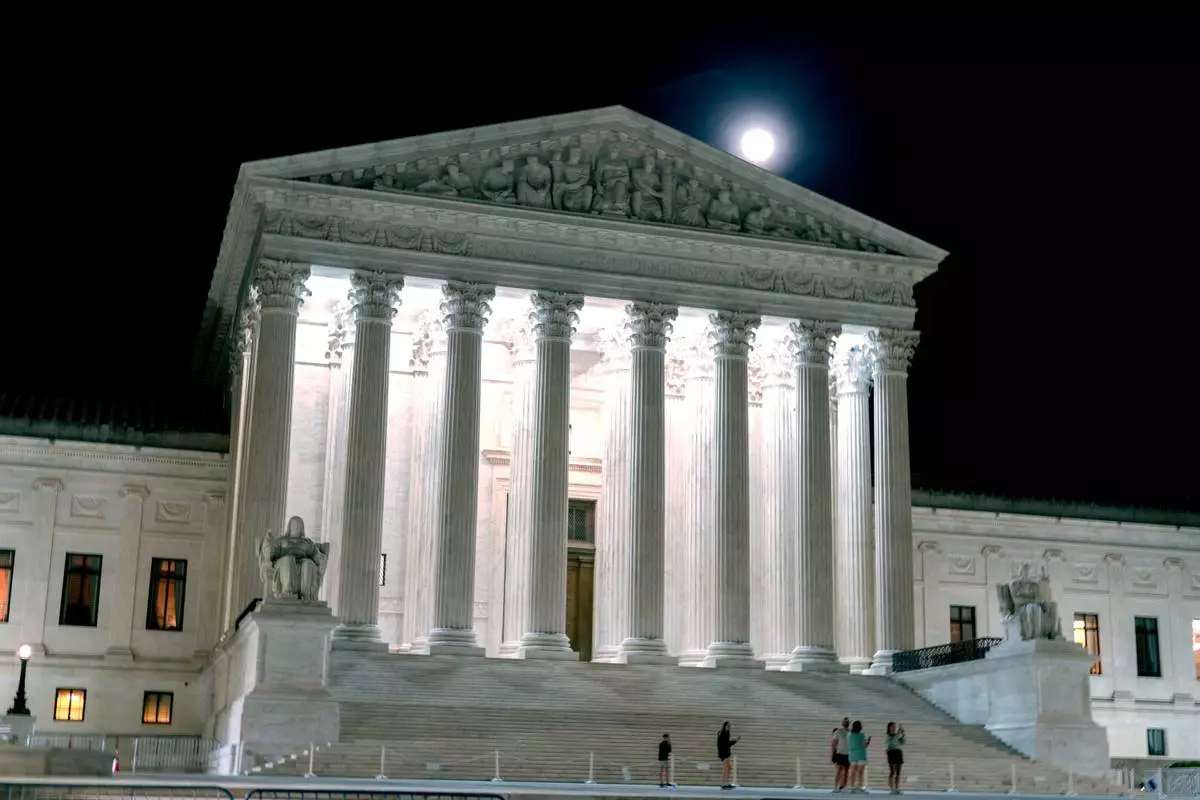
The U.S. Supreme Court is seen as the moon rises Tuesday, March 31, 2026, in Washington. (AP Photo/Jose Luis Magana)

The U.S. Supreme Court is seen as the moon rises Tuesday, March 31, 2026, in Washington. (AP Photo/Jose Luis Magana)

Recommended Articles