ESPN and Major League Baseball appeared headed for an ugly separation after the network opted out of its rights deal in February.
Nine months later, it appears to be the best thing to happen to both parties.
ESPN has a reworked deal that includes out-of-market streaming rights while NBC and Netflix will air games as part of a new three-year media rights agreement announced by MLB on Wednesday.
“I think it’s really important that we manage to continue a relationship with ESPN. They’ve been kind of the bedrock of our broadcast program for a long time,” baseball Commissioner Rob Manfred said.
NBC/Peacock will become the new home of “Sunday Night Baseball” and the Wild Card Series while Netflix will have the Home Run Derby and two additional games.
The three deals will average nearly $800 million per year. ESPN will still pay $550 million while the NBC deal is worth $200 million and Netflix $50 million.
ESPN, which has carried baseball since 1990, loses postseason games and the Home Run Derby but gains something more valuable for its bottom line by becoming the rights holder for MLB.TV, which will be available on the ESPN app.
ESPN also gets the in-market streaming rights for the six teams whose games are produced by MLB: San Diego, Colorado, Arizona, Cleveland, Minnesota and Seattle.
Even though ESPN no longer has “Sunday Night Baseball,” it will have 30 exclusive games, primarily on weeknights and in the summer months.
“We’re excited to have a midweek package back out there,” Manfred said. “This is an evolution of a relationship. Long relationships go through these things, and it’s an evolution that I think is significant. I think it is consonant with ESPN’s focus on streaming going forward.”
Baseball is the second league that has its out-of-market digital package available in the U.S. on ESPN’s platform. The NHL moved its package to ESPN in 2021.
NBC, which celebrates its 100th anniversary next year, has a long history with baseball, albeit not much recently. The network carried games from 1939 through 1989. It was part of the short-lived Baseball Network with ABC in 1994 and ’95 and then aired playoff games from 1996 through 2000.
Its first game will be on March 26 when the defending two-time champion Los Angeles Dodgers host the Arizona Diamondbacks.
The 25 Sunday night games will air mostly on NBC with the rest on the new NBC Sports Network. All will stream on Peacock.
The first “Sunday Night Baseball” game on NBC will be April 12 with the next one in May after the NBA playoffs.
The addition of baseball games gives NBC a year-around night of sports on Sunday nights. It has had NFL games on Sunday night since 2006 and will debut an NBA Sunday night slate in February.
NBC will also have a prime-time game on Labor Day night.
The Sunday early-afternoon games also return to Peacock, which had them in 2022 and ’23. The early-afternoon games will lead into a studio Whip-Around Show before the Sunday night game.
NBC/Peacock will also do the Major League Futures game on the day before the Home Run Derby and coverage of the first round of the amateur draft on the Saturday heading into the All-Star break.
Netflix's baseball deals are in alignment with its strategy of going for big events in a major sport. The streamer will have an NFL Christmas doubleheader this season for the second straight year.
Besides the Home Run Derby, Netflix will have the first game of the season on March 25 when three-time AL MVP Aaron Judge and the New York Yankees visit the San Francisco Giants. It also has the Home Run Derby and the Field of Dreams game at Dyersville, Iowa, on Aug. 13, when Minnesota faces Philadelphia. Netflix will stream a MLB special event game each year.
The negotiations around the other deals were complicated due to the fact that MLB was also trying not to slight two of its other rights holders. MLB receives an average of $729 million from Fox and $470 million from Turner Sports per year under deals which expire after the 2028 season.
Fox’s Saturday nights have been mainly sports the past couple years with a mix of baseball, college football, college basketball and motorsports.
Apple TV has had “Friday Night Baseball” since 2022.
The deals also set up Manfred for future negotiations. He would like to see MLB take a more national approach to its rights instead of a large percentage of its games being on regional sports networks.
AP Baseball Writer Ronald Blum contributed to this report.
AP MLB: https://apnews.com/hub/mlb
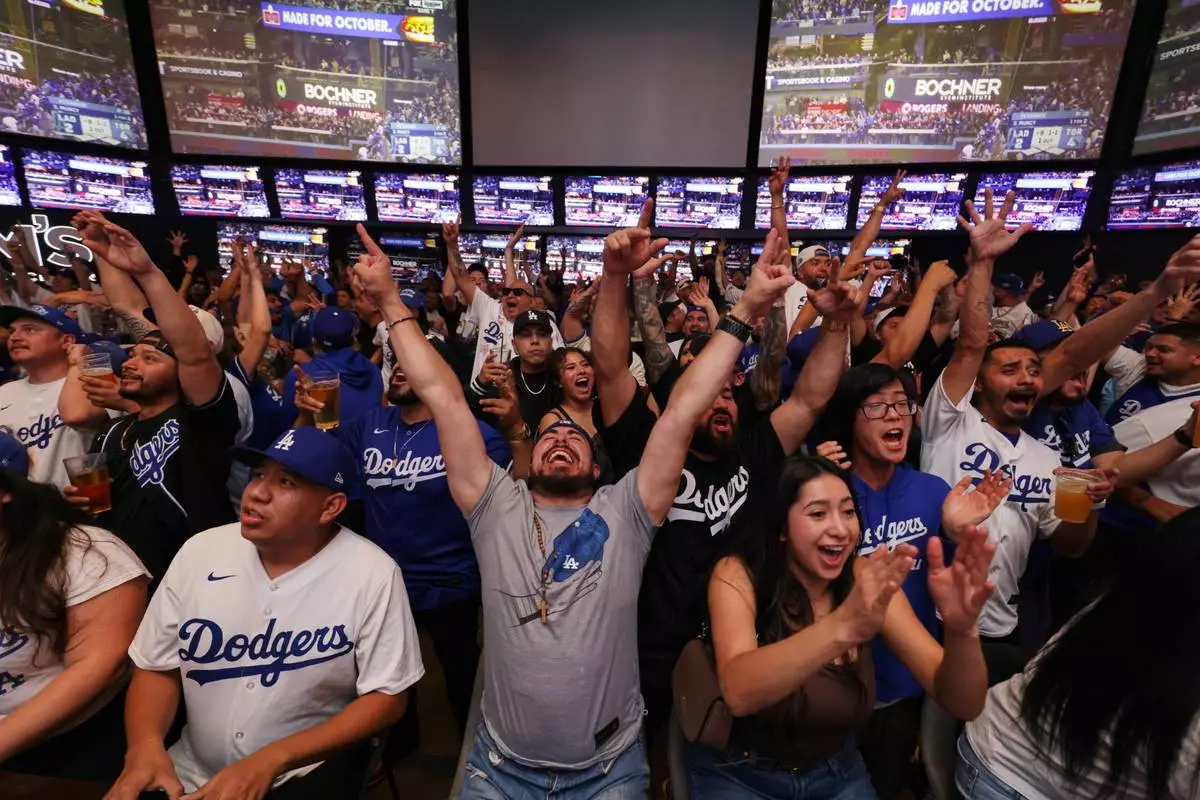
FILE - Fans react at a watch party as the Los Angeles Dodgers play the Toronto Blue Jays in Game 7 of baseball's World Series, Saturday, Nov. 1, 2025, in Los Angeles. (AP Photo/Ethan Swope, File)
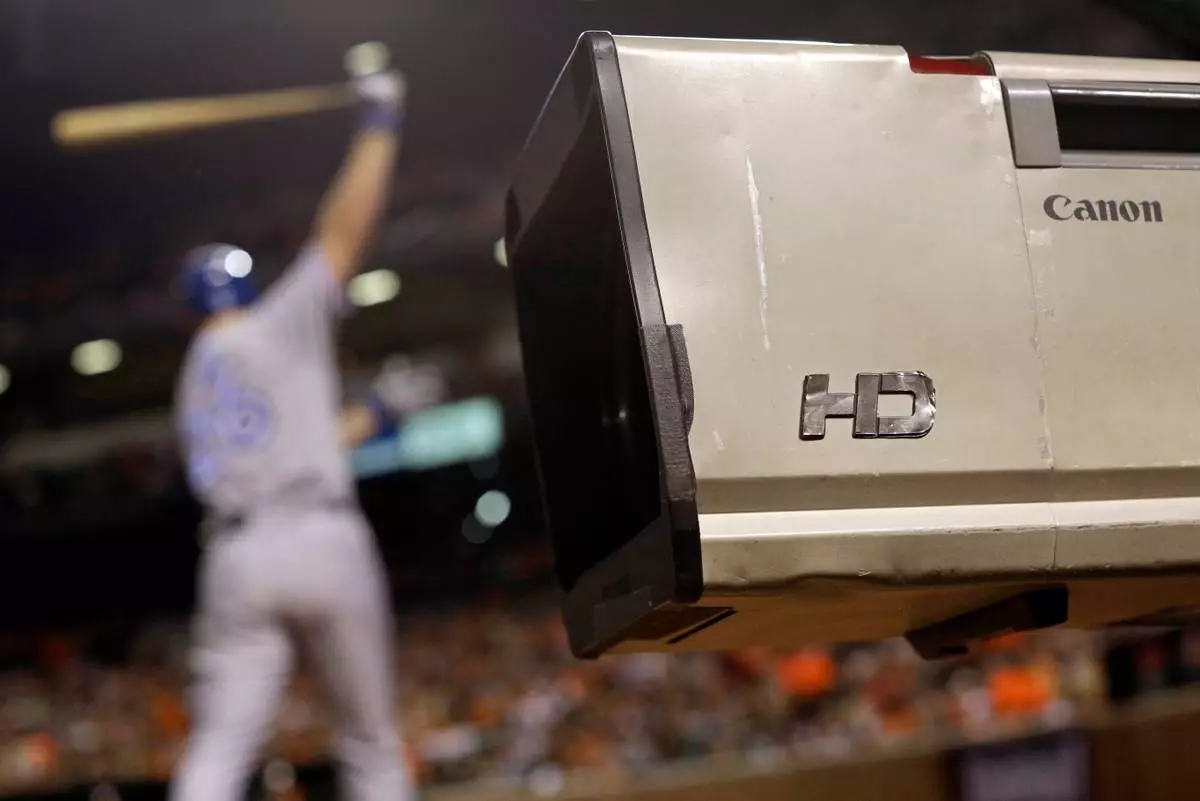
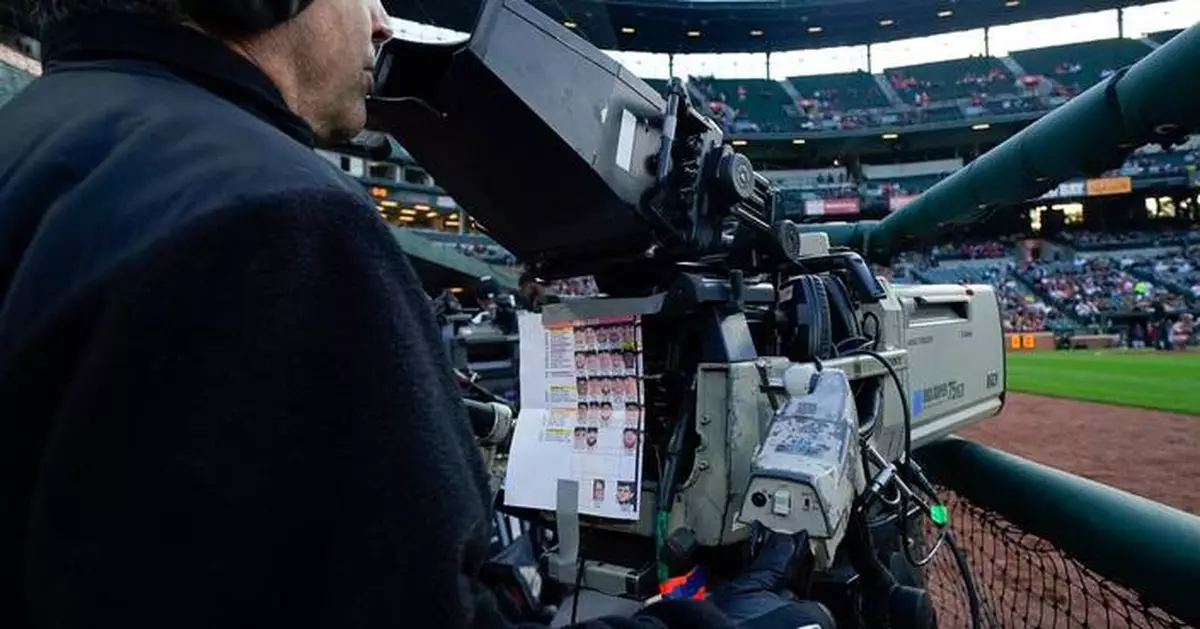
FILE - In this April 12, 2014 file photo, a television camera stands near the Toronto Blue Jays' on deck circle during a baseball game between the Blue Jays and the Baltimore Orioles in Baltimore. (AP Photo/Patrick Semansky, File)
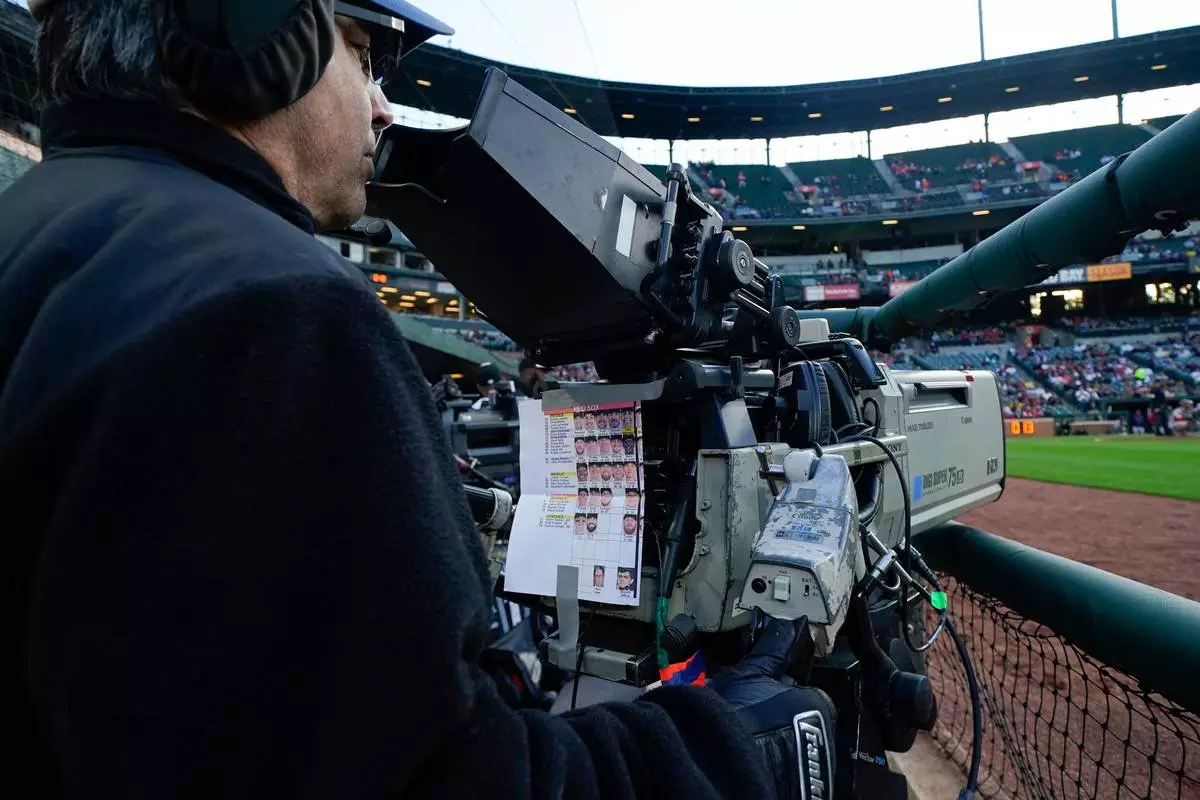
FILE - A sheet showing Boston Red Sox players photos hangs from a camera as a broadcast operator works during the first inning of a baseball game between the Baltimore Orioles and the Red Sox, Monday, April 24, 2023, in Baltimore, Md. (AP Photo/Julio Cortez, File)
WASHINGTON (AP) — The Supreme Court is taking up one of the term’s most consequential cases, President Donald Trump’s executive order on birthright citizenship declaring that children born to parents who are in the United States illegally or temporarily are not American citizens, and he was in the courtroom on Wednesday for some of the arguments.
The justices are hearing Trump’s appeal of a lower-court ruling from New Hampshire that struck down the citizenship restrictions, one of several courts that have blocked them. They have not taken effect anywhere in the country.
Trump is the first sitting president to attend oral arguments at the nation’s highest court. He spent just over an hour inside the courtroom, hearing arguments by the government’s lawyer, Solicitor General D. John Sauer. He left shortly after Sauer wrapped up and the plaintiff was invited to present her case.
The case frames another test of Trump's assertions of executive power that defy long-standing precedent for a court that has largely ruled in the president's favor — but with some notable exceptions that Trump has responded to with starkly personal criticisms of the justices. A definitive ruling is expected by early summer.
The birthright citizenship order, which Trump signed the first day of his second term, is part of his Republican administration’s broad immigration crackdown.
Birthright citizenship is the first Trump immigration-related policy to reach the court for a final ruling. The justices previously struck down global tariffs Trump had imposed under an emergency powers law that had never been used that way.
Trump reacted furiously to the late February tariffs decision, saying he was ashamed of the justices who ruled against him and calling them unpatriotic.
He issued a preemptive broadside against the court on Sunday on his Truth Social platform. “Birthright Citizenship is not about rich people from China, and the rest of the World, who want their children, and hundreds of thousands more, FOR PAY, to ridiculously become citizens of the United States of America. It is about the BABIES OF SLAVES!,” the president wrote. “Dumb Judges and Justices will not a great Country make!”
Trump's order would upend the long-standing view that the Constitution’s 14th Amendment, ratified in 1868, and federal law since 1940 confer citizenship on everyone born on American soil, with narrow exceptions for the children of foreign diplomats and those born to a foreign occupying force.
The 14th Amendment was intended to ensure that Black people, including former slaves, had citizenship, though the Citizenship Clause is written more broadly. “All persons born or naturalized in the United States, and subject to the jurisdiction thereof, are citizens of the United States and of the State wherein they reside,” it reads.
In a series of decisions, lower courts have struck down the executive order as illegal, or likely so, under the Constitution and federal law. The decisions have invoked the high court's 1898 ruling in Wong Kim Ark, which held that the U.S.-born child of Chinese nationals was a citizen.
The Trump administration argues that the common view of citizenship is wrong, asserting that children of noncitizens are not “subject to the jurisdiction” of the United States and therefore are not entitled to citizenship.
The court should use the case to set straight “long-enduring misconceptions about the Constitution’s meaning,” wrote Sauer, the solicitor general.
No court has accepted that argument, and lawyers for pregnant women whose children would be affected by the order said the Supreme Court should not be the first to do so.
“We have the president of the United States trying to radically reinterpret the definition of American citizenship,” said Cecillia Wang, the American Civil Liberties Union legal director who is facing off against Sauer at the Supreme Court.
More than one-quarter of a million babies born in the U.S. each year would be affected by the executive order, according to research by the Migration Policy Institute and Pennsylvania State University’s Population Research Institute.
While Trump has largely focused on illegal immigration in his rhetoric and actions, the birthright restrictions also would apply to people who are legally in the United States, including students and applicants for green cards, or permanent resident status.
Associated Press writer Darlene Superville contributed to this report.
Follow the AP’s coverage of the U.S. Supreme Court at https://apnews.com/hub/us-supreme-court.
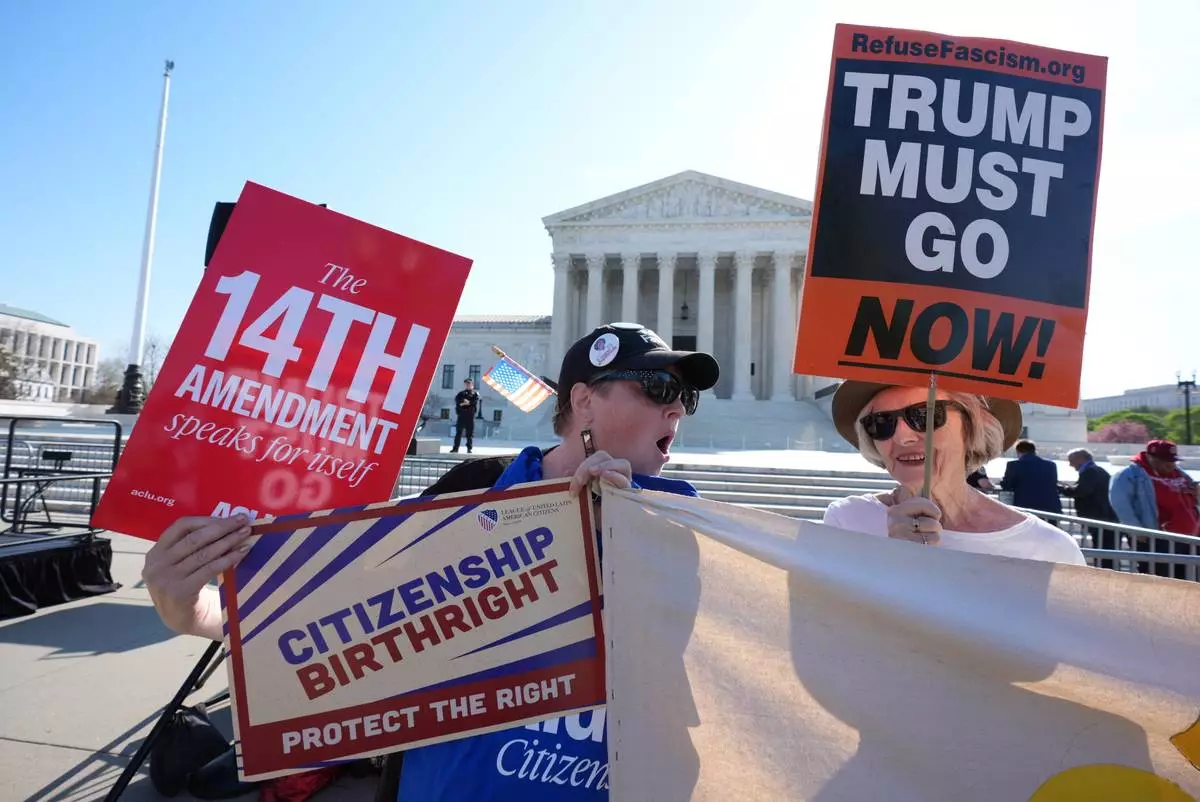
Pro and anti-Trump demonstrators rally outside the U.S. Supreme Court, before justices hear oral arguments on whether President Donald Trump can deny citizenship to children born to parents who are in the United States illegally or temporarily, on Capitol Hill, in Washington, Wednesday, April 1, 2026. (AP Photo/J. Scott Applewhite)
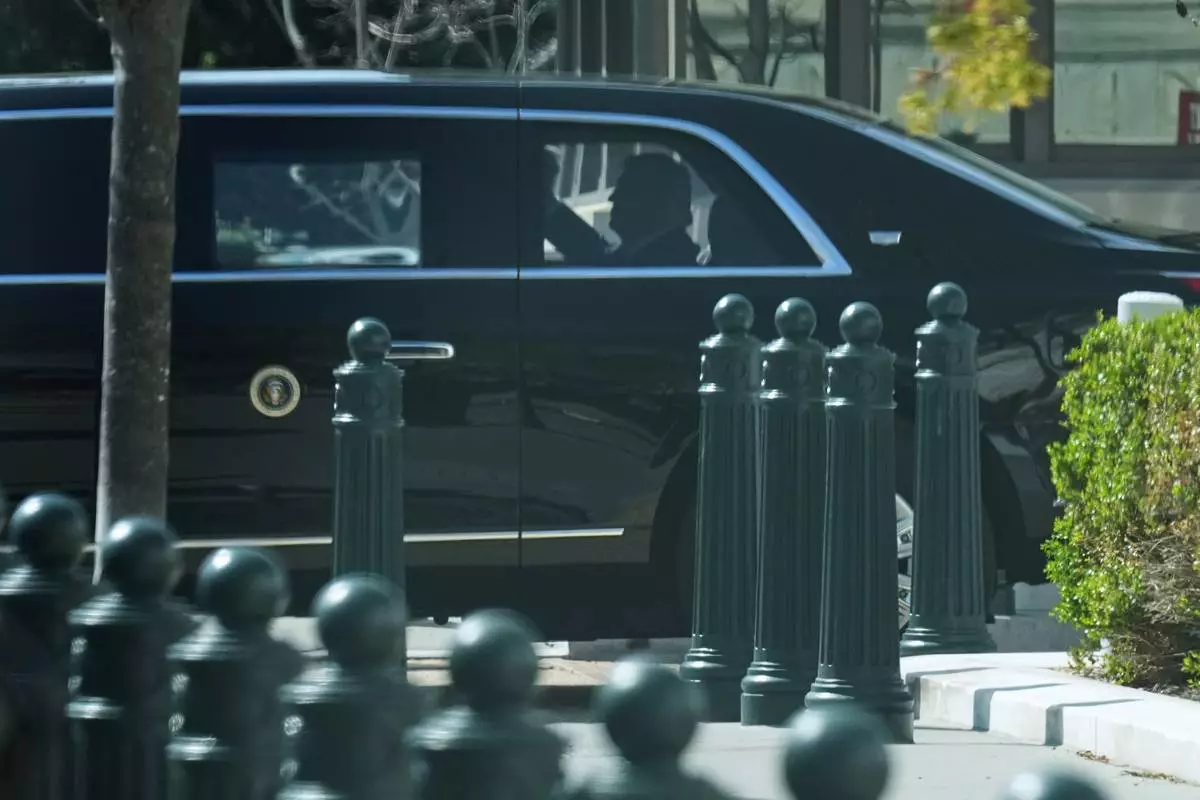
President Donald Trump leaves the U.S. Supreme Court, Wednesday, April 1, 2026, in Washington. (AP Photo/Mark Schiefelbein)

President Donald Trump's motorcade arrives at the U.S. Supreme Court, Wednesday, April 1, 2026, in Washington. (AP Photo/Tom Brenner)
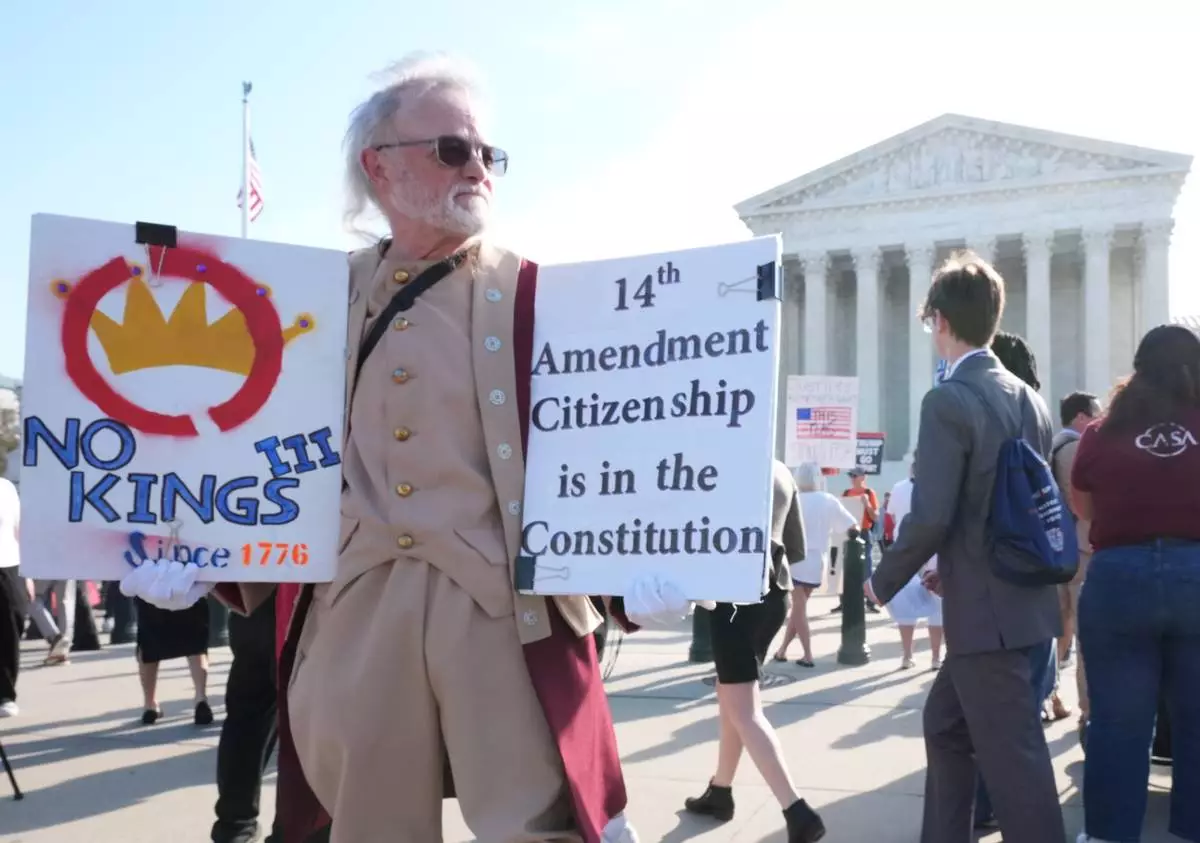
Pro and anti-Trump demonstrators rally outside the U.S. Supreme Court, before justices hear oral arguments on whether President Donald Trump can deny citizenship to children born to parents who are in the United States illegally or temporarily, on Capitol Hill, in Washington, Wednesday, April 1, 2026. (AP Photo/J. Scott Applewhite)

President Donald Trump's motorcade arrives at the U.S. Supreme Court, Wednesday, April 1, 2026, in Washington. (AP Photo/Tom Brenner)
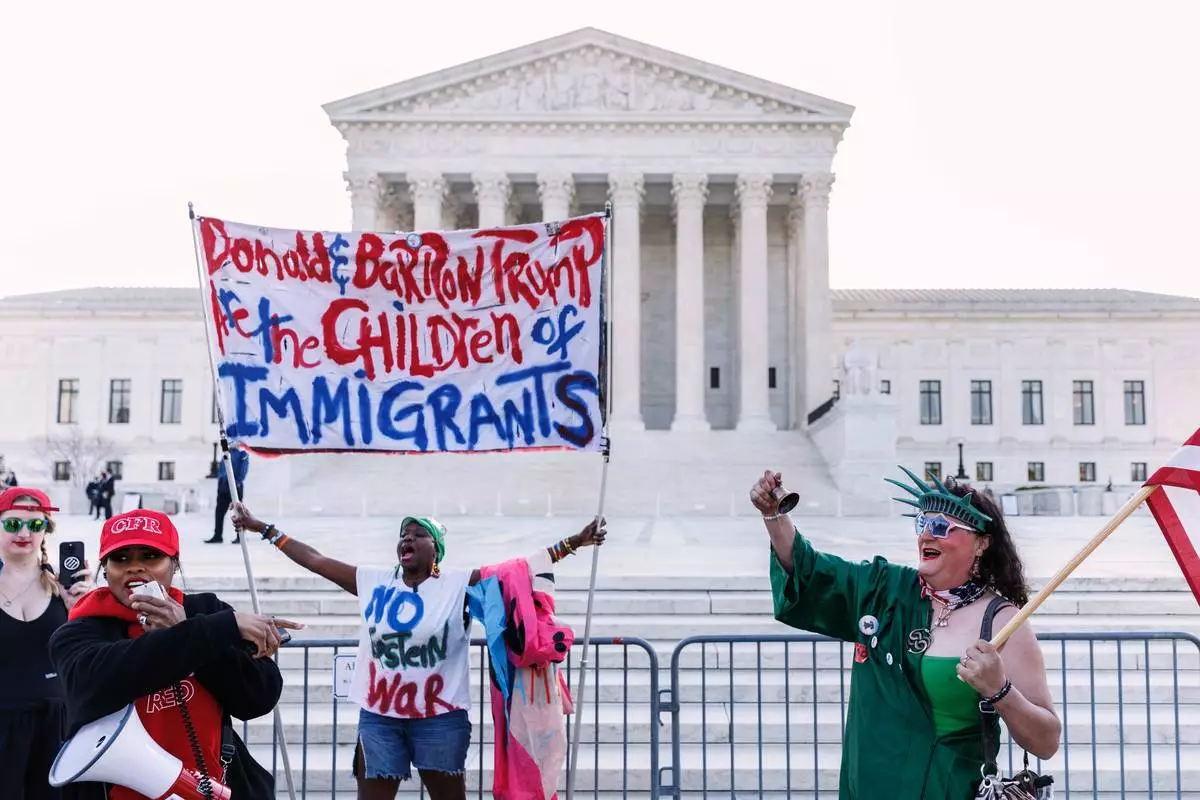
Demonstrators holding opposing views verbally engage ahead of President Donald Trump's arrival at the U.S. Supreme Court, Wednesday, April 1, 2026, in Washington. (AP Photo/Tom Brenner)
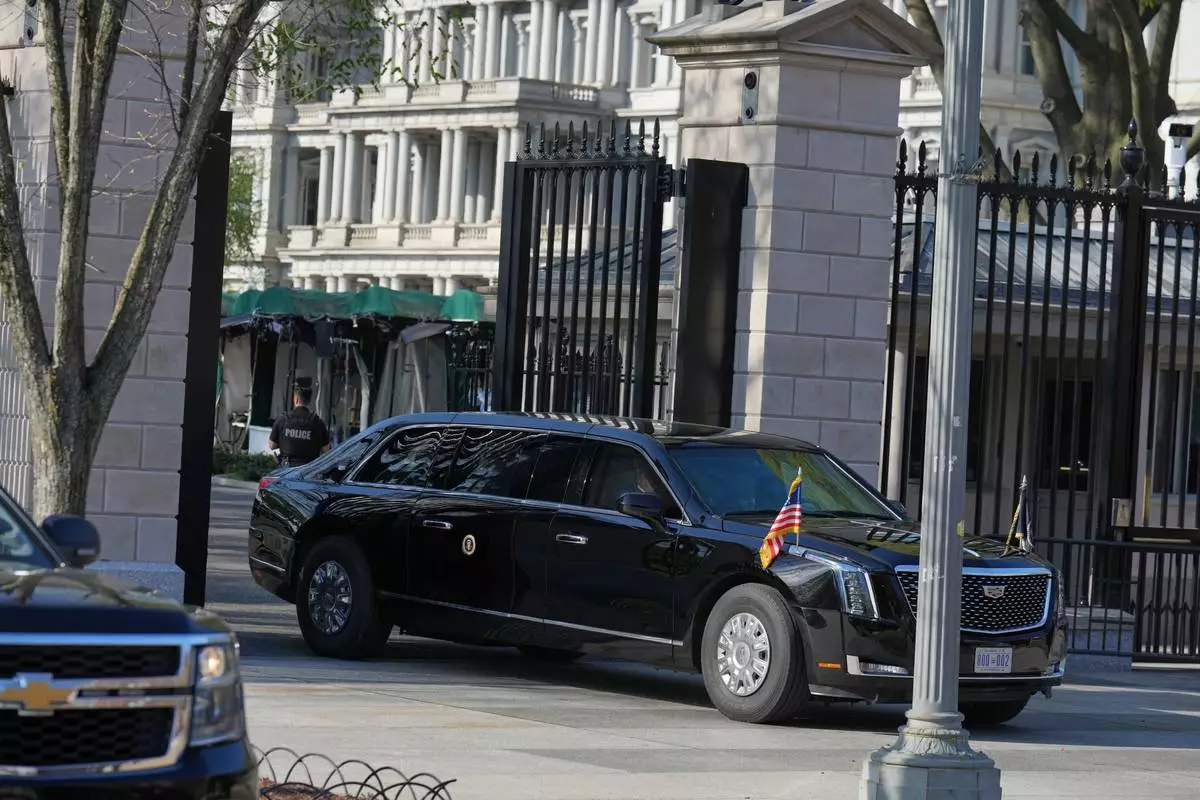
President Donald Trump's limo exits the White House en route to the Supreme Court, Wednesday, April 1, 2026, in Washington. (AP Photo/Mark Schiefelbein)
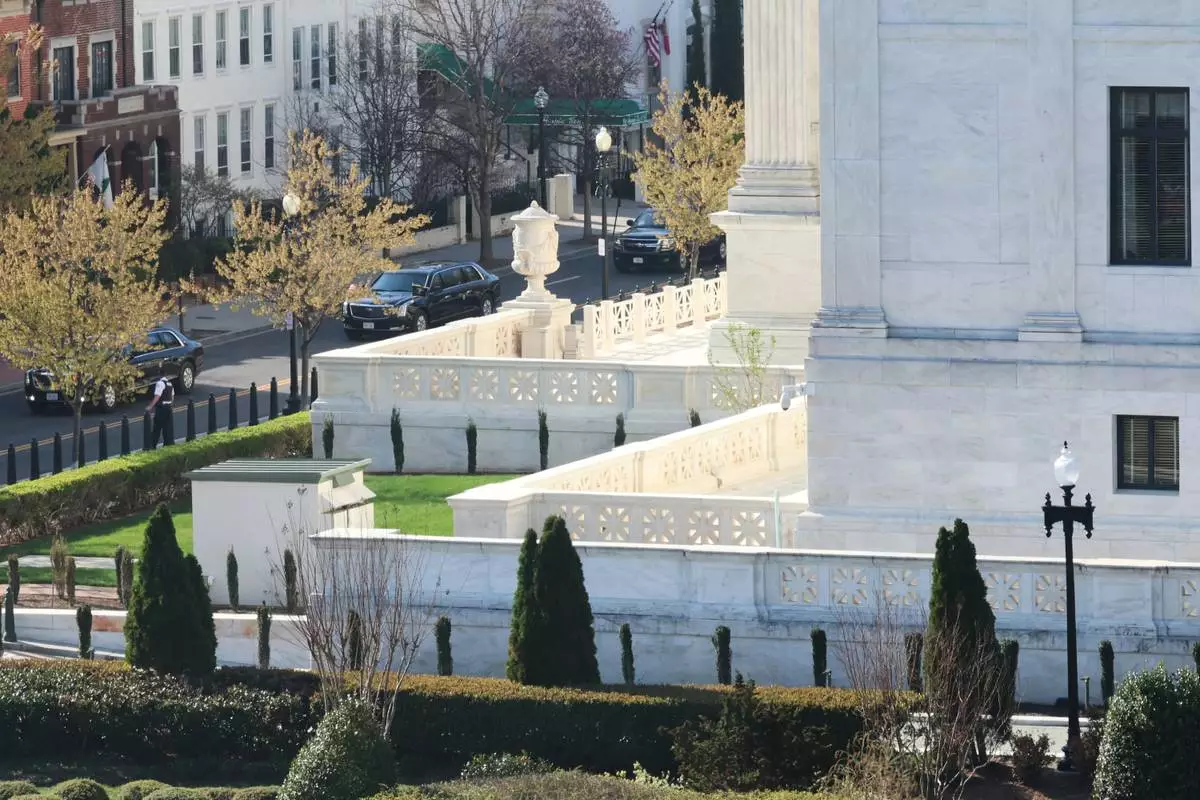
President Donald Trump's motorcade arrives at the U.S. Supreme Court, Wednesday, April 1, 2026, in Washington. (AP Photo/Tom Brenner)

Pro and anti-Trump demonstrators rally outside the U.S. Supreme Court, before justices hear oral arguments on whether President Donald Trump can deny citizenship to children born to parents who are in the United States illegally or temporarily, on Capitol Hill, in Washington, Wednesday, April 1, 2026. (AP Photo/J. Scott Applewhite)
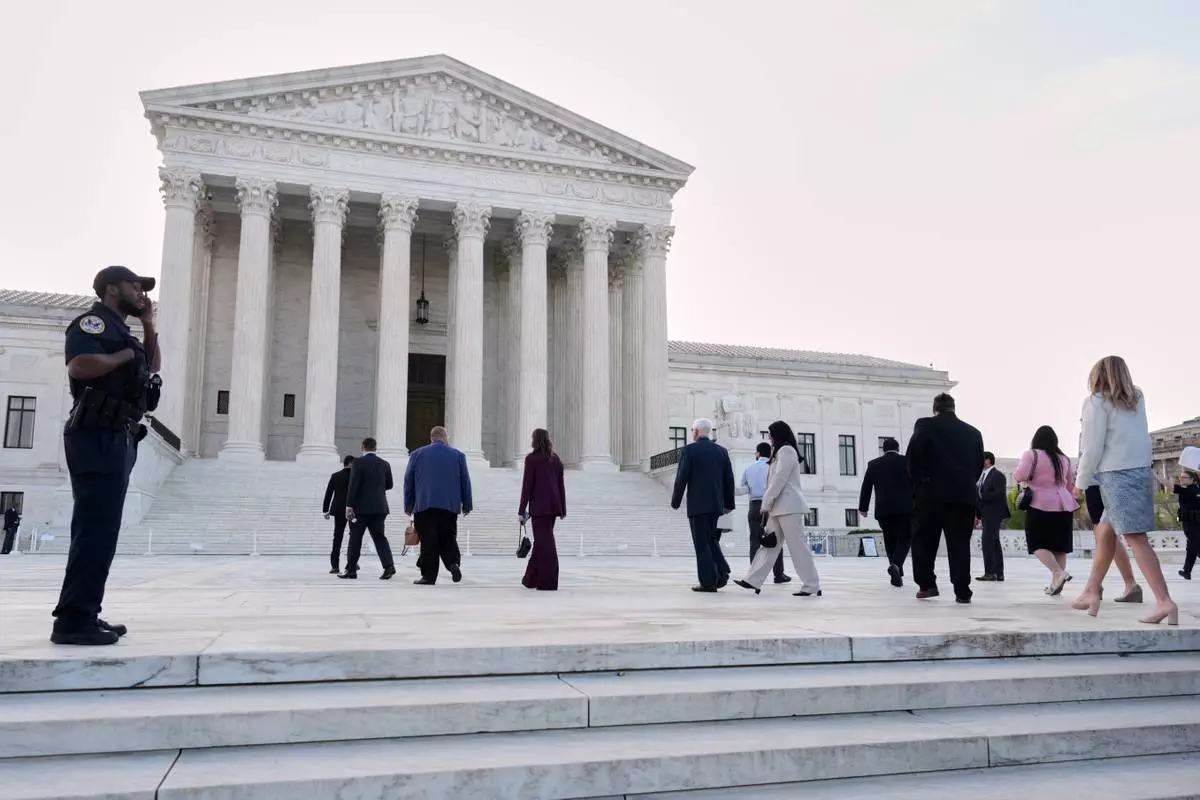
People arrive to walk inside the U.S. Supreme Court, on Capitol Hill in Washington, Wednesday, April 1, 2026. The Supreme Court justices will hear oral arguments today on whether President Donald Trump can deny citizenship to children born to parents who are in the United States illegally or temporarily. (AP Photo/J. Scott Applewhite)
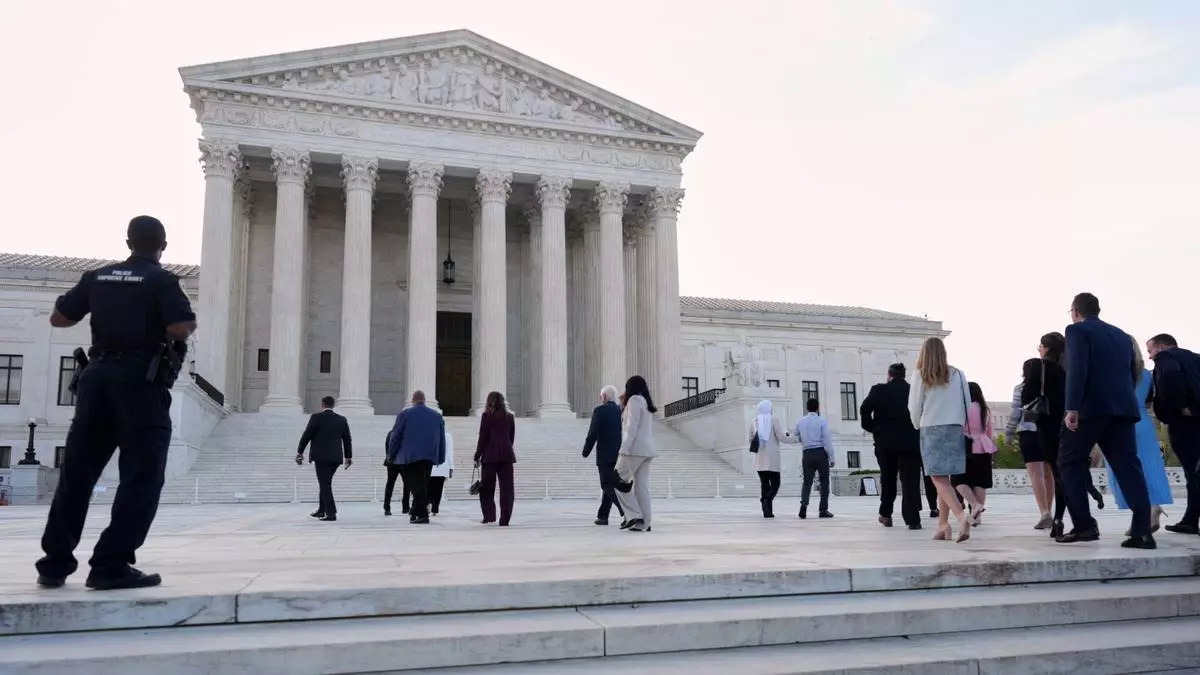
People arrive to walk inside the U.S. Supreme Court, on Capitol Hill in Washington, Wednesday, April 1, 2026. The Supreme Court justices will hear oral arguments today on whether President Donald Trump can deny citizenship to children born to parents who are in the United States illegally or temporarily. (AP Photo/J. Scott Applewhite)
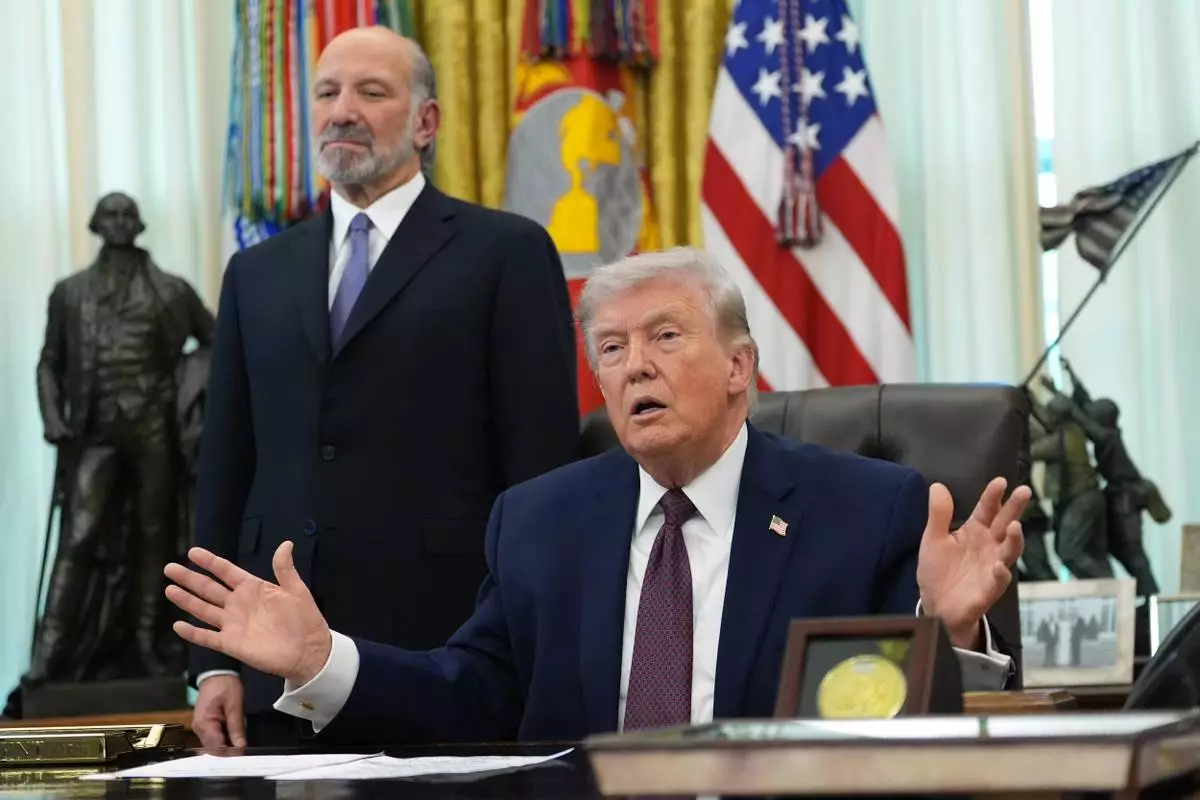
President Donald Trump answers questions from reporters after signing an executive order in the Oval Office of the White House Tuesday, March 31, 2026, in Washington, as Commerce Secretary Howard Lutnick listens. (AP Photo/Alex Brandon)
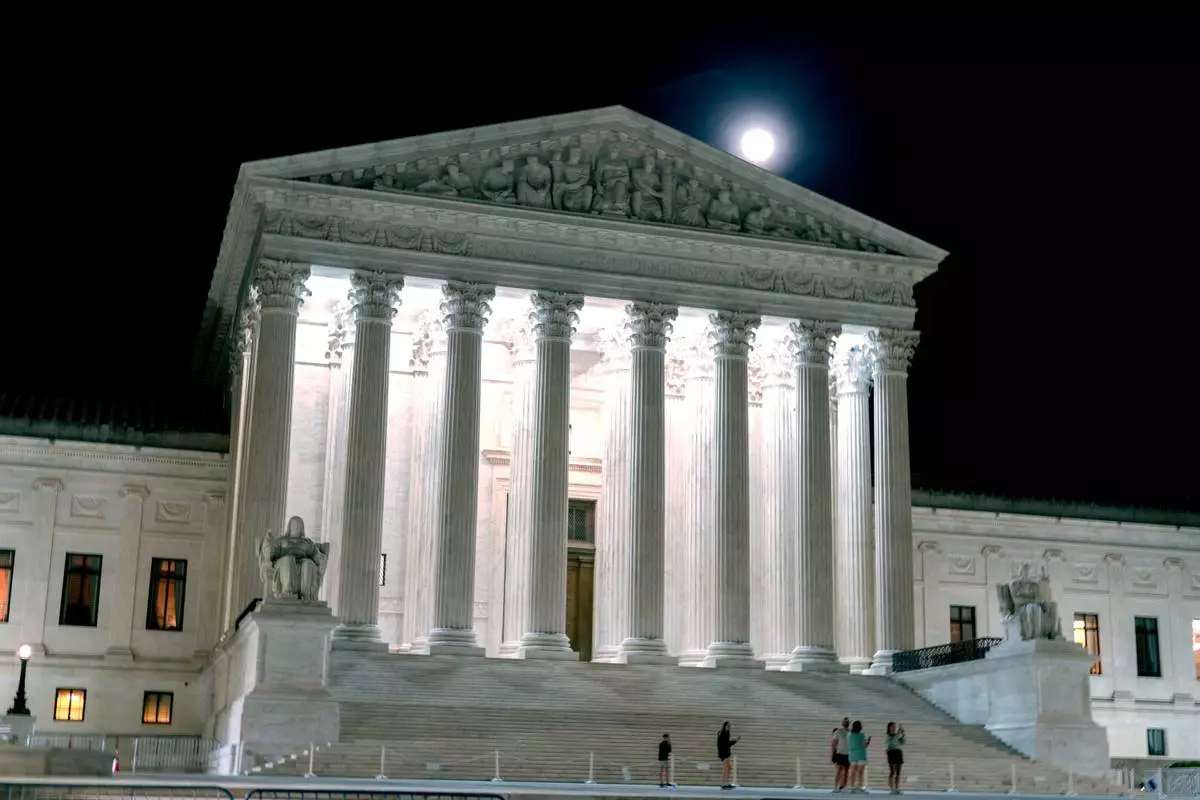
The U.S. Supreme Court is seen as the moon rises Tuesday, March 31, 2026, in Washington. (AP Photo/Jose Luis Magana)